
10 Fitness Label Ideas Gym Brands Are Printing Now


Marcus is our print marketing voice, built from the knowledge of our production team, with over 20 years in printing.
Pick the face stock before the artwork: synthetic film for anything that meets sweat, condensation or a wash cycle, paper only for dry products that sell fast. Standard, premium, bottle and clear labels print in 3 business days, die-cut labels in 5 and metallic labels in 7.
Fitness label formats at a glance
| Container | Typical wrap size | What the label carries | Where it is used | Product at 4OVER4 |
|---|---|---|---|---|
| Tub, 32 oz protein | Wrap around, roughly 9 x 4 in | Supplement Facts panel, flavor, scoop count, brand mark | Protein, pre-workout, mass gainer | Premium product labels |
| Shaker or water bottle | Wrap around, roughly 8 x 3 in | Logo, one line of copy, a handle for social | Branded bottles, member gifts | Premium bottle labels |
| Supplement jar | Wrap around, roughly 6 x 2.5 in | Facts panel plus dosage, small type | Capsules, creatine, vitamins | Premium jar labels |
| Bar or sachet | Flat, roughly 3 x 2 in | Flavor, macros, one claim | Protein bars, single serves | Standard product labels |
| Equipment and gear | Die cut to shape | Logo only, or logo plus a serial | Mats, dumbbell tags, asset marking | Die-cut labels |
Measure the real container before you set the wrap, because circumference and curvature both change the finished size.
Labels that survive the gym, not just the shelf
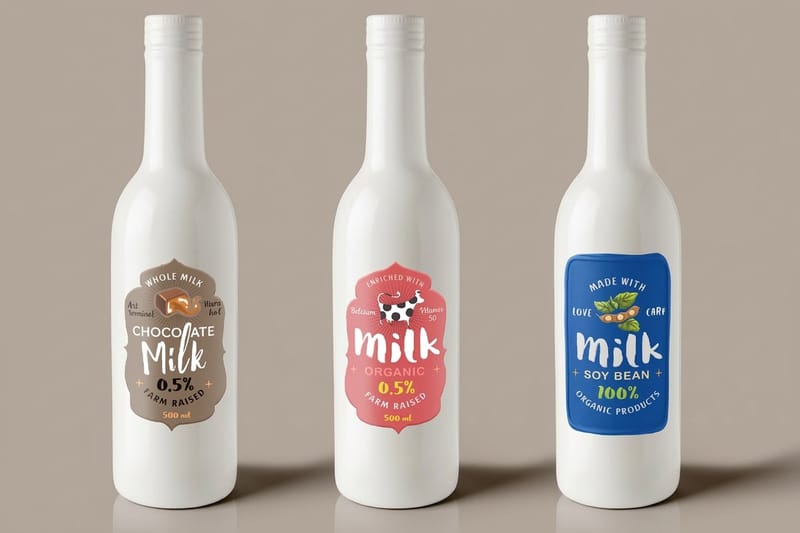
A fitness label lives a harder life than most. It gets handled with chalky hands, sits in a bag next to a wet towel, rides in a car that bakes all afternoon, and on a shaker bottle it goes through the dishwasher. Paper stock gives up early: the edges lift and the print scuffs.
The fix is the face stock, not the artwork. A white vinyl face does not soften when it gets wet the way paper does, and it is the decision that keeps a label looking new to the end of a training block.
What the label legally has to carry
A supplement sold in the United States needs a Supplement Facts panel, a statement of identity, the net quantity of contents, an ingredient list, and the name and place of business of the manufacturer, packer or distributor. Structure and function claims carry their own disclaimer requirement.
Design around that panel from the start rather than squeezing it in at the end. It is the single largest fixed block on most fitness labels, and a layout that treats it as an afterthought ends up redrawn. Leave it a clean rectangle, keep the type legible, and build the brand around it.
Sizing to the container, not to the artboard
Measure the container circumference and subtract a small overlap, then decide how much of the wrap you actually want covered. A full wrap gives you the most room and hides the seam behind the panel. A partial wrap leaves the product visible, which matters when the product itself looks good.
Order the smallest run, 25 labels, wrap one on the real container and look at it in the light the product will sit in. Then put another through the fridge or a day in the gym bag before you order thousands.
The ten ideas worth printing
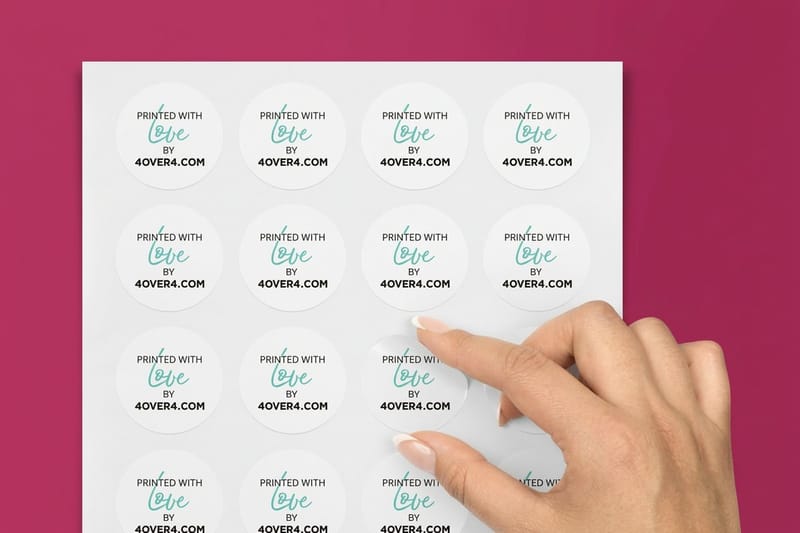
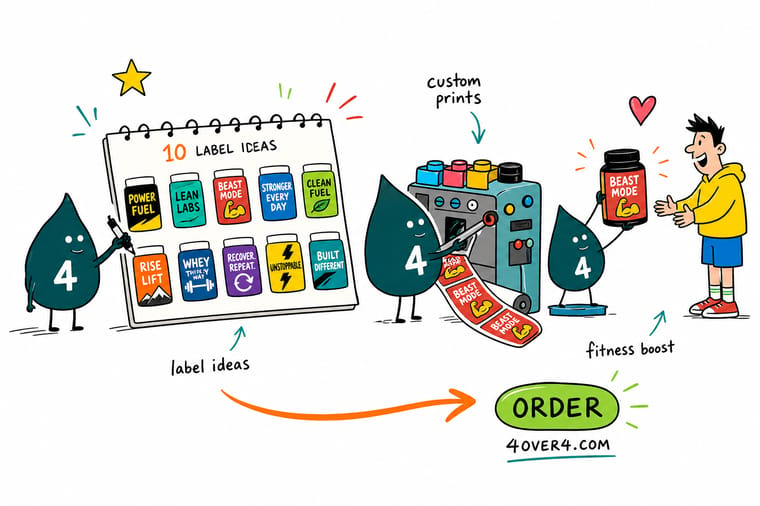
These are ten label directions that work for fitness brands, each with the stock that suits it. They are ordered roughly from the easiest to execute to the most involved, so a new brand can start at the top and an established one can pick further down.
None of them are expensive to test. Standard product labels and premium product labels both start at runs of 25, small enough for a first test.
Ideas one to five: the shelf
1. Clear label, product on show. A clear label lets the color of the powder or the liquid do the work, and the printed type appears to float on the container. Add the white ink base when the type has to sit over a dark product.
2. A metallic label with one bold mark. Metallic labels print on a semi-gloss label with High Gloss UV, so keep the artwork to one strong mark and let the metal show around it. The restraint is what reads as expensive, not the amount of metal.
3. Flavor as a color system. One layout, one plate, and a color that changes per flavor. It makes a range look like a range on the shelf and it keeps artwork costs down as you add flavors.
4. Big honest macros. Put protein grams, calories and serving count where a buyer can read them across an aisle. Large numbers make that comparison easy.
5. A die-cut silhouette. A die-cut label that follows a shape rather than a rectangle sets the tub apart from the rectangles beside it, with basic and complex custom shapes in the configurator.
Ideas six to ten: beyond the tub
6. Branded bottle labels for members. A bottle label on a giveaway bottle keeps the gym name in a member’s hand every session, in the gym and out of it.
7. Equipment and asset tags. Small die-cut labels on mats, dumbbells and machines mark ownership, carry a serial for maintenance, and quietly brand every photo a member takes.
8. Batch and best-before as a design element. A printed panel for batch and date, rather than an ink-jet stamp squeezed onto the base, signals a brand that takes its own quality control seriously.
9. A QR to the routine, not the homepage. Point the code at something worth scanning: the training program the product supports, or a dosing guide.
10. A seasonal or limited-run label. Short runs are cheap enough to print a limited edition for a challenge, a competition, or a new year intake, and the date on the label tells buyers it will not be back.
Materials, finishes and what they cost
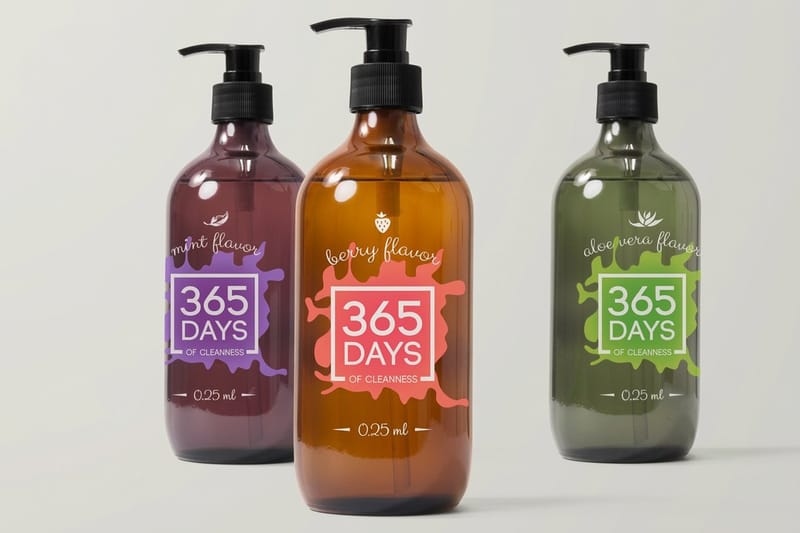
Once the idea is settled, three choices decide the price and the durability: the face stock, the finish, and the quantity. Everything else is artwork.
Face stock is the durability decision, covered below by where the product lives. Finish is the look: Hi-Gloss UV lifts color and photography, uncoated paper reads flat and natural, brown kraft reads handmade, and a clear face lets the product show through.
Quantity is the cost lever, and the pricing panel below shows how it moves.
Matching stock to where the product lives
For a tub on a shelf at room temperature, a semi-gloss or Hi-Gloss UV paper label is usually enough. For a bottle that goes in a fridge or a bag, use white vinyl permanent. For anything that gets wiped with alcohol or goes through a wash cycle, use vinyl.
Label pricing and specs at 4OVER4.COM
A first fitness label run costs little: at the .5 inch circle, 25 standard product labels are $23.88 and 500 are $74.14. The panel below shows the premium label prices, stocks and options from the live configurator.
Quantity and price
Product label pricing and specs
Live prices for premium product labels at 3 x 5 inches, with every stock and option.
| Quantity | Price Per Unit | Total |
|---|---|---|
| 25 | $1.17 | $29.16 |
Label stocks and finishes for fitness products
Premium product labels offer 23 stocks: uncoated, semi-gloss and Hi-Gloss UV paper labels, permanent and repositionable white vinyl, clear permanent and clear vinyl, cling labels, kraft and fluorescent colors. Standard product labels keep it to five: uncoated, semi-gloss, hi-gloss, white vinyl and clear.
Print it
Product labels, ready to wrap
Paper, vinyl and clear faces for tubs, jars and bottles.
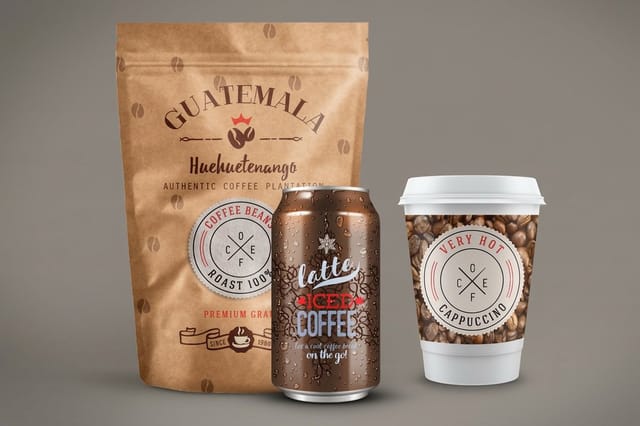
The 13 colored stocks, four fluorescent, four pastel and five brights, give a colored face for a limited edition or a challenge label.
Which labels suit which fitness business
- Supplement brands. Premium jar labels for capsule and creatine jars and premium product labels for the big protein tub, on white vinyl when the jar travels in a gym bag.
- Gyms and studios. Bottle labels for member giveaways, reprinted in a short run each intake.
- Personal trainers. Small runs on standard product labels for supplement resale or branded merch, paired with fitness business cards so the brand matches across everything a client sees.
- Equipment suppliers. Die-cut asset tags with a serial number, on white vinyl, so the mark lasts on a product that gets handled.
Label templates sized to the die
Start from a blank at your exact label size. Premium product labels come in 3" x 5", 3" x 6", 4" x 4", 4" x 6", 5" x 5", 5" x 7", or a custom size up to 11 x 17 inches. Each blank in the blank template library marks the bleed and the die line, so the Supplement Facts panel on a tub wrap stays inside the cut.
Start fast
Label templates sized to the die
Blank press files for premium, roll and standard labels, with bleed and the die line marked.
Wally picks the label stock that survives the gym
Match the dimensions to your message and your doorknob
Pick 4.25 x 11 inches for a detailed offer or 3.5 x 8.5 inches for a quick one, add 0.125 inch bleed on every side, and design at 300 DPI in CMYK so your colors hold. Print on 14pt or 16pt gloss cover, keep your headline clear of the doorknob cutout, and 4OVER4.COM ships it fast on premium stock.
Order product labels →What decides whether a gym label survives
Design tips that work at every size
- Legible beats clever. The flavor name should read from arm’s length. If a buyer has to pick the tub up to work out what it is, the label has already lost to the one next to it.
- One accent, held steady. Pick a single accent, metallic or bright, and use it the same way on every product. Consistency across a range reads as a brand; variety reads as a jumble.
- Keep the code clear of the curve. A QR code on a tight wrap distorts, so put it on the flattest part of the container.
- Leave the seam somewhere sensible. Put the overlap behind the panel, not through the logo. It is a two-minute layout decision that decides whether the finished product looks considered.
Explore more
More ways to print and promote
Each label product, plus the category with every size.
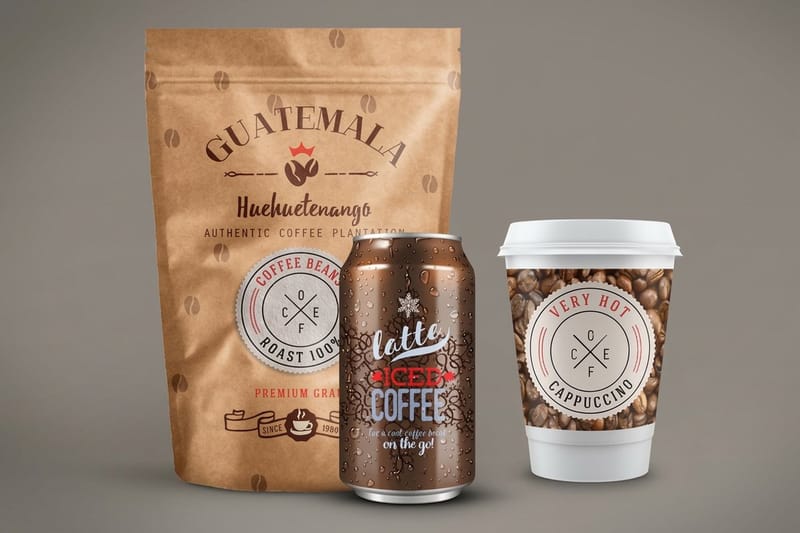 Product Premium Product Labels Durable stock and finishes for products that get handled. Product Premium Clear Labels Let the powder or the liquid show through the label. Product Custom Die Cut Labels Cut to your shape instead of a rectangle. Product Premium Bottle Labels Wrap labels built for bottles that get wet.
 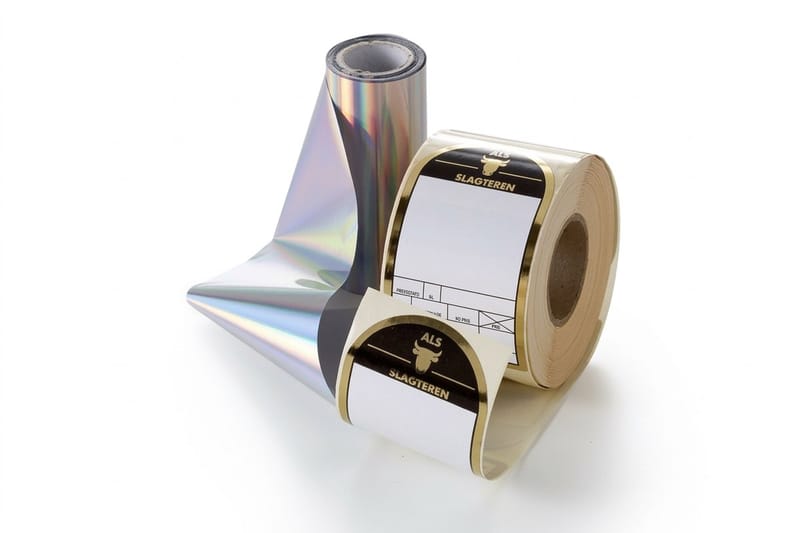 Product Custom Metallic Labels A metallic face with High Gloss UV for one bold mark.
 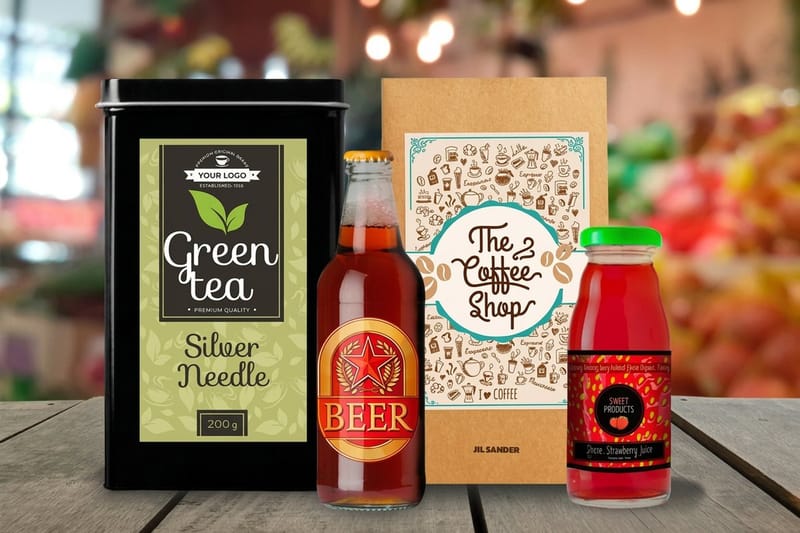 Category Product Label Printing Every stock, finish and size in one place.
 Ready to print your labels?
Pick your label size, drop in your artwork or a blank template, and 4OVER4.COM prints it on paper or synthetic film, as fast as your deadline needs.
Common questions about fitness labels
Should I pick permanent or repositionable white vinyl?
Permanent for a tub or bottle the label should never leave. Repositionable when the label has to come off and go back on, such as an asset tag you move between machines or a member bottle you relabel each intake. Premium product, bottle and jar labels offer both.
Can I round the corners on a premium label?
Yes, as an option. Premium product, bottle, jar and clear labels can add a 1/8 inch or a 3/8 inch corner radius; square corners are the default.
Are clear labels worth the extra cost?
Premium clear labels cost $86.17 for 25 at 3 x 5 inches, against $29.16 for 25 premium product labels on the default uncoated stock, and the white ink base is an extra option on top. The clear face earns that gap on a product whose own color is part of the look. On an opaque tub, nobody sees through the label.
How many labels should I order on a first run?
Order what you will use before the artwork changes. Standard and premium labels come in steps from 25 up to 25,000, and the price per label falls at each step, so move to a bigger step once the design has stopped changing.
