
Branded Tote Bag Benefits That Turn Customers Into Walking Ads


Why a Branded Tote Outlives Almost Every Other Giveaway

Most promotional items fail for the same reason. They have no job. A branded pen competes with the twelve pens already in the drawer, a stress ball has no use after the first squeeze, and a keychain only wins if someone is actively unhappy with the keychain they own. The item gets accepted politely at the booth and abandoned quietly at home.
A tote bag is different because it answers a question people ask several times a week, which is how do I carry this. That single piece of utility is what buys it a place by the door instead of a place in the bin. It gets picked up for a market run, a gym change, a laptop and a notebook, a beach afternoon. Every one of those trips is an unpaid impression in front of people who never opted into your marketing.
The economics follow from the durability. A flyer does its work in the few seconds before it is recycled. A tote does its work every time it leaves the house, for as long as the fabric and the print survive. Spread the cost of the bag across a couple of years of errands and the cost per impression drops to something no paid channel can match. That is the whole argument, and it only holds if the bag is good enough to keep using, which is what the rest of this article is about. If you are weighing it against other options first, our guide to branded merchandise ideas puts totes next to the alternatives.
The Impression Math, and Where It Quietly Breaks
The case for totes usually gets made with big impression numbers, and it is worth being honest about where those numbers come from. Nobody can tell you exactly how many people will see your bag, because it depends entirely on whether the recipient uses it. The useful version of the math is simpler and harder to fake: a tote costs a few dollars once and can be carried hundreds of times, so the cost per exposure falls every week it stays in circulation.
That also tells you where the argument breaks. A bag that never gets carried has an infinite cost per impression, because the denominator is zero. This is the failure nobody plans for and almost everyone experiences, and it is nearly always caused by one of three things: the bag is the wrong size for any real task, the handles are too short to sling over a shoulder, or the design is so loud that carrying it feels like wearing someone else's advertising.
So the decision that matters is not whether totes work. It is whether the specific bag you order is one a person would choose over the other bags they already own. Every choice below, fabric, size, handle, artwork, is really a question about that. Get those right and the impression math takes care of itself. Get them wrong and you have bought several hundred expensive dust covers.
Print picks
Four tote formats worth putting a logo on
Live starting prices from the configurator, ready for your artwork and your handout plan.
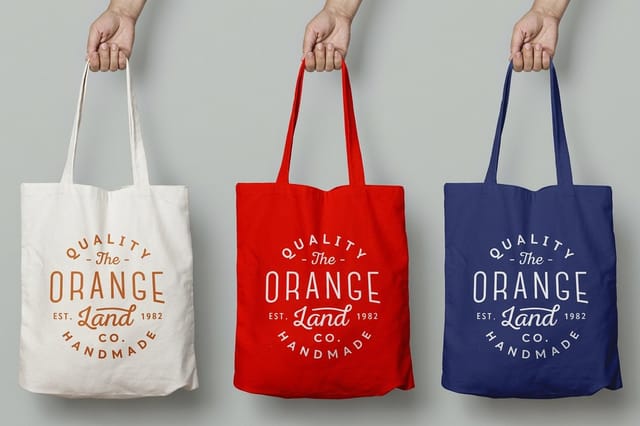 Tote Bags From $22.73 The everyday workhorse, sized for groceries, conferences, and the walk home from the shop.
 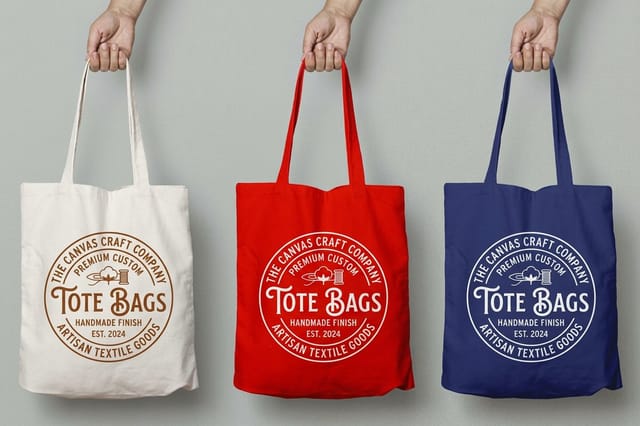 Canvas Tote Bags From $22.73 Heavier fabric that holds its shape on a shoulder and takes a large front print cleanly.
 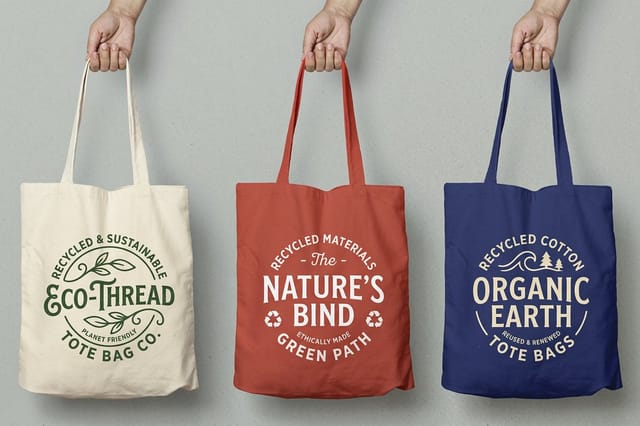 Recycled Tote Bags From $22.73 The same carry with a recycled story your sustainability page can actually stand behind.
 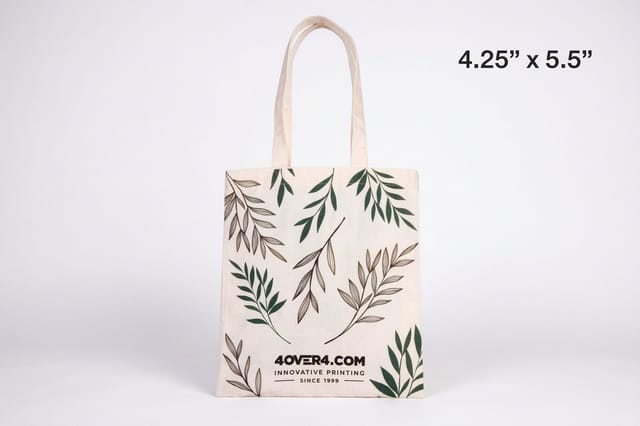 Cotton Totes From $5.00 The budget option when the goal is volume, handed out by the hundred at a fair or an open day.
 Cotton, Canvas, and Recycled, and What Each One Signals
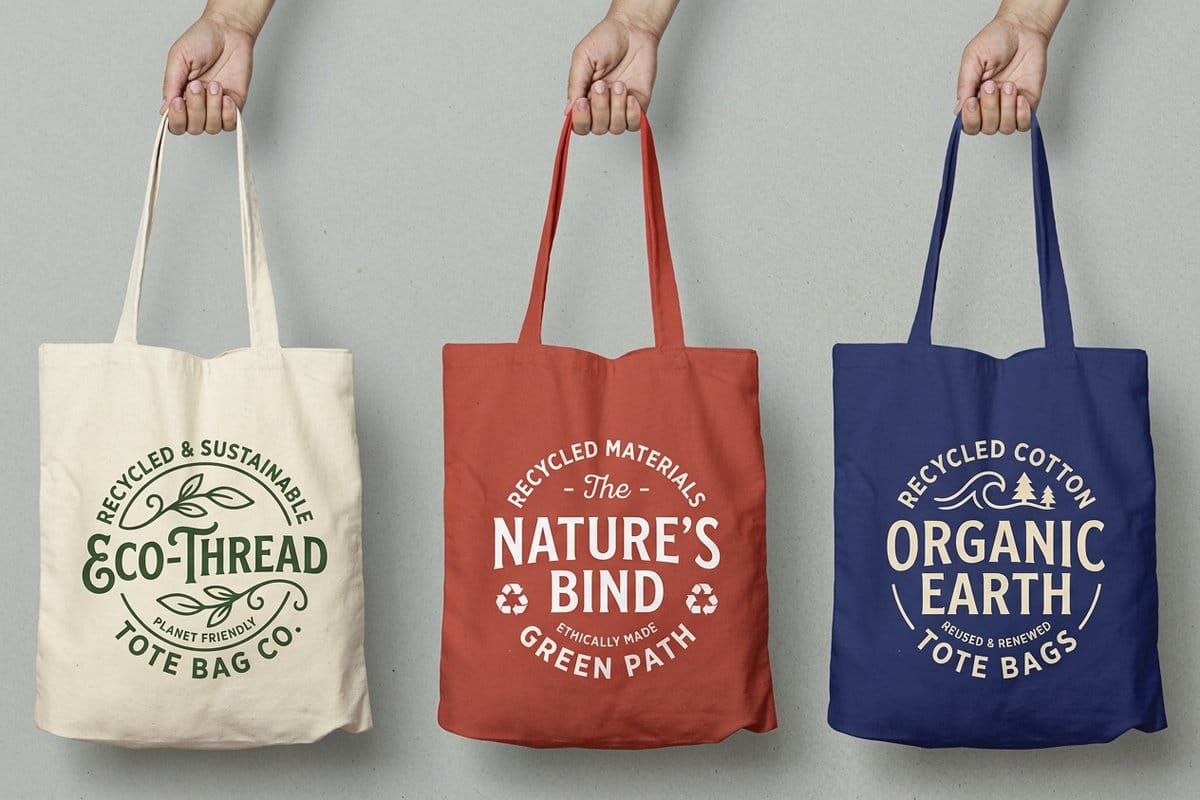
Fabric is the first real decision, and durability is only part of it. The material is read instantly and unconsciously by whoever receives the bag, and it sets expectations about the brand handing it over.
How the three compare
- Lightweight cotton. Soft, thin, and cheap enough to hand out by the hundred. It folds into a pocket, which is genuinely useful, and it reads as a friendly handout rather than a gift. It also creases, and it will not carry a heavy load without the handles digging in.
- Canvas. Heavier, stiffer, and structured enough to stand up on its own. It holds its shape on a shoulder, takes a large front print without distorting, and survives years of loading. It costs more per unit and it is the right call when the bag is meant to be a keepsake.
- Recycled fabric. Similar carry to the others, with a material story attached. It only helps if your brand actually has a sustainability position, because handing out a recycled bag while the rest of the business ignores the subject invites the obvious question.
The honest way to choose is to decide what the bag is for. Mass handouts at a fair want lightweight cotton, because volume matters more than longevity and nobody expects a keepsake from a stall. A client gift, a conference welcome bag, or a retail purchase bag wants canvas, because the recipient will judge the brand by the weight in their hand. Our side by side comparison of cotton, canvas, and recycled totes goes deeper on the tradeoffs, and the broader custom bags buying guide covers the rest of the bag family.
Size and Handles, the Details That Decide If It Gets Used
Two specifications do more to determine whether a tote gets carried than anything printed on it, and both are easy to get wrong because they feel like afterthoughts at ordering time.
The first is size. A tote needs to fit a task. The common mistake is ordering something modestly sized because it looks neat in the mockup and costs slightly less, then discovering it will not take a laptop, a folder, or a normal grocery run. A bag that fits nothing in particular is used for nothing in particular. Think about the single most likely errand your recipient runs, then make sure the bag comfortably swallows it with room to spare.
The second is handle length, and it is the detail most often ignored. Short handles mean the bag can only be hand carried, which rules it out the moment someone needs a free hand for a phone, a coffee, or a child. Handles long enough to sit on a shoulder over a winter coat change the bag from an occasional option into a default. If you only interrogate one specification before ordering, make it this one.
Gussets matter too, though less dramatically. A flat tote holds flat things. A bag with a base gusset stands up, holds boxed and bulky items, and does not tip its contents onto the pavement. For a retail handoff bag in particular, that difference is the whole product, which our guide to custom shopping bags covers in detail.
Designing a Tote People Will Actually Carry

There is a real tension in tote design and it is worth naming. You want the brand visible, because that is the point. The recipient wants a bag that does not make them feel like a billboard. Every successful branded tote resolves that tension in the recipient's favor, and gets more exposure as a result, because a bag that is comfortable to carry is a bag that gets carried.
In practice that means restraint. One mark, printed large and clean, beats a crowded lockup of logo, tagline, website, phone number, and social handles. Nobody reads a phone number off a moving bag, and nobody carries a bag covered in contact details. If the mark is strong, the mark is enough. If the mark is not strong enough to work alone, the problem is the mark, and our guide to logo design best practices is the better place to start.
What survives the trip across a street
- High contrast. Fabric is not paper. A mid tone mark on a mid tone bag disappears at ten paces. Push the contrast further than feels necessary on screen.
- Chunky shapes over fine detail. Hairlines, thin serifs, and small type break up on woven fabric. Simplify the artwork before the press does it for you.
- Vector artwork. Supply the mark as vector so it scales to a large front print without softening.
- Mind the fold. Art placed too low or too close to a seam ends up creased, folded, or wrapped around the base. Keep the mark in the flat central panel.
One more strategic option worth considering. A design that people would carry even without knowing the brand, a good pattern, a genuinely funny line, a piece of local artwork, with the logo present but modest, often outperforms a large logo. It gets carried more, so the smaller mark is seen more often than a large mark would have been. Build the artwork in the online designer or start from a print ready file in the design templates library.
Where Branded Totes Earn Their Keep
Totes are not universally the right answer, and knowing where they underperform is as useful as knowing where they shine. They do their best work in a handful of specific situations.
Conferences and trade shows are the obvious one, and also the most competitive. Everyone hands out a bag, so yours only wins if it is visibly better than the four already on the attendee's arm. That usually means paying for a heavier fabric while everyone else buys the thinnest option, which is a defensible spend precisely because it is the one thing attendees compare directly. Our guide to swag attendees actually want covers what goes inside it.
Retail is the quieter, better use. A branded bag handed over at the counter turns a purchase into a walking advertisement on the way home, and unlike a conference bag it reaches an audience who already chose to buy from you. Workshops, memberships, and onboarding kits work similarly, because the recipient has an ongoing relationship with the brand and no reason to feel used.
Where totes underperform is cold outreach to people with no connection to you. A bag handed to a stranger on the street is usually accepted and rarely carried, because carrying it means endorsing a brand they know nothing about. Spend that budget on print that does not ask for endorsement, such as flyers or a well placed poster.
Pair it with print
A tote works harder when something goes inside it
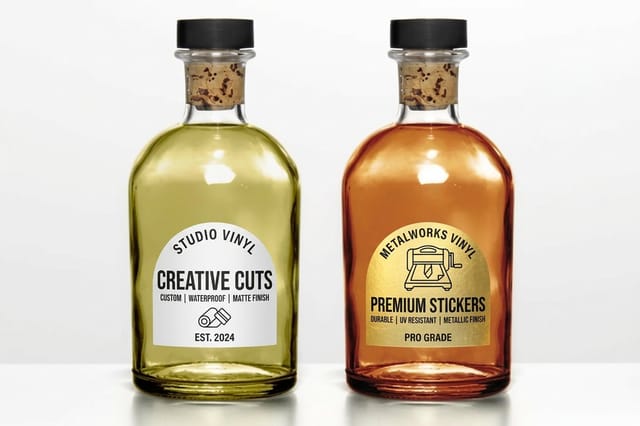
Stickers, cards, and a one page insert turn a handout bag into a small campaign the recipient unpacks at home.
Preparing Artwork for Fabric Instead of Paper
Fabric printing has different tolerances from paper, and files built for a business card do not automatically translate. The surface is woven rather than smooth, so ink sits into a texture instead of on top of a coating, and fine detail loses definition in a way it never would on card stock.
Build the artwork as vector wherever possible so the mark can be scaled to a large front panel without softening. If a photographic element is unavoidable, supply it at high resolution and expect it to read softer than it does on screen, since our guide to DPI and PPI explains why the effective resolution on a large fabric print is lower than the number in the file suggests.
Color is the other adjustment. Screen color is emitted light and fabric color is reflected light landing on a textured, often unbleached surface, so vivid mid tones flatten and pale tints can vanish into the fabric entirely. Convert deliberately rather than accepting an automatic conversion, and if an exact brand color is critical, say so at order time rather than hoping. Our walkthrough of converting RGB to CMYK covers the mechanics.
What a Tote Run Costs and How to Order Without Wasting It
Tote bags at 4OVER4.COM start at $22.73, with lightweight cotton totes from $5.00 when the goal is volume rather than longevity. As with every print run, the per unit cost falls as the quantity climbs, which is why the second order almost always looks better on a spreadsheet than the first.
That price curve creates a trap. The obvious move is to order the biggest run you can afford up front to get the lowest unit cost, and it is the wrong move for a first order, because you do not yet know which size, fabric, or color your audience actually picks up. A large cheap run of the wrong bag is more expensive than a small correct one.
Order in two waves instead. Start with a modest run, hand it out, and watch what happens. Do people carry it or fold it away? Does anyone ask for a different size? Does the color survive contact with real clothing? Then place the volume order with the answers in hand. If budget is the binding constraint, our guide to sourcing wholesale promotional products covers how to keep the margin intact at volume.
Quantity and price
Tote bag pricing and specs, straight from the configurator
Real numbers on a standard tote. The per bag cost falls as the run grows, which is what makes a second batch easy to justify.
| Quantity | Price Per Unit | Total |
|---|---|---|
| 1 | $22.73 | $22.73 |
| 5 | $16.67 | $83.36 |
| 10 | $10.99 | $109.88 |
| 15 | $10.10 | $151.56 |
| 20 | $9.79 | $195.78 |
| 25 | $9.25 | $231.14 |
Putting the Bag to Work After It Ships
A tote arriving in boxes is not a campaign. What turns it into one is deciding, before the boxes land, who hands them out, to whom, and in exchange for what. Bags given away indiscriminately get taken by people collecting free things. Bags given with a small amount of friction attached, a purchase, a signup, a workshop, a membership, land with people who have a reason to use them.
Fill the bag as well. An empty tote is a bag. A tote with a sticker sheet, a card, and a single well written insert is a small unboxing that happens at home, hours after the handoff, when the recipient is paying more attention than they were at the booth. Vinyl stickers and a short printed card cost very little next to the bag itself and change the moment it is opened.
Then keep the design consistent with everything else you print. A tote that shares its palette and mark with your cards, brochures, and signage compounds recognition instead of introducing a new visual to remember. Start from a print ready file in the blank templates library, and if the run is tied to a dated event, Same Day Printing covers the orders that get approved later than planned.
Wally packs the case for a branded tote
One bag, years of impressions, no ad spend
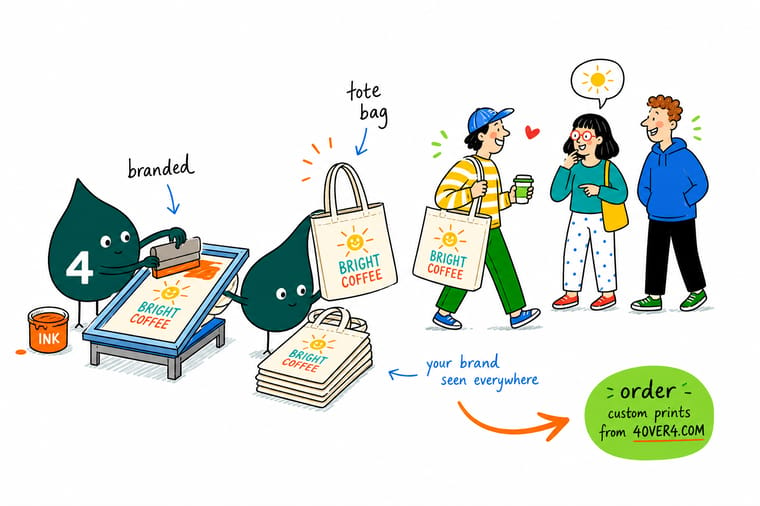
Most giveaways get thrown away because they have no job. A tote has one. It carries things, so it leaves the house, and every trip puts your logo in front of strangers who never opted into anything. Pick the fabric for the message you want, size it for a real errand, keep the artwork simple enough to read across a street, and the bag keeps working long after the event that handed it out is forgotten.
Design your branded totes →What actually makes a branded tote pay off
Explore more
More ways to put your brand in someone's hands
Tote bags start at $22.73 on 6oz cotton canvas in 7 business days, and lightweight cotton totes at $5.00.
 Guide Cotton vs Canvas vs Recycled Totes The fabric comparison that decides cost, feel, and message.
 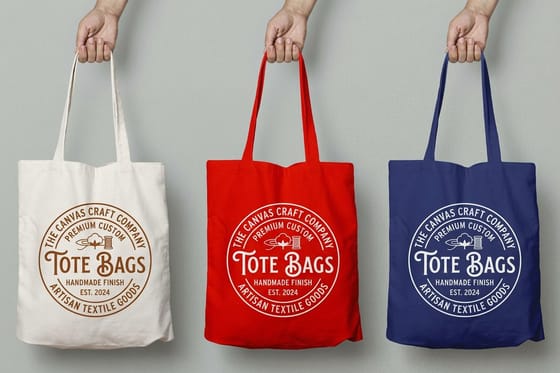 Guide Custom Bags Buying Guide Sizes, materials, and print methods for every bag type.
  Guide Branded Merchandise Ideas Merch people actually keep instead of quietly binning.
  Guide How to Make Merch From first idea to a finished run, step by step.
  Guide Wholesale Promotional Products Source volume merch without wrecking the margin. Guide Custom Shopping Bags The retail handoff bag, sized and branded properly.
  Article Swag Bag Ideas That Work What conference attendees keep and what they leave behind.
  Article Event Promotional Materials The print that makes a booth worth stopping at.
  Article Slang on Merch When a phrase on a bag lands and when it ages badly.
  Guides Apparel and Merch Guides Every how-to for branded wearables and carryables.
  Benefit Green Printing The greener production route for a recycled run.
  Product Vinyl Stickers The cheap extra that turns a bag into a small kit.
 Ready to put your logo on something people carry?
Pick the fabric, size it for a real errand, upload one clean high contrast mark, and 4OVER4.COM prints a run that keeps advertising long after the event ends.
Branded tote bag questions
Are branded tote bags actually effective for marketing?
Yes, with one condition attached. A tote is effective because it has a genuine use, so it leaves the house repeatedly and puts your mark in front of people who never opted into your marketing. Spread the unit cost across a couple of years of errands and the cost per exposure is very hard to beat. The condition is that the bag has to be one the recipient would choose over the bags they already own. A tote that is the wrong size, has handles too short for a shoulder, or is designed so loudly that carrying it feels like advertising will sit in a cupboard, at which point its cost per impression is infinite.
What is the difference between cotton, canvas, and recycled tote bags?
Lightweight cotton is thin, soft, and cheap enough for volume handouts. It folds into a pocket and reads as a friendly giveaway rather than a gift, but it creases and will not carry heavy loads comfortably. Canvas is heavier and structured, holds its shape on a shoulder, takes a large front print cleanly, and survives years of use, which makes it the right choice when the bag is meant to be kept. Recycled fabric carries similarly to the others with a material story attached, and it works best when your brand already has a sustainability position rather than as a standalone gesture.
What size tote bag should I order for my business?
Size it for the single most likely errand your recipient runs, then add room to spare. The common mistake is ordering a modest size because it looks neat in a mockup and costs slightly less, only to find it will not take a laptop, a folder, or a normal grocery run. Handle length matters just as much as the panel size. Handles long enough to sit on a shoulder over a coat turn the bag into a default choice, while short hand carry handles rule it out whenever someone needs a free hand. If the bag has to hold boxed or bulky items, choose one with a base gusset so it stands up rather than tipping its contents out.
How should I design artwork for a tote bag?
Design for distance and for fabric. Use one mark printed large with high contrast, because a mid tone logo on a mid tone bag disappears at ten paces. Favor chunky shapes over hairlines, thin serifs, and small type, all of which break up on a woven surface. Supply the artwork as vector so it scales to a large front panel without softening, and keep the mark in the flat central area away from seams and the fold at the base. Resist the urge to add a tagline, website, phone number, and social handles, since nobody reads contact details off a moving bag and a crowded design is the main reason totes go uncarried.
How much do custom printed tote bags cost?
Tote bags at 4OVER4.COM start at $22.73, and lightweight cotton totes start at $5.00 for high volume handouts. The final price depends on fabric weight, size, print coverage, and run length, and the per bag cost drops as the quantity climbs. Resist ordering the largest possible run on the first order just to reach the lowest unit price. Until you have watched real people use the bag, you do not know which size, fabric, or color they will pick up, and a large run of the wrong bag costs more than a small run of the right one. Order a modest first batch, learn from it, then scale.
