Business Card Size Dimensions Guide for 2026

Business Card Size Dimensions Guide: Getting Every Measurement Right
The standard business card size in the United States is 3.5 x 2 inches (89 x 51 mm). This is the dimension that fits wallets, cardholders, and scanning apps without any issues. 4OVER4 has printed 10 billion+ cards across 60+ paper types, so we know exactly how dimensions affect the final product you hand to someone.
Your business card is a tiny billboard. It's the one marketing tool that physically moves from your hand to someone else's. Get the size wrong and it won't fit in a wallet. Get the bleed wrong and your logo gets chopped. Get the safe zone wrong and your phone number disappears into the trim edge. This business card size dimensions guide covers every measurement you need, from standard US cards to international formats, square designs, folded options, and the file setup that keeps your printer happy.
Whether you're ordering standard business cards for a new startup or experimenting with die-cut shapes for a creative agency, the numbers in this guide apply. Let's get into it.
Why Business Card Dimensions Actually Matter
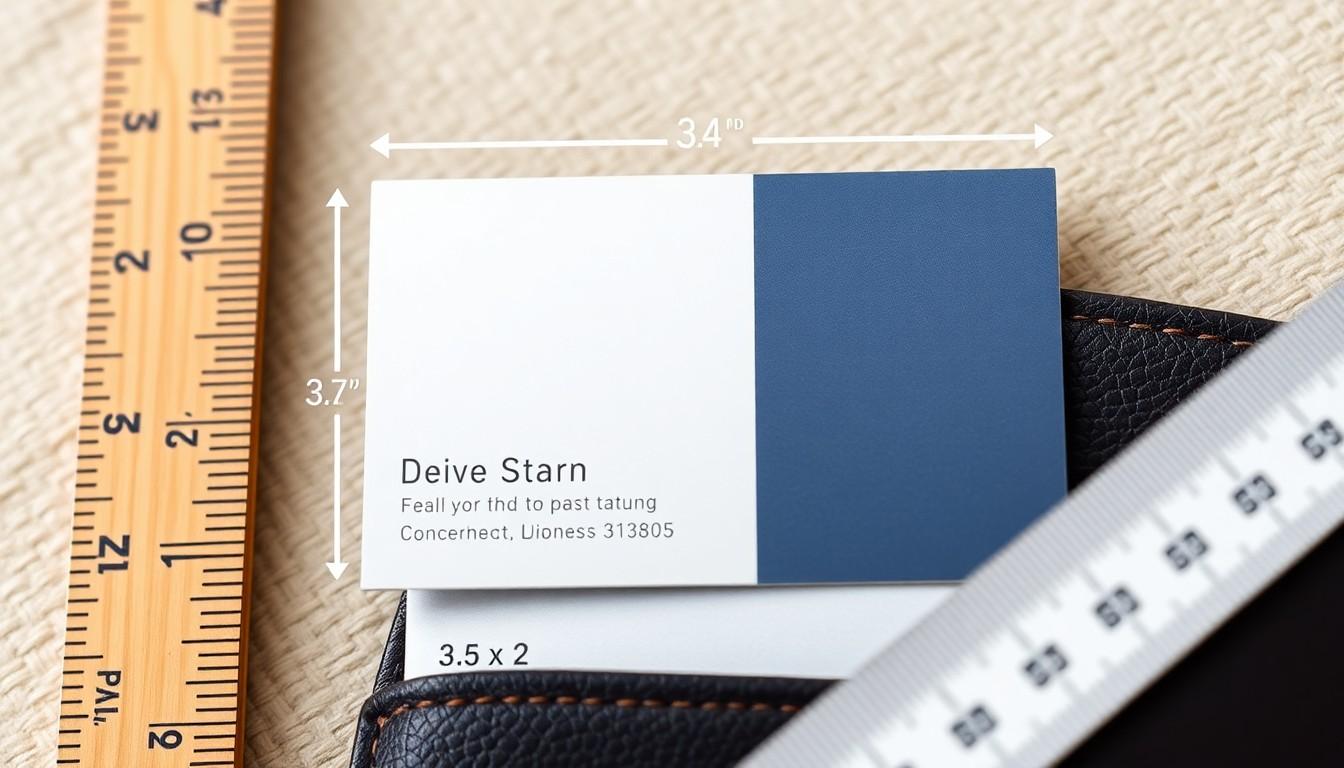
Business card dimensions aren't just a technicality. They're a design constraint that shapes how people perceive and use your card. The wrong size creates friction. The right size creates confidence.
Practicality and Fit
Standard business card dimensions - 3.5 x 2 inches in the US - exist for a reason. They fit credit card slots in wallets. They stack neatly in cardholders and display cases. They slide into pockets without bending or folding over. When you hand someone a card at a networking event, you want them to tuck it away easily. Not wrestle with it.
Explore 4OVER4's full range of business card printing options to find formats that match these practical standards perfectly.
Professional Appearance
Cards sized correctly look uniform and intentional. An oversized card sticks out of a cardholder awkwardly. An undersized card looks like it was printed on the wrong stock. Either way, it signals carelessness. Standard dimensions tell people you pay attention to details - and that matters when you're trying to earn trust in the first 10 seconds of a handshake.
"I switched from an oversized card to 4OVER4's standard 3.5 x 2 on 32pt stock. People actually keep them now instead of leaving them on the table."
- Marcus L., Real Estate Agent
Clarity in Messaging
A business card needs to communicate your name, title, company, phone number, email, and possibly a website or social handle. That's a lot of information for a small space. The standard size gives you enough room to present all of it without crowding. Go smaller and text gets cramped. Go bigger and you end up with awkward white space that makes the card feel empty.
For layout ideas that maximize your card's real estate, check out Classy Business Card Design Inspiration for designs that balance information with visual impact.
Scanning and Digital Compatibility
Most business card scanning apps - CamCard, HubSpot, Microsoft Lens - are calibrated for standard dimensions. They use the card's edges to detect boundaries and extract text. Non-standard sizes can confuse these tools, resulting in missed phone numbers or garbled email addresses. If your contacts rely on scanning apps (and many do in 2026), sticking to standard dimensions keeps your information accessible.
Standard US Business Card Dimensions - Inches and Millimeters
The standard business card size in the United States is 3.5 x 2 inches, which converts to 89 x 51 mm. This is the measurement for the finished, trimmed card - the piece you actually hand to someone.
But here's where people get tripped up. Your design file shouldn't be exactly 3.5 x 2 inches. You need to account for two additional zones that protect your design during the cutting process.
Bleed Area
The bleed extends your design 0.125 inches (3.175 mm) beyond the trim line on all four sides. This means your file dimensions should be 3.75 x 2.25 inches (95.25 x 57.15 mm). The bleed gets cut off during trimming, but it prevents white edges from appearing if the cut shifts slightly. Any background color, pattern, or image that touches the edge of your card needs to extend into the bleed.
Safe Zone
The safe zone sits 0.125 inches (3.175 mm) inside the trim line. Keep all text, logos, and important design elements within this boundary. That means your safe area is 3.25 x 1.75 inches (82.55 x 44.45 mm). Anything outside this zone risks getting partially trimmed. Your phone number sitting right on the edge? That's a recipe for a useless card.
Understanding these three zones - trim, bleed, and safe - is the foundation of every business card size dimensions guide. Miss one and your print comes back wrong.
Here's a breakdown of the core measurements you need for standard US business cards.
International Business Card Sizes by Country
Not every country uses the same card dimensions. If you do business internationally - or if you're printing cards for overseas clients - you need to know the local standard. Handing someone in Japan a US-sized card that doesn't fit their cardholder sends the wrong message.
European Standard
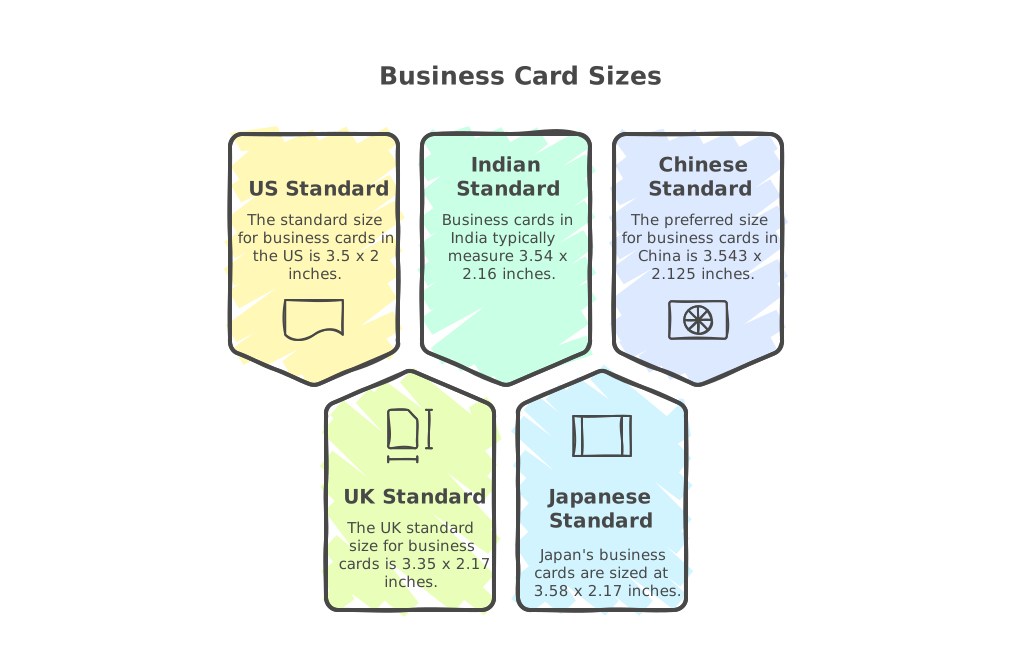
The most common European business card size is 3.346 x 2.165 inches (85 x 55 mm). It's slightly narrower and taller than the US standard. This is the ISO 7810 ID-1 format, the same dimensions used for credit cards across Europe. Cards in this size fit European wallets and cardholders perfectly.
Japanese Standard
Japan uses the Meishi format at 3.582 x 2.165 inches (91 x 55 mm). It's slightly wider than both the US and European standards. In Japanese business culture, card exchange is a formal ritual. Having the correct dimensions shows respect for that tradition.
Other Regional Sizes
China commonly uses 3.543 x 2.126 inches (90 x 54 mm). Australia follows the European ISO standard. South America varies by country but often aligns with either US or European dimensions. When in doubt, ask your contact which format they prefer.
Review business card design standards for a deeper comparison of sizing norms across regions.
Non-Standard and Creative Business Card Sizes
Standard dimensions work for most people. But if your brand is built on standing out, non-standard sizes can make a strong impression. Just know the trade-offs before you commit.
Square Business Cards
2.5 x 2.5 inches (63.5 x 63.5 mm) is the most popular square format. Square cards are eye-catching and work well for photographers, designers, and creative professionals. The downside? They don't fit standard cardholders or wallet slots. Your recipient might not have a convenient place to store it.
Mini Business Cards
Mini cards measure 3.5 x 1 inch (89 x 25 mm) - same width as a standard card but half the height. They're slim, modern, and perfect for brands with minimal information to share. Think DJs, freelancers, or anyone whose card just needs a name, handle, and QR code.
Folded Business Cards
Folded cards start at 3.5 x 4 inches (89 x 102 mm) flat, then fold down to the standard 3.5 x 2 inches. You get four panels instead of two, which means room for a mini portfolio, appointment schedule, or detailed service list. Artist Business Cards often use this format to showcase work samples right on the card.
Oversized Business Cards
Some brands go bigger - 3.5 x 2.5 inches or even 4 x 3 inches. These cards demand attention but sacrifice portability. They work best as leave-behinds at trade shows or as part of a presentation kit rather than everyday networking cards.
Die-Cut and Custom Shapes
Die-cut cards can be any shape - rounded corners, circles, leaf shapes, guitar picks. The base dimensions vary, but most stay within the general footprint of a standard card for practical reasons. 3D Lenticular Business Cards take this concept even further with motion graphics built into the card surface.
How to Set Up Your Business Card File Correctly
Knowing the right dimensions is only half the battle. Your design file needs to be set up properly or you'll get a proof back that looks nothing like what you expected. Here's exactly how to prepare your file for print.
Resolution
Set your file to 300 DPI (dots per inch) minimum. Anything lower and your text will look fuzzy, your logo will appear pixelated, and colors will lack sharpness. Screen resolution (72 DPI) looks fine on a monitor but prints terribly. Always design at print resolution from the start - don't try to upscale later.
Color Mode
Use CMYK color mode, not RGB. Your screen displays RGB (red, green, blue light). Printers use CMYK (cyan, magenta, yellow, black ink). Colors shift between the two modes. That bright neon green on your screen? It'll print as a muted olive if you don't convert. Design in CMYK from the beginning to avoid surprises.
File Format
Submit your file as a PDF with fonts embedded or outlined. This prevents font substitution issues. If you use Adobe Illustrator or InDesign, export as PDF/X-1a for the most reliable results. PNG and JPEG files work for simple designs but don't support vector elements or spot colors.
Margins and Guides
Set up three guides in your design software: the trim line at 3.5 x 2 inches, the bleed line at 3.75 x 2.25 inches, and the safe zone at 3.25 x 1.75 inches. Most professional design tools let you define these as document margins. If you're using Canva or a similar tool, look for their built-in business card templates that already have these zones marked.
For creative direction beyond dimensions, browse Diy Greeting Card Design Ideas to see how layout principles translate across different print formats.
Paper Stock and Thickness - How They Interact with Card Size
Dimensions define the shape. Paper stock defines the feel. Together, they create the physical experience of holding your card. And that experience matters more than most people think.
Standard Paper Stocks
14pt cardstock is the most common choice for business cards. It's about the thickness of a standard playing card - sturdy enough to feel professional, affordable enough for large print runs. This is where most people start.
16pt cardstock adds noticeable heft. Pick it up and you can feel the difference from 14pt. It's a good middle ground between budget and premium.
32pt ultra-thick cardstock is roughly three times the thickness of a standard card. It's rigid, heavy, and impossible to ignore. When someone takes a 32pt card from you, they pause. They notice. That pause is worth the price difference if you're in a competitive field like real estate, luxury retail, or consulting.
Specialty Materials
Beyond traditional cardstock, materials like 30Mil Clear Plastic Cards offer a completely different tactile experience. Plastic cards are waterproof, nearly indestructible, and make an instant impression. They use the same standard dimensions but feel like a different product entirely.
Black Business Cards on dark-colored stock create dramatic contrast with white or metallic ink. The dimensions stay the same, but the visual impact multiplies.
"We ordered 500 cards on 32pt stock with spot UV. At 3.5 x 2 inches, they fit every cardholder at the conference. But the thickness made people stop and comment every single time."
- Diana K., Brand Strategist
Finish Options
Matte, gloss, soft-touch, spot UV, foil stamping - your finish doesn't change the card's dimensions, but it changes how those dimensions feel in someone's hand. A soft-touch matte finish on a 32pt card feels velvety and big. A high-gloss finish on 14pt stock looks sharp and clean. Match your finish to your brand personality, not just your budget.
Common Sizing Mistakes That Ruin Business Cards
Even experienced designers make these errors. Here's what to watch for so your cards come out right the first time.
No Bleed Area
This is the number one mistake. You design a card at exactly 3.5 x 2 inches with a colored background that goes edge to edge. The printer trims the cards and thin white lines appear along one or more edges. Always extend your background to 3.75 x 2.25 inches. Every time. No exceptions.
Text Too Close to the Edge
Your email address sits 0.05 inches from the trim line. The cut shifts slightly (it always does, even with precision equipment) and now half your email is gone. Keep all text inside the safe zone - at least 0.125 inches from every edge.
Wrong Resolution
You designed at 72 DPI because that's what your screen shows. The card prints blurry. Your logo looks like it was photographed through a dirty window. Start at 300 DPI. If your source images are low-res, find higher-quality versions before you begin.
RGB Instead of CMYK
Your bright purple turns muddy brown. Your electric blue becomes dull teal. RGB-to-CMYK color shifts are real and sometimes dramatic. Convert early in the design process and adjust colors while you can still see the difference.
Ignoring International Standards
You print US-sized cards for a European trade show. Your cards stick out of every cardholder and look oversized next to the local standard. Research your audience's expectations before you print. For creative uses of promotional print materials, Logo Sticker Design Ideas shows how sizing choices affect brand perception across formats.
Design Templates That Nail the Dimensions
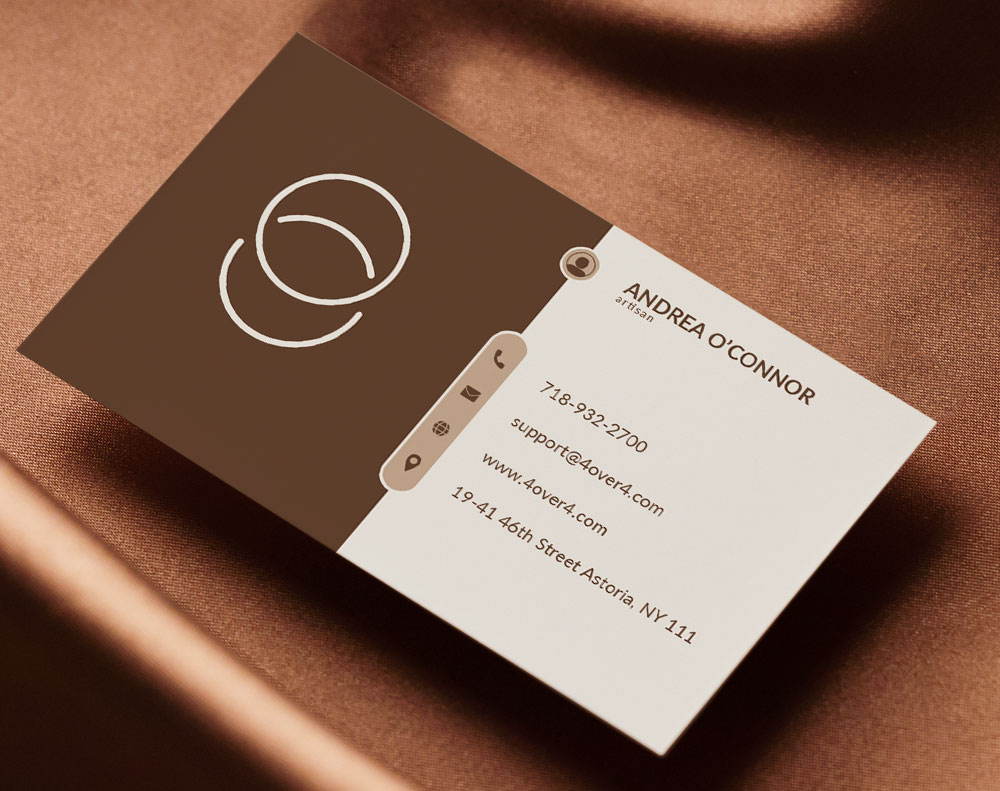
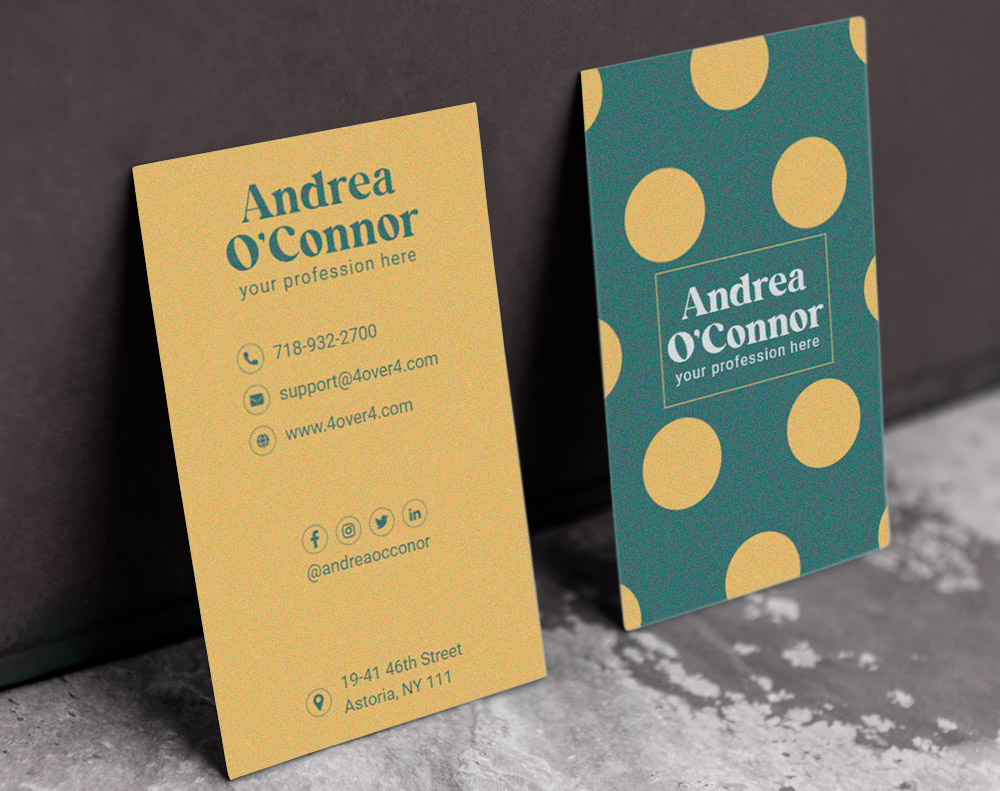
Starting from a blank canvas is hard. Starting from a professionally designed template with the correct dimensions, bleed, and safe zones already built in? That's smart. 4OVER4 offers free design templates sized to exact specifications so you can focus on your brand instead of measuring guides.
Here are templates built specifically for standard business card size and dimensions.
Need a completely blank starting point with just the dimension guides? These blank templates give you the trim, bleed, and safe zone markers with nothing else.
Blank Templates
What Real Customers Say About Their Business Cards
With 10,000+ reviews and a 4.8/5 star rating, 4OVER4 customers consistently highlight print quality, accurate sizing, and fast delivery. Here's what people are saying about their business card orders.
"I'm a photographer and I was nervous about getting the dimensions right for my first print order. The 4OVER4 templates had everything marked - bleed, trim, safe zone. Cards came back perfect. Crisp edges, no white lines, text exactly where I wanted it."
- Rachel T., Photographer - ★★★★★
"Ordered business card size dimensions guide from 4OVER4 and the quality blew me away. Sharp colors, premium feel, arrived 2 days early."
"Been using 4OVER4 for business card size dimensions guide for a year. Consistent quality every time. The online designer made it easy."
"Switched to 4OVER4 and saved 40% on business card size dimensions guide. Better quality than my old printer. 60+ paper options."
"4OVER4's business card size dimensions guide helped us look more professional. Clients notice the difference."
What to Remember About Business Card Sizing
- US standard is 3.5 x 2 inches (89 x 51 mm) - this fits wallets, cardholders, and scanning apps without issues.
- Always add bleed - your file should be 3.75 x 2.25 inches to prevent white edges after trimming.
- Keep text in the safe zone - at least 0.125 inches inside the trim line on all sides to protect important content.
- International sizes differ - European cards are 85 x 55 mm, Japanese cards are 91 x 55 mm. Match the local standard when printing for overseas contacts.
- Design at 300 DPI in CMYK - lower resolution prints blurry, and RGB colors shift unpredictably during printing.
- Paper stock changes perception - 32pt ultra-thick cardstock or specialty materials like 30Mil Frosted Plastic Cards use the same dimensions but create a completely different impression. 4OVER4 offers 60+ paper types to match your brand's personality.
This business card size dimensions guide covers every measurement you need. Whether you're printing 100 cards or 10,000, getting the dimensions right is the difference between a card people keep and one they toss.
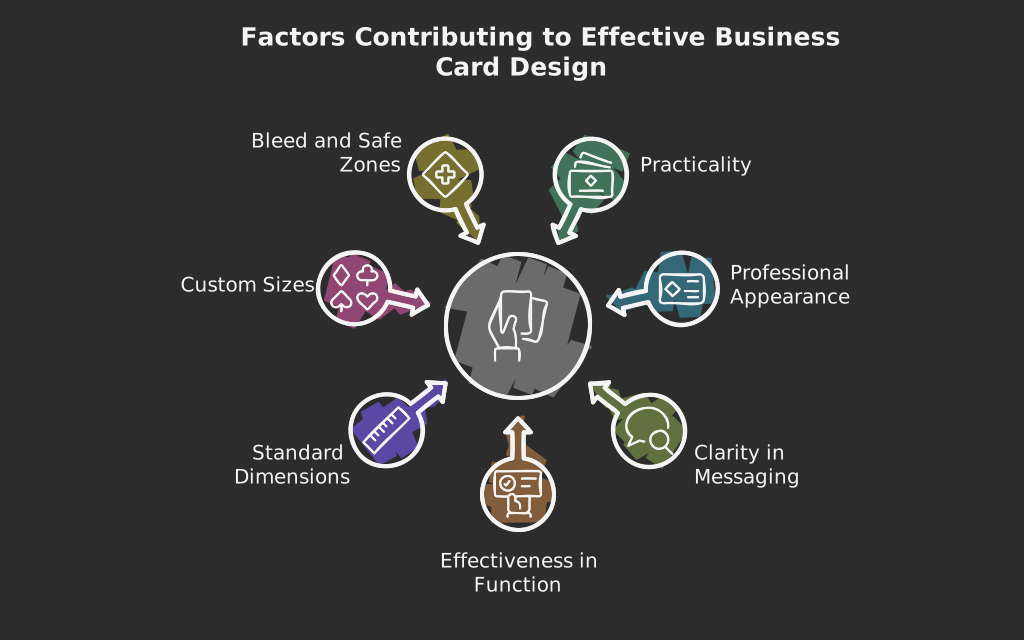
- Practicality
- Professional Appearance
- Clarity in Messaging
- Effectiveness in Function
- Slim Cards: Measuring 3.5 x 1.75 inches, they deliver a sleek, minimalist look suitable for modern business aesthetics.
- Square Cards: Available in sizes like 2 x 2, 2.5 x 2.5, or 3 x 3 inches, these provide an ideal canvas for showcasing logos or central design elements.
- Mini Cards: At 3 x 1 inches, they are compact, portable, and distinctive for small-scale branding endeavors.
- Circle: Typically 2.5 inches in diameter.
- Leaf or Organic Designs: Designed to complement eco-friendly or artisanal brands.
- Custom Die-Cuts: From house-shaped to pineapple-shaped, these solidify branding uniqueness.
- 14pt (0.014 inches)
- 16pt (0.016 inches)
- 18pt (0.018 inches)
- 32pt (0.032 inches)
- Purpose: Thinner cards (14pt, 16pt) suit casual networking, while thicker stocks (18pt, 32pt) are better for premium branding.
- Budget: Thicker cards, due to their material and production costs, are typically pricier. Balancing brand image with budget helps optimize your investment. Check out business card printing for cost considerations.
- Brand Image: The thickness should align with your brand's values. For instance, a luxury product brand might select ultra-thick cards to maintain a consistent premium image.
Free Business Card Size And Dimensions Templates
Your Business Card Sizing Questions, Answered
What are the best practices for business card size dimensions?
Start with the standard 3.5 x 2 inch trim size. Add 0.125 inches of bleed on all sides, making your file 3.75 x 2.25 inches. Keep all text and logos inside the safe zone, at least 0.125 inches from the trim edge. Design at 300 DPI in CMYK color mode. These steps prevent trimming errors and color shifts. Browse Printing Articles for more detailed file preparation tips.
How do I choose the right business card size dimensions?
Consider your audience and industry. The US standard (3.5 x 2 inches) works for most professionals. If you do business in Europe, use 85 x 55 mm. Creative fields can explore square (2.5 x 2.5 inches) or folded formats. If portability matters most, stick to standard. If standing out matters more, try a non-standard shape like 30Mil White Plastic Cards in standard dimensions.
What makes business card size dimensions effective for marketing?
Correct dimensions ensure your card fits wallets and cardholders, which means people keep it. A business card size dimensions guide helps you maximize the 3.5 x 2 inch space for clear messaging. Cards that fit scanning apps also transfer contact info digitally. The right size paired with thick stock (like 32pt) creates a tactile experience that reinforces your brand long after the handshake.
How much should I budget for business card size dimensions?
Standard-sized cards on 14pt stock start at just a few cents per card when ordered in bulk from 4OVER4. Moving to 32pt ultra-thick or specialty materials like plastic increases cost but dramatically improves the impression. Non-standard sizes (square, folded, die-cut) may carry slight upcharges due to custom cutting. Budget based on quantity and stock - dimensions alone don't a lot affect price.