
Conference Printing Ideas That Make an Event Stand Out


Tobias is our voice for cutting, binding and large format, built from the knowledge of our production team, with over 20 years in printing.
Conference Printing, the Short Answer
A conference needs four groups of printed pieces, and 4OVER4.COM prints all of them on one order with one delivery date. Each line below links to its full section.
- Badges. Event badges start at $49.88 for 25, in six sizes from 2 x 3 to 4 x 6 in on 30pt gloss laminated or 18pt PVC vinyl, with a lanyard slot or a drilled hole, and print in 5 business days.
- Signs and the entrance. Room signs, arrow panels and registration headers, with a 10 x 10 ft event tent in 6oz tent fabric from $987.45 over the check-in line.
- Handouts and agendas. Event flyers start at $57.11 for 50, from 5.5 x 8.5 to 11 x 25.5 in on 100# gloss or silk text, folded or flat, and print in 3 business days.
- Ordering windows. Promotion twelve to eight weeks out, large format eight to four weeks out, badges two weeks to seven days out, and paper in the final week.
What Conference Printing Actually Covers
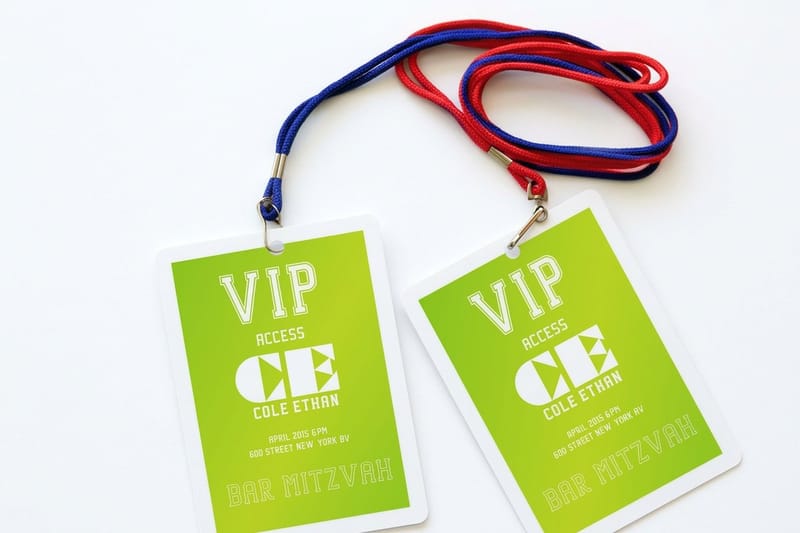
Conference printing is the full set of physical pieces an event needs, from a 2 x 3 in name badge to a 10 x 10 ft entrance tent, and from the moment registration opens to the moment the last attendee walks out with a folder under one arm. Badges, directional signage, session handouts, sponsor banners, and the tent over the check-in table all draw on the same budget, and treating them as one job instead of eight rush orders is what separates a smooth event from a stressful one.
Most planners learn the hard way that the pieces are interdependent. Badge size dictates the holder, the holder dictates the lanyard, and the sponsor logo sheet you approve for badges is the same artwork that has to sit on the flyer, the program cover, and the banner behind the stage without shifting a shade.
Order everything from one printer and the color matches, the stock behaves the same way under the same house lights, and a single delivery date covers the whole set. 4OVER4.COM prints Event Badges from $49.88, Event Flyers from $57.11, and Event Tents from $987.45, which means the credential, the handout, and the structure at the front door can all ship on one job. That job is also the easiest thing to repeat next year, because the files are already sized, proofed, and archived at the right dimensions.
Start from the attendee walk
Walk the venue in your head the way a first-time attendee will. Parking, front door, registration desk, badge, welcome folder, main hall, breakouts, lunch, exhibitor row, exit. Every stop on that walk is a print decision waiting to be made.
Count every touchpoint twice
Count the pieces once for attendees and again for staff, speakers, press, and volunteers. Those secondary groups need their own badge tier, their own signage, and often their own handout, and they are the categories most often forgotten.
Lock artwork before you lock quantities
Sponsor logos arrive late, keynote headshots get swapped, and room names change. Freeze the artwork first, then set quantities. Reversing that order is how planners end up paying twice for the same signage.
Build in a reprint buffer
Print roughly ten percent above your registration count on badges and handouts. Walk-ups, misspellings, and coffee spills are certainties, not risks, and a small buffer costs far less than a same-week reorder.
Shop the event
Conference printing essentials
Badges, handouts, and branded structures produced on one job with one delivery date.
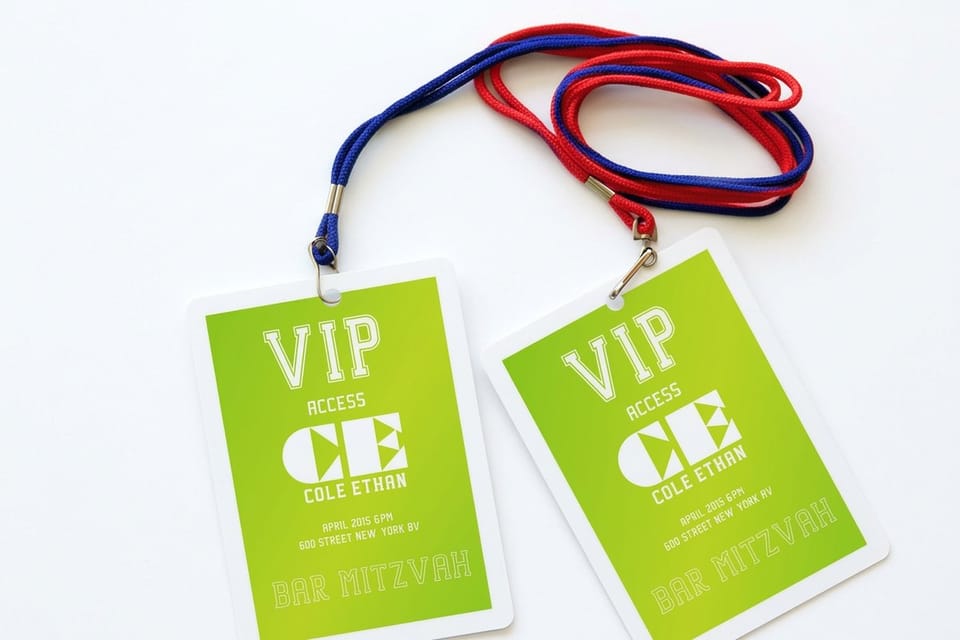
The Complete Conference Print Checklist
A conference print list is easier to manage when it is grouped by function rather than by vendor. Identification, wayfinding, content, and branding are the four buckets, and almost every piece you will ever order drops cleanly into one of them. Build the list once and it becomes your reusable template for every future event.
If your event sells seats, the ticket belongs on the list too, and it is worth reading how the layout affects scanning and check-in speed in this breakdown of event ticket layout. For the printed schedule attendees carry between rooms, these event program examples show what a well-structured agenda looks like on paper.
- Identification. Attendee badges, staff and speaker badges, press credentials, exhibitor passes, table tents, and reserved seat cards.
- Wayfinding. Entrance signage, registration headers, room and track signs, arrow panels, floor graphics, and restroom and exit direction.
- Content. Agendas, session handouts, workbooks, speaker one-sheets, sponsor inserts, and the folder that holds them together.
- Branding. Step and repeat backdrops, stage banners, retractable stands, sponsor logo walls, and the branded tent at the entrance.
- Follow-up. Thank you cards, feedback cards with a QR code, next-year save-the-dates, and business cards for every team member on the floor.
Print the checklist and assign an owner and a due date to every line. The pieces that fail at conferences are rarely the expensive ones. They are the small items nobody was formally responsible for, like the sign that tells people which of two identical doors leads to the breakout track.
Print picks
Three conference formats that carry the event
Live starting prices, ready to customize with your artwork and quantities.
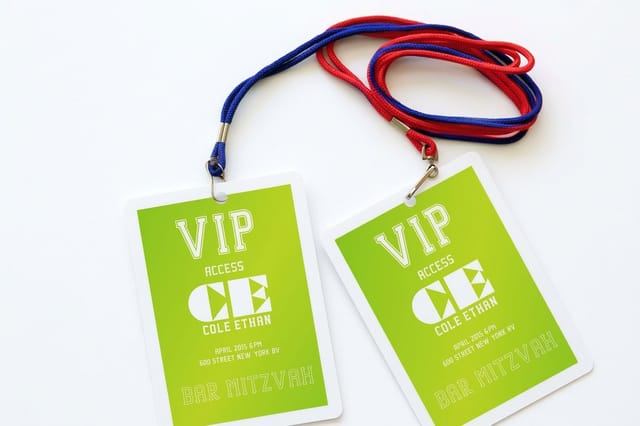 Event Badges 25 for $49.88 The credential every attendee wears all day and reads a hundred times.
  Event Flyers 50 for $57.11 Agendas, session handouts, and sponsor one-sheets in a format people keep.
 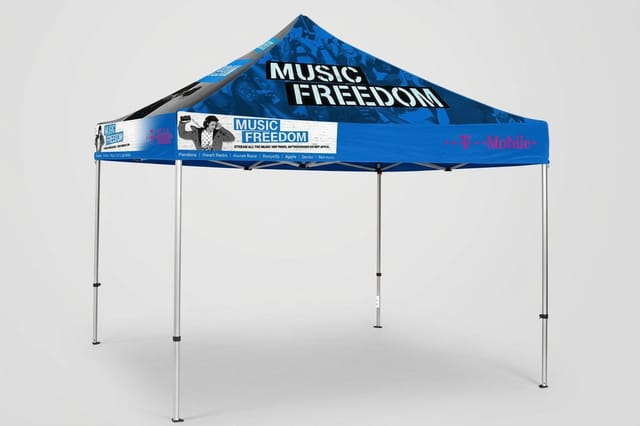 Event Tents $987.45 each Branded cover for registration, check-in lines, and outdoor breakout space.
 Badges Are the Piece Every Attendee Touches
The badge is the only printed item that stays with a person for the entire event. It is read across a table, scanned at doors, and photographed for LinkedIn. That makes it the print decision that carries the most weight on the whole list, and the one worth over-engineering slightly.
Set the name in the largest type the card can carry, well above the company line. People need to read it from roughly six feet away without leaning in, and a legible first name does more for networking than any icebreaker on the agenda. Keep the company and title secondary, and give the session track its own color band so staff can direct people at a glance.
- Size. Wider cards read better across a table. Confirm the holder opening before you approve the badge dimensions, not after.
- Orientation. Portrait badges flip constantly on a lanyard. Print the essentials on both sides and the problem disappears.
- Coating. A matte or satin finish stays readable under stage lighting and camera flash, where high gloss throws glare.
- Codes. Leave a clear quiet zone around any QR or barcode so scanners read it on the first pass at a busy door.
- Tiers. Give staff, speakers, press, and exhibitors distinct color blocks that are obvious from a distance without reading a word.
Print the on-site blanks at the same time as the personalized run. Every conference has late registrations, and a stack of matching blank badges with a marker beside them looks intentional, while a printer-paper substitute at the front desk quietly tells everyone the event was underprepared.
Signage, Wayfinding, and the Room Itself

Wayfinding is the print category attendees never compliment and always notice when it is missing. If a person has to ask a staffer where to go, the signage failed. Plan it as a chain of decisions rather than a set of individual signs, and place one at every point where a person could plausibly turn the wrong way.
Outdoor and entrance moments deserve the most weight, because they set expectations before anyone hears a word of programming. A branded tent over the registration line does three jobs at once. It shelters the queue, marks the entrance from across a parking lot, and photographs well enough to earn its own social posts.
- Entrance. One large branded moment with the event name and dates, visible from the street or the lobby doors.
- Registration. Alphabetical or tier-based line markers so the queue sorts itself before it reaches a staff member.
- Decision points. An arrow panel wherever a hallway splits, sized for reading while walking rather than while standing still.
- Room doors. Session name, track color, time block, and speaker, refreshed between blocks if your schedule rotates.
- Sponsor zones. Consistent panel sizes across all sponsors, which prevents the awkward conversation about whose logo looked bigger.
Give every sign a mounting plan before it prints. Grommets, easels, stands, or removable adhesive all change the file setup, and a beautiful panel with no way to hang it is a common and entirely avoidable mistake on load-in morning.
Handouts and Leave Behinds That Survive the Flight Home
The test for any handout is simple. Would an attendee pack it in a carry-on? A folded 8.5 x 11 in agenda on 100# silk/matte text slips into a laptop sleeve, while a loose 11 x 17 in sheet stays on the chair, and anything that fails the test is landfill printed at your expense. The pieces that pass tend to have one thing in common: they contain something the attendee cannot get from a slide deck link, such as a worksheet, a checklist, or a diagram worth annotating during the session.
Flyers do the most work here because they scale in both directions. One flyer can serve as a session handout, a room drop, and a sponsor one-sheet with nothing changing but the artwork, and pricing improves sharply as quantity rises. Anything folder-bound is worth checking against standard dimensions first, and this guide to standard folder sizes saves a costly resize late in the process.
- Agenda card. One page, both sides, room names and times only. The single most-consulted printed item at any conference.
- Session workbook. Room to write. Attendees who take notes on your paper carry your brand home without being asked.
- Sponsor one-sheet. A short offer with a scannable code, not a company history. Sponsors get better returns from brevity.
- Feedback card. Handed out before the closing session, collected at the door, and worth more than any post-event email survey.
- Save-the-date. Next year's dates in hand while this year still feels good. The cheapest registration you will ever buy.
Quantity and price
Event flyer pricing and specs
Real configurator numbers. Handout costs drop sharply as the run grows.
| Quantity | Price Per Unit | Total |
|---|---|---|
| 50 | $1.14 | $57.11 |
| 100 | 82.4¢ | $82.38 |
| 200 | 53.3¢ | $106.55 |
| 300 | 41.0¢ | $123.02 |
| 400 | 34.9¢ | $139.49 |
| 500 | 31.2¢ | $155.97 |
Conference Materials Sequenced by Event Timeline
The reason conference print goes wrong is almost never quality. It is sequencing. Pieces get ordered in the order somebody remembered them rather than the order the event needs them, which pushes the highest-volume items into the smallest window. Working backward from the doors opening fixes it permanently.
Use these five windows as your ordering calendar. Each one has a natural print batch, and each batch can be a single order rather than a scramble. Personnel-facing pieces like team business cards belong in the earliest window, and there are useful format ideas in these event planner business card ideas.
- Twelve to eight weeks out, promotion. Save-the-dates, invitations, tickets, sponsor prospectus, and the team business cards your staff will hand out while selling seats.
- Eight to four weeks out, environment. Tents, backdrops, retractable banners, and sponsor walls. Large-format items with the longest production and the least tolerance for a late artwork change.
- Four to two weeks out, structure. Room signage, arrow panels, table tents, and registration headers, ordered once the floor plan and session schedule are genuinely final.
- Two weeks to seven days out, people. Personalized badges and credentials, ordered as late as the registration list allows so the fewest names are missing.
- Seven days out, paper. Agendas, handouts, feedback cards, and blank badge stock, the pieces that change right up to the last minute and print fastest.
Keep one shared document listing each batch, its owner, its artwork deadline, and its ship-by date. When a speaker cancels in week three, you will know instantly which batch is affected and whether it has already gone to press.
Badge specs
Event badges, size by size
Check stock, coating, and dimensions against your holders before artwork is approved.

How Conference Printing Differs From Trade Show Printing
Own the entrance
Branded event tents
Shelter the registration line, mark the door from across a parking lot, and reuse the structure at every outdoor event on the calendar.
The two get bundled together in most planning conversations, and they should not be. A trade show is a selling environment built around a booth footprint. A conference is a content environment built around rooms and a schedule. That difference changes what you print, how much of it, and where the money goes.
Trade show print concentrates spend on a small number of large, reusable pieces built to pull a stranger off a busy aisle. Conference print spreads across many small pieces built to move a registered attendee through a building on time. If you have exhibitors at your conference, you are effectively running both models at once, and the sponsor-facing pieces should follow trade show logic while everything else follows conference logic.
- Primary goal. Trade show print interrupts and attracts. Conference print orients and informs an audience that already committed.
- Quantity profile. Trade shows print few pieces at large sizes. Conferences print many pieces at small sizes with high per-attendee counts.
- Reuse. Trade show backdrops travel to the next city. Conference signage is usually dated and single-use, so it prices differently.
- Personalization. Conference badges are named and tiered. Trade show credentials are typically generic and issued at the door.
- Failure mode. A weak trade show booth loses leads. Weak conference signage creates late sessions and visibly frustrated attendees.
One overlap is worth protecting. The branded structures you buy for a conference entrance, such as a printed tent, work just as hard at outdoor trade shows, sponsor activations, and recruiting fairs. Those are the pieces where paying for durable material returns the investment across several events.
What Conference Printing Costs and How Prices Are Set
Conference print pricing is driven by four variables, and once you can name them you can control the budget instead of reacting to it. Quantity is the largest lever, followed by size, then stock and coating, then turnaround. Everything else is rounding.
At 4OVER4.COM, Event Badges start at $49.88, Event Flyers start at $57.11, and Event Tents start at $987.45, with the per-unit cost falling as quantity climbs. That curve is why printing your badge buffer with the main run costs a fraction of reordering it, and why splitting one signage order across two dates is nearly always the most expensive way to buy the same panels.
- Quantity. The steepest discount curve. Consolidating batches across the whole event usually beats optimizing any single item.
- Size and format. Standard sizes run on standard presses. A custom trim on a small run costs disproportionately more than the extra material suggests.
- Stock and coating. Heavier stock and specialty finishes raise unit cost, and they earn it on badges and covers far more than on handouts.
- Turnaround. Rush production is the one variable entirely within your control, and the easiest place to give money back to the budget.
Build the budget per attendee rather than per item. Divide your total print spend by expected headcount and you get a number you can defend to a finance team, compare against last year, and use to decide whether the folder upgrade is genuinely worth it.
Compare formats
Popular handout formats, side by side
Stock, finish, size, quantity, turnaround, and price lined up in one view.
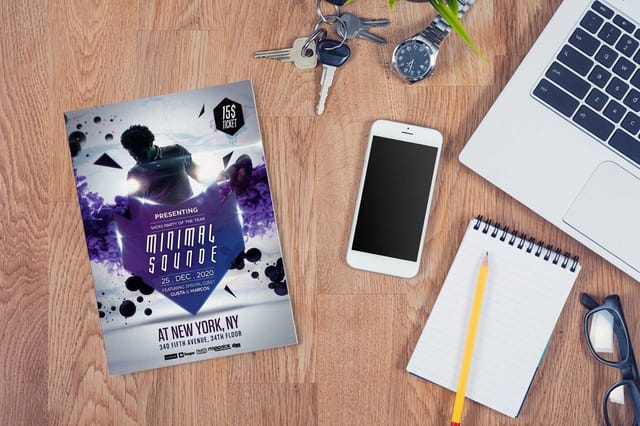 Standard Flyers | 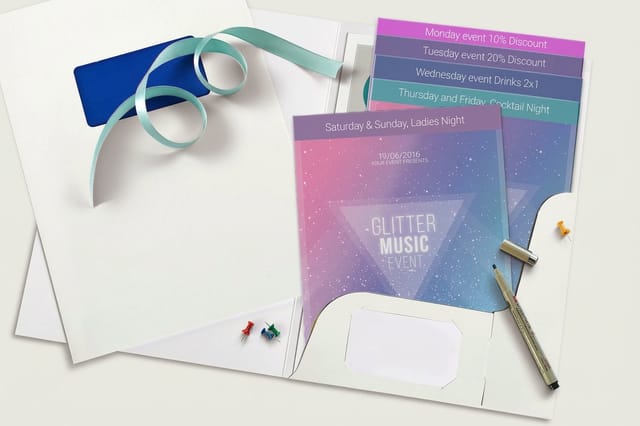 Staggered Cut Flyers |  Grand Opening Flyers | 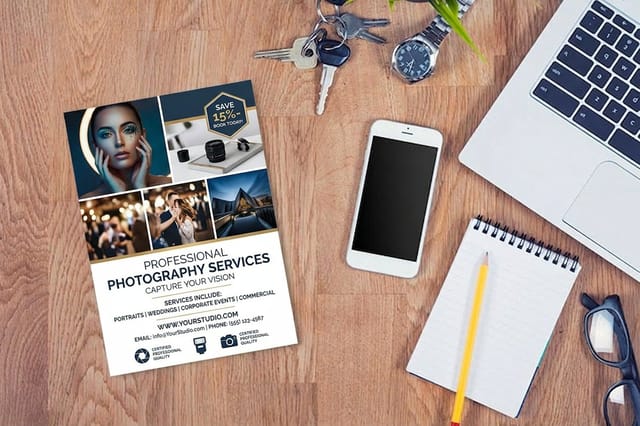 Photography Flyers | |
|---|---|---|---|---|
| Min price | $39.54 | $218.59 | $39.54 | $39.54 |
| Paper / stock | 100# Gloss Text | 100# Gloss Text | 100# Gloss Text | 100# Gloss Text |
| Finish | Standard Finish | Standard Finish | Standard Finish | Standard Finish |
| Size | 4.25" x 5.5" | 8.5" x 11" | 4.25" x 5.5" | 4.25" x 5.5" |
| Default qty | 50 | 50 | 50 | 50 |
| Turnaround | 3 business days | 5 business days | 3 business days | 3 business days |
| Rating | ||||
| View & customize | View & customize | View & customize | View & customize |
Lead Times, File Prep, and Ordering It All in One Go
Turnaround depends on the product and the finishing it needs, not on how urgently you need it. Flat printed pieces such as flyers, agendas, and badges move fastest. Large-format structures with sewing, hardware, or assembly take the longest, which is why they sit in the earliest print window on the timeline above.
File prep causes more delays than production does. Every file needs the correct bleed, safe margins that keep text away from trim and fold lines, images at print resolution rather than screen resolution, and fonts outlined or embedded. Approve the digital proof carefully, because that proof is what prints, and a typo caught at proof stage costs nothing while the same typo caught on site costs a full reprint.
Ship dates, not order dates
- Confirm the venue receiving window. Many convention centers refuse deliveries before a set date and charge storage after it.
- Name a physical recipient. A box addressed to an event rather than a person is a box nobody signs for.
- Split large-format shipments. Signage arriving separately from paper reduces the risk of one delayed pallet holding everything hostage.
- Keep the buffer with you. Blank badges and spare agendas travel in a personal bag, not on the freight truck.
Place the whole set as one order wherever the timeline allows. One vendor means one color standard, one point of contact when something changes, and one archive of print-ready files waiting for you when next year's planning starts.
Start fast
Event templates and print-ready blanks
Free layouts plus exact-size blanks so bleed, margins, and trim are correct before you upload.




Wally plans your conference print in one pass
Every piece the event needs, ordered in the right sequence
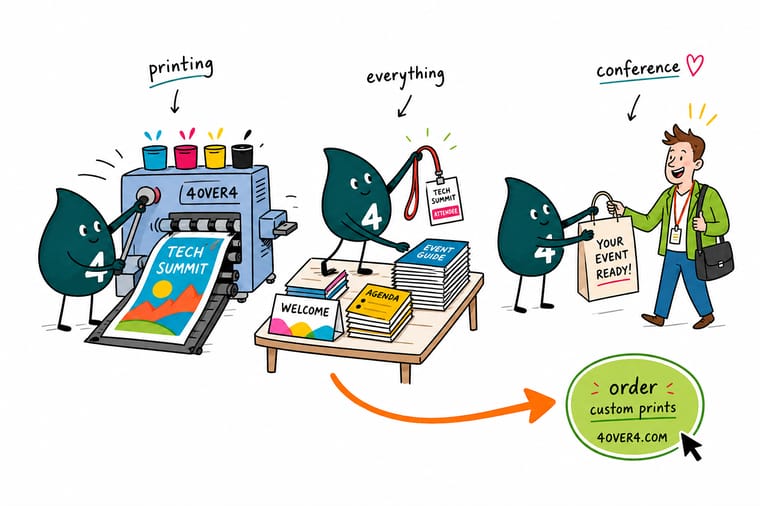
Conference print fails on sequencing, not quality. Work backward from the doors opening: promotion twelve weeks out, tents and backdrops eight weeks out, room signage four weeks out, personalized badges two weeks out, and agendas in the final week. Group each window into one order and you get matching color, one delivery date, and a file archive that makes next year straightforward instead of frantic.
Design your conference badges →Conference Print Takeaways Worth Keeping
Keep reading
Guides that pair with conference printing
Folder sizes, program layouts, ticket formats and team business cards, each matched to a line on your print list.
Guide Standard Folder Sizes Get the conference folder dimensions right before artwork. Guide Event Program Examples Printed agendas and schedules that attendees actually follow. Guide Event Ticket Layout Layouts that scan fast and speed up the check-in line. Guide Event Planner Business Cards Card ideas for the team selling and running the room. Explore more
More ways to print a better event
Badges from $49.88, flyers from $57.11, the 10 x 10 ft event tent, and the event ideas to plan them around.
Product Event Badges Named, tiered credentials from $49.88 per order. Product Event Flyers Agendas, handouts, and sponsor sheets from $57.11. 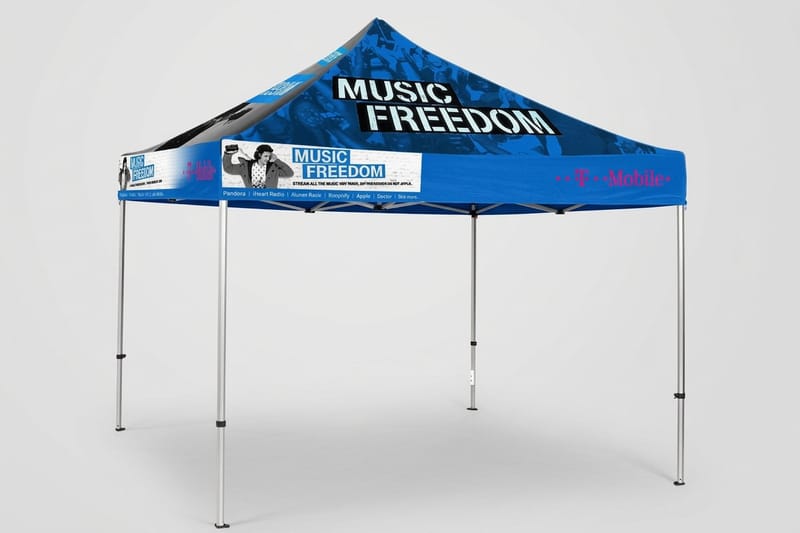 Product Event Tents Branded cover for registration and outdoor space. Article 7 Unique Corporate Event Ideas Formats worth building a print plan around.
  Article 15 Facts About Logos Why sponsor marks behave the way they do in print. Alternative Event Ticket Printing Alternative How 4OVER4 compares for printed event tickets.
 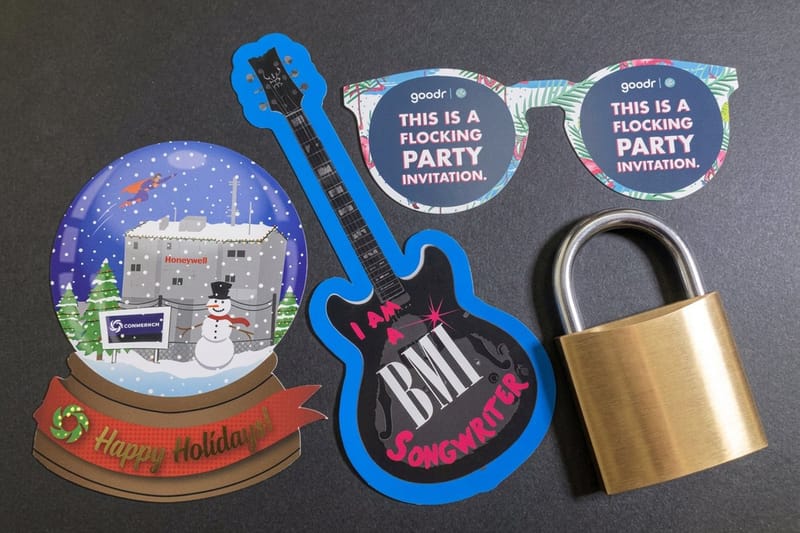 Alternative Custom Invitation Alternative Invitation printing compared for private events.
 Ready to print a conference that runs itself?
Lock your artwork, set your quantities with a buffer, and send badges, handouts, and entrance branding through as one job with one delivery date.
Conference Printing Questions, Answered
What is conference printing?
Conference printing is the complete set of printed materials an event needs across its whole run, grouped into identification, wayfinding, content, and branding. That means attendee and staff badges, room and directional signage, agendas and session handouts, sponsor panels, and the branded structures at the entrance. The defining feature is that the pieces are interdependent, so badge size drives holder choice and one approved logo file has to sit on paper, fabric, and large-format signage without shifting color. Ordering them as one job keeps that consistency intact. For the printed schedule specifically, see these event program examples.
How do I choose the right conference printing?
Start from the attendee walk rather than a product list. Trace the route from parking to front door, registration, badge, main hall, breakouts, lunch, exhibitor row, and exit, then name the printed piece that answers a question at each stop. Anything that does not answer a question or get carried home is a candidate to cut. After that, weight the budget toward the badge and the entrance, because those are the two pieces every single attendee sees, touches, and photographs.
What does conference printing cost and how are prices set?
Four variables set the price: quantity, size and format, stock and coating, and turnaround. Quantity is the steepest lever, so the per-unit cost falls sharply as the run grows, which is why buffers should print with the main order rather than as a reorder. At 4OVER4.COM, Event Badges start at $49.88, Event Flyers start at $57.11, and Event Tents start at $987.45. Promotional flyers sent before the doors open follow the same curve, and our article on how to print flyers that boost event exposure and fill seats covers that side. A useful planning method is to divide total print spend by expected headcount and manage the resulting per-attendee figure year over year.
What sizes, stocks and finishes are available for conference printing?
Badges run on sturdy card stock in standard holder-compatible sizes, with matte or satin coating recommended because gloss throws glare under stage lighting and camera flash. Flyers, agendas, and handouts run on paper weights from light sheets for high-volume room drops to heavier text stock for workbooks and speaker one-sheets. Large-format pieces such as banners and event tents use durable outdoor-rated material with hardware and finishing options. Confirm holder openings and mounting hardware before approving any file dimensions.
How long does conference printing take to print and ship?
It depends on the product and its finishing, not on urgency. Flat pieces such as flyers, agendas, and badges produce fastest, while large-format structures needing sewing, hardware, or assembly take the longest, which is why tents and backdrops belong in the earliest ordering window. Delays usually come from file prep rather than production, so set correct bleed and safe margins, use print-resolution images, embed or outline fonts, and review the digital proof carefully. Also confirm the venue receiving window and name a physical recipient before shipping.
What is the best online printing service?
For a conference, the best online printing service is the one that prints every piece on a single order, so color and delivery dates match. 4OVER4.COM prints event badges from $49.88 for 25, event flyers from $57.11 for 50 in 3 business days, and a 10 x 10 ft event tent from $987.45, with a free online proof before each run.
What are the best print-on-demand sites in 2026?
For event work, the best print-on-demand sites in 2026 let you order short runs close to the date. At 4OVER4.COM a first badge run is 25 pieces for $49.88 in 5 business days, and flyers start at 50 for $57.11 in 3 business days, so late registrations and agenda changes get a small run of their own instead of a full reprint.
