
Is It Illegal to Put Business Cards on Cars and What the Law Actually Says


Short answer: there is no single federal law against leaving a business card on a car. In practice it is governed by local anti-littering ordinances, and on private lots by trespassing rules, so the same card can be legal in one city and a fine in the next. Get the property owner's permission and you take almost all of the risk off the table.
Placing business cards on cars: what the law actually says
Placing business cards on cars is one of the most common grassroots marketing tactics out there. It is cheap, direct, and it feels personal. But in many jurisdictions across the United States, this practice falls into a legal gray area that can tip into outright illegal territory fast.
Here is the core issue. Most cities have anti-littering ordinances. When you place a card on a car and it blows away, or the driver tosses it on the ground, that card becomes litter. And guess who is responsible? You are. Not the driver, not the wind, but the person who placed the card.
In cities like Los Angeles, New York, and Chicago, anti-littering fines can range from $50 to $1,000 depending on the offense and whether it is a repeat violation. Some municipalities have specific statutes that address handbilling on vehicles. These laws do not just apply to flyers. They cover business cards, postcards, menus, and any other printed material left on a windshield.
The distinction between public and private property matters a lot here. A car parked on a public street might fall under city littering ordinances. A car parked in a private lot, like a shopping center, gym, or restaurant parking area, is governed by the property owner rules. Most commercial property managers prohibit solicitation of any kind without written permission, and violating that prohibition can result in trespassing charges, not just littering fines.
Public property vs private property
Public property includes city streets, public parking lots, parks, and government-owned spaces. Rules here are set by local government. Some cities allow distribution on public property as long as the material does not end up as litter. Others ban it outright.
Private property is a different story entirely. Shopping centers, office parks, apartment complexes, and restaurant parking lots are all privately owned, and the owner or manager sets the rules. Most have no-solicitation policies posted at entrances, and ignoring those signs can get you cited for trespassing. For creative ways to make your cards stand out when you do distribute them legally, these business card design ideas grab attention the right way.
State-level regulations that apply
Beyond city ordinances, some states have their own laws that affect business card distribution. States like Florida and Texas have specific statutes addressing unsolicited advertising materials. In Florida, placing advertising material on a vehicle without the owner consent can be classified as a second-degree misdemeanor under certain circumstances.
California anti-littering laws are particularly strict. Under California Penal Code Section 374, distributing materials that become litter can result in fines up to $1,000 for a first offense. If your business operates across state lines, research the regulations in each jurisdiction where you plan to distribute, especially for franchise operations, multi-location businesses, and traveling sales teams.
| State | Statute or ordinance | What it restricts | Penalty range |
|---|---|---|---|
| California | Penal Code Section 374 | Distributing material that ends up as litter, including cards left on windshields | Up to $1,000 for a first offense |
| Florida | State statutes on unsolicited advertising material | Placing advertising material on a vehicle without the owner's consent | Can be charged as a second-degree misdemeanor |
| Texas | State statutes on unsolicited advertising material | Leaving advertising material on vehicles and private property | Fine, with trespass charges possible on posted property |
| Los Angeles, New York, Chicago | City anti-littering and handbilling ordinances | Handbills and cards left on vehicles in public parking | $50 to $1,000, higher for repeat violations |
Treat the table as a starting point, not legal advice. City ordinances are amended often, and the one that decides your case is the one in the municipality where you left the card.
Penalties and consequences: what happens if you get caught
Let us get specific about what is at stake. The consequences of illegal business card placement go beyond a simple fine. Littering fines typically range from $50 to $500 for a first offense, and repeat offenders can face fines up to $1,000 or more. In some jurisdictions, chronic littering can result in community service.
Trespassing charges are more serious. If you are caught placing cards on private property after being warned or in violation of posted no-solicitation signs, you could face misdemeanor trespassing charges. These can include fines, court appearances, and even a criminal record in extreme cases.
Business reputation damage is the hidden cost. If your business name is on those cards and you are cited for littering or trespassing, that is not the kind of publicity you want. Property managers may also ban your business from their premises entirely. And if a card adhesive damages a car finish, the vehicle owner could file a claim against you. The potential downside far outweighs any marketing benefit.
Can you put flyers on cars in parking lots?
Usually no, and the answer turns on who owns the lot. A shopping center, gym, apartment complex or restaurant lot is private property, so the owner or manager decides, and almost all of them post a no-solicitation rule at the entrance. Papering that lot after the sign is up is trespassing, on top of any littering citation. A car parked on a public street is governed by the city instead, and the flyer becomes litter the moment it hits the ground, with you as the person who put it there. Fines for handbilling and littering run roughly $50 to $1,000 depending on the city and whether you have been cited before. Flyers are worse than cards on both counts, because they are bigger, they catch wind, and one blown flyer per row of cars is enough for a complaint. Ask the property manager first and get the yes in writing.
Is it illegal to put a sticker on someone else's car?
Yes, and this one is not a gray area. The moment adhesive touches a car you are no longer handing out advertising, you are altering someone's property, which lands under vandalism and criminal tampering statutes rather than littering ordinances. Removal can leave residue, lift clear coat or pull paint, and the owner can charge you with the cost of detailing or a repaint on top of the criminal charge. A card under a wiper blade comes off in two seconds; a sticker on a bumper can cost hundreds. Put your sticker on your own vehicle, or hand it to someone who wants it.
Business card placement legal guide: rules, risks, and smarter alternatives
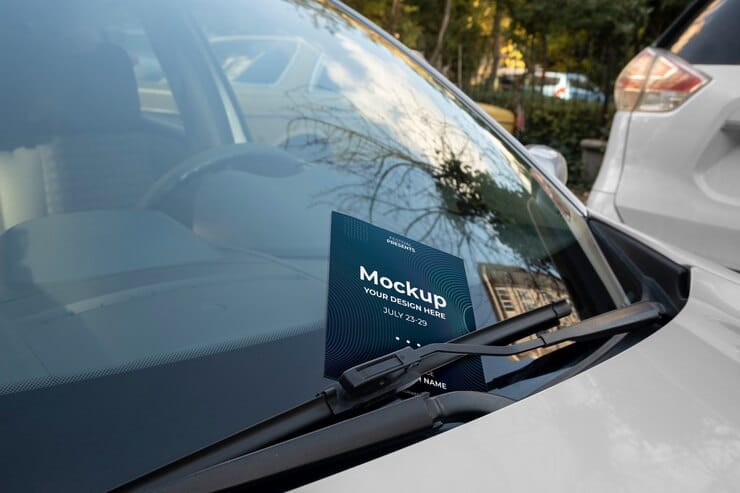
Read this as a business card placement legal guide, current for 2026: it covers the laws and best practices around handing out physical business cards on vehicles, in public spaces, and on private property. 4OVER4.COM has printed over 10 billion cards for more than 150,000 businesses, and many of those customers ask the same thing. Where can I legally leave my cards? The honest answer is that it depends on your city, your state, and the property owner rules.
You have probably seen it. A business card wedged under a windshield wiper. A stack left on a coffee-shop bulletin board. It feels harmless, but the reality is more complicated. Local ordinances, anti-littering statutes, trespassing laws, and private-property rules all come into play, and ignoring them can cost you money, your reputation, or both.
This guide breaks down what is allowed, what is not, and how to promote your brand without running into trouble. Whether you are a real estate agent, a freelance designer, or a startup founder, you need to know the boundaries first. For related rules, see whether leaving cards on doors or in mailboxes is allowed too.
Smarter alternatives to leaving cards on windshields

The good news is that there are plenty of ways to distribute your cards that are completely legal, more effective, and kinder to your brand. Networking events and trade shows put your card straight into a prospect hand, which converts far better than a card left on glass. For those moments, a memorable card earns a spot in the wallet.
Community bulletin boards at libraries, grocery stores, and laundromats are designated for exactly this purpose. Direct mail is the most targeted legal option of all, landing your card in an envelope that feels personal and professional. Explore direct mail formats that get opened, and pair them with premium Black Business Cards on heavy stock for an instant impression.
Strategic partnerships with local businesses
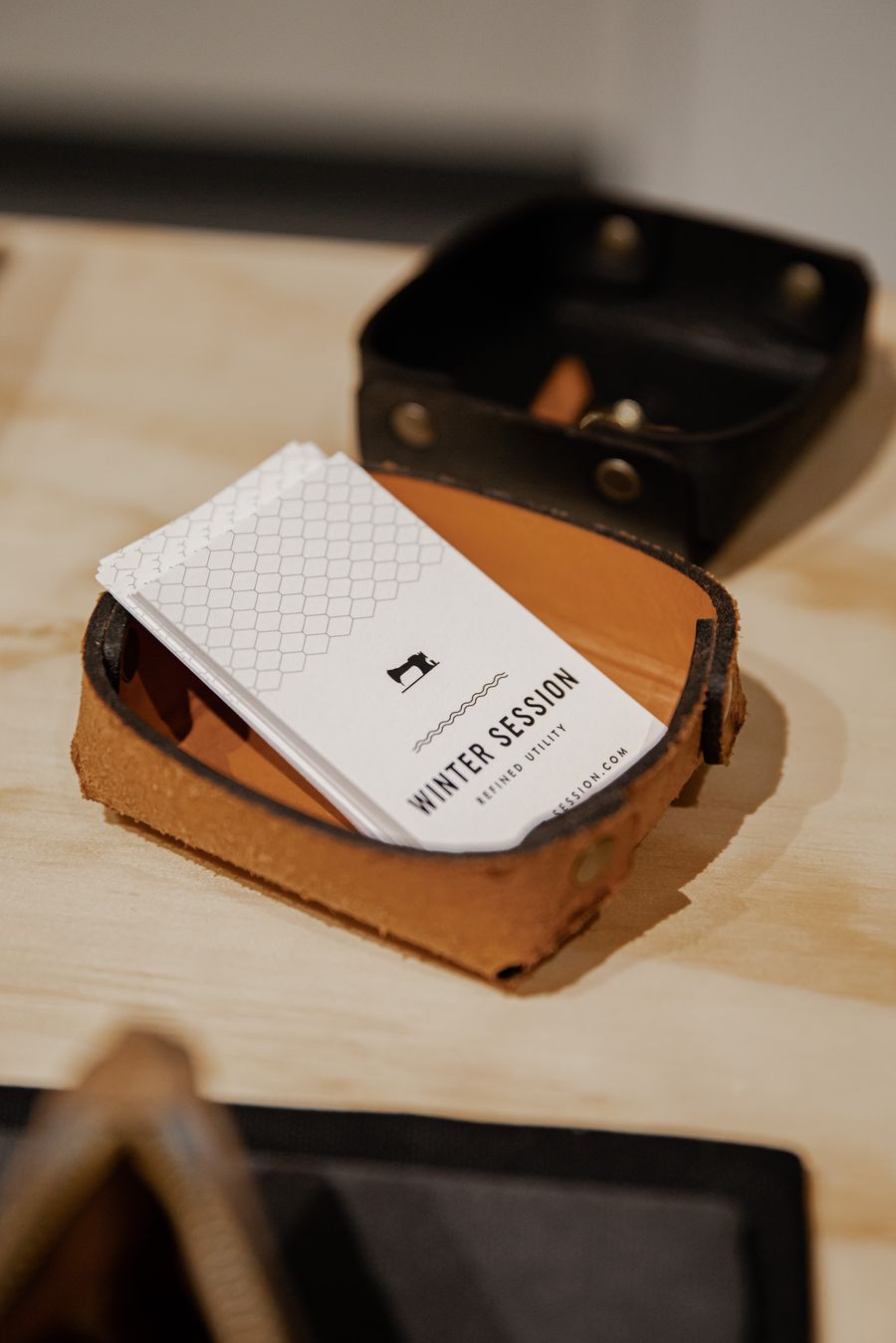
Ask complementary businesses if you can leave a small stack of cards at their counter. A wedding photographer might leave cards at a bridal shop, and a personal trainer might leave cards at a health-food store. This is legal because you have the owner permission, and it targets an audience already interested in related services.
The key is reciprocity. Offer to display their cards at your location too. It builds relationships and generates referrals with zero legal risk. If you are a creative professional, Artist Business Cards with unique designs work as mini portfolios that partners are happy to display.
Print it
A card worth keeping, not tossing
Standard business cards on premium stock make people hold on to your brand instead of dropping it in a parking lot.
Quantity and price
Business card pricing and specs
Real configurator numbers, the more you order, the lower the per-unit cost drops.
| Quantity | Price Per Unit | Total |
|---|---|---|
| 100 | 17.6¢ | $17.57 |
| 200 | 11.5¢ | $23.07 |
| 300 | 9.15¢ | $27.46 |
| 400 | 7.96¢ | $31.86 |
| 500 | 7.25¢ | $36.26 |
| 600 | 6.77¢ | $40.64 |
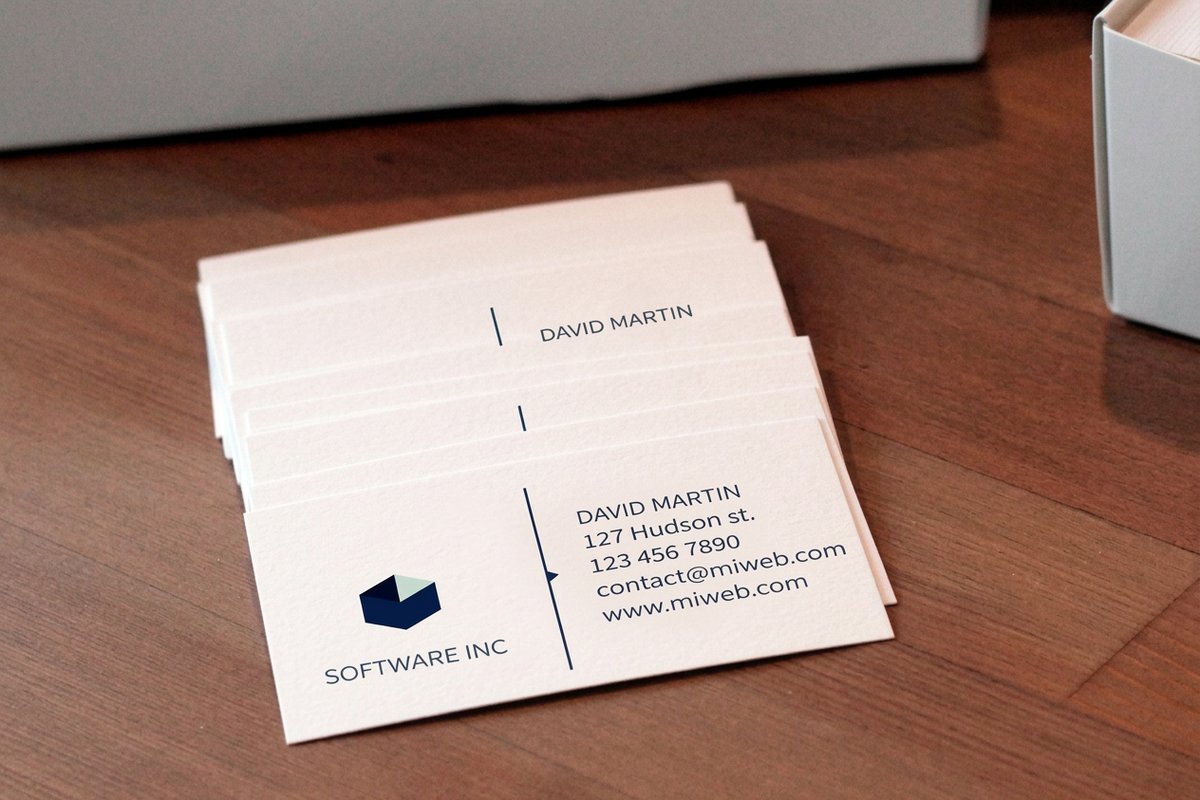
Design cards that work harder so you need fewer
Here is something most legal guides will not tell you. If your card is good enough, you do not need to distribute thousands of them on windshields. A well-designed card handed to the right person at the right time is worth more than 500 cards scattered across a parking lot.
4OVER4.COM offers 60+ paper types and multiple finish options so you can create something people actually want to keep. When was the last time you kept a thin, flimsy card? Probably never. But a thick, textured card with a velvety soft-touch finish stays in the wallet.
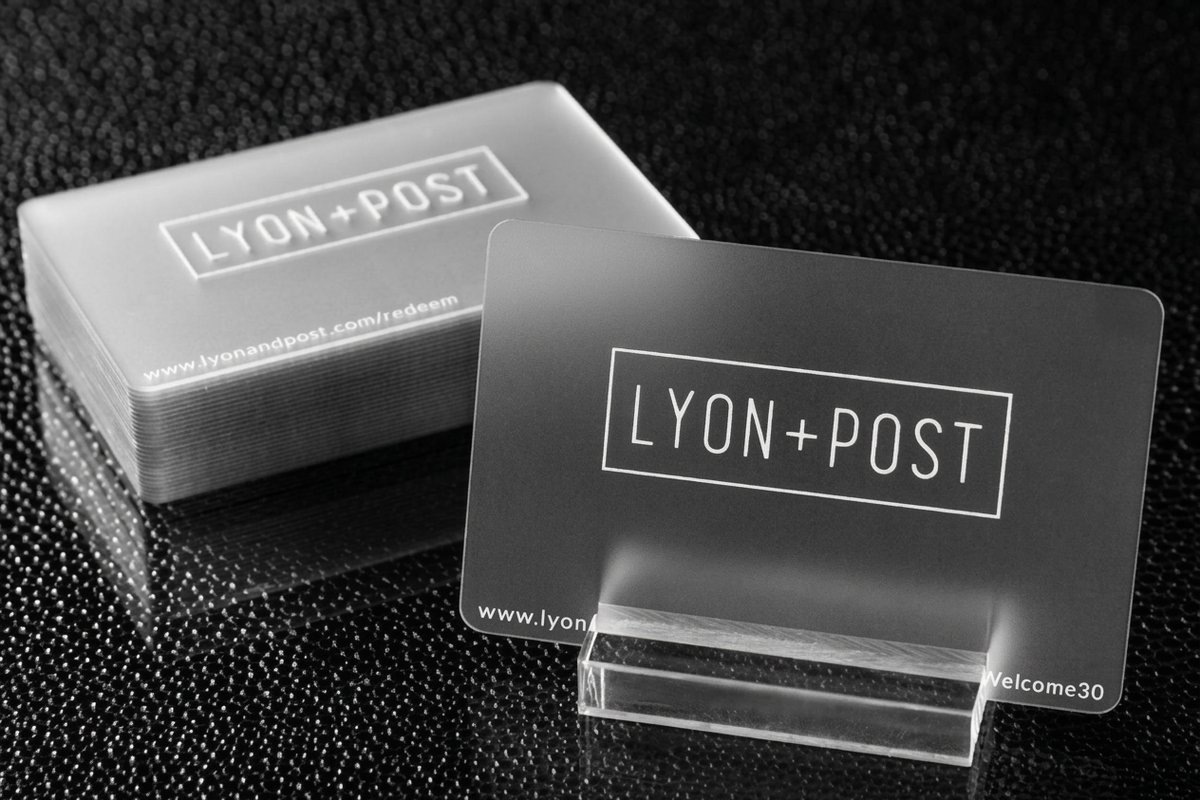
Your card should include your name, title, phone number, email, website, and one clear call to action. Do not clutter it, because white space is your friend. For something that truly stands apart, 30Mil Frosted Plastic Cards offer a semi-transparent look that is impossible to ignore. They are waterproof, durable, and feel completely different from paper.
Plastic card specs
Frosted plastic cards, built to last
Material, thickness, and finishing options for a card that survives wallets, glove boxes, and years of handling.
Digital and hybrid approaches
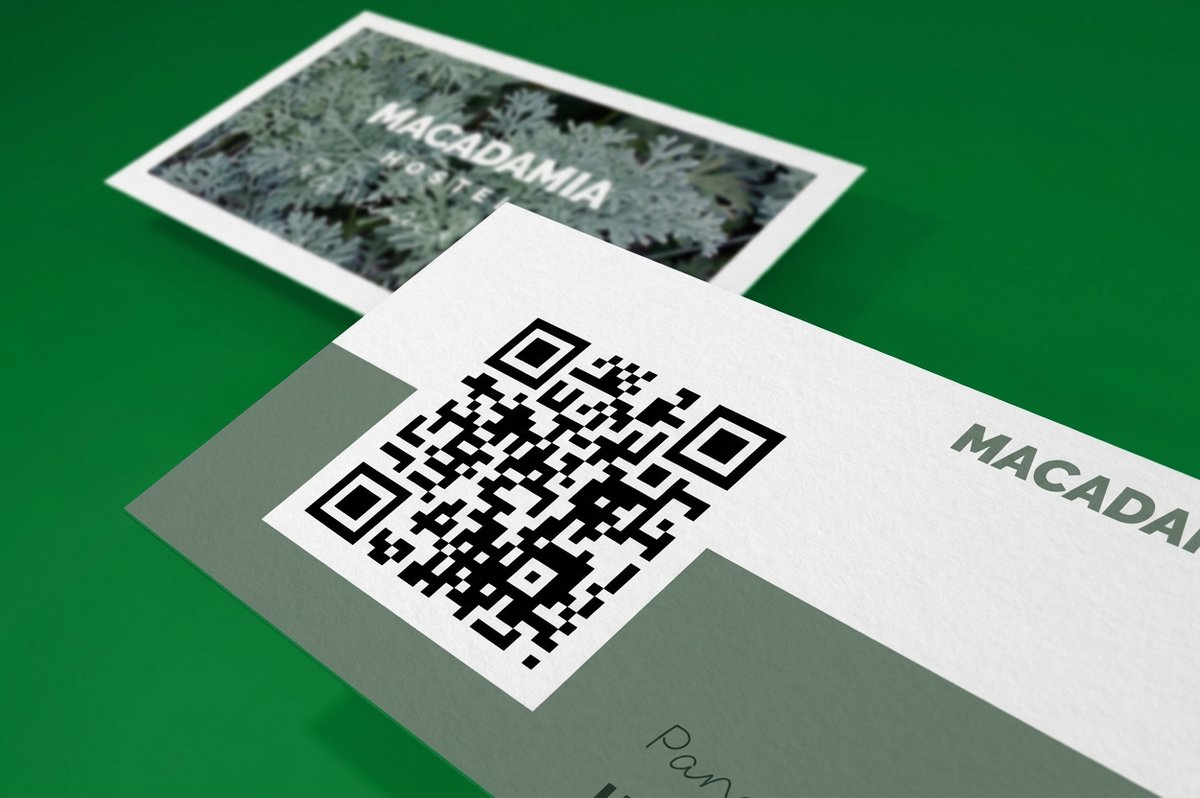
QR codes on your business cards bridge the physical and digital worlds. Include a code that links to your website, portfolio, or a special offer landing page. This makes your card interactive and trackable, so you know exactly how many people scanned it, which gives you data a windshield placement never could.
For a truly modern approach, consider 30Mil Clear Plastic Cards with an embedded QR code. The transparent material looks futuristic and makes the code a design feature rather than an afterthought. If you want tracking built in from the start, QR Code Business Cards are ready to scan.
Track every scan
QR code business cards
Turn a handshake into measurable data with a card that links straight to your site or offer.
Ordering business cards: formats and options at 4OVER4.COM
4OVER4.COM offers several card formats so you can match the product to the use case, all part of the wider business stationery lineup. Standard cards cover everyday branding, plastic and frosted cards add durability and a premium feel, and QR code cards make your print trackable. Compare the most-ordered options side by side before you buy.
Compare formats
Popular business cards, side by side
Stock, finish, quantity, turnaround, and from-price across our most-ordered cards.
 free business cards | Standard Business Cards |  3D Lenticular Business Cards | 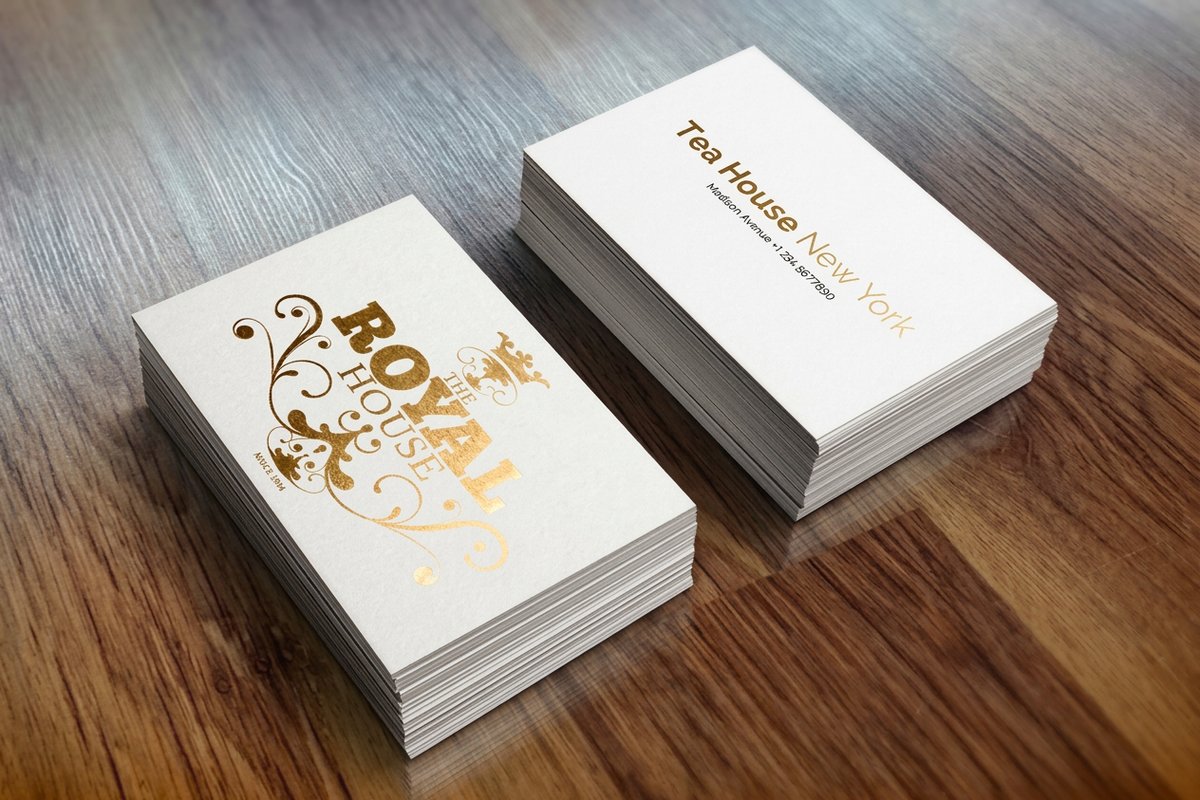 Metallic Foil Business Cards | |
|---|---|---|---|---|
| Min price | Free | $17.57 | $690.88 | $222.13 |
| Paper / stock | 14pt Gloss Cover | 14pt Gloss Cover | 31pt Lenticular Lens | 16 Point Silk Laminated |
| Finish | - | Standard Finish | - | - |
| Size | 2" x 3.5" | 2" x 3.5" | 2" x 3.5" - Vertical | 2" x 3.5" |
| Default qty | 200 | 100 | 500 | 500 |
| Turnaround | 5 business days | 3 business days | 22 business days | 7 business days |
| Rating | ||||
| View & customize | View & customize | View & customize | View & customize |
Templates and pricing to get you started
If you are not starting from scratch, templates speed things up. 4OVER4.COM offers blank templates sized to exact product specs, so your artwork lines up with the cut lines and bleed areas. Start from free black business card templates or 3D lenticular business card templates, then pick your quantity and stock.
Start fast
Templates and print-ready blanks
Business card design templates and exact-size blanks so your design lands inside the cut line.





Best practices for legal business card distribution
Following a clear set of best practices keeps you compliant and makes your distribution more effective. Here is a checklist you can follow.
- Always get permission first. Whether it is a coffee-shop counter, a community board, or a partner front desk, ask before you leave cards. Written permission is ideal, but a verbal yes works for informal setups.
- Research local laws before distributing. Spend 30 minutes on your city ordinances for handbilling, solicitation, and littering. That small investment protects you from fines.
- Never place cards on vehicles. Unless you have explicit permission from both the vehicle owner and the property owner, skip this method. The risk-to-reward ratio does not make sense.
- Use designated distribution spaces. Bulletin boards, trade-show tables, networking events, and reception desks are built for this. Your cards belong there.
- Track your distribution. Keep a simple log of where you leave cards, how many, and when. It shows what works and documents your practices.
- Invest in quality over quantity. A hundred premium cards handed out at the right events beat a thousand cheap ones in a parking lot. For more marketing ideas, see these logo sticker design ideas.
Creative promotional ideas that do not risk legal trouble
If you want to get your brand in front of more people without worrying about placement legality, these approaches work across industries. Leave a card with the tip at restaurants and cafes, since you are a customer on the premises and servers remember generous tippers. Tuck a card into every package you ship, and include a second card so the customer can pass it to a friend.
Attach cards to your own vehicle with a magnetic holder or turn your ride into a rolling billboard with car magnets, which is completely legal. Send a handwritten thank-you note with your card enclosed, and pair it with greeting cards for a personal, memorable touch. Real estate agents, event planners, and caterers can leave cards at any event they host or attend.
Visit the Showcase to see how other businesses use creative card designs to stand out in legal distribution channels. The right design paired with the right placement strategy makes all the difference.
Wally maps the legal way to hand out cards
Skip the windshield, keep the results
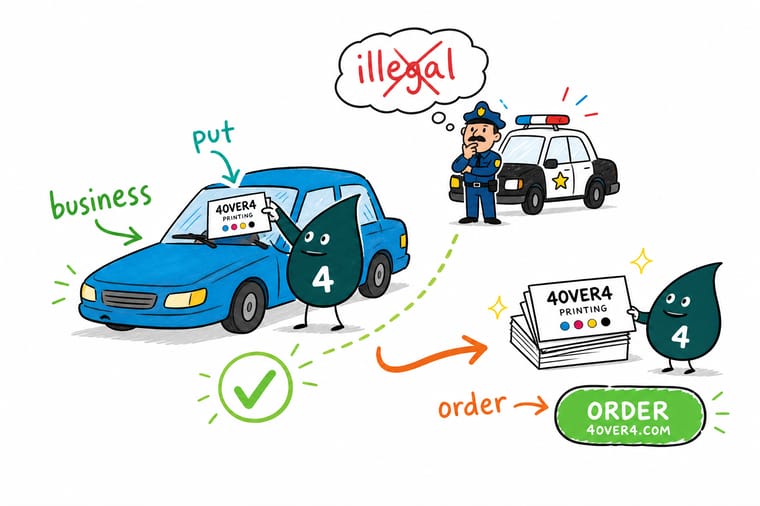
Cards on car windshields can turn into littering fines fast, and private lots can add trespassing on top. Hand cards out at networking events, leave them on permission-based counters, or send them by direct mail. Print a card people want to keep, and let real conversations do the marketing.
Order business cards →What to remember about legal business card distribution
Explore more
More on placement, distribution, and cards
Related pages on 4OVER4.COM, one card each, so you can keep exploring legal ways to promote your brand.
Ready to print cards worth keeping?
Pick a stock, drop in your design or a free template, and 4OVER4.COM prints it sharp, as fast as same day.
Common questions about business card placement laws
Can you put flyers on cars in parking lots?
In most parking lots, no. A shopping center, gym or apartment lot is private property, so the manager decides, and nearly all of them post a no-solicitation rule at the entrance. Ignoring it is trespassing on top of a littering citation, and city fines for handbilling run roughly $50 to $1,000. Ask the property manager and get the yes in writing.
Is it illegal to put a sticker on someone else's car?
Yes. Adhesive turns advertising into property damage, so it falls under vandalism and criminal tampering statutes rather than littering rules. Removal can lift clear coat or pull paint, and the owner can pursue the cost of the repair as well as charges. Stickers belong on your own vehicle or in someone's hand.
Can you get fined for putting business cards on cars?
Yes. The card counts as litter once it leaves the windshield, and the person who placed it is the one cited. Fines commonly start around $50 for a first offense and reach $1,000 for repeat violations, and in California distributing material that becomes litter can cost up to $1,000 under Penal Code Section 374.
Is it trespassing to put a business card on a car in a parking lot?
It can be. If the lot is private and a no-solicitation sign is posted, walking the rows to place cards is trespassing whether or not a single card hits the ground. Property managers can ban your business from the premises and refer the matter for a misdemeanor charge, so get written permission first.
What are the best practices for legal business card placement?
Always get permission before leaving cards on private property. Use designated spaces like community bulletin boards, trade-show tables, and partner counters, and research your city rules on handbilling and littering before you distribute. Stick to networking events where a face-to-face exchange is expected and welcome.
How do I choose the right business card placement strategy?
Start by identifying where your customers spend time. A real estate agent benefits from open-house distribution, while a personal trainer does better at gym bulletin boards. Match the strategy to your audience, and invest in premium stock so every card makes a strong impression, because quality matters more than volume.
What makes a business card placement legal guide effective for marketing?
Understanding the rules helps you avoid fines and focus your budget on channels that actually work. Networking, direct mail, and partnerships generate higher-quality leads than parking-lot distribution. Browse more printing articles for ideas, and remember that cards handed directly to prospects convert far better than cards left on windshields.
How much should I budget for legal business card distribution?
Budget for printing first, since 4OVER4.COM offers competitive pricing across 60+ paper types. Then set aside funds for legal channels. Networking events often run 20 to 100 dollars, direct mail varies by list size, and community bulletin boards are usually free. Skip the windshield approach and redirect that effort toward methods that build your reputation.
