
Reach Prospects Turning 65 With Daily Medicare Mailers


Nadia is our customer education voice, built from the knowledge of our production team, with over 20 years in printing.
How Daily Age Triggered Medicare Mailing Works
Turning 65 Medicare mailers work as a standing order of postcards rather than a campaign with a launch date and a wrap up meeting. Every single week another group of people crosses into the age band where Medicare stops being an abstraction and turns into a decision with a deadline attached. The agent whose postcard is already sitting on the kitchen counter when that shift happens is the agent who gets the call.
Turning 65 Medicare mailers, the print side
- Format. A full color, two sided postcard, 4 by 6 inches for the educational touches and 6 by 9 for the offer piece, on 14pt card.
- Cost. Postcards start at $16.48 an order, and 500 direct mail postcards at 4 by 6 inches run $89.68.
- Speed. Postcards print in 3 business days, so a weekly pull can be in the mail stream the following week.
- Artwork. The carrier approved design with its material ID, reprinted unchanged, with 1/8 inch bleed on every edge.
- Sequence. Four touches at six, four, three and one month before the birthday month.
The mechanics are simpler than the jargon suggests. A consumer data provider maintains a household file with a date of birth on most records. Instead of buying a one time list, you buy a standing selection: people who will turn 65 within the next four months, inside the ZIP codes you can actually service. The provider refreshes that selection daily, releases only the records that newly qualified, and your print and mail partner drops those pieces within a day or two of the pull.
That is the whole difference between a quarterly blast and a daily drop. In a quarterly model, a prospect who turns 65 in the first week after your mailing waits eleven weeks to hear from you, and by then three competitors have landed. In a daily model nobody sits in a queue. Across all its products, 4OVER4.COM has printed 10 billion plus pieces since 1999 for more than 150,000 businesses, and a daily Medicare run is one of the smallest jobs in that mix: a short reprint of the same approved postcard, from $16.48 an order.
The daily loop in five moves
- Pull. The data vendor returns the households that newly entered your age window since yesterday.
- Suppress. Existing clients, prior responders, do not mail flags, and bad addresses come off the file.
- Version. Each record is matched to the creative and offer that fits its county and plan availability.
- Print. The day's file goes to press as a short run of full color postcards.
- Drop. Pieces are presorted, entered at the postal facility, and tracked to the mailbox.
Why the cadence matters more than the creative
Agents obsess over headlines and ignore arrival timing, which is backwards for this niche. A decent postcard that lands in the first week of someone's enrollment window will outperform a beautiful one that lands in the last week, because the first mailer sets the frame for every conversation that follows. Fix the cadence first, then spend your energy on the copy.
Shop the format
Postcards printing
Every size, stock, and finish agents use for age triggered mail.
Building a Turning 65 List That Actually Converts
Every list vendor selling age data will quote you a low price per thousand. The cheap files are cheap because the date of birth is modeled rather than sourced, which means a meaningful share of your postcards land on people who turned 65 two years ago or will not get there until next spring. You pay for that twice, once in postage and once in the credibility you burn when the message does not match the reader.
Ask for the source of the birth date, the refresh interval, and the match rate before you sign anything. Then narrow hard. Homeowners in the counties where your carriers have real plan availability, filtered against income and dwelling type, will beat a wider file every time. A tight list of a few thousand households mailed repeatedly is worth far more than a broad list mailed once.
Selects worth paying for
- Verified date of birth. Sourced, not modeled, with the birth month exposed so you can sequence drops.
- County level plan match. Never mail an offer into a county where the plan is not sold.
- Dwelling and tenure. Long tenure homeowners are easier to reach and far more likely to stay put through renewal.
- Language preference. A Spanish language version of the same card often lifts response more than any headline rewrite.
- Suppression feed. Weekly removal of your own book of business so current clients never get a prospecting piece.
Split the file the day you buy it. Half gets creative A, half gets creative B, both drop the same week, and you read the results by call tracking number rather than by feel. Two postcard designs printed side by side cost almost nothing extra when the run is already scheduled.
Print picks
Three postcard formats for a turning 65 program
Live prices, ready to customize with your approved artwork.
 3D Lenticular Postcards 500 for $1097.28 A motion effect card for high value ZIP codes where you need the mail opened first.
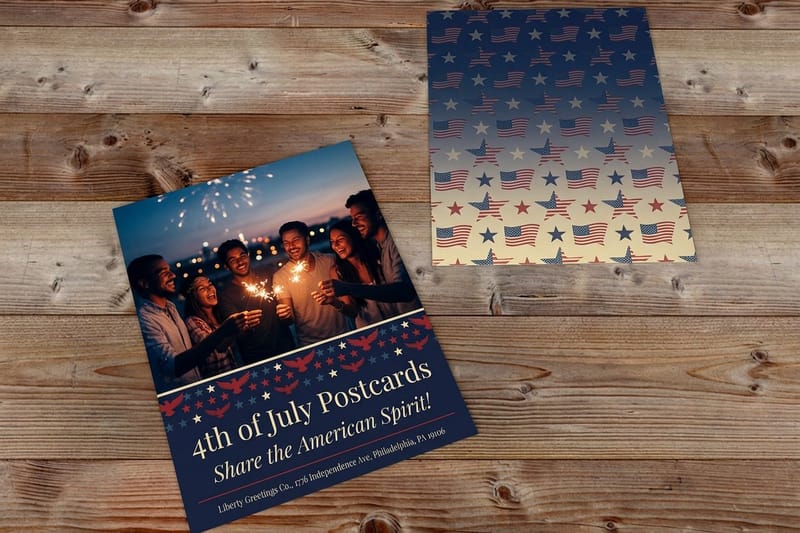
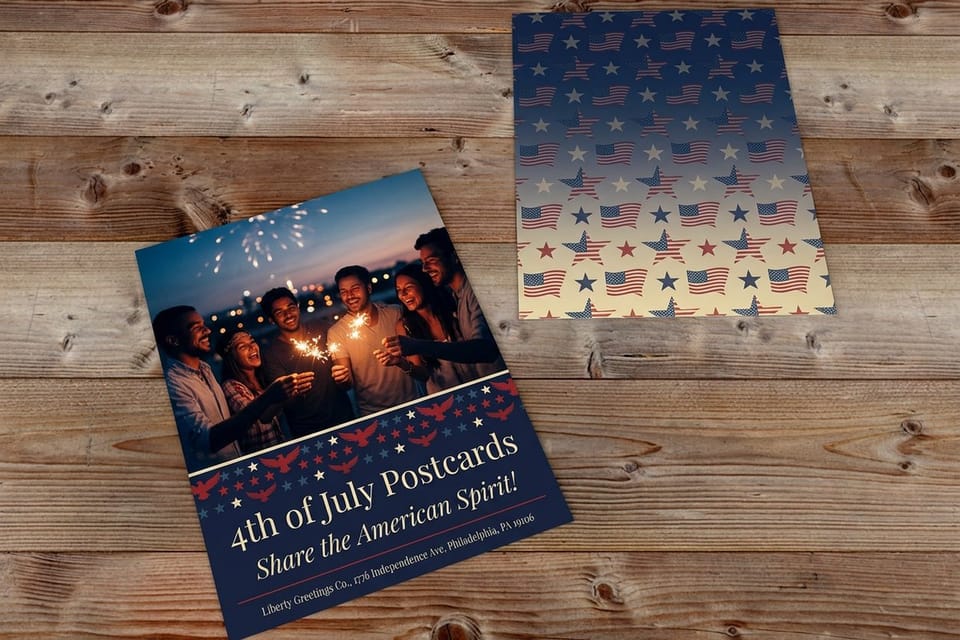
  4th of July Postcards 50 for $16.48 A standard full bleed postcard format that carries a birthday window offer cleanly.
  Back to School Postcards 50 for $16.48 Same stock and sizing, an easy second creative for your split test rotation.
 Timing Every Drop Around the Initial Enrollment Period

The Initial Enrollment Period runs seven months: the three months before the month a person turns 65, the birthday month itself, and the three months after. Everything about your calendar should hang off that window, because it is the only period when a first time enrollee can act without penalty math entering the conversation.
Most agents mail once and call it a program. The households that convert usually saw the same agency three or four times. Spread the touches so each one arrives with a different job to do, and keep the design family consistent enough that the fourth piece is recognized as coming from the same person as the first.
A four touch sequence that fits the window
- Six months out. A plain educational card. What Medicare is, what the parts cover, when the clock starts. No plan names, no pressure.
- Four months out. The mistakes card. What late enrollment penalties look like and which deadlines are unforgiving.
- Three months out. The window opens. This is the offer piece, tied to a review appointment or a local seminar.
- One month out. The last call card, with a single phone number and a specific reason to dial it this week.
Two more dates belong on the same calendar. The Annual Enrollment Period from October 15 to December 7 is when your existing book reviews plan changes, and the Medicare Advantage Open Enrollment Period from January 1 to March 31 gives you a second bite at anyone who chose badly in the fall. Age triggered drops keep running straight through both.
Quantity and price
Postcard pricing and specifications
Real configurator numbers. The more you print per run, the less each piece costs.
| Quantity | Price Per Unit | Total |
|---|---|---|
| 50 | 33.0¢ | $16.48 |
| 100 | 24.2¢ | $24.16 |
| 200 | 15.9¢ | $31.86 |
| 300 | 12.8¢ | $38.45 |
| 400 | 11.3¢ | $45.04 |
| 500 | 10.3¢ | $51.62 |

Staying Inside the CMS Marketing Rules
Compliance decides whether you run this program for years or shut it down in a quarter. Anything that mentions plan benefits, premiums, cost sharing, or a specific Medicare Advantage or Part D plan counts as marketing, and marketing material has to go through the carrier for review and receive a material ID before it can be mailed. Purely educational pieces sit under a lighter standard, but the line between education and marketing is thinner than most agents assume.
Build the review step into the schedule rather than treating it as an obstacle. Get the creative approved once, keep the approved PDF and its material ID on file, and reprint that same approved artwork daily without touching it. The moment you edit a headline you are back in review, so lock the design and vary only the list.
Guardrails to write into your process
- Approval before press. No plan specific piece goes to print without the carrier response and the material ID on the artwork.
- Required disclaimers. Keep the carrier supplied disclaimer text at the specified size instead of shrinking it to win layout space.
- No unsolicited contact promises. The card invites a call from the reader, it never implies you will show up unannounced.
- Scope of appointment discipline. Whatever the postcard promises, the appointment has to match the documented scope.
- Version control. Every approved file gets a date and an ID so an audit can be answered in minutes.
Rules get updated, so treat this section as the shape of the problem rather than the final word, and confirm the current requirements with your carrier compliance contact before each plan year. Printing is the easy half of the job. Approval is the half that protects your license.
Premium format
3D lenticular postcards
A motion effect that stops the sort at the kitchen table in your best ZIP codes.

What the Postcard Itself Needs to Say
A turning 65 postcard has roughly two seconds between the mailbox and the recycling bin. It wins that moment by being specific about the reader rather than clever about the sender. The birthday reference does most of the work: a card that acknowledges the reader is approaching a real deadline reads as relevant, while a card about your agency reads as advertising.
Keep the front to one idea and one image. Put the deadline logic, the short proof line, and the response path on the back. Give the reader more than one way to reply, because a 64 year old prospect may prefer a phone call, a website, or a reply card, and the one you leave out is the one they wanted.
The elements that earn their space
- A dated hook. Reference the enrollment window in months, not vague urgency language.
- A local signal. County name, a nearby landmark, or a licensed local agent photo beats a stock skyline.
- One offer. A no cost review, a seminar seat, or a plain guide. Three offers on one card is zero offers.
- A tracked phone number. A unique number per creative is the only honest way to compare designs.
- Compliance text placed on purpose. Design around the disclaimer from the first draft instead of squeezing it in last.
If you want the piece to survive on a refrigerator, print it on a heavier stock and give the back a usable panel: enrollment dates, a checklist, a place to write a question before the appointment. Utility keeps a postcard in the house for weeks, and mail that stays in the house gets acted on.
Split test creative
A second postcard for the same list
Print two designs in one run, assign a tracking number to each, and let response data pick the winner.
Running the ROI Math Before You Scale
Direct mail in this niche is judged with one number: cost per enrolled member. Everything upstream of that, response rate, appointment rate, close rate, is diagnostic. Build the model with your own inputs on a single page and update it monthly. If you cannot state your cost per enrollment, you are not running a program, you are buying postage.
Here is the arithmetic, using placeholder figures so you can swap in your own. Say a drop of 2,000 pieces costs you P in print, postage, and data. A response rate of R gives you 2,000 times R inbound contacts. An appointment rate of A on those contacts and a close rate of C on those appointments produces 2,000 times R times A times C enrollments. Divide P by that number and you have your cost per enrollment. Compare it to first year commission plus the renewal stream you realistically expect to keep, and the decision makes itself.
Where the model usually breaks
- Counting the first year only. Retention carries this business, so model renewals or you will underinvest.
- Untracked calls. Without a per creative number your response rate is a guess wearing a decimal point.
- Judging one drop. Age triggered mail compounds. Read a full quarter before you change anything.
- Ignoring speed to lead. A call returned in five minutes and one returned the next day are two different businesses.
The lever most agents never pull is print volume. A daily program run as one consolidated order per week costs meaningfully less per piece than seven separate rush jobs, and the pricing table below shows how quickly the unit cost falls as the run grows. The mailing schedule stays daily even when the printing schedule does not.
Compare formats
Popular postcards, side by side
Standard postcards run 50 for $16.48 in 3 business days and metallic foil 500 for $421.91 in 7.
 Standard Postcards |  Metallic Foil Postcards |  Mini Cards |  Spot UV Postcards | |
|---|---|---|---|---|
| Min price | $16.48 | $421.91 | $17.57 | $190.02 |
| Paper / stock | 14pt Gloss Cover | 16 Point Silk Laminated | 14pt Gloss Cover | 16pt Gloss Cover |
| Finish | Standard Finish | - | Standard Finish | - |
| Size | 2.5" x 2.5" | 4" x 6" | 2" x 2" | 2" x 6" |
| Default qty | 50 | 500 | 100 | 1,000 |
| Turnaround | 3 business days | 7 business days | 3 business days | 5 business days |
| Rating | ||||
| View & customize | View & customize | View & customize | View & customize |
Turning the Program On Without Printing It Yourself
Nothing above requires you to become a print buyer. The practical setup is one data feed, one approved creative family, and one printer who can take a weekly file and turn it around without a phone call each time. Once those three pieces exist, the program runs in the background while you spend your hours on appointments.
Start from a print ready postcard layout so bleed, safety margins, and postal clear zones are already correct, then hand the finished artwork to production. Free templates and exact size blanks are below, and if you would rather hand over the whole thing, our team can quote print, data, and mailing together through 4OVER4.COM contact. If you are still choosing formats and envelope pairings, the postcard and envelope size guide and the five step direct mail walkthrough cover the mechanics end to end.
A first month that proves the model
- Week one. Buy a narrow standing selection and get two creatives through carrier review.
- Week two. Print both versions, assign a tracking number to each, and start daily drops.
- Week three. Log every inbound call with its number and the date the piece landed.
- Week four. Kill the weaker creative, expand the winning one, and calculate your first cost per appointment.
Start fast
Postcard templates and print ready blanks
Free layouts plus exact size blanks so bleed, safety margins, and postal clear zones are already right.










Wally maps your turning 65 mailing calendar
The right week to arrive, then the right card to arrive on
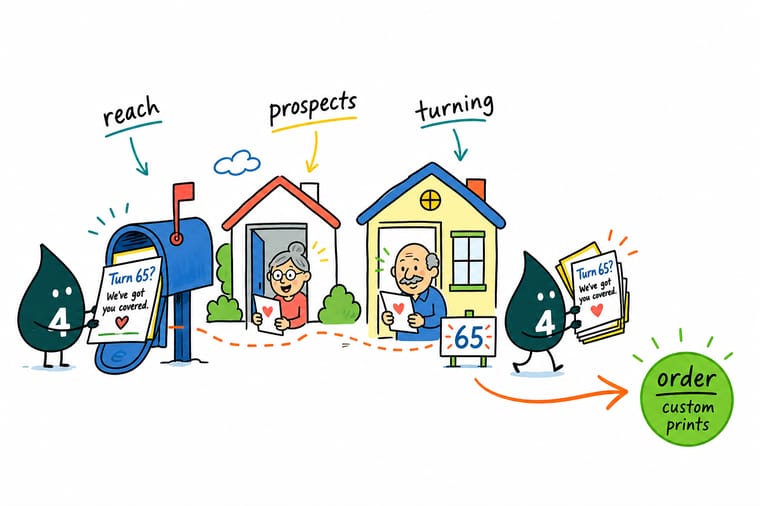
Think of the seven month enrollment window as a runway, not a deadline. Wally lines up four touches across it: an educational card six months out, a penalties card at four months, the offer when the window opens at three months, and a last call piece at one month. Buy a standing daily list, lock one compliance approved design, print it in consolidated runs, and let the calendar do the prospecting for you.
Design your Medicare postcards →Building a Program That Runs Without You
By the numbers
What sits behind your print run
The seven month enrollment window and the 3 business day postcard production your drops run against.
Keep reading
Guides that cover the mailing mechanics
Artwork at 4 by 6 or 6 by 9 inches with 1/8 inch bleed, and the postal steps between your file and the mailbox.
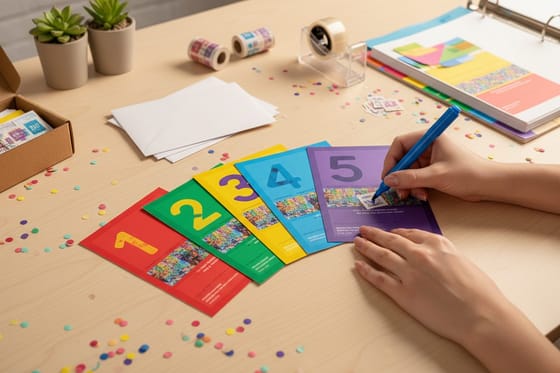 Guide 5 Quick Steps to Send Direct Mail Postcards The full mailing workflow from artwork to postal drop.
  Guide Pairing Postcards and Envelope Sizes Match formats and envelopes so nothing gets returned.
  Guide Membership Marketing Tips Four expert plays for growing a renewal driven book.
  Guide Is Door to Door Sales Dead? Where field prospecting still works and where mail wins.
 Explore more
More ways to put print in front of Medicare prospects
Related pages across 4OVER4.COM, one card per page type.
 Shop Postcards Printing Every postcard size, stock, and finish in one place. Product 4th of July Postcards Standard full bleed postcard format for age triggered drops. Product Back to School Postcards A second creative for split testing the same list.
  Product 3D Lenticular Postcards Motion effect mail for your highest value ZIP codes. Guide Send Direct Mail Postcards Five steps from finished artwork to postal drop. Guide Postcard and Envelope Sizes Pair the format with the right envelope every time. Article Membership Marketing Tips Expand a renewal driven book with four expert plays. Article Is Door to Door Sales Dead? Field prospecting compared with targeted mail.
  Alternative Does Canva Mail Postcards? What Canva does and does not handle for mailing. Alternative MOO Postcards Alternative How the two compare on postcard runs and pricing. Alternative PrintingForLess Alternative A closer look at pricing and turnaround options. Contact Talk to a Print Specialist Quote print, data, and mailing for your program.
 Ready to put your card in the mailbox first?
Lock one compliance approved design, print it in a consolidated run, and release mail daily as new prospects enter their enrollment window.
Turning 65 Medicare Mailer Questions
What are turning 65 Medicare postcards?
They are direct mail pieces sent to people approaching their 65th birthday, timed to arrive inside the seven month Initial Enrollment Period that opens three months before the birthday month. The list is age triggered, meaning a data provider releases newly qualified households daily and you mail those records right away instead of waiting for a quarterly batch. The card usually offers an educational guide, a no cost plan review, or a seminar seat, and the whole point is arriving before the competition rather than out designing it.
How do I choose the right turning 65 postcard format?
Start with the job the piece has to do. Early educational touches work fine on a standard full bleed postcard, because they are about clarity rather than impact. Later offer pieces earn a heavier stock or a premium effect, since they need to survive on a counter until the reader is ready to call. Test two formats on the same list in the same week with separate tracking numbers, and let the response data pick the winner instead of a design opinion. Whatever you choose, keep the family consistent so the fourth mailer is recognized as coming from you.
What do turning 65 Medicare postcards cost and how is the price set?
Postcards at 4OVER4.COM start at $16.48 per order, and 3D Lenticular Postcards start at $1097.28 for the premium motion format. Price is driven by quantity, size, paper stock, coating, and turnaround, and the per piece cost drops sharply as the run grows, which is why a consolidated weekly print run beats seven daily rush jobs. Budget separately for data and postage, since those are ongoing costs the printer does not control. Configure a quantity on the product page to see live pricing for your exact specification.
What sizes, stocks, and finishes are available for these mailers?
Standard postcard sizes cover the common postal rate tiers, and heavier card stocks are available when you want the piece to feel substantial in hand. Coating options range from uncoated stock that takes a pen easily, useful when you want the reader to write a question before an appointment, through gloss and matte finishes for photo heavy designs, up to specialty effects like lenticular motion. Keep the required disclaimer legible at the size your carrier specifies, and design the postal clear zone in from the first draft rather than patching it later.
How long does printing and shipping take for a daily mail program?
Production time depends on the product, quantity, and finish you select, with faster turnaround options available when a drop is time sensitive. For an ongoing age triggered program the practical approach is to print a larger approved run in advance and hold inventory, then release mail daily from that stock, which removes print turnaround from the critical path entirely. Plan the carrier compliance review as its own lead time, because approval usually takes longer than printing. Check the turnaround options on your chosen product page for current production windows.
