
The History of Food Packaging: A Visual Timeline


Jordan is our labels, packaging and sustainability voice, built from the knowledge of our production team, with over 20 years in printing.
A Visual Timeline of Food Packaging in Four Eras
The history of food packaging runs in dated steps: clay jars and gourds, the 1810 tin canister, the 1852 paper bag machine, the 1879 folding carton, the 1898 Uneeda Biscuit carton, aluminum foil in the 1910s, moisture-proof cellophane in 1927 and the Tetra Pak carton in 1952. Food packaging is the oldest branding medium we have, and for most of its life it was not branding at all. It was survival. Every container people built for food answered one of three questions: how do we stop it spilling, how do we stop it spoiling, and how do we tell whose it is. Decoration only arrived once those three were solved. A small food brand today prints the same three answers: a custom mailer box at 5 x 7 x 1.7 inches on 18pt cover, 250 for $711.78, a product label from 25 for $23.88, and printed packaging tape to seal the shipper.
Reading the story as a timeline pays off for anyone designing a package today, because every era left a habit behind. The tamper seal, the flat bottom, the printed front panel, the resealable flap and the recycling mark each entered the world as a fix for a specific problem, and none of them ever left.
It also explains why certain materials still carry meaning before a single word is read. Kraft board reads as honest because kraft was the everyday stock of the industrial age. Foil reads as premium because foil stayed expensive for decades. 4OVER4.COM has printed 10 billion+ cards and print products since 1999 for more than 150,000 businesses, and the packaging that performs best on a shelf still borrows these inherited signals instead of trying to invent new ones from nothing.
Before 1800: containers borrowed from nature
Gourds, leaves, woven baskets, animal skins, fired clay and blown glass carried food for thousands of years. The package was whatever the local landscape offered, and the only mark on it was a potter's stamp or a scratched owner's sign pressed into wet clay.
1800 to 1900: sealing, canning and the printed carton
Preservation became a science, the tin can arrived, paper bags were machine made, and the folding carton turned printing into part of the package rather than a label stuck on afterward. Food finally left its region of origin at scale.
1900 to 1980: film, foil and the self service aisle
Transparent film, aluminum foil, laminated cartons and plastic bottles handed shoppers the job that a grocer used to do. The package now had to sell itself across a crowded aisle in about three seconds, so graphics grew loud.
1980 to today: barriers, data and the eco reset
Barcodes, modified atmosphere sealing and multilayer barriers stretched shelf life further than ever. Then recycling reality pushed designers back toward single material board, molded fiber and honest, minimal print.
Shop packaging
Packaging printing collection
Boxes, wraps, tape and inserts for brands writing their own chapter of this timeline.

Clay, Glass and the First Sealed Containers
The earliest food packages were not manufactured, they were found. A large leaf, a hollow gourd, a length of gut, a woven reed basket. What changed everything was fired clay, because a sealed ceramic jar could be stacked, shipped, stored underground and closed with a plug of pitch, wax or cloth that kept air and insects out for months.
Roman amphorae carried olive oil, wine and fish sauce across the Mediterranean with painted marks that named the producer and the port. That is a supply chain label two thousand years before the term existed. If you want the modern equivalent for a bakery or a deli, our food and cookie packaging options guide maps the formats that do the same job now.
- c. 8000 BC. Fired clay vessels appear across the Near East and give grain and oil their first sealable, stackable home.
- c. 1500 BC. Egyptian and Mesopotamian potters press ownership seals into wet clay stoppers, the ancestor of the tamper-evident closure.
- c. 100 BC. Syrian glassblowers make thin glass affordable, and glass becomes the first truly inert food container.
- c. 200 BC. Chinese papermakers wrap and cushion food in treated sheets, the earliest documented use of paper as packaging.
- c. 100 AD. Roman amphorae carry painted producer marks, origin and volume, an honest early version of a printed panel.
Two lessons from this era still hold. First, the closure is the product: whatever keeps air out decides how far food can travel and how long a brand can hold quality. Second, identity rides on the container, not beside it. The moment a producer could mark the jar itself, the jar started doing the selling, and it has never stopped doing that job since.
Print picks
Three packaging formats worth a look
Live prices, ready to customize with your own structure and artwork.
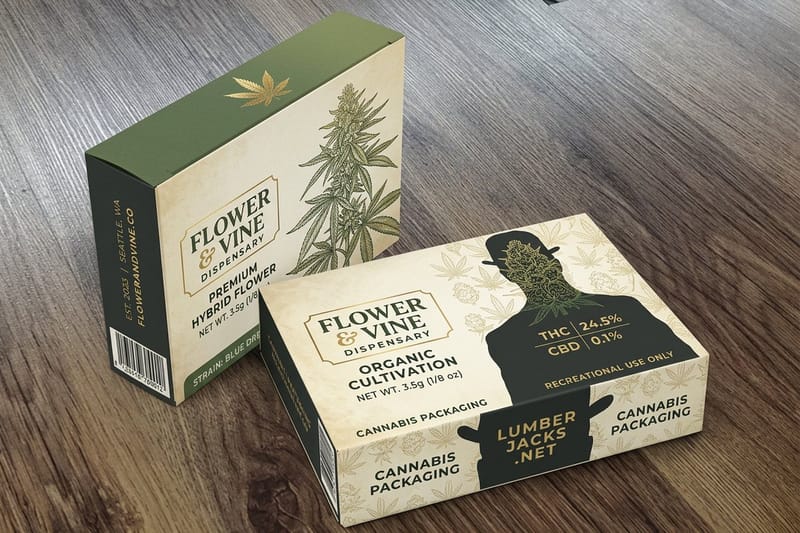
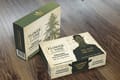
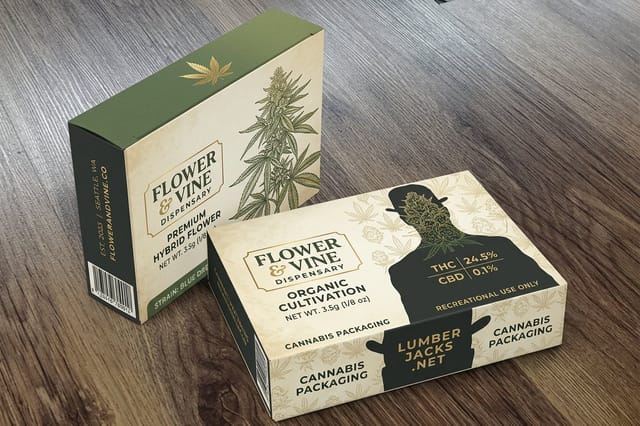 Cannabis Packaging 250 for $711.78 Rigid printed boxes built for compliance labeling and shelf presence.
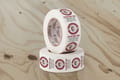
 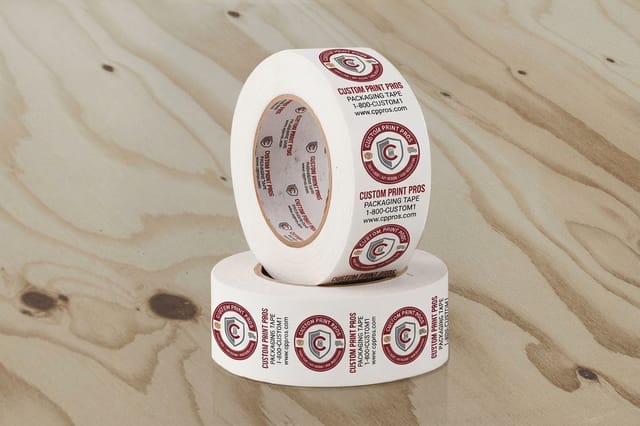 Custom Printed Packaging Tape $347.11 each Turn the seal itself into branding, the modern heir to the wax stamp.
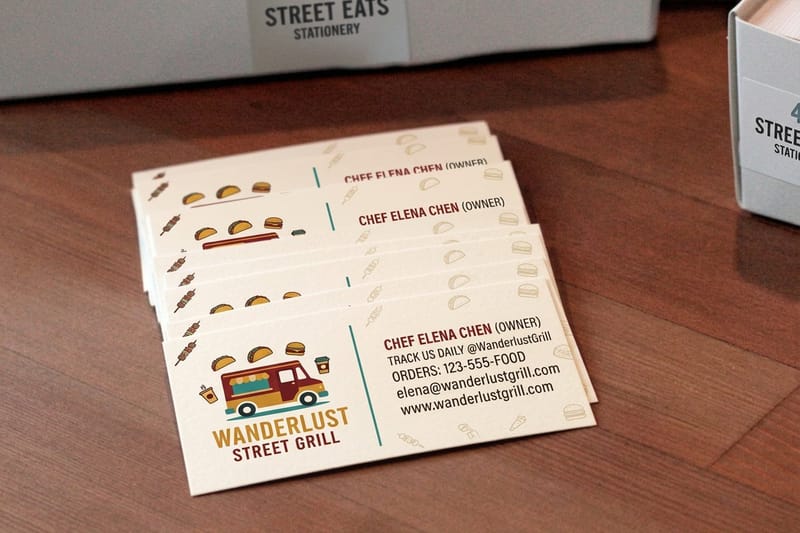
 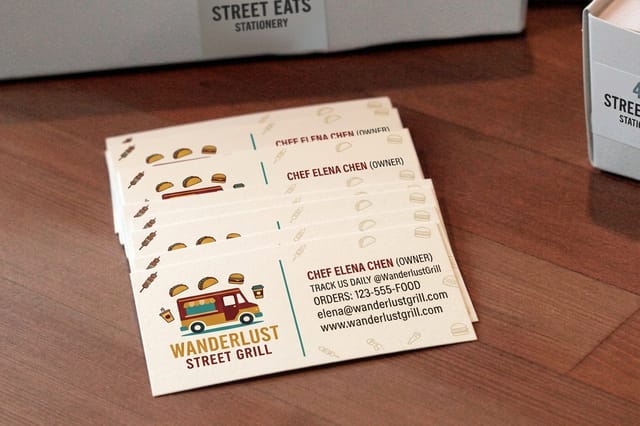 Food Truck Business Cards 100 for $17.57 The card that goes in the bag so the next order finds you.
 Canning, Tin and the Industrial Package
In 1795 the French government offered a prize for a way to keep food edible on long campaigns. Nicolas Appert answered it by heating food in sealed glass and published his method in 1810. That same year, Peter Durand took out an English patent for a tin-plated iron canister, and by 1813 Bryan Donkin and John Hall were canning at commercial scale.
The can was a decade ahead of the tools to open it, and the first dedicated can opener only arrived in 1858. Packaging has always run slightly ahead of the customer, which is why testing a real sample beats guessing. Our walkthrough on building a beautiful DIY kraft packaging box is a fast way to prototype before committing to a run.
- 1810. Appert publishes his preservation method and Durand patents the tin canister, splitting food from its harvest season for good.
- 1852. Francis Wolle patents a paper bag machine, and in 1870 Margaret Knight adds the flat bottom that lets a bag stand up.
- 1871. Albert Jones patents corrugated paper, and by 1874 lined corrugated board is protecting glass in transit.
- 1879. Robert Gair discovers the pre-cut, pre-creased folding carton in Brooklyn and makes printed boxes affordable at volume.
- 1898. The Uneeda Biscuit carton pairs a sealed inner wrap with a printed exterior, and the branded grocery package is born.
Cardboard, Cellophane and the Supermarket Century
The twentieth century removed the shopkeeper. In a self service aisle nobody weighs your flour or vouches for the freshness of the fish, so the package had to take on both jobs at once, proving the contents and persuading the shopper without a word of help.
Transparency was the breakthrough. Jacques Brandenberger invented cellophane in 1908 and a moisture-proof version reached the market in 1927, which meant a buyer could finally see the food and still trust the seal. Everything since has been a variation on that trade between visibility, barrier and cost, and you can see where it landed in our roundup of notable packaging design trends.
- 1908. Cellophane is invented, and by 1927 a moisture-proof coating turns it into the first practical see-through food wrap.
- 1910s. Aluminum foil rolls out of Swiss mills and gives chocolate, cheese and tobacco a light barrier against air.
- 1952. Tetra Pak launches its tetrahedron carton and proves that shelf-stable liquid does not need glass or metal.
- 1959. The all-aluminum beverage can arrives, and Ermal Fraze adds the pull tab in the early sixties.
- 1974. A pack of chewing gum becomes the first product scanned by barcode, wiring packaging into inventory data.
Three quieter inventions from the same stretch still shape how a package feels in the hand:
- The crown cork. William Painter's 1892 bottle cap made a cheap, reliable seal that a customer could hear break.
- The window carton. A die-cut opening plus film let board and transparency work together instead of competing.
- The retort pouch. Flexible laminates in the sixties cut shipping weight dramatically and pushed rigid formats toward premium.
Modern Materials and the Science of Shelf Life
Ask a packaging engineer today what they actually design and the answer is rarely the graphics. It is a barrier: a stack of thin layers chosen so that oxygen, moisture, light, grease and aroma each move at the rate the food needs, for exactly as long as the distribution route demands. For a small brand the printed layer sits outside that barrier: a round label from 0.5 to 4.5 inches on the jar, or a printed mailer box on 14pt uncoated or 18pt gloss cover around it.
That is why a coffee bag has a valve, a cheese wrap breathes, a chip bag is flushed with nitrogen and a chocolate box stays opaque. The graphic layer sits on top of decisions made about physics, and the print process has to survive whatever the barrier requires, whether that means direct print, a laminated film or a printed sleeve wrapped over a rigid box.
- Oxygen. The main enemy of fats and pigments, controlled with foil, metallized film or high-barrier coatings.
- Moisture. Crispness and caking both live here, which is why liners and coated board matter more than thickness alone.
- Light. Opaque board and dark films protect oils, dairy and anything with delicate color.
- Aroma. Sealed pouches keep the smell in, and a one-way valve lets coffee degas without letting air back in.
- Handling. Rigid boxes, corner strength and tape closure decide whether the package survives the last mile intact.
Quantity and price
Packaging pricing and specifications
Real configurator numbers. Unit cost drops as the run grows, exactly as it has since 1879.
| Quantity | Price Per Unit | Total |
|---|---|---|
| 250 | $2.85 | $711.78 |
| 500 | $1.42 | $711.78 |
| 1,000 | 79.7¢ | $797.02 |
| 2,500 | 53.5¢ | $1,338.30 |
| 5,000 | 44.6¢ | $2,231.42 |
| 10,000 | 40.4¢ | $4,044.70 |
The Eco Future of Food Packaging
The multilayer laminate that solved shelf life created the recycling problem, because a package made of three bonded materials is usually recyclable as none of them. The current wave of packaging design is a deliberate walk back toward simplicity, and it looks a lot more like 1900 than like 1990: a single-material box on 14pt uncoated cover or a paper label on a glass jar keeps the package in one recycling stream. 4OVER4.COM prints on FSC certified stock with low-VOC soy inks.
Single-material board, molded fiber trays, water-based coatings, right-sized cartons and print that uses less ink coverage are all part of it. If you are choosing a direction for a small food brand, start with the practical options in our list of eco-friendly packaging ideas for your brand rather than chasing a label nobody at the counter understands.
- Mono-material. One substrate through the whole pack so a customer can recycle it without separating layers.
- Molded fiber. Pressed pulp replaces foam trays and inserts, and it takes a printed sleeve or band cleanly.
- Right-sizing. A carton cut to the product removes void fill, cuts freight and reads as considered rather than wasteful.
- Uncoated kraft. Natural stock carries the honesty signal at a lower cost than any special finish.
- Refill and reuse. Sturdier primary containers with lighter refill packs, the return of a very old idea.
Brand the seal
Custom printed packaging tape
A plain carton plus a printed seal is the lowest-waste way to brand a shipment end to end.
Where Your Brand Fits on the Timeline
Most small food brands do not need a new material. They need to pick the era their product belongs to and commit to it. A cold-pressed juice belongs in the transparency era. A slow-fermented sourdough belongs in the kraft and stamp era. A confection that costs thirty dollars belongs in the foil and rigid box era.
Naming plays into the same decision, and if you are still settling on one, our list of food truck name ideas is a good place to test how a name looks in print. Then carry it across every touchpoint, including the small ones: Food Truck Business Cards in the bag start at $17.57 and do more repeat-order work than most people expect, as the food truck business cards video shows.
- Artisan and handmade. Kraft board, one or two ink colors, a stamped or printed seal, minimal coverage.
- Fresh and clean. White stock, a window or clear film, generous space, cool restrained color.
- Premium and gift. Rigid boxes, foil accents, heavier board, a lid that resists as it lifts.
- Bold and fast. Saturated color, oversized type, high-contrast graphics that read from across a market stall.
- Regulated categories. Compliance panels planned first, so the legal text never crowds out the brand later.
The small touchpoint
Cards that ride along with the order
A printed card in the bag carries the name home, which is the same job a potter's stamp did on an amphora.
What Every Era Teaches a Packaging Designer
Every era of packaging solved a problem and then handed the solution to designers as a visual shortcut. Knowing which shortcut you are pulling is the difference between a package that feels inevitable and one that feels borrowed from a competitor who happened to get there first. Kraft board reads as the 1900 grocer, a window carton reads as the 1950s supermarket, and clear film reads as the freshness cellophane promised from 1927.
Design history rewards this kind of looking in every discipline, not just in packaging, which is one reason a study of movements and makers is time well spent for anyone who prints for a living. The same instinct runs through our look at must-see graphic designs, where the context behind a piece explains its power better than the surface ever could.
- The seal sells trust. Anything a customer must break to open reassures them before they taste a thing.
- The panel is the pitch. Since 1879 the front face has been the ad, so treat it as one.
- Transparency is a claim. Showing the food is a promise, so only show it when it looks its best.
- Convenience wins repeats. Resealing, pouring and stacking decide whether someone buys the same product twice.
- Restraint is the new signal. Less ink, less material and a clean recycling story now read as quality, not as cheapness.
Compare formats
Popular packaging products, side by side
Stock, structure, size, quantity, turnaround and price lined up in one view.
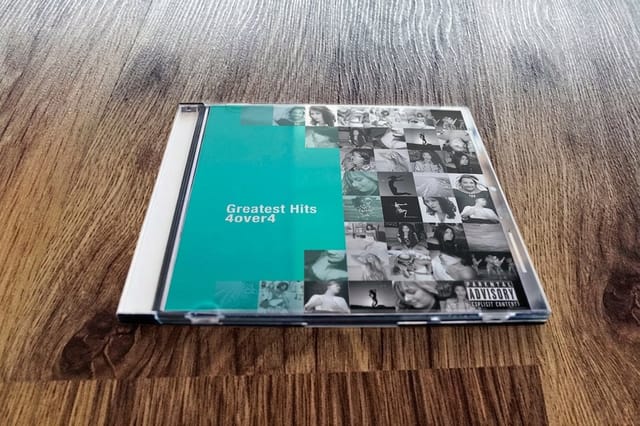 Cd Covers | 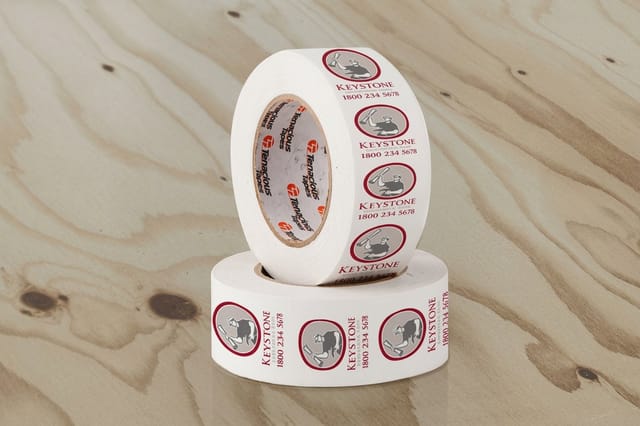 Packaging Tape | 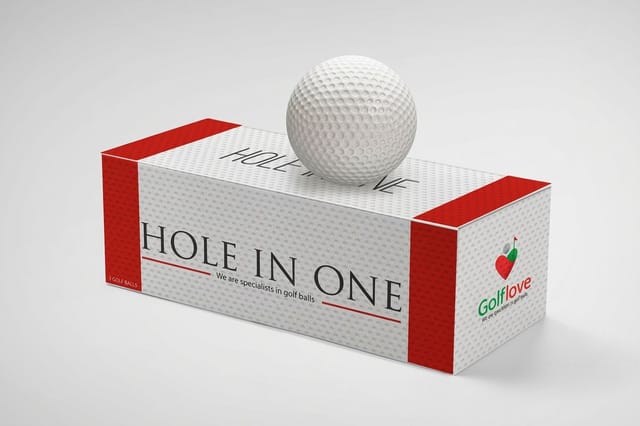 Golf Ball Boxes | 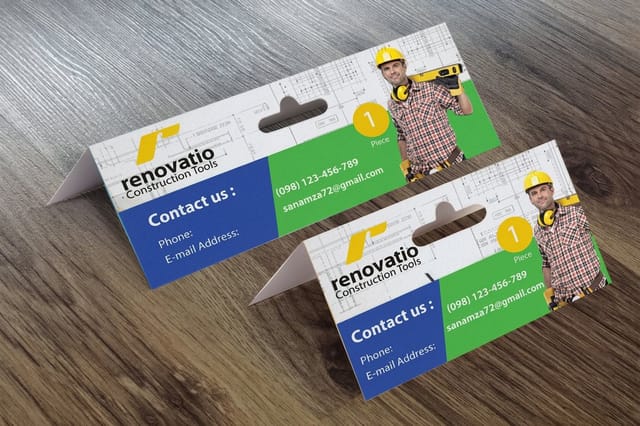 Header Cards | |
|---|---|---|---|---|
| Min price | $75.80 | $347.11 | $269.11 | $218.30 |
| Paper / stock | 100# Gloss Text | - | 14pt Uncoated Cover | 14pt Uncoated Cover |
| Finish | Standard Finish | - | Standard Finish | Standard Finish |
| Size | 4.75" x 4.75" Single Panel | 2" x 55 Yard Tape (36 rolls/case) | 1.7" x 1.7" x 5" | 3.5" x 4" scores to 3.5" x 2" |
| Default qty | 25 | 1 | 50 | 1,000 |
| Turnaround | 5 business days | 20 business days | 7 business days | 6 business days |
| Rating | ||||
| View & customize | View & customize | View & customize | View & customize |
Printing Your Own Chapter of the Timeline
Once the era is chosen, the work becomes specification. Substrate, structure, closure, print method and finish, in that order, because each one narrows the next. Choosing a finish before choosing a stock is how good concepts end up impossible to produce at a sane price.
Work through the structural decisions with our guide on how to design custom food packaging, size the run against the formats in the packaging printing collection, and if you are still weighing budget against shelf impact, the tradeoffs are laid out plainly in our rundown of food packaging options for small businesses.
Match the material to the era you chose
- Heritage and handmade. Uncoated kraft board with a single dark ink and a printed seal.
- Modern grocery. Coated white board, full color print, a matte laminate for fingerprint resistance.
- Premium gift. Rigid box construction with foil or spot gloss on an otherwise quiet surface.
- Shipping and fulfillment. Corrugated mailers closed with printed tape so the brand survives the courier.
Start fast
Packaging templates and print-ready blanks
Free layouts plus exact-size dielines so your artwork lands inside the safe area on the first try.
Wally walks you through the packaging timeline
Four eras, one shelf, and where your product belongs
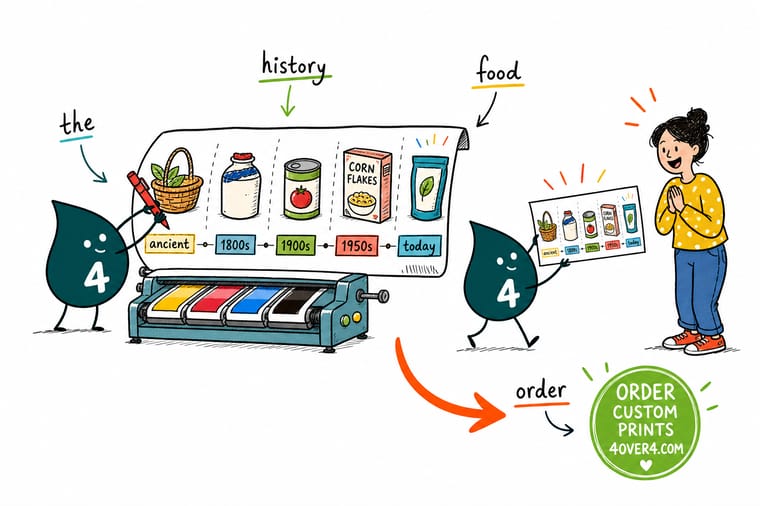
Packaging history is really a list of solved problems. Clay and glass solved spillage. Canning solved spoilage. The folding carton made printing part of the package. Film made the food visible. Barriers stretched shelf life, and recycling pushed us back toward simple board. Pick the era your product belongs to, choose the material that already says it, and let the structure decide the artwork instead of the other way around.
Design your packaging →The Short Version of a Very Long Story
Explore more
More packaging reading and print formats
Printed cannabis boxes, 250 for $711.78 in 7 business days, printed packaging tape, food truck business cards at 100 for $17.57 in 3, and guides to food, cookie and eco packaging.
 Collection Packaging Printing Boxes, wraps, tape and inserts for food and retail brands. Product Cannabis Packaging Rigid printed boxes built for compliance panels and shelf impact. Product Custom Printed Packaging Tape Brand the seal, the modern heir to the wax stamp. Product Food Truck Business Cards The card in the bag that brings the next order back.
  Guide Design Custom Food Packaging Structure, substrate and artwork, in the right order.
  Guide Options for Small Businesses Budget against shelf impact, laid out plainly. Guide Food and Cookie Packaging Formats that suit bakeries, delis and gift boxes.
  Article Packaging Design Trends Where the transparency and barrier tradeoff landed. Article Eco-Friendly Packaging Ideas Practical moves toward simpler, recyclable formats.
 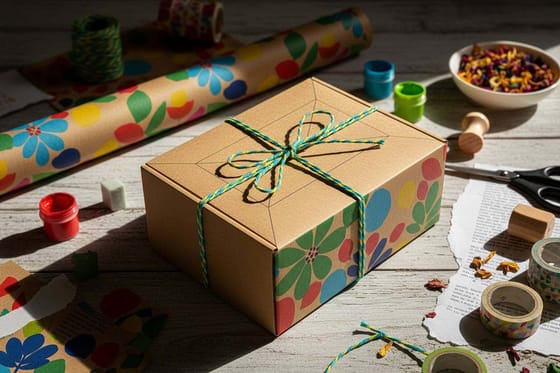 Article DIY Kraft Packaging Box Prototype the structure before you commit to a run.
  Article Food Truck Name Ideas Test how a name looks once it is printed.
  Article Must-See Graphic Designs Why context explains the power of a piece.
 Print the label first, then the box around it
Pick the era your product belongs to, choose the structure that protects it, and print packaging that looks like it was always meant to hold your food.
Food Packaging History FAQs
What is the history of packaging in short?
Packaging started as whatever nature supplied, gourds, leaves, skins and fired clay, and stayed that way for thousands of years. Preservation science and the tin can arrived around 1810, the pre-cut folding carton in 1879 made printed boxes affordable, cellophane in 1908 added transparency, and cartons, foil and plastics carried food through the supermarket century. The current chapter walks back toward single-material board and lighter print for recyclability. For the applied version, see our guide to designing custom food packaging.
How do I choose the right packaging for a food brand?
Work in order. Decide what the food needs first, which means barrier against oxygen, moisture, light and aroma for the shelf life you want. Then pick the structure, a folding carton, a rigid box, a pouch or a corrugated mailer. Only then choose stock, print method and finish. Picking a finish before a substrate is the most common way a good concept becomes unprintable at a sensible price. Our small business packaging options guide compares the practical routes.
What does custom food packaging cost and how are prices set?
Price comes from four things: the substrate, the structure, the print coverage and the quantity. Rigid and specialty formats sit at the top, flat printed items at the bottom, and every format drops sharply in unit cost as the run grows. At 4OVER4.COM, Cannabis Packaging starts at $711.78 per run, Printed Packaging Tape starts at $347.11, and Food Truck Business Cards start at $17.57. The live configurator on each product page prices your exact size, stock and quantity before you order.
What sizes, stocks and finishes are available for food packaging?
Packaging formats run from small folding cartons through rigid gift boxes, printed tape, sleeves, labels and corrugated mailers, in stock sizes plus custom dimensions on most structures. Stock choices cover coated white board for full-color work, uncoated kraft for a natural handmade look, and heavier caliper board for rigid construction. Finishes include gloss and matte lamination, soft-touch, spot gloss and foil accents. Each product page lists its exact size, stock and finish options in the specs panel.
How long does packaging printing take to print and ship?
Turnaround depends on the format and the finish you select. Flat printed items such as business cards move fastest, while structural packaging needs die-cutting, gluing and assembly time before it ships, and special finishes such as foil or soft-touch lamination add a production step. Every product page shows the available turnaround options with your quantity, and the estimated ship date updates as you change them, so you can see the tradeoff between speed and finish before you commit.
