
The Open House Print Materials That Fill a Showing


Emma is our prepress and print production voice, built from the knowledge of our production team, with over 20 years in printing.
What Belongs in an Open House Print Kit
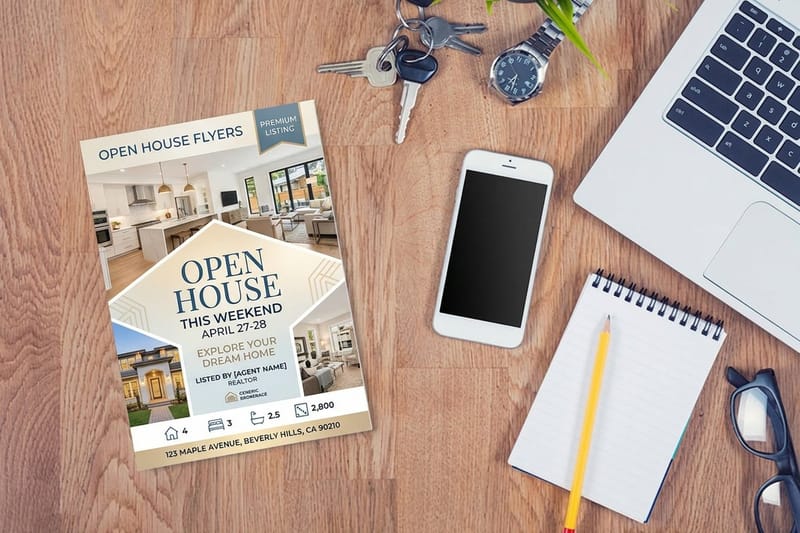
Open house materials are the printed pieces that carry a showing from the street to the mailbox: directional signs and a yard sign rider outside, property flyers, spec sheets and business cards inside, and neighborhood postcards and thank-you notes after. They move the two numbers an open house lives or dies on, how many people find the house and how many of them still remember it on Tuesday. Signage pulls drivers off the main road, and the paper a visitor carries out keeps the address, the price, and your phone number in a buyer's hand long after you lock the door.
Digital does the reach, print does the room. A listing portal gets someone curious on Wednesday. A directional arrow at the corner is what makes them turn on Sunday, and a printed flyer is what they hand to the spouse who could not come along.
Think of the kit in three layers. Outside is anything a stranger sees from a moving car: the yard sign and its rider, directional arrows at every turn, a flag or balloons at the driveway. Inside is what a visitor touches: the property flyer on the counter, a spec sheet for the finishes and the HOA numbers, the sign-in sheet, your card. After is what lands in a mailbox: a neighborhood postcard and a thank-you note to everyone who signed in. Skip a layer and the event leaks buyers.
Layer one: everything visible from the street
Assume your visitor is driving 35 miles per hour and glancing sideways. That means large type, one message per sign, and an arrow that actually points the way the car should turn. Directional signs at the two nearest intersections usually do more for attendance than the sign in the yard itself.
Layer two: the handouts on the kitchen island
Print more flyers than you think you need, and stage them where people naturally stop. A single stack by the front door is a mistake. Put one set at the entry, one on the island, and one in the primary bedroom, because that is where couples pause to talk about whether the house works.
Layer three: capture and follow-up
A printed sign-in sheet still outperforms a tablet with a form on it, because nobody has to think about what happens to their data. Pair it with postcards you mail the week after, so the people who liked the house hear from you before they hear from another agent.
The pieces that carry your name, not the listing
Business cards, a short seller-services sheet, and a recent-sales card do the quiet work. Half the people at a Sunday open house are neighbors deciding who will list their own home next spring, and they are judging your materials while they walk your listing. Reorder your cards from the business cards printing range with the same photo and phone number as the flyer, so the neighbor who pockets one connects it to the listing.
Shop the event
Open house printing collection
Signage, flyers, postcards, and invitations built for one busy Sunday.
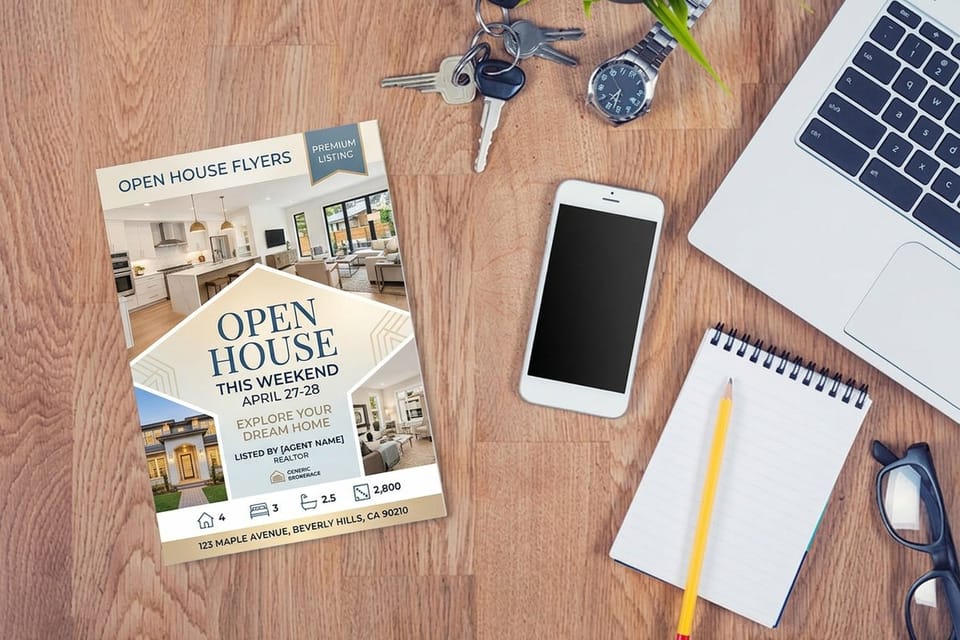
The Open House Materials List for One Sunday
A well-signed suburban open house draws 15 to 40 groups, and this list covers that crowd with spares. Order the pieces top to bottom, mailer first and flyers last, so the flyer on the counter carries Friday's price.
- Neighborhood postcards. 200 to 500 on 14pt gloss cover, in 4 x 6 or 4.25 x 6.25 inches, sent to print 12 days before the showing.
- Directional signs and the yard sign rider. One arrow per turn and never fewer than two, ordered 10 days out in the same artwork as the rider.
- Invitations. 50 to 100 at 5 x 7 inches on 14pt gloss cover, mailed 7 days out to your buyer list, past clients and co-broker agents.
- Property flyers and spec sheets. 75 to 100 flyers on 100# gloss text at 8.5 x 11 inches plus 50 spec sheets, printed 4 days out once the price is set.
- Sign-in sheets. 10 pages, printed the day before and clipped to a board that sits flat on the counter.
- Business cards. 100 in the stack by the door and a spare box in the car.
Postcards, invitations and flyers each print in 3 business days at standard turnaround, so the two-week plan further down leaves room for shipping and for a price change late in the week.
Why Open Houses Still Move Listings
Agents argue about whether open houses sell the house they are held in. Often they do not. What they reliably produce is a pipeline: unrepresented buyers who walked in without an agent, neighbors who are two months from listing, and the feedback that tells a seller their price is off before the listing goes stale.
That is the honest reason to invest in the print. You are not printing for one Sunday, you are printing a repeatable system. Build it once with the realtor open house kit, keep the layout, and swap the photos and the address each time. Open House Flyers start at $57.11, which is a rounding error against a single commission.
- Unrepresented buyers. They walk in without an agent, and a flyer with your face on it is what they dig out of the car door pocket a week later.
- Neighbor intelligence. The couple three doors down is scouting your marketing before they scout your price opinion.
- Seller proof. Photos of a room full of visitors and a full sign-in sheet make a hard price conversation much easier.
- Real-time feedback. Twenty people saying the same thing about the kitchen is data your seller can act on this week.
- Co-broker exposure. Agents who preview a home in person bring buyers back for a private showing.
The pattern holds across other industries too, which is why the same three-layer approach appears in a restaurant marketing materials checklist and in a trade show booth materials checklist. Draw people in, hand them something physical, then follow up in the mailbox while the memory is warm.
Print picks
Three open house formats worth ordering first
Live prices, ready to customize with your listing photos and details.
 Open House Flyers 100 for $57.11 The counter handout with photos, specs, price, and your phone number.
 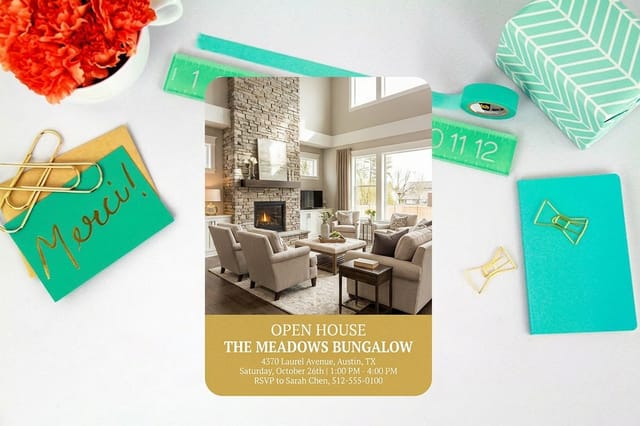 Open House Invitations 25 for $19.77 Send to your buyer list and to the agents you want walking through.
 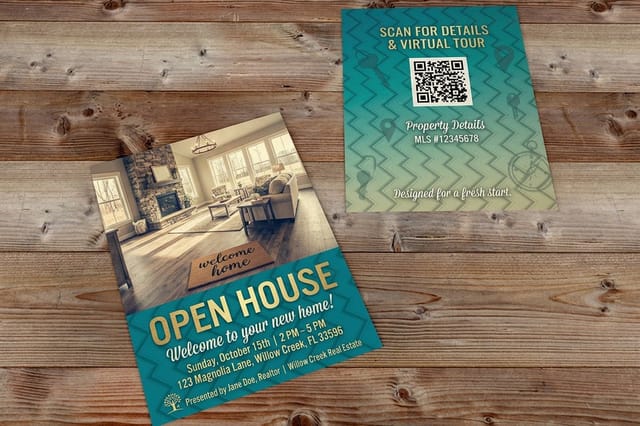 Open House Postcards 50 for $16.48 Mail the surrounding blocks before Sunday and again after it sells.
 Signage That Turns Passing Cars Into Foot Traffic
Signage is the print that returns most for an open house, and it is the piece most agents under-order. One sign in the yard tells the people already on your street. Four signs on the approach routes tell everyone who was driving somewhere else.
Map the route before you order. Stand at the nearest arterial road and drive to the house the way a stranger would, marking every decision point. Each turn needs its own sign facing the oncoming lane. The guide to effective open house directional signs walks through placement, legal setbacks, and the sight-line math in detail.
- Yard sign with a rider. The listing sign lives there all week. The open house rider goes on Saturday and comes off Sunday night.
- Directional arrows. One per turn, minimum two per event, placed on the right side of the road facing traffic.
- A-frame at the driveway. This is the sign that says the door is unlocked and you are welcome to walk in.
- Flag or balloon cluster. Motion catches peripheral vision, which is the only vision a driver has to spare.
- Interior signage. Small cards that name a recent renovation, the school district, or the finish on a countertop answer questions while you are talking to someone else.
Check your municipality and HOA rules before Saturday. Placement windows, right-of-way distances, and how early you may set up all vary, and a code officer removing your arrows at noon costs you the second half of the event.
The Two-Week Print Timeline Before Showing Day
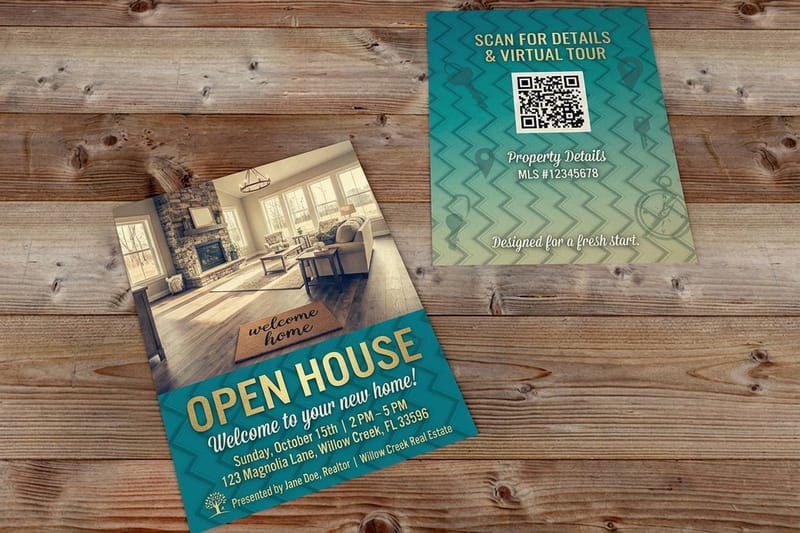
Nearly every print problem at an open house is a scheduling problem. The mailer has to reach mailboxes before the event, the signage has to arrive before the weekend, and the flyer has to reflect whatever the price is on Friday afternoon. Work backward from the door opening.
Two weeks is comfortable. One week is workable if you order the mailer first and the flyers last. Anything tighter and you should pay for the rush turnaround rather than accept a mailer that lands on Monday.
- Day 14. Photos finalized, floor plan measured, copy written. Nothing prints well from unfinished content.
- Day 12. Send the neighborhood postcards to print so the mailing window opens with room to spare.
- Day 10. Order signage, riders, and directional arrows together, because they share artwork and ship as one package.
- Day 7. Send invitations to your buyer list and to the co-broker agents you want previewing the home.
- Day 4. Print flyers and spec sheets, after any price adjustment has been decided.
- Day 1. Print the sign-in sheets, walk the route, and stage each stack of flyers in the room where it belongs.
Keep the source files organized by listing so the next event is a swap rather than a rebuild. Agents who run open houses weekly get their whole print order down to about fifteen minutes once the templates exist.
How Many of Each Piece to Order
Quantity is where budgets get wasted in both directions. Order too few flyers and you spend the last hour apologizing. Order a thousand and you carry nine hundred to the next listing, where the address is wrong. Base the numbers on expected attendance, then add the neighbors.
A useful planning figure for a well-signed suburban open house is 15 to 40 groups, and a group takes one flyer, not one each. Price breaks fall fast, so printing for two events at once is usually cheaper than printing for one twice.
- Flyers. 75 to 100 per event. Extra copies go in the car for the next showing and in a weatherproof box on the yard sign.
- Spec sheets. 50, for the buyers who ask about the roof age, the HOA dues, and the utility averages.
- Postcards. 200 to 500, addressed to the surrounding blocks. This is your attendance driver, not your leftover budget.
- Invitations. 50 to 100 across your buyer list, past clients, and the agents working that price band.
- Business cards. 100 in the stack, and a fresh box in the car, because you will hand out more than you plan to.
- Sign-in sheets. 10 pages, printed fresh, on a clipboard that does not wobble on a countertop.
Reorder the mailer for the follow-up wave before the event, not after. A just-sold card to the same list is the single most effective listing generator most agents run, and it costs less than the coffee you bought for the open house.
Quantity and price
Open house flyer pricing and specs
Real configurator numbers. Print for two events at once and the unit cost drops.
| Quantity | Price Per Unit | Total |
|---|---|---|
| 50 | 79.1¢ | $39.54 |
| 100 | 57.1¢ | $57.11 |
| 200 | 37.3¢ | $74.69 |
| 300 | 28.6¢ | $85.68 |
| 400 | 24.4¢ | $97.76 |
| 500 | 21.8¢ | $108.75 |

Neighborhood Postcards That Fill the Room Before Sunday
The people most likely to attend your open house already live within a few blocks of it. Some are curious about what their own home is worth. Some have a friend or a parent who wants to move onto the street. All of them see a postcard whether or not they meant to read the mail.
Keep the card blunt: the address, the day, the hours, one strong exterior photo, and your name. Open House Postcards start at $16.48, so the whole mailing usually costs less than a single boosted social post and reaches a list that actually lives near the property.
- Front. One photo that shows the house at its best, the words Open House, and the day and time in type readable at arm's length.
- Back. Two or three specs, a short line about what makes the home unusual, your phone number, and your license information.
- Radius. The 200 to 300 homes closest to the listing, then the streets that feed onto it.
- Timing. Aim for delivery on the Wednesday or Thursday before, so the card is still on the counter on Sunday morning.
- Second wave. The same list gets a just-sold version once it closes, with the days on market where the price used to be.
Mail the block
Open house postcards
Cover weight, coated on the photo side, sized for the mail stream and priced for volume.
Invitations for Buyers and Co-Broker Agents
A postcard is public. An invitation is personal, and the difference shows up in who walks through the door. Buyers on your own list, past clients with a referral in them, and the agents who work that price band deserve something that arrives addressed to them.
This is also how you run a broker preview or a first-look hour before the public event. Open House Invitations start at $19.77, and a heavier stock with a clean layout signals a listing worth blocking an hour for. Hand a few to the sellers as well, because their neighbors and coworkers are a warm list you cannot buy.
- Buyer list. Anyone you have shown a comparable home to in the last ninety days.
- Co-broker agents. The names that keep appearing on nearby sales, invited to a preview window before the public hour.
- Past clients. They forward the invitation to exactly the person you want, without being asked.
- Sellers. Ten in their hands turns into ten conversations you would never have started.
- Local businesses. The coffee shop counter and the salon window reach the same neighborhood your mailer did, twice.
Send it addressed
Open house invitations
Heavier stock and optional accents for the buyers, past clients, and co-broker agents you want in the door first.
Stocks, Coatings, and Sizes That Survive a Busy Sunday
Materials matter more here than on most marketing pieces, because everything you print gets handled by wet hands, folded into a pocket, and left on a car seat in the sun. A flimsy flyer reads as a flimsy listing, and buyers make that leap in about a second.
For flyers, a heavier text or light cover stock with a gloss finish keeps photos saturated and resists creasing. If visitors will write notes on the sheet, choose an uncoated or matte finish so a pen actually works. Postcards want cover weight with a UV coating on the photo side, since they travel through mail equipment.
- Flyers. Letter size, full color both sides, gloss for photography and matte when people will write on it.
- Spec sheets. Lighter stock is fine, since these are read once and filed or discarded.
- Postcards. Cover weight so they arrive flat, with the address side left uncoated for clean printing.
- Invitations. Thicker stock with an optional soft-touch or foil accent, because this piece is a signal as much as a message.
- Anything outdoors. Weather-resistant material only. Paper in a plastic sleeve curls and fogs by the second hour.
Compare formats
Popular flyer formats, side by side
Open house postcards run 50 for $16.48 and flyers 50 for $39.54, both out in 3 business days.
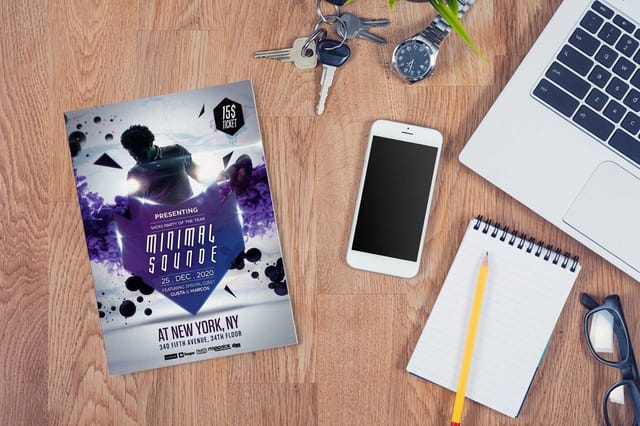 Standard Flyers | 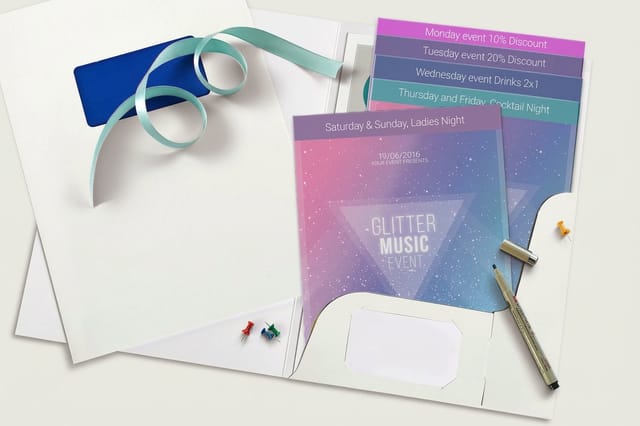 Staggered Cut Flyers |  Grand Opening Flyers |  Photography Flyers | |
|---|---|---|---|---|
| Min price | $39.54 | $218.59 | $39.54 | $39.54 |
| Paper / stock | 100# Gloss Text | 100# Gloss Text | 100# Gloss Text | 100# Gloss Text |
| Finish | Standard Finish | Standard Finish | Standard Finish | Standard Finish |
| Size | 4.25" x 5.5" | 8.5" x 11" | 4.25" x 5.5" | 4.25" x 5.5" |
| Default qty | 50 | 50 | 50 | 50 |
| Turnaround | 3 business days | 5 business days | 3 business days | 3 business days |
| Rating | ||||
| View & customize | View & customize | View & customize | View & customize |
Follow-Up Print That Works After the Last Visitor Leaves
The event ends when the follow-up ends, not when you pull the signs. Every name on the sign-in sheet is a lead with a timestamp, and the agents who convert them are the ones who put something in the mail within seventy-two hours while the house is still the one everyone is comparing against.
Build the follow-up pieces at the same time as the event pieces so nothing waits on design. Start from a print-ready layout, drop in the address and photos, and send the whole order together. The same discipline applies in any local business launch, which is why an event set like the pizzeria opening print set or a photographer marketing materials list is assembled in one pass rather than piece by piece.
The four follow-up pieces worth printing
- Thank-you notes. A short handwritten line to everyone who signed in, mailed Monday, with your card tucked inside.
- Seller report. A one-page recap of attendance and feedback, which is the calmest way to open a price conversation.
- Just-sold postcards. The same radius as the first mailing, showing the neighborhood what your marketing produced.
- Recent-sales sheet. Kept in the car for the neighbor who asks what their own home might bring.
Keep the artwork, the quantities, and the vendor consistent across listings. Repetition is what turns a stack of one-off print jobs into a neighborhood recognizing your name before you knock.
Start fast
Flyer templates and print-ready blanks
Free layouts plus exact-size blanks so your listing photos and margins land right the first time.




Wally maps your open house print run
Signs to the door, paper in their hands, a postcard in the mailbox
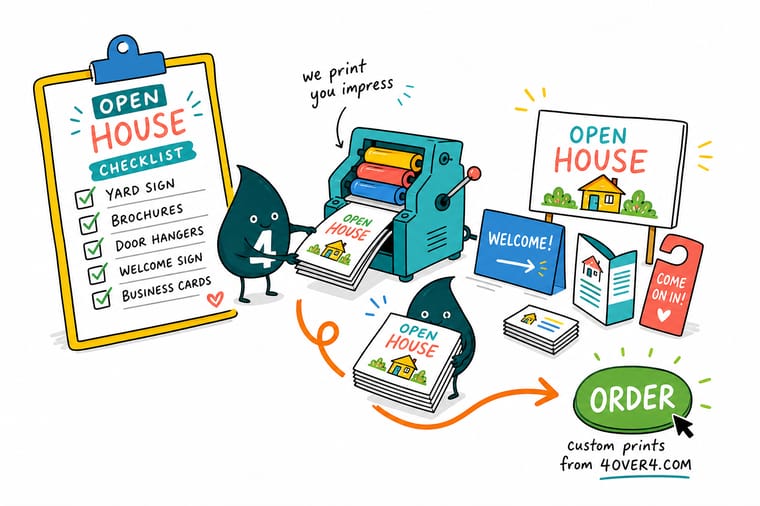
Not sure where to start? Work the three layers in order. Signage on the approach routes creates the traffic, one strong flyer and a spec sheet inside the home carry your details home with every group, and a postcard to the surrounding blocks does both jobs twice, once before the event and once after it sells. Order the mailer first, the signage next, and the flyers last so the price on paper is the price on Sunday.
Design your open house flyers →An Open House Checklist You Can Run Every Weekend
By the numbers
The numbers behind a weekend open house order
Plant scale, delivery record, and the production days and quantities to plan each listing around.
- 10B+ Cards and print products, printed since 1999.
- 150,000+ Businesses served, across every industry.
- 3 layers Signage, handouts, follow-up, the working open house kit.
- 99.8% On-time delivery, tracked orders.
- 3 business days Standard production, for open house postcards, invitations, and flyers.
- 14 days Order window before the showing, postcards on day 12, signs on day 10, invitations on day 7, flyers on day 4.
- 75 to 100 Flyers per event, on 100# gloss text at 8.5 x 11 inches, staged in three rooms.
Keep reading
Guides and kits for the same event
Placement, bundles, and the collection your whole order comes from.
 Open House Directional Signs Placement, sight lines, and how many arrows a route needs.
 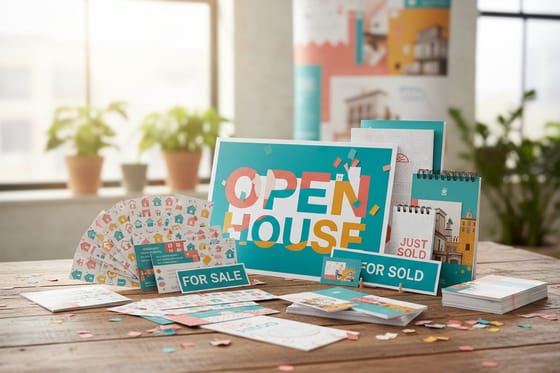 Realtor Open House Kit Every piece for one event, bundled and ready to order.
  Open House Printing Flyers, postcards, invitations, and signage in one place.
 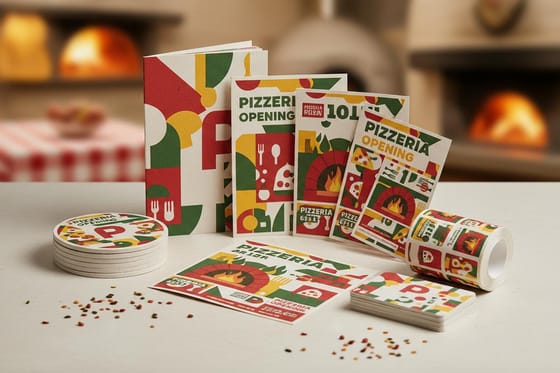 Opening Event Print Set How a launch event assembles its print in a single pass.
 Explore more
More print that fills a room and follows up
Related pages across 4OVER4.COM, one card for every kind of open house piece.
Collection Open House Printing Flyers, postcards, invitations, and signage for the event. Product Open House Flyers The counter handout that carries specs, price, and contact. Product Open House Postcards Mail the surrounding blocks before and after the event. 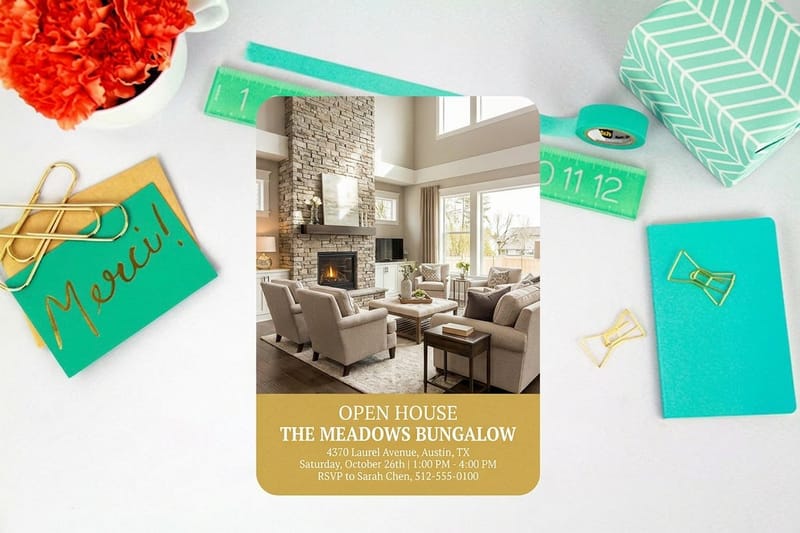 Product Open House Invitations Addressed pieces for buyers, past clients, and agents. Guide Directional Sign Guide Where every arrow goes on the route to the front door. Kit Realtor Open House Kit One bundle covering signage, handouts, and follow-up. Kit Opening Event Print Set A launch-day print bundle built the same three-layer way.
  Article Photographer Materials The print a booked photographer actually keeps in the bag.
  Article Restaurant Materials Checklist The same layered checklist applied to a dining room. Article Trade Show Materials Checklist Draw a crowd, hand out something physical, follow up.
 Ready to print the open house that fills the sign-in sheet?
Order the mailer, the signage, and the flyers as one job, upload your listing photos, and have the whole kit in hand before the weekend.
Open House Materials FAQ
What counts as open house materials?
Open house materials are the printed pieces that run the event from the street to the follow-up. That means curbside items such as the yard sign, its open house rider, directional arrows, and a driveway A-frame, plus in-home pieces such as property flyers, spec sheets, sign-in forms, and business cards, plus mailed pieces such as neighborhood postcards and thank-you notes. Placement is half the job, and the directional sign guide covers where each one belongs on the route.
How do I choose the right open house materials?
Start with the gap you actually have. If attendance is thin, spend on signage and a neighborhood postcard drop, because those are the pieces that create traffic. If people come but never call back, spend on a better flyer and a follow-up mailer, because that is a retention problem rather than a reach problem. Most agents need roughly four directional signs, one solid flyer, and one mailer per listing before anything else is worth adding.
What do open house materials cost and how are prices set?
Price is driven by quantity, size, paper stock, coating, and how fast you need the order. At 4OVER4.COM, Open House Postcards start at $16.48, Open House Invitations start at $19.77, and Open House Flyers start at $57.11. Unit cost drops sharply as quantity rises, so ordering flyers for two events at once is usually cheaper than ordering twice, and every option updates the live total in the configurator before you check out.
What sizes, stocks, and finishes are available for open house materials?
Flyers print in standard letter and half-page sizes on text and light cover stocks, with gloss for photo-heavy layouts or matte and uncoated when visitors will write on them. Postcards run in common mailing sizes on cover weight, with optional UV coating on the photo side and an uncoated address side stock available. Invitations take heavier stocks with optional soft-touch, foil, or spot gloss accents. Every size, stock, and finish is priced live on each product page.
How long does printing and shipping take before an open house?
Production depends on the product and the options you pick, and rush turnarounds are available on most open house pieces. The safe plan is two weeks: send postcards to print around day twelve so the mailing window has room, order signage around day ten, invitations around day seven, and flyers around day four once the price is final. If you are inside a week, print the mailer first and the flyers last.
