
Trade Show Trends to Watch in 2026 and the Print That Delivers Them


Tobias is our voice for cutting, binding and large format, built from the knowledge of our production team, with over 20 years in printing.
The trade show trends to watch in 2026 are experience-first booths, print paired with screens, gamified engagement, reusable sustainable displays, and impact measured instead of square footage. Each one rests on the same four printed pieces, so the practical question is which wall, table, stand and takeaway you order, and at what size.
Booth zones and the print that fills them
| Booth zone | The job it does | Product at 4OVER4 | From | Watch for |
|---|---|---|---|---|
| Back wall | Says who you are from across the aisle. Three words and a logo, nothing more | Fabric tube displays | $163.67 | Keep it under 8 ft on an inline booth |
| Photo backdrop | Repeats the logo so it survives cropping in every photo posted | Step-and-repeat banners | $217.50 | Logo repeat every 12 to 18 in, off the vertical grid |
| Table front | Turns a folding table into furniture and hides the boxes underneath | Stretch table covers | $250.00 | Buy to the real table size, 6 ft and 8 ft are not interchangeable |
| Aisle edge | Carries the one offer that stops a walker, at eye height | Retractable fabric banner stands | $159.85 | Fabric kills the glare that ruins vinyl under show lighting |
| Lit feature | Holds attention in a dim hall where flat graphics disappear | SEG displays | $229.00 | Frame plus graphic, and the frame needs a hard case |
Prices are the live starting prices in the configurator, each for one piece at the smallest size: a 36 by 90 inch fabric tube graphic, an 8 by 8 ft step-and-repeat, a cover for a 6 ft table, a 23 by 66 inch economy fabric stand and a 3 ft SEG display. They move with size, quantity and finish. If you are buying one thing this year, buy the back wall, because it is visible for every hour of the show. Compare the full range in the banner stand range.
Experience-first booths
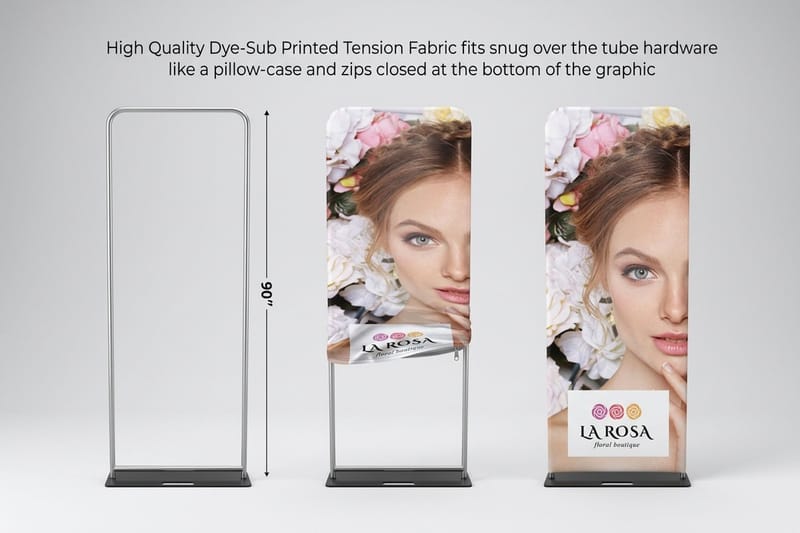
The booths that hold people in 2026 are built as a room, not a wall of information. A back wall carrying three words, a table people can stand at, and one thing to touch or try beats a panel covered in bullet points every time. Nobody reads a booth. They scan it, decide in about three seconds, and either step in or keep walking.
That changes what you print. The wall gets less copy and bigger type, and the detail moves to something a visitor carries away. A fabric tube display at $163.67 gives you a one piece printed room divider that packs into a case you can carry through an airport, which is the practical reason it has replaced hard panel walls for booths under 200 square feet.
The trade-off is honest and worth knowing before you order. Dye sublimated fabric has a slight show-through on a dark solid, so a black wall in a bright hall can look gray unless you specify a blockout liner. Fabric also arrives with fold creases. They relax within a few hours of tension, but if you set up an hour before doors open, you will see them. Vinyl has neither problem and every other one, starting with glare and weight.
The three-second wall
Type on a back wall should read at 20 feet. That means a headline around 4 to 6 inches tall, and no body copy at all. Put the logo in the top third, because the bottom third of every booth is blocked by staff, chairs and boxes for the entire show.
Design it once at full size, print a letter-sized proof, then stand back and look at it from ten feet. If you cannot read the headline, the wall is not finished. Our guide to making banners covers the resolution and bleed side of the same file.
What goes on the table instead
The table is where the detail lives: a one-page sheet, a sample, a printed spec card. A stretch table cover at $250.00 is the cheapest upgrade in the booth because it changes the whole impression of the space and hides the cardboard underneath, which is what visitors see when they stand close.
Measure the table before ordering. A 6 ft cover on an 8 ft table looks like a mistake from the aisle, and show-supplied tables are not always the size the floor plan promised.
Physical meets digital activations
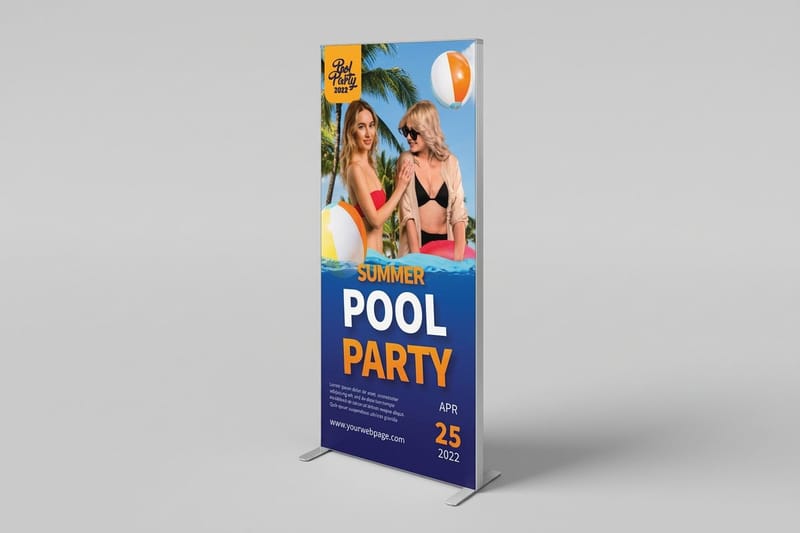
The screen-plus-print hybrid has settled into a shape that works. Print holds the structure and the brand, the screen holds the demo, and a code on the print carries the visit into the follow-up. Booths that tried to be all screen learned that a dark hall full of monitors reads as noise.
A SEG display at $229.00 is the piece that makes the hybrid look built rather than assembled. The graphic is fabric with a silicone bead sewn into its edge, and the bead pushes into a groove in an aluminum frame, so the print sits perfectly flat with no visible hardware. Backlit versions turn the same frame into a lightbox, which is what holds attention in the dim aisles most halls run.
Two limits. The frame costs more than a stand and it needs a hard case, because an aluminum extrusion that gets bent in transit cannot be straightened on site. And the graphic is sized to that exact frame, so if you change frames later you reprint. Buy the frame once and treat the fabric as the annual consumable.
Codes that go somewhere worth going
A QR code that lands on your homepage teaches people not to scan your codes. Point it at the one thing the conversation was about: the spec sheet, the pricing page, the calendar link. Give each printed piece its own URL and you can tell which piece did the work without any tracking beyond your own analytics.
Print the code at 1 inch or larger with clear space around it, and never reverse it out of a photograph. On a wall, put it at chest height, not overhead, because people scan with their arms down.
Gamified engagement
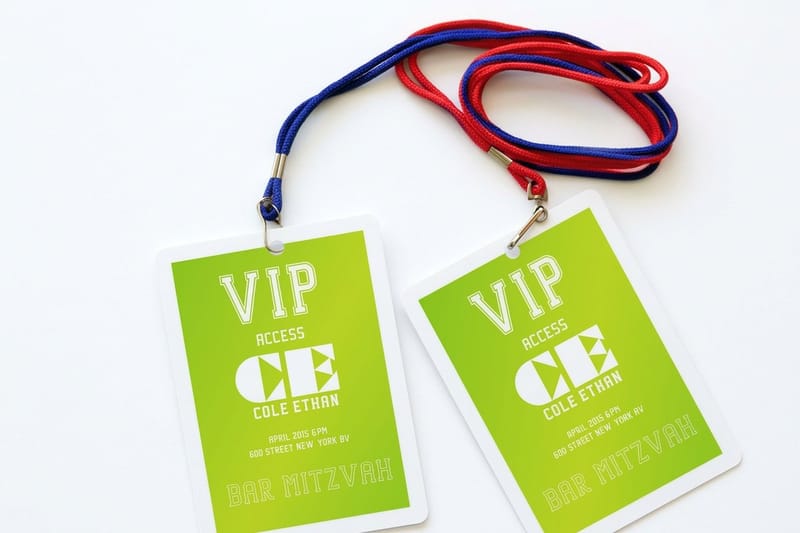
Passport cards, spin-to-win, stamp trails and prize draws are back, and the reason is simple: they give a stranger a task, and a task is easier to accept than a conversation. The print side is small and cheap, which is why it is the trend most exhibitors can act on this year.
The pieces that make it work are a printed card the visitor carries, a clear rule printed where they can see it, and a way to identify your staff. Event badges start at $49.88 and do more than name people. Print the role on them, not just the name, so a visitor knows whether they are talking to a founder or to booth staff.
The failure mode is a game that rewards the wrong behavior. If the prize goes to whoever scans fastest, you collect a queue of badge scans and no conversations. Tie the reward to something that takes 90 seconds, such as answering one question about their own setup, and the same game fills your notes instead of your CRM.
Print the rules, then hold to them
A printed rule card at the table stops the argument at 4pm on day two. State the draw time, the eligibility and the collection method in one short paragraph, in type big enough to read standing up. A fabric banner at $57.20 works well for this because it hangs flat, folds into a bag and does not curl at the edges like paper.
Whatever you promise on the card, do at the stated time and in public. The draw is the moment the booth is busiest all show, and people notice when it slips.
Sustainability takes center stage

The credible version of booth sustainability is not a claim printed on the wall. It is a booth that gets used again. Fabric graphics are washable and pack into a soft case, hardware separates from graphics so you replace one and keep the other, and lighter freight means a smaller shipping bill and a smaller footprint at the same time.
Design for reuse and the savings are real. Keep the year, the show name and the current promotion off the wall and the wall survives four shows instead of one. Put the dated content on a retractable fabric banner stand at $159.85, which is the cheapest thing in the booth to reprint, and swap only that.
Be straight about the limit. Printed polyester is still plastic, and no amount of framing changes that. Reuse is the honest lever, recycling is not, and a booth that ships twice as often to avoid a reprint has not saved anything. If you want a genuine number to report, weigh your crate.
What actually cuts the shipping bill
Fabric packs to a fraction of the volume of rigid panels, and volume is what freight charges. A tube display, two stands and a table cover fit in cases two people can move without a forklift, which also removes the drayage bill that eats small booth budgets. Table covers in the same tension fabric sit in our custom table cover printing range.
Wash fabric graphics cold and hang them to dry rather than pressing them. If a crease survives, steam from the back at low heat. A hot iron on the face melts polyester and there is no repair for that. Our banner material guide compares the stocks side by side.
Impact over visibility
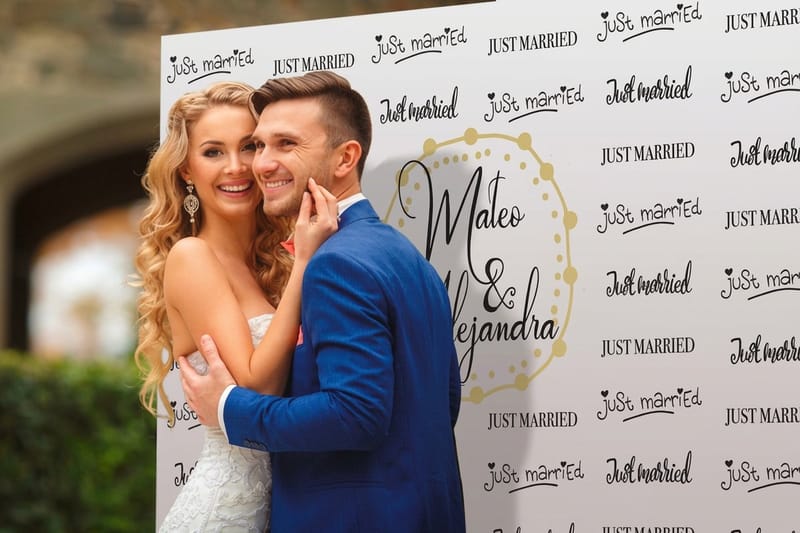
Exhibitors have stopped buying the biggest booth they can afford and started buying the busiest one. A 10 by 10 that runs a full schedule of demos beats a 20 by 20 with two people standing at the back, and it costs a fifth as much to ship.
The print that carries this is the piece that keeps working after the show closes. A step-and-repeat banner at $217.50 puts your logo in every photo a visitor takes and posts, cropped however they crop it, which is why the repeat spacing matters more than the artwork. Set the logo every 12 to 18 inches and stagger the rows so no crop can miss it.
Measuring it does not need new software. Give each printed piece its own short URL, count the badge scans against the number of conversations your team logged, and note which piece people were holding when they walked over. That is enough to decide next year’s budget, and it is more than most exhibitors have.
Where the money should go in a small booth
On a 10 by 10, spend on the back wall and the table first, because they are visible for the whole show. Stands are next. Everything else, including furniture and flooring, is a want. A trade show booth kit at $2,599.00 packages wall, stands and case together for exhibitors who would rather buy the set once than assemble it piece by piece.
Ordering separately is usually cheaper and always more flexible, since you can replace the graphic without touching the hardware. Kits win on time, not on price. Browse the full range in the trade show printing collection.
Booth display pricing and specs at 4OVER4.COM
Display pricing moves with size, hardware and quantity, and the per unit cost drops as the run grows. A SEG display runs from a 3 ft frame to a 20 ft wall and a retractable fabric stand from 23 by 66 inches up to 60 by 92, and most booth pieces take 3 or 4 business days, badges 5. The numbers below come from the live configurator, so you can build the booth budget before you commit artwork.
What to print for a trade show booth comes down to the six pieces below. Each row gives the sizes you can order, the material, the production time and what your file needs to carry.
| Piece | Sizes | Material | Turnaround | What to upload |
|---|---|---|---|---|
| Fabric tube display | 36 by 90 in or 48 by 90 in | 8.8 oz tension fabric | 4 business days | One full size file, logo in the top third, nothing in the bottom 24 in |
| Step-and-repeat banner | 8 by 8 ft, 8 by 10 ft or a custom size | 13 oz smooth blockout vinyl, pole pockets top and bottom | 3 business days | A logo tile repeated every 12 to 18 in, alternate rows offset |
| Stretch table cover | For a 6 ft or an 8 ft table | 8.8 oz tension fabric | 4 business days | Art on the blank for the table you measured |
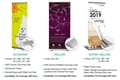
| Retractable fabric banner stand | 23 by 66 in up to 60 by 92 in | 9 oz UV printed coated polyester fabric on an aluminum stand | 3 business days | The offer and anything dated, one message per stand |
| SEG display | 3 ft, 10 ft or 20 ft frame | 6 oz fabric with a sewn in 10 mm silicone edge | 3 business days | Art sized to that exact frame |
| Event badges | 2 by 3 in up to 4 by 6 in, from 25 badges | 30 pt gloss laminated card, 5/16 in drilled hole | 5 business days | A name and role list if you add personalization |
Quantity and price
Retractable fabric stand pricing and specs
Live configurator numbers for the piece most booths reprint every year.
| Quantity | Price Per Unit | Total |
|---|---|---|
| 1 | $159.85 | $159.85 |
You can also earn coins on every order and redeem them against the next show, which is useful when the same booth ships three or four times a year.
Print and display checklist for your next show
Work down this list in order. It is written so that if the budget runs out halfway, you still have a booth that functions.
- Read the exhibitor kit first. It sets your back wall height, your side rail limit, whether you can hang anything, and the drayage rules. Printing before you read it is how a wall gets left in the crate.
- Back wall, sized to the booth. One headline, one logo, no body copy. Order at 8 ft or under for an inline space and keep artwork out of the bottom 24 inches.
- Table cover to the real table size. Measure it. Show-supplied tables are 6 ft or 8 ft and the covers are not interchangeable.
- Two stands, different messages. One for the offer, one for the proof. Fabric rather than vinyl if the hall lights are bright.
- Something to take away. A card, a sheet or a sample, each with its own URL so you know which one worked.
- Badges with roles printed. Name plus role. Visitors decide who to approach based on it.
- A spare graphic for the stand. The cheapest piece is the one most likely to be damaged in transit. Bring the spare, not the regret.
Print it
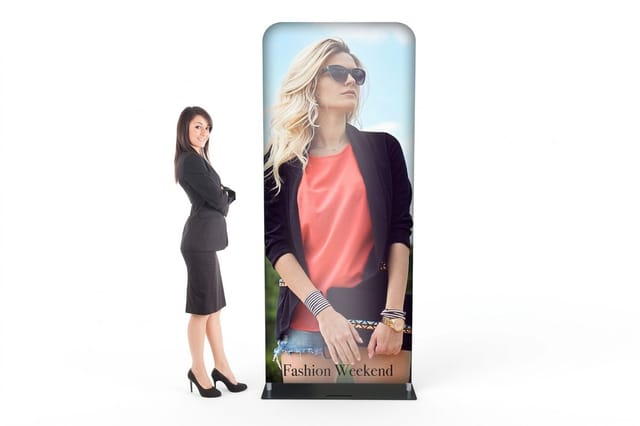
The back wall, ready to ship
Dye sublimated fabric with no seam, on a push-fit tube frame, packed in a carry case.
Set-up order matters as much as the print. Wall first, then table, then stands at the aisle edge once you can see the sightlines from outside the booth. Standing in the aisle and looking in is the only reliable way to spot a stand blocking your own headline, and it takes thirty seconds. The retractable stand setup guide covers the mechanical part, and the signs and banners department holds everything else a booth needs.
Matching the trend to your booth
The same five trends land differently depending on the space you booked and the crowd walking past it.
- Small booth, 10 by 10. A fabric tube wall, a stretch table cover and one retractable stand. That is the whole booth, it fits in two cases, and it costs less than the drayage on a panel system.
- Corner or peninsula booth. Two open sides means two aisles to catch. Put a stand on each corner with different copy and let the back wall stay purely brand.
- Consumer and lifestyle shows. The photo backdrop earns its keep here. A step-and-repeat plus good lighting turns visitors into distribution.
- Medical and technical shows. Detail moves off the wall and onto printed spec sheets at the table. The wall names the category you serve and nothing else.
- Recruiting and career fairs. Badges with roles printed on them, a table cover, and a takeaway card with a QR to the live openings rather than the careers homepage.
Blanks for a wall read at twenty feet
Booth graphics are large format, so the file matters more than usual: a wall printed from a low resolution file shows it at 20 feet. Build the file at full size at about 150 ppi, with 100 ppi as the floor, which for a 36 by 90 inch tube wall means 5400 by 13500 pixels. 4OVER4.COM sizes its blanks to exact product specs with bleed and trim marked, which removes the most common cause of a reprint. Start from a print-ready blank or build on a free design template.
Start fast
Blanks for a wall read at twenty feet
Exact size blanks with bleed and trim marked, so your artwork lands inside the cut line.
Wally builds a 10 by 10 booth that works
Four printed pieces, in the order that matters
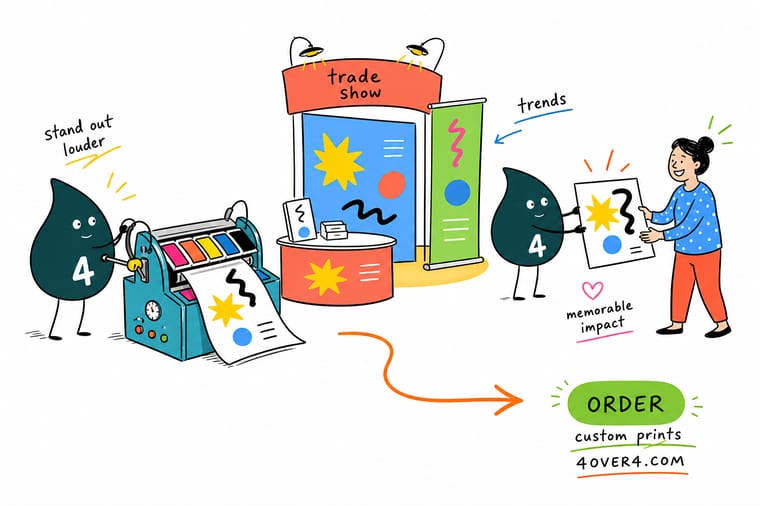
Start with the back wall at 8 feet or under, three words and a logo, nothing in the bottom 24 inches. Add a stretch cover measured to the real table. Put one retractable fabric stand at the aisle edge with the offer on it, and give every visitor something printed to carry away with its own URL. 4OVER4.COM prints all four on fabric that packs into cases you can carry.
Shop trade show displays →What to remember about the 2026 show floor
Explore more
More ways to print and staff your booth
SEG displays run 1 for $229.00 in 3 business days and fabric tube displays 1 for $163.67 in 4.
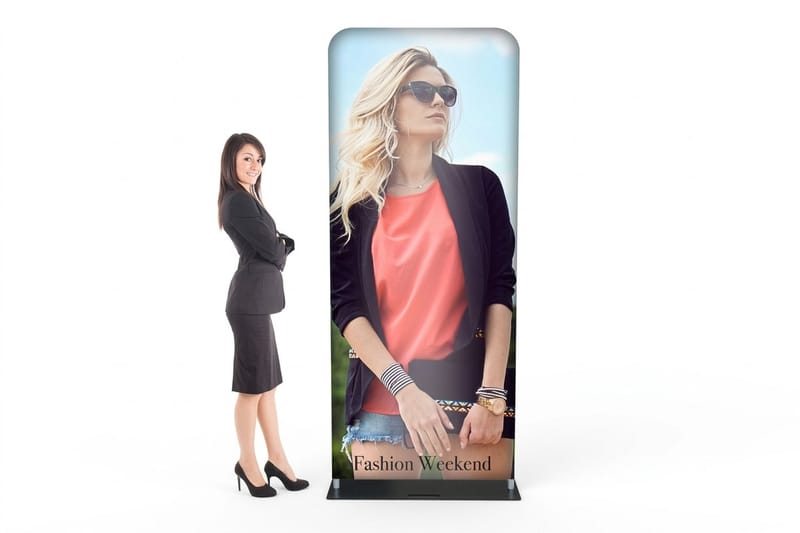 Product Fabric Tube Displays One piece printed back wall that packs into a carry case. Product Step-and-Repeat Banners The photo backdrop that keeps working after the show. Product SEG Displays Silicone edge fabric in an aluminum frame, hardware hidden.
 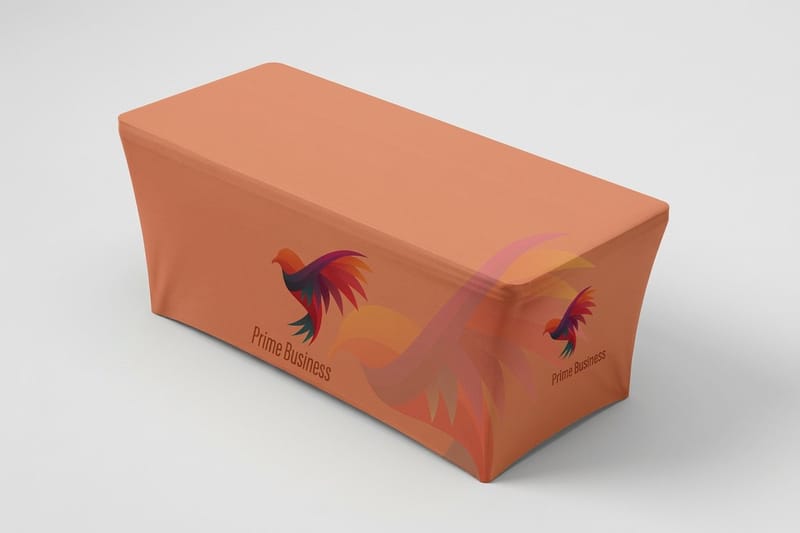 Product Stretch Table Covers Turns a folding table into furniture and hides the boxes. Product Retractable Fabric Banner Stands No glare under hall lighting, and cheap to reprint.
 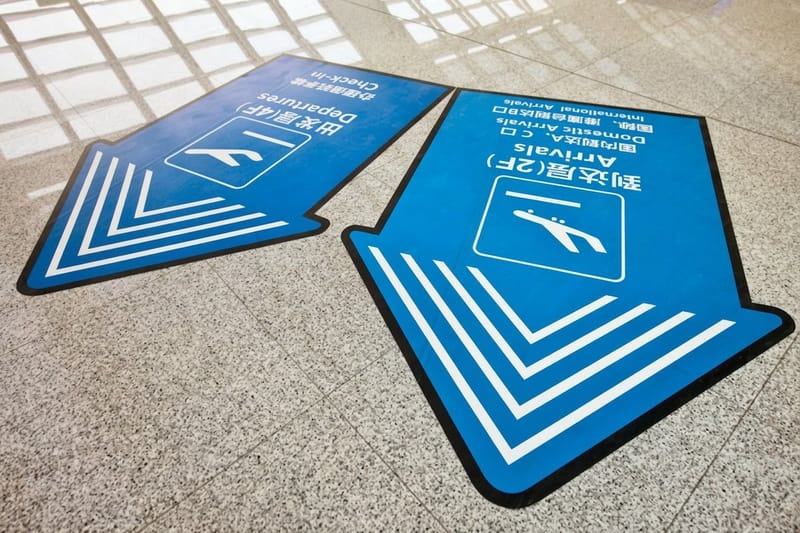 Category Trade Show Printing Walls, stands, covers and badges in one place.
  Guide Set Up a Retractable Stand The setup order that stops a stand falling mid show.
 Ready to print your booth?
Pick the wall, the cover and the stands, drop in your artwork or a free template, and 4OVER4.COM prints it on fabric that ships in cases you can carry.
Common questions about trade show print
How tall can a trade show back wall be?
On a standard inline booth at a US show, 8 feet is the usual maximum for the back half of the space, and the front half nearest the aisle is normally limited to about 4 feet. Corner, peninsula and island booths run on different rules, and hanging signs are separately controlled. Every show publishes its own display guidelines in the exhibitor kit, and that document overrides any general rule, so read it before you send artwork. Print at 8 feet or under and you can take an inline back wall to almost any show without a reprint.
Is a fabric display better than vinyl for a trade show booth?
For indoor booths, yes, for two specific reasons. Fabric does not throw the glare that vinyl throws under bright hall lighting, so your graphic stays readable from an angle, and it packs to a fraction of the volume, which cuts both the freight and the drayage. The costs are real too: dye sublimated fabric shows a little through on dark solid backgrounds unless you specify a blockout liner, and it arrives with fold creases that need a few hours of tension to relax. Vinyl still wins outdoors and anywhere the graphic will get wet or scraped.
What does a small trade show booth cost to print?
At 4OVER4.COM a working 10 by 10 comes together from a fabric tube display at $163.67, a stretch table cover at $250.00 and a retractable fabric banner stand at $159.85, which is the wall, the table and the aisle piece. Add event badges from $49.88 and you have staff identification too. To see the packaged route set up, the fabric trade show booth kit has its own video. A packaged trade show booth kit runs $2,599.00 and buys convenience rather than a lower price, since ordering the pieces separately is cheaper and lets you replace one graphic without touching the hardware.
How should a step-and-repeat logo be spaced?
Repeat the logo every 12 to 18 inches and offset alternate rows so the pattern never lines up into vertical stripes. The reason is cropping: photos taken at a booth get cut to a square or a portrait frame, and a wide repeat means a crop can land between logos and show none of them. Keep the logo well inside the printed area at the top and bottom, because the top of the backdrop is often out of frame and the bottom is blocked by the people standing in front of it.
Can I reuse the same booth graphics next year?
Yes, if you keep dated content off them. Leave the year, the show name and the current promotion off the back wall and it stays accurate for several shows. Put anything that changes on a retractable stand, which at $159.85 is the cheapest piece in the booth to reprint. Wash fabric graphics cold, hang them to dry, and steam from the back at low heat if a crease survives. An iron on the printed face melts polyester and there is no fixing it afterwards.
