
Why Curved Tension Fabric Displays Win the Trade Show Floor


Tobias is our voice for cutting, binding and large format, built from the knowledge of our production team, with over 20 years in printing.
What a Curved Tension Fabric Display Actually Is
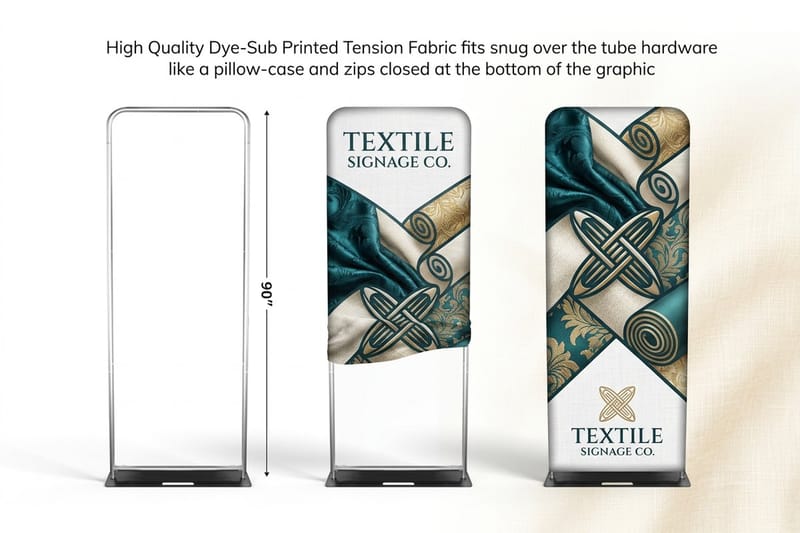
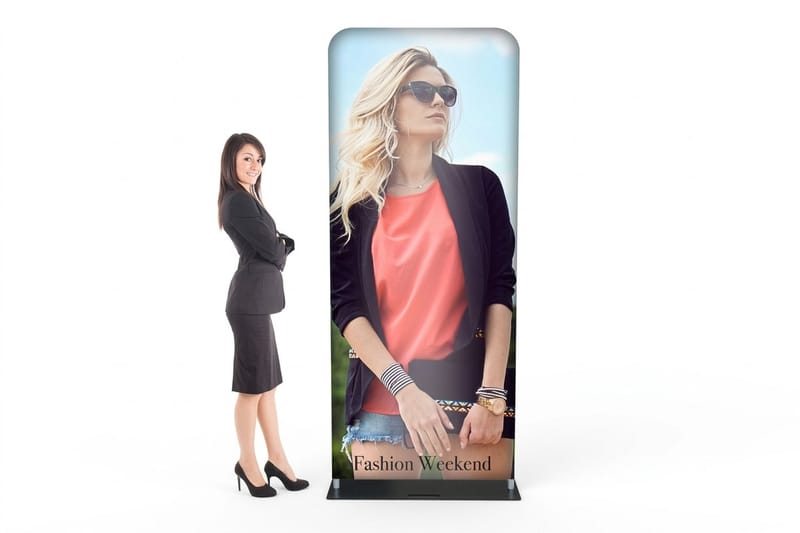
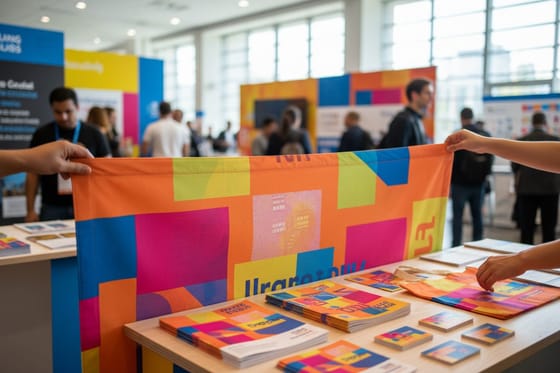
A curved tension fabric display is a single continuous backdrop rather than a wall built from pieces. Aluminum tubes snap together into a gentle arc, and a printed stretch fabric graphic slides over the whole structure like a pillowcase, then zips shut along the bottom. No panels to align, no magnetic strips to hide, and no seam running down the middle of your logo.
That one detail is why exhibitors keep switching. Under hundreds of overhead spots, a rigid vinyl backwall shows every joint and every hotspot. Fabric scatters that light across the arc instead of bouncing it back, so the photos your team posts from the floor look like a printed brand environment rather than a stack of hardware.
4OVER4.COM has been printing for exhibitors since 1999, and the trade show lineup covers the booth rather than just the wall behind it. Fabric Displays start at $163.67 with the frame, the dye sublimated graphic, and a carry bag in one box. Fabric Tube Displays also start at $163.67 when you want a wider arc across a 10x20 space, and Pop Up Displays start at $752.39 for the tallest locking backwall structure we build.
The frame
The skeleton is 30mm or 40mm anodized aluminum tube, numbered at each joint so the pieces only fit one way. Most frames are push-fit or bungee-corded, which means a two person crew can stand the arc up without a single tool in hand.
The graphic
Artwork is dye sublimated into the polyester rather than printed on top of it. The ink becomes part of the fiber, so the color survives folding, packing, and a cold wash without cracking the way a laminated vinyl face eventually does.
The curve itself
The arc is usually a shallow concave sweep of a few feet across a ten foot span. It is enough to angle your message toward the aisle on both sides while still reading as one flat headline from directly in front.
What ships in the box
Frame sections, the tensioned graphic, feet or a weighted base, and a padded bag. Everything nests into a case one person can wheel through a loading dock without a forklift or a drayage ticket.
Shop the floor
Trade show printing collection
Displays, banners, signage, and the printed pieces that leave the booth in someone's hand.

Why a Curve Pulls Traffic on a Crowded Show Floor
Walk the inline rows of any hall and you see the same thing: 10x10 booths with flat backwalls at the same seven and a half to eight feet, all competing with the same visual weight. A curve breaks that rhythm before anyone reads a word of your copy. Attendees notice depth and shape from thirty feet out, long before they can process a headline or a product name.
The shape also does quiet work for your staff. Because the arc gently funnels people inward, conversations happen inside your footprint instead of in the aisle. If you are weighing structures before you commit, the breakdown in this pop up display advantages guide covers the tradeoffs, and the full trade shows and events lineup shows what pairs with the backdrop.
- It reads as one image. A single graphic across the arc means your headline never lands in a panel gap or across a hinge.
- It faces the aisle. The concave sweep angles your message toward both approaches instead of firing it straight back at the drape.
- It kills glare. Fabric diffuses overhead lighting, so nobody photographs a white hotspot where your logo should be.
- It hides the mess. Cases, coats, and spare literature tuck behind the curve and disappear from every sightline.
- It flatters people. Staff standing inside the arc land in front of clean brand color in every phone photo and every recap post.
There is a practical benefit too. A curved backdrop is more stable than a flat one of the same height because the arc resists twisting, which matters on a carpeted floor where someone is always brushing past your corner. Add feet at both ends and the wall stands through a three day show without a single midday adjustment.
Print picks
Three display builds worth comparing
Live starting prices, each one ready to configure with your own artwork.
 Fabric Displays $163.67 each The curved SEG backdrop most exhibitors start with, frame and graphic included.
 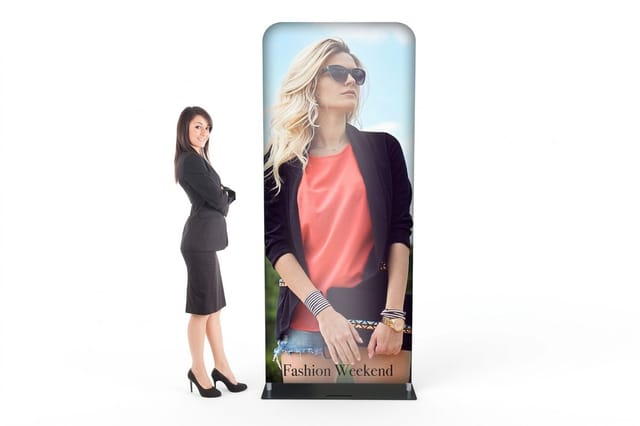 Fabric Tube Displays $163.67 each Push-fit tube frame with a wider arc for booths that need more brand width.
 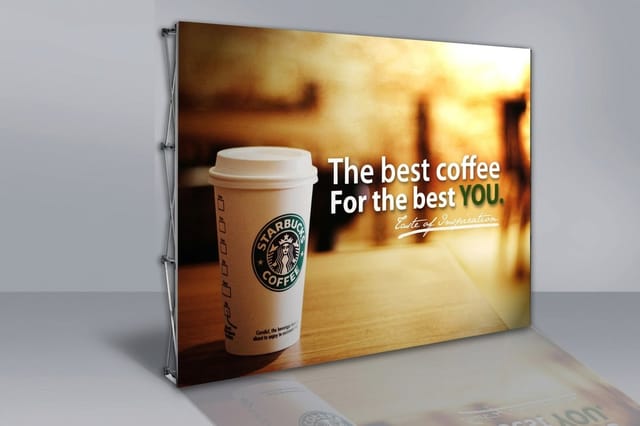 Pop Up Displays $752.39 each Full-height locking backwall when the booth has to anchor the whole aisle.
 How the Frame and the SEG Graphic Fit Together
SEG stands for silicone edge graphic. A thin silicone strip is sewn around the perimeter of the fabric print, and that strip presses into a recessed channel in the frame. The tension pulls every wrinkle flat, which is why a well finished fabric wall looks tighter than a stretched vinyl banner.
Getting the finish right on the file is the difference between a wall that looks poured on and one that puckers at the corners. Our trade show signage and display guide walks through the bleed, seam, and pole-pocket rules for each hardware family so your first proof comes back clean.
- Silicone edge graphic. A sewn silicone strip snaps into the frame channel and tensions the print flat on all four sides.
- Pillowcase pull-over. The graphic slips over the assembled arc and zips at the base, the fastest option for solo setup.
- Single or double sided. Print the back too when the booth sits on a corner and traffic sees both faces.
- Blockout liner. An opaque middle layer stops a bright neighbor booth from ghosting through your white areas.
- Frame depth. Deeper tube profiles hold a wider span without bowing, which matters most past the ten foot mark.
Setting Up a Curved Backdrop in Minutes
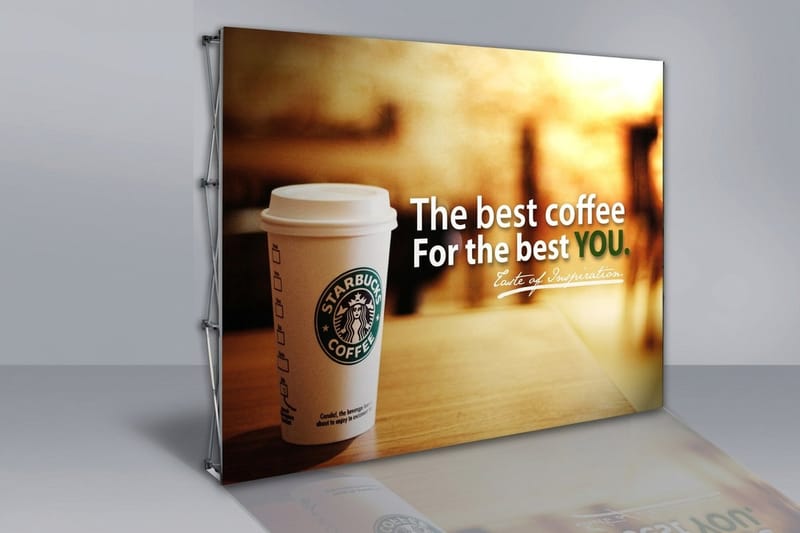
The pitch for fabric hardware has always been speed, and the curve does not slow it down. Two people who have never built one before can stand the frame up, dress it, and step back for a look while the neighbors are still unpacking their crate screws.
Give yourself one dry run in the office before the truck leaves. Build it, photograph each stage, and put the photos in the case. When you plan the rest of the booth around it, this booth ideas and materials checklist keeps the small parts from being the reason you are late to the aisle.
- Lay the frame out. Match the numbered joints on the carpet first so you never build a section backwards.
- Stand the arc. Push-fit the uprights, add the crossbars, then set the feet so the curve holds its shape on its own.
- Dress the graphic. Pull the fabric from the top down with clean hands, keeping the print off the show floor carpet.
- Tension and zip. Work the silicone edge or the base zipper corner to corner rather than side to side.
- Walk the aisle. Look at it from thirty feet where your buyer will, not from two feet where you built it.
Teardown is the same three moves in reverse, and it decides how the graphic looks at the next show.
- Graphic first. Unzip and pull it off before a single frame section comes apart, so nothing snags on an open tube end.
- Fold, do not cram. Fold along the same lines each time and the creases relax out overnight.
- Bag the small parts. Feet, clips, and light arms go in one labeled pouch that lives inside the case permanently.
Sizing a Curved Display for 10x10 and 10x20 Booths
Size is where most first-time exhibitors overspend or undershoot. The rule that holds up: fill the back wall of the space you paid for, leave breathing room at the corners, and stay under the height limit in the exhibitor manual. A backdrop that gets flagged by show management at eight in the morning is worse than one that is a foot too short.
A standard inline 10x10 takes a curved wall around eight to ten feet wide and seven and a half to eight feet tall. Step up to a 10x20 and you can run one long arc or pair two curves with a counter between them, which gives you two conversation pockets instead of one crowded center.
- 10x10 inline. One curve across the back, a counter on the open side, and clear floor for two people to stand.
- 10x20 inline. A single wide arc for one brand message, or two arcs when you are showing two product lines.
- Corner booth. Angle the curve toward the open corner so both aisles get the front of the graphic.
- Island space. Back two curves against each other for a freestanding column that reads from every direction.
- Tabletop and roadshow. A short curve behind a six foot table travels as carry-on for regional shows and campus days.
Quantity and price
Fabric display pricing and specs
Real configurator numbers pulled from the product page, plus the frame and graphic specifications.
| Quantity | Price Per Unit | Total |
|---|---|---|
| 1 | $163.67 | $163.67 |
| 2 | $163.66 | $327.32 |
| 3 | $163.66 | $490.97 |
| 4 | $152.68 | $610.70 |
| 5 | $152.67 | $763.37 |
| 6 | $152.67 | $916.04 |
Designing Artwork That Survives the Curve
A curved wall is not a poster. The arc pulls the far edges away from the viewer and slightly compresses whatever sits near the ends, so a design that looks balanced flat on your monitor can feel lopsided once it is tensioned. Design for the middle third and let the outer thirds carry color and texture.
Keep the message short enough to read at a walking pace, then let the printed pieces on your counter carry the detail. The pairing logic in this piece on trade show flyers and displays is a good sanity check before you commit the file.
- Headline in the center. Keep the primary line inside the middle third where the surface is closest to flat.
- Big type only. If it is smaller than three inches tall, it belongs on a flyer, not on the wall.
- Respect the bleed. Add the full bleed the spec sheet asks for, since the silicone edge wraps into the channel.
- Avoid dead-center logos on seams. Place marks where the fabric is under even tension, not where two panels would meet.
- Test your color. Dye sublimation renders rich, saturated tones beautifully, so proof any brand color that lives near a neon or a pastel.
Wider arc
Fabric tube displays
Push-fit tube frame that spans a bigger footprint while keeping the graphic one continuous piece.
What Goes in Front of the Backdrop
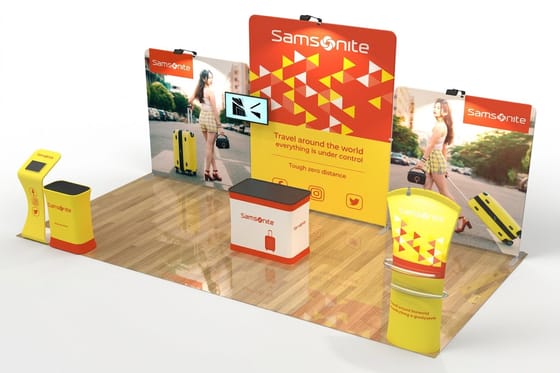
In a 10x10 inline booth the curve takes the back wall, eight to ten feet wide, and the rest of the floor is your stage. Put a standing height counter on the open side and keep clear floor for two people to stand. The mistake is filling that stage with a six foot folding table and a stack of catalogs nobody picks up.
Plan the floor and the giveaway together. The ideas in this roundup of trade show giveaways pair well with a printed path into the booth, and our custom floor stickers guide shows how to run that path from the aisle to the counter without violating the venue rules.
- A counter, not a table. Standing height keeps staff on their feet and keeps the sightline to the graphic open.
- Floor graphics. A short printed path from the aisle turns passive walkers into people already inside your space.
- Lighting. Clip-on LED arms across the top of the arc keep color true when the hall lights go dim for a keynote.
- One product moment. A single demo, sample, or screen beats four things nobody has time to look at.
- Something to take. A card, a sample, or a QR-linked flyer so the conversation continues after the hall closes.
Anchor the aisle
Full backwall pop up displays
When the booth has to own the aisle, the locking pop up frame gives you the tallest, most rigid brand surface we build.
Curved Fabric Versus Straight and Rigid Backdrops
Every backdrop family solves a different problem. Retractable banners are the cheapest way to hold a corner, and the video on retractable fabric banners shows one going up. Rigid modular panels win when you need shelving, mounted screens, or a locking storage closet, and Pop Up Displays start at $752.39 for the tallest locking backwall. Curved fabric sits in the middle, from $163.67 with frame, graphic and carry bag in one box, and for most exhibitors it is the best return per pound shipped.
The honest tradeoff is that fabric will not hold weight. If your booth needs a mounted monitor or product shelves, you want a hybrid: a curved fabric wall as the brand surface with a separate rigid tower or counter carrying the hardware. Nobody in the aisle notices the seam between the two systems.
- Curved fabric. One continuous image, glare resistant, light to ship, and rebrandable by swapping the graphic alone.
- Straight fabric. Slightly cheaper and easier to align in a row of booths, but flatter and easier to walk past.
- Rigid modular. Holds monitors, shelves, and doors, at the cost of weight, crates, and setup labor.
- Retractable banners. Great as satellites at the corners, thin as a primary wall for a booth you paid real money for.
- Full backwall pop ups. The tallest, most locked-down option when the booth has to own the aisle.
Compare builds
Popular trade show displays, side by side
Frame, graphic, size, quantity, turnaround, and starting price in one table.
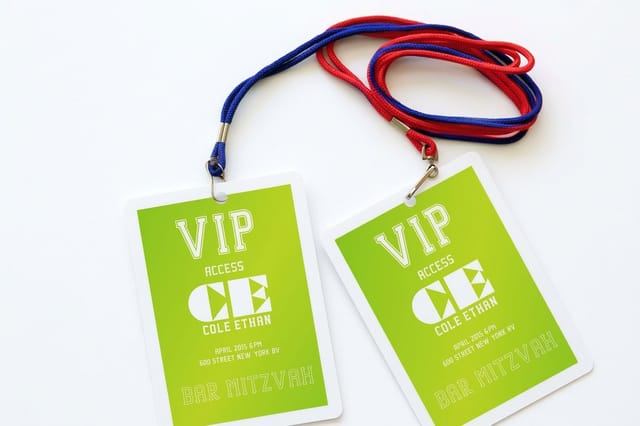 Event Badges | 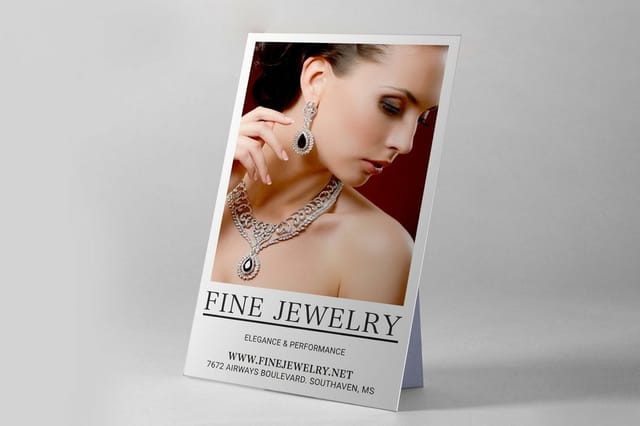 Counter Cards | Fabric Tube Displays | 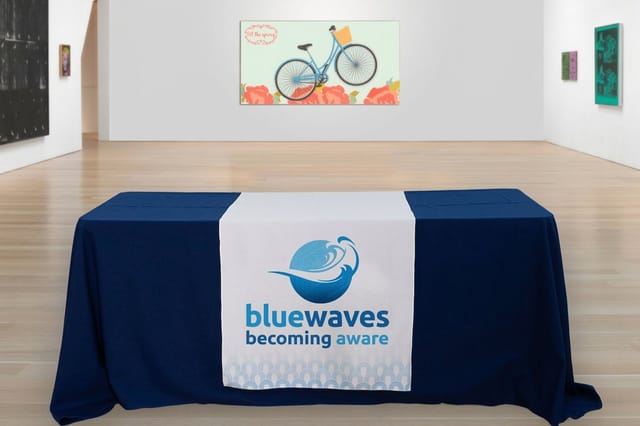 Table Runners | |
|---|---|---|---|---|
| Min price | $49.88 | $21.97 | $163.67 | $97.76 |
| Paper / stock | 30pt Gloss Laminated | 56pt. SBS Board | 8.8oz. Tension Fabric | 9oz Premium Polyester |
| Finish | - | Standard Finish | - | - |
| Size | 2" x 3" | 8.5" x 11" | 36" x 90" | 24" x 72" |
| Default qty | 25 | 1 | 1 | 1 |
| Turnaround | 5 business days | 2 business days | 4 business days | 4 business days |
| Rating | ||||
| View & customize | View & customize | View & customize | View & customize |
Packing, Washing, and Reusing It Show After Show
The math on fabric only works if you reuse it. A curved display bought for one show is expensive. The same frame carried through six shows with two graphic swaps is the cheapest brand presence you will ever buy, and the frame is the part that never dates.
Treat the graphic as the consumable and the frame as the asset. That is exactly the pattern behind this first trade show case study, where one arc carried a company through a full season on a budget that would not have covered a single custom build.
Care that keeps it looking new
- Wash cold, hang dry. Dye sublimated polyester takes a gentle cold cycle without fading, and heat is the only real enemy.
- Steam, never iron. A handheld steamer at arm's length drops travel creases in under a minute.
- Store it dressed down. Keep the graphic out of the frame between shows so the silicone edge does not take a set.
- Swap the message, keep the frame. New campaign, new graphic, same aluminum arc and the same case you already know how to pack.
Start fast
Display templates and print-ready blanks
Free layouts plus exact-size blanks so your artwork lands inside the bleed on the first proof.
Wally sizes up your curved backdrop
Pick the arc, then print the graphic that fills it
Not sure whether you need a curve or a full backwall? Measure the booth first. A 10x10 inline space takes a curve around eight to ten feet wide, a 10x20 takes one wide arc or two paired curves with a counter between them, and anything that has to hold a monitor needs a rigid tower next to the fabric. Get that right and the graphic is the easy part.
Design your fabric display →Make the Wall Do the Work Before Anyone Says Hello
Explore more
More ways to build a booth people walk into
Counters, floor stickers, retractable banners and the flyers that leave a 10x10 booth in a visitor's hand.
 Collection Trade Show Printing Displays, banners, signage, and handouts for the floor. Product Fabric Displays The curved SEG backdrop, frame and graphic included.
  Product Fabric Tube Displays Push-fit tube frame with a wider arc for bigger booths. Product Pop Up Displays Full-height locking backwall for a headline booth.
  Guide Advantages of Pop Up Displays Where pop up hardware wins and where it does not.
  Guide Trade Show Signage Guide Every sign and display type for a booth, explained.
 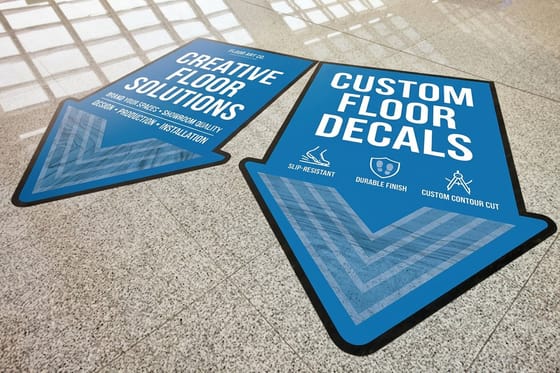 Guide Custom Floor Stickers Guide Print a path from the aisle into your booth.
 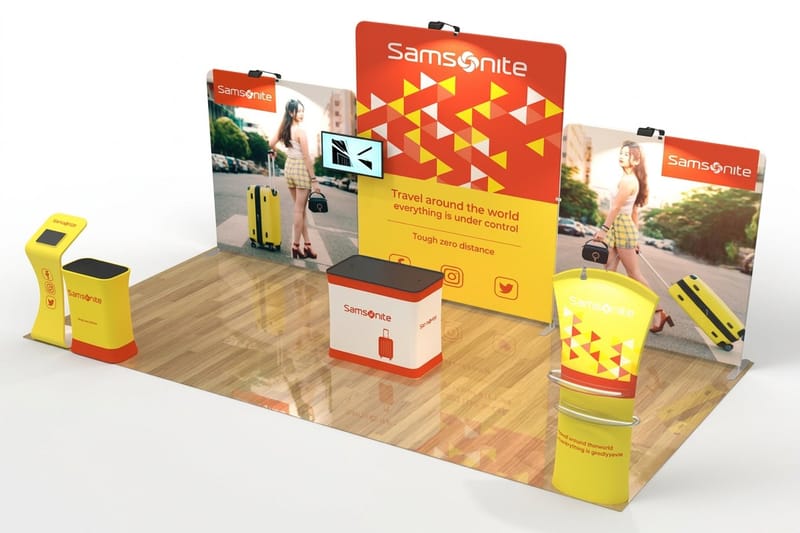 Shop Trade Shows and Events Shop everything an exhibiting team needs in one place.
  Article Flyers and Displays for Events Pair the wall with printed pieces that get taken home. Article Booth Materials Checklist What to pack so nothing derails setup morning.
  Article Trade Show Giveaway Ideas Takeaways people keep instead of leaving on the chair.
  Case study First Trade Show Case Study How one arc carried a startup through a full season.
 Stand a $163.67 curve behind your team at the next show
Pick the arc that fits your booth, upload artwork built for the middle third, and let the frame carry the same brand wall through show after show.
Curved Pop Up Display Questions, Answered
What is a curved pop up display?
A curved pop up display is a trade show backdrop built from a lightweight aluminum tube frame that assembles into a gentle arc, with a single printed stretch fabric graphic tensioned over the whole structure. Because the graphic is one continuous piece rather than a set of panels, there are no seams cutting through your headline or logo, and the fabric diffuses overhead show lighting instead of reflecting it as glare. For a broader comparison of pop up hardware families, see our guide to the advantages of pop up displays.
How do I choose the right curved pop up display?
Start with the booth you booked. A standard 10x10 inline space wants a curve roughly eight to ten feet wide and under the height limit printed in the exhibitor manual, while a 10x20 can carry one wide arc or two paired curves with a counter between them. Then decide whether the wall needs to hold anything. Fabric carries graphics beautifully but not monitors or shelving, so pair it with a rigid counter or tower if you are mounting hardware.
What does a curved pop up display cost and how are prices set?
Fabric Displays start at $163.67 and Fabric Tube Displays start at $163.67, both including the frame, the dye sublimated graphic, and a carry bag. Pop Up Displays start at $752.39 for the taller locking backwall structure. Price moves with the width and height of the frame, the tube profile, whether you print one side or both, and whether you add a blockout liner, lighting arms, or a hard shipping case. Reprinting only the graphic later costs a fraction of a full kit.
What sizes, stocks, and finishes are available for curved pop up displays?
Frames run from tabletop widths for regional roadshows up to full 10x20 spans for island and inline booths, in 30mm and 40mm anodized aluminum tube. Graphics print by dye sublimation on tensioned polyester, in single sided or double sided builds, with an optional opaque blockout liner when a bright neighboring booth would otherwise ghost through your white areas. Finishing options include silicone edge graphics that snap into the frame channel and pillowcase pull-over graphics that zip along the base.
How long does a curved pop up display take to print and ship?
Large format display orders are produced after the artwork proof is approved, so the clock effectively starts when your file passes preflight. Send print-ready artwork with the full bleed the spec sheet requires and you avoid the single most common delay, which is a proof round trip over a missing bleed or low resolution logo. Order with a real buffer before the show date, and ship to your hotel or the advance warehouse rather than the show floor whenever the venue allows it.
