
Acrylic Signs Vs Metal Signs Vs Aluminum Signs


Three sign materials sit next to each other in the catalog, and they are not really rivals. One is built for premium interiors, one for versatile everyday display, and one to shrug off years of weather outside. Material, durability, look, and cost separate them, and only one of the three is meant to sit outside for years.
Print acrylic signs for premium indoor branding, metal signs for versatile everyday display, and aluminum signs for anything that lives outdoors. Acrylic gives you glossy, glass-like depth and starts around $152.72. Metal signs are the low-cost, modern all-rounder starting around $29. Aluminum signs are rustproof and weatherproof, the outdoor choice starting around $36. Match the material to the environment and all three print sharp at 4OVER4.COM.
Head to head
Acrylic vs metal vs aluminum signs at a glance
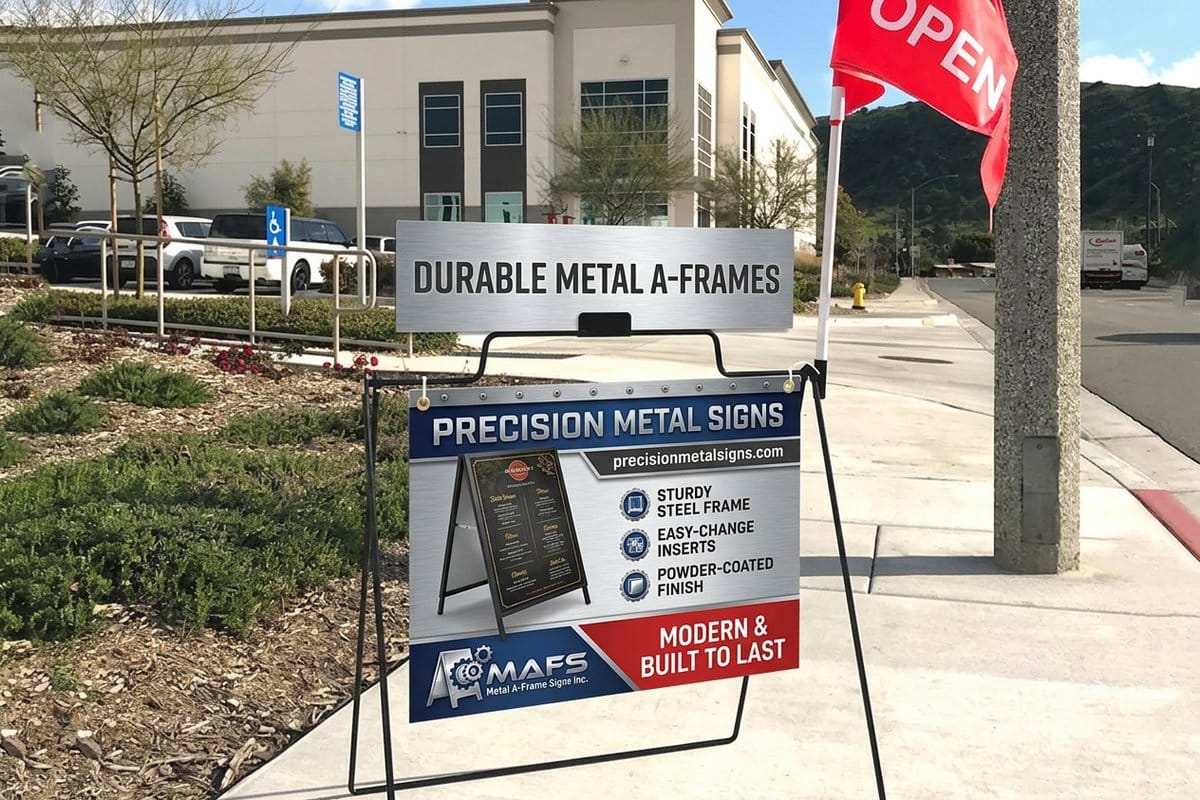
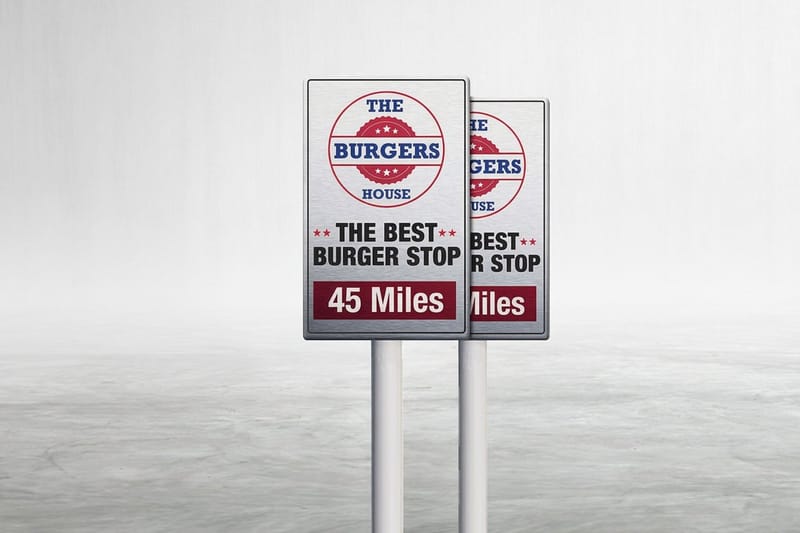
The fastest way to choose is to read down the column that matches your setting. Premium indoor branding lands on acrylic, versatile everyday display on metal, and anything outdoors on aluminum. Aluminum A-frames, the mounted version of the same panel, start at $146.07.
| Acrylic signspremium | Metal signsversatile | Aluminum signsdurable | |
|---|---|---|---|
| Best for | Upscale lobbies, reception walls, and boutique interiors | Indoor business signs, wall decor, and modern plaques | Outdoor, weatherproof, directional, and real-estate signage |
| Material | Thick clear or frosted acrylic panel with real depth | Printed metal sheet with a sleek, contemporary sheen | Rigid, rustproof aluminum built for the elements |
| Best environment | Indoors, or shaded spots away from harsh direct sun | Indoors and covered outdoor areas | Full outdoor exposure, rain, and sun |
| The look | Glossy and glass-like, light catches the edges | Modern metallic finish, crisp and premium | Clean, flat, high-contrast and legible at distance |
| Durability outside | Great indoors, can yellow under years of direct UV | Solid for covered outdoor use | Best in class, rustproof and weatherproof for years |
| Mounting | Standoffs for a floating, dimensional look | Drilled holes, standoffs, or adhesive | Pre-drilled holes, screws, or frames |
| Typical use | Office branding, awards walls, luxury retail | Decor, wayfinding, storefront plaques | Parking, construction, yard, and street signage |
| Starts at | $152.72 | $29 | $36 |
| Order online | Customize acrylic | Customize metal | Customize aluminum |
| Years outdoors | Indoor material. Shade or cover only, since harsh direct sun yellows the face and dulls the gloss over the years, and thermal movement can craze the drilled holes. | Outdoors under cover, a porch, an awning, a protected storefront. Full exposure works on the finish first. | Full exposure, and it outlasts the other two by years. Rustproof, UV stable, flat through heat and cold, so the print softens long before the sheet does. |
| Cost per sign | From $152.72, and the gap is material, not markup: a thick, optically clear panel rather than a printed sheet. | From $29, the lowest entry price of the three. | From $36, the cheapest way to get a sign that survives weather. |
Acrylic is best kept indoors or shaded. Metal handles indoor and covered spaces. Aluminum is the only one built for full outdoor exposure. Environment is the deciding factor as much as budget.
Our picks
Three ways to print your sign at 4OVER4
The premium panel, the versatile all-rounder, and the outdoor workhorse. Each one is live with real specs and pricing, and you can lay any of them out free in our online Designer, start from a design template, or request free samples first.
Three materials, three completely different jobs

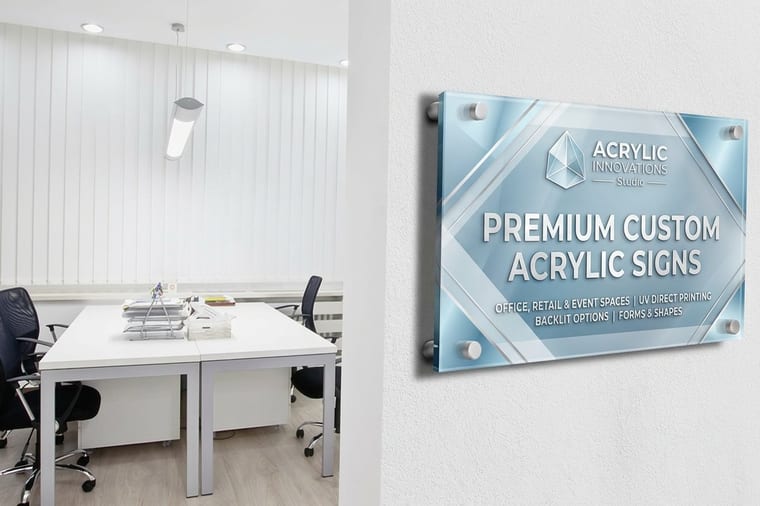
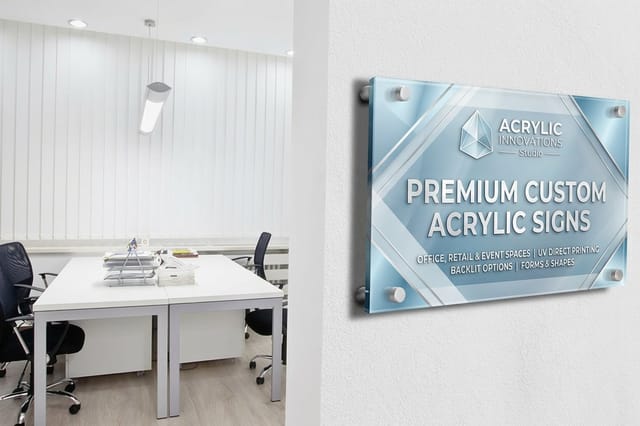
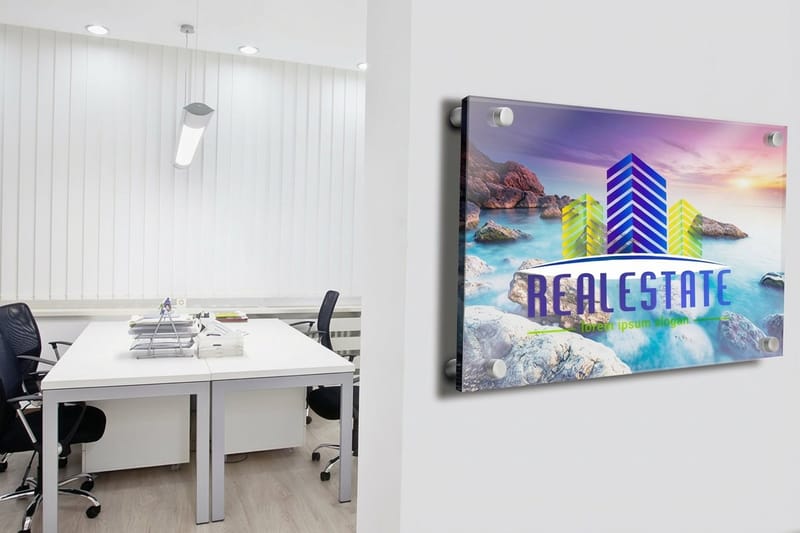
Line them up and the three signs look like cousins, but they are built for different lives. An acrylic sign is a thick, clear or frosted panel with real depth. Light catches its edges, the print sits behind a glossy face, and mounted on standoffs it seems to float off the wall. That polish is why it reads as premium the moment someone walks in.
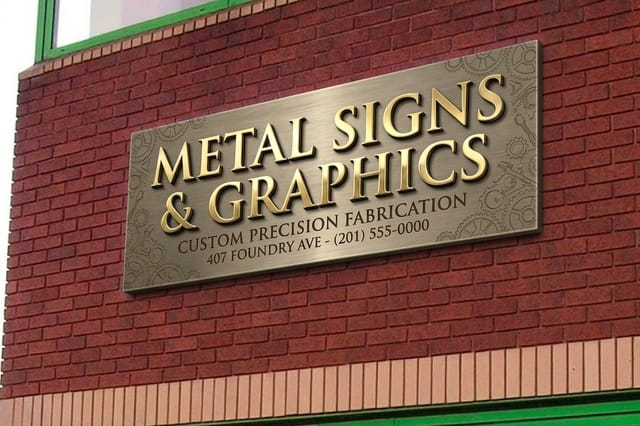
A metal sign is the versatile middle. Printed on a sleek metal sheet, it brings a modern, contemporary sheen at the lowest entry price of the three, which is why it shows up on everything from wall decor to storefront plaques. An aluminum sign is the one for weather: rigid, rustproof, and built to shrug off rain and sun for years, so it owns the outdoors.
If any of the material vocabulary is new, keep our printing terms glossary open in another tab. For the full build path on any of them, the how to make custom signs guide walks design to print end to end.
Indoors or out: where each one belongs

Outside, use aluminum. Acrylic and metal are indoor materials, and aluminum is the only one of the three built for weather: it does not rust, it holds color under UV, and it stays flat through temperature swings, which is why it dominates parking, directional, construction, and real-estate signage. The single fastest way to narrow the choice is still to ask where the sign will hang, because the setting decides the material before taste does. Push aluminum further with a reflective aluminum sign for low-light visibility, when the sign has to be read by headlights rather than daylight, or an aluminum A-frame when it needs to stand on its own instead of bolting to a post or a wall.
Metal signs are happiest indoors or under cover, where the finish stays crisp without the full assault of the elements. Acrylic belongs inside too. It looks its best in a lobby, a reception wall, or a boutique, but years of harsh direct sun can slowly yellow it, so keep it shaded or interior. For a deeper look at outdoor durability, see which materials hold up outdoors.
Put plainly: aluminum signs go outside in full weather, metal signs go inside or under a roof or awning, and acrylic signs go inside, where people stand close enough to see the depth in the panel. If one message has to work in both places, print it twice: the same artwork on aluminum for the exterior wall or post, and on acrylic for the lobby, so the brand matches at the curb and at the front desk.
Whatever you pick, you do not have to design it alone. Lay out any of the three free in our online Designer, start from a ready-made design template, or order free samples to feel the substrate before you commit a full run.
Acrylic vs aluminum outdoors: UV, weather, and lifespan
Outdoors, aluminum outlasts acrylic by years, not months, and the two do not fail the same way. Rain is not what kills a sign. Sun is. Ultraviolet light plus the daily expansion and contraction of a panel that bakes at midday and cools at night is what decides how long the sign still looks like the file you sent us.
On acrylic, the face fails first. Long exposure to harsh direct sun gradually yellows the panel, and the yellowing is worst where it hurts most, in the whites and light greys of a logo. The gloss goes flat at the same time, so the depth and the color pop that made acrylic worth its price are the first things you lose. The second failure is mechanical: acrylic moves with temperature, and that movement concentrates at the drilled mounting holes, where fine surface crazing can start at the edges. Standoffs with a little clearance and a shaded, covered position, a recessed entry, a north-facing wall, an awning, buy an acrylic sign far more outdoor time than an open south wall ever will.
On aluminum, the panel does not fail at all in normal service. It does not rust, it stays flat through heat and cold, and it holds color under UV, so what eventually goes is the printed graphic softening in the sun, not the sheet buckling or corroding. That is why aluminum is the standard for parking, directional, construction, and real-estate signs that get bolted up once and left alone. Where the sign has to be read by headlights rather than daylight, a reflective aluminum sign keeps working after dark. Metal sits between the two: a printed metal sign is happy outdoors under cover, on a porch, a covered walkway, a protected storefront, and it is the finish, not the substrate, that suffers in full exposure.
So the outdoor rule is short. Full exposure, aluminum. Covered exposure, metal. Interior or deep shade, acrylic. If you want to judge the surfaces yourself before a full run goes up on a wall, order free samples, and read which materials hold up outdoors before you commit.
The look: gloss, sheen, and clean contrast

Each material carries a different visual signature. Acrylic is the show-off, in the best way. The clear face adds depth, the gloss makes colors pop, and standoff mounting gives it a dimensional, gallery-grade presence. If the goal is to make a brand feel high-end the instant someone sees it, acrylic earns its price. The same logic drives the choice between a metal print and an acrylic print for wall art.
Metal reads modern and understated, a clean metallic sheen that flatters logos and typography without shouting. Aluminum is all about legibility: a flat, high-contrast face that stays readable from across a lot or down a hallway. It is meant to be understood in a glance, not admired up close, and that clarity is exactly the point for wayfinding.
Color accuracy matters on every one of them, so build your file in the right color space first. If you are unsure, our guide on CMYK vs RGB for print keeps your greens and reds from shifting between screen and sign.
Cost and quantity: what each does to the budget
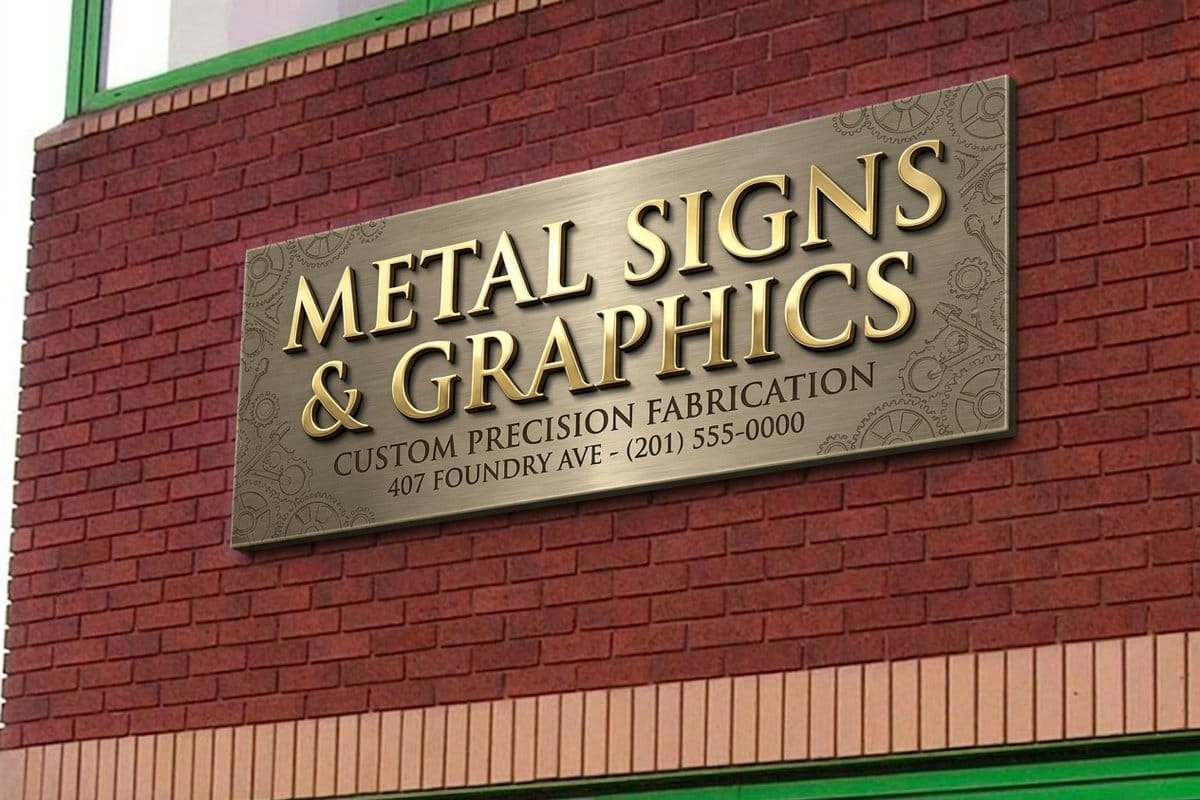
On raw entry price the order is clear. Metal signs start around $29, aluminum signs around $36, and acrylic signs around $152.72. That gap is not markup, it is material: acrylic is a thick, optically clear panel with far more substance in your hands, while metal and aluminum are efficient printed sheets. You are paying for the object, and with acrylic the object is much of the message.
Quantity is the biggest lever on unit price for all three, the same way it is when you weigh yard signs against A-frames and banners. A single premium acrylic piece for a reception wall is a different budget conversation than a run of aluminum directionals for a parking lot, and both are valid.
Every number here is live, not a guess. Set your size, material options, and quantity in the configurators below and watch the price move. For a low-cost run that still needs to survive outdoors, aluminum is almost always the smart floor.
How to choose in one minute
Reach for an acrylic sign when the setting is indoors and premium, the sign represents your brand up close, and you want depth, gloss, and a floating standoff look. Lobbies, reception walls, office branding, and upscale retail are acrylic territory. Browse the wider range in the acrylic printing collection.
Reach for a metal sign when you want a modern, versatile piece at the lowest entry price, mostly for indoor or covered spaces. Decor, wayfinding, plaques, and small-business storefront signs all fit, and a metal A-frame adds a freestanding option.
Reach for an aluminum sign when the sign lives outdoors or has to survive weather and time. Parking, directional, construction, yard, and real-estate signage all belong here. See the full lineup in aluminum sign printing, or explore other ways to display your message if none of the three is quite right.
Wally breaks the three-way tie
Same shop, three materials, three different jobs
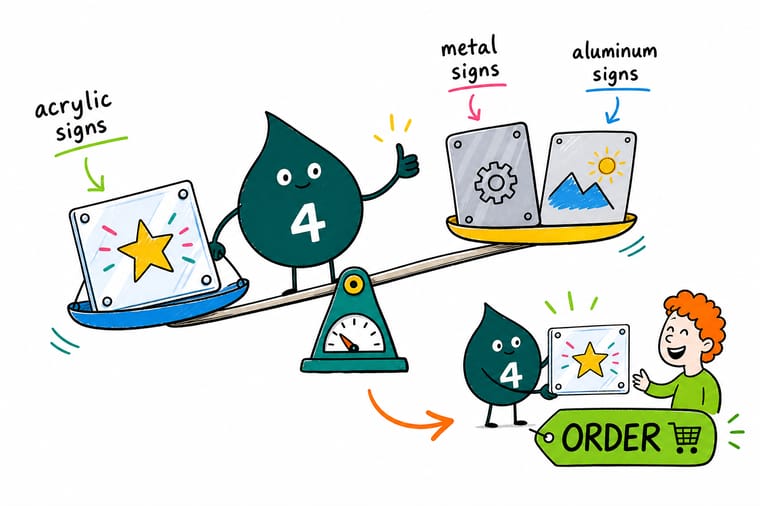
Wally points at a glossy acrylic panel, a sleek metal sheet, and a rugged aluminum sign and grins, because there is no single winner, only the right one for the setting. Need premium polish in a lobby? Acrylic. Need a versatile piece for less indoors? Metal. Need it to survive rain and sun for years? Aluminum. Tell 4OVER4 where the sign lives, then print it sharp on the size, material, and mount you choose.
Start your sign →
The trade-offs
What each material gives you, and what it asks in return
No material is free of compromise. Weigh the upside against the trade-off for the sign you actually need to hang.
Acrylic signs
Where acrylic wins
- Glossy, glass-like depth that reads premium up close
- Standoff mounting gives a floating, gallery-grade look
- Clear or frosted panels for different moods
- Ideal for lobbies, reception walls, and upscale retail
- Photo-quality print behind an optically clear face
Where it falls short
- Highest entry price of the three
- Heavier panel, more involved to mount
- Best kept out of years of harsh direct sun
- Shows fingerprints and light scratches over time
Metal signs
Where metal wins
- Lowest entry price of the three
- Modern metallic sheen that flatters logos and type
- Versatile across indoor and covered-outdoor use
- Lightweight and easy to mount
- Great for decor, plaques, and storefront branding
Where it falls short
- Less weatherproof than aluminum for full exposure
- Thinner feel than a thick acrylic panel
- Fewer premium display effects than acrylic
Aluminum signs
Where aluminum wins
- Rustproof and weatherproof for years outdoors
- Best outdoor lifespan of the three
- Lightweight yet rigid and flat
- Often pre-drilled for fast screw or frame mounting
- High-contrast face stays legible from a distance
Where it falls short
- Utilitarian look next to acrylic polish
- Flat finish feels less premium indoors
- No edge-glow or dimensional depth effect
Live options
Compare live sign options, side by side
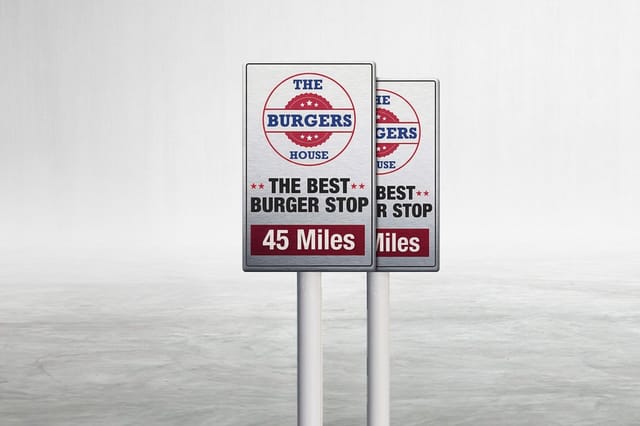
Pulled straight from the catalog so you can see how price, options, and turnaround shift across acrylic, metal, and aluminum. The aluminum family below is the outdoor range in depth.
 Aluminum Signs | 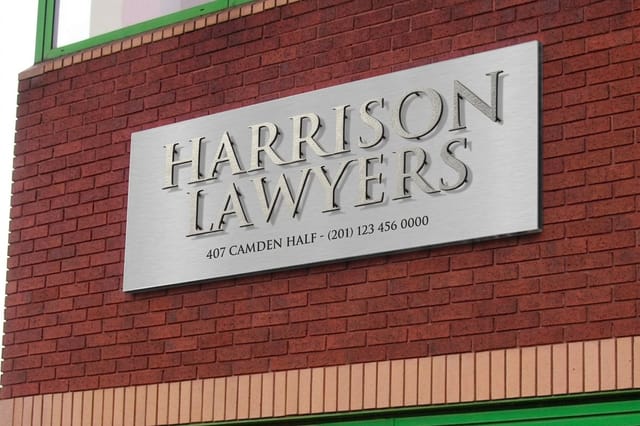 Aluminum Sign Panels | 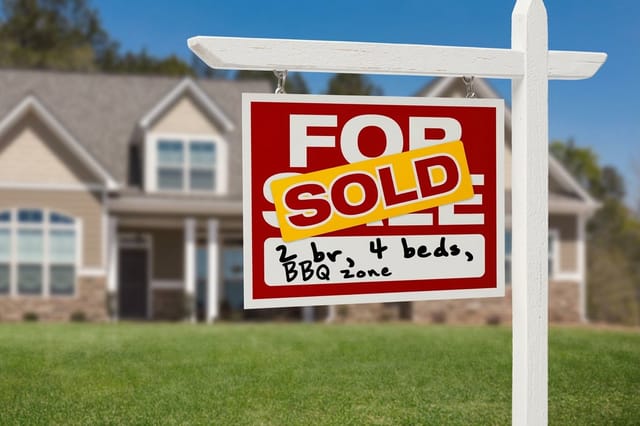 Dry Erase Aluminum Panels | 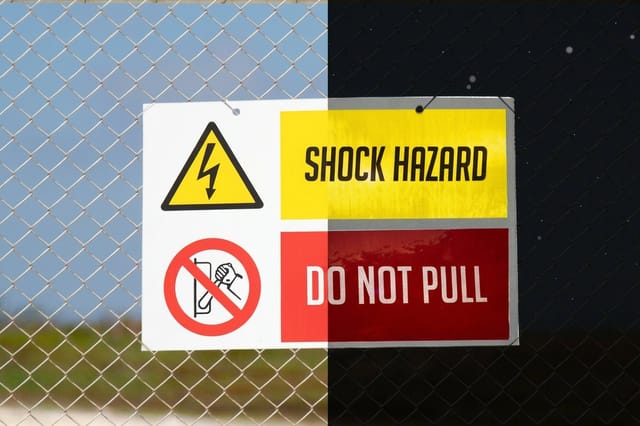 Reflective Aluminum Signs | 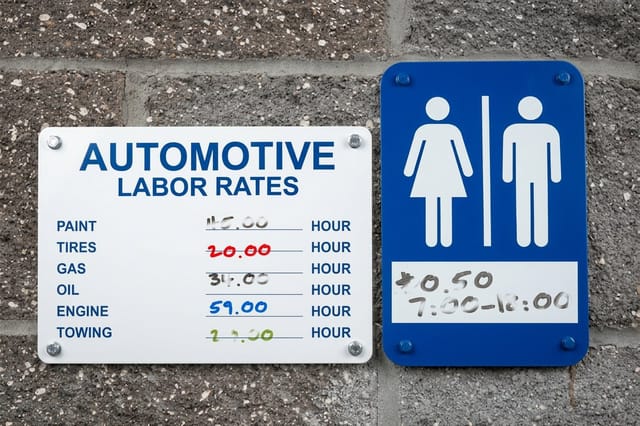 Dry Erase Aluminum Signs | |
|---|---|---|---|---|---|
| Min price | $36.00 | $29.00 | $39.00 | $41.02 | $47.22 |
| Paper / stock | .040" Aluminum | 1/8" Aluminum Sign Panel | 1/8" Aluminum Sign Panel | .040" Aluminum | .040" Aluminum |
| Finish | - | - | Dry Erase Lamination | Reflective Film | Dry Erase Lamination |
| Size | 12" x 18" | 11" x 17" | Any Size | 12" x 18" | 12" x 18" |
| Default qty | 1 | 1 | 1 | 1 | 1 |
| Turnaround | 4 business days | 4 business days | 4 business days | 4 business days | 4 business days |
| Rating | |||||
| View & customize | View & customize | View & customize | View & customize | View & customize |

| Quantity | Price Per Unit | Total |
|---|---|---|
| 1 | $152.72 | $152.72 |
| Quantity | Price Per Unit | Total |
|---|---|---|
| 1 | $29.00 | $29.00 |
| Quantity | Price Per Unit | Total |
|---|---|---|
| 1 | $36.00 | $36.00 |
The verdict
So which should you print?
There is no single winner, because they are not really competing. Score each one on the turf it was built for and the choice makes itself: acrylic owns premium interiors, metal owns versatile everyday signage, and aluminum owns the outdoors. The ratings below follow where the sign hangs and what weather it sees.
Acrylic, for premium interiors
The right call when the sign is indoors and represents your brand up close. Glossy depth and a floating standoff look that reads high-end the moment someone sees it.
Metal, for versatile display
The right call when you want a modern, low-cost piece for indoor or covered spaces. Clean metallic sheen, easy to mount, and flexible across decor and storefronts.
Aluminum, for the outdoors
The right call when the sign faces weather and time. Rustproof, weatherproof, legible from a distance, and the safe long-term choice for anything exposed.
Running signage inside and out for the same brand? Print acrylic for the reception wall and aluminum for the exterior, or browse other ways to display your message if a different format fits better.
Explore more
Where to go next

By the numbers
Print any of the three with a shop you can count on
Common Questions
Common questions about acrylic, metal, and aluminum signs
What is the difference between acrylic, metal, and aluminum signs?
Acrylic signs are thick, clear or frosted panels printed for a glossy, dimensional look that suits premium interiors. Metal signs are printed on a sleek metal sheet, offering a modern finish at the lowest entry price for versatile indoor and covered-outdoor use. Aluminum signs are rigid, rustproof sheets built to survive full outdoor exposure. In short, acrylic is for polish, metal is for versatility, and aluminum is for the elements.
Which sign material is best for outdoors?
Aluminum. It does not rust, it holds its color under UV, and it stays flat through heat and cold, which is why it is the standard for parking, directional, construction, and real-estate signs. Metal signs work outdoors under cover, and reflective aluminum adds visibility in low light. Acrylic is best kept indoors or in shaded spots, since years of harsh direct sun can gradually yellow it.
Can acrylic signs be used outdoors?
For a short run, yes. For a sign you want to forget about, no. Acrylic handles rain and wind without trouble; UV is the problem. Years of harsh direct sun gradually yellow the panel, worst in the whites and light greys of a logo, and the gloss that made acrylic worth its price goes flat at the same time. Acrylic also expands and contracts with temperature, and that movement concentrates at the drilled mounting holes, where fine crazing can start. Shade buys it real time: a recessed entry, a north-facing wall, or an awning is a very different job from an open south wall. If the sign lives in full sun, print it on aluminum instead, which does not rust and holds its color under UV, and keep acrylic for the lobby.
Are acrylic signs more expensive than metal or aluminum signs?
Usually, yes. At 4OVER4.COM metal signs start around $29 and aluminum signs around $36, while acrylic signs start around $152.72. The difference is material, not markup: acrylic is a thick, optically clear panel with far more substance than a printed metal or aluminum sheet. Every price updates live in the configurator as you set size, options, and quantity.
Which sign material looks the most premium?
Acrylic. The clear face adds depth, the glossy surface makes colors pop, and standoff mounting gives it a floating, gallery-grade presence that reads as high-end the moment someone sees it. Metal comes second with its clean, modern sheen. Aluminum prioritizes flat legibility over polish, so it is the least decorative of the three but the most practical outdoors.
Can I use metal or aluminum signs indoors?
Absolutely. Metal signs are often used indoors for decor, plaques, and storefront branding, and aluminum works indoors too, especially for durable wayfinding and directional signs. Neither will look as premium as acrylic up close, but both are lighter on the budget. If the indoor sign is the face of your brand in a lobby or reception area, acrylic is the upgrade worth considering.
Which should I choose for a storefront or business sign?
It depends on where the sign hangs. For an indoor reception or a boutique wall, acrylic makes the strongest first impression. For a covered storefront or interior plaque on a tighter budget, a metal sign delivers a modern look for less. For an exterior sign exposed to weather, aluminum is the safe long-term choice. Many businesses use acrylic inside and aluminum outside for the same brand.
How do I mount each type of sign?
Acrylic signs usually mount on metal standoffs for a floating, dimensional effect, though they also take adhesive or hanging hardware. Metal signs mount with drilled holes, standoffs, or adhesive depending on the surface. Aluminum signs typically come ready for screws or frames and are often pre-drilled for fast installation, which is part of why they are so common on posts, fences, and walls outdoors. Check the options panel on each product for the mounting choices available.
Get Started
Order acrylic, metal, or aluminum signs, printed in 4 business days
Bring your design to 4OVER4.COM and print acrylic, metal, or aluminum signs on the size, material, and mount that fits the job. Acrylic, metal, and aluminum signs all run 4 business days in production.
Legal Disclaimer
Gold Standard guarantees apply to all standard orders placed through 4over4.com. Price match requires verifiable proof of a competitor's published price for an equivalent product with matching specifications and turnaround time. Satisfaction guarantee covers manufacturing defects and print quality issues. Contact support with order number and documentation. On-time delivery rate based on tracked orders 1999 to 2026. Individual results may vary based on shipping carrier performance.
