
Bamboo and Eco-Friendly Business Cards, Options Explained


Bamboo cards get the headlines, but wood, kraft and cotton stocks give the same natural look with proven print quality. All three absorb ink, so color reads softer than on a coated sheet.
A bamboo business card is a card cut from a thin, fast-renewing plant material, prized for its natural texture and sustainability. If you want that eco look with reliable print quality, real wood veneer, uncoated kraft, and 100 percent cotton stocks deliver the same earthy feel, take ink cleanly, and are available now, while true bamboo stock is rare and harder to print evenly.
Start here
Three natural stocks, three stories
Bamboo cards get attention, but wood, kraft, and cotton stocks give you the same natural, sustainable look with print quality you can count on. Uncoated eco stocks read as authentic, absorb ink into softer and deeper tones, and are recyclable or biodegradable, so the card itself carries your values. Match the stock to the impression you want and design for a natural surface rather than a glossy one.
What bamboo and eco business cards really are
A bamboo business card is cut from a fast-growing grass that regrows in a few years rather than the decades a tree needs, which is why it became a symbol of sustainable stationery. The appeal is real: a natural texture, a warm tone, and a story that lines up with an eco-conscious brand. The catch is that true bamboo card stock is uncommon and its fibrous surface can print unevenly, so it is more of an ideal than a reliable everyday option.
The good news is that the look and the values are easy to get from stocks that print beautifully today. Real wood veneer, uncoated kraft, and 100 percent cotton all deliver the natural, sustainable impression people associate with bamboo, while behaving predictably on press. Think of bamboo as the inspiration and these stocks as the practical way to hand someone a card that clearly cares about the planet. Browse them together in our eco-friendly collection.
The eco stocks 4OVER4 actually prints
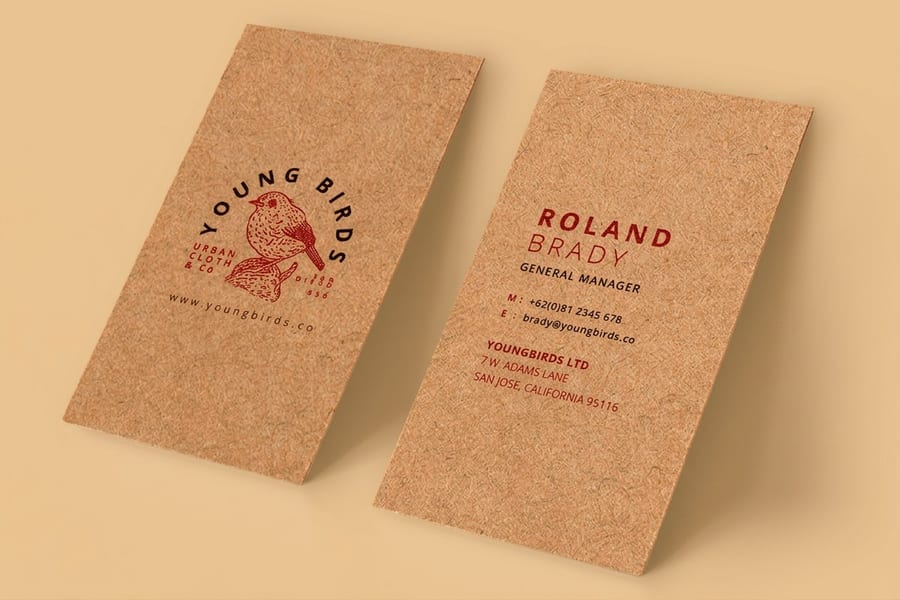
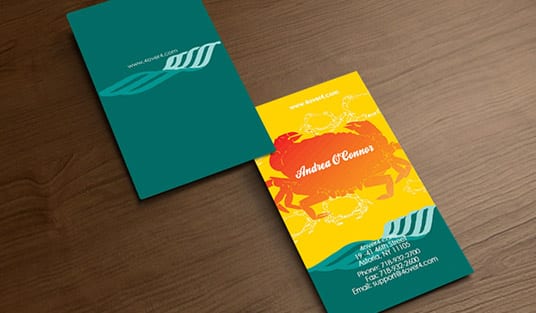
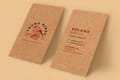
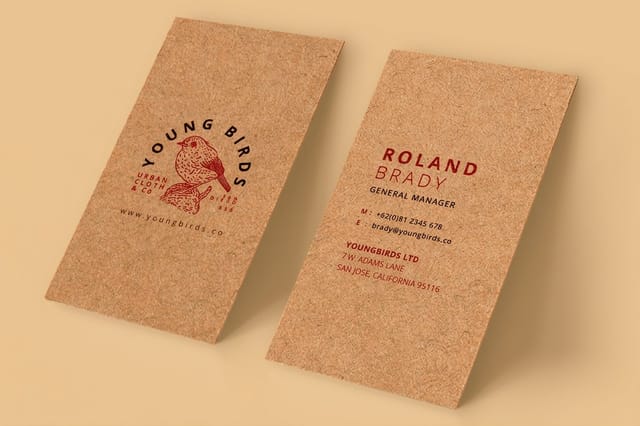
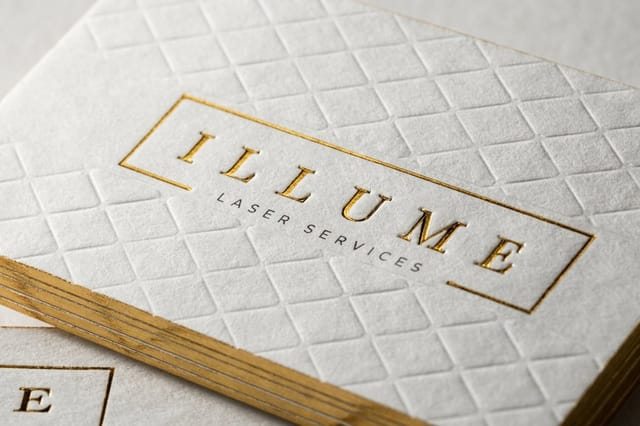
Three stocks cover almost every eco brief. Kraft business cards use a warm, recycled-content brown stock with a rustic, unbleached look that suits makers, cafes, and outdoor brands, and they are the most affordable way into the natural aesthetic. Cotton business cards are printed on a soft, tree-free stock made from cotton fibers, giving a soft, substantial hand that reads high-end and sustainable at once.
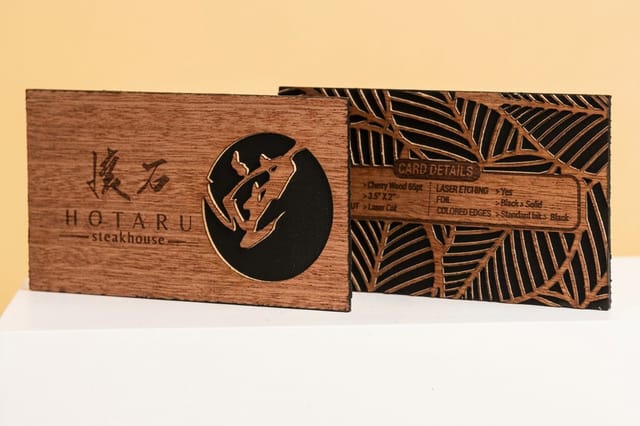
For the true showpiece, wood business cards are made from a thin real-wood veneer, so every card carries a unique grain and an unmistakable natural texture. Each stock tells a slightly different story, rustic, premium, or striking, but all three land the eco message the moment they leave your hand. Compare their weights against standard stocks with our thickness and paper weight chart.
Why these cards count as sustainable
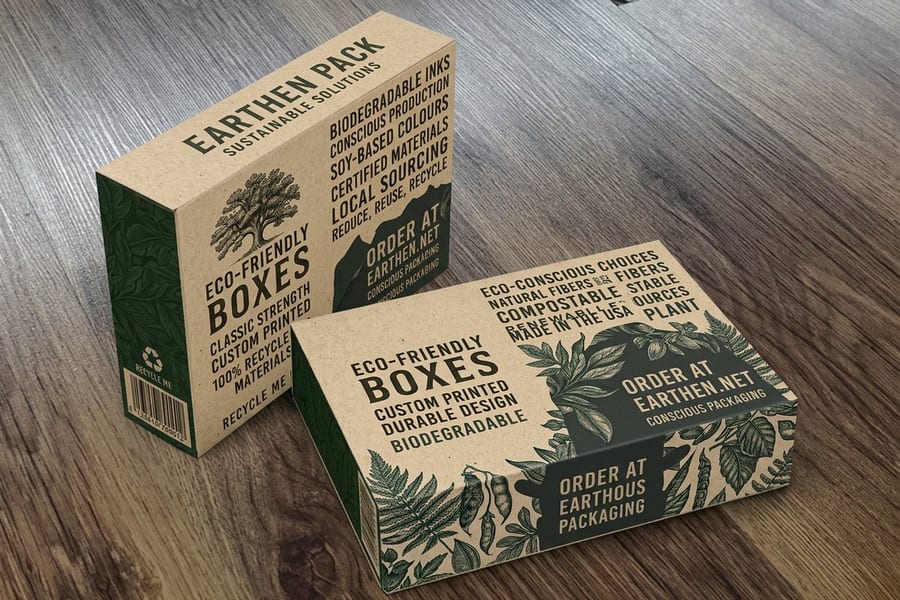
Sustainability in stationery comes down to the material and its end of life. Kraft stock carries recycled content and is itself recyclable, cotton is made from a renewable, tree-free fiber, and wood veneer is biodegradable, so none of these cards is destined to sit in a landfill as plastic would. Choosing them lets a small, everyday item reinforce a larger commitment rather than quietly contradict it.
There is a branding payoff too. Handing over a visibly natural card starts a conversation and signals your values without a word of explanation, which is worth more than any printed claim. If you want the story to extend past the card, our guide on whether business cards are recyclable covers how to keep the whole print program low-impact.
How ink behaves on natural stocks
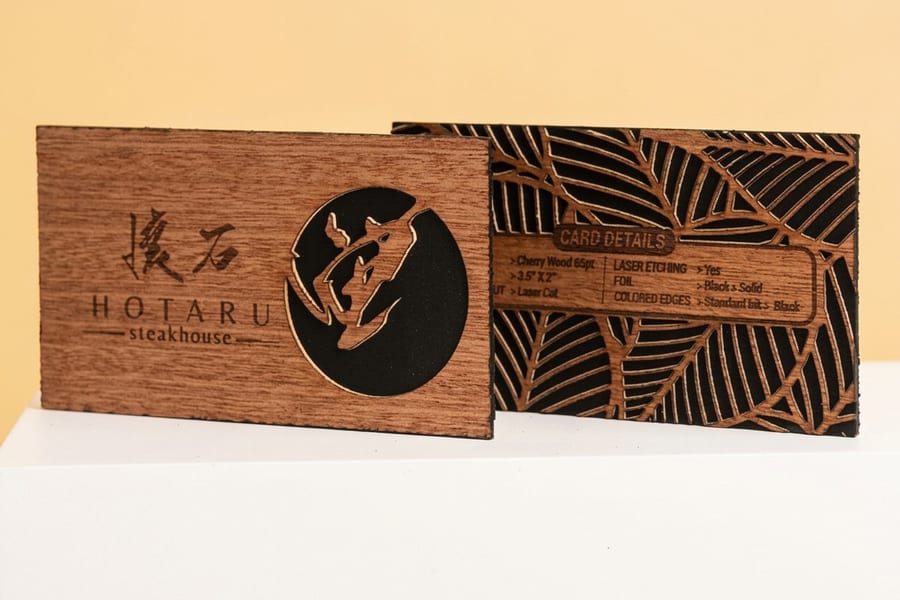
Natural stocks are uncoated and often textured, which changes how they take ink. A coated card holds color on the surface for bright, glossy pop, while kraft, cotton, and wood absorb ink into the fiber, so colors read softer, warmer, and a shade more muted. That is not a flaw, it is the aesthetic, but it means a neon brand color will land earthier than it does on a screen.
Design with the surface in mind: favor bold, high-contrast marks, lean on the natural stock color as part of the palette, and keep fine reversed-out text a little heavier so it holds on a textured ground. On wood especially, the grain shows through lighter inks, which is part of the charm. When exact color matters, order a sample first so you can judge the ink on the real fiber before a full run.
Designing eco cards that still look sharp
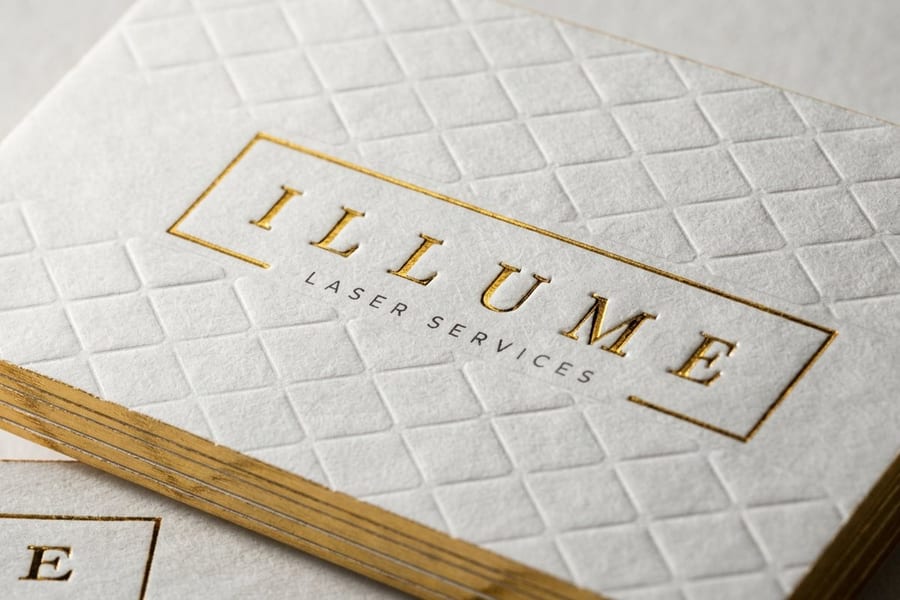
The strongest eco cards lean into the material rather than fighting it. Minimal layouts with generous space let the natural stock breathe, and a restrained palette, one or two inks plus the stock color, feels intentional and premium. Where a coated card might use a big glossy photo, an eco card wins with clean typography, a simple mark, and the texture of the paper itself.
Finishes can still add polish: a foil or a debossed logo reads beautifully against kraft or cotton and adds a tactile, high-end note without any plastic coating. Keep contact details inside a safe margin and your logo crisp in vector so it stays sharp on a soft surface. For the underlying rules, our logo design best practices apply on natural stock just as they do on coated.
Choosing your stock and ordering
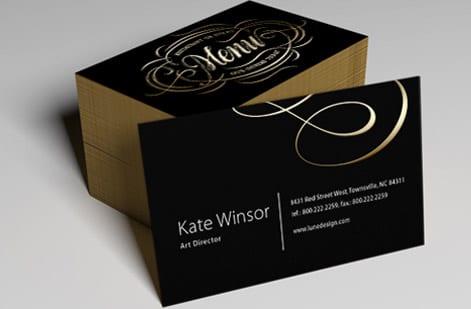
Picking the stock is really picking the impression. Choose kraft for a warm, affordable, rustic feel, cotton for a soft premium touch, and wood for a genuine conversation piece with natural grain. All three carry the sustainable message, so let your brand personality and budget make the final call. Order a sample pack if you are deciding between them, since the difference is easiest to feel in hand.
Once you have chosen, set your quantity and any finish in the configurator and the price updates live, dropping per card as the run grows. Start with kraft cards for the classic eco look, explore the full lineup in business cards, or browse everything natural in the eco-friendly collection.
Wally hands you the eco look that actually prints
Bamboo is the idea, kraft, cotton, and wood deliver
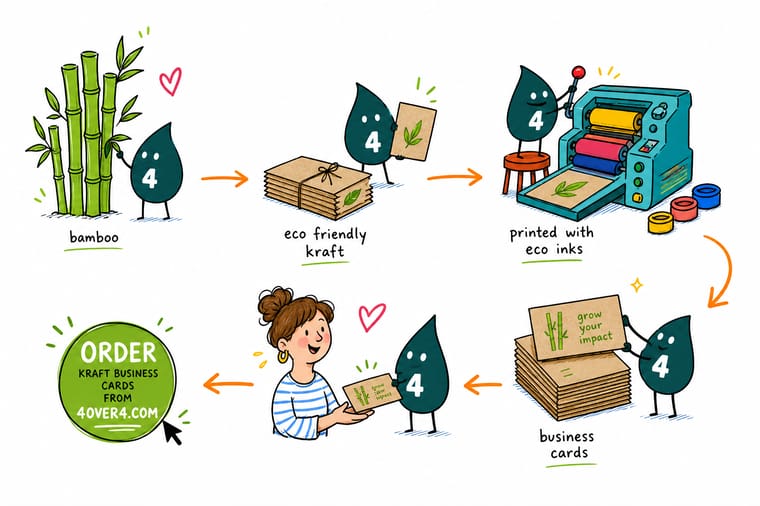
Wally skips the hard-to-print bamboo and reaches for the natural stocks that shine on press: rustic kraft, soft cotton, and real wood veneer. Each one is recyclable or biodegradable, takes ink into a warm, honest tone, and tells your sustainability story the moment it changes hands. Pick your stock, add a tactile finish, and let 4OVER4 print it clean.
Order eco-friendly cards →Quick reference
Eco business card stocks compared
Each natural stock lands the sustainable message a little differently. Match the material to the impression and budget you want.
| Eco stock | Material | Best for |
|---|---|---|
| Kraft | Recycled-content brown stock | A warm, rustic, affordable look for makers, cafes, and outdoor brands. |
| Cotton | Tree-free cotton fiber | A soft, substantial hand that reads high-end and sustainable. |
| Wood | Real wood veneer | A striking conversation piece with unique natural grain on every card. |
| Ink behavior | Absorbs into fiber | Expect softer, warmer, slightly muted colors, not glossy pop. |
| End of life | Recyclable or biodegradable | The card itself supports your sustainability message. |
| Best finishes | Foil or deboss | Tactile, high-end accents that suit natural stock without plastic coating. |
Step by step
Get to an eco card you love in 6 steps
- Fix your eco goal Decide whether recyclability, tree-free fiber, or a biodegradable material matters most for your brand story.
- Pick the impression Choose rustic kraft, premium cotton, or showpiece wood based on the feel you want to hand across a table.
- Order a sample first Feel the natural stocks in hand before a full run, since the difference is tactile as much as visual.
- Design for the surface Use minimal layouts, bold marks, and the stock color as part of the palette rather than expecting glossy pop.
- Add a tactile finish Consider a foil or debossed logo, which reads beautifully against kraft or cotton without any plastic coating.
- Set quantity and order Choose your run in the configurator, watch the per-card price drop, and place the order.
Specs and pricing
Live kraft business card specs and pricing
Kraft is the cheapest way into the natural look, at 100 for $24.75 on 18pt Kraft Uncoated Cover.
| Quantity | Price Per Unit | Total |
|---|---|---|
| 100 | 24.8¢ | $24.75 |
| 250 | 14.2¢ | $35.57 |
| 500 | 13.1¢ | $65.60 |
| 1,000 | 13.3¢ | $132.55 |
Order it
Eco business card stocks to choose from
See it in use
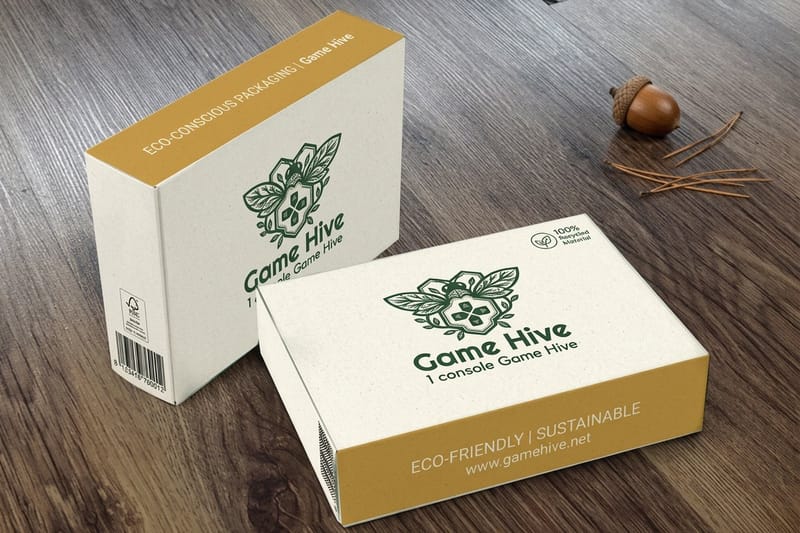
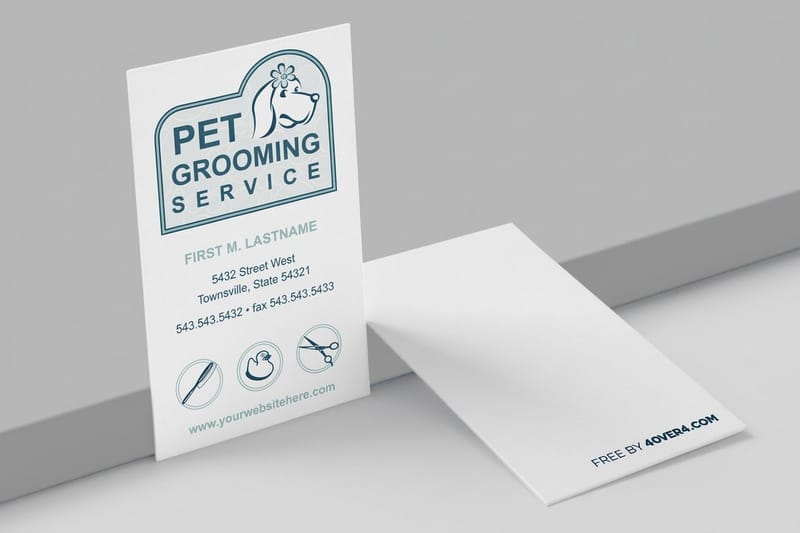
Cards that came off the press for real orders
Explore more
Where to go next


By the numbers
The catalog behind an eco business card order
Common Questions
Common questions about eco business cards
What is a bamboo business card?
A bamboo business card is a card cut from a thin, fast-renewing bamboo material, valued for its natural texture and sustainability. Because bamboo regrows in a few years rather than decades, it became a symbol of eco stationery. True bamboo card stock is uncommon and its fibrous surface can print unevenly, so brands who want the look usually choose wood veneer, kraft, or cotton, which give the same natural feel with reliable print quality.
Kraft, cotton or wood, what does each one cost?
Match the stock to the impression you want. Kraft gives a warm, rustic, affordable look, cotton feels soft and premium, and wood veneer is a striking conversation piece with unique grain. All three carry the sustainable message and are recyclable or biodegradable, so let your brand personality and budget decide. Ordering a sample pack first makes the choice easy, since the difference is mostly tactile.
What do eco business cards cost and how are prices set?
Price depends on the stock, the quantity, and any finish. Kraft is the most affordable natural option, cotton and wood sit higher because of the specialty material, and adding foil or a deboss raises the price further. You set each option in the configurator and the total updates live, with the per-card price dropping as the quantity climbs, so you can see exactly what a premium stock or finish adds.
What sizes, stocks, and finishes are available for eco business cards?
Eco cards print at standard business card size on kraft, cotton, or real wood veneer, all uncoated for a natural feel. Because the stocks are uncoated, glossy coatings are not the goal, but tactile finishes like foil stamping and debossing look excellent against natural fiber. Order a sample if you want to judge a stock and finish combination in hand before committing to a run.
How long do eco business cards take to print and ship?
Standard turnaround is the most economical and gives the press time to handle the natural stock well. Specialty stocks like wood veneer can take a little longer than a standard coated card, and any added finish extends production slightly. You can see the production and shipping estimate for your exact stock and quantity in the configurator before you order.
Do natural stocks print in full color?
Yes, but the color reads differently than on a coated card. Uncoated kraft, cotton, and wood absorb ink into the fiber, so colors land softer, warmer, and a shade more muted, and on wood the grain shows through lighter inks. That natural look is the appeal. Design with bold, high-contrast marks and order a sample first when exact color matters.
Get Started
Order 250 wood business cards from $470.11
Pick kraft, cotton, or real wood veneer, add a tactile foil or deboss, and print a card that carries your sustainability message the moment it leaves your hand.
Legal Disclaimer
Gold Standard guarantees apply to all standard orders placed through 4over4.com. Price match requires verifiable proof of a competitor's published price for an equivalent product with matching specifications and turnaround time. Satisfaction guarantee covers manufacturing defects and print quality issues. Contact support with order number and documentation. On-time delivery rate based on tracked orders 1999 to 2026. Individual results may vary based on shipping carrier performance.
