
Circle Cards: The Complete Guide to Round Die-Cut Card Printing


Tobias is our voice for cutting, binding and large format, built from the knowledge of our production team, with over 20 years in printing.
Circle cards are round die-cut cards measured by diameter, and a circle card trades corners for attention. This guide covers how round die-cut cards are made, which diameters fit a wallet and which belong on a counter, the stocks that hold a curved edge, how to build artwork the die will not spoil, and what the whole thing costs.
A circle card is a printed card cut to a round outline with a custom die instead of trimmed to a rectangle. It is measured by diameter rather than height and width, with two and a half inches fitting a wallet and three inches working better on a counter or a product. Heavier and laminated stocks hold the curved edge best, and price is driven by the die, the stock, the finish and the quantity. If you came looking for die-cut backer cards, the same die makes them: a heavy or laminated round or a custom outline that carries earrings, a keychain or a small product on the shelf.
Start here
Diameters that fit a wallet and a counter
A circle card is an ordinary printed card with an extraordinary last step. It is printed flat on the same press as any other card, then a custom steel die stamps it into a full circle. Because there are no corners, the card is specified by a single diameter, it survives handling better, and it interrupts a stack of rectangles the moment someone reaches for it. The tradeoffs are a smaller usable area, a stricter safe zone and a one-time tooling cost that rewards ordering a real quantity rather than a token run.
What is a circle card, and how is it actually made
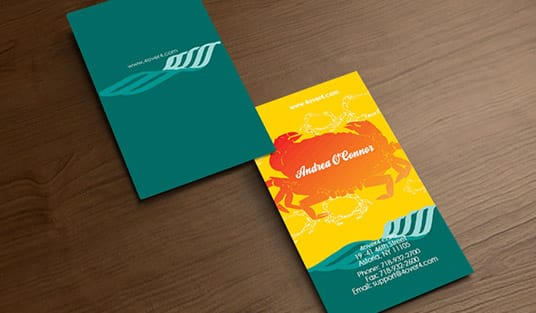
A circle card is a printed card whose finished outline is a full circle. Nothing about the printing itself is exotic. The artwork is imposed onto a flat sheet exactly like a rectangular card, printed, and dried. What changes is the last stage: instead of a straight guillotine cut, a custom steel rule die shaped to your circle presses through the sheet and releases the round pieces.
That single change carries real consequences. The die is a physical tool, so the shape is fixed once it is made and every card in the run is identical. There are no corners to bend or fray, which is why round cards tend to survive a pocket better than a sharp-cornered one. And because a circle has no long edge, everything about layout, from where the eye lands to how much copy fits, has to be rethought rather than copied over from a standard card.
At 4OVER4 the round shape is produced through our die-cut card lines. Die-Cut Business Cards cover the common shapes at the friendliest entry price, while Die-Cut Any Shape Business Cards exist for outlines that step outside the standard set. Both sit inside the wider circle printing collection, alongside the round labels and stickers that share the same cutting process.
Why a round card gets kept when a rectangular one gets binned
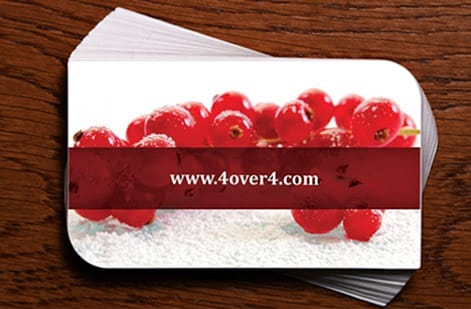
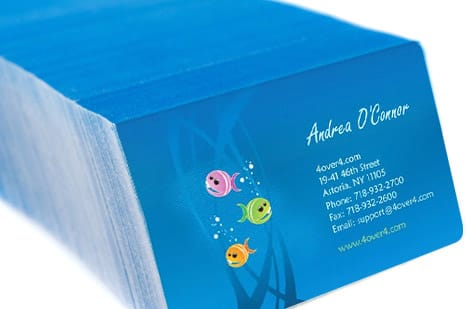
The honest advantage of a circle card is attention. A stack of handouts at an event is a stack of identical 3.5 by 2 inch rectangles, and the eye stops registering them after the third one. A 2 or 2.5 inch circle, from 100 for $26.37 on 14pt gloss, is the one shape in the pile that does not match. A round card breaks the pattern before anyone reads a word on it. That interruption buys you the two seconds you need for the design to do its job.
The second advantage is memory through handling. People turn an unusual card over. They spin it. They show it to the person next to them. A shape that invites handling gets more contact time than a shape that gets slid into a pocket unexamined, and contact time is what turns a card into a recalled brand rather than a discarded one.
There is a third, quieter reason. A circle reads as friendly and finished. It borrows the visual language of coasters, badges, seals and stamps, all objects that signal completeness and approval. Bakeries, coffee roasters, salons, breweries, wellness studios and product brands lean on that association constantly, which is also why round formats dominate label work. Our comparison of round labels and die-cut labels walks through the same logic on the adhesive side of the catalog.
Circle card sizes and how to pick a diameter
Rectangular cards are described by two numbers. A circle only needs one: the diameter, measured straight across the widest point. That simplification is convenient but it hides a trap, because a circle always has less usable area than the rectangle it appears to match. A two inch circle holds noticeably less than a standard card, even though it looks similar at arm's length.
The common diameters behave differently in practice. Around one and a half to two inches you get a token, a seal or a small hang tag, room for a mark and a handful of words and nothing more. Two and a half inches is the sweet spot for a genuine round business card: it still enters a wallet slot and it fits a logo, a name, a role and one contact line without crowding. Three inches becomes a counter object, a coaster, a loyalty card or a product insert that stays visible. Beyond that you are designing a small circular flyer.
Choose the diameter by asking where the card ends up. If the answer is a wallet, stay small. If the answer is a desk, a fridge, a gift box or a table, go bigger and let the design breathe. Our complete guide to card sizes gives the standard rectangular dimensions that customers are unconsciously comparing your round card against.
Stocks and finishes that hold a circular edge
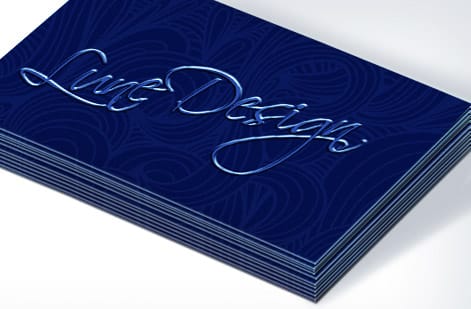
Stock choice matters more on a die-cut circle than on a straight-cut rectangle. A curved cut travels through the fibers of the sheet at a constantly changing angle, so a thin or soft stock can feather along the edge or bow slightly once it is released. A heavier board takes the cut cleanly and keeps the circle looking machined rather than punched out.
For a round business card, a thick premium card stock is the sensible default. It survives being carried, it resists the soft curl that thin round cards develop, and it feels intentional in the hand, which is half the reason to print a shaped card in the first place. Uncoated stocks are the choice when someone needs to write on the card, for example a punch card or an appointment reminder, because ink from a normal pen actually dries on them.
Finish is where the card gets its personality. Gloss lifts photography and deep colors. Matte quiets everything down and reads as expensive. Soft-touch laminate turns the card into a tactile object, and on a circle that effect is amplified because there is no corner to interrupt the sweep of your thumb. Die-Cut Laminated Business Cards add a sealed film over the whole piece, which is the right call for coasters, food service cards, hang tags on physical products and anything that will meet moisture.
Setting up artwork so the die cuts where you expect
Three concentric zones govern every die-cut file. The outermost is bleed: background color and imagery that deliberately extend past the finished edge, so that any tiny drift in the cut still lands on printed area instead of exposing raw white paper. The middle is the cut line itself, the circle the die follows. The innermost is the safe zone, the region where text and logos are guaranteed to survive.
On a circle those zones deserve more respect than on a rectangle. A straight cut that drifts a fraction of a millimetre shaves an even sliver off one side. A rotary die that drifts does it around a curve, so the loss is visible as an asymmetry the eye picks up instantly. Pull your critical elements further inside than instinct suggests, and never let type run parallel to the edge unless you are willing to see the gap vary slightly.
A few practical rules save reprints. Build the file in CMYK rather than screen color. Supply images at print resolution, not web resolution. Center the composition, because circles reward radial and centered layouts and punish dense left-aligned blocks. If you want a decorative border, keep it thick enough that a small shift never reads as an error. And if you are curious how far shaped printing can be pushed creatively, this walkthrough of DIY scratch-off print and cut cards is a good look at print plus a second finishing pass.
How to order circle cards, step by step

The order sequence is short, and each step narrows the next one. Work through it in order and the whole thing takes a few minutes.
- Fix the diameter first. Everything downstream, including how much copy fits, is decided by this number. Two and a half inches for a wallet card, three inches for a counter card.
- Pick the product line. A standard round shape goes through Die-Cut Business Cards. A shape outside the standard set goes through Die-Cut Any Shape Business Cards. Anything that needs a sealed surface goes to Die-Cut Laminated Business Cards.
- Choose stock and finish. Heavier for durability, uncoated if it will be written on, laminated if it will get wet or handled constantly.
- Set the quantity. Check two or three quantity tiers before you commit, because the per-piece price on die-cut work falls sharply as the run grows.
- Prepare and upload the file. Bleed out, critical content in, CMYK, print resolution, one file per side.
- Review the proof. Look specifically at the relationship between your artwork and the cut line, not just at the colors.
If you are still deciding between vendors on shaped work, our Jukebox stickers alternative comparison covers how die-cut pricing and stock options line up across providers.
What circle cards cost and what actually drives the price
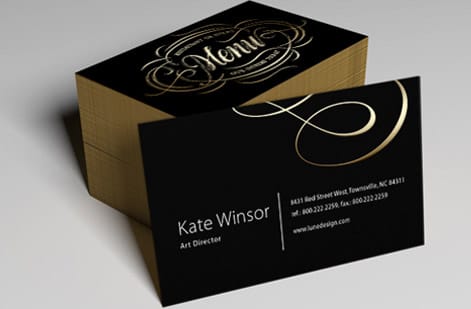
Four levers set the price of a die-cut round card, and only one of them is unfamiliar. The first is the die, the physical cutting tool made for your outline. It is a setup cost, which means it lands hard on a small run and becomes almost invisible on a large one. The second is stock. The third is finishing, where lamination and specialty coatings sit. The fourth is quantity, and it moves the per-piece figure more than anything else.
Against those levers, the entry points are straightforward. Die-Cut Business Cards start at $26.37, which makes standard round shapes the most accessible way into the format. Die-Cut Any Shape Business Cards start at $95.56, reflecting the freedom to specify an outline that is not on the standard list. Die-Cut Laminated Business Cards start at $174.65, with the added film layer and its durability built into that figure.
Two habits keep the total sensible. Commit to one shape and one diameter for the whole run, because every additional die is another setup. And order the quantity you will realistically use over the next six to twelve months rather than the minimum, since the second half of a run is always cheaper per card than the first.
Production and shipping time for die-cut round cards
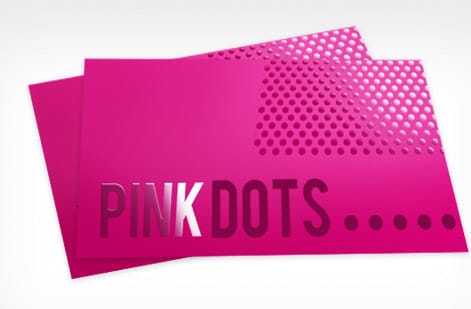
A die-cut card passes through one more stage than a rectangular one. The sheet is printed and allowed to dry, the die-cutting pass runs, then the pieces are separated, inspected, finished and packed. Each of those stages is quick on its own, but they are sequential, so the total production window sits slightly wider than a plain card of the same stock.
Shipping time is a separate number that stacks on top of production. Where the order is going, and which service you pick at checkout, decide it. The single most common scheduling mistake is treating the quoted production window as the delivery date, then discovering the gap the week of the event.
The practical fix is a buffer. Order at least a week earlier than you think you need to, so that if a proof needs a revision or an address needs correcting, there is still room to fix it without an expedited shipment. That advice applies to any print job, but it applies hardest to shaped work, where a reprint means the die-cutting stage runs again.
Where circle cards earn their keep
Round cards are not a novelty looking for a use. Certain jobs genuinely suit them better than a rectangle does. Loyalty and punch cards are the clearest example: a circle of stamps around the rim reads as a progress dial, and customers understand it without instructions. Coasters and drink tokens are another, since the format already matches the object it sits under.
Product brands use circle cards as hang tags and care cards, where the round shape stops the tag from catching and tearing at a corner. Bakeries, candle makers, soap makers and small-batch food producers use them as seals and thank-you inserts inside packaging. Event organizers use them as badges, table numbers and giveaway tokens. Wellness studios and salons use them as appointment reminders that hold their place on a fridge door.
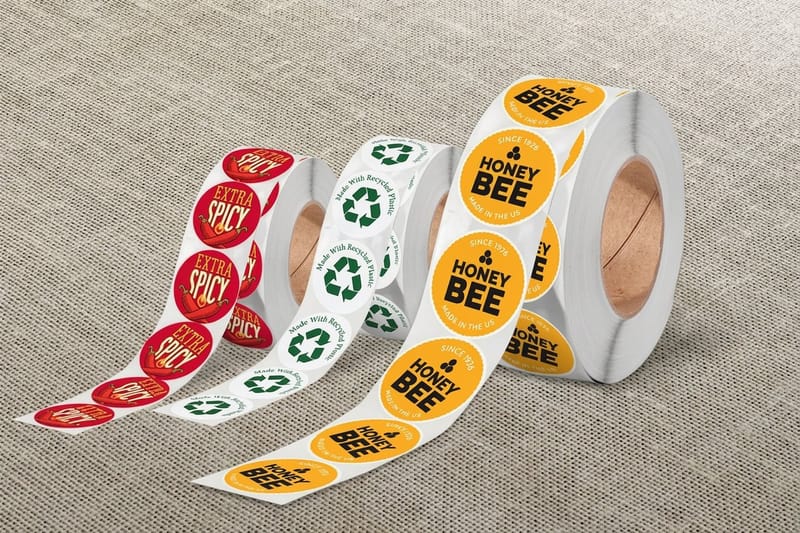
If your round work is heading toward packaging rather than handouts, the label side of the catalog is the closer fit. Our Vistaprint candle labels alternative covers round product labeling directly, our candle labels range prints the round label itself, and the broader circle printing collection keeps every round format together so you can match a card to the label on the same product.
How to choose the right circle card for your job
Reduce the decision to four questions and the specification writes itself. Where does the card end up, a wallet or a surface? That fixes the diameter. Will anyone write on it? That decides coated against uncoated. Will it meet moisture, food or heavy repeated handling? That decides whether lamination is worth the step up. Is your outline a standard circle or something more unusual? That decides which product line you order through.
Answer those and you land somewhere obvious. A two and a half inch card on heavy stock with a matte finish through Die-Cut Business Cards covers most round business cards. A three inch laminated card through Die-Cut Laminated Business Cards is the coaster, the hang tag and the food service card. A custom outline through Die-Cut Any Shape Business Cards is where you go when the circle should really be a rounded badge, a hexagon or a silhouette of your product.
One last piece of advice: order a small run before a large one. Shaped cards feel different in the hand than they look on a screen, and the diameter you thought was right is occasionally half an inch off. A short first run tells you that for a fraction of the cost of finding out on ten thousand pieces.
Wally explains circle cards
One number decides everything: the diameter
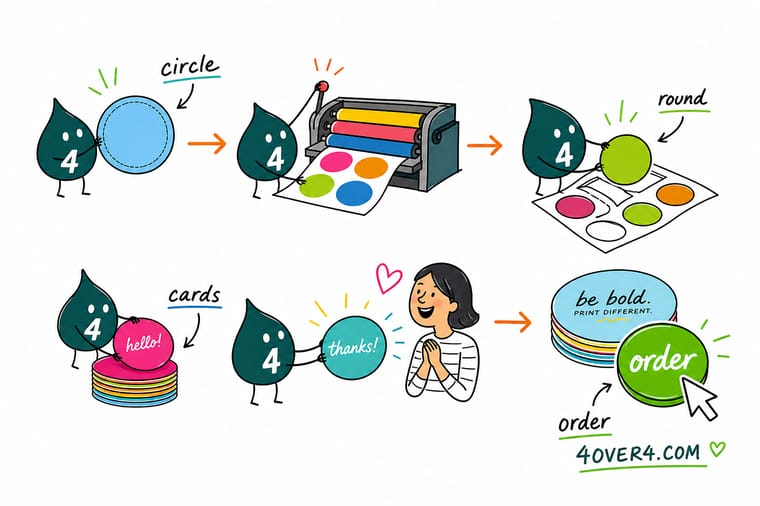
Wally starts every round card the same way, by asking where it will live. A wallet means two and a half inches or less. A counter, a fridge or a gift box means three inches and room to breathe. Once the diameter is fixed, the stock, the finish and the amount of copy that fits all follow from it. Then he pushes the artwork past the cut line and pulls the text well inside, because a curved die is far less forgiving than a straight blade.
Design and print circle cards →
Infographic
The circle card decision, at a glance
One frame, seven decisions. Save it, send it to whoever is designing the file, and you will avoid the three mistakes that cause almost every round card reprint.
The three reprints we see most often on round cards all start in the same place: text too close to the curve, artwork stopping at the cut line, and a diameter chosen before anyone asked where the card would live.
Specs and pricing
Die-cut card specs and live pricing
When the diameter and the stock are settled, the numbers below are the ones that matter. Specs first, then live pricing across quantity tiers so you can see how quickly the per-card cost falls.

| Quantity | Price Per Unit | Total |
|---|---|---|
| 100 | 26.4¢ | $26.37 |
| 200 | 15.9¢ | $31.86 |
| 300 | 12.8¢ | $38.45 |
| 400 | 10.2¢ | $40.64 |
| 500 | 9.45¢ | $47.24 |
| 600 | 8.97¢ | $53.83 |
| 700 | 8.32¢ | $58.23 |
| 800 | 7.83¢ | $62.61 |
Print it
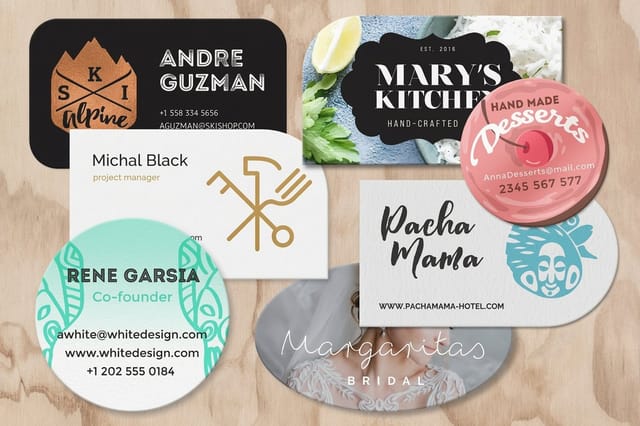
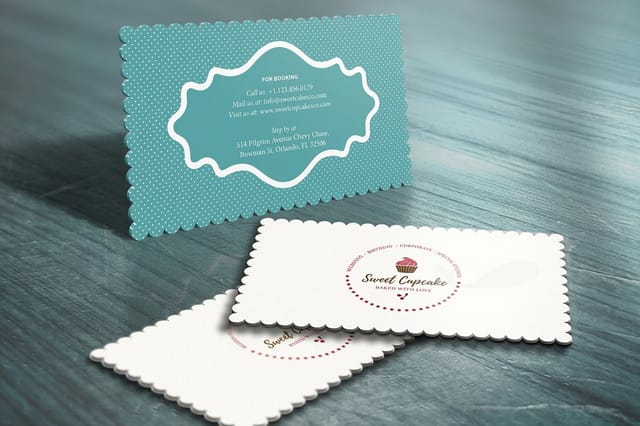
Three ways to print a round card at 4OVER4

See it in use
Round and die cut cards we cut in house
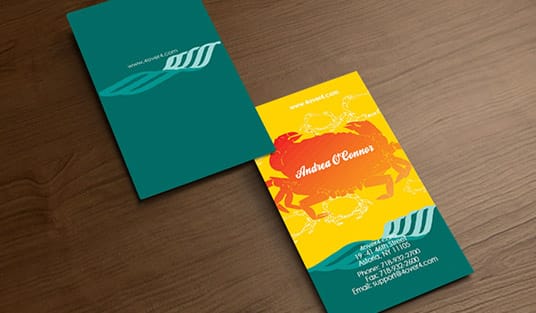
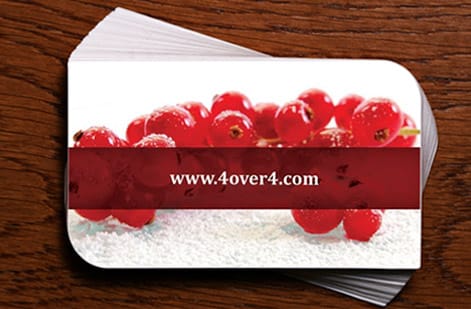
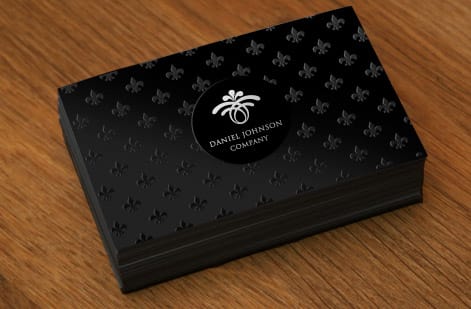
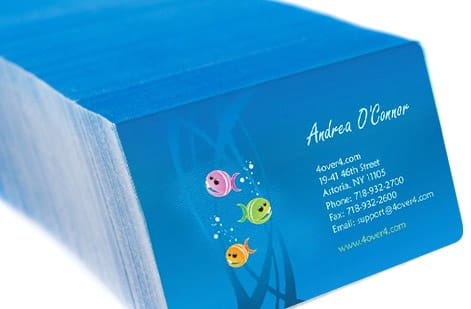
%22%2F%3E%3Ccircle%20cx%3D%2241%22%20cy%3D%2245%22%20r%3D%2226%22%20fill%3D%22%2314b8a6%22%20opacity%3D%220.15%22%2F%3E%3Ccircle%20cx%3D%2280%22%20cy%3D%2262%22%20r%3D%2226%22%20fill%3D%22%2314b8a6%22%20opacity%3D%220.1%22%2F%3E%3Crect%20x%3D%2271%22%20y%3D%2221%22%20width%3D%2226%22%20height%3D%2232%22%20rx%3D%224%22%20fill%3D%22%2314b8a6%22%20opacity%3D%220.08%22%20transform%3D%22rotate(6%2080%2030)%22%2F%3E%3C%2Fsvg%3E)
Explore more
Where to go next



By the numbers
The stocks a die cut card gets cut from
Common Questions
Common questions about circle cards
What is a circle card?
A circle card is a printed card cut to a round outline instead of the usual rectangle. It starts life on the same flat press sheet as a standard card, then a custom steel die stamps the circular shape out of the sheet. The result is a card with no corners at all, sized by diameter rather than by height and width. People use circle cards as business cards, hang tags, coasters, loyalty punch cards, drink tokens, product seals and event handouts.
What diameter should a round card be?
Start with the job the card has to do. If it lives in a wallet, stay at two inches or two and a half inches so it does not fight the card slot. If it sits on a counter or a product, go to three inches or larger where the artwork can breathe. Then pick the stock by handling: light stocks feel disposable on a curve, thick and laminated stocks feel deliberate. Finally decide whether one side or both sides carry information, because a round back panel holds less copy than you expect.
What does a circle card cost and how are prices set?
Pricing on round cards is built from four things: the custom die, the stock, the quantity and the finish. The die is a one-time cutting tool for your shape, so it weighs heavily on small runs and almost disappears on large ones. Die-Cut Business Cards start at $26.37, the any-shape version starts at $95.56, and the laminated version starts at $174.65. Doubling a quantity rarely doubles the price, because setup is already paid for.
What sizes, stocks and finishes are available for circle cards?
Common diameters run from about one and a half inches up to three and a half inches, with two, two and a half and three inches doing most of the work. Stocks range from standard card weight through heavy premium boards, and finishes include matte, gloss and soft-touch laminates as well as uncoated options that take pen ink. Laminated circle cards add a sealed film layer that resists moisture and keeps the cut edge from fraying, which matters on coasters and hang tags.
How long does a circle card take to print and ship?
Die-cut work carries an extra production stage, so plan for a slightly longer window than a plain rectangular card. Printing and drying come first, then the die-cutting pass, then finishing and packing. Transit time sits on top of production time and depends on where the order is going. If the cards are tied to a launch, a trade show or a wedding date, order with a buffer week so a reprint is still possible.
Do round cards fit in a standard wallet or card holder?
A two inch or two and a half inch circle slides into most wallet slots and card holders without bending, because its widest point is still under the standard card width. A three inch circle will not, and that is often the point: it stays on a desk or a fridge instead of disappearing into a pocket. Decide which behavior you want before you pick the diameter, since it changes how the card gets used.
How do I set up artwork for a round die-cut card?
Extend background color and imagery past the finished edge so the cut never exposes white paper, then keep logos, text and anything you cannot afford to lose well inside the trim. Work in CMYK, supply a print resolution file, and keep the round shape in mind while composing: centered layouts, circular type and radial patterns sit naturally in a circle, while dense left-aligned paragraphs fight it.
Get Started
100 die-cut business cards cost $26.37, or 26 cents each
Pick a diameter, pick a stock, upload your file and let the die do the rest. Our team checks every round layout against the cut line before it goes to press.
Legal Disclaimer
Gold Standard guarantees apply to all standard orders placed through 4over4.com. Price match requires verifiable proof of a competitor's published price for an equivalent product with matching specifications and turnaround time. Satisfaction guarantee covers manufacturing defects and print quality issues. Contact support with order number and documentation.
