
One Label Order Can Cover Products, Cartons and Equipment Tags


One artwork job, one purchase, three materials. The facestock and adhesive follow the surface, and paper is still the smarter buy on some of them.
Order company labels by surface, not by department: paper face with a general purpose permanent adhesive for shipping cartons, coated or film face with a laminate for retail product labels, and polyester film with a protective layer for asset tags that must stay readable for years. The print is the same job across all three. The adhesive and the facestock are what change, and getting those wrong is what causes a reprint six weeks later.
Quick answer
The surface decides the material, and the material decides the price
Group your labels by what they stick to, then buy them in one order. Cartons take paper on a high-tack adhesive because they ship once. Retail product labels take a coated or film face with a laminate because they sit under lights and get handled. Asset tags take polyester film with a permanent acrylic and a protective layer over the print, because the number has to survive cleaning solvents and four years of service. Consolidating the print run is where the money comes back, not forcing one stock across three jobs.
Three Label Jobs, Three Different Ways to Fail

Most companies buy labels by department, which is why the same stock ends up on a retail jar, a shipping carton and a forklift. Buy by surface instead, because each of the three fails in its own way.
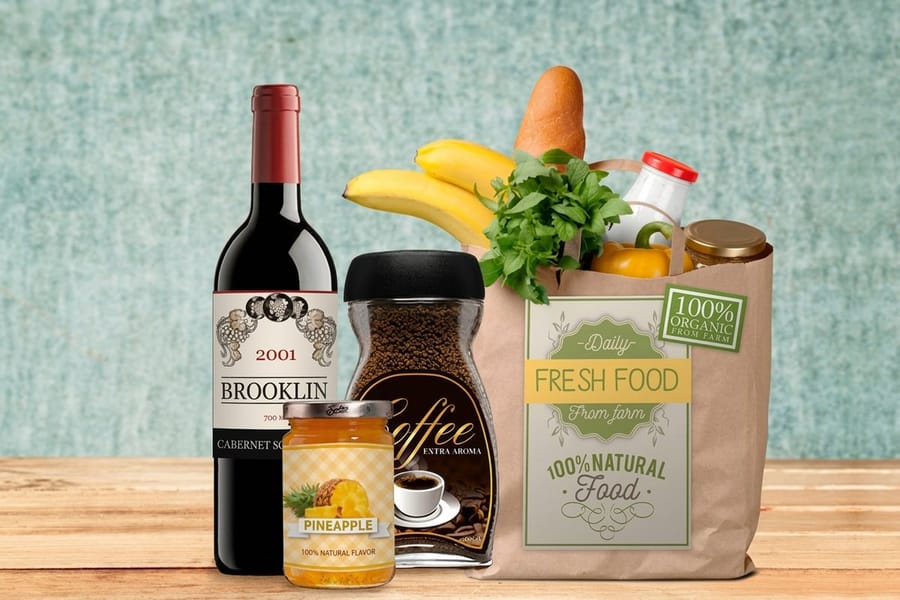
Product labels fail visually. Nothing falls off. The label goes slightly gray at the edges after a month on a shelf, the black looks washed under store lighting, or a thumb rubs the ink where the customer picks the jar up. The spec that fixes it is a coated or film face with a laminate, not a heavier paper.
Carton labels fail mechanically. Recycled corrugated is porous, dusty and often has a slightly loose surface fiber. A general purpose adhesive contacts the dust rather than the board, so the label rides a conveyor, catches a corner, and peels. The fix is a higher-tack adhesive and a label small enough that it sits flat rather than bridging a flute crease.
Asset tags fail slowly, which is worse. A tag on a machine has to still be scannable in year four. It gets wiped with cleaners, warmed by the equipment, and knocked by tools. Paper and unprotected ink lose that fight quietly, and you find out when someone cannot read the number during an audit.
Once the three are separated, the buying gets simple. A single order through packaging labels can carry all three, as long as each one gets the material it actually needs. If your artwork is not built yet, start with preparing files for packaging products so the dieline and bleed are right before anything prints.
Facestock: Paper Until It Gets Wet, Film After That

Facestock is the layer you print on, and the decision is close to binary. Paper is cheaper and prints beautifully. Film costs more and survives things paper cannot. Everything else is detail.
| Facestock | Holds up to | Gives up at | Where it belongs |
|---|---|---|---|
| Uncoated paper | Handling, barcode scans, writing on by hand. | Any moisture, and any scuffing of the ink. | Shipping cartons, internal bin labels, anything that ships once. |
| Coated paper | Sharper color, mild rubbing, shelf display indoors. | Standing water, condensation, outdoor exposure. | Retail product labels on dry goods, boxed items, gift packaging. |
| Vinyl film | Moisture, curves, repeated flexing without tearing. | Aggressive solvents and long unprotected UV exposure. | Bottles, tubs, curved containers, drums, outdoor short term. |
| Polyester film | Heat cycles, cleaning chemicals, years of service. | Tight curves, and any budget that wanted paper pricing. | Equipment tags, serial plates, anything read years from now. |
Read the third column before the second. Choosing a facestock is choosing which failure you can live with, and the honest answer for most carton work is uncoated paper: it ships once, gets sliced open, and goes in the recycling. Paying for film there is money burned. Standard packaging labels start at $23.88 and cover that job completely.
The moment moisture enters the picture, the calculation flips. Paper wicks water from the cut edge in, so a chilled bottle, a wash-down area or a humid warehouse lifts a paper edge within days. Bottle work is the clearest case: shaped wine labels start at $10.99 and are cut to a contour precisely because a shaped label on glass has to be chosen for both the curve and the condensation, which is the same reason our beer label options live in their own category.
Adhesive Is the Half of the Spec Nobody Writes Down

Buyers specify size, color and quantity, then let the adhesive default. It is the single most common reason a reprint gets ordered.
There are four adhesive decisions worth making deliberately.
- Permanent or removable. Permanent is the default and is meant to tear the facestock rather than release. Removable is for anything you plan to take off within a season: promotional overlays, temporary pricing, seasonal packaging. Removable on an asset tag is a mistake you discover a year later.
- The surface it lands on. Glass and coated board are easy. Recycled corrugated needs high tack because of surface dust. Polyethylene and polypropylene containers have low surface energy, so ordinary adhesive beads up instead of wetting out and the label peels from the ends within a week.
- Temperature at application. A standard permanent adhesive is too stiff to flow below roughly 50F. Labeling a container that just came out of a cooler gives a weak bond no matter how good the label is. Either warm the container or specify a cold-temperature adhesive.
- Curve and edge stress. A flat tub is forgiving. A slim bottle puts constant peel force on both ends of the label, and a stiff facestock makes it worse by resisting the curve. Softer film and a stronger adhesive go together on small diameters.
Two habits prevent most failures. Clean the surface, because a fingerprint of packing oil is enough to halve the bond on a smooth container. And give the adhesive time: it grabs on contact but keeps building for roughly 24 to 72 hours, so a pull test done immediately is measuring nothing useful.
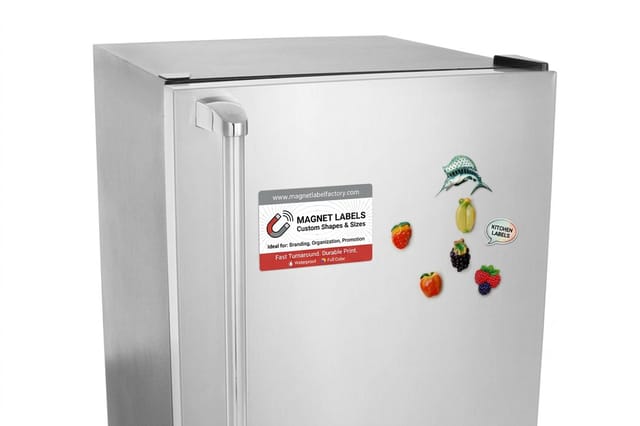
Where the answer is genuinely no adhesive, use a magnet. Magnet labels start at $19.68 and are the right call for shelving, steel bins and racking that gets relabeled whenever a line changes, since they leave no residue at all. The limit is obvious once stated: they hold on steel and nothing else, so aluminum shelving, plastic bins and wooden racks are back to adhesive.
Sheets, Rolls and Where the Money Actually Goes
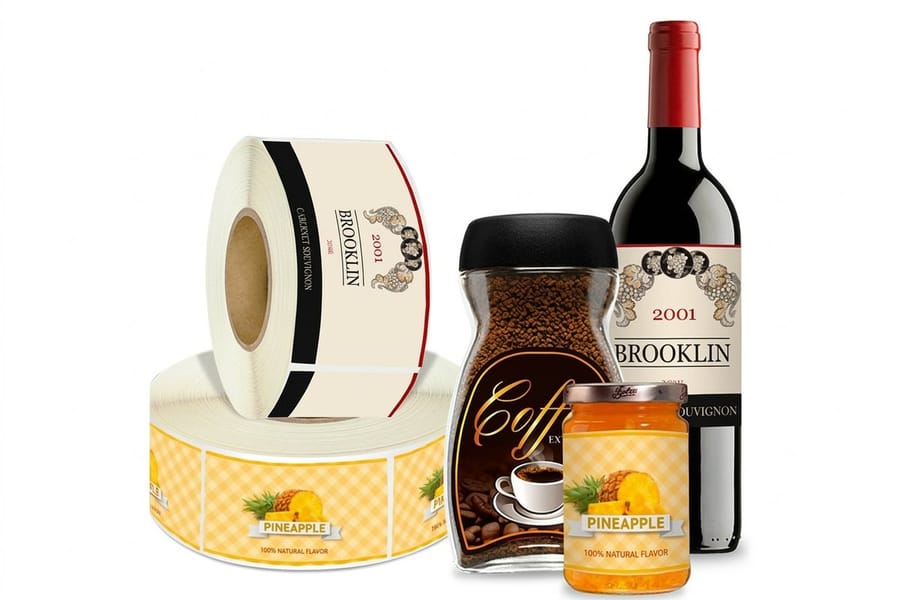
Format is a labor decision dressed up as a material decision. The question is not which is cheaper per label, it is who is applying them and how many.
Sheets suit hand application. You peel from a sheet, you can buy a modest quantity, and the entry price is low: standard packaging labels begin at $23.88 and premium packaging labels at $29.16 for a better face and finish where the label is part of the product rather than part of the box. For a few hundred cartons a month, sheets win outright.
Rolls suit machines and volume. Roll packaging labels start at $322.98, which looks like a different universe until you notice it is a different purchase: a roll order starts at a production quantity and is wound to feed an applicator. Per label it is far cheaper, and the real saving is the person no longer peeling by hand. The trap is buying rolls without an applicator, which turns a cost saving into a very long afternoon.
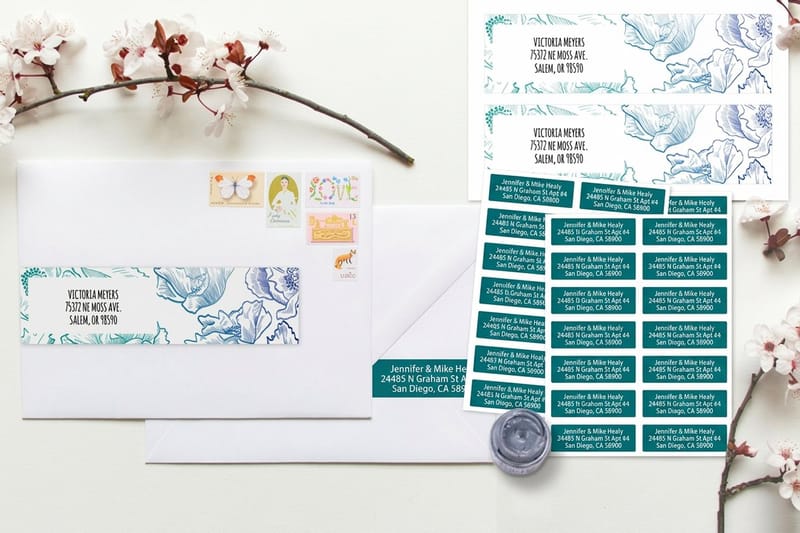
A practical way to split a mixed order: rolls for the one high-volume item, sheets for everything else, and a separate durable spec for the asset tags. Consolidating them into one purchase is where the price improves, not by forcing one material across all three. Our guide to choosing a label printing company covers the questions worth asking before a first order, and ordering custom labels online compares that route against a local shop on turnaround. For everyday outbound mail that never touches a product, address labels are the cheaper category to buy from, and packaging ideas that sell is worth a read if the retail label is doing marketing work as well as identification.
Wally sorts the labels by surface
Same artwork, three materials, one purchase order
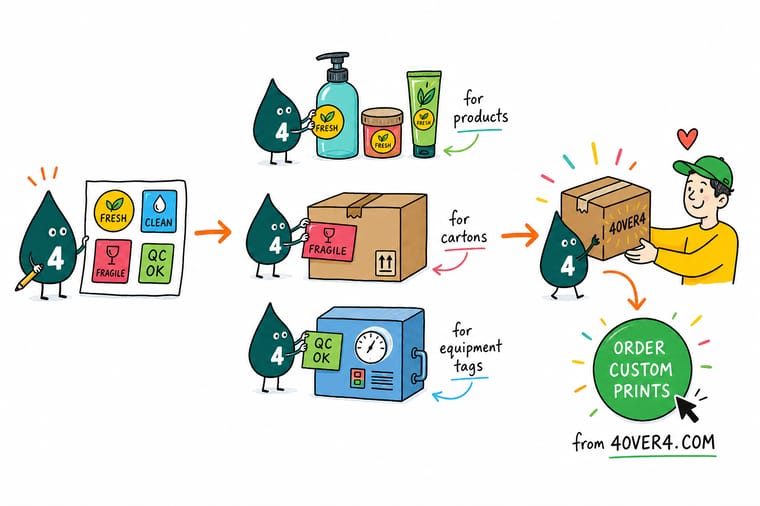
Wally puts paper on the carton because it ships once and gets opened. He puts a coated face with a laminate on the jar because a thumb picks it up every time someone reads the shelf. He puts polyester film on the machine because someone has to scan that number in four years, after a lot of cleaning cloths. Then he wipes the surface before he sticks anything down, and he waits a day before he pull tests it. Three materials, one order, no reprint.
Order packaging labels →Specs and pricing
Label formats, sizes, and starting prices
Compare sheet and roll label options side by side, with live configuration choices and starting prices straight from the 4OVER4.COM configurator.

Print it
Order labels that hold where you put them

Explore more
Where to go next




By the numbers
Twenty five years of printing stand behind a label run
Common Questions
Your company label questions, answered
Can one label spec cover product labels, shipping cartons and asset tags?
One print order can, one material cannot. The artwork, the printing and the ordering all consolidate happily, and buying three label jobs at once is usually cheaper than buying them across three months. What does not consolidate is the material. A retail product label is chosen for how it looks under store lighting, a carton label is chosen for how well it grips dusty recycled corrugated, and an asset tag is chosen for how long it stays readable on a machine that gets wiped with solvent. Pick the material per surface, then place them together.
What label material stays readable on equipment for years?
A film facestock with a permanent acrylic adhesive and a protective layer over the print. Polyester and vinyl films do not absorb moisture, do not tear when someone catches an edge, and hold their dimensions through heat cycles. The protective layer matters as much as the face: unprotected digital ink on a machine housing scuffs from cleaning cloths and fades from UV long before the film itself gives up. Paper asset tags are false economy unless the equipment lives indoors and never gets cleaned.
Will a paper label survive a cooler, a freezer or a wet bottle?
Usually not for long. Paper wicks moisture from the cut edge inward, so the label softens, the edge lifts, and the ink can smear. Cold is a second problem on its own: a standard permanent adhesive is too stiff to flow into a surface below roughly 50F, so applying to an already-cold container gives a weak bond even before moisture arrives. For chilled or condensing containers, use a film face with a cold-temperature or wet-application adhesive. This is exactly why beer and wine bottles run film or wet-strength stock, and why the options on our beer labels sit apart from ordinary carton labels.
How soon can I ship a carton after applying the label?
Immediately in practice, but understand what is happening. The adhesive grabs on contact and keeps building for about 24 to 72 hours as it flows into the pores of the board. Handling in that window is fine. What is not fine is testing a corner with a fingernail ten seconds after application and concluding the label is defective. If you need a genuine bond test, apply the label, leave it a full day at room temperature, then try to pull it.
Why do labels lift off some plastic containers but not others?
Surface energy. Polyethylene and polypropylene containers, including most squeeze bottles and a lot of industrial tubs, have a low surface energy, which means adhesive beads up on them instead of wetting out across the surface. A general purpose adhesive holds for a day and then peels from the edges. The fix is an adhesive formulated for low surface energy plastics, or a container change. Curvature makes it worse: a small diameter bottle puts constant peel force on the ends of a label, so the same adhesive that works flat on a tub fails on a slim bottle.
Are sheet labels or roll labels cheaper?
They are priced for different worlds. Sheet labels start low because you can buy a small quantity and apply them by hand, with standard packaging labels starting at $23.88. Roll labels start at $322.98 because a roll order starts at a production quantity and is built to feed a machine applicator. If you apply labels by hand, sheets are cheaper for every quantity you would realistically buy. If you have an applicator or you are labeling thousands of units, rolls cost less per label and save far more in labor than they cost in material. Check the quantity break in the configurator before assuming either.
Get Started
25 packaging labels cost $23.88, 100 roll labels $322.98
Pick a size, choose the stock that matches what the label sticks to, and we print product labels, carton labels and equipment tags in one order.
Legal Disclaimer
Gold Standard guarantees apply to all standard orders placed through 4over4.com. Price match requires verifiable proof of a competitor's published price for an equivalent product with matching specifications and turnaround time. Satisfaction guarantee covers manufacturing defects and print quality issues. Contact support with order number and documentation. On-time delivery rate based on tracked orders 1999 to 2026. Individual results may vary based on shipping carrier performance.
