
Adding Magnetic Stripes and Barcodes to a Gift Card Order


What a magnetic stripe adds to a gift card order, what a barcode does instead, and the variable data file your POS provider has to send before anything goes on press.
A magnetic stripe requires a rigid PVC card and a separate encoding pass after printing, while a barcode or QR code prints in the same pass as the artwork on ordinary cardstock. Find out which one your POS actually reads before you quote the job, because that answer decides whether you are buying printed cards or plastic cards from a personalization bureau. If a barcode is enough, the rules that matter are quiet zone, bar color and coating, plus a clean variable data file with one row per card.

Quick answer
One is a manufacturing step, the other is just ink
The stripe changes what the card is made of; the barcode only changes how the card is laid out. Magnetic tape has to be laminated into a plastic CR80 body and written on an encoder after printing, which moves the job to a card personalization bureau. A barcode or QR code prints with the artwork on any stock, as long as you respect the quiet zone, keep the bars dark on a light ground, and keep gloss off the symbol. Both routes need the same thing from you first: unique numbers issued by the platform that will redeem them.
Stripe or Barcode: Decide Before Anyone Quotes the Job

The two carry the same thing, a card number, and they get there by completely different routes. A barcode is ink. It prints in the same pass as the artwork, on whatever stock the rest of the job is on, and it costs nothing beyond the layout discipline it demands. A magnetic stripe is a physical tape laminated into a plastic card body, then written to on an encoder in a second operation.
That is the whole decision in one sentence: a barcode is a printing question, a stripe is a manufacturing question.
| Carrier | What the card has to be | Extra pass | Where it fails |
|---|---|---|---|
| Magnetic stripe | Rigid PVC or PET, CR80 at 3.375 by 2.125 inches, 30 mil. | Encoding, on a HiCo or LoCo writer, after lamination. | Demagnetised by strong magnets, worn by repeated swipes, useless if the POS has no swipe reader. |
| 1D barcode | Any printable stock, plastic or card. | None. It prints with the artwork. | Scans badly under gloss, or when the quiet zone gets crowded by design elements. |
| QR code | Any printable stock. | None. | Needs a camera or a phone at redemption, not a laser lane scanner. |
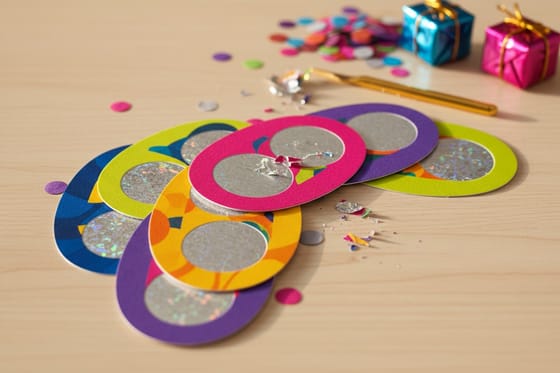
| Scratch-off code | Any printable stock, with a scratch panel applied. | Panel application on press. | Nothing to scan, so the cashier keys it in and gets it wrong sometimes. |
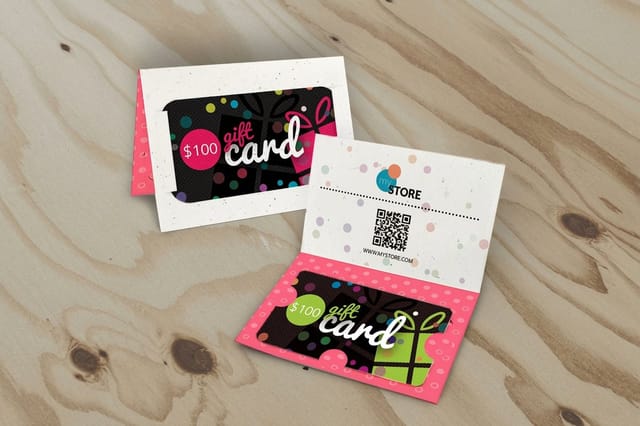
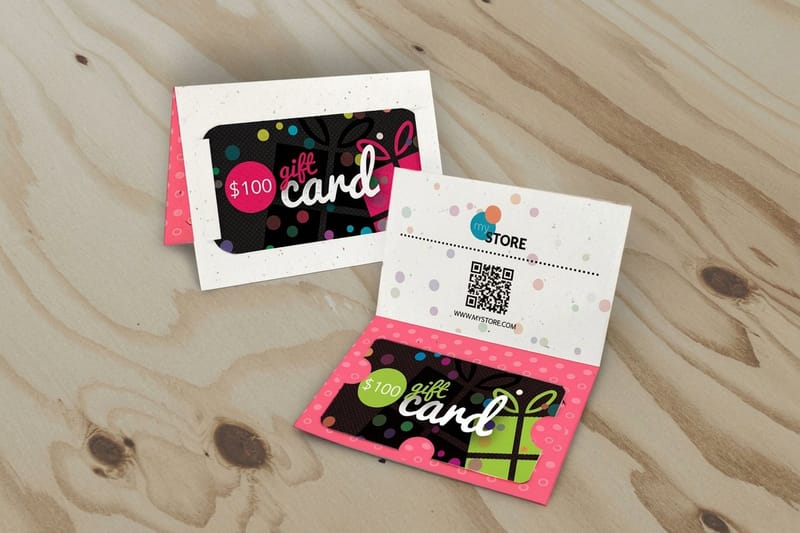
Most small and mid-sized retail programs land on a barcode, because the POS platform already holds the balance and only needs the number. If yours does, you can print the whole program on cardstock and put it inside gift card holders rather than sourcing plastic. If you like the idea of a hidden code instead of a printed one, the scratch-off approach covers the same ground with a different failure mode.
Where the Stripe Sits and What It Takes Away From Your Design

The stripe is not placed where a designer wants it. ISO/IEC 7811 fixes its position relative to one long edge, and every reader in the world is built around that geometry. On a CR80 card the band begins roughly 0.223 inch in from the reference edge and ends around 0.493 inch in, running the full width.
Practically, that means a strip about a quarter of an inch tall, near the top of the card back, is gone. Nothing prints there. No logo, no legal text, no background photograph bleeding across it. Designers who lay out the back first and add the stripe afterward usually discover the terms and conditions block is sitting under the tape.
Inside that band live three tracks. Track 1 is alphanumeric and holds up to 79 characters at 210 bits per inch. Track 2 is numeric only and is where a gift card number almost always goes, with about 37 usable digits after the sentinels and check character. Track 3 is rarely touched in retail. Your gift card platform will tell you which track it reads and in what format, and that format is not negotiable.
Then there is coercivity. HiCo tape at 2750 or 4000 Oersted resists stray magnetic fields; LoCo at 300 Oersted does not. LoCo is cheaper and was designed for cards that spend their life inside a machine. A gift card spends its life in a handbag next to a phone and a magnetic clasp, so HiCo is the only sensible specification, and the difference in encoding cost is small enough that arguing about it wastes more money than it saves.
Printing a Barcode That Scans on the First Pass
A barcode is not a graphic. It is a measured object, and three measurements decide whether the cashier scans once or five times.
- Quiet zone. Code 128 needs at least ten module widths of empty space on each side of the symbol. Empty means white or near-white, not a light tint and not a photo faded to 8 percent.
- X-dimension. That is the width of the narrowest bar. Keep it at 10 mil or wider for handheld retail scanners. Shrinking the symbol to fit a crowded layout is the usual cause of a slow checkout lane.
- Bar height. Tall enough that an off-angle sweep still crosses the whole symbol. Squashing a barcode vertically to fit a band of artwork removes the tolerance the scanner relies on.
Color is where most gift card art breaks. A typical retail laser scanner reads at about 660 nanometres, deep in the red end. At that wavelength red, orange and yellow reflect almost like white paper, so red bars on a white card are invisible to the scanner even though they look perfect on screen. Bars must be black, dark blue or dark green. The background must be white or very close to it.
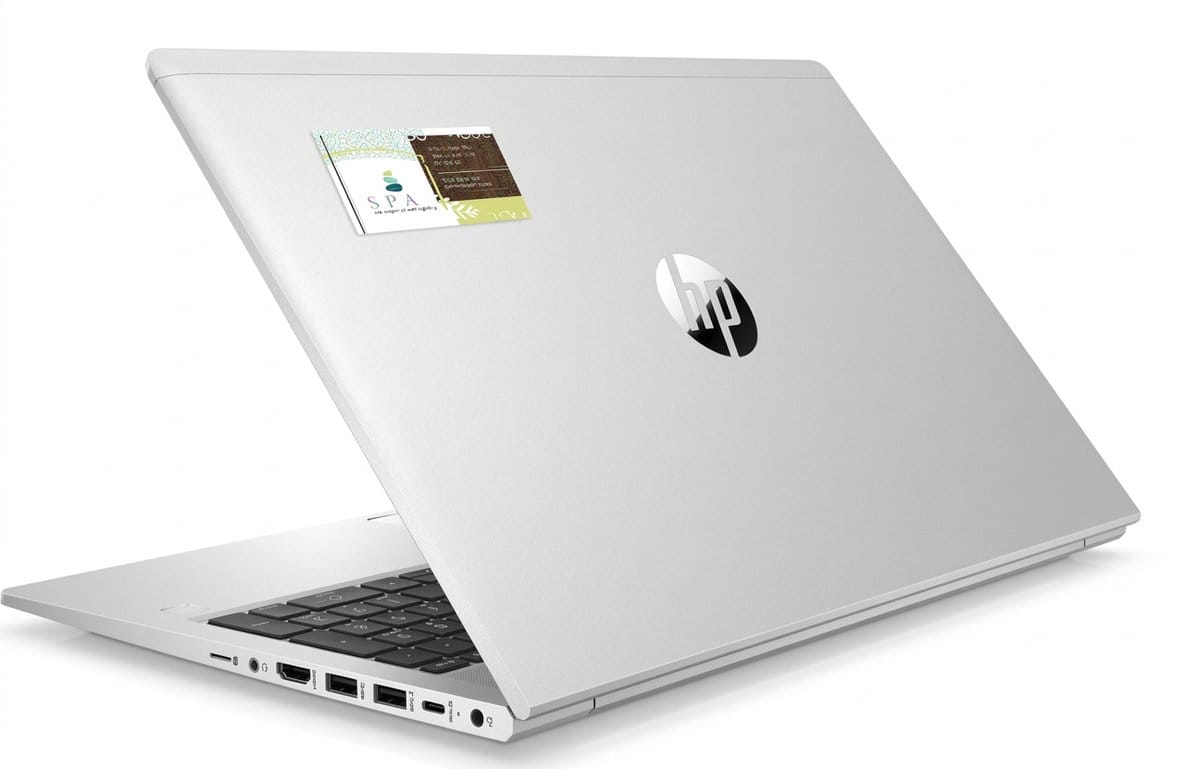
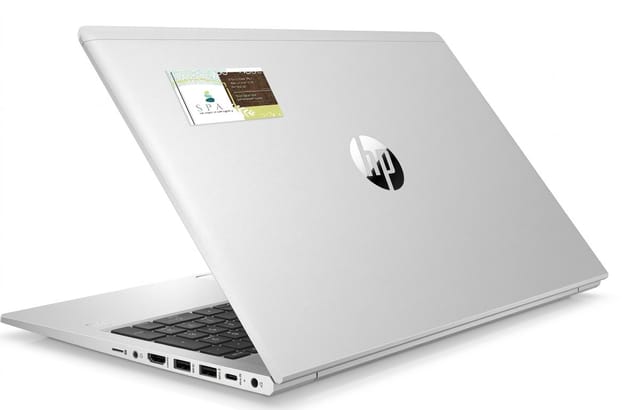
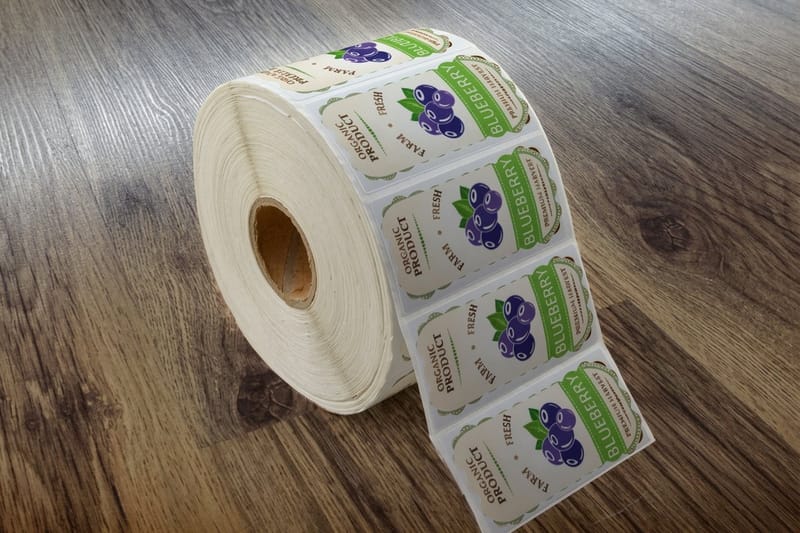
Finishing matters just as much. A gloss laminate or a flood UV coating over the barcode throws specular reflection straight back at the imager, and the symbol reads intermittently depending on the angle the card is held. Either finish the whole card matte, or knock a matte window out of the gloss over the barcode area. If your existing card stock is already printed and glossy, the honest fix is a matte label: business card stickers start at $10.76 and let you apply a clean, correctly sized symbol without reprinting the run.
The Variable Data Your POS Needs Before the Run

Every card in the run is a different card. That single fact changes the whole production route: variable numbers require a digital press with a merge, not an offset plate, and it means the file you send is a spreadsheet as much as it is artwork.
What the merge file needs, in one row per card: the card number exactly as your platform stores it, the barcode string if it differs from the human-readable number, and any sequence or batch identifier your reconciliation uses. Send it as a CSV with a header row, numbers formatted as text so leading zeros survive, and no thousands separators. A spreadsheet that has quietly turned a 16-digit number into scientific notation has ruined more gift card runs than any press fault.
Three rules save the reconciliation afterward. The number encoded on the stripe, the number in the barcode and the digits printed in human-readable text must be identical, because the moment a cashier keys a number that does not match the scan, the balance lands on a card that is still sitting in the rack. The numbers must be issued by your POS provider, not generated by the printer, so the records exist before the cards do. And cards ship inactive, activated at the register on sale, which is what makes a stolen stack of blanks worth nothing.
Get the numbering right and the presentation is the easy half. A folded enclosure printed as greeting cards from $56.02 gives the card somewhere to sit and gives you a surface for the terms, and the custom shape and die-cut collection covers rounded corners and cut-outs when a rectangle feels too plain.
What 4OVER4.COM Prints, and What Needs a Card Bureau

Here is the line, drawn plainly. We are a printer. We print the card when the card is paper or cardstock, we print the barcode and the variable numbers, and we print everything the card is presented in. We do not laminate magnetic tape into PVC and we do not run an encoder, so a swipe-capable plastic card is a personalization bureau job and we will say so rather than quote around it.
For a paper-and-barcode program, the pieces are already in the catalog. Gift Card Holders from $170.03 are the carrier the card is handed over in and the place your terms and expiry language belongs. Greeting Cards from $56.02 work as the folded enclosure when the card is a gift rather than a purchase. Custom Business Cards from $17.57 are the closest stock format to a gift card itself, at the size customers already expect in a wallet. Business Card Stickers from $10.76 carry the barcode when the card is already printed.
Around the program, the same rules apply to everything else you hand a customer. Packaging for a multi-card set comes out of custom box printing, and the wider range of stocks, coatings and formats sits in the custom printing collection. If the cards are going into a retail gifting display, the gift bag guide and the gift tag guide cover the two pieces that usually get ordered late and rushed. More on formats like this sits in the invitation and card guides.
Wally explains stripes and barcodes
One is glued into plastic, the other is printed with the artwork
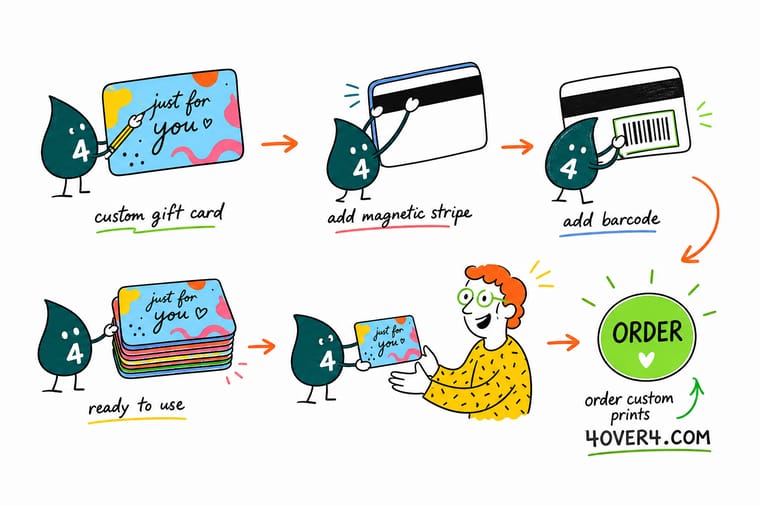
Wally taps the black band across the top of the card. That tape is laminated into a plastic body and written by an encoder after printing, so it is a card bureau job and a chunk of your layout is gone before you start. Then he taps the barcode. That one is ink, it prints with everything else, and it only asks for three things: empty space around it, dark bars on a light ground, and no gloss coating over the top. Whichever you pick, the number has to come from the system that will redeem it, one row per card.
Order gift card holders →Specs and pricing
Card formats, sizes, and starting prices
The stock formats a barcode gift card program is actually built from, with live configuration choices and starting prices from the 4OVER4.COM configurator.

Print it
Order the pieces your gift card program runs on

Explore more
Where to go next


By the numbers
Variable data, one row per card
Common Questions
Your gift card printing questions, answered
Do I need a magnetic stripe at all, or is a barcode enough?
For most independent retailers a barcode is enough. Modern POS platforms issue gift cards against a number in their own database, and the scanner at the counter reads that number from a printed barcode just as happily as a reader pulls it off a stripe. A stripe earns its cost in two situations: you already run legacy card readers that have no imager, or you are joining a multi-location program that mandates swipe. Answer that question first, because it decides whether you are buying printed cardstock or plastic cards from a personalization bureau.
What is the difference between HiCo and LoCo magnetic stripes?
Coercivity, which is how hard the tape resists being rewritten. LoCo tape runs around 300 Oersted, is usually brown, and was designed for cards that live in a machine, such as hotel keys and transit passes. HiCo tape runs at 2750 or 4000 Oersted, is normally black, and needs a stronger encoder to write. Gift cards ride around in wallets and handbags next to magnets and phones, so HiCo is the sane default. The encoding cost difference is small. The cost of a wallet of dead cards is not.
Which barcode symbology should a gift card use?
Take the answer from your POS provider rather than picking one. Code 128 is the common choice because it packs numeric data densely and handles long card numbers. Code 39 turns up on older systems and is more forgiving but wider. UPC-A appears when the card is also being sold through a retail lane. QR codes are used when the redemption happens in a phone app rather than at a scanner. Whatever the symbology, the human-readable digits printed underneath must match it exactly.
How much clear space does the barcode need?
Code 128 requires a quiet zone of at least ten module widths on each side of the symbol, and that space has to be genuinely empty, not filled with a light tint or a background photograph. Keep the X-dimension at 10 mil or wider for reliable handheld scanning, and give the bars enough height to survive an off-angle sweep. Shrinking a barcode to fit a crowded card back is the single most common reason a gift card program starts with a queue at the register.
Can you print variable numbers on every card?
Yes, on a digital press with a merge file. You supply a CSV with one row per card, we merge the number into the barcode and the human-readable field, and the run comes off in sequence. What we cannot do is invent the numbers. They come out of your POS or gift card platform so that the cards you receive already exist as records in the system that will redeem them.
What can I order from 4OVER4.COM for a gift card program?
Everything around the card, and the card itself when it is printed rather than encoded. Gift Card Holders start at $170.03 and are the carrier that turns a bare card into something a customer will hand over. Greeting Cards start at $56.02 and cover the folded gift card enclosure format. Business Card Stickers start at $10.76 and are the practical way to add a barcode or QR label to stock you already hold. Magnetic stripe encoding on PVC is a card bureau service, and we will tell you that rather than quote around it.
Get Started
25 gift card holders cost $170.03, or $6.80 each
Send the merge file from your POS provider, pick the stock and the carrier, and we print cards and holders that scan the first time at the register.
Legal Disclaimer
Gold Standard guarantees apply to all standard orders placed through 4over4.com. Price match requires verifiable proof of a competitor's published price for an equivalent product with matching specifications and turnaround time. Satisfaction guarantee covers manufacturing defects and print quality issues. Contact support with order number and documentation. On-time delivery rate based on tracked orders 1999 to 2026. Individual results may vary based on shipping carrier performance.
