
Direct Mail Design Best Practices That Lift Response Rates


Nadia is our customer education voice, built from the knowledge of our production team, with over 20 years in printing.
A mailer gets one pass in the hand, on the walk from the box to the recycling bin. These are the layout rules that survive that pass, tied to the USPS sizes and clear zones that decide what the campaign costs to send.
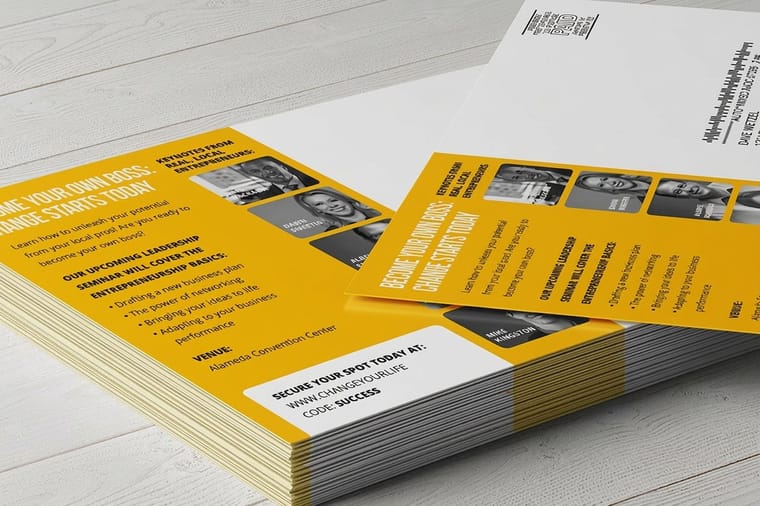
Build the piece around one offer and one trackable action, design the address side as well as the front, and choose the trim size against the USPS rate tier before you open the file. Card rate stops at 4.25 by 6 inches and 0.016 inch thick, letter rate at 6.125 by 11.5 inches, and anything larger is a flat, which is also the minimum size for EDDM. Then leave the mechanical areas alone: the bottom 0.625 inch of the address side for the barcode, the top right corner for postage, and plain light paper with dark ink behind the address block.
Quick answer
One offer, a readable address panel, and a size that matches the postage
Response comes from clarity and targeting, and the layout exists to protect both. Lead with the offer in the largest type on the piece, restate it on the free half of the address side, and give the reader exactly one way to answer. Set the trim size against the rate tier you want to pay, since card rate ends at 4.25 by 6 inches and every size above it costs more per piece to send. Keep the barcode strip, the postage corner and the address block itself free of artwork, and the mail flows through automation instead of coming back.
What the Layout Has To Survive in One Pass
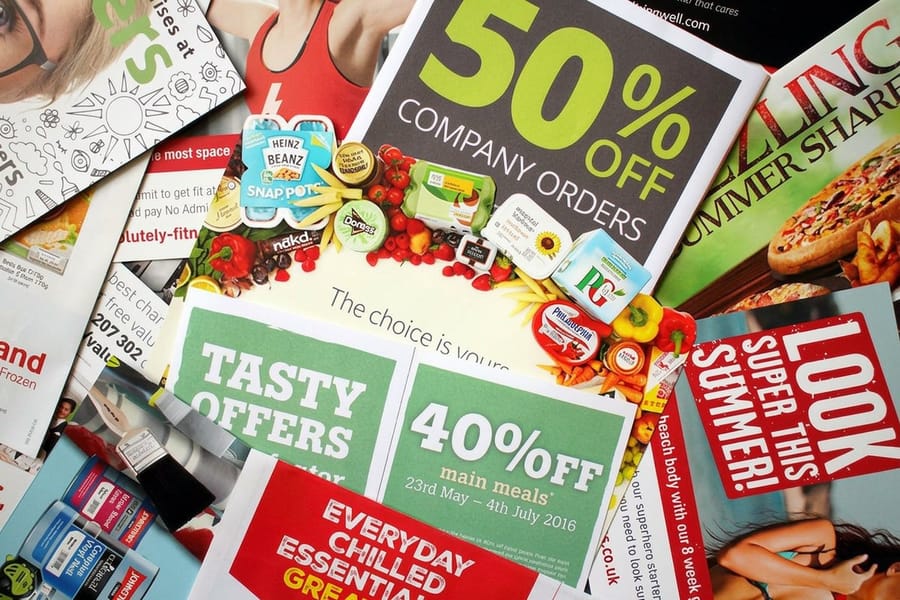
A mailer is judged standing up, over a bin, with a stack of other mail in the same hand. Nobody reads it. They scan it, decide, and either keep it or drop it, which means the hierarchy has to do its job in the order the eye moves.
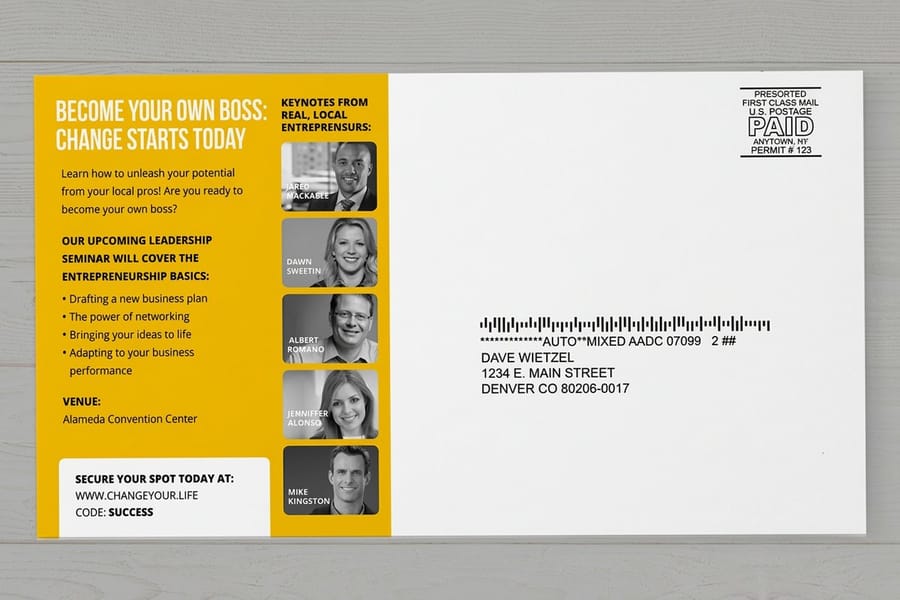
Put the offer at the top in the largest type on the piece. Not the company name, not the logo, not a welcome line. The offer. Underneath it goes the qualifier that makes it believable, then the deadline, then one response device. On a 4.25 by 6 card that headline usually lands around 24 to 30 point, and body copy should not drop below 10 point. On a 6 by 9 you have room for 36 to 48 point.
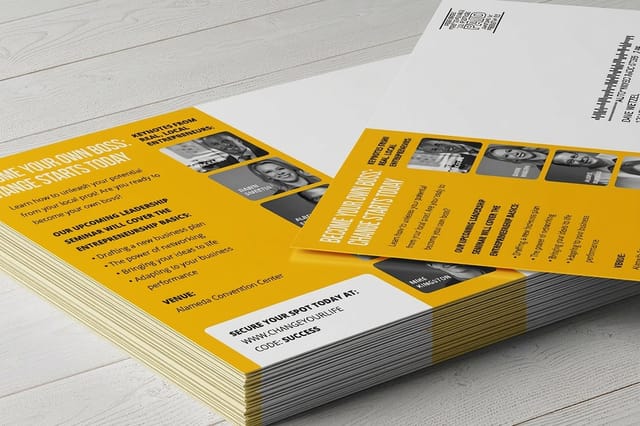
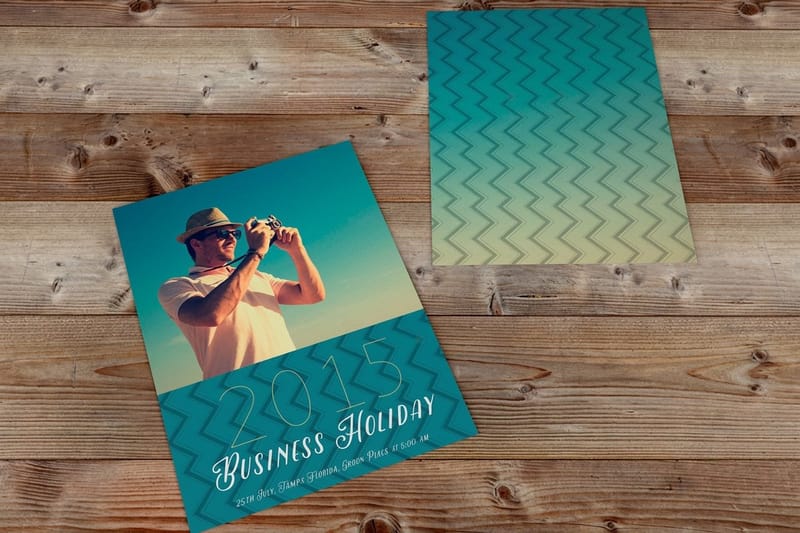
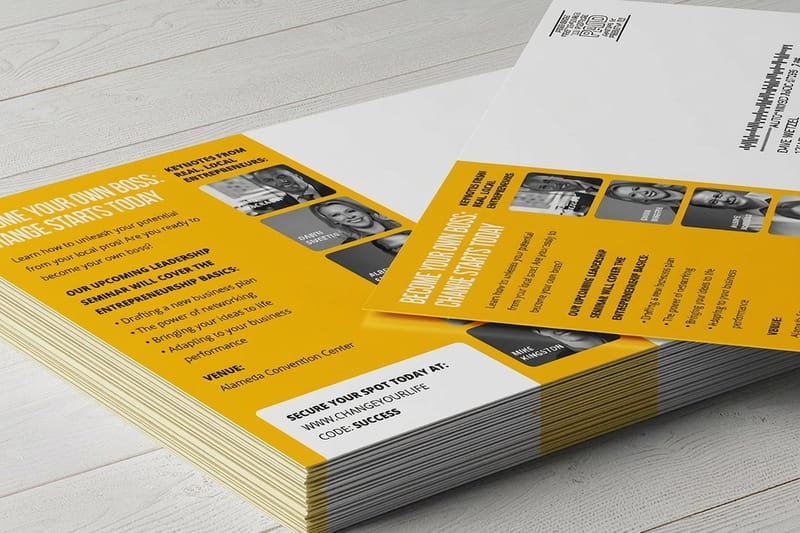
The second rule costs nothing and is skipped constantly: design the address side. When the mail is sorted, that panel faces up. The right half is reserved for the address and the barcode, but the left half is a free column, and it is the right place for a short restatement of the offer, a photo of the thing being sold, or three lines of proof. A blank left panel throws away close to half of what you paid to print.
Keep one action. A card that asks the reader to call, scan a code and stop by the store splits the response and makes the results unreadable when you compare drops. If you want a worked example of the elements in order, our postcard design breakdown walks the front and back panel by panel, and direct mail postcards are the format most of these rules were written around.
Design to the Postage Tier, Not to the Page
The most expensive design mistake in direct mail happens before anyone draws a box: picking a trim size because it looks good. Postage is set by dimensions, and the jump between tiers is larger than most people expect when it is multiplied across a drop of ten thousand.
| Trim size | USPS tier | What it buys | Print it as |
|---|---|---|---|
| 4 x 6 or 4.25 x 6 | Card rate, the cheapest tier | The lowest cost per piece, so the widest drop for the same budget. | Standard postcards, from $16.48 |
| 5 x 7 | Card rate at the top of the band | Noticeably larger in a stack while still riding card postage. | Standard postcards, from $16.48 |
| 6 x 9 or 6 x 11 | Letter rate, up to 6.125 x 11.5 in | Room for a real headline and a coupon, at higher postage per piece. | Oversized postcards, from $51.62 |
| 5.5 x 8.5 folded | Letter rate, folded and tabbed | Four panels of space with the offer hidden until it is opened. | Folded postcards, from $84.36 |
| 6.5 x 9, 8.5 x 11, 9 x 12 | Flat, and the minimum for EDDM Retail | Impossible to ignore, and the only way into carrier route mailing. | Direct mail flyers, from $238.73 |
Two details in that table catch people out. USPS wants a card's length divided by its height to fall between 1.3 and 2.5 for automation, so a square 6 by 6 mailer collects a nonmachinable surcharge that a 4 by 6 never sees. And the card tier has a thickness window as well as a size window, 0.007 to 0.016 inch, which quietly disqualifies lightweight text stock.
Our print-only and mail-included products are priced differently on purpose. Standard postcards start at $16.48 as a run you address and drop yourself. Direct mail postcards start at $89.68 because the job is set up to go into the mailstream rather than into a box on your desk. If you are still choosing between formats, postage cost by size and rate tier puts the numbers side by side.
The Clear Zones, the Bleed, and the Coating
This is the mechanical half of direct mail design, and it is where files come back for correction. Three areas of the mailing panel are not yours to design.
- The barcode strip. The bottom 0.625 inch across the right 4.75 inches has to stay empty. The simplest habit is to keep the whole bottom 0.625 inch of the address side clear and stop worrying about the horizontal measurement.
- The postage corner. Reserve the top right for a stamp, a meter mark or a printed indicia. A permit indicia block wants roughly 2.5 by 1 inch of clean space.
- Behind the address itself. Dark ink on plain light paper. No photograph, no gradient, no tint above about 15 percent, no reversed white type. The scanner is reading contrast, and every one of those choices reduces it.
The rest is the same file prep as any print job, with two habits that matter more on mail. Build 0.125 inch of bleed and keep live text 0.125 inch inside the trim, and avoid thin decorative frames around the edge, because a small trim shift makes an even border look crooked in a way a full bleed background never does. Our bleed, cut line and safety checklist covers the setup, and the blank template library gives you a correctly sized artboard to start from.
One trap catches campaigns that print and address in separate steps. A UV or high gloss coating on the mailing panel repels inkjet ink, so the address smears or skips. If the piece is being addressed after it is printed, ask for the back to be uncoated or aqueous coated, or leave the mailing panel uncoated entirely. The same logic applies to printed envelopes, where a heavy coating on the face fights both the addressing head and a handwritten signature. For the panel geometry in full detail, see the address side layout rules.
Response Devices, Targeting, and What To Change First
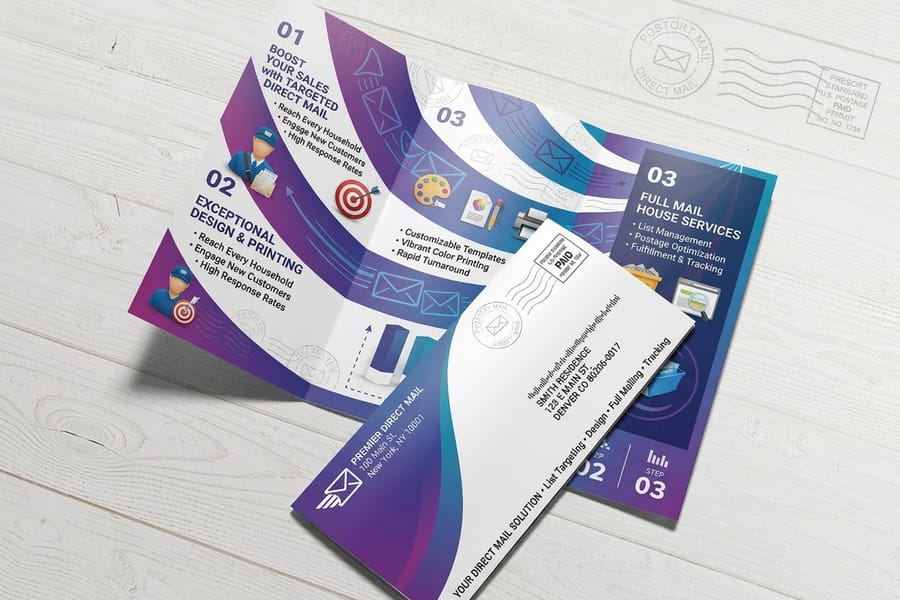
Design decides whether the piece gets read. What happens after that is a targeting and measurement problem, and it is worth settling before the artwork is finished, because two of the answers change the layout.
The response device comes first. Give the reader one route in and make it trackable: a dedicated phone number, a short vanity URL, or a QR code at 0.8 inch square or larger with a clear quiet zone around it and dark modules on a light field. A code reversed to white on a dark photo scans badly on older phones, and a code printed at half an inch fails at arm length. The QR code guide covers sizing and the tracking parameters worth appending.
Then targeting, which is a fork with a real trade-off. Every Door Direct Mail skips the list entirely and buys carrier routes, which is cheap and simple when your customer is anybody in the neighborhood. It cannot select by household, so a narrow audience wastes most of the drop, and the piece has to be flat sized, larger than a letter in at least one dimension, with EDDM Retail capped at 5,000 per ZIP code per day. A rented or built list costs more per name and targets precisely. Building or renting a list explains where that data comes from.
When it comes time to improve results, change one variable per drop and start where it moves most. The list beats the offer, the offer beats the format, and the format beats the creative. A beautiful card to the wrong households loses to a plain one to the right ones every time. Keep the control running alongside the test so the season does not get credit for the win, and print both versions in the same run so the paper and the ink are identical. For campaigns that need more room than a card, direct mail brochures and direct mail letters carry longer arguments, and the full direct mail services collection lists every format we print and mail. To pick the most effective direct mail format for the next test, start with the format ideas article.
Wally explains the mailing panel
One offer on the front, three empty zones on the back
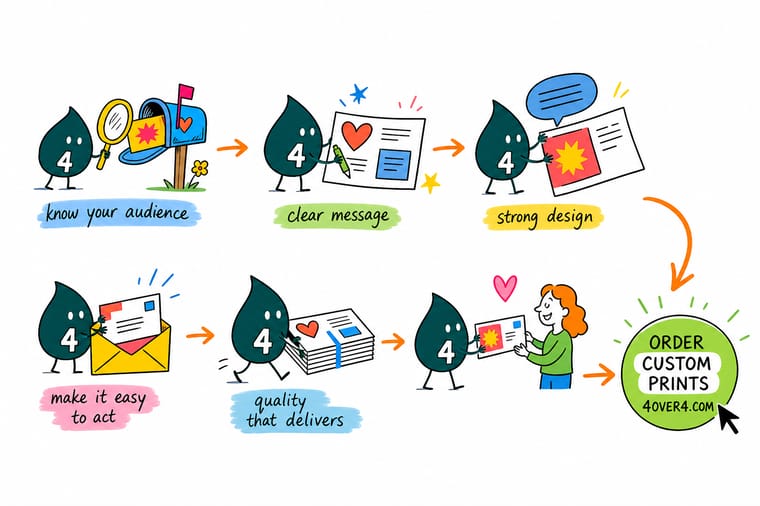
Wally puts the offer on the front in the biggest type he has, then flips the card over and uses the left half of the address side for a second run at it. The right half he leaves to the Post Office: stamp in the top right corner, address block on plain light paper, and the bottom 0.625 inch kept completely empty so the barcode has somewhere to land. Before he picks a size he checks the tier, because 4.25 by 6 inches is where the cheap postage stops. One offer, one deadline, one way to answer.
Order direct mail postcards →
Specs and pricing
Mailer sizes, stocks and starting prices
Direct mail postcards run from 4 by 6 to 6 by 11 inches on 14pt or 16pt cover from 500 pieces. Oversized postcards come in 5.5 by 8.5, 6 by 8, 6 by 9 or 6 by 11 inches from 50, and direct mail flyers print at 8.5 by 11 up to 11 by 17 inches on 100# gloss or silk text with nine folds. Compare the three with live size and stock options and starting prices straight from the 4OVER4.COM configurator.
Print it
Print the drop and let us put it in the mail
Oversized postcards print in 3 business days, direct mail postcards in 4 and direct mail brochures in 6, so order the test and the control together and both arrive from the same run.
Explore more
Where to go next
The barcode clear zone and indicia on the address side, EDDM without a list, postage by trim size, and where household data comes from.
By the numbers
USPS sizes and clear zones we hold to
Common Questions
Your direct mail design questions, answered
What postcard size gets the cheapest postage?
Anything that stays inside 4.25 by 6 inches and measures between 0.007 and 0.016 inch thick qualifies for the USPS card rate, the cheapest tier a printed mailer can ride. The card also has to be rectangular with a length-to-height ratio between 1.3 and 2.5, which is why a square 6 by 6 card picks up a nonmachinable surcharge while a 4 by 6 does not. Go one eighth of an inch over on either dimension and the piece is billed as a letter, so trim size is a budget decision before it is a design decision.
Where does the address go on a direct mail postcard?
On the right side of the mailing panel, set in dark ink on plain light stock, with the return address in the top left and the stamp or indicia in the top right. Keep the bottom 0.625 inch clear across the right 4.75 inches so the sorting equipment can print and read the barcode there. The left portion of the panel is yours, and that is where most of the message copy belongs on a card.
Can I print a full bleed photo on the address side?
On the message half, yes. Behind the address block and inside the barcode strip, no. Automation reads the address optically, and a photo, a gradient, a tint over about 15 percent or white type on a dark field all reduce the contrast the scanner needs. The usual fix is to keep the photo on the front, let it bleed across the message half of the back, and stop it with a clean white panel where the address and barcode sit.
How thick does a mailed card have to be?
At least 0.007 inch for the USPS card rate, and no more than 0.016 inch. That single number rules out most text weight paper. A 100lb gloss text sheet lands around 0.005 inch and fails, while 14pt cardstock is roughly 0.014 inch and passes with room to spare. When in doubt order the heavier stock, because a card that flops in the hand also reads as disposable.
Should I use EDDM or a mailing list?
EDDM buys carrier routes, not households, so it is right when your customer is anybody in a neighborhood and wrong when your customer is a narrow group. A pizza shop or a lawn care crew can blanket the routes around the depot and win. An orthodontist looking for families with children aged eight to fourteen wastes most of the drop. EDDM Retail also requires flat sized pieces, larger than 6.125 by 11.5 inches in at least one dimension, and caps at 5,000 pieces per ZIP code per day.
How big should the headline and the QR code be?
Big enough to read at arm length while the piece is being sorted over a bin. On a 4.25 by 6 card that means a headline around 24 to 30 point and body copy no smaller than 10 point. On a 6 by 9 the headline has room to run 36 to 48 point. Print a QR code at 0.8 inch square or larger, keep a clear quiet zone of at least four modules around it, and never reverse it to white on a dark background, because most scanners expect dark on light.
Get Started
500 direct mail flyers cost $238.73 in 6 business days
Pick the size that matches the postage tier you want, upload the artwork, and we print the run and hand it to the Post Office for you.
Legal Disclaimer
Gold Standard guarantees apply to all standard orders placed through 4over4.com. Price match requires verifiable proof of a competitor's published price for an equivalent product with matching specifications and turnaround time. Satisfaction guarantee covers manufacturing defects and print quality issues. Contact support with order number and documentation.
