
How Embossed Printing Works and Which Stocks Hold the Depth


Emma is our prepress and print production voice, built from the knowledge of our production team, with over 20 years in printing.
Embossed printing raises artwork by pressing the sheet in a die pair, and that die can be cut in four profiles. The stock decides whether the shoulder holds without cracking, and past a certain point a cheaper raised finish does the same job.
Embossed printing squeezes a sheet between a recessed die and a matching raised counter, usually with heat, so the paper itself is pushed into a raised shape. Nothing is added to the surface, which is why a blind emboss carries no ink and why every raised face leaves a matching recess on the back. The die is tooling you pay for once and reuse on every reprint of the same artwork.
Quick answer
The paper is moved, not coated
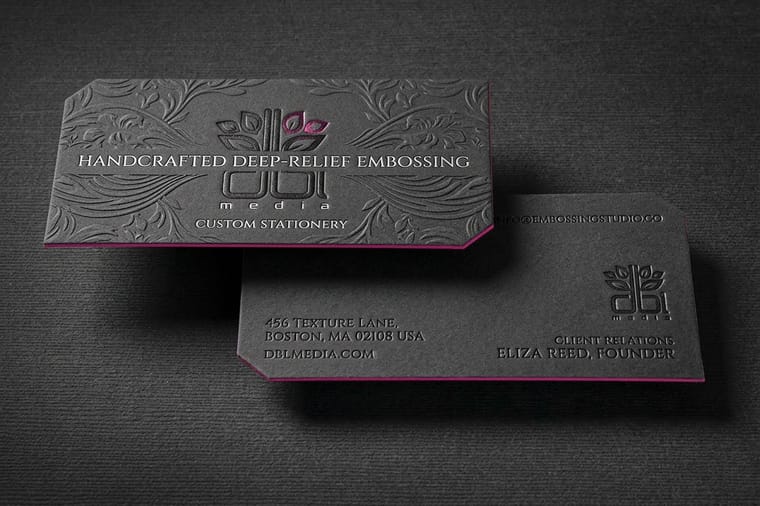
Embossing shapes the sheet between two mirrored dies under heat and pressure. The fibres stretch into the recess and hold, so the artwork stands above the surface and reads by touch as much as by sight. It can run blind with no ink, registered to printed artwork, or combined with foil in a single hit. The trade-off is the recess left on the reverse and the die that has to be cut before anything prints.
What Happens Between the Two Dies
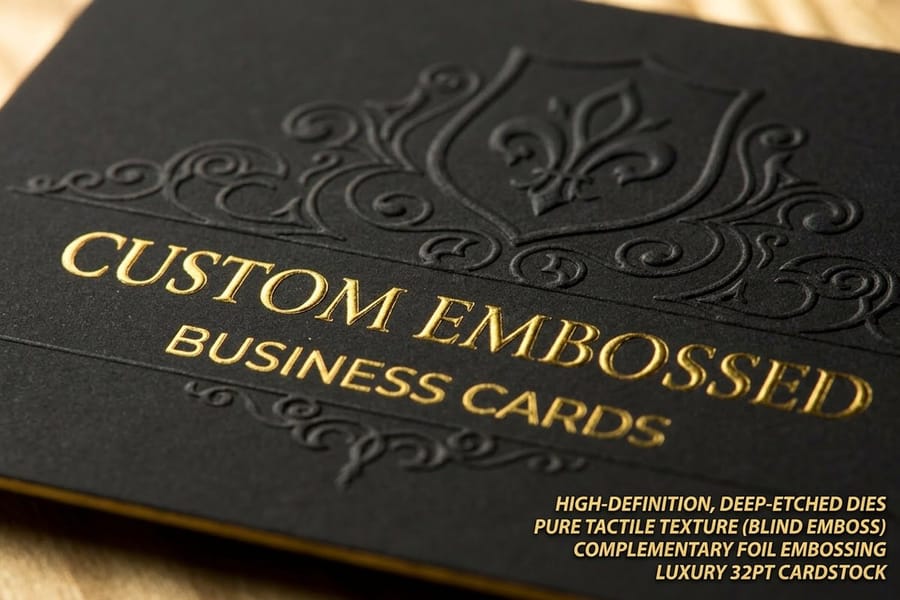
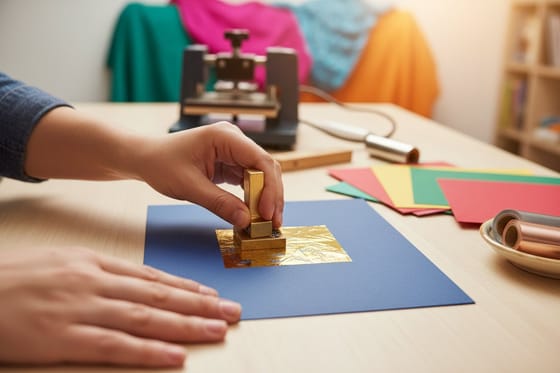
An embossing die comes in a pair. One half is engraved so the artwork is cut into it, the other is built up so it matches that shape exactly, and the sheet goes between them. The press closes, the two halves meet, and the paper has nowhere to go but into the recess.
Heat usually goes with the pressure. A warm die relaxes the fibres so they stretch rather than tear, and it helps the shape hold once the sheet cools. That is also why the shoulder, the sloping wall between the flat sheet and the raised face, is where things go wrong: it is the part of the paper doing the stretching.
Dies are cut from metal, and the metal is chosen by the job. Magnesium is the economical option for simple, single-level shapes on short runs. Brass is harder, holds a finer edge, tolerates heat better over a long run, and is what any multi-level or sculpted die is made from. You pay for the die once because it is tooling, not consumable, and it runs again on every reprint of the same artwork.
Nothing is added to the surface at any point in this. That distinction runs through the whole guide: embossed business cards are a card that has been reshaped, while raised foil business cards are a card with a raised layer sitting on top of it.
Blind, Registered, and Combination Embossing
Three jobs use the same press and behave very differently on the proof.
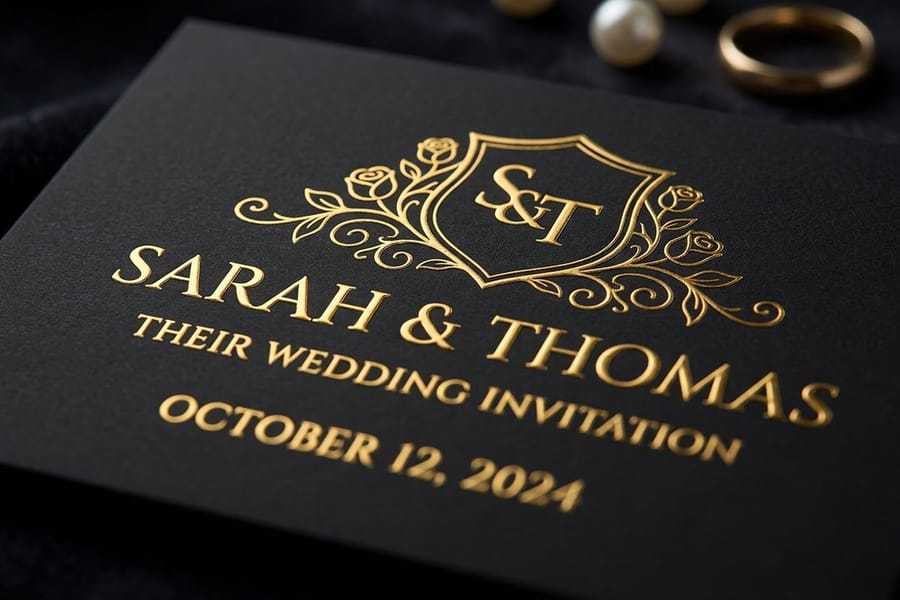
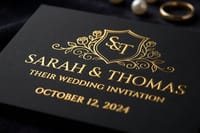
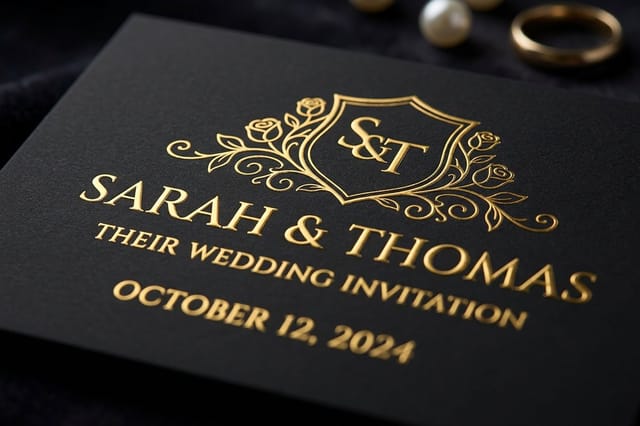
Blind embossing puts no ink and no foil on the shape at all. The artwork exists only as texture, visible because light hits the raised face and the shoulder at different angles. It is quiet and it photographs badly, which is exactly why it works on a monogram, a crest, or the back of an invitation. It also demands a stock with some presence: on a thin, bright white sheet a blind emboss can disappear entirely. Embossed wedding invitations start at $220.20 and lean on this effect.
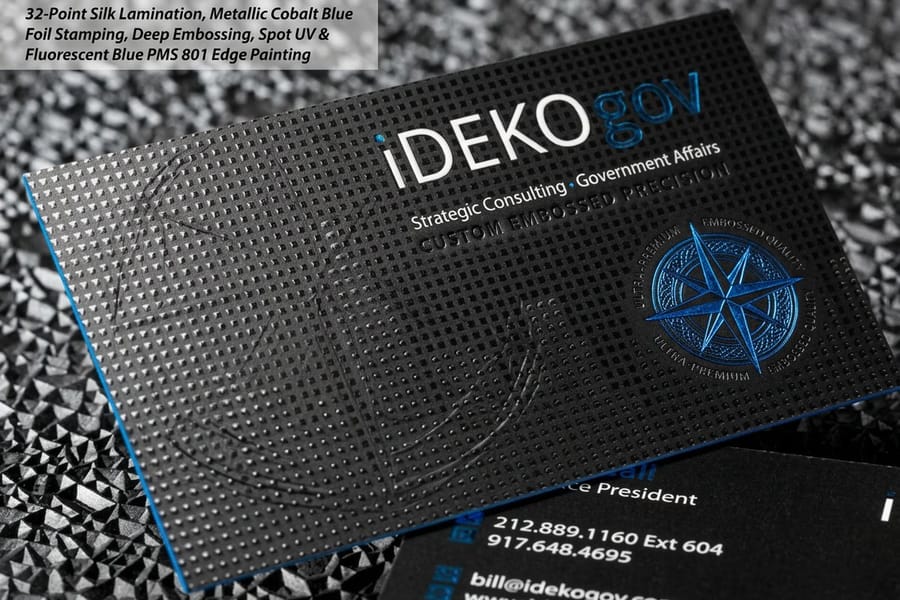
Registered embossing aligns the die to something already printed, so a printed logo rises exactly where its ink sits. This is the fussiest of the three, because the sheet has moved between the press and the embossing station and register is never perfect to the last hair. Build a little forgiveness in: let the printed shape sit a fraction wider than the embossed shape, so a small shift shows more color rather than a white sliver along one edge.
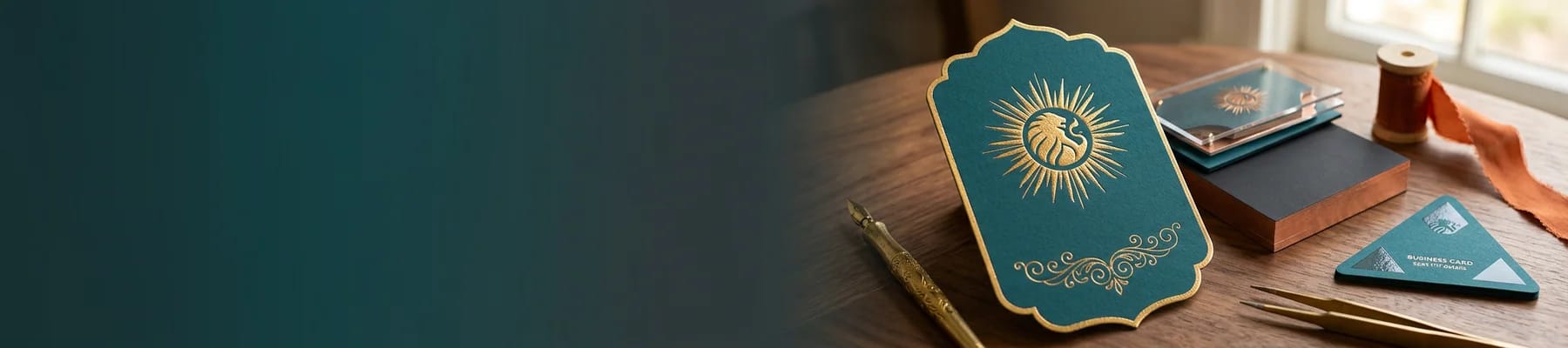
Combination embossing stamps foil and raises the shape in one hit, using a single die that does both. The foil lands on the top face while the walls stay bare, which is the look most people picture when they think of a luxury card. If you want the metallic without the height, flat foil stamped business cards start at $222.13, and our guide to foil stamping covers how the foil itself transfers.
Debossed Versus Embossed, the Core Difference
Debossing and embossing use the same die pair, flipped. An emboss pushes the sheet up from behind so the artwork stands above the surface. A deboss presses it down from the front so the artwork sinks below it. Each one leaves its mirror on the other side, because in both cases the paper is moved and nothing is added.
| Finish | Direction | How it reads | On the back |
|---|---|---|---|
| Embossed | Pressed up from behind. | Stands above the sheet and catches light on the shoulder. | A matching recess. |
| Debossed | Pressed down from the front. | Sinks into the sheet, the pressed look you feel on a letterpress card. | A matching raised mark. |
Both can run blind with no ink, registered to printed artwork, or with foil in the same hit. On our embossed business cards the order form lists embossing and debossing as separate choices, each on the front, the back or both sides, on 32pt or 48pt silk or velvet laminated stock.
Embossing or Debossing, Which to Choose
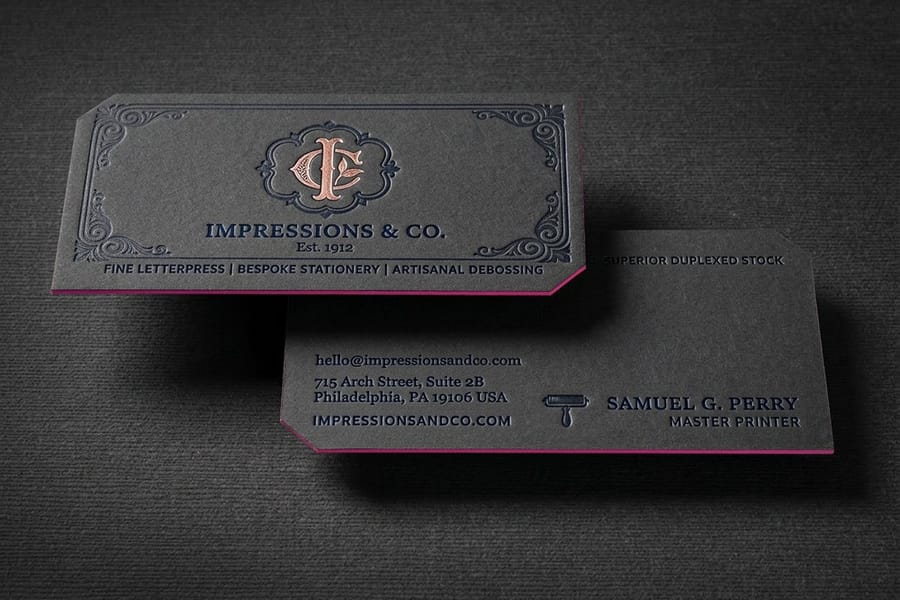
Four questions settle it, and the prices on this page show what each answer costs.
- Emboss when the mark has to catch light on the front and read by touch: a monogram, a crest, a logo on an invitation. Embossed wedding invitations start at $220.20 and embossed business cards at $251.36.
- Deboss when you want the pressed look instead of the raised one. Letterpress business cards at $251.36 give that impression with ink in it.
- Pick the stock first. Uncoated, cotton and textured card take either finish cleanly, and thin text weight telegraphs either shape through to the other side.
- Combine both when a card has two faces worth feeling: raise the logo on the front and press a small mark on the back. Each shape needs its own die, so finalize both before the first run.
Either finish sits well above the $17.57 of a standard card, because the die is the cost. If the goal is shine rather than depth, flat foil stamped cards start at $222.13, and raised foil at $86.78 adds height with a flat back.
Die Profiles and What Each One Can Hold
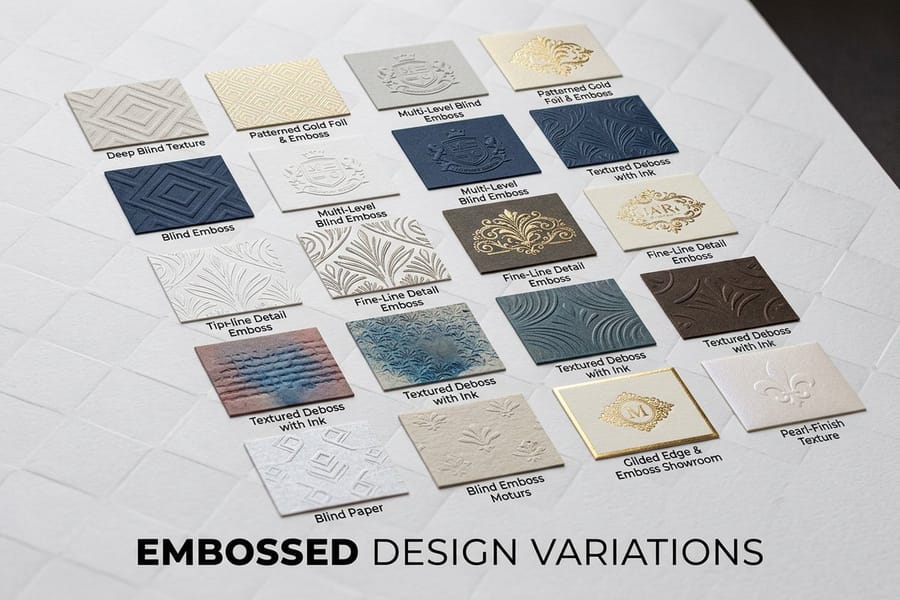
Two embossed cards can look nothing alike because the walls of the die were cut differently. The profile is a real line item on a quote, so it is worth knowing what you are asking for before you ask.
| Die profile | Wall shape | What it suits | Cost to cut |
|---|---|---|---|
| Single level | Straight walls, one flat plateau. | Type, monograms, solid logo marks, borders. | Lowest, and often magnesium. |
| Beveled edge | Angled walls instead of square. | Shapes that need to catch light along the edge rather than sit flat. | Slightly above single level. |
| Multi-level | Two or more stepped plateaus at different heights. | Layered logos, seals, anything with a foreground and a background. | Brass, priced by the number of levels. |
| Sculpted | Contours tooled by hand, no flat top. | Crests, coats of arms, faces, relief artwork. | Highest, and the longest lead time. |
Read the last column against the run length. A sculpted die on 250 cards is a lot of tooling for very few pieces, while the same die on an annual print of invitations or covers earns its keep across years. For most business work a single-level die on a good uncoated stock delivers the effect people actually notice.
The Stocks That Hold Depth, and the Ones That Crack
The die gets the credit and the paper does the work. Fiber length, coating, and caliper decide whether a shoulder comes out crisp or fuzzy, and whether it survives at all.
Uncoated stocks emboss best. So do cotton and lightly textured sheets, because a longer, softer fiber stretches further before it gives up. Coated stock is workable at a shallow depth and gets risky as the die goes deeper, since the coating sits on the surface and can craze where the paper moves most. Film laminate is the hardest case: it stretches over the shoulder and can whiten along the edge of the shape, and a soft touch film will mute a shallow emboss until it is barely there.
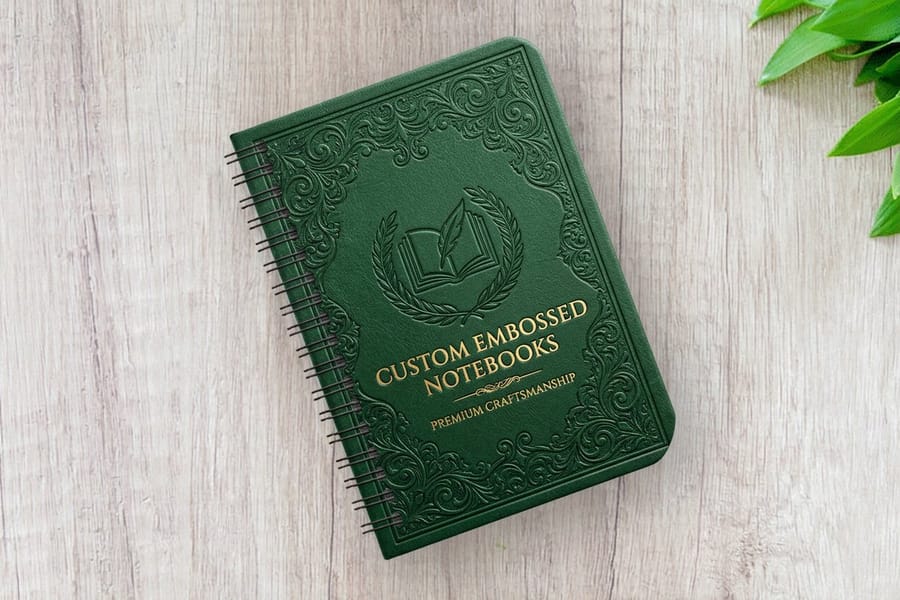
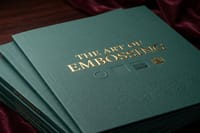
Caliper matters in both directions. Thin text weight will take an emboss but telegraphs the shape through to the reverse and can split on a deep die, which is why letterhead embossing is normally kept shallow and small. Heavy card gives the fibres something to work with and produces the crispest edge, which is why cover board handles it so well on embossed notebooks. The embossing collection groups every product we offer with embossed printing in one place.
Two clearances are worth writing on the layout before you send it. Keep raised artwork roughly an eighth of an inch clear of the trim, because an emboss cut through by the guillotine looks like damage. And never run an emboss across a fold: on embossed presentation folders the score line and the die have to stay out of each other's way, or the crease cracks straight through the shape.
Setting Up Artwork a Die Can Actually Be Cut From
A die is cut from a shape, not from a picture. That one sentence rules out most of what goes wrong in embossed files.
Supply the emboss as vector artwork on its own layer, named so nobody has to guess, filled 100 percent in a single spot color. No gradients, because a die has no way to express a tone. No soft shadows or feathered edges, because the toolpath will simply ignore them. No placed raster logo, since a die maker cannot cut a clean wall from an anti-aliased edge and will have to redraw it, which costs time and rarely matches your original.
Give the shapes room. Two raised elements sitting a hair apart share one weak wall between them, and it collapses into a single mound in the press. Keep strokes reasonably weighted, keep type at 8 point and up, and drop anything with a hairline serif from the emboss layer entirely.
Then treat the rest of the file like any other print job: outlines on the fonts, artwork at final size, bleed where it belongs. The how online printing works guide walks through the handoff end to end, and the blank template library gives you a correctly sized layout to start from so the die and the trim agree.
Where the Die Charge Earns Its Money
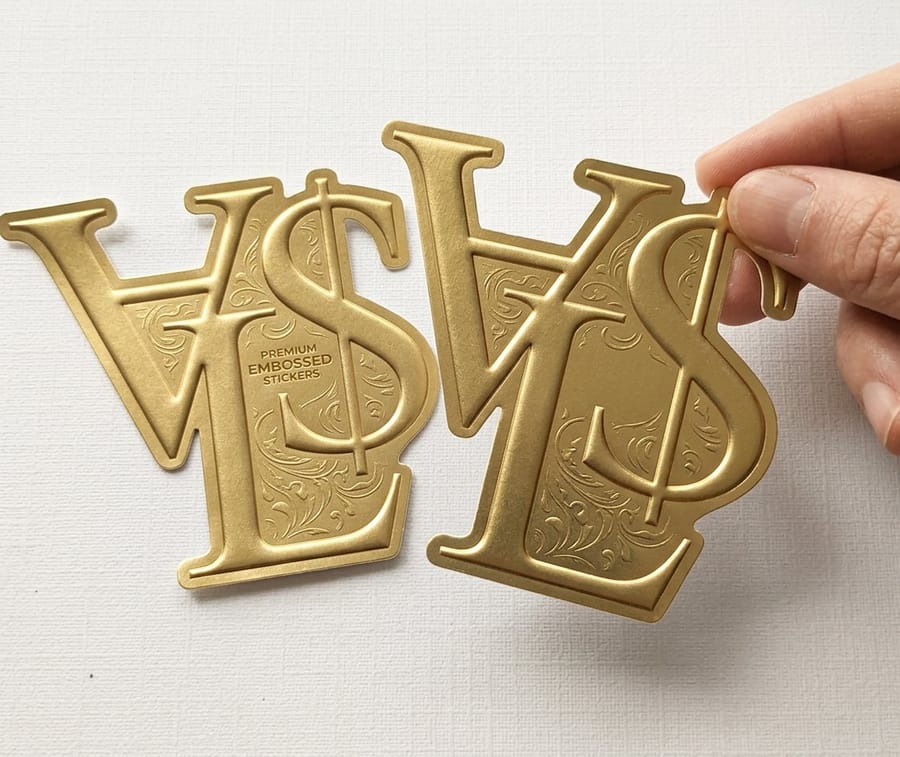
Embossing pays where the piece is handled slowly and kept. That is a short list, and the price makes it worth being honest about.
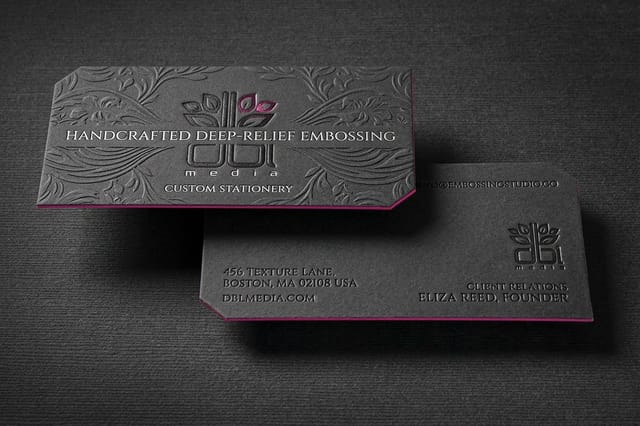
Embossed business cards start at $251.36, against $17.57 for standard business cards. The gap is tooling and an extra pass through the press, not better paper, so the question is whether the card gets handed over in a moment that matters. Invitations are the strongest case, because the recipient holds the piece, reads it slowly, and often keeps it on a shelf for months. Covers and folders are next: embossed presentation folders sit on a desk through a whole meeting. The web story on embossed folders for business shows one in use.
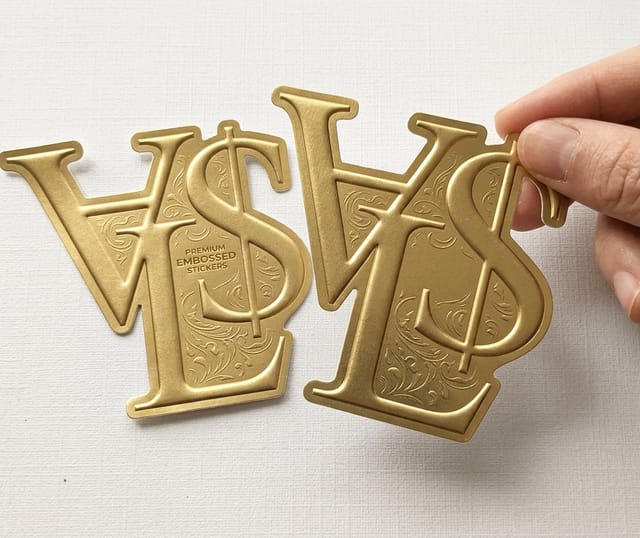
Labels deserve their own note, because they dodge the one real drawback. An embossed label carries the same recess on its back, but that recess sits against the adhesive, so the moment the label is applied to a jar or a box the dent is gone and only the raised face reads. Embossed stickers start at $322.98, and the rest of the range sits in sticker printing and label printing.
Where it does not pay: high-volume mail that gets skimmed, anything with fine type as the hero, and any job where the back of the sheet has to stay clean. For those, spend the money elsewhere. Raised foil business cards at $86.78 build a raised metallic layer on top and leave the reverse flat, and letterpress business cards at $251.36 give you the opposite effect, a pressed impression you can feel with a thumb. The full range of stocks and finishes sits in business card printing.
Wally explains embossing
Two dies, one sheet, and a dent on the other side
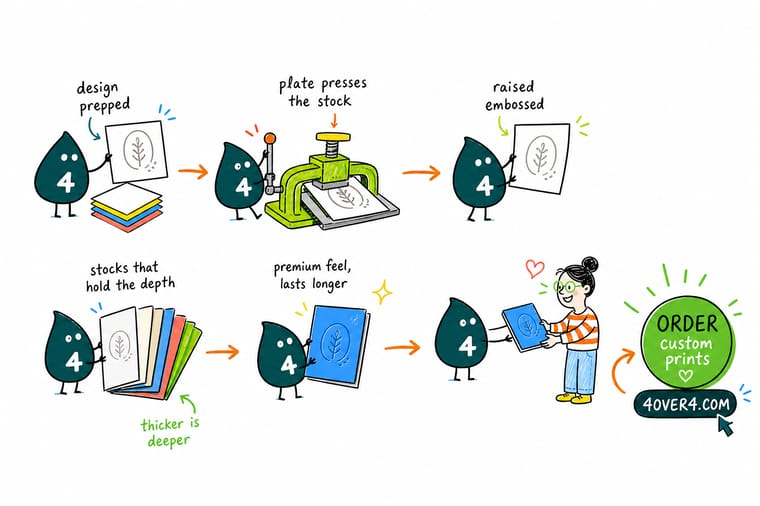
Wally puts the card between a die with the shape cut into it and a counter with the same shape sticking out, warms them, and closes the press. The paper stretches into the recess and stays there, so the logo stands up and you can read it with a fingertip. Turn the card over and the dent is right behind it, because nothing was added, only moved. Give him a bold mark on uncoated stock and it comes out crisp. Give him hairline type on a laminated card and the shoulder goes soft and white.
Order embossed business cards →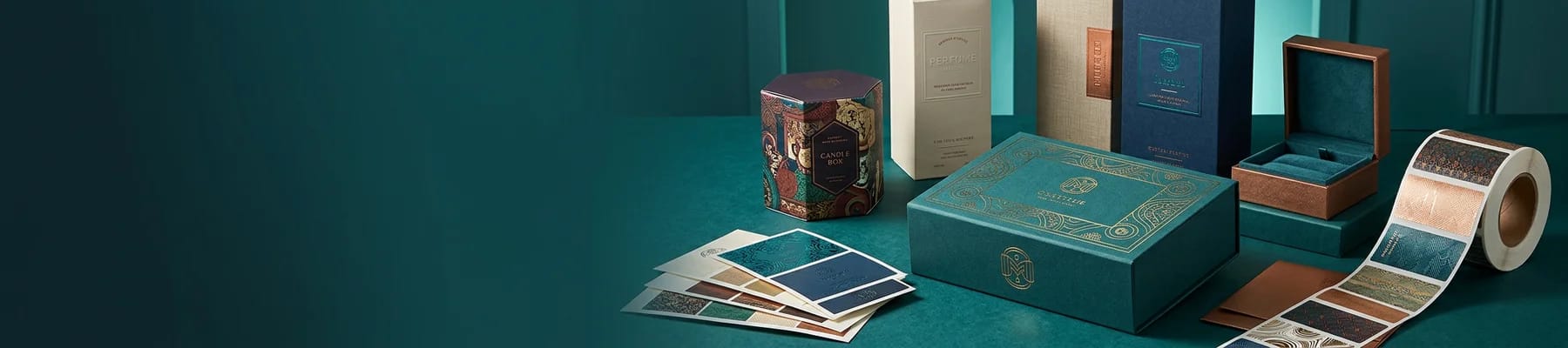
Specs and pricing
Embossed products, sizes, and starting prices
Embossed business cards come in 2 by 3.5, 1.5 by 3.5 and 2.5 by 2.5 inches on 32pt or 48pt silk or velvet laminated stock, from 250 cards in 15 business days. Embossed wedding invitations run 4 by 6 to 11 by 17 inches on 16pt silk, gloss or velvet laminated stock with embossing on the front, the back or both, from 100 in 10 business days. The 9 by 12 inch presentation folder carries raised foil in gold, silver, rose gold or red on 16pt silk matte or soft touch laminated stock, from 50 in 10 business days.
Print it
Order a finish people read with their fingers
Order the card with a single-level emboss for your logo, the invitation with a blind motif on the front, or embossed stickers, from a 1 inch circle up to 5 by 5 inches on white gloss, BOPP or silver metallic foil stock, from 100 in 6 business days.
Explore more
Where to go next
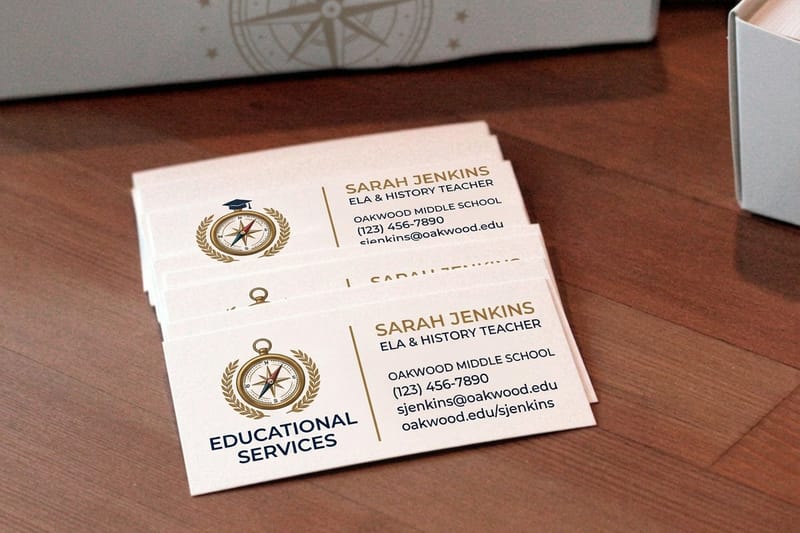
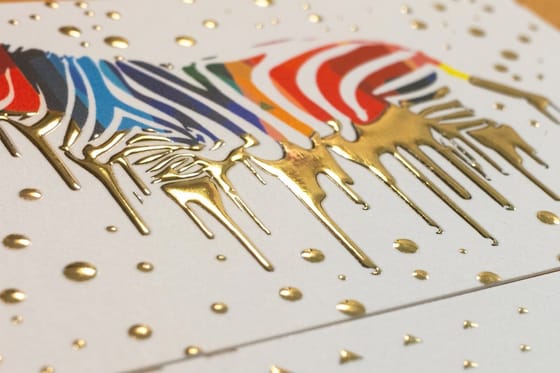
The cards below compare embossing with debossing, show how thermography raises a line with no die, explain how foil stamping transfers, set the finishing options side by side, and list the card and sticker ranges.


By the numbers
Stocks that hold a shoulder
Common Questions
Your embossing questions, answered
What is embossed printing?
Embossed printing shapes the paper instead of coating it. The sheet is pressed between a recessed die and a raised counter that mirror each other, usually with heat, and the fibres stretch into the die and stay there. The result is artwork that stands above the surface of the sheet and can be read by touch. When it carries no ink or foil it is called a blind emboss. When the die is aligned to printed artwork it is a registered emboss, and when foil is applied in the same hit it is a combination emboss.
Does embossing show on the back of the sheet?
Yes, and this is the single thing people forget. Whatever rises on the front leaves a matching recess on the back, because the paper is displaced rather than built up. On a business card printed both sides, a heavy dark reverse will show the dent clearly under raking light. Two fixes work: keep the reverse light or empty behind the embossed area, or switch to a finish that adds material on top, such as raised foil or thermography, which leaves the back flat.
Do I need a new die every time I reorder?
No. A die is cut once for a specific piece of artwork at a specific size, and it is reusable for as long as the artwork does not change. Reprint the same card and the same die runs again. Move the logo, resize it, or add a tagline and the die no longer matches, so a new one has to be cut. That is the practical argument for finalising embossed artwork before the first run rather than tweaking it later.
How small can embossed type be?
Below roughly 8 point, and in any hairline weight, an emboss stops being readable and starts looking like a bruise. The die needs a wall on both sides of every stroke, and two walls too close together merge into one soft lump. Fine serifs, thin script tails, and tightly reversed type are the usual casualties. The reliable approach is to emboss the logo mark and the name, and print the address block and legal text flat.
Can you emboss a laminated or gloss coated card?
It can be done, but it is the highest-risk combination in the process. A film laminate stretched over a shoulder can stress-whiten along the edge of the shape, and a heavy gloss coating can craze where the fibres move the most. Soft touch laminate also mutes a shallow emboss, so the effect you paid for gets flattened. Uncoated, cotton and lightly textured stocks give the crispest shoulder and the least trouble.
Can labels and stickers be embossed?
Yes, and labels handle the recess better than a card does. On an embossed label the dent on the reverse sits against the adhesive layer, so once the label is stuck to a box, a jar or a folder, only the raised face is visible. Embossed stickers start at $322.98 at 4OVER4.COM. Keep the raised shape well inside the cut line, because an emboss that runs to the edge of a label fights the die cut and can lift the corner.
Get Started
250 embossed business cards cost $251.36, or $1.01 each
Send the logo as vector artwork, pick an uncoated stock with some body, and we cut the die and press cards that stand up under a fingertip.
Legal Disclaimer
Gold Standard guarantees apply to all standard orders placed through 4over4.com. Price match requires verifiable proof of a competitor's published price for an equivalent product with matching specifications and turnaround time. Satisfaction guarantee covers manufacturing defects and print quality issues. Contact support with order number and documentation.
