
Feather Flag Sizes From 8 to 15 Feet and How to Set One Up


Tobias is our voice for cutting, binding and large format, built from the knowledge of our production team, with over 20 years in printing.
Four sleeve sizes, four standing heights, three bases, and one measurement that catches people out indoors. Choosing and rigging one follow from that measurement.
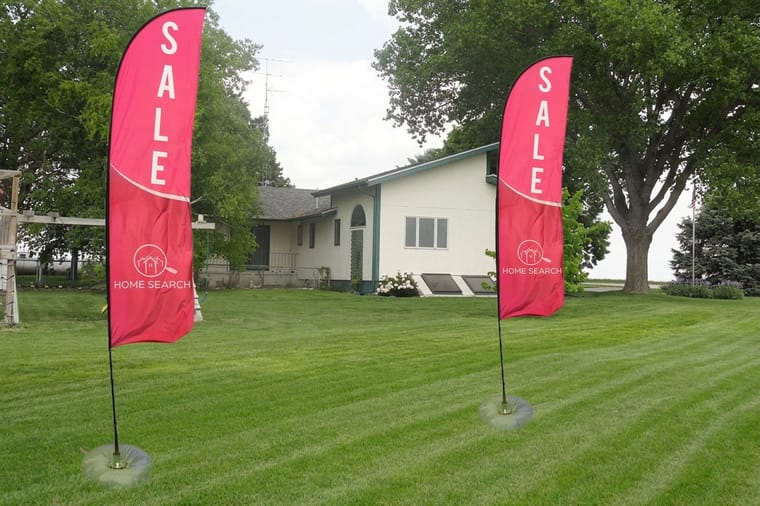
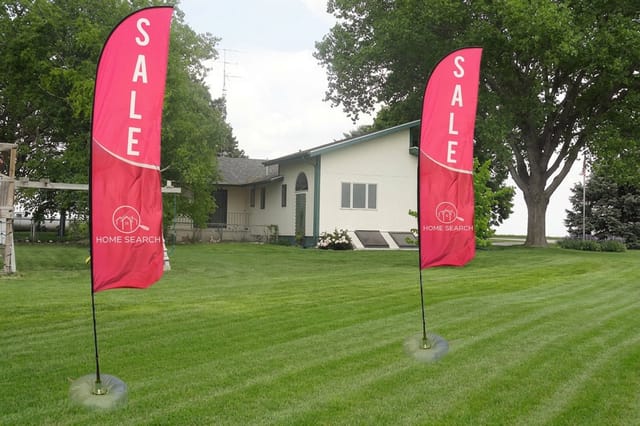
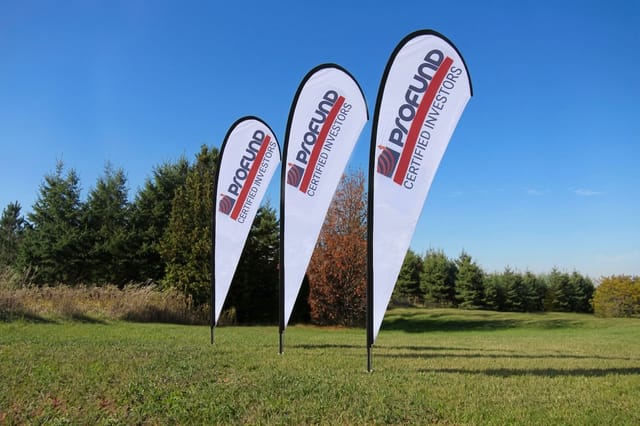
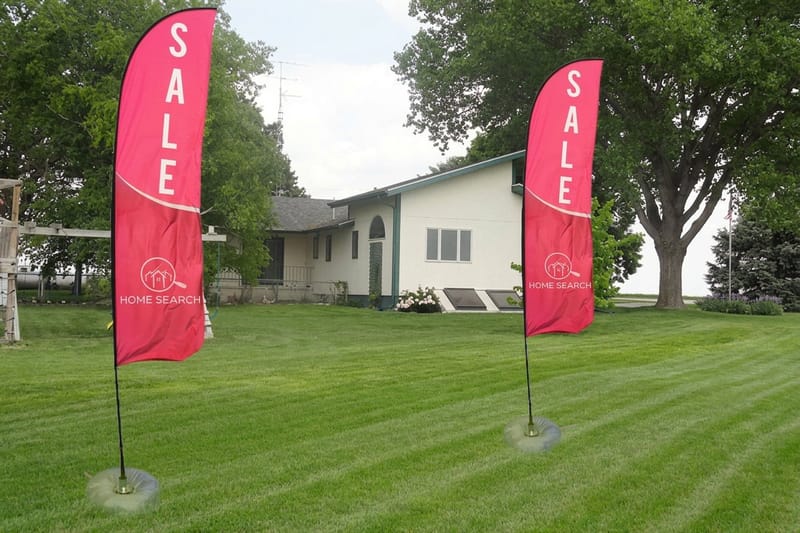
Feather flags come in four sleeve sizes: 24" x 81", 32" x 99", 32" x 123" and 37" x 161", which stand about 8, 10, 12 and 15 feet once the pole and base are under them. Choose by reading distance, then check the space, because the ordered size measures the printed fabric only. Add a stake and spike base for grass or dirt, an X-stand cross base for a hard floor indoors, and set the pole on the left or the right so the correctly reading face points at your traffic.
Quick answer
Order by the sleeve, plan by the standing height
The size on the order form is the printed fabric, and the assembled flag stands roughly a foot and a half taller. 24" x 81" reaches about 8 feet, 32" x 99" about 10, 32" x 123" about 12, and 37" x 161" about 15. Match the height to how far away the flag gets read, then confirm the ceiling or the awning above the spot will take it. All four print on 3oz polyester knit, single sided with a reverse back, on a 4 business day standard turnaround.
The Four Feather Flag Sizes and What Each One Suits
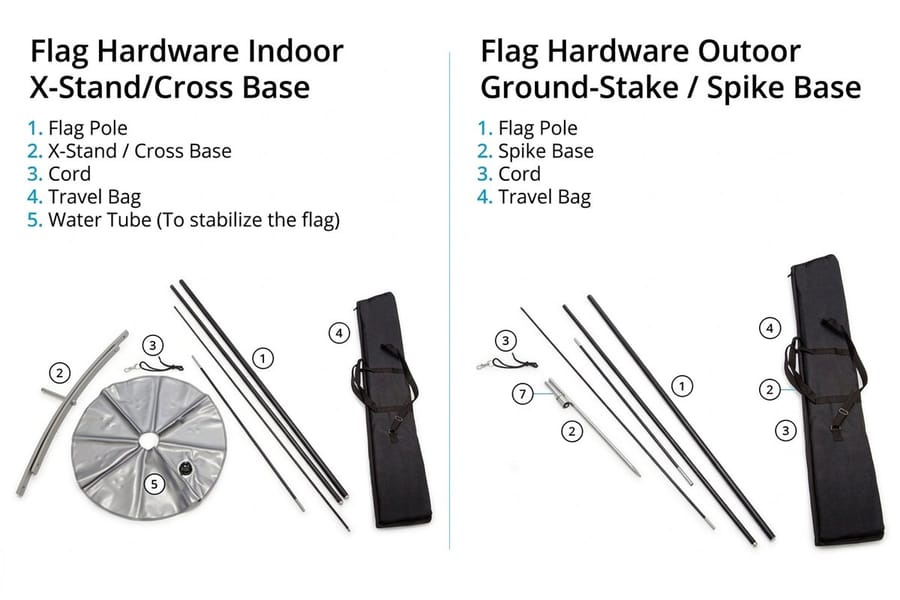
Pick the size by how far away the flag has to be read, then check the space will take it. Those two questions settle almost every order.
| Sleeve size | Stands about | Read from | Where it fits |
|---|---|---|---|
| 24" x 81" | 8 feet | 15 to 30 feet | Indoor rooms with a low ceiling, a single doorway, a narrow sidewalk frontage, a market stall. |
| 32" x 99" | 10 feet | 30 to 60 feet | A standard trade show booth, a shop front with one window, a driveway entrance. |
| 32" x 123" | 12 feet | 60 to 120 feet | A wide storefront or a run of parking spaces, where the flag has to clear parked cars. |
| 37" x 161" | 15 feet | 120 feet and beyond | Dealership lots and road frontage, read from a passing lane rather than the sidewalk. |
The width column does more work than people expect. Going from the 32 inch sleeve to the 37 inch sleeve widens the message as well as raising it, which is what makes a short headline legible from a moving car. It also means a 15 foot flag needs more clearance on either side before it stops slapping a wall or a neighbouring booth.
Every size runs on the same 3oz polyester knit and the same 4 business day turnaround, so stepping up a height changes the price and the footprint, not the schedule. All four are listed with live pricing on the feather flags product page.
Whichever size you pick, the order form asks for the same six choices, and each one has a fixed set of answers.
| Choice | Options |
|---|---|
| Sleeve size | 24" x 81", 32" x 99", 32" x 123" or 37" x 161". |
| Material and print | 3oz polyester, full color on one face with the reverse showing through. |
| Base | Outdoor stake and spike base, indoor X-stand cross base, or none. |
| Pole direction | Pole on left or pole on right. |
| Proof | Free online proof, or straight to production. |
| Quantity and time | From one flag, $108.75 for a single flag, 4 business days. |
Upload the artwork at the full sleeve size you ordered, built from the flag layout in the blank template library so the pole pocket and safe margin sit where the press expects them.
Sleeve Size Is Not Standing Height
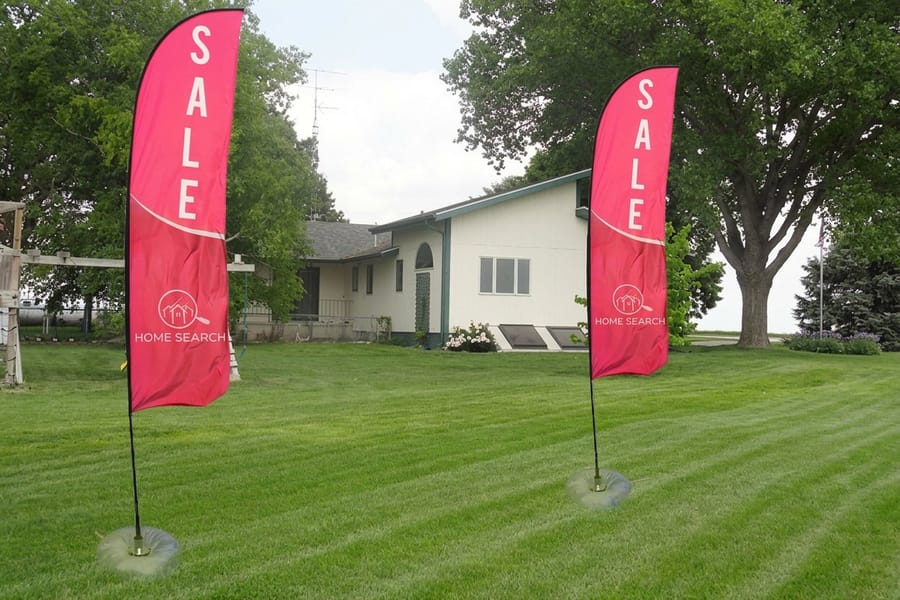
This is where indoor orders go wrong. The size you choose on the product page measures the printed fabric, and the fabric is the shortest part of the assembled display.
A finished feather flag is three pieces stacked: the base sits on the floor, the sectional pole runs up through it, and the printed sleeve slides over the pole with a little pole showing above the top of the print. Add those together and a 123 inch sleeve, which is 10 feet 3 inches of fabric, ends up close to 12 feet in the air. That extra foot and a half is the part nobody measures.
Before ordering for a lobby, a showroom or a conference hall, measure the ceiling and take a foot off for sprinkler heads and light fittings. A standard 9 foot room takes the 24" x 81" flag and nothing above it. A 10 foot ceiling is workable for that same size and awkward for the 32" x 99". Outdoors, look up rather than out: awnings, canopy edges, low branches and a shop fascia rule out a tall flag long before wind does.
If the ceiling wins and the flag will not fit, the display that usually replaces it is a retractable banner stand, which tops out at 92 inches and carries far more copy at eye level. Our guide to choosing trade show banners covers where each one earns its floor space.
Bases, Pole Direction, and the Surface Underneath
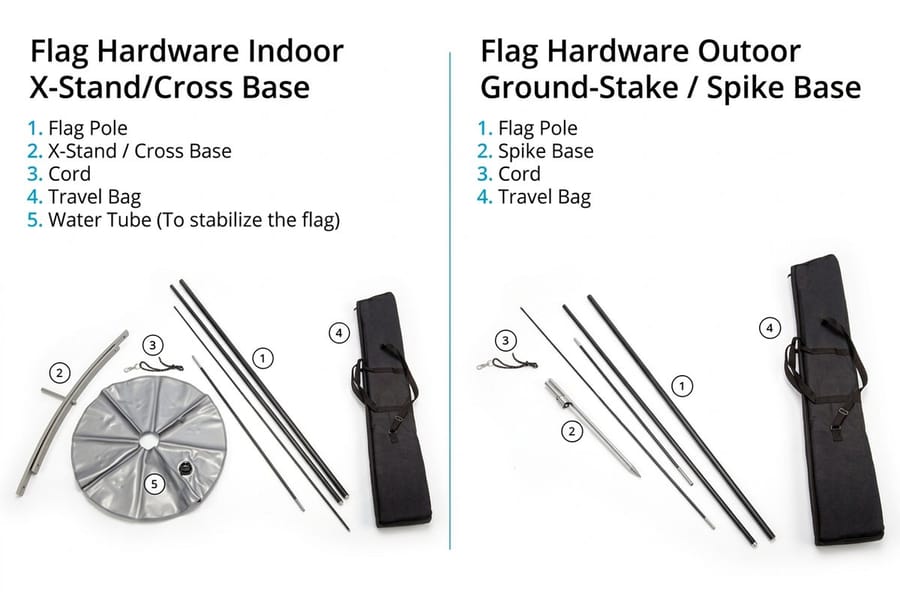
The base is the part that turns a printed sleeve into something that stands up, and it is a three way choice on the order form.
- Outdoor stake and spike base. A metal spike you drive into grass, dirt or a planting bed. The ground does the holding, which is why it beats any freestanding base of similar price in wind.
- Indoor X-stand cross base. A flat cross that sits on tile, concrete or carpet. Right for a booth, a lobby or a showroom floor where you cannot put a spike in anything.
- No base. Only if you already own a pole set the sleeve will fit. Ordering this to save money and then discovering your old pole is a different diameter is a common and annoying mistake.
Asphalt is the case neither option was built for. A spike will not go in and a cross base on a windy lot walks. If that is your surface, plan on weight over the cross base or a tie-off to a fence post or a bollard, and treat the flag as a fair-weather display rather than a permanent fixture.
Pole on Left or Pole on Right is a separate choice, and it decides which way the correctly reading face points. Stand where your customer walks or drives, then order the direction that puts the readable side toward them. Get it backwards on a one-way street and every driver sees mirrored text. For a wall bracket rather than a base, pole banners hang off a street light pole instead of standing on the ground.
Setting the Flag Up, Start to Finish
A feather flag goes up in about five minutes once you have done it once, and the order of operations matters more than the strength involved.
- Join the pole sections on the ground. They slot together, thinnest section at the top. Push each joint fully home; a half-seated joint is what makes a flag lean after an hour.
- Slide the sleeve over the assembled pole. Feed the pole in from the bottom of the pocket and work the fabric up rather than pulling the sleeve down over the tip, which is how flexible top sections get bent.
- Clip or tie the bottom of the sleeve to the pole. Most kits use a small cord or clip at the foot. Skip it and the flag rides up the pole and bunches.
- Set the base, then drop the pole in. Spike into the ground first, or lay the cross base flat and check it does not rock, then lower the pole into the socket.
- Turn the flag to face the traffic. The pole rotates in the base. Point the readable face at where people approach from and let the tail swing downwind.
Take it down in the reverse order and store the sleeve rolled rather than folded, since hard creases in polyester knit take a long time to hang out. For a slower walkthrough with the fiddly parts photographed, read how to assemble a feather flag or the shorter feather flag setup guide.
Artwork, the Single-Sided Print, and Outdoor Life

Feather flags print 4/0, single sided with a reverse back. Full color goes onto one face of the 3oz knit and soaks through, so the back carries the same artwork mirrored. Colors and shapes read from behind. Text does not.
Design for that. Put the phone number, the offer and the address on the front face, keep the rear-facing story to a logo mark and a color block, and use the pole direction to aim the good side at your traffic. If your site genuinely needs both directions to read forward, stop looking at flags: double-sided pole banners print on 18oz blackout vinyl with an opaque core, and that opaque layer is exactly what stops one printed side ghosting through the other.
Set artwork up at full size and keep the message short. A flag is read in the second and a half a driver gives it, which is around four words and one number. Vertical stacking beats a long horizontal line every time, and the strongest element belongs in the top third, since the bottom of a flag is often behind a parked car. Start from a correctly sized layout in the blank template library, which builds in bleed, safe margin and the pole pocket so nothing important lands in the curve.
Outdoors, plan on the sleeve wearing out before the hardware. Sun flattens the ink and wind frays the trailing edge, so the useful move is to reorder the printed sleeve and keep the pole and base. Browse the rest of the range in flags printing, or compare against a fabric or vinyl option in the banners printing collection.
Wally sizes a feather flag
Measure the fabric, then measure the sky above it
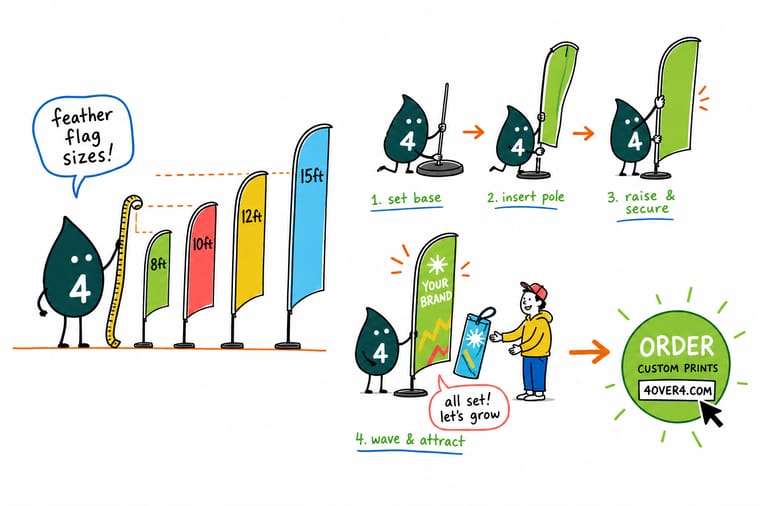
Wally orders the 32 by 123 inch sleeve and sets it down next to a tape measure. Ten feet three inches of fabric. Then he slots the pole together, drops it into the spike base, and the top of the flag is nearly twelve feet up. That gap is the whole trick. Outdoors he looks for awnings and branches. Indoors he checks the ceiling, because a nine foot room only takes the small one. Then he turns the pole so the readable face points at the road, and lets the tail swing downwind.
Order feather flags →%22%2F%3E%3Ccircle%20cx%3D%2240%22%20cy%3D%2249%22%20r%3D%2225%22%20fill%3D%22%232dd4bf%22%20opacity%3D%220.15%22%2F%3E%3Ccircle%20cx%3D%2278%22%20cy%3D%2258%22%20r%3D%2214%22%20fill%3D%22%232dd4bf%22%20opacity%3D%220.1%22%2F%3E%3Crect%20x%3D%2270%22%20y%3D%2228%22%20width%3D%2225%22%20height%3D%2234%22%20rx%3D%224%22%20fill%3D%22%232dd4bf%22%20opacity%3D%220.08%22%20transform%3D%22rotate(35%2080%2030)%22%2F%3E%3C%2Fsvg%3E)
Specs and pricing
Flag sizes, hardware, and starting prices
Feather flags come in four sleeves from 24" x 81" to 37" x 161", and teardrop flags in 32" x 70", 44" x 87", 45" x 97" and 57" x 142", standing about 7 to 14 feet, both on 3oz polyester with a spike or cross base, from one flag in 4 business days. Pole banners run 13 sizes from 18 by 24 to 30 by 72 inches on 18oz blackout vinyl, printed on both sides, for a street pole or a wall bracket. The panels show every live option.

Print it
Order a flag that reads from across the lot
For a lot read from a passing lane, order the 37" x 161" feather flag on a spike base. A teardrop flag uses the same fabric and bases in a rounder shape, and a retractable banner stand, up to 92 inches tall, takes over where the ceiling is too low for any flag.

%22%2F%3E%3Ccircle%20cx%3D%2243%22%20cy%3D%221%22%20r%3D%2218%22%20fill%3D%22%23f59e0b%22%20opacity%3D%220.15%22%2F%3E%3Ccircle%20cx%3D%2240%22%20cy%3D%2250%22%20r%3D%225%22%20fill%3D%22%23f59e0b%22%20opacity%3D%220.1%22%2F%3E%3Crect%20x%3D%2273%22%20y%3D%22-7%22%20width%3D%2228%22%20height%3D%2210%22%20rx%3D%224%22%20fill%3D%22%23f59e0b%22%20opacity%3D%220.08%22%20transform%3D%22rotate(8%2080%2030)%22%2F%3E%3C%2Fsvg%3E)
Explore more
Where to go next
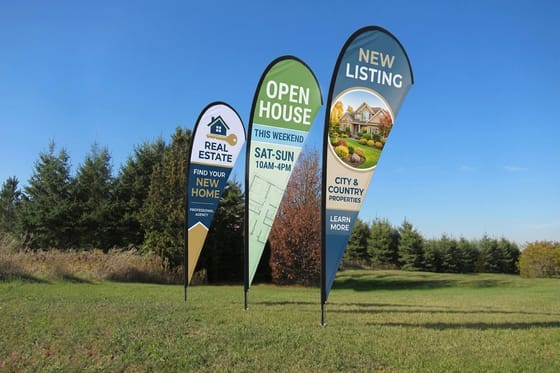
The cards below walk through feather flag assembly step by step, compare feather, teardrop, blade and rectangle shapes, and weigh trade show banners against each other for floor space.


By the numbers
Four flag heights, and 61 reviews behind them
Common Questions
Your feather flag questions, answered
What sizes do feather flags come in?
Four sleeve sizes at 4OVER4.COM: 24" x 81", 32" x 99", 32" x 123" and 37" x 161". Those dimensions describe the printed fabric only. Once the sleeve is on its sectional pole and the pole is in a base, the finished displays stand roughly 8, 10, 12 and 15 feet tall. Order by the size on the product page, plan your space by the standing height.
How tall is a feather flag once it is standing?
Add the base and the pole tip to the sleeve and you land near 8, 10, 12 or 15 feet. Indoors that matters more than anything else on the order. A standard 9 foot ceiling only clears the 24" x 81" sleeve comfortably, and a 10 foot ceiling is tight for the 32" x 99". Outdoors the thing to check is what is above the spot, since awnings, low branches and shop signage take a flag out of the running long before the wind does.
Which feather flag base do I need?
Match it to the surface. The outdoor stake and spike base is a metal spike you drive into grass, dirt or a planting bed, and it holds better than any weight of the same price because the ground does the work. The indoor X-stand cross base is a flat cross that sits on tile, concrete or carpet for a booth or a lobby. If you are on asphalt, neither one is ideal on its own, so plan to add weight over the cross base or tie the pole off to something fixed.
Are feather flags printed on both sides?
Not as two separate images. The ink option is 4/0 single sided with a reverse back, so full color prints onto one face of the 3oz knit and soaks through the fabric. Stand behind the flag and you see the same artwork mirrored: shapes and colors read, text runs backwards. That is why you choose Pole on Left or Pole on Right, since it fixes which way the correct side faces the traffic you care about. If both approaches need to read forward, a double-sided pole banner on 18oz blackout vinyl is the honest alternative.
How long does a feather flag last outdoors?
As long as the weather allows, and the two things that end it are sun and wind. Constant UV flattens the color first, and steady wind frays the trailing edge where the fabric whips against the pole. Bringing the flag in overnight and before a storm buys back a lot of that. When the color goes dull or the edge starts to shred, reorder just the sleeve and keep the pole and base you already own.
How much do feather flags cost?
A single feather flag starts at $108.75 at 4OVER4.COM and the per-flag price drops as the run grows. Five come to $488.78, about $97.76 each, and twenty come to $1,869.43, about $93.47 each. Standard turnaround is 4 business days with a free online proof if you want to check the layout before it prints.
Get Started
A feather flag costs $108.75, a teardrop flag the same
Pick a height, choose the spike base for grass or the cross base for a hard floor, set the pole left or right, and we print your flag on 3oz polyester in 4 business days.
Legal Disclaimer
Gold Standard guarantees apply to all standard orders placed through 4over4.com. Price match requires verifiable proof of a competitor's published price for an equivalent product with matching specifications and turnaround time. Satisfaction guarantee covers manufacturing defects and print quality issues. Contact support with order number and documentation.
