
How to Choose Convention Displays That Fill Your Booth


Tobias is our voice for cutting, binding and large format, built from the knowledge of our production team, with over 20 years in printing.
Booth size and reading distance decide the set. A 10 by 10 takes a specific set, each piece starts at its own price, each one fails somewhere, and the artwork has to read while people walk past.
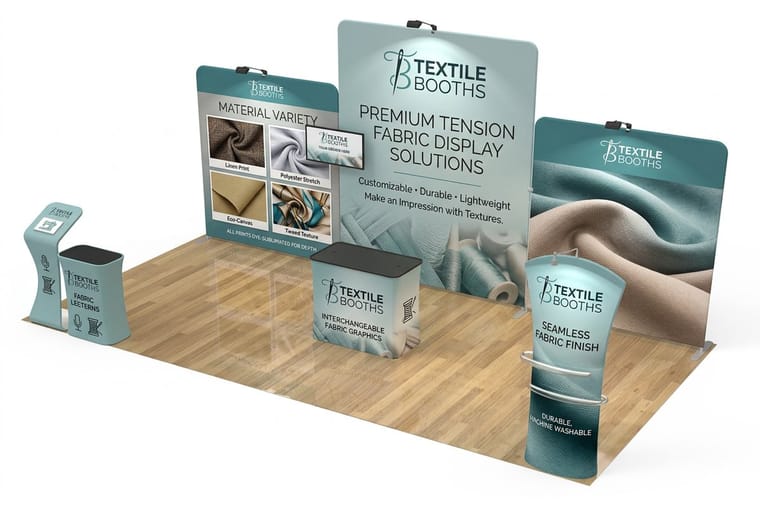
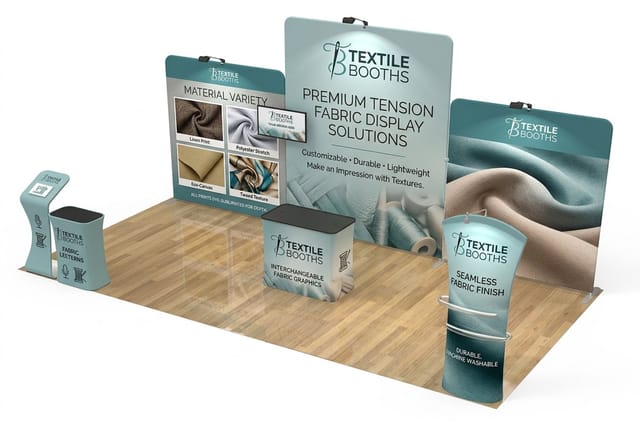
For a standard 10 by 10 convention booth, buy an 8 ft fabric back wall, one or two retractable banner stands, and a printed table cover, then stop. Add a step-and-repeat only if someone will photograph people at your booth, and a tent only if the event is outdoors. For a 10 by 8 step and repeat banner with a stand, ours comes in 8 by 8 or 8 by 10 ft on 13oz smooth blockout vinyl or 9oz wrinkle free fabric, with top and bottom pole pockets and a stand as an option, from $217.50. Choose by footprint first, because the height rules in the exhibitor kit and the 30 inch table line decide what anyone in the aisle can actually see.
Quick answer
Footprint first, then height, then the pieces
A convention display set is chosen by the booth diagram, not by the product photo. A 10 by 10 inline booth holds an 8 ft back wall, a covered table off to one side, and one or two stands. The table hides the bottom 30 inches and standing people hide the next 30, so your name has to live in the top band of the wall. Everything else, from step-and-repeat backdrops to tents, is situational and easy to buy by mistake.
Read the Booth Before You Read the Catalog
Your floor plan decides most of this for you. Three formats cover almost every convention contract, and each one has a display set that fits and several that do not.
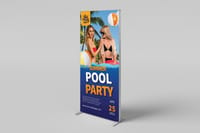
The tabletop slot. Six or eight feet of shared table, no floor space of your own. You get a covered table and one thing standing behind it. A mini retractable banner stand sits on the table itself and starts at $49.41, which is the cheapest branded height in the catalog.
The 10 by 10 inline booth. The default at most regional shows. An 8 ft wide back wall, a table pushed to one side, and one or two stands flanking the wall. Everything else is clutter you will carry twice.
The 10 by 20 or island. Now the back wall is a structure, the table becomes a counter, and you have room for a demo. This is where a full booth kit stops being an indulgence.
Two rules from the exhibitor kit override anything a supplier tells you. Inline booths are usually capped at 8 ft along the back wall, and the front half is usually capped around 4 ft so you do not wall off your neighbors. Halls differ, so check the number in writing before you order a display you cannot legally stand up. The trade show printing collection groups everything that fits inside those limits.
The Four Pieces of a Convention Display Set
A working booth is a back wall, something vertical beside it, a covered table, and occasionally a photo backdrop. Each piece does a different job, starts at a different price, and lets you down somewhere.
| Piece | What it does | Starts at | Where it fails |
|---|---|---|---|
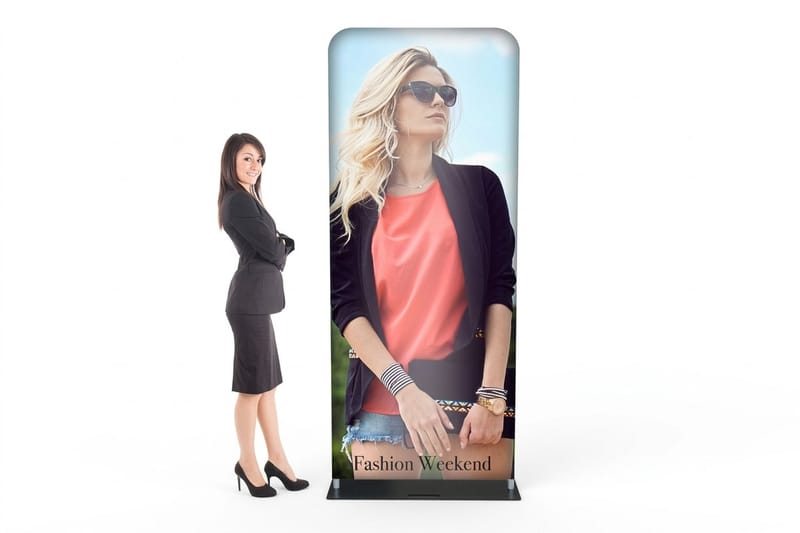
| SEG display | Tensioned fabric in an aluminum frame. The back wall people read from the aisle. | $229.00 | Needs assembly time and floor depth. Not a one-person, five-minute setup. |
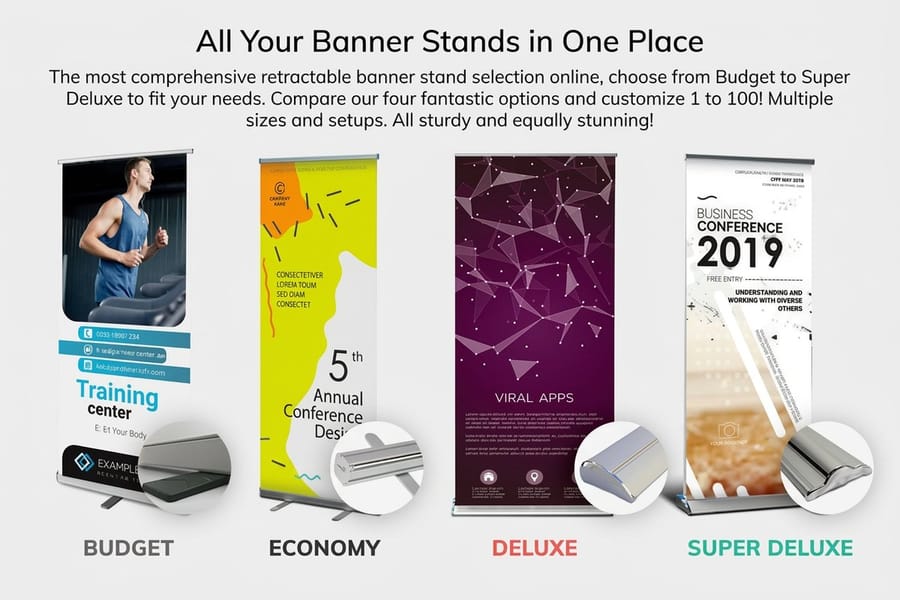
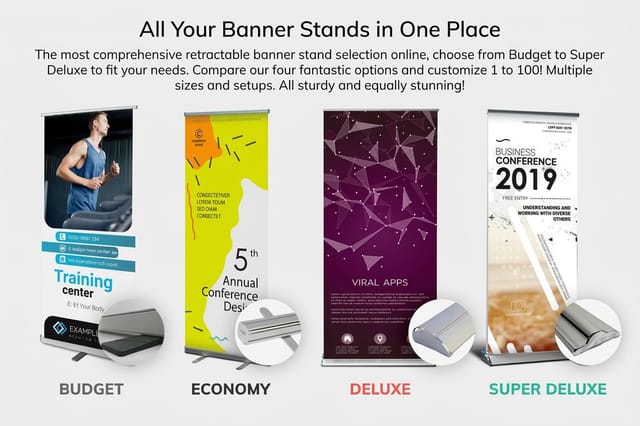
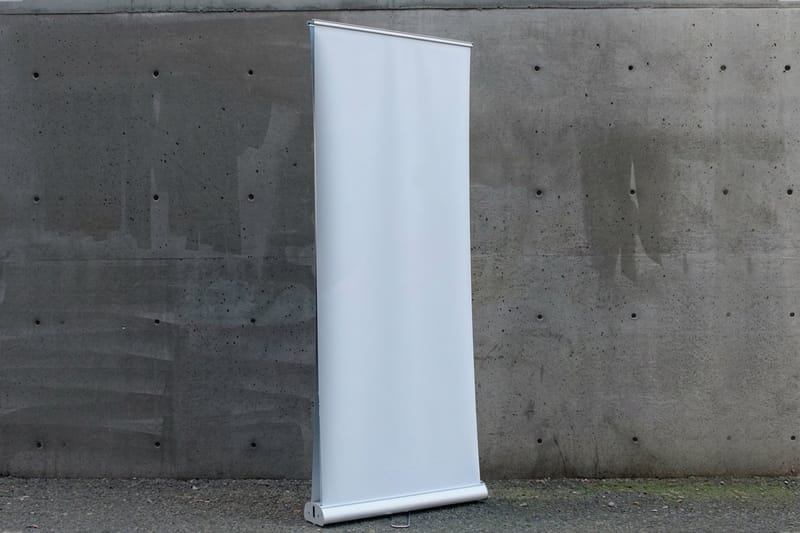
| Retractable stand | Rolls up into its own base. Vertical height in about a minute. | $139.00 | Narrow. One message per stand, and a light base can rock in a busy aisle. |
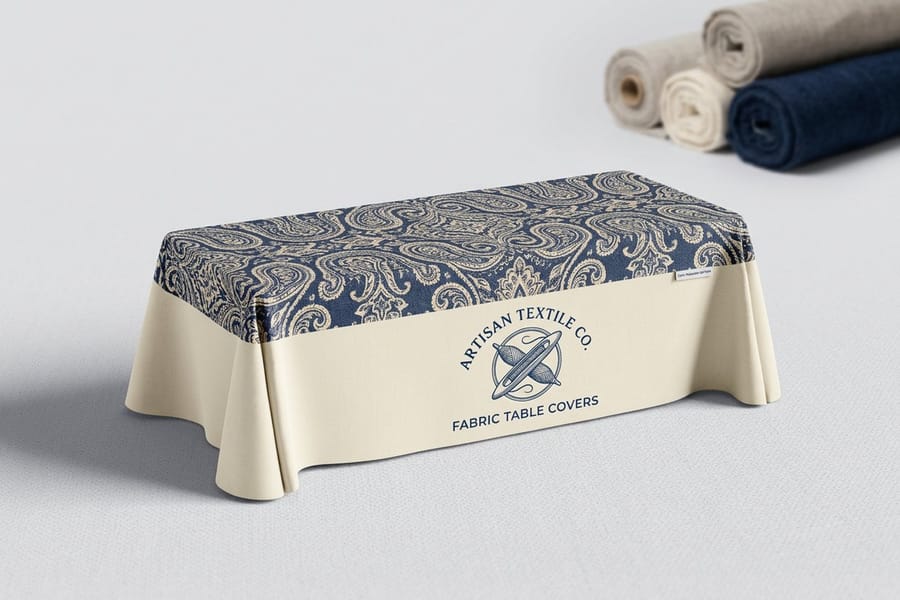
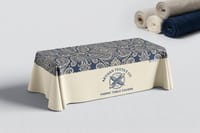
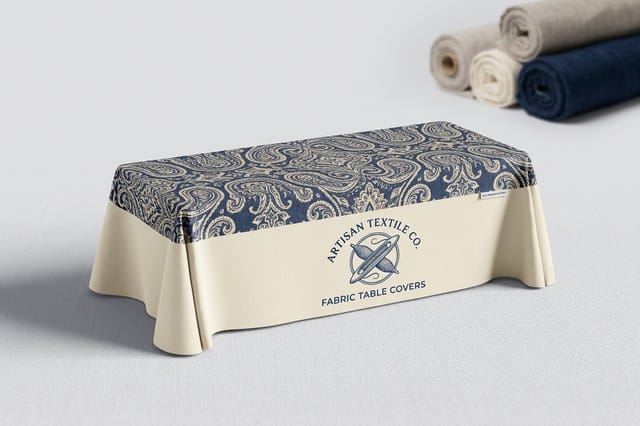
| Fabric table cover | Turns rented furniture into branded furniture and hides the boxes underneath. | $225.00 | The print is the product, so a dated tagline retires the whole cover. |
| Step-and-repeat | Photo backdrop with a repeating logo for press and social shots. | $217.50 | Pure waste unless someone is actually taking photographs. |
| Event tent | Shade, shelter and branding for outdoor expos and street events. | $987.45 | Outdoor only, and it needs weights. Useless inside a hall. |
The column that decides most orders is the last one. A retractable stand is not a small back wall, and a back wall is not a fast setup. If your team lands at the venue two hours before doors, the honest answer is stands plus a covered table, and a pop up display at $752.39 when you want a wall that opens like an accordion instead of bolting together.
Three Booth Kits at Three Real Budgets
Money spent on the wrong piece is the most common booth mistake, so compare the same 10 by 10 space at three levels.
- Under $400, the first show. One retractable banner stand at $139 behind the table, and a printed table runner at $97.76 over the plain cloth the venue supplies. A runner carries the logo for well under half the price of a full cover, and nobody at the show can tell from six feet away.
- Around $600, the repeat exhibitor. Two stands at $139 each and a full fabric table cover at $225. Two stands let you angle one toward each side of the aisle, which matters more than height in a crowded hall.
- Around $700 and up, the real back wall. A SEG display from $229 as an 8 ft wall, a fabric table cover at $225, and one stand at $139. The frame is reusable and only the fabric panel is replaced when the messaging changes.
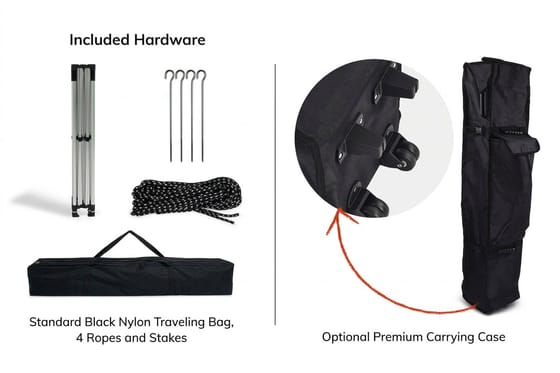
Above that, fabric booth kits start at $2,599 and bundle the wall, the hardware and the cases as one order, which is the point: matched pieces, one shipment, and nothing missing on the show floor. Before you get there, spend on the back wall rather than a second table cover. Pricing on each option is live in the configurators further down this page, and our guide to banner sizes for events and displays covers the dimensions that fit standard halls.
Designing for 30 Feet, Not for Your Monitor
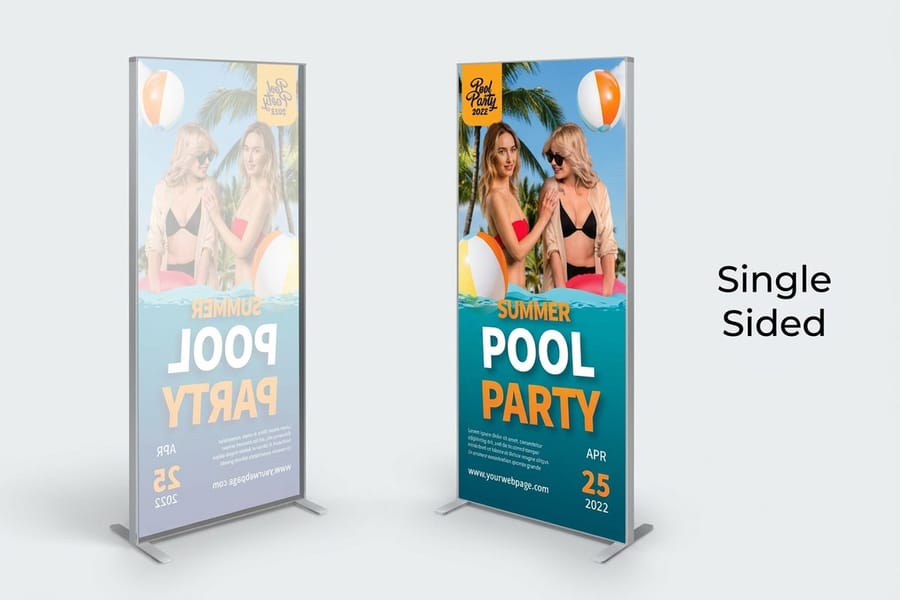
Booth artwork fails for one reason more than any other: it was judged at arm's length on a screen and it will be read from thirty feet away by someone walking. Design for the walk.
Put the company name and one benefit line in the top band of the back wall, above roughly 60 inches. Below that the table hides one stretch and your own staff hide the next. Detail belongs on the table, on a flyer, or in the conversation, never high on a wall where it is too small to read anyway. Two lines of large type beat six lines of medium type every time.
Watch the edges on tensioned fabric. A SEG graphic has a silicone bead sewn into its hem that tucks into the frame channel, so anything near the perimeter disappears into the groove. Keep type and logos well inside the visible area and let the background run to the edge. Retractable graphics have their own dead zone: the bottom few inches roll into the cassette and the top few sit behind the rail.
Color behaves differently on fabric. Dye-sub ink sits in the fiber, which reads slightly softer than the same file on gloss vinyl, and that softness is what keeps the panel from glaring under hall lighting. Large flat dark fields show every crease and seam, so break them with imagery or lift the value. Build files at the correct proportions from the start using the blank template library, and the guide to making banners covers hems, grommets and large-format file prep in detail.
Indoors, Outdoors, and the Piece Everyone Buys Twice
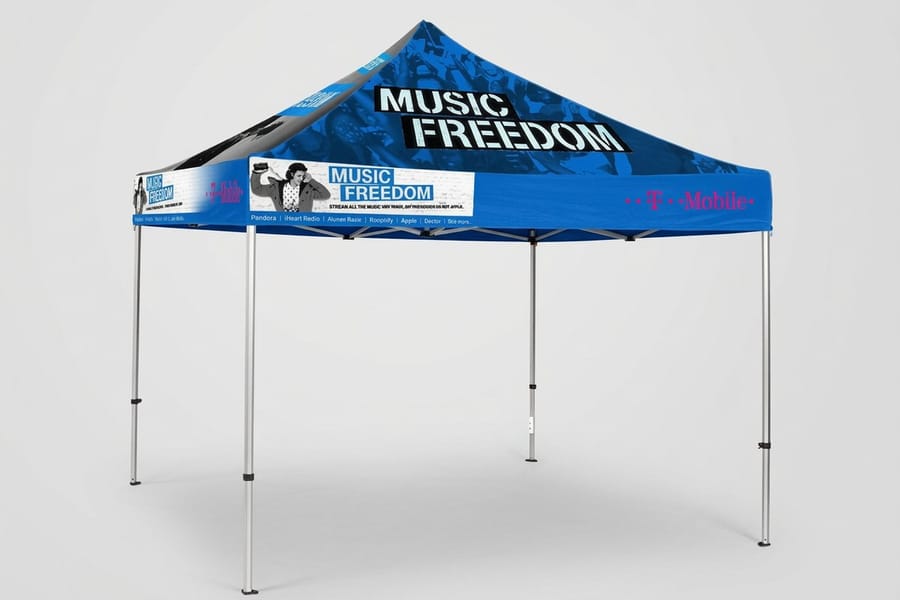
Conventions happen in two very different rooms, and the same display does not serve both. Inside a hall the enemies are glare, crowding and height rules. Outside they are wind, rain and sun.
Indoor sets are fabric: a SEG wall, fabric stands, a fabric cover. Outdoor sets are vinyl and structure: an event tent from $987.45 with proper weights on every leg, plus vinyl banners that shed water. A tent that is not weighted is a sail, and one gust across a parking lot expo ends the day for you and possibly for the booth beside you.
The piece most exhibitors buy twice is the back wall. The first purchase is a cheap fixed-graphic panel that is obsolete the moment a product name changes. The second is a frame system where the fabric swaps out. If you exhibit more than once a year, start at the second purchase. Our trade show exhibit design ideas show what to put on that wall. Browse the frames in displays, the hardware in banner stands, and the complete matched sets in the trade show printing collection.
Wally sets up a 10 by 10 booth
Back wall, two stands, covered table, done
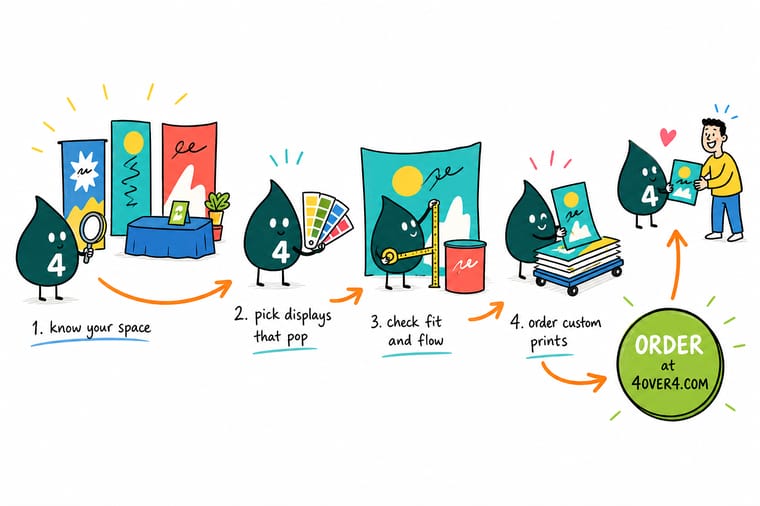
Wally paces out the booth first. Eight foot fabric wall across the back, a table pushed to one side so there is a gap to walk into, and a retractable stand angled toward each end of the aisle. He puts the company name high on the wall, because the table swallows the bottom 30 inches and his own staff swallow the next 30. The tent stays in the van. It is an outdoor product and it would eat half his floor.
Shop fabric booth kits →
Specs and pricing
Sizes, materials and starting prices for the core three
The stand, the back wall and the table cover, with live configuration choices and starting prices straight from the 4OVER4.COM configurator. Retractable stands start at $139 in 13 sizes with 3 business days of production. SEG displays start at $229 in 3 ft, 10 ft and 20 ft sizes on 6oz fabric with a sewn in 10mm silicone edge, printed on one side or two, with 3. Fabric table covers start at $225 on 9oz polyester cut for a 6 ft or 8 ft table, with 4.
Print it
Order the pieces your booth actually needs
Two retractable stands at $139 each and a fabric table cover at $225 for a first 10 by 10 booth, or a fabric booth kit from $2,599 in 10 by 10, 10 by 20 or 20 by 20 ft on 8.8oz tension fabric, with 8 business days of production.
%22%2F%3E%3Ccircle%20cx%3D%2247%22%20cy%3D%2220%22%20r%3D%2222%22%20fill%3D%22%23a78bfa%22%20opacity%3D%220.15%22%2F%3E%3Ccircle%20cx%3D%2254%22%20cy%3D%2227%22%20r%3D%22-3%22%20fill%3D%22%23a78bfa%22%20opacity%3D%220.1%22%2F%3E%3Crect%20x%3D%2277%22%20y%3D%22-9%22%20width%3D%2232%22%20height%3D%2220%22%20rx%3D%224%22%20fill%3D%22%23a78bfa%22%20opacity%3D%220.08%22%20transform%3D%22rotate(42%2080%2030)%22%2F%3E%3C%2Fsvg%3E)
Explore more
Where to go next
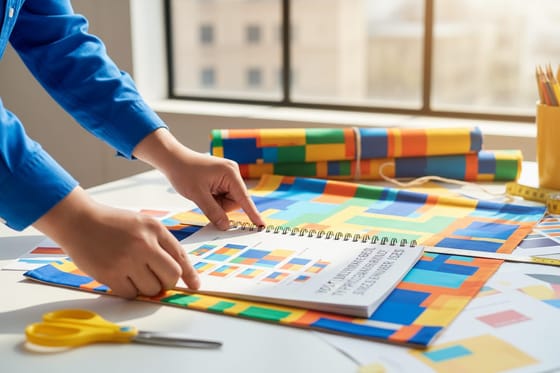
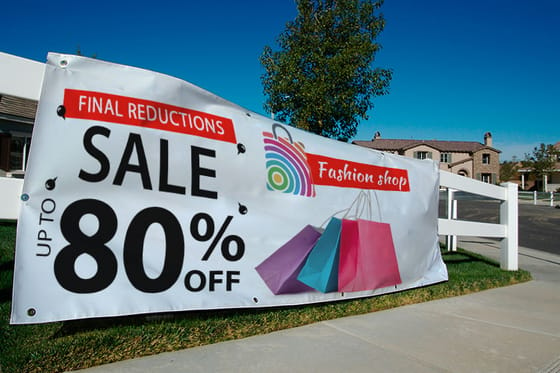
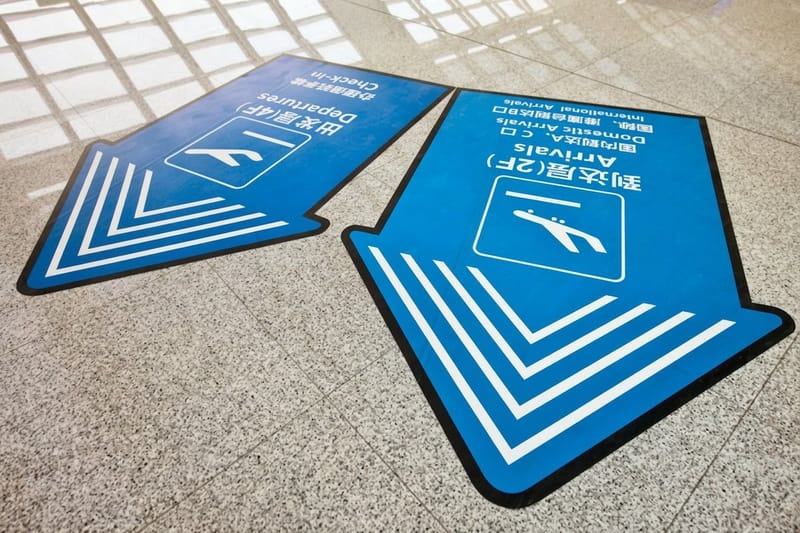
Check the banner sizes that fit a booth and a hall entrance, make a banner that survives large format, and design the badge every attendee reads, then shop trade show printing, banner stands and displays.

By the numbers
Display work through 25 years of show seasons
Common Questions
Your convention display questions, answered
What display size fits a 10 by 10 booth?
An 8 ft wide back wall and one or two retractable stands, and that is close to the whole story. A 10 ft booth loses width to the neighboring drape hardware, so an 8 ft SEG frame sits comfortably with a hand of clearance on each side. Most shows also cap an inline booth at 8 ft tall along the back wall and 4 ft tall across the front half so you do not block the booths beside you, which rules out tall structures near the aisle. Read the height rule in the exhibitor kit before ordering, because the numbers vary by hall and by show organizer.
Fabric or vinyl for a trade show backdrop?
Fabric for indoor shows, vinyl when weather is involved. Dye-sublimated fabric takes the ink into the fiber, so the surface stays matte and does not flare when a hall spotlight hits it at an angle, and the whole graphic folds into a carry bag. Vinyl is heavier, holds a crisp flat plane, and shrugs off rain, which is why outdoor banners and tent tops are vinyl. The practical tiebreaker is travel: if you fly to shows, fabric goes in a suitcase and vinyl does not.
How many retractable banner stands do I need?
Two for a 10 by 10 booth, one for a tabletop. A pair flanking the back wall frames the space and gives you two extra messages without buying floor structure, and because each stand is independent you can angle them toward the aisle rather than flat against the wall. Beyond two in a small booth they start blocking your own staff. If you work several shows a year, buy the stands once and treat the printed graphic as the consumable.
Can I reuse a display when the messaging changes?
Yes, and that is the main reason to buy frame-based displays. A SEG frame holds a silicone-edge fabric graphic in a channel, so a new season means a new fabric panel while the aluminum frame stays in the case. Retractable stands work the same way with a replacement cassette. Printed table covers are the exception: the graphic is the product, so keep the design to your logo and colors rather than a dated show tagline and it will last years.
Do I need a step-and-repeat banner?
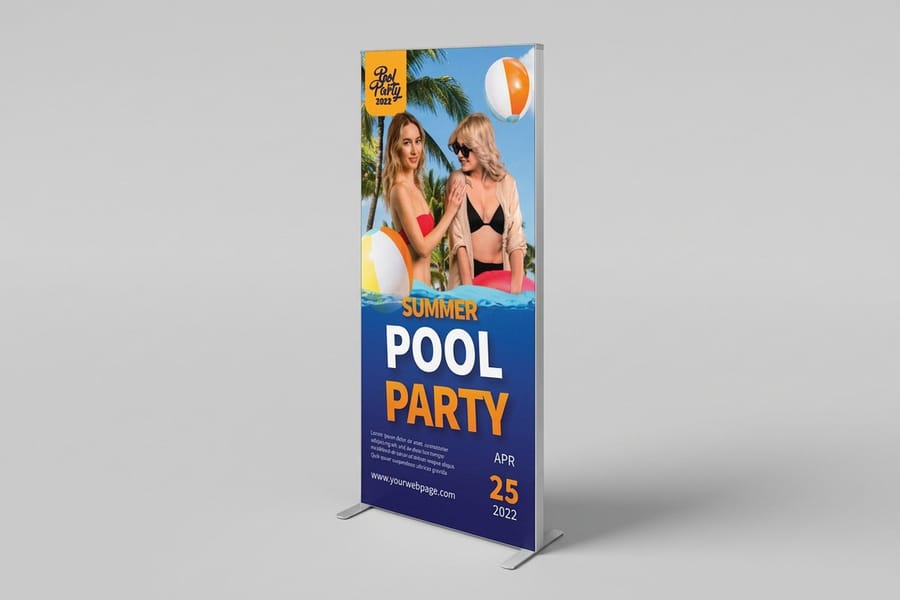
Only if someone will photograph people in front of it. A step-and-repeat earns its cost at an award night, a product launch or a press-facing booth, and it is wasted as general booth decor. The design rule that matters is repetition: a portrait crop from the waist up needs to contain at least one complete logo, so repeat a modest logo across the panel instead of centering one large one that every photo cuts in half. Step-and-repeat banners start at $217.50.
My fabric graphic arrived creased. Is it ruined?
No. Dye-sublimated fabric is folded to ship and the fold lines relax once it hangs, usually overnight and faster with a handheld steamer held a few inches away. Do not press a hot iron directly onto the printed face. If you are setting up the morning of the show, unpack the panel into the frame the night before so gravity does the work while you sleep.
Get Started
Order a fabric table cover from $225.00
Pick the back wall, add the stands, cover the table, and we print a matched set that ships in its own cases before your load-in date.
Legal Disclaimer
Gold Standard guarantees apply to all standard orders placed through 4over4.com. Price match requires verifiable proof of a competitor's published price for an equivalent product with matching specifications and turnaround time. Satisfaction guarantee covers manufacturing defects and print quality issues. Contact support with order number and documentation.
