
How to Order Custom Sandwich Wrap Paper for a Deli or Food Truck


Emma is our prepress and print production voice, built from the knowledge of our production team, with over 20 years in printing.
What to specify, what it costs, and the cheaper way most delis end up branding the sandwich once they see the minimum on a printed run.
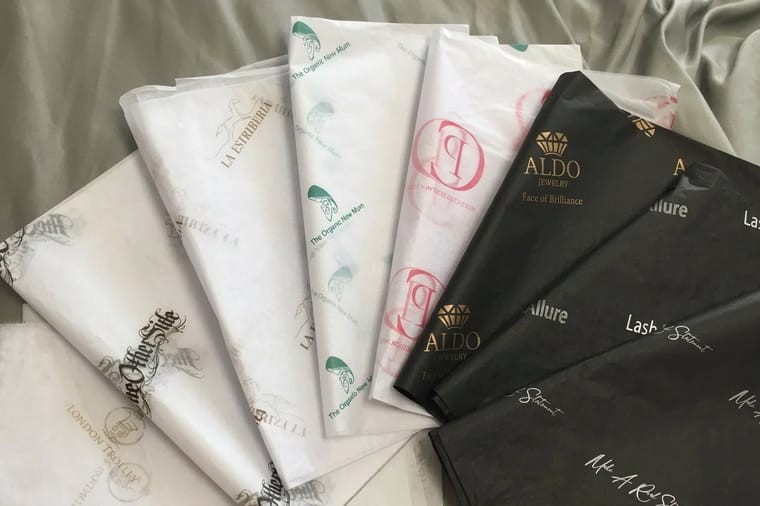
Custom sandwich wrap paper is a grease-resistant or dry wax sheet, usually 12 x 12 or 15 x 15 inches, printed on the outer face with food-grade ink in one or two spot colors. It is run flexo from rolls, which is why most converters set a minimum near 10,000 sheets. Below that volume the practical route is plain food-safe wrap plus a printed label or sleeve, which starts at $23.88 for Standard Food Labels at 4OVER4.COM and lands the brand where the customer actually looks. For a cooler case, premium food labels add vinyl stocks and sizes up to 5 x 7, and our kit of 8 food-safe product labels that survive cold, grease and condensation matches a stock to each job.
Quick answer
Specify the stock, then decide whether to print the sheet at all
Two numbers settle a wrap order: the Kit rating of the paper and the minimum on the print run. Kit 5 to 7 carries a cold sub, Kit 8 and up is for fried food, and dry wax handles both as long as nothing goes near an oven. Printing the sheet means roughly 10,000 units and a design you are stuck with, so most single-site delis buy plain food-safe wrap and brand it with a label across the seal or a sleeve around the parcel. If you do print the sheet, tile the logo instead of centering it, because four folds hide about a third of the artwork.
The Stock Decides Everything, So Specify It First
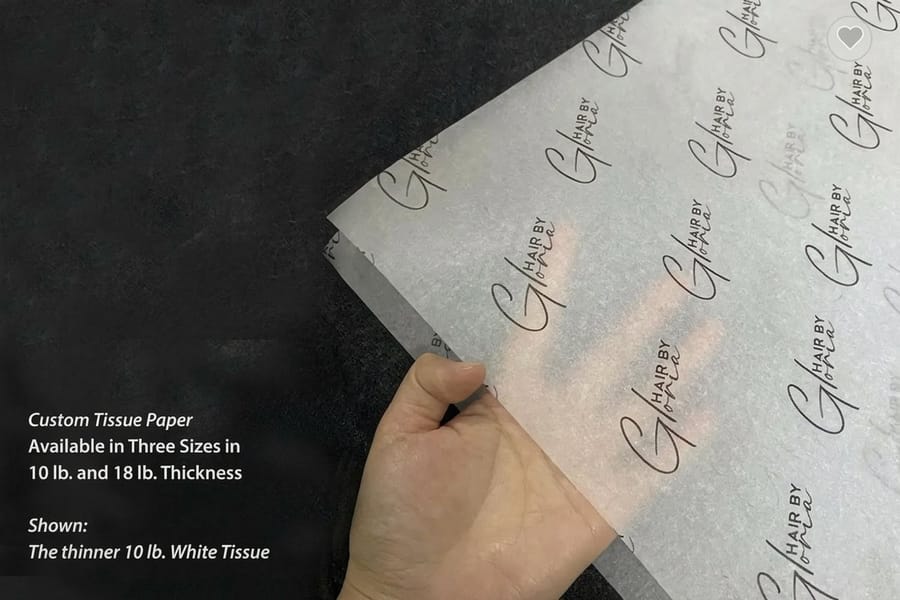
Sandwich wrap is not one material. Four different stocks get sold under the same name, and they fail in different ways, so the first conversation with any supplier should be about which one you are buying.
| Stock | How it holds back grease | Feel and behavior | Where it belongs |
|---|---|---|---|
| Dry wax | Wax is worked through the whole sheet, not coated on the face. | Soft, matte, slips a little, folds without cracking. | Cold subs, wraps, basket liners, anything held at room temperature. |
| Grease resistant | A clay or silicone surface treatment, rated on the Kit scale. | Dry, smooth, a touch stiffer than wax. | Fried food, burgers, anything that keeps releasing hot fat. |
| Natural kraft | Nothing but density. There is no barrier at all. | Rough, strong, prints beautifully in one color. | Dry items, pastries, sandwiches eaten within minutes. |
| Foil laminated | An aluminum layer blocks fat and steam together. | Crinkles, holds heat, does not breathe. | Hot holding and delivery, where temperature beats crispness. |
The number that separates a good sheet from a bad one is the Kit rating. It comes from a bench test that drops progressively harsher oil mixtures on the paper and records the strongest one that does not darken it within 15 seconds, scored 1 to 12. Kit 5 to 7 handles a cold sub with dressing. Kit 8 and above is what fried food needs. A supplier who answers "it is grease resistant" without a number is quoting a category, not a product.
One more thing to settle in writing. The old cheap route to a high Kit number was a fluorochemical treatment, and that route is closing: FDA said in February 2024 that PFAS grease-proofing agents were no longer being sold for food-contact use in the United States, and California, New York, Washington and Minnesota ban intentionally added PFAS in food packaging. Dry wax and clay coating do the same job without it. Ask for a PFAS-free declaration against the specific stock code.
Sizes Delis Actually Order, and Why
Wrap comes as flat squares in boxes of 1,000, and four sizes cover almost every kitchen. Buying the wrong one is expensive in a way that does not show up on the invoice: an undersized sheet needs two, and an oversized sheet gets trimmed by hand at the counter during a rush.
| Sheet size | What it wraps | Fold behavior | Watch for |
|---|---|---|---|
| 12 x 12 in | Half subs, burritos, basket and tray liners. | Two folds and a tuck. Fast. | Too short for anything on a full-length roll. |
| 15 x 15 in | Full sandwiches, large burritos, the default deli sheet. | Four folds, seam lands on top. | The size most branded stock is printed on, so patterns are designed around it. |
| 12 x 16 in | Hoagies, heroes, long rolls. | Rolls lengthwise, ends tucked. | The rectangle throws off a square repeat pattern. |
| 14 x 14 interfolded | High-volume counters running from a dispenser. | One sheet pulls the next up. | Interfolded costs more per sheet and cannot be printed edge to edge on both faces. |
Work out your monthly burn before you talk quantities. A counter that wraps 120 sandwiches a day over 25 trading days goes through about 3,000 sheets a month, and tears and re-wraps add another 5 to 10 percent. Hold that number against the minimum on a printed run and the arithmetic usually makes the decision for you. Our explainer on custom food paper sheets and wraps compares the sheet stocks behind that count.
Three Ways to Get Your Name on the Wrap
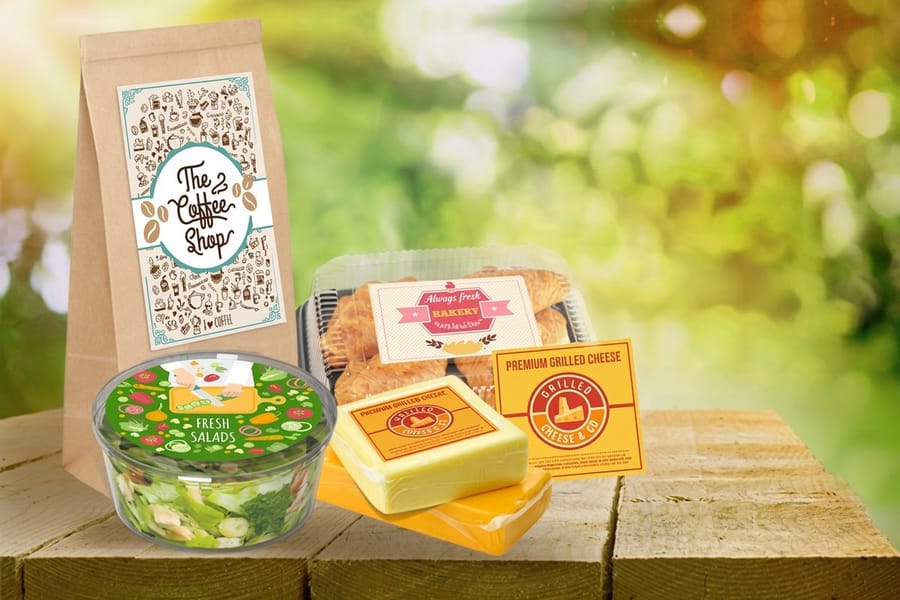
Printing the wrap itself is the option everybody asks for and the one that fits fewest kitchens. It is worth understanding all three routes before committing, because two of them start at a fraction of the cost and reach the customer in a better spot.
| Route | What carries the brand | Entry cost | Where it is seen |
|---|---|---|---|
| Printed wrap | The sheet, one or two spot colors, tiled repeat. | Around 10,000 sheets from a converter. | Everywhere, but only the top face survives the fold. |
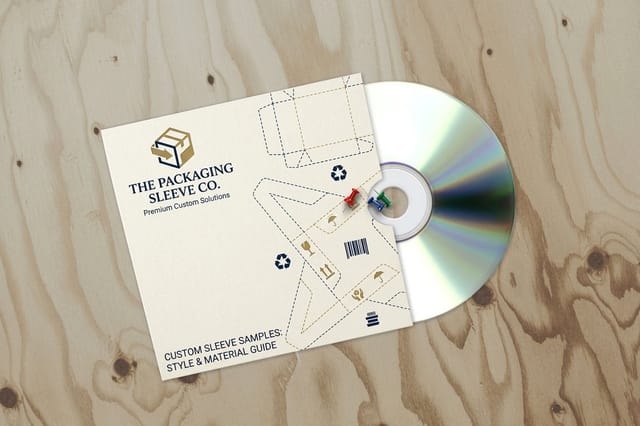
| Printed sleeve | A band around the wrapped sandwich. | Packaging Sleeves from $438.25. | The front face, at eye level in a grab-and-go case. |
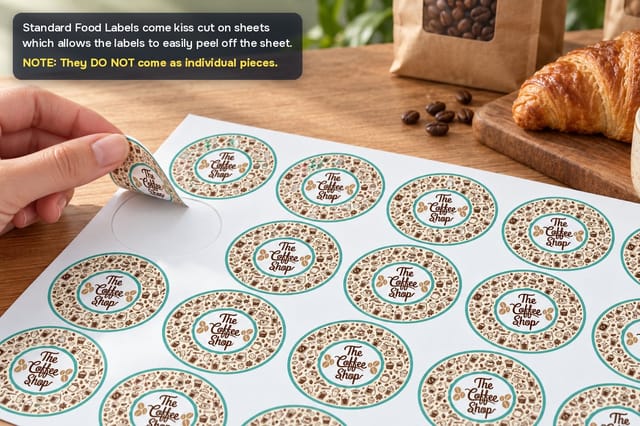
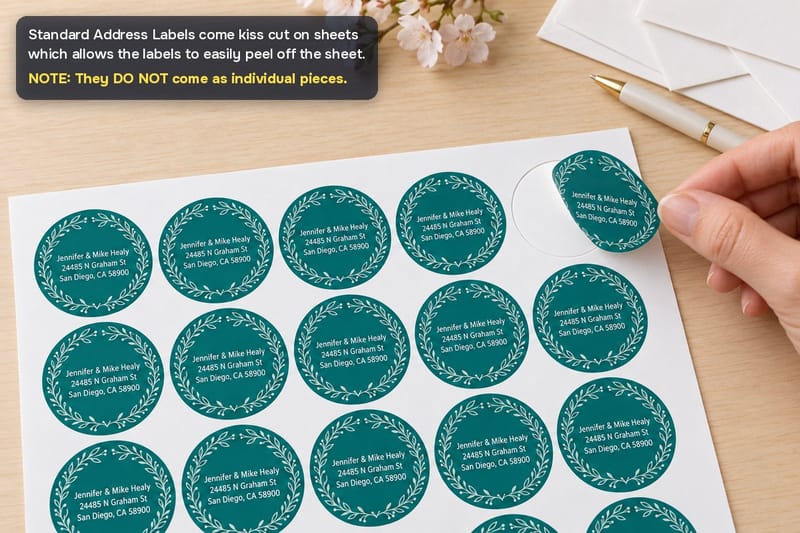
| Printed label | A circle or square sealing the fold. | Standard Food Labels from $23.88. | The seal point, the first thing a hand touches. |
Start with the label. It costs the least, it does a job the printed wrap cannot do at all, which is holding the fold shut, and it can carry the things that change: a flavor name, an allergen line, a use-by date, a QR code to the menu. Once volume is steady, roll food labels from $322.98 feed from a dispenser or an applicator so a busy counter is not peeling backing paper by hand.
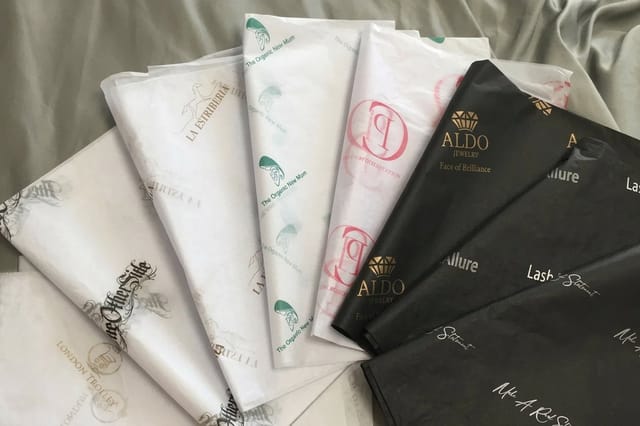
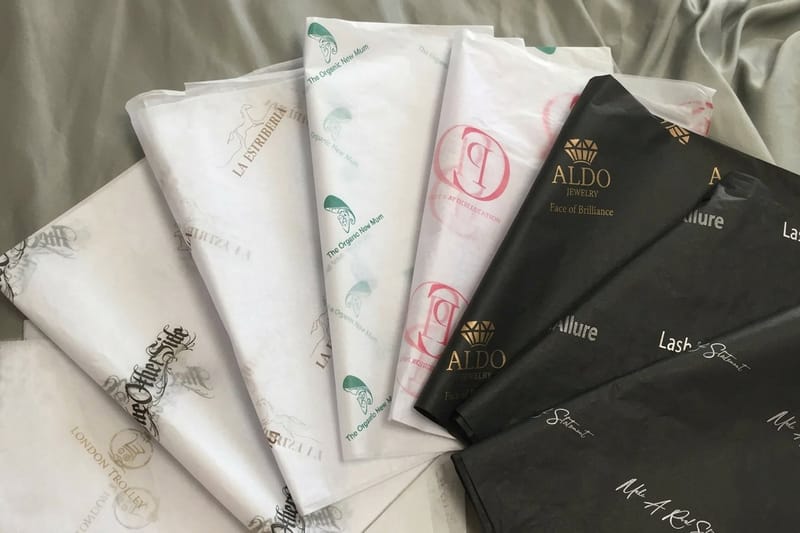
The sleeve is the move for anything sold from a chilled case, because the customer reads the band before they pick the sandwich up. If your packaging is a box rather than a wrap, custom tissue paper from $126.32 lines a bakery box and shows the logo the moment the lid opens. Tissue is retail packaging, not a grease barrier, so keep it outside the food or under a food-safe sheet. Menus follow the same logic: kraft menus from $166.04 match an uncoated wrap without a color-match argument.
Setting Up Artwork That Survives Four Folds
The design brief for wrap is unusual, because the finished object is a crumpled parcel, not a flat sheet. Three rules cover most of it.
- Tile the mark, do not center it. A 15 inch sheet folds four times, and roughly a third of the printed area ends up under the sandwich or against the tray. Repeat the logo on a diagonal grid at 3 to 4 inch spacing so at least two land on the face people see.
- Keep coverage light. Aim under about 30 percent ink coverage. Solid blocks on a waxed or uncoated sheet sit on the surface, rub onto hands, and mark the sheet below in the stack.
- One or two spot colors, supplied as vector. Name the Pantone, outline the fonts, and hand over the repeat tile rather than a single logo placed on a 15 inch canvas. The press repeats the tile around the cylinder.
Everything else is standard print hygiene, and it is the same file discipline that any folded package needs. Our guide to preparing packaging files covers dielines, bleed and color setup, and checking a packaging proof before approval is worth ten minutes when the run is 10,000 sheets you cannot reprint. For labels and sleeves you can start from a correctly sized layout in the blank template library, and the wider packaging and labels range shows what else fits the same brand system.
One habit that saves a reprint: mock it up physically. Print the tile on a plain sheet at true size on any office printer, cut it to 15 inches square, and wrap an actual sandwich. You will see within seconds whether the logo lands on the face or on the underside, which is the single thing a flat PDF proof cannot tell you.
Wally wraps a sandwich
Four folds, one visible face, one label holding it shut
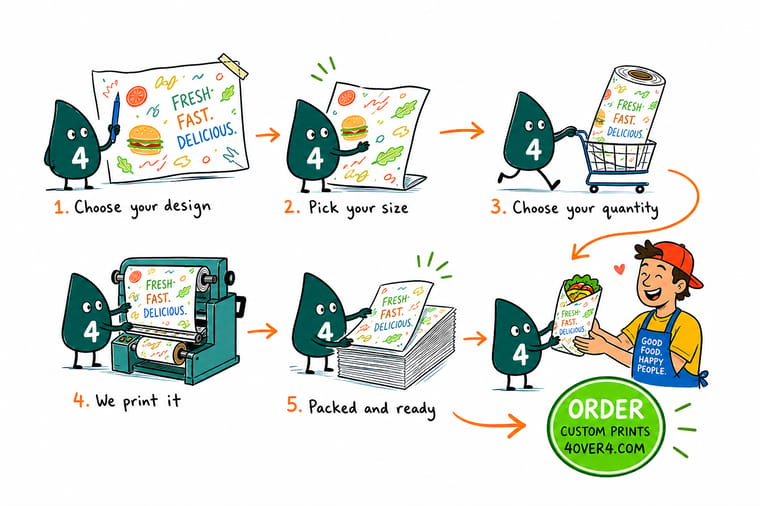
Wally lays the sandwich on a 15 inch sheet and folds it four times. Three quarters of his beautiful centered logo is now under the sandwich. So he does it the printer's way: the mark repeats across the sheet on a diagonal grid, and a round food label goes over the seam to hold the fold and carry the flavor name. Same brand, a fraction of the cost, and no 10,000 sheet minimum sitting in the stockroom.
Order standard food labels →
Specs and pricing
Sizes, quantities and starting prices
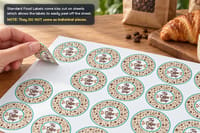
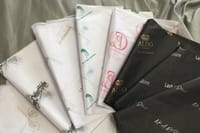
Standard food labels run from a half inch circle up, on five stocks including white vinyl and clear, from $23.88 for 25 in 3 business days. The packaging sleeve is a 5 x 5 inch band from $438.25 for 100 in 5 business days, and custom tissue comes in 10 x 15, 15 x 20 or 20 x 30 inch sheets, one or two ink colors, from $126.32 for 100. Configure the pieces that brand a wrapped sandwich, with live options and starting prices from the 4OVER4.COM configurator.

Print it
Brand the sandwich without the 10,000 sheet minimum
Each card starts far below a printed wrap run: 25 labels to seal the fold, 100 sleeves for the chilled case, or 100 sheets of tissue to line a bakery box.

Explore more
Where to go next
Two guides cover the file and the proof for a 10,000 sheet run, one sorts the nine layers of packaging, and the category cards lead to tissue, restaurant and food truck print.
By the numbers
Wrap paper orders and the delivery record they ship on
Common Questions
Your sandwich wrap questions, answered
What is the minimum order for custom printed sandwich wrap paper?
Most converters that print deli wrap run flexographic presses from paper rolls, and the plate and washup time on a food-contact press puts the practical floor around 10,000 sheets for one or two colors. Some will quote 5,000 at a higher per-sheet rate. If you are a single location that gets through 3,000 sheets a month, that is roughly a quarter of stock sitting in a stockroom, plus a design you cannot change until it runs out. The cheaper path is plain food-safe wrap from a restaurant supplier plus a printed label or sleeve that carries the brand.
Is the printing on wrap paper safe against food?
Only if it is specified that way. Wrap is printed on the outer face with food-grade inks so the ink never touches the sandwich directly, and the paper itself has to comply with the FDA rules for paper components in contact with food, 21 CFR 176.170. Ask any supplier for a food-contact letter of guarantee naming the ink system and the base stock. If a printer cannot produce that letter, the job is not food packaging, whatever the quote says.
What does the Kit rating mean and which one do I need?
Kit is a bench test that drops mixtures of castor oil, toluene and heptane on the sheet and records the harshest one that does not darken the paper within 15 seconds. The scale runs 1 to 12, higher meaning more grease resistance. A cold sub with oil and vinegar sits comfortably on Kit 5 to 7. Fried chicken, a smash burger, or anything that keeps releasing hot fat wants Kit 8 and above, or a dry wax sheet where the wax runs through the paper rather than sitting on it.
Is grease-resistant wrap paper PFAS free now?
It should be, but you still ask. Fluorochemical treatments were the old way to hit a high Kit number cheaply. FDA announced in February 2024 that grease-proofing substances containing PFAS were no longer being sold for food-contact use in the United States, and several states including California, New York, Washington and Minnesota ban intentionally added PFAS in food packaging outright. Dry waxing, clay coating and silicone treatment are the replacements. Request a written PFAS-free declaration for the specific stock code, not a general statement about the supplier.
Can I put a wrapped sandwich in an oven or a microwave?
Not in dry wax paper. Wax softens well below oven temperature and will transfer to the food and the rack. Unwaxed grease-resistant paper and plain kraft handle a short warm hold, and foil-laminated wrap is the one built for heat because the aluminum layer holds temperature and blocks steam. If your service model is hot holding, decide that before you choose the stock, because the wrap that looks best cold is usually the wrong one hot.
Can I print a photograph or full color artwork on sandwich wrap?
In practice, no. Food-contact flexo presses run spot colors, the absorbent uncoated stock spreads dots, and heavy ink coverage on a waxed surface rubs off on hands. One or two solid spot colors at low coverage is what the process does well, which is why nearly every branded deli wrap you have seen is a logo repeat in a single ink. If you want photography on the packaging, put it on something coated: a printed sleeve, a label, or a bakery box.
How many sheets should a small shop order at once?
Count the wraps, not the sandwiches. A counter making 120 sandwiches a day across 25 trading days uses about 3,000 sheets a month, and most kitchens waste 5 to 10 percent on tears and re-wraps. Two months of stock is a sensible order for plain wrap, which stores well in its box as long as it stays dry and away from anything with a strong smell, since paper picks up odor. For printed labels the calculation is different because the artwork changes more often, so order to the season rather than the year.
Get Started
Order 25 food labels from $23.88 for plain wrap
Pick a label size, a sleeve, or branded tissue for the box, upload one or two spot colors, and we print food service packaging that reaches the counter looking deliberate.
Legal Disclaimer
Gold Standard guarantees apply to all standard orders placed through 4over4.com. Price match requires verifiable proof of a competitor's published price for an equivalent product with matching specifications and turnaround time. Satisfaction guarantee covers manufacturing defects and print quality issues. Contact support with order number and documentation.
