
How to Pick a Custom Logo Stamp


A custom logo stamp brands packaging, paperwork and thank-you notes in one press. Fine detail closes up in rubber, so the mark gets simplified before the die is cut.
Pick the stamp type by how often you will use it, then size it to your logo. Self-inking stamps suit high-volume, everyday branding because the ink pad is built in and re-inks itself with each press. Pre-inked stamps give the sharpest, most detailed impression for finer logos. Prepare a clean high-contrast version of your logo, choose a size that keeps detail legible, and match the ink to your surface. Our article on why pre-inked stamps leave sharper marks at volume explains the difference in the die.
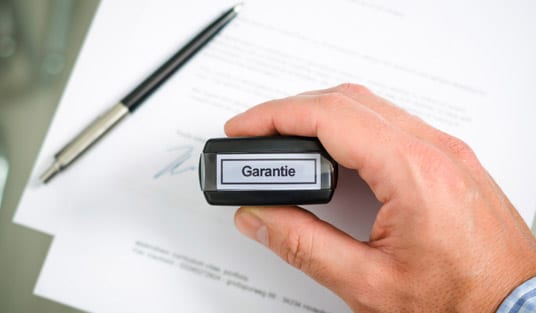
Start here
One press, every surface
Choose the stamp type by frequency, then size it to keep your logo legible. Self-inking rubber stamps are best for everyday, high-volume branding; pre-inked stamps give the finest detail; traditional stamps suit occasional use. Prepare a clean, single-color version of your logo, pick a size that preserves the detail, and match the ink to the surface you will stamp. The guide below walks each decision.
Benefits and Uses of Custom Logo Stamps
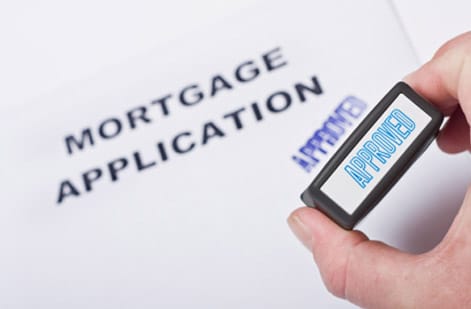
A custom logo stamp is one of the cheapest ways to put your brand on everything you touch. With a single press it adds your logo to packaging, invoices, envelopes, thank-you cards, loyalty cards, and receipts, giving small runs and handmade goods a finished, professional look without custom-printing every item. One stamp brands an unlimited number of pieces. Our self-inking rubber stamps come in five sizes, from a .375 by 1 inch mini to a 1.5 by 3 inch jumbo, in black, red, blue, green or purple ink, starting at $31.29.
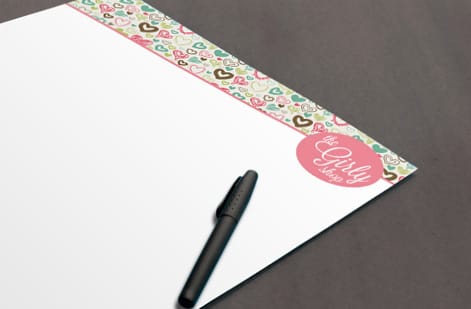
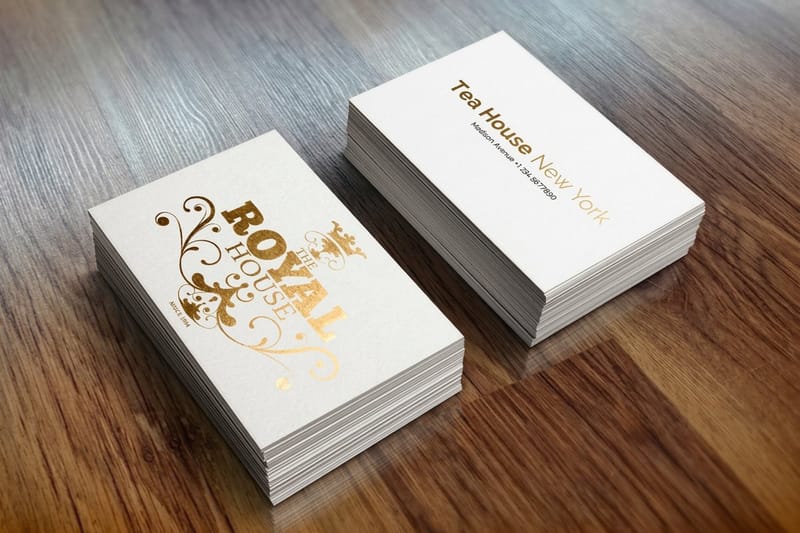
The uses are broad. Ecommerce sellers stamp kraft mailers and tissue for a branded unboxing, service businesses stamp paperwork and invoices, and makers stamp tags and packaging on the fly. It complements printed materials rather than replacing them, so it pairs naturally with letterheads and foil stamped business cards for a consistent identity. Browse the full range in custom printing.
Because a stamp is reusable indefinitely, the cost per impression is tiny, which makes it a favorite for growing brands watching their budget. For care that keeps it crisp over years of use, see our guide on how to clean rubber stamps.
Different Types of Custom Stamps
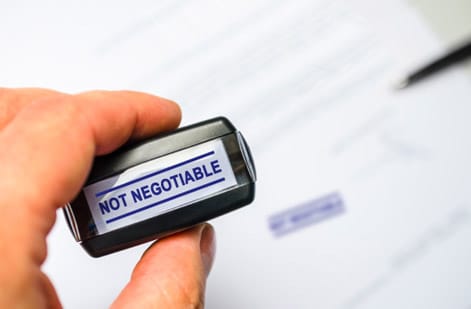
There are three main stamp types, and the right one depends on how you will use it and how big the impression has to be. Self-inking stamps have the ink pad built into the housing, so each press re-inks the die automatically, making them ideal for high-volume, everyday branding with thousands of clean impressions before re-inking. They are fast, mess-free, and the most popular choice for business use, and they are the usual pick in the 1 in to 2 in range that covers card corners and return addresses.
Pre-inked stamps hold ink within the die itself and deliver the sharpest, most detailed impression, which suits logos with fine lines or small text. Traditional rubber stamps, pressed onto a separate ink pad, cost the least and work well for occasional use or when you want to switch ink colors freely, and they are the simplest way to press a 2 to 3 in impression onto a kraft mailer or a carton without a heavy self-inking housing. Our rubber stamps cover these use cases, and you can compare related finishes in what is foil stamping.
Match the type to your reality: choose self-inking for daily branding, pre-inked for intricate logos, and traditional for light or flexible use. Browse the full lineup of custom logo stamps to see the sizes and mounts side by side before you commit. If your logo will also appear on postcards or mailers, our guide on stamp size on a postcard covers proportions that translate to stamp sizing too.
How to Make a Custom Stamp From Your Logo
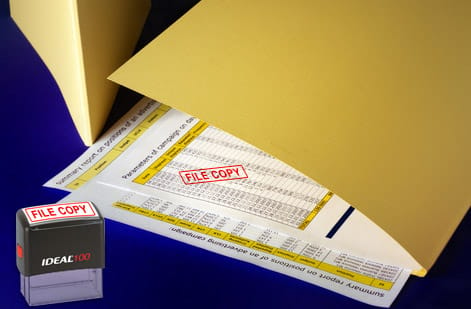
Making a great logo stamp starts with the artwork, not the stamp. First, choose your stamp type based on volume and detail as above. Second, prepare the logo: convert it to a clean, high-contrast, single-color version, since a stamp presses one ink color and cannot reproduce gradients or full color. Fine details and thin lines may need thickening so they hold ink and read clearly.
Third, pick a size that keeps the logo legible: 1 in for a business card corner, 1.5 to 2 in for an envelope return address, 2 to 3 in for packaging and boxes. Larger stamps preserve detail; if your mark is intricate, size up or simplify it rather than shrinking it until the lines merge. Then choose an ink color and type that suits your surfaces. Our online design tool helps you prepare a stamp-ready version of your artwork before you order.
Finally, proof the layout at actual size, confirm no letter has dropped below 1/16 in tall, and confirm the type, size, and ink match your use. When you order with us, your artwork runs through a free file check so the stamp die is cut cleanly from a version that will actually press well. For occasional-use care, revisit cleaning rubber stamps to protect the detail.
How to Choose the Right Logo Stamp
Size first: 1 in for a business card corner, 1.5 to 2 in for an envelope return address, 2 to 3 in for packaging and boxes, 1.5 in for a bag or tissue closure, and 2.5 in for an address or notary block. If you stamp as a notary, the Notary Business Cards story shows the card that sits beside that block. With the size settled, bring the rest of the decisions together in order. Start with frequency: if you will stamp dozens of pieces a day, a self-inking stamp saves time and mess; if you stamp occasionally or need very fine detail, pre-inked or traditional may serve better. Frequency is the single biggest driver of the right type.
Next, weigh detail against size. Audit your logo honestly: intricate marks with thin lines and small text need a larger stamp or a simplified version, while a bold, simple logo stamps beautifully at almost any size. A tagline sitting under the mark is usually what pushes a 1 in stamp up to 1.5 in, because every letter still has to stand at least 1/16 in tall to keep from filling in with ink. Then consider your surfaces, since glossy, dark, or non-porous materials call for specialty inks rather than standard ones. Pair the stamp with complementary print like letterheads for a unified brand.
Finally, think about longevity and value. A quality stamp lasts for years and tens of thousands of impressions, so the cost per use is negligible. Use the specs and pricing panel below to configure your custom logo stamps and see the number, and explore premium branded finishes in the foil stamping collection.
How to Choose the Right Stamp Size
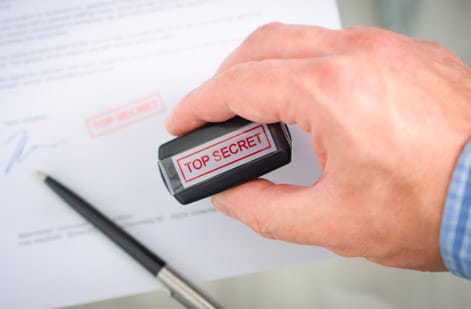
Start from the thing you are stamping, not from the logo. Measure the space the impression has to sit in, take off a comfortable margin, and that is your stamp size. These five cover almost every job:
| Use case | Stamp size | Why this size |
|---|---|---|
| Business card corner | 1 in | Sits inside the trim without crowding the printed type |
| Envelope return address | 1.5 to 2 in | Holds three or four lines of address text and still reads at arm's length |
| Packaging and boxes | 2 to 3 in | Reads across a kraft mailer or carton face from a few feet away |
| Bag closure and tissue paper | 1.5 in | Fits the fold or the sticker zone without wrapping over the crease |
| Address and notary block | 2.5 in | Room for several lines plus a signature or date line |
One rule governs all of them: no letter should end up smaller than 1/16 in tall on the finished stamp, and reversed text, meaning white type knocked out of a solid block, wants 1/8 in because ink spreads into the gaps. Set your logo at the intended stamp size, print it on plain paper, and look at it before you order. If the thin strokes close up or the tagline goes muddy, move up a size or drop the tagline rather than shrinking further. Caught between two sizes, take the larger one: a bigger die is easier to align by hand and holds detail a smaller die loses.
What a Custom Logo Stamp Costs and How It Is Priced
Custom stamp price depends on the type, the size, and the mount. Traditional rubber stamps are the most economical, self-inking stamps cost a little more for the built-in re-inking convenience, and larger sizes cost more than compact ones because the die and housing are bigger, which is why a 2 to 3 in packaging stamp sits above a 1 in card-corner stamp. Unlike printed products, a stamp is a one-time purchase that then brands unlimited pieces, so the effective cost per impression is tiny. At 4OVER4, a self-inking rubber stamp starts at $31.29 for one, you can order up to 20 at a time, and it ships in 5 business days.
You set the options in the configurator and the total updates as you adjust type and size, so you can weigh a compact everyday rubber stamp against a larger detailed one before you commit. For most businesses, one well-chosen stamp pays for itself quickly against the cost of custom-printing every package or document.
Use the specs and pricing panel below to configure your stamp and see the number. When you order, your logo runs through a free file check so the die is cut from a clean, stamp-ready version that presses crisp from the first impression.
Wally picks the stamp that fits your brand
Frequency picks the type, your logo picks the size
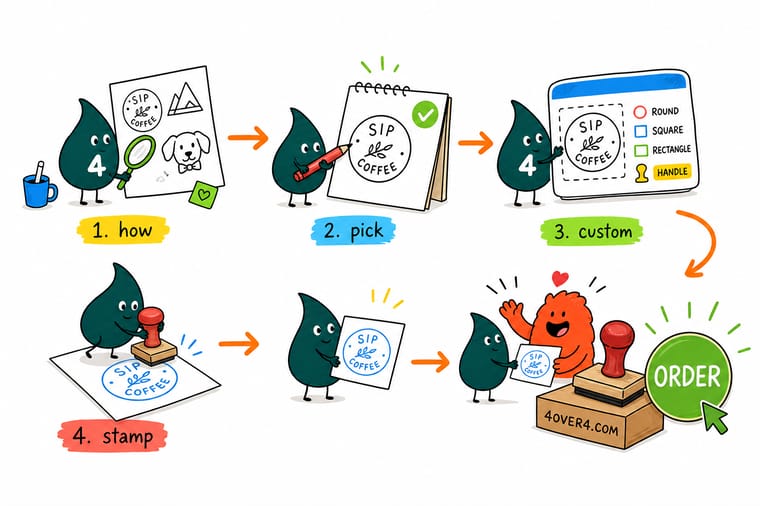
Wally starts with how often you will stamp: daily volume gets a self-inking stamp, fine detail gets pre-inked. He preps a clean single-color version of your logo, sizes it so the lines stay legible, and matches the ink to your surface. One well-chosen stamp then brands unlimited packages and paperwork, and 4OVER4 cuts the die clean.
Order a logo stamp →Quick reference
Choosing a logo stamp at a glance
Match the type and setup to how you will use the stamp. Frequency picks the type, your logo detail picks the size: 1 in for a card corner, 1.5 to 2 in for a return address, 2 to 3 in for packaging.
| Decision | Choose | Why it matters |
|---|---|---|
| Everyday, high volume | Self-inking stamp | Built-in ink pad re-inks each press for fast, mess-free daily branding. |
| Fine detail or small text | Pre-inked stamp | Ink held in the die gives the sharpest, most detailed impression. |
| Occasional or flexible use | Traditional rubber stamp | Lowest cost, and you can switch ink colors on a separate pad. |
| Intricate logo | Larger size | Size up or simplify so thin lines and small text stay legible. |
| Glossy or dark surfaces | Specialty ink | Standard ink suits paper; non-porous materials need specialty ink. |
Step by step
Pick your custom logo stamp in 6 steps
- Assess how often you will use it Daily volume points to self-inking; occasional use to traditional or pre-inked.
- Audit your logo detail Note thin lines and small text that will need a larger stamp or simplifying.
- Prepare single-color artwork Convert the logo to clean, high-contrast, one-color art that holds ink.
- Choose a size for legibility Pick a size that preserves the detail rather than shrinking lines together.
- Match ink to your surfaces Standard ink for paper, specialty ink for glossy, dark, or non-porous materials.
- Proof and order Confirm type, size, and ink, run the free file check, and place the order.
Infographic
Self-inking vs pre-inked stamps
The two most common logo stamp types, side by side. Frequency and detail decide which one fits your brand: self-inking re-inks from a pad in the housing for thousands of presses, and pre-inked holds the ink in the die for the sharpest fine lines and small text.
Whichever type you pick, prepare a clean single-color version of your logo first. A stamp presses one ink color, so high contrast and thickened fine lines press best, and every letter should stay at least 1/16 in tall, or 1/8 in for reversed type.
Specs and pricing
Rubber stamp specs and live pricing
Once you know the type and size, the rest is quick. Rubber stamps run $31.29 and ship in 5 business days.

| Quantity | Price Per Unit | Total |
|---|---|---|
| 1 | $31.29 | $31.29 |
| 2 | $31.29 | $62.57 |
| 3 | $31.29 | $93.87 |
| 4 | $31.29 | $125.16 |
| 5 | $31.29 | $156.44 |
| 6 | $27.99 | $167.95 |
| 10 | $28.01 | $280.07 |
| 12 | $27.99 | $335.91 |
Order it
Order the logo stamp that fits your brand
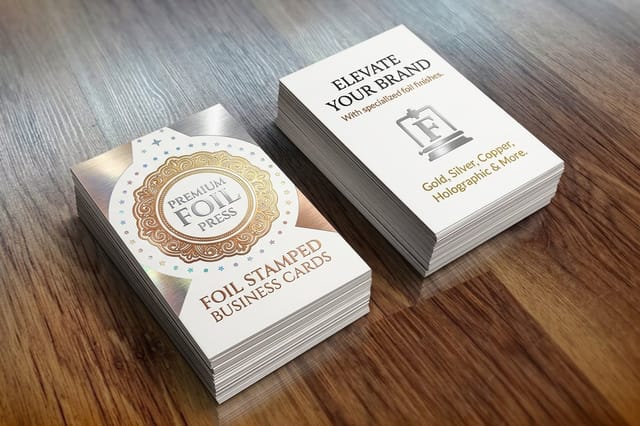
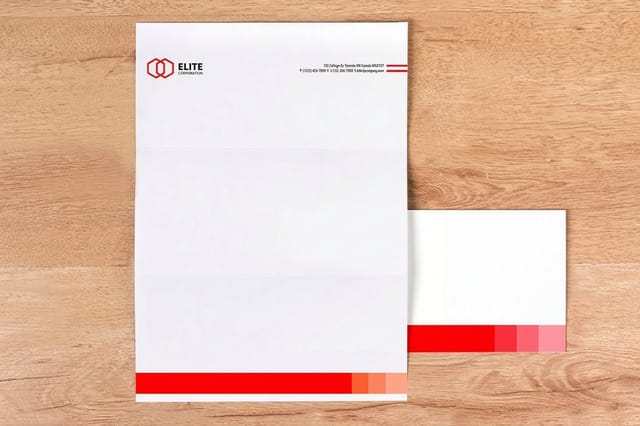
A self-inking rubber stamp from $31.29 for everyday branding, foil stamped business cards when the logo should catch the light, and letterheads that carry the same mark on your paperwork.

Explore more
Where to go next
By the numbers
Where stamps sit in a catalog of a thousand products
Common Questions
Common questions about custom logo stamps
What type of logo stamp should I get?
Choose by how often you will use it. A self-inking stamp is best for everyday, high-volume branding because the ink pad is built in and re-inks the die with each press, giving thousands of clean, fast, mess-free impressions. A pre-inked stamp delivers the sharpest, most detailed impression and suits logos with fine lines or small text. A traditional rubber stamp pressed onto a separate pad costs the least and works well for occasional use or when you want to switch ink colors freely.
How do I prepare my logo for a stamp?
Convert your logo to a clean, high-contrast, single-color version, because a stamp presses one ink color and cannot reproduce gradients or full color. Thicken any thin lines and small details so they hold ink and read clearly, and remove elements that will not survive at stamp size. Then pick a size that preserves the detail rather than shrinking the mark until lines merge. When you order, a free file check confirms the artwork is stamp-ready before the die is cut.
What size should a logo stamp be?
Let the detail of your logo set the size. A bold, simple mark stamps beautifully at almost any size, while an intricate logo with thin lines and small text needs a larger stamp to stay legible. If you want a compact stamp but your logo is detailed, simplify the artwork rather than shrinking it until the lines run together. Larger stamps preserve detail and are easier to align, so when in doubt about legibility, size up.
How small can my logo go before it fills in?
Size the stamp to the surface first, then check the artwork against it. Use 1 in for a business card corner, 1.5 to 2 in for an envelope return address, 2 to 3 in for packaging and boxes, 1.5 in for a bag or tissue closure, and 2.5 in for an address or notary block. Then confirm no letter falls below 1/16 in tall at that size, or 1/8 in for reversed white type knocked out of a solid block, since thin strokes fill in with ink. Print your logo at actual size on plain paper before you order: if the tagline goes muddy, move up a size or simplify the mark instead of shrinking it. Caught between two sizes, take the larger one, because a bigger die aligns more easily by hand and holds detail a smaller die loses.
What is the difference between self-inking and pre-inked stamps?
Self-inking stamps have the ink pad built into the housing, so each press automatically re-inks the die, which makes them fast, mess-free, and ideal for high-volume everyday use with thousands of impressions before re-inking. Pre-inked stamps hold the ink within the die itself and produce a sharper, more detailed impression, which suits logos with fine lines or small text. In short, self-inking prioritizes speed and volume, while pre-inked prioritizes crispness and detail.
What can I use a custom logo stamp for?
A logo stamp brands almost anything you touch: packaging and kraft mailers, tissue paper, invoices, envelopes, thank-you cards, loyalty cards, tags, and receipts. Ecommerce sellers use it for a branded unboxing, service businesses stamp paperwork, and makers stamp packaging on the fly. Because one stamp brands an unlimited number of pieces, it gives small runs and handmade goods a finished, professional look without custom-printing every item, and it pairs naturally with letterheads and business cards.
How much does a custom logo stamp cost?
Price depends on the type, size, and mount. Traditional rubber stamps are the most economical, self-inking stamps cost a little more for the built-in re-inking convenience, and larger sizes cost more because the die and housing are bigger, which is why a 2 to 3 in packaging stamp sits above a 1 in card-corner stamp. Unlike printed products, a stamp is a one-time purchase that then brands unlimited pieces, so the effective cost per impression is negligible. You set the options in the configurator and the total updates as you adjust type and size.
Get Started
Order a custom rubber stamp at $31.29
Order a custom logo stamp at 4OVER4.COM in the type and size your brand needs. Configure it, run your logo through a free file check, and stamp unlimited pieces.
Legal Disclaimer
Gold Standard guarantees apply to all standard orders placed through 4over4.com. Price match requires verifiable proof of a competitor's published price for an equivalent product with matching specifications and turnaround time. Satisfaction guarantee covers manufacturing defects and print quality issues. Contact support with order number and documentation. On-time delivery rate based on tracked orders 1999 to 2026. Individual results may vary based on shipping carrier performance.
