
Plan Campaign Mailers That Reach the Right Voters On Budget


Nadia is our customer education voice, built from the knowledge of our production team, with over 20 years in printing.
A campaign mailer plan for a political race is four decisions in a fixed order: the voter households you want to reach, EDDM or an addressed list, a mail format legal on that path, and the budget. Here is the sequence, the size rule that decides which mail path you can use, and how to price and schedule the whole program.
Plan campaign mailers in this order: size the universe in households, choose EDDM saturation or an addressed list, pick a format that is legal on that path, then set the budget and count backwards to an order date. The size rule is the hinge. EDDM only accepts flat-size mail, so a 4 by 6 postcard has to travel to an addressed list while an 8.5 by 11 flyer can ride a carrier route. Print and postage are separate budgets, and print turnaround of 4 business days standard or 2 on rush sits inside your in-home window.
Quick answer
Universe, path, format, budget, in that order
Start with how many households you want to reach, not with how many cards you want to print. That number decides whether you mail a selected list or saturate carrier routes, and the path decides what the piece is allowed to be, since EDDM takes flat-size mail only. Format sets the message, because a 4 by 6 card and a folded brochure hold very different amounts of argument. Budget comes last and comes in two parts, print and postage, both of which sit inside a calendar you build backwards from the in-home date.
Step One: Size the Universe Before You Pick a Piece
The first number in a mail plan is a household count, not a piece count. Write down how many addresses you would genuinely spend money to reach, and everything after it becomes arithmetic instead of argument.
That number comes from one of two places. An addressed list lets you select by district, party registration, and vote history, which is how a persuasion program reaches the few thousand households that decide a down-ballot race. A saturation drop skips the list entirely and mails whole carrier routes, which is cheaper per name and far less precise. Our guide to building or renting a mailing list walks through where those files come from and what a clean one looks like.
Once the household count exists, divide the print budget by it. If the answer buys three touches, you have a three-piece program. If it buys less than one, the universe is bigger than the money, and the fix is to cut the universe rather than cut the paper weight. A tight list mailed three times beats a loose list mailed once in nearly every race we print for.
One thing to check early: how many of those addresses are current. A file that has not been run against change-of-address data recently will mail a meaningful share of pieces to people who left, and that money is gone before anyone reads a word.
Step Two: EDDM Saturation or an Addressed List
These are two different products with two different sets of rules, and the choice constrains the artwork, so make it before the designer starts.
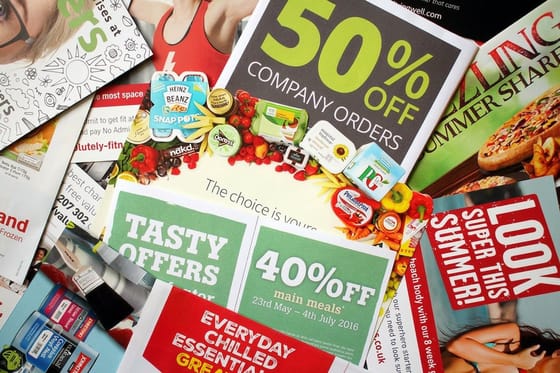
EDDM Retail mails to every address on the carrier routes you select. No list, no permit at the retail counter, and a cap of 5,000 pieces per ZIP Code per day. The catch is the size rule: EDDM accepts flat-size mail only, which means the finished piece has to be taller than 6-1/8 inches, or longer than 11-1/2 inches, or thicker than 1/4 inch. A 4 by 6 postcard fails that test. An 8.5 by 11 mailing flyer passes it comfortably. The second catch is political rather than postal: you are paying to reach the opposition and everyone who never votes, which is fine for name recognition in a small municipal race and wasteful in a primary. If the saturation piece is a flat sheet, our guide to designing a political flyer covers the layout.
An addressed list removes both catches and adds its own. Any size mails, including the 4 by 6 card that EDDM will not take, and you only pay for the households you chose. In exchange you buy or build the file, you keep it clean, and you go through a permit if you want automation prices. That is where our direct mail service takes over the paperwork, and our EDDM service handles the bundling and facing slips on the saturation side.
If you are torn, the honest tiebreaker is the size of the geography relative to the target. When most doors in an area are people you want, saturation is efficient. When your targets are scattered across a city, a list is the only way to reach them without paying for everyone else. The full EDDM explainer covers the route selection mechanics in detail.
Step Three: Choose the Format, Then Write to Its Panels

A mailer gets judged in the few seconds between the mailbox and the recycling bin. That window is the real design brief, and it is why the format question comes before the copy question rather than after it.
| Format | Starts at | Mail path it suits | The job it does best |
|---|---|---|---|
| Direct mail postcards | $89.68 | Addressed list | The default. One message, one ask, repeated across a wave. |
| Oversized postcards | $51.62 | Addressed list, larger sizes reach flat | The piece that has to carry an endorsement list or a record. |
| Mailing flyers | $89.68 | EDDM saturation | Carrier-route drops where the 8.5 by 11 sheet clears the size gate. |
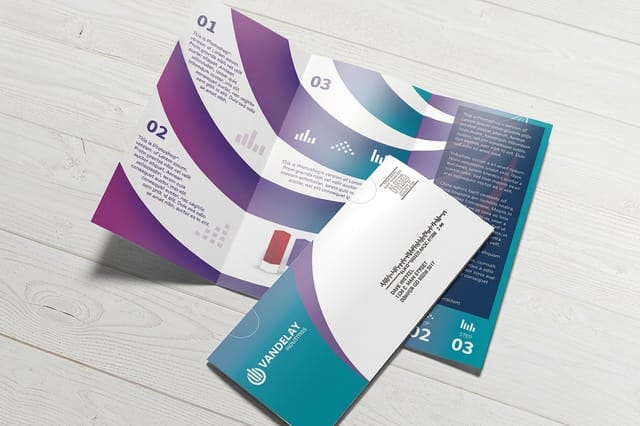
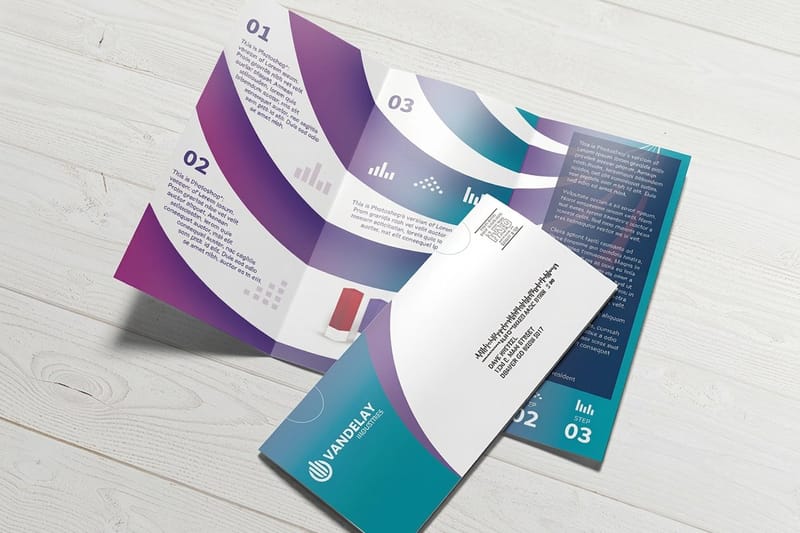
| Direct mail brochures | $238.73 | Addressed list | The single deep piece, usually late, for undecided households. |
Those starting prices are each product's own entry configuration, and the entry quantities differ, so do not read the column as a ranking. Put the same quantity into the configurator on two products before you commit a line in the budget. The cost per piece guide explains how print, list and postage stack into the number you plan against.
Now the copy. One ask per piece, stated in the top third of the front, in type a person reads while walking. Everything else on the card supports that one ask or comes off. Keep the address side disciplined: the bottom right of the back panel belongs to the address block and the barcode clear zone, and artwork that wanders into it can knock the mailing out of automation prices after the job is printed. Persuasive campaign messaging covers the message itself, and designing political mailers covers the layout, including where the paid-for disclaimer sits. Start from a correctly sized file in the blank template library so the clear zones are already drawn.
Step Four: Two Budgets and a Backwards Calendar
Printing and postage are separate budgets with separate rules, and treating them as one number is how campaigns run out of money halfway through a wave. Print is quoted per job and drops sharply with quantity. Postage is quoted per piece, depends on shape, weight and how automatable your address file is, and it does not get cheaper because you designed a nicer card.
The lever that moves postage is preparation, not format. A clean, standardized address list and a layout that respects the clear zones earn automation prices. A messy file or a design that overlaps the address block pays the higher rate on every piece. Rates and tiers change, so check the current numbers in the postage cost by size and rate tier guide rather than reusing last cycle's spreadsheet.
Then build the calendar backwards from the day the piece stops being useful. In a state that mails ballots, that day is when ballots reach kitchen tables, not Election Day. From the in-home window, subtract USPS transit, then subtract print turnaround of 4 business days standard or 2 on rush. What is left is the day your artwork has to be finished and approved, and it is usually earlier than anyone on the campaign guessed.
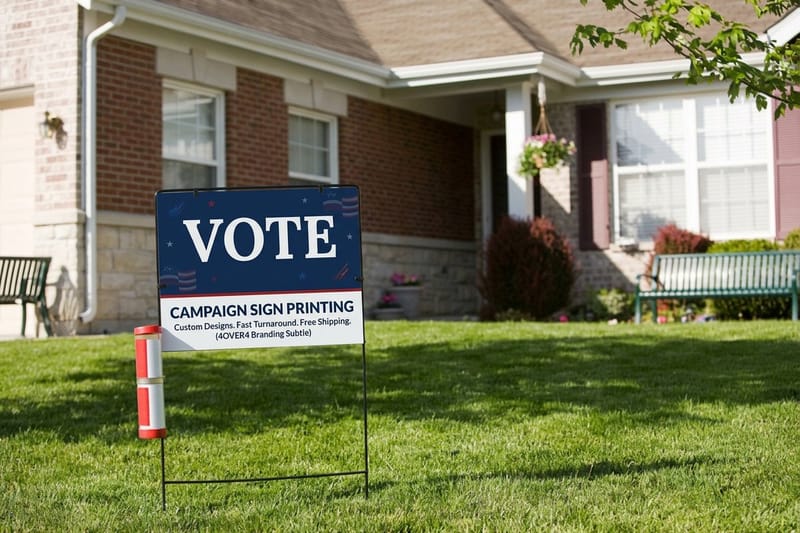
Two habits save wave three from wave one. Order the whole program's printing at once if the messages are locked, because the quantity break is real and the second order is the one that runs late. And keep a small contingency for the piece nobody planned, since a late attack or an endorsement is exactly the thing a rush turnaround exists for. If mail is running alongside field, yard signs and the rest of the political printing range come off the same schedule.
Wally plans the mail
Count the doors, then measure the card
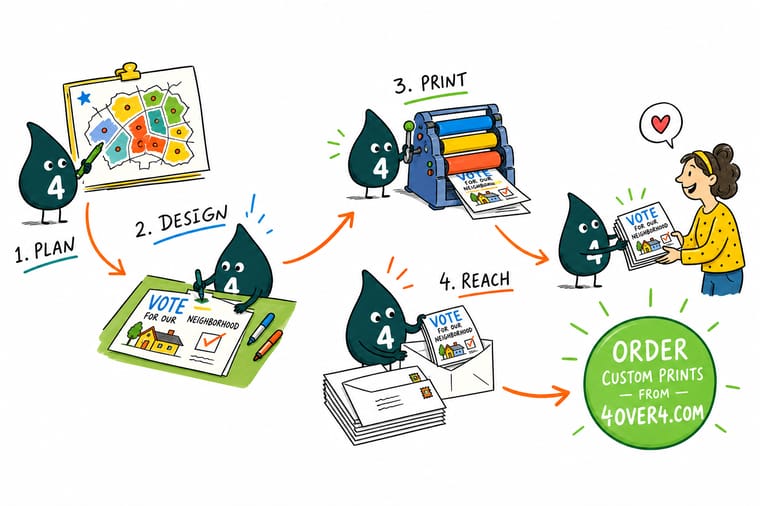
Wally starts with a household count, because that is the number the whole budget divides into. Then he picks the path. Saturation means every door on the route and no list, but the piece has to be flat size, so he holds a ruler against it first. A 4 by 6 card fails that test and goes to an addressed list instead. Only then does he choose the format and write one ask on it. Last comes the calendar, built backwards from the day the piece stops being useful, with print turnaround subtracted before anything else.
Price direct mail postcards →
Specs and pricing
Campaign mail formats, sizes, and starting prices
Configure the three formats a campaign mail program usually runs on, with live size, stock and quantity choices straight from the 4OVER4.COM configurator. Direct mail postcards and mailing flyers run 4 by 6 up to 6 by 11 inches on 14pt or 16pt cover from 500 pieces, and oversized postcards run 5.5 by 8.5 up to 6 by 11 inches from $51.62.

Print it
Order the pieces your plan calls for
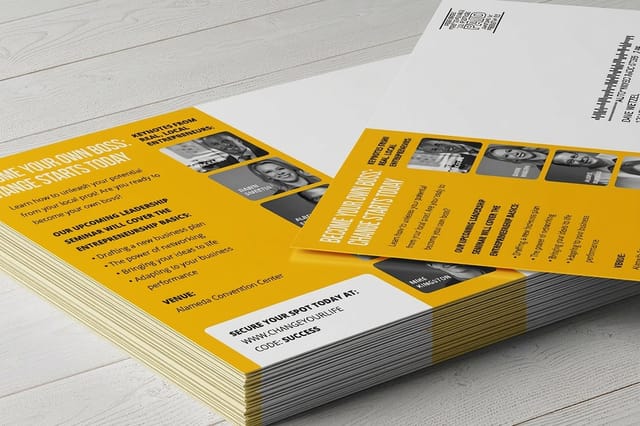
Direct mail postcards from $89.68 for the addressed wave, oversized postcards from $51.62 for the endorsement card, and direct mail brochures from $238.73, folded in half, in thirds or as a gate, for the one deep piece late in the race.


Explore more
Where to go next
Five guides cover political mail rules, building or renting a list, voter messaging, cost per piece and EDDM Retail against BMEU. The last card opens political printing.
By the numbers
Campaign mail printed on schedule at 4OVER4
Common Questions
Your campaign mailer planning questions, answered
What order should I plan a campaign mailer in?
Universe, path, format, message, budget, calendar, in that order. The universe is the list of households you are trying to reach. The path is EDDM saturation or an addressed list. The format is the physical piece, and it has to be legal on the path you chose. Only then does the message get written to fit the panel you actually have, and only then can you price the job and count backwards to an order date. Campaigns that start at the format almost always discover a constraint late, when the fix costs a reprint.
How do I size the universe before I pick a piece?
Pull the geography you are running in, filter it down to the households you would actually spend money on, and write down the number. In a down-ballot race that is often a few thousand doors rather than the whole city. Then divide your print budget by that number. If the answer buys three touches, plan three pieces. If it buys less than one, the universe is too big for the budget and the honest move is to cut the universe rather than the quality of the piece. Our guide to building or renting a mailing list covers where those household counts come from.
Do I need a USPS permit to mail campaign postcards?
It depends on the path. EDDM Retail is designed to be taken to a Post Office counter without a permit, which is why small campaigns use it, and it caps at 5,000 pieces per ZIP Code per day. Addressed bulk mail at automation prices runs through a permit and a Business Mail Entry Unit, which is where a mailing service earns its fee by holding the permit and doing the paperwork for you. If nobody on the campaign has done this before, use a mailing service and spend your hours on the message.
How far ahead does the order have to be placed?
Take the last day the piece is useful, subtract the delivery window, then subtract print turnaround, which is 4 business days standard and 2 on rush at 4OVER4.COM. If your race is in a state that mails ballots, the useful window closes when ballots hit kitchen tables, not on Election Day, so the whole schedule moves several weeks earlier than most first-time campaigns expect. Put the order date on the calendar as a hard deadline and treat the artwork approval as the milestone before it.
Can the same design work as a mailer and as a handout?
Partly. The front usually travels fine between a mailer and a leave-behind, but the back does not: a mailed piece has to keep the address block and the barcode clear zone empty, and that is roughly the bottom right half of the back panel. If you want one design to do both jobs, lay out the mail version first with the clear zone respected, then fill that space on the handout version. Doing it the other way round means redrawing the layout under deadline.
What goes wrong most often on a first campaign mail program?
Address data. Artwork problems get caught in proofing, but a list full of people who moved gets mailed, gets returned, and quietly burns a chunk of the budget on households that were never going to see the piece. Standardize and update the file before it goes anywhere near postage, and ask whoever supplies the list when it was last run against change-of-address data. The second most common problem is a design that overlaps the address block, which knocks the mailing out of automation prices and raises the postage bill after the job is already printed.
Get Started
Count the households first, then price 500 cards from $89.68
Pick the format your mail path allows, set the quantity against your household count, and we print the wave in 4 business days standard or 2 on rush.
Legal Disclaimer
Gold Standard guarantees apply to all standard orders placed through 4over4.com. Price match requires verifiable proof of a competitor's published price for an equivalent product with matching specifications and turnaround time. Satisfaction guarantee covers manufacturing defects and print quality issues. Contact support with order number and documentation.
