
How to Print Cheap Business Cards That Still Look Expensive


Cheap business cards are a spec choice, not a quality cut. Pick the value stock, order the right quantity, design it free, and skip the premium finishes to pay the lowest price for a card that still looks the part.
To print cheap business cards, keep the specs at their value settings. Choose the standard 3.5 x 2 in card on 14pt gloss or matte stock, print full color on both sides, order in bulk so the per-card price drops, design it free with the online tool or a template, and leave premium finishes like foil off this run. That is the lowest price for a card that still looks professional.
Start here
Quantity is the biggest lever
A cheap business card is the standard card with smart spec choices. Print a 3.5 x 2 in card on 14pt gloss or matte stock, full color on both sides, in a bulk quantity so the unit price falls, design it free with the online tool, and skip premium finishes for now. Do that and your card from 4OVER4.COM looks professional at the lowest price. The diagram below shows exactly where the savings come from.
Free before cheap
Get free business cards from 4OVER4
The cheapest cards are the ones you never pay to print. 4OVER4 runs a free business cards offer, and the terms are all on one page rather than buried in fine print: the free business cards page lists what the free run includes, the quantity it covers, the stock and finish it prints on, how to claim it, and what is still charged at checkout, since shipping is always quoted by method and speed before you pay. Two more things cost nothing alongside it: the design, if you build it in the free online tool or start from a template, and the file check that catches low-resolution art or text crowding the trim before it becomes a paid reprint. Claim the free batch, hand those cards out for a few weeks, and if the design holds up, repeat it as a paid bulk run using the exact specs in this guide: standard 3.5 x 2 in, 14pt gloss or matte, full color on both sides, no premium finishes, and a quantity large enough to push the per-card price down.
What cheap business card printing really means
Cheap does not have to mean flimsy or amateur. The price of a business card is set almost entirely by three choices: how many you print, what stock you print them on, and which finish you add. Move those levers with intent and you pay the lowest sensible price for a card that still looks like it came from a real business.
The value baseline is simple. A standard business card at 3.5 x 2 in, printed full color on both sides on 14pt gloss or matte stock, is already professional. That is the same size and stock most cards in your wallet use. What drives the number up from there is quantity that is too small, stock that is heavier than you need, and specialty finishes you can happily add later.
This guide walks the cheapest path to a card you are proud to hand out: pick the value specs, order the right quantity, design it free, and skip the extras for now. If you would rather not build a file at all, our online design tool and ready-made products remove the design cost entirely.
Quantity is where the real savings live
If you only take one thing from this page, take this: quantity is the biggest lever on price. Printing sets up the same way whether you run 100 cards or 1,000, so spreading that setup across more cards drops the price of each one. A run of 1,000 costs dramatically less per card than a run of 100, even though the larger order costs more in total.
The trap is ordering too few. People print 100 cards, hand them out over a couple of months, then reorder another small batch at the same high unit price. Two small runs almost always cost more than one larger run that covers the whole year. Look at how many cards you actually give away in a real month, multiply it out, and buy the volume up front.
Use the live pricing panel further down to see the effect for yourself. Raise the quantity in the configurator and watch the per-card price fall, then stop at the point where it flattens out. That flat point is your sweet spot for the cheapest useful run of classic business cards.
Choose the value stock, then stop
Stock is the next lever. The standard 14pt card is the value baseline: thick enough to feel solid, thin enough to stay affordable, and the weight most people picture when they think of a business card. Full color on both sides is included, so there is no reason to leave the back blank.
Heavier stocks exist for good reasons. A 16pt card feels a touch more substantial, and specialty papers like kraft or ultra-thick cards make a statement. But each step up adds cost. For the cheapest run that still looks professional, the standard 14pt stock is the right stopping point. Save the heavier weights for a premium batch once your design is settled.
Not sure your card design is holding up? Our online tool and free templates make it easy to keep the layout clean and the text sharp, and our team also prints the full range of business cards if you later decide to upgrade the stock or finish.
Skip the premium finishes on a budget run
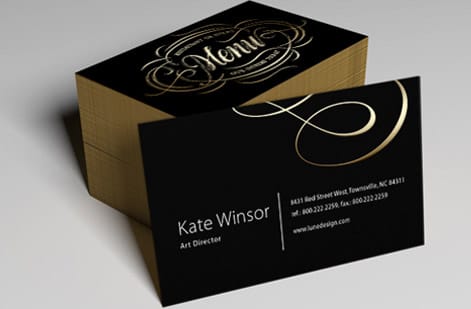
Finishes are where a card gets expensive fast. Foil, spot UV, soft touch lamination, and painted edges are genuinely beautiful, and there is a time to use them. That time is not your first, cost-focused run. Each finish adds a production step and a line to the price, and none of them is required for a card to look clean and credible.
A standard gloss or matte coating already gives you a polished, protected card. Gloss makes colors pop, matte reads as understated and modern, and both cost far less than any specialty treatment. Pick whichever suits your brand and move on.
The smart play is to prove the design cheaply first, then invest in a premium finish later once you know the layout works and you want the extra impact. When that day comes, we print premium business cards with the full range of finishes, so upgrading is a single reorder away.
Remove the design bill entirely
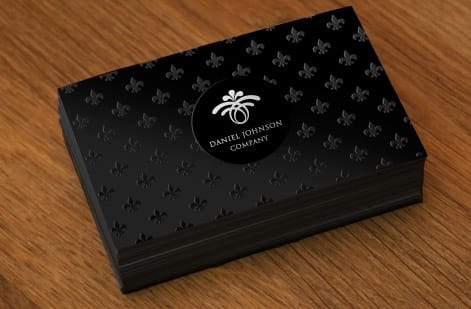
Design is a hidden cost that many people forget. Hiring a designer for a simple card can cost more than the printing itself. For a budget run, you do not need to spend a cent on design, because the tools to do it well are free.
Start from a free template or open our online design tool, drop in your logo, name, and contact details, and adjust the layout until it looks right. Keep the text inside a safe margin, use a sharp logo file, and let the color do the work. For a quick primer on getting your mark print-ready, our guide on preparing a business card logo covers the essentials.
Before you order, run the artwork through the free file check. It confirms the color, bleed, and resolution so a small mistake does not turn into a paid reprint. Free design plus a free file check is how a genuinely cheap card still comes out looking professional.
How to keep a cheap card from looking cheap
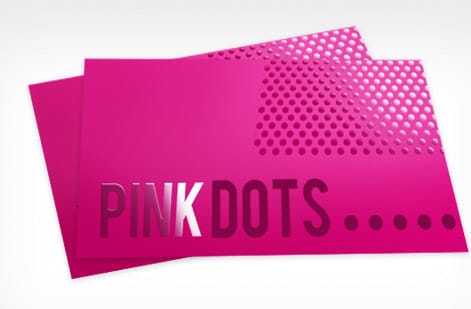
What actually makes a card look cheap is rarely the stock or the coating. It is the design. A crowded layout, a blurry logo, or text running off the edge will undermine even an expensive card, while a clean layout makes a standard 14pt card look like money.
Keep it simple. Give the design room to breathe, use a high-resolution logo, hold your text inside the safe margin so nothing gets trimmed, and pick one or two colors that match your brand. A single strong idea beats a card cluttered with every detail you could fit. Our roundup of what to include on a business card helps you decide what earns a spot.
Get those fundamentals right and no one can tell your card was the budget option. That is the whole point: pay the low price, look like you did not. For more on the topic, see why business cards still matter for any business.
The four levers that set your price
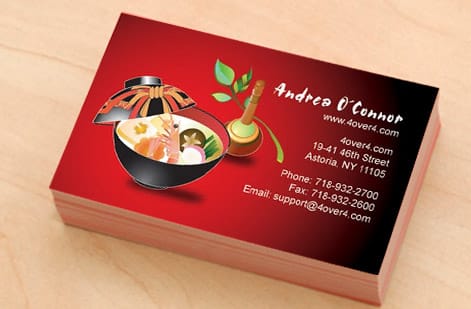
Every business card price comes down to four levers, and knowing them lets you dial in the cheapest run without guessing. Quantity is the big one: more cards mean a lower price each. Stock is next: the standard 14pt is the value choice, and every heavier or specialty paper adds cost. Size follows: the standard rectangle is the cheapest cut, while custom shapes and squares cost more to trim.
Finish is the fourth. A plain gloss or matte coating is inexpensive, and every specialty treatment adds a step and a charge. Set all four to their value positions and you have the least expensive card that still looks professional. Change one at a time and watch the live price move so you always know what an upgrade actually costs.
The specs and pricing panel below shows this in action for standard business cards. Use it to find the exact combination of quantity, stock, and finish that fits your budget, then order with confidence knowing nothing is hidden.
Free versus cheap: what costs nothing and what you pay for
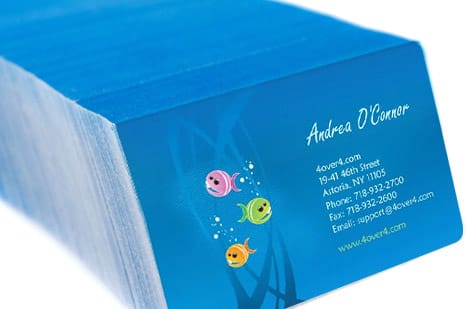
Two different things get called cheap here, so split them. Some parts of a business card order cost nothing at all. The design is free if you build it in the online design tool or start from a template instead of paying a designer. The file check is free, and it catches low-resolution art or text sitting too close to the trim before that mistake turns into a paid reprint. And the cards themselves are free if your batch is covered by the free business cards offer, which sets out what the run includes, the quantity it covers, the stock and finish it prints on, and how to claim it.
The paid side is four variables and nothing else. Quantity sets the unit price and moves it the most: 1,000 cards in one run cost far less per card than 100. Stock sets the feel, with 14pt gloss or matte as the value baseline and 16pt or specialty papers as a deliberate step up. Finish is third: a standard gloss or matte coating is inexpensive, while foil, spot UV, soft touch, and painted edges each add a production step and a charge. Shipping is fourth, quoted by method and speed at checkout, so a rush tier always costs more than allowing standard production and transit time.
Read that as an order of operations for the cheapest possible card. Take everything free first, set the four paid variables to their value positions, then upgrade one variable at a time and watch the live price move so you know exactly what each change costs before you commit.
Wally prints cheap without printing cheap-looking
The savings hide in three levers, not in the quality
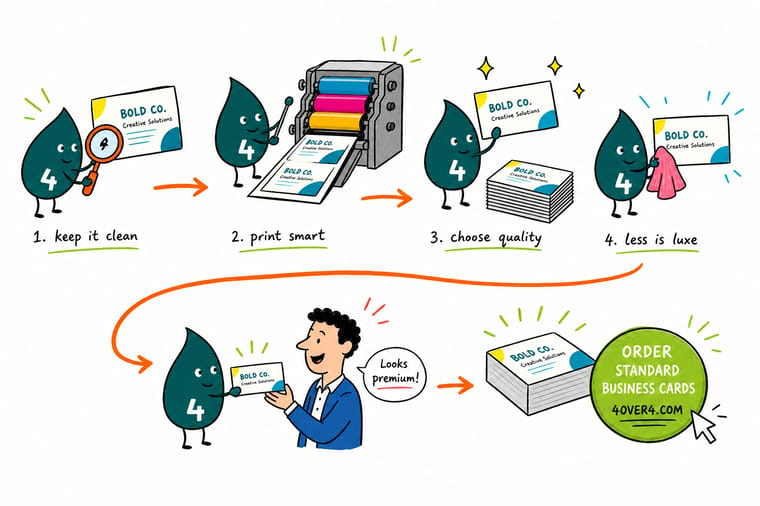
Wally keeps it simple: order the quantity your year needs so the per-card price drops, print on the standard 14pt stock in full color, and leave the foil and soft touch for a fancier day. Design it free with the online tool, run the free file check, and the card that lands in someone's hand looks like you spent far more than you did. Cheaper still, check the free business cards offer first and see whether your first batch is covered before you pay for a run at all. That is a cheap business card done right at 4OVER4.
Price your business cards →Quick reference
The cheapest business card setup, at a glance
Set each lever to its value position and you land on the lowest price for a card that still looks professional. Change one at a time to see what an upgrade really costs.
| Lever | Set it to | Why it saves |
|---|---|---|
| Quantity | Order in bulk (500 to 1,000+) | The single biggest lever. The more cards you print in one run, the lower the price per card falls, which is why 1,000 in one go beats two runs of 500. |
| Stock | 14pt gloss or matte | The standard value stock. Sturdy and professional at the lowest price, before you step up to 16pt or specialty papers. |
| Sides | Full color, both sides | Color on the back is included, so use it. It adds room for your offer or QR code at no extra print step. |
| Finish | Standard gloss or matte coating | A clean coating protects the card and looks polished. Save foil, spot UV, and soft touch for a later premium run. |
| Size | Standard 3.5 x 2 in | The standard rectangle fits every wallet and cardholder and prints at the lowest cost, unlike custom shapes or square cuts. |
| Artwork | Design online or upload a print-ready PDF | Using the free business card design tool or a template removes the design fee, and the free file check prevents a paid reprint. |
| Cost floor | Check the free business cards offer first | The free run covers the printing on a first batch. What it includes, the quantity, and what is still charged at checkout are listed on the free business cards page. |
Step by step
Print cheap business cards in 7 steps
- Start with a standard size and stock Choose the classic 3.5 x 2 in card on 14pt gloss or matte. This is the value baseline, and it already looks professional before you spend a cent on upgrades. If the free business cards offer covers your first batch, start there and keep these same specs.
- Pick the quantity your year needs Look at how many cards you hand out in a real month, then order enough to cover several months. Buying 1,000 at once costs far less per card than reordering 100 twice.
- Use both sides of the card Color on the back is included in the price, so put a tagline, a QR code, or a small offer there. You get more value from the same print run.
- Design it free instead of paying for design Open our online design tool or start from a free template, drop in your logo and details, and skip the outside design bill entirely.
- Leave the premium finishes off this run Foil, spot UV, soft touch, and painted edges look incredible but add cost. Keep the budget run on standard coating and add flair to a future batch.
- Run the free file check before you buy Upload your artwork and let the free file check confirm the color, bleed, and resolution. Catching a problem now is free, while a reprint is not.
- Compare the live price at each quantity Set your options in the configurator and watch the per-card price update as you raise the quantity. Pick the point where the unit price flattens out.
Specs and pricing
Standard business card specs and live pricing
Standard business cards run 100 for $17.57, which is $0.18 each, and the per-card price falls as the quantity climbs.
| Quantity | Price Per Unit | Total |
|---|---|---|
| 100 | 17.6¢ | $17.57 |
| 200 | 11.5¢ | $23.07 |
| 300 | 9.15¢ | $27.46 |
| 400 | 7.96¢ | $31.86 |
| 500 | 7.25¢ | $36.26 |
| 600 | 6.77¢ | $40.64 |
| 700 | 6.43¢ | $45.04 |
| 800 | 6.18¢ | $49.43 |
Print it
Order low-cost business cards from 4OVER4
See it in use
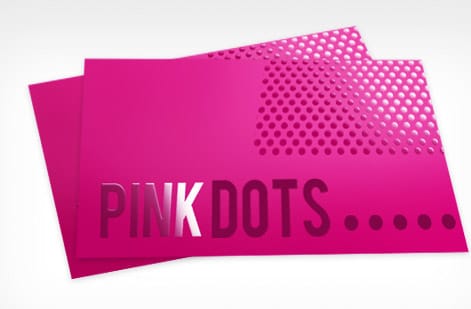
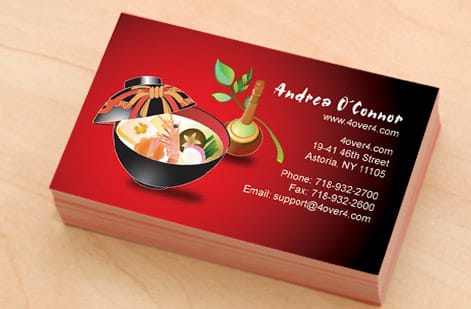
Business cards from real customer orders
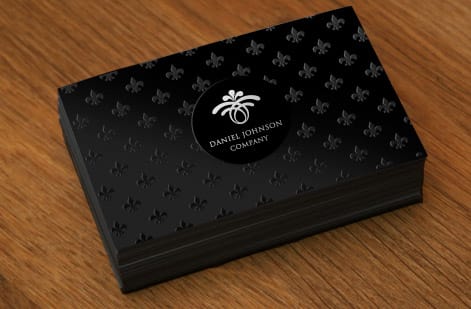
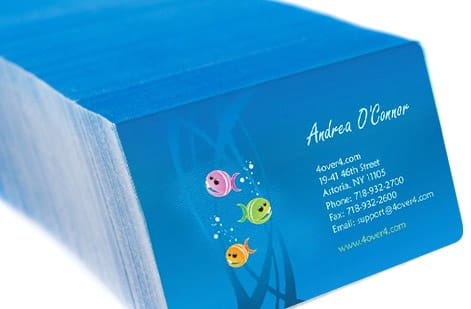
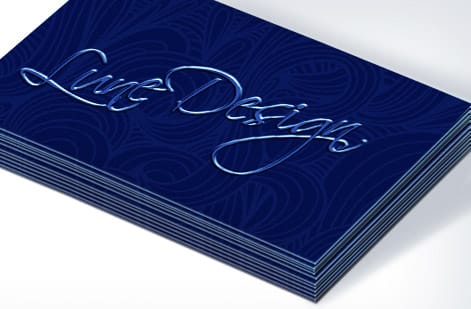
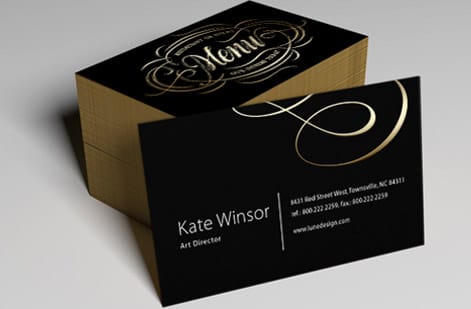
Explore more
Where to go next
By the numbers
Sixty stocks, whatever the budget
Common Questions
Common questions about cheap business cards
What is cheap business card printing?
Cheap business card printing means getting professional cards at the lowest sensible price by choosing cost-efficient specs rather than cutting corners on print quality. In practice it is a standard 3.5 x 2 in card on 14pt gloss or matte stock, printed full color on both sides, in a quantity large enough to bring the per-card price down, with the design done through a free online tool or template. The card still looks sharp and legitimate. You simply skip the extras, like foil or soft touch, that add cost without being necessary for a clean, credible card. The bottom of that price scale is the free business cards offer, where the printing on a first batch is covered, so check it before you pay for a run at all.
Where does cutting cost start to show?
Start from the value baseline and only add cost where it earns its keep. Pick the standard size and 14pt stock, use full color on both sides since it is included, and choose a quantity that matches how many cards you actually hand out over several months. Design it yourself with our free tool or a template to avoid a design fee; the guide to the free business card design tool walks you through size, bleed, and safe margin so the file lands print ready the first time and the free file check has nothing to flag. If a specific detail matters to your brand, like a slightly thicker 16pt stock, add just that one upgrade rather than a whole package. The goal is a card that looks professional at the lowest total price.
What does cheap business card printing cost and how are prices set?
Price is driven by four levers: quantity, stock, size, and finish. Quantity is the biggest one, because the unit price falls as the run grows, so a thousand cards cost much less per card than a hundred. A standard size on 14pt stock with a plain coating is the least expensive setup, while thicker stocks, custom shapes, and specialty finishes each add to the number. Shipping sits outside those four and is quoted by method and speed at checkout, so a rush tier costs more than standard transit. You set every option in the configurator and the price updates live, so you can see exactly what raising the quantity or changing the stock does before you commit, and the free business cards offer is the zero end of that same scale.
What sizes, stocks and finishes are available for cheap business cards?
The value path is the standard 3.5 x 2 in card on 14pt gloss or matte stock with full color on both sides and a standard protective coating. From there you can step up to 16pt or heavier stocks, choose rounded or custom shapes, and add premium finishes like foil, spot UV, soft touch, or painted edges. Each of those raises the price, so for the cheapest run you keep to the standard size, the value stock, and a plain coating, then reserve the upgrades for a later premium batch once the design has proven itself.
How long does cheap business card printing take to print and ship?
A standard business card order moves through production quickly, and choosing the value specs does not slow it down. Turnaround depends on the quantity, the options you select, and the shipping method at checkout, all of which are shown before you pay. If you need cards fast, same-day and rush options exist for standard cards, though the fastest turnarounds carry their own pricing. For the lowest total cost, allow standard production and shipping time rather than paying for a rush, and order early enough that you are not forced into the express tier.
Do cheap business cards look unprofessional?
Not when the specs are chosen well. A 14pt full color card on a clean gloss or matte coating reads as a normal, professional business card to anyone who receives it, because the standard stock and coating are what most cards use anyway. What makes a card look cheap is usually a weak design, low-resolution images, or text crowding the edges, none of which cost extra to fix. Use a strong layout, sharp artwork, and a proper safe margin, run it through the free file check, and a budget card is indistinguishable from an expensive one in the hand.
Is it cheaper to print business cards at home or order them?
For anything beyond a handful of cards, ordering is almost always cheaper and better. Home printing burns through ink and specialty cardstock, the perforated edges look rough, and the color rarely matches across a batch, so the true cost per usable card is high. A professional run spreads the setup across the whole quantity, uses proper card stock and a clean cut, and drops the unit price as the volume rises. Order a value run of standard cards and you get a sturdier, more consistent card for less than the home-printed version really costs.
Are 4OVER4 free business cards really free?
Yes, and the terms are published rather than implied. The free business cards offer covers the printing of the cards themselves, and the free business cards page lists what the run includes, the quantity it covers, the stock and finish it prints on, how to claim it, and what is still charged at checkout, since shipping is always quoted by method and speed before you pay. The design costs nothing either if you build it in the online design tool or start from a template, and the file check that catches low-resolution art or text crowding the trim is free as well. Treat the free run as the way to test a design in real hands. Once it proves itself, repeat it as a paid bulk run of 500 to 1,000 or more on the same 14pt gloss or matte stock, where the per-card price keeps falling as the quantity rises.
What is the cheapest way to print business cards?
Claim anything free first, then set every paid variable to its value position. Start by checking the free business cards offer to see whether your first batch is covered. For the paid run, choose the standard 3.5 x 2 in size, 14pt gloss or matte stock, full color on both sides since the back costs no extra print step, and a plain gloss or matte coating rather than foil, spot UV, soft touch, or painted edges. Order in bulk, 500 to 1,000 or more, because quantity moves the unit price further than any other choice. Design it in the free online tool or from a template so there is no design fee, run the free file check so there is no paid reprint, and allow standard production and shipping instead of paying for a rush tier. That combination is the lowest total cost for a card that still reads as professional in the hand.
Get Started
Order 100 classic business cards at $0.18 each
Set your quantity, stock, and finish at 4OVER4.COM and watch the per-card price update live. Design it free with our online tool, then order the value run that fits your budget.
Legal Disclaimer
Gold Standard guarantees apply to all standard orders placed through 4over4.com. Price match requires verifiable proof of a competitor's published price for an equivalent product with matching specifications and turnaround time. Satisfaction guarantee covers manufacturing defects and print quality issues. Contact support with order number and documentation. On-time delivery rate based on tracked orders 1999 to 2026. Individual results may vary based on shipping carrier performance.
