
How to Use a Dotted Journal or Planner in 9 Practical Ways


The dot grid guides your layout without boxing you in, so one notebook becomes a journal, a planner, and a sketchbook. Nine uses follow, and then how brands turn it into swag people keep.
A dot-grid notebook uses faint dots instead of lines, so the same page works for writing, drawing, and planning. Use it as a journal, bullet journal, planner, habit tracker, sketchbook, lettering pad, study book, or project map, and order it custom-branded so your logo lands on every desk as swag people actually use.

Start here
Why a dot grid beats lines and blank pages
To use a dotted journal, number the pages, keep an index on pages 1 and 2, set a key of symbols on page 3, then draw each spread you need: a weekly plan, a habit tracker, a sketch. Faint dots give you structure without the constraint of lines. That is why a single dot-grid book flexes from a daily journal to a planner to a sketchbook, all in your own layout. Below are nine ways to use it, and why a custom-branded dot-grid notebook is one of the few pieces of swag people keep and open every day.
Setup takes about ten minutes and no ruler, and nothing you draw is permanent: if a layout does not suit your week, you turn the page and rule a better one. The only decision worth making before you start is paper weight, because a heavier gsm is what keeps a marker or a fountain pen from bleeding through to the spread behind it.
What makes a dotted journal different
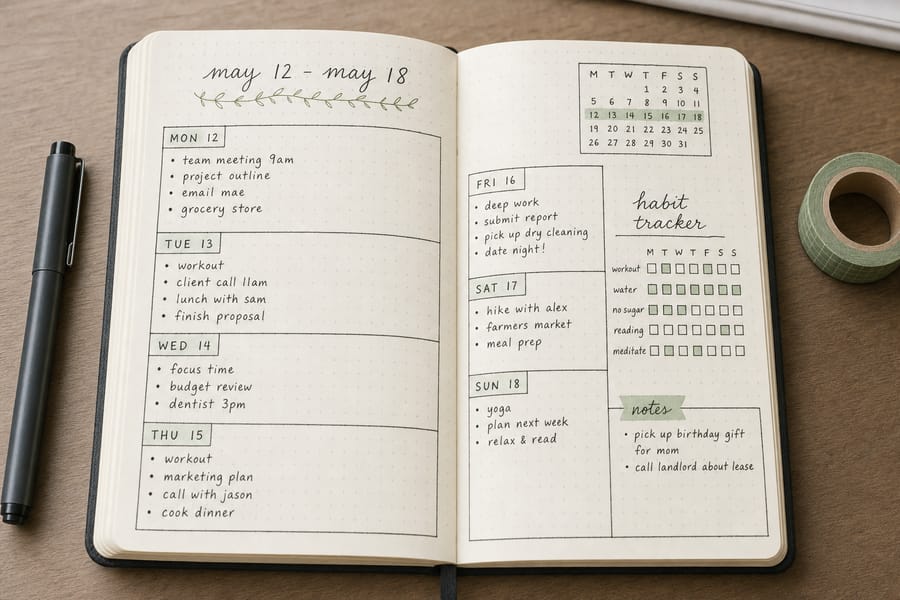
A dotted, or dot-grid, journal swaps solid ruled lines for a faint matrix of evenly spaced dots. That one change is why it has quietly become the favorite format for planners, bullet journals, and sketchers alike. The dots do the job lines do, guiding your handwriting, spacing, and alignment, but they stay light enough to vanish into a drawing, a chart, or a calendar you draw yourself.
Compare the three page types and the appeal is obvious. A blank page gives total freedom but no structure, so your writing drifts and your layouts wander. A lined page gives structure but no flexibility, so it fights you the moment you want a table or a sketch. The dot grid sits exactly in between: enough structure to stay tidy, enough openness to do anything.
That versatility is what makes a single dot-grid book replace a shelf of single-purpose planners. Print it on the right paper, on a custom notebook your brand can order, and it becomes a tool people reach for every day.
Nine ways to put the dot grid to work
The nine uses in the list below all share one trait: you build the structure, so the same notebook flexes to whatever you need this week. Start as a daily journal, keeping your handwriting level without ruled lines boxing you in, then flip a few pages and run a full bullet journal system of tasks, events, and notes on the same grid.
Turn it into a planner by drawing the exact weekly, monthly, or daily spread your schedule needs, and add a habit tracker where each dot becomes one day filled in. Use it as a sketchbook, where the dots help proportion and perspective before disappearing into the drawing, or for hand lettering, where they guide consistent letter height.
Then there are the working uses: mixed notes and study spreads that combine text, tables, and diagrams, and project mapping that lays a big goal out as milestones and checklists. The ninth use is the one brands care about most, covered just below: the custom dot-grid notebook as swag people keep and use.
Custom-branded notebooks as swag people actually keep
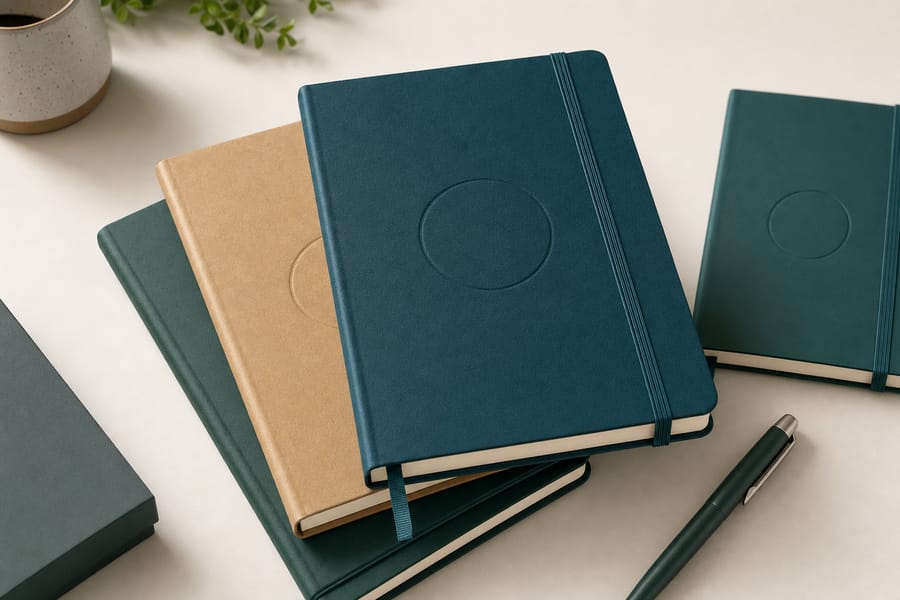
Most promotional swag gets used once and forgotten. A dot-grid notebook is different: it is a tool people open every day, which means a custom-printed one puts your logo on desks, in meetings, and on video calls for months. That daily, useful presence is worth far more per dollar than a giveaway that ends up in a drawer.
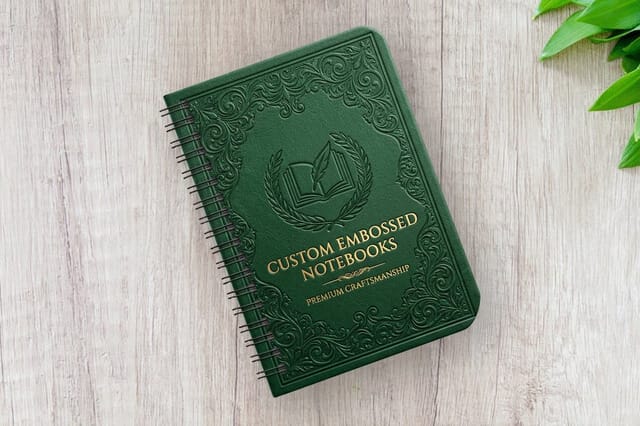
Because you order in a run, the economics work in your favor. Printing a batch of embossed notebooks or spiral notebooks lowers the unit price as the quantity climbs, so branded notebooks make cost-effective event handouts, employee welcome gifts, or client thank-yous at volume. Choose a heavier paper so the dot grid resists bleed-through and the gift feels premium in the hand.
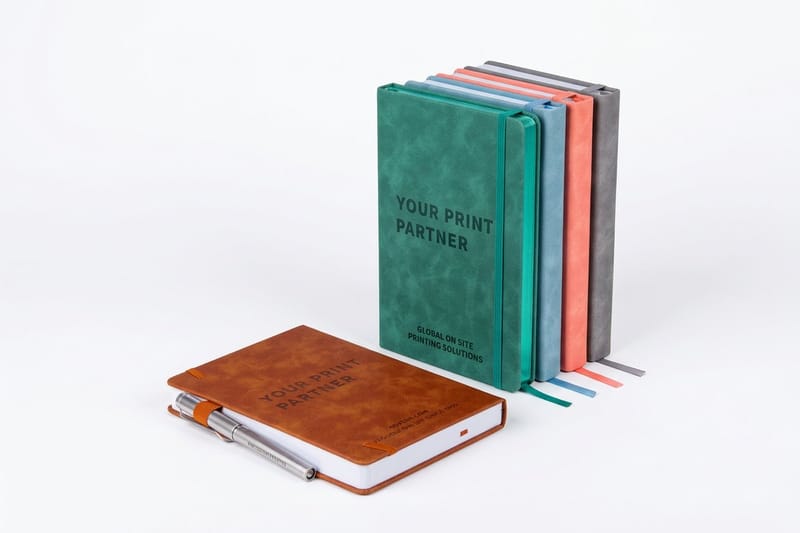
Match the finish to the impression you want. An embossed hardcover or a foil logo reads as a keeper, while a soft-touch cover suits everyday carry. Our guide on making custom notebooks walks through designing the cover and the dot-grid interior before you order.
Wally shows off the one-notebook trick
Dots give you structure without the cage of lines
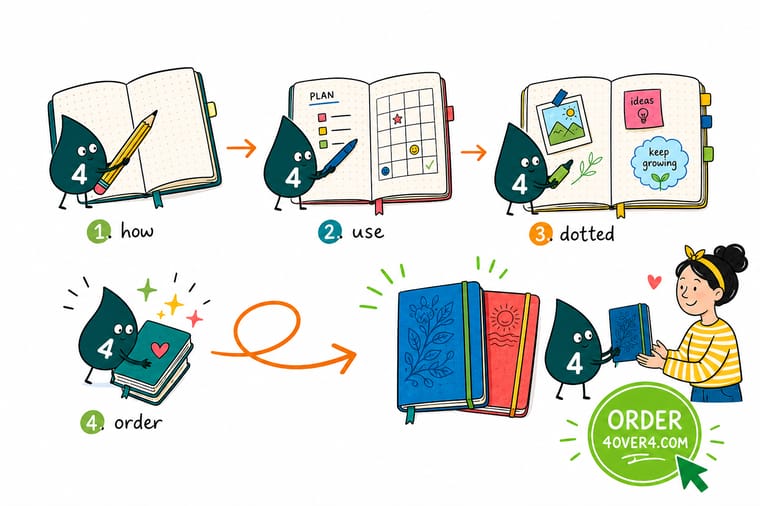
Wally flips a single dot-grid book from a daily journal to a planner to a sketchpad, then prints your logo on the cover. Because you draw your own layout, one notebook does the work of a whole shelf, and a custom-branded run turns everyday planning into daily brand exposure people are happy to carry.
Order custom notebooks →Nine uses
9 ways to use your dot-grid notebook
- As a daily journalThe dots keep your handwriting level without ruled lines boxing you in. Freewrite, log the day, or keep a gratitude list, and let the grid quietly guide the margins.
- As a bullet journalBuild a rapid-logging system with tasks, events, and notes. The dot grid is the classic canvas for bullet journaling because it supports both text and hand-drawn structure.
- As a plannerDraw the exact calendar you need: a weekly spread, a monthly grid, or a daily timeline. When your schedule changes, you redraw it instead of buying a new planner.
- As a habit trackerThe evenly spaced dots make perfect little grids for tracking habits, water, workouts, or sleep, one filled dot per day, no ruler required.
- As a dot-grid sketchbookThe faint dots help with proportion and perspective, then disappear into the drawing. Ideal for quick concepts, isometric sketches, and studies.
- For hand lettering and calligraphyUse the dots as guides for consistent letter height and spacing, then practice flourishes across the open grid without heavy printed lines in the way.
- For notes and studyMix text, diagrams, and mind maps on the same page. The grid keeps columns and tables tidy while leaving room to sketch a concept in the margin.
- For project and goal mappingBreak a big goal into a visual roadmap: milestones, timelines, and checklists you lay out exactly how your brain works, all on one flexible spread.
- As branded team swagA custom dot-grid notebook is a gift employees and clients actually use. Printed with your logo, it turns everyday planning into daily brand exposure.
Infographic
Why the dot grid does more than lines or blank
The dot grid combines the guidance of ruled lines with the freedom of a blank page, which is why one notebook can serve so many uses.
Pick two or three uses that fit your routine, then let the notebook grow with you instead of a fixed template.
Specs and pricing
Custom notebook specs and live pricing
Once you know how you will use it, the print choices are paper weight, cover, binding, and finish. Here are the live specs and price-per-unit for embossed notebooks from the configurator.

| Quantity | Price Per Unit | Total |
|---|---|---|
| 50 | $15.27 | $763.37 |
| 100 | $9.83 | $983.04 |
| 200 | $7.66 | $1,532.24 |
| 300 | $6.94 | $2,081.42 |
| 400 | $6.30 | $2,520.78 |
| 500 | $5.92 | $2,960.13 |
| 1,000 | $3.95 | $3,948.67 |
Print it
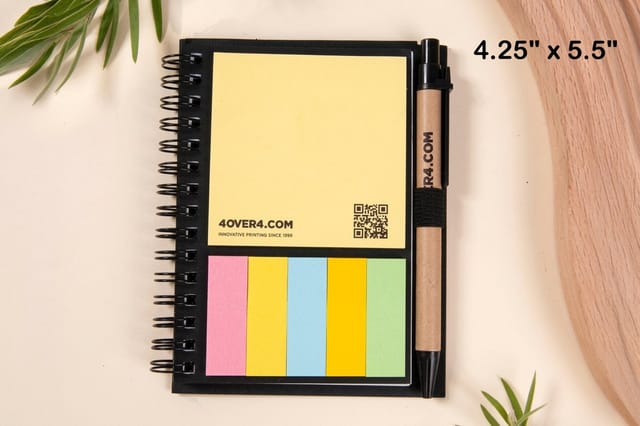
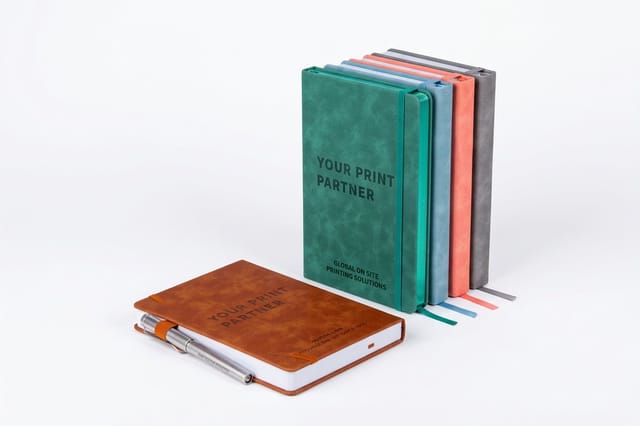
Custom dot-grid notebooks your brand can order
See it in use
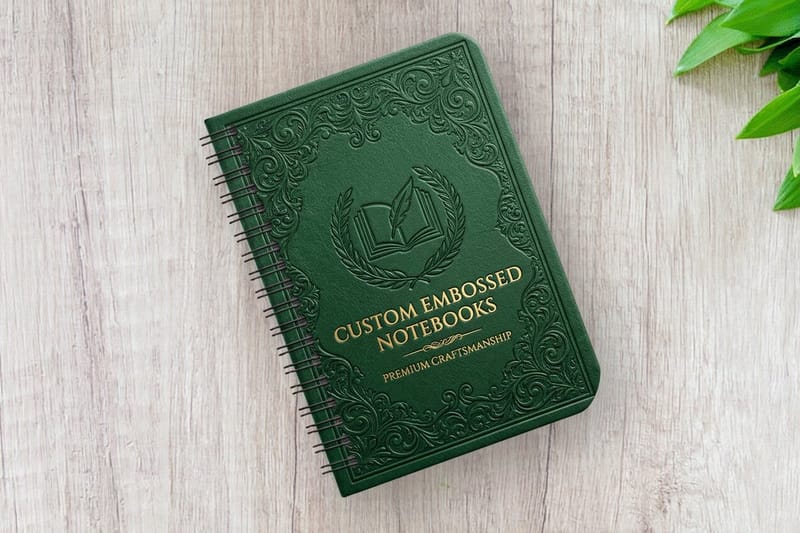
Embossed notebooks and journals customers printed
Explore more
Where to go next

By the numbers
Notebook paper stocks and the record behind a journal run
Common Questions
Common questions about dotted journals and planners
What makes a dotted journal different from lined or blank?
A dotted or dot-grid journal replaces solid lines with a faint matrix of evenly spaced dots. That gives you the best of both worlds: the dots guide your handwriting, spacing, and layout like ruled lines do, but they stay out of the way so the page also works for drawing, charts, calendars, and lettering. A blank page offers freedom with no structure, and a lined page offers structure with no flexibility. The dot grid sits in between, which is exactly why it has become the default for bullet journaling, planning, and sketching in one book.
What are the best ways to use a dot grid notebook?
The most popular uses are a daily journal, a bullet journal, a custom planner, a habit tracker, a sketchbook, hand lettering practice, study notes, and project or goal mapping. Because you draw your own structure, one dot-grid book can do all of these across different spreads, which is its main advantage over a single-purpose planner. Start with two or three uses that fit your routine, and let the notebook grow with you rather than locking you into a pre-printed template.
What paper weight and binding should a dot grid notebook have?
Look at three things: paper weight, binding, and cover. Heavier paper (higher gsm) resists ink bleed-through, which matters if you use pens, markers, or brush pens. The binding decides how flat it lays: a spiral or lay-flat binding is easier to draw across, while a sewn hardcover feels more premium. The cover sets the durability and the impression, from a soft cover for everyday carry to an embossed hardcover for a gift or branded piece. For a run of company notebooks, set the size, paper, and cover in the configurator to match how they will be used.
What does a custom dotted notebook cost and how are prices set?
Custom notebook pricing scales with quantity, size, page count, paper stock, cover type, and finishes like embossing or foil. Ordering a larger run lowers the unit price, which is why branded notebooks are cost-effective as team or event swag at volume. You choose each option in the configurator and the price updates live, so you can weigh a premium hardcover and heavier paper against a leaner run before you commit.
What sizes, stocks, and finishes are available for custom notebooks?
You can order dot-grid notebooks in common journal and planner sizes, on a range of paper weights from everyday to bleed-resistant heavy stock, with covers from soft-touch to embossed hardcover and spiral to sewn bindings. Finishes like embossing, foil stamping, and printed dot-grid interiors let you match the book to your brand or your personal preference. Use the live specs on the product page to see the exact sizes, papers, and finishes available for your run.
How do I start a dotted journal?
Number every page in the bottom outer corner first, then give the first nine pages fixed jobs. Pages 1 and 2 are the index: topic on the left, page number on the right, filled in after you draw a spread rather than before. Page 3 is the key, where you write the symbols you will use and stick to them: a dot for a task, an x through it when done, an arrow when it moves, a circle for an event, a dash for a note. Pages 4 to 7 are the future log, three months per page, so four pages hold a year of dated items. Pages 8 and 9 are your first weekly spread: four dots down for a header, then four columns on the left page and three plus a notes block on the right. Everything after that stays blank until you need it. The whole setup takes about ten minutes, and if a layout does not suit your week you turn the page and draw a better one.
What is the dot spacing in a dot grid notebook?
The common standard is 5 mm from dot centre to dot centre, which works out to about five boxes to the inch, and it is why bullet journal layouts are described in boxes rather than inches. Tighter 4 mm grids fit more rows on a page but crowd average handwriting, and looser 6 mm grids suit large writing, lettering practice, and sketching. To check a book you already own, count the dots across one inch with a ruler. Whatever the spacing, the dots should be printed light grey so they guide the layout and then disappear under ink, and the spacing pairs with paper weight: a tight grid on thin paper is where bleed-through shows up worst.
What pens work best on dot grid paper?
A 0.3 mm to 0.5 mm fineliner or a gel pen is the safe default: fine enough to sit between the dots, dry enough not to feather. Fountain pens, brush pens, and alcohol markers all put down far more ink, so they need a heavier gsm stock or they will bleed to the back of the sheet and through to the next spread. Learn the difference before you commit to a book: ghosting means you can see the writing faintly from the other side and it is normal, bleed-through means the ink has come through and that side of the sheet is lost. Test on the last page of a new notebook with every pen you own, and for a custom run pick the heavier paper option if the books will be used with markers or brush pens.
Get Started
Order 50 embossed notebooks from $763.37 for the team
Print custom dot-grid notebooks at 4OVER4.COM in the size, paper, cover, and finish that fit your team or event. Embossed notebooks run 22 business days, so order well ahead of an event date.
Legal Disclaimer
Gold Standard guarantees apply to all standard orders placed through 4over4.com. Price match requires verifiable proof of a competitor's published price for an equivalent product with matching specifications and turnaround time. Satisfaction guarantee covers manufacturing defects and print quality issues. Contact support with order number and documentation. On-time delivery rate based on tracked orders 1999 to 2026. Individual results may vary based on shipping carrier performance.
