
Line Sheets, Lookbooks and Catalogs Each Do a Different Selling Job


Three documents, three readers, three completely different pages. What belongs on each one sets its size and binding, and the mistakes there cost a season.
A line sheet is the ordering document: every style number, colorway, case pack, minimum, wholesale price and MSRP on a page a buyer can scan and mark up. A lookbook is the persuasion piece and carries almost no data, and a catalog is the consumer-facing one with retail prices and the full assortment. Send the lookbook to create the want, the line sheet to get the purchase order written, and the catalog to sell the product through to the shopper. Merging any two of them is what makes a strong meeting end without an order.
Quick answer
One creates the want, one writes the order, one sells it through
The line sheet is a form, the lookbook is an argument, and the catalog is a storefront. A buyer needs the seven ordering fields on a page they can print and write on. The same buyer needed the lookbook first, to care at all. The shopper never sees either and gets the catalog instead, with retail prices and the whole assortment. Page count then decides the binding, binding decides the trim size, and trim size decides what mailing the season costs.
Line Sheet, Lookbook and Catalog Side by Side

The three get merged constantly, and the merge is why a buyer asks for a line sheet ten minutes after you handed over a beautiful lookbook. Sort them by who reads the page and what that reader has to do next.
| Document | Who reads it | What is on the page | Photography | Typical format |
|---|---|---|---|---|
| Line sheet | A wholesale buyer and whoever raises the purchase order. | Style number, colorway, case pack, minimum, wholesale price, MSRP, ship window, terms. | Product isolated on white, same angle and scale every row. | Letter size, 1 to 4 loose pages, one product family per page. |
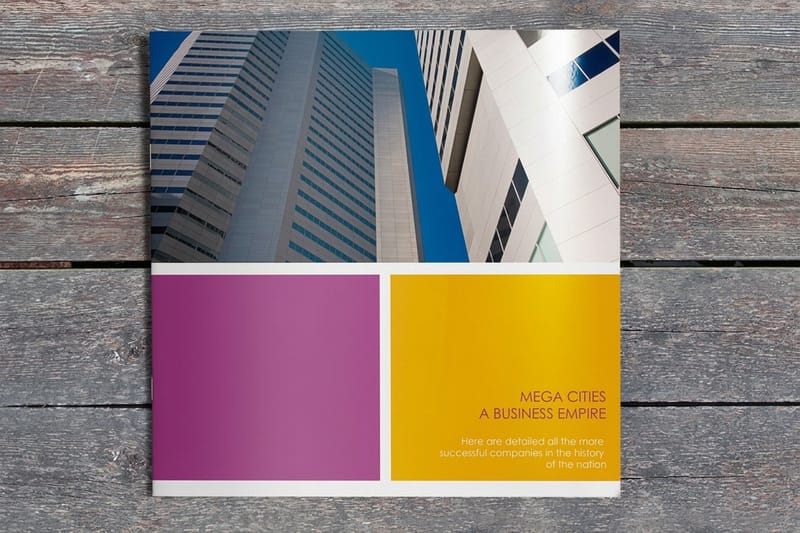
| Lookbook | The same buyer, earlier, plus press and stylists. | Concept, styling, a few hero styles. Little or no pricing. | Styled and modelled, cropped for atmosphere. | Square or letter, 12 to 24 pages, saddle stitched. |
| Catalog | The end shopper, in store or by mail. | Full assortment, retail prices, sizes, how to order. | Clean product shots with some lifestyle pages between. | Letter or digest, 16 to 80 pages, stitched or perfect bound. |
Read the second column first. A wholesale buyer at a trade show is comparing you against thirty other brands in one afternoon and is not reading anything. They are scanning for a price and a minimum. A shopper holding your catalog at home has time and wants to be sold to. Those two readers want opposite pages, which is why one document trying to serve both usually serves neither. The difference between a booklet and a catalog is the same question of who is holding it.
What Belongs on a Line Sheet, Line by Line
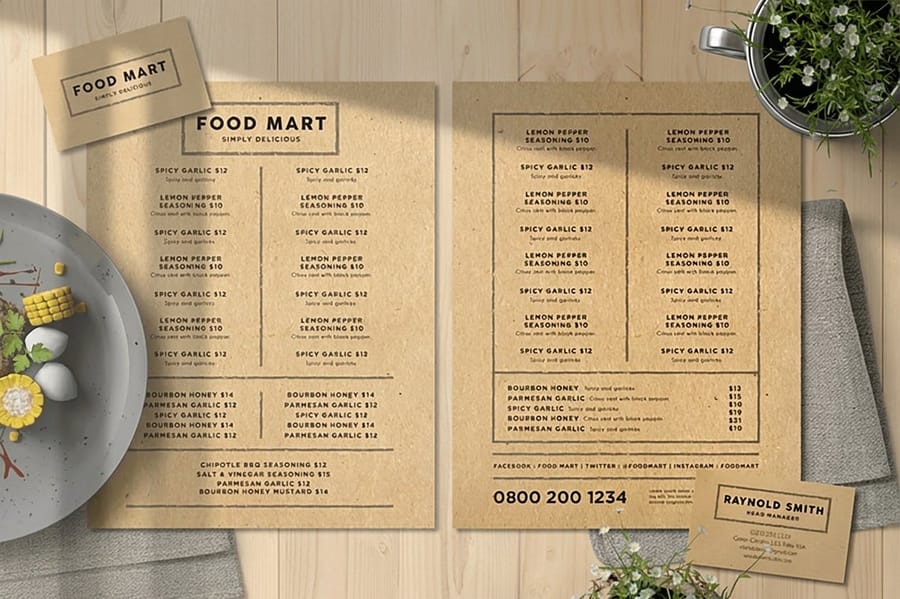
A line sheet is a form that happens to have your logo on it. Every row needs enough information for a buyer to commit money without emailing you a question, because the email is where the order dies.
- Style number and name. The number is what ends up on the purchase order, the packing list and the product label. Set it once and never renumber mid-season.
- Colorways or variants. Listed as separate orderable lines, not as a sentence under the photo.
- Materials and dimensions. Two lines at most. A buyer needs to know it is 100 percent cotton and 12 by 16 inches, not the story of the mill.
- Case pack and minimum order. The two numbers most often left off, and the two that most often stall an order.
- Wholesale price and suggested retail. Both, on every line. A buyer who has to calculate the margin themselves will do it for a competitor instead.
- Ship window and terms. Season dates, lead time, and how you take payment.
Then treat the layout as a working document rather than a design piece. Keep the price column hard against the right edge of the type area, leave the outer margin genuinely empty so quantities can be written beside each row, and hold to one product family per page so the buyer can pull out the two pages they care about. Nine or ten rows fits a letter page comfortably; past twelve the type drops below 8 point and the sheet stops being readable under trade show lighting.
Print it on something that survives the day. A line sheet on 100lb gloss text goes soft in a tote by lunchtime, which is why many brands run theirs as a heavier flat sheet instead. Printed sales sheets start at $75.80 and are the standard vehicle for this, and kraft sales sheets at $166.04 give a natural uncoated surface that takes a pen without beading, which matters when the buyer is writing quantities on it. The comparison between brochures and sales sheets covers when a fold helps and when it just hides your prices.
Size, Stock and Binding: the Decisions That Cost Money Later
Page count picks the binding, binding picks the size, and size decides what you pay to mail it. Work backwards from the mailing if you are mailing at all, because postage over a full season dwarfs the printing.
| Pages | Binding | What it does well | What it costs you |
|---|---|---|---|
| 4 to 16 | Saddle stitch | Cheapest per copy, lies flat, fast turnaround. | Looks thin next to a competitor with a spine. |
| 20 to 48 | Saddle stitch | The sweet spot for lookbooks and seasonal catalogs. | Creep pushes the inner pages outward, so anything closer than a quarter inch to the trim can be cut. |
| 52 to 64 | Saddle stitch, heavier | Still lies flat for a full assortment catalog. | The spine bulges and the fore edge steps visibly on thick coated stock. |
| 64+ | Perfect bound | A printable spine and a retail book feel. | It will not lie flat, so a spread photograph loses its centre and gutter margins have to grow. |
Two rules follow from the table. Saddle stitched page counts must divide by four, so plan the flatplan in spreads rather than pages and decide early which four pages you would drop if the range shrinks. And on anything past 24 pages, pull page numbers, prices and captions at least a quarter inch clear of the trim, because creep moves the inner pages relative to the outer ones and the price is the worst thing on the sheet to lose. The bleed, cut line and safety checklist is the file setup that keeps that from happening, and catalogs versus perfect bound books goes deeper on the binding choice itself.
Size is mostly a postage decision. A digest catalog at 5.5 by 8.5 inches stays inside the USPS letter maximum of 6.125 by 11.5 inches, while the same content at 8.5 by 11 becomes a flat and moves to a higher rate. If the catalog is handed over rather than mailed, that constraint disappears and the larger page earns its keep on photography. Browse the formats in the booklets and catalogs range before you settle the flatplan, since a size you cannot actually order is a week lost.
After the Order: Labels, Signage and Sell Through

Getting the purchase order is half of it. The buyer reorders only if the product sells off their shelf, so the print that follows the line sheet is what decides whether you are in the range again next season.
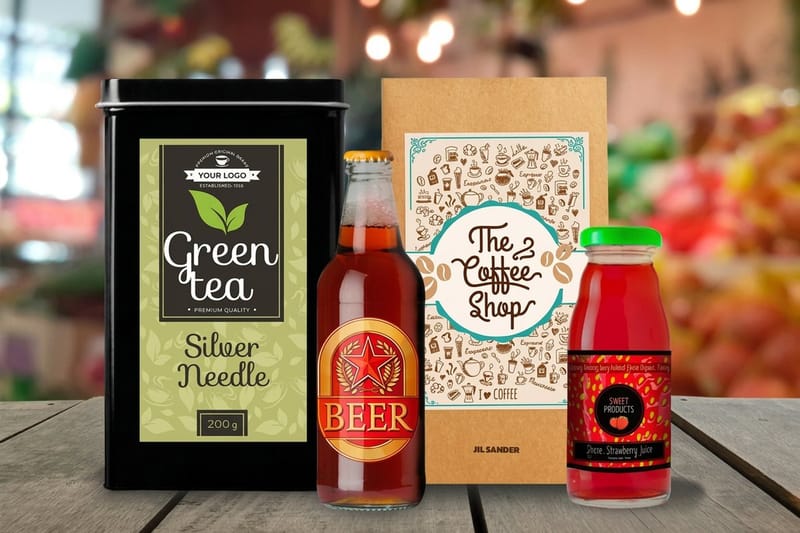
Start with the style number. The number on your line sheet, the number on the carton and the number on the product label all have to match, or the retailer's receiving team will call yours and someone will spend an afternoon on it. Standard product labels start at $23.88 and handle case marking and back-of-pack information; premium product labels at $29.16 are the front-facing ones that sit on the shelf, so that is where the finish and the substrate matter. The full product label range covers materials for chilled, oily and outdoor products, which behave very differently from a dry box.
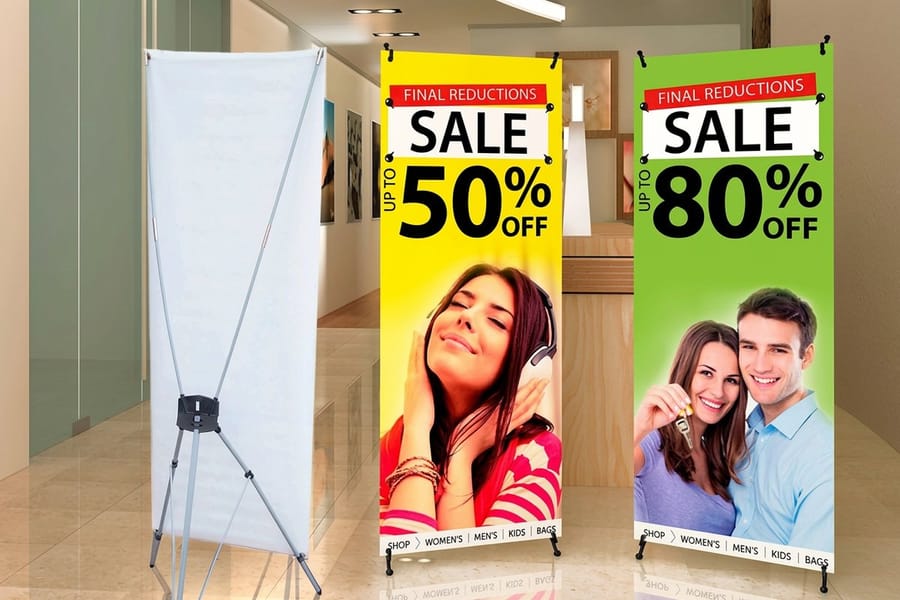
Then the shelf itself. A retailer running your promotion needs a reason for a shopper to stop, and that is signage rather than paper. Sale banners start at $43.92 and are worth supplying with the second order rather than the first, once you know which accounts actually merchandise the range. The retail and point of sale collection has the rest of the in-store pieces, and there are practical merchandising ideas in 21 retail store marketing and promotion ideas and 128 sales promotion examples if you are building the season plan.
Last, the carton the order ships in. Case pack on the line sheet has to match the box you actually pack, and the box size chart by product type is the fastest way to check that the number you printed is the number that fits.
Wally explains the three documents
The pretty one opens the door, the plain one gets signed
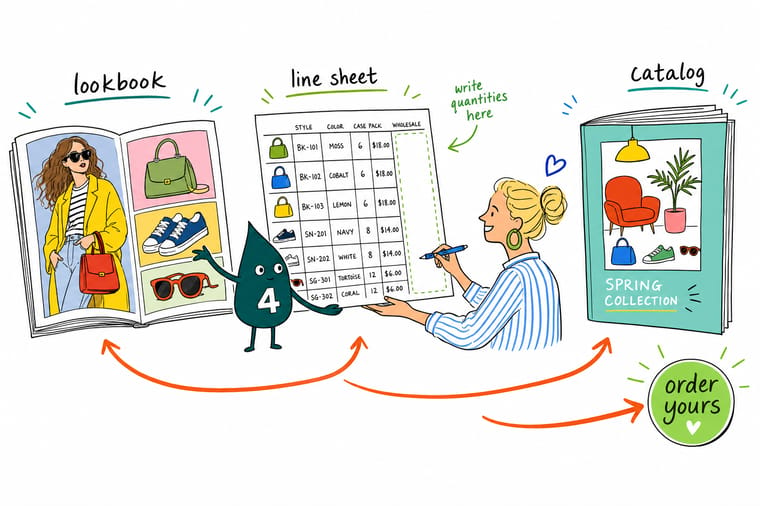
Wally hands the buyer a lookbook and the buyer smiles. Then he hands over the line sheet, and that is the one that gets a pen taken to it: style numbers down the left, case pack and minimum in the middle, wholesale and retail hard against the right edge, and a blank margin to write quantities in. The catalog comes later, with retail prices on it, for the shopper. Wally never sends one of them on its own, because a lookbook with no prices gets admired and filed.
Print your line sheet on sales sheets →Specs and pricing
Sheets, stocks and starting prices
Compare the formats side by side, with live configuration choices and starting prices straight from the 4OVER4.COM configurator.


Print it
Print the pieces that carry the season

Explore more
Where to go next


By the numbers
Line sheets, lookbooks, and catalogs inside our product range
Common Questions
Your line sheet and lookbook questions, answered
Do I need both a line sheet and a lookbook?
For wholesale, yes, and in that order of importance. The line sheet is what a buyer forwards to whoever cuts the purchase order, so it has to survive being printed, marked up and filed. The lookbook is what convinces the buyer to look at the line sheet in the first place. Sending only a lookbook is the most common reason a promising appointment produces no order: the buyer liked the range and had no document to order from. If your budget covers one printed piece, print the line sheet and email the lookbook as a PDF.
What has to be on a wholesale line sheet?
Style number, product name, available colorways or variants, materials, case pack, minimum order quantity, wholesale price, suggested retail price, ship window, payment terms, and your contact plus ordering method. Buyers also expect a small product photo per row, shot on white at a consistent crop. Anything beyond that list is decoration, and decoration is what makes a line sheet hard to read across forty vendors in a trade show tote.
What size should a line sheet be printed at?
Letter size, 8.5 by 11 inches, printed portrait. It fits a binder, it scans on any office machine, and it matches the paper the buyer will print your emailed PDF on anyway. Keep the outer margin genuinely empty so there is room to write quantities next to each row, and put the price column hard against the right edge of the type area where the eye already looks for it. Our sales sheets print at that size and start at $75.80.
Should wholesale prices be printed on the sheet?
Print them if the season is locked, and split them onto a separate sheet if it is not. Material and freight costs move, and a printed price you have to correct by hand in front of a buyer costs you more credibility than a second sheet costs to print. A common setup is a printed product sheet that lives for the whole season plus a dated price list reprinted whenever it changes, which also lets you run different price lists for different territories from the same product pages.
How many pages should a lookbook be?
Between 12 and 24 pages for most ranges, and the page count must divide by four for saddle stitching. Under 12 pages the piece reads as a flyer and rarely earns the photography budget. Past 24 pages buyers start skimming, and you are paying for pages that get flipped. If the range is genuinely large, split it: one lookbook that sells the season and a separate line sheet that lists every style.
Can I reuse the lookbook photos on the line sheet?
Usually not, and trying to is a false economy. Lookbook images are styled, cropped for atmosphere and often shot on models, which makes it impossible to compare two products at a glance. A line sheet needs the product isolated on white, shot at a consistent angle and scaled so a small item does not appear the same size as a large one. Budget a separate flat-lay or cutout pass when you book the shoot rather than trying to cut usable silhouettes out of styled frames later.
Get Started
50 sales sheets cost $75.80, or $1.52 each
Print the line sheet flat and readable, the lookbook stitched and styled, and the labels that carry the same style numbers. We turn all three around on the same schedule.
Legal Disclaimer
Gold Standard guarantees apply to all standard orders placed through 4over4.com. Price match requires verifiable proof of a competitor's published price for an equivalent product with matching specifications and turnaround time. Satisfaction guarantee covers manufacturing defects and print quality issues. Contact support with order number and documentation. On-time delivery rate based on tracked orders 1999 to 2026. Individual results may vary based on shipping carrier performance.
