
The Security Features That Make an NCR Form Hard to Alter


Four features do real work on a carbonless form, and two of them are cheap. Each catches something different and lets something else through, and a numbered multipart set is what survives an audit.
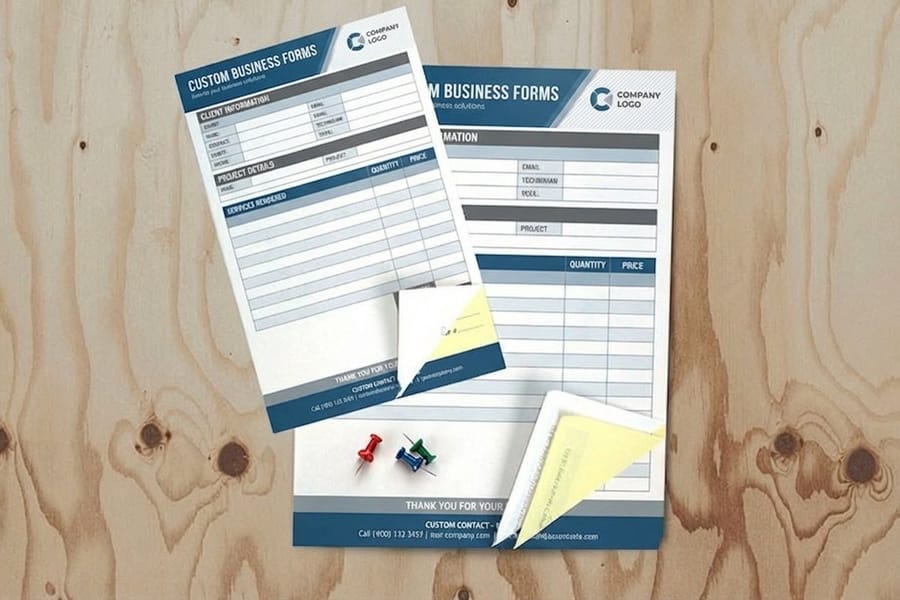
The security features on an NCR form are sequential numbering, a void pantograph, microtext, a security tint over the writing fields, and a controlled part order with each copy labelled for its destination. Numbering is the one to buy first, because it turns a missing document into a visible gap. The pantograph and the microtext protect against copies rather than the original, and none of them replace the real control, which is that the parts separate and end up in different hands.
Quick answer
Buy the numbering first, the clever features second
Sequential numbering, a void pantograph, microtext, a security tint and a labelled part order are the options on the table, and they do not carry equal weight. Numbering is the only one that surfaces a problem during ordinary bookkeeping, and it is the cheapest. A pantograph and microtext both target copies, so they matter when a form leaves the building and gets presented elsewhere. A tint over the amount fields makes erasure visible. Underneath all of it sits the control that actually works: three parts, one struck number, held by three different people.
Why a Multipart Form Resists Alteration in the First Place
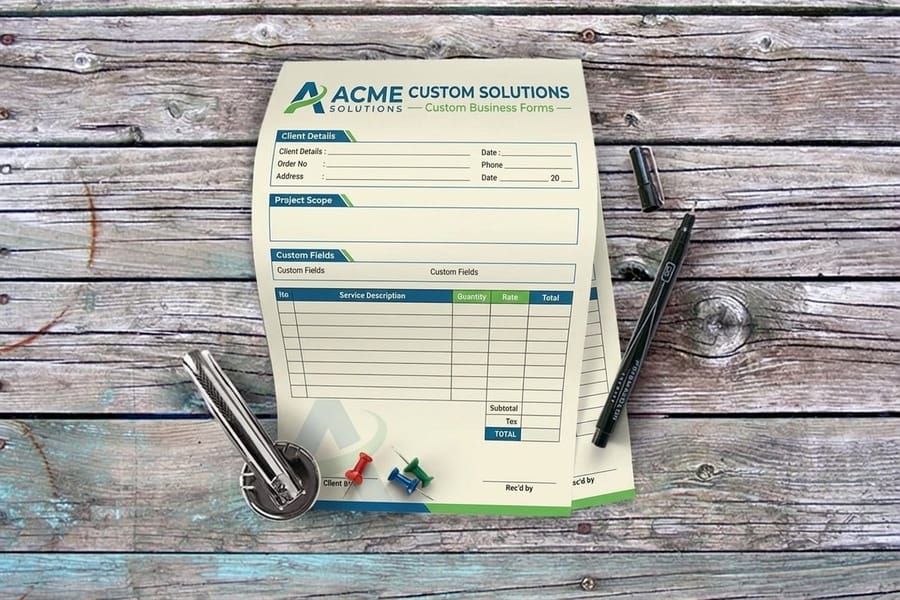
A carbonless form is hard to alter for one blunt reason: the second the parts separate, the record lives in more than one place. Change your file copy of a work order tonight and the customer copy sitting in someone glovebox still says what it said this afternoon. Every printed security feature on the sheet exists to defend that split, not to replace it.
The paper does the copying by itself, which is where the name comes from. The back of the top sheet carries millions of microcapsules holding a colorless dye, and printers call that coating CB, coated back. The face of the sheet beneath it carries an acidic clay receptor, called CF, coated front. Pen pressure bursts the capsules, the dye reaches the clay, and the mark develops in place. Middle parts are coated on both faces at once and get labeled CFB.
Here is the detail most people never notice. The bottom part of a set is CF only, with a bare back, so nothing written on it transfers any further. You cannot slide a spare sheet under a finished set and manufacture a matching fourth copy after the fact. If the job needs four parts, it is ordered as a four part set at the start, and how carbonless paper replaced carbon copies covers the construction in more depth.
Two practical consequences follow. Write with a ballpoint and a firm hand, because felt tip and gel ink glide instead of pressing and often leave part three faint. And keep a chipboard backer under the last part when the sets are padded into a book, or the pressure carries into the next set and images it before anyone uses it.
The Security Features Worth Paying For, and What Each One Catches
Printers will happily quote you four or five security options on the same form. Most businesses need one or two, and the way to choose is to ask what each feature catches and what it lets straight through.
| Feature | What it catches | What it does not catch | Where it earns its place |
|---|---|---|---|
| Sequential numbering | A document that quietly disappeared, because the sequence has a hole in it. | A set rewritten end to end while keeping the same number. | Every invoice, receipt, work order and anything a bookkeeper reconciles. |
| Void pantograph | Photocopies and most flatbed scans, which reveal a hidden VOID across the sheet. | The original, and a fake that was retyped rather than copied. | Forms presented elsewhere as proof: reimbursements, permits, delivery receipts. |
| Microtext | A copy, because the tiny line blurs into mush and the fake becomes provable. | Nobody at all, since it is invisible unless someone knows to look. | High value paperwork you may one day have to authenticate in front of a third party. |
| Security tint on writing areas | Erasure and scraping, which lift the printed tint and leave a bald patch. | A clean alteration typed onto a fresh blank form. | Amount, quantity and date fields, where a single digit is worth changing. |
| Part labelling and color order | The wrong copy going to the wrong person, which is the everyday failure. | Deliberate tampering of any kind. | Every multipart form, and it costs nothing extra. |
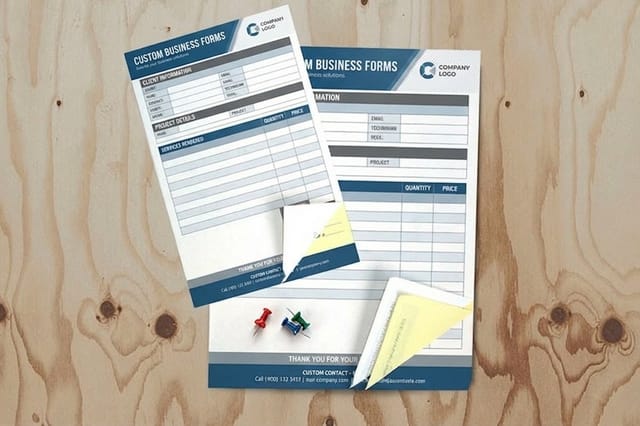
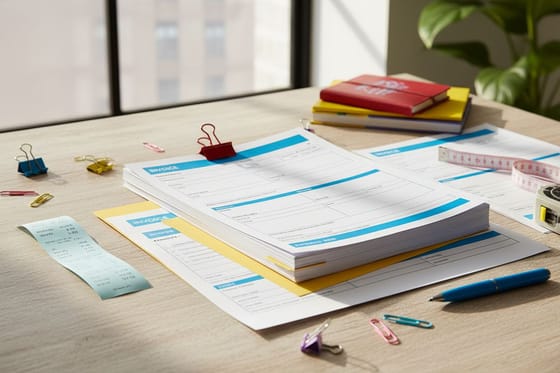
Read the third column before the second one. Two of these features protect the copy rather than the original, which means they only pay off when the form travels: a pantograph on a shop work order that never leaves the building is decoration. Numbering and clear part labelling are the two that earn their keep on every job, and they are the two that cost least. Our custom business forms take all of them, but the sensible starting build is numbered, perforated, padded, with the destination printed on each part.
Numbering, Part Order and the Chain of Custody
Numbering comes two ways, and the difference shows up on the parts. Crash numbering uses a mechanical head that strikes the top sheet hard enough for the impression to carry through the whole set, so all three parts share one number by physical force. Digital numbering images each part separately as the sheets run, which allows a per part prefix but relies on the press collating correctly.
Red is the convention for the number, because it stays instantly readable against black form printing and it does not vanish into a ruled box. Choose the start number deliberately rather than beginning at 1: a prefix per location, per truck or per till turns the number into a fact about origin as well as sequence. When the numbers restart at reorder, note where the last book ended, since a duplicate number in the same year is the one thing that makes the whole control useless.
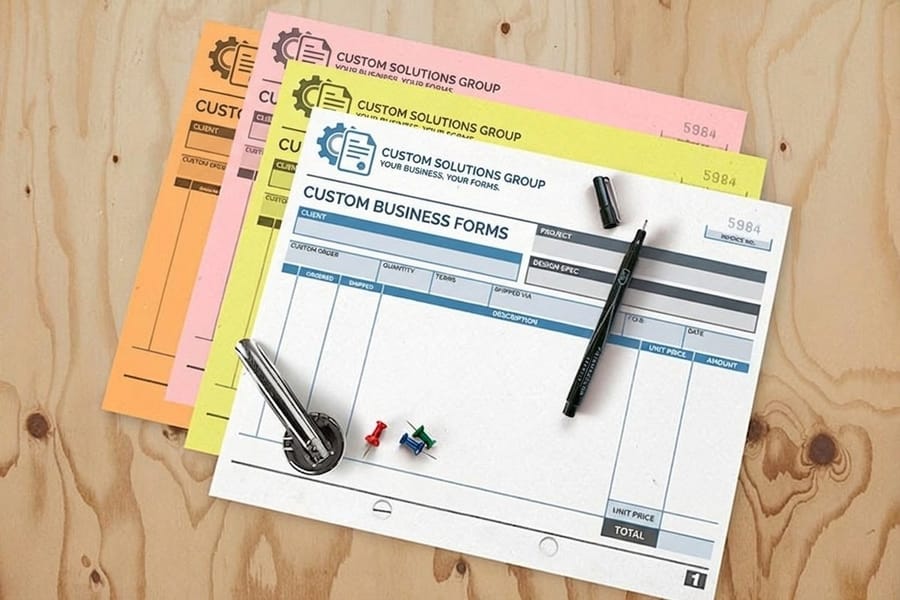
Part order in the trade runs white, canary, pink, then goldenrod. White is the original and normally goes to the customer, canary is the office file copy, pink typically follows for accounting, dispatch or the driver. The colors work because nobody has to read anything to sort them. Print the destination on each part anyway, because a color convention that lives only in one supervisor head stops working the week that supervisor leaves. If you want to see how the fields land in practice, these business form and invoice examples show where the number, the terms and the signature block usually sit.
Where the Paper Trail Stops, and What to Order
Print level security ends the moment the document becomes a scan. Once a signed set is filed as a PDF, the pantograph, the microtext and the tint are gone from the record and the number is the only thing that survived. That argues for the same conclusion as everything else on this page: put the form number into whatever system holds the money, and treat the paper as the backup rather than the archive.
The other limit is chemistry. The image on a carbonless copy is a developed dye, so heat, direct sun and vinyl folder plasticizers all attack it, and a set left on a dashboard through a summer can darken until the handwriting is hard to read against the sheet. Store completed sets flat and cool, and copy anything with a long retention requirement while it is crisp.
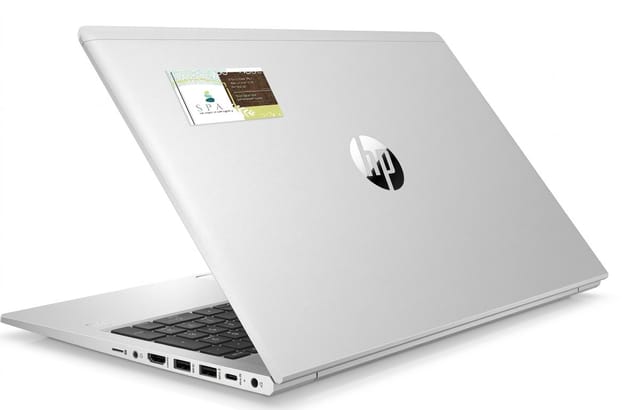
For ordering, business forms start at $120.82 at 4OVER4.COM, with numbering, pantograph, tint and microtext quoted as add ons per job. Get those priced before the artwork is drawn, not after, because a pantograph in particular affects how the whole background is built. When the number needs to stay with the item rather than the paperwork, a small printed label does that better than another sheet: business card stickers start at $10.76 and carry a logo, a contact line and a QR code, and the full business labels range covers the larger sizes.
Forms are rarely ordered alone. Most counters reprint them alongside the rest of the everyday set, which is why the business printing basics collection groups them with business cards, and why the wider business applications guides are worth a pass before a reprint.
Wally explains NCR form security
One number, three parts, three sets of hands
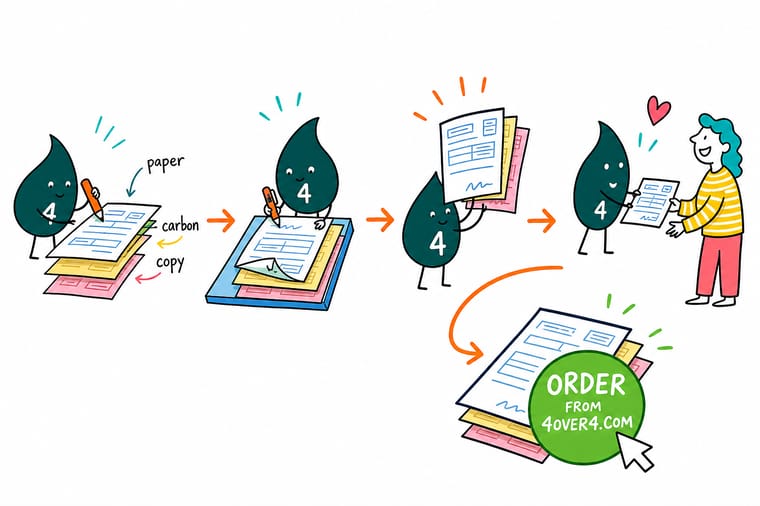
Wally writes the ticket once with a ballpoint and a firm hand. The number was struck through all three parts, so the customer walks off with the white copy, the office keeps the canary, and accounting takes the pink. If anyone edits their sheet later, the numbers still match but the wording does not, and that is the argument over. The pantograph and the microtext only join in when someone tries to copy the form. Wally still scans the important ones, because the dye image fades in heat and sun.
Order numbered business forms →Specs and pricing
Configure the form set, and the label that tags the job
Part counts, sizes, quantities and starting prices straight from the 4OVER4.COM configurator, for the multipart form itself and for the printed label that carries the job number onto the item.


Print it
Order the forms and the paperwork that travels with them
Explore more
Where to go next



By the numbers
Numbered multipart sets we run
Common Questions
Your NCR form questions, answered
Which NCR form security feature should I add first?
Sequential numbering, every time. It is the only feature that makes a missing document visible: if book 4 runs 10,201 to 10,250 and 10,237 is not in the file, somebody has to explain it. A pantograph and microtext only matter once a document is disputed, which is rare. A numbering gap gets noticed during a normal month end review, which is not. Add a prefix per location, truck or till so a number also tells you where the set came from.
Does a void pantograph actually work on a modern copier?
On a photocopier and a flatbed scanner, usually yes. The background is built from two dot patterns printed at the same visual density but different sizes, and copier optics reproduce one and drop the other, which makes the hidden word surface. It is a probabilistic feature, not a lock: a very high resolution scan or a phone photo taken close and square can capture both patterns cleanly enough that the word stays hidden. Ask the printer to match the pantograph to the press and the stock, because a screen tuned for smooth offset paper behaves differently on soft carbonless sheets.
Can you print microtext on carbonless paper?
Yes, but be conservative with the point size. Carbonless stock is softer and slightly more absorbent than a coated sheet, so type that holds at a hairline size on gloss can plug into a solid line here. Keep microtext as a rule or a border rather than a fine reversed element, tell your printer it is microtext so it does not get resampled or trapped like ordinary type, and ask to see it on the real stock before the full run.
What order do the parts go in and do the colors mean anything?
The common sequence is white, canary, pink, then goldenrod, and the color is a handling convention rather than a technical property. White is the original and normally goes to the customer, canary is the office or file copy, pink follows for accounting, dispatch or the driver. The colors are useful precisely because nobody has to read: a driver holding a pink sheet has the right one. Print the destination on each part as well, since a color convention that lives only in a staff member head stops working the week they leave.
What stops someone altering their own copy of the form?
Nothing does, and any printer who says otherwise is selling. A person can write over any single part they hold. What multipart printing gives you is a second copy, held elsewhere, carrying the same struck number, so an alteration becomes a mismatch you can put on the table. A security tint across the amount and quantity fields helps in the other direction, because scraping or erasing lifts the tint and leaves a bald patch that shows under a glance.
How long does writing on a carbonless form stay readable?
It depends entirely on storage, and the honest answer is less time than most people assume. The image is a dye that developed against a clay receptor, so heat, direct sunlight and plasticizers in vinyl folders all degrade it, and a set left on a dashboard can darken across the whole sheet until the writing is hard to pick out. Store sets flat, out of the sun, away from heat, and scan or photocopy anything with a multi year retention requirement while the image is still crisp.
What does a numbered multipart form cost to print?
Business Forms at 4OVER4.COM start at $120.82, and that starting figure is for the printed set itself. Numbering, a void pantograph, a security tint and microtext are add ons priced per job, so ask for them to be quoted before you design them into the artwork rather than after. Padding into books with a chipboard backer and perforation are also specified at order time, and both matter more day to day than the exotic features do.
Get Started
100 business forms cost $120.82 in 2-part white and canary
Pick your part count, add sequential numbering, perforation and padding, and we print multipart forms that separate cleanly and reconcile at month end.
Legal Disclaimer
Gold Standard guarantees apply to all standard orders placed through 4over4.com. Price match requires verifiable proof of a competitor's published price for an equivalent product with matching specifications and turnaround time. Satisfaction guarantee covers manufacturing defects and print quality issues. Contact support with order number and documentation. On-time delivery rate based on tracked orders 1999 to 2026. Individual results may vary based on shipping carrier performance.
