
No Trespassing Sign Rules and Posting Laws Across the U.S.


A posted sign puts intruders on legal notice, but posting rules vary by state. What follows is how the common laws work, where to place signs, and which material lasts, so you can post a compliant boundary.
A visible no-trespassing sign establishes that entry is unauthorized, but the exact posting, wording, size, and spacing rules are set by each state. Post at entrances, corners, and intervals along the boundary so the notice cannot be missed, confirm your state statute, and choose rustproof aluminum for permanent posting or coroplast for short-term, high-quantity needs.
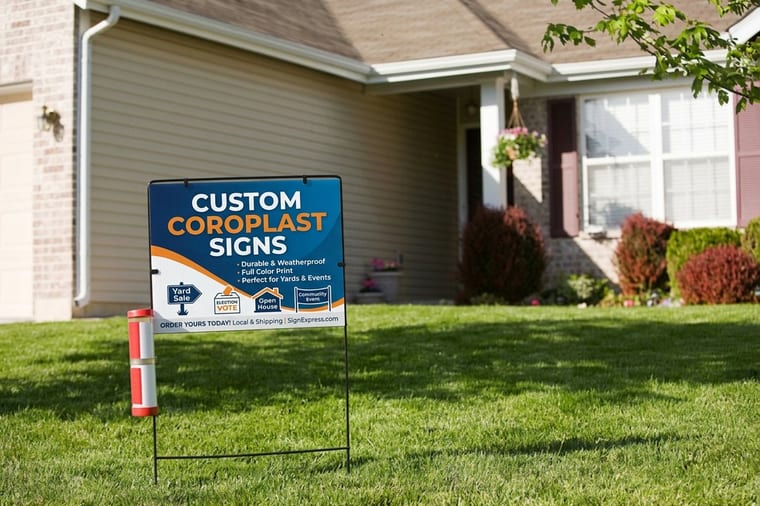
Start here
What the law asks of a posted sign
Post so the notice cannot be missed, then confirm your state statute. Signs generally belong at entrances, at property corners, and at intervals along the boundary, with wording and size that your state may specify. Choose aluminum for permanent posting or coroplast for short-term coverage. The diagram below shows a simple, visible placement plan.
What is trespassing, and why the sign matters
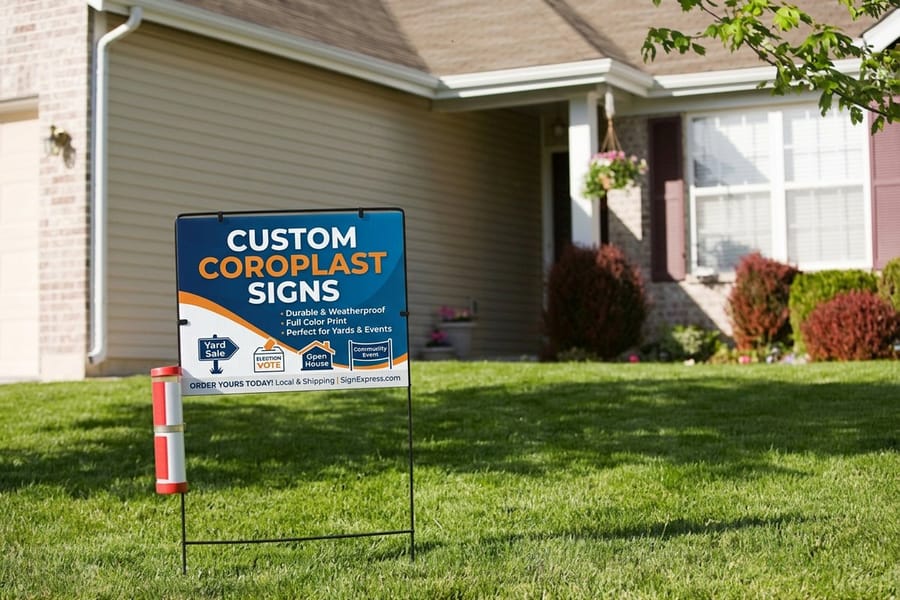
Trespassing is entering or staying on someone else's property without permission or a legal right to be there. Owners have the right to control access to their land, and the law generally separates a person who strays on by accident from one who enters knowing they are not welcome. That distinction is exactly where a posted sign does its work.
A visible no-trespassing sign removes the ambiguity. It puts a person on notice that entry is unauthorized, which in most states is what lets a violation be treated as knowing rather than innocent. It also supports law enforcement and simply deters casual intrusion, since most people turn back at a clear posted boundary.
This guide maps the common posting rules so you can plan a compliant, visible boundary, then order durable signs to match. One important note up front: sign laws vary by state and sometimes by county, so treat what follows as a starting map and confirm the exact statute for your location. When you are ready, our aluminum signs and coroplast signs print weatherproof and ready to install.
Common state rules about posting

Requirements differ from state to state, but several themes recur. Many states call for signs at conspicuous points such as entrances and property corners, and some define wording, a minimum sign size, or a minimum letter height so the notice is legible at a distance. A number of states also recognize purple or orange boundary paint as legal notice, used alongside or instead of signs, though a clear posted sign is the most universally understood form.
Because the specifics vary, the safe approach is to look up your own state posting statute and any county rules before you rely on a boundary. Read the exact language for wording and size, note whether your state defines a spacing interval, and check whether marked paint is accepted where you are.
What travels everywhere is the goal behind the rules: unmistakable notice. Whatever your state specifies, a sign that is large, high-contrast, and placed where people actually approach will satisfy the intent. Our guide on aluminum vs coroplast vs PVC helps you pick a face that stays legible outdoors for the long haul.
Spacing and placement rules

There is no single national spacing number, because spacing is set by each state and sometimes by local ordinance. The principle underneath every version of the rule is the same: a person approaching your property should not be able to reasonably miss the notice. In practice that means three placements you can plan around.
Post at every entrance and access point, including driveways, gates, and trails, since those are where people actually cross the line. Add signs at the property corners so the boundary is defined from any direction. Then fill in intervals along the boundary so long stretches of frontage stay covered, following any maximum distance your state specifies between signs.
State spacing rules fall into four patterns, so identify the one your state uses before you start measuring. Some states name a maximum distance between signs along the boundary and expect that interval to be held the whole way around, which is the pattern posted land and hunting statutes usually follow. Some require a sign within a set distance of every entrance, gate or road frontage rather than a continuous interval, so the corners and access points carry the whole burden. Some name no distance at all and require only notice a reasonable person would see, which in practice is judged after the fact on whether the signs were visible from the direction the person approached. And some let purple or orange boundary paint stand in for part of the run, with marks placed on trees or posts along the line where signs would be hard to mount. Post to the pattern that applies, then walk the line and photograph it so you have a dated record of what was up and where.
Height and angle matter too. Mount signs at eye level where possible, face them toward the likely approach, and keep them clear of brush that could hide the message. The diagram above shows a simple compliant layout, and the reference table below matches each material to how permanently you plan to post.
Last reviewed: August 8, 2026. Trespass and posted land statutes get amended, so confirm the current text of the rule before you rely on this page in a dispute.
Sources to check for your state: the trespass and posted land sections of your own state code, plus the county or township ordinance that sits on top of them. The codes that carry the rules named on this page are the Texas Penal Code, the Florida Statutes, the New York Environmental Conservation Law, the Missouri Revised Statutes, the Pennsylvania Consolidated Statutes, the North Carolina General Statutes, the Illinois Compiled Statutes, the Kansas Statutes Annotated, the Arkansas Code, the Tennessee Code, the Louisiana Revised Statutes, the Indiana Code, the West Virginia Code, the Idaho Statutes and the Montana Code Annotated. Read the hunting and fishing title as well as the criminal title, because agricultural, timber and hunting land is frequently posted under a separate section with its own spacing and wording rules.
Choosing the right sign material
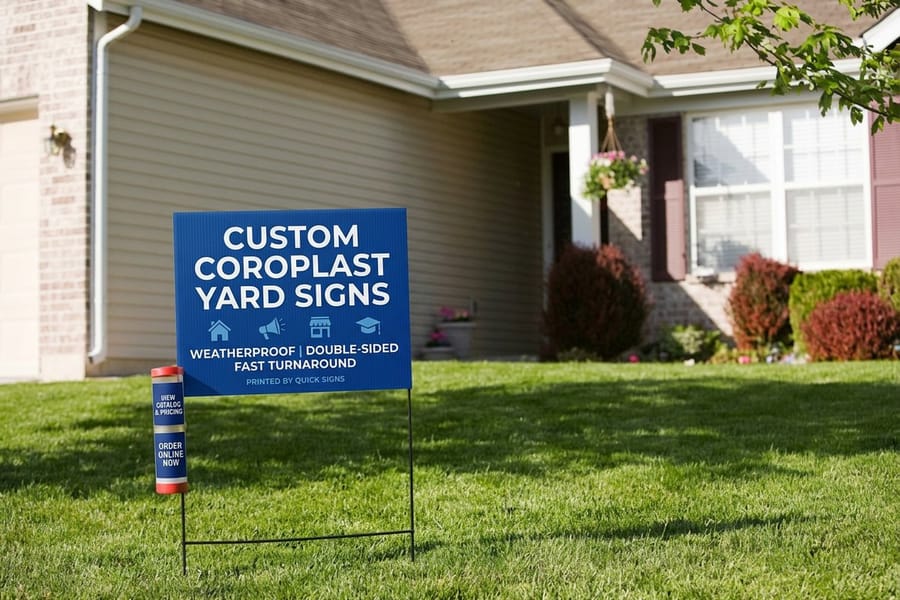
Material decides how long a sign survives outdoors, so match it to your exposure. Aluminum signs are rustproof and rigid, holding up to years of sun, rain, and wind, which makes them the standard for a boundary you post once and leave in place. A reflective aluminum face adds night visibility for roadsides and driveways, returning headlights and flashlight beams so the notice reads after dark.
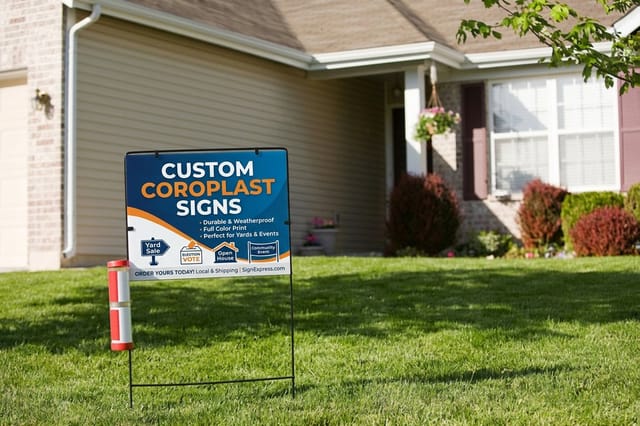
Coroplast, a lightweight corrugated plastic, is the budget-friendly choice for shorter-term needs or when you must post many points at once. It is weather resistant for a season or two and inexpensive enough to cover a large property affordably. Paired with an H-stake, coroplast yard signs plant quickly along a field edge or lot line without any hardware.
All of our outdoor signs print with UV-durable inks so the wording stays legible in the weather. Whatever face you choose, our online design tool lets you set clear, high-contrast wording, and the specs panel below shows the exact sizes and options.
Order code-ready signs

Once you know your state rules and your placement plan, ordering is straightforward. Choose the material for your exposure, the size that meets any minimum your state sets, and the quantity your property needs to cover every entrance, corner, and interval. The per-sign price drops as the run climbs, which makes covering a large boundary affordable.
Every outdoor sign ships weatherproof and ready to install, printed with high-contrast, legible wording so it does its job at a glance. For staked postings, add H-stakes to your coroplast yard signs so they plant in minutes.
Set your options in the configurator and watch the total update live, then post the signs securely and visibly. Browse the full range in coroplast signs, or build a permanent boundary with the aluminum signs below.
Wally posts it so nobody can miss it
Entrances, corners, and intervals, on durable stock
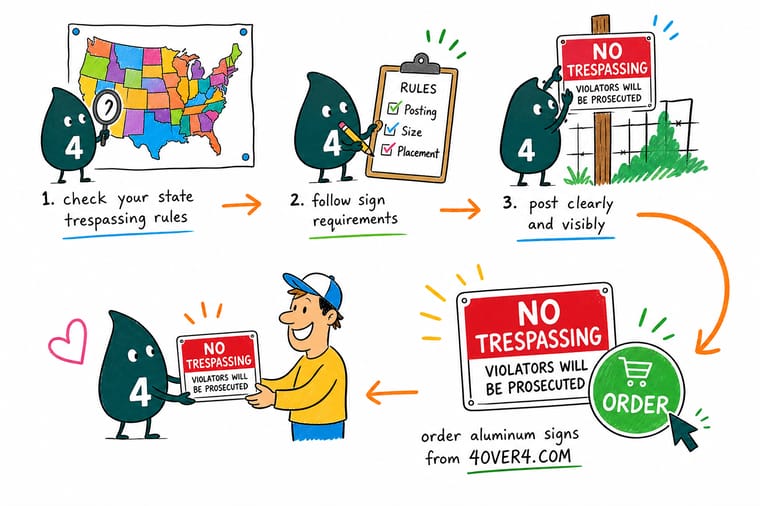
Wally walks the property line and posts a sign at every gate, corner, and stretch of frontage, so the notice is unmistakable from any approach. Confirm your state rules first, pick rustproof aluminum for a permanent boundary or coroplast for many points at once, and 4OVER4 prints them weatherproof and ready to install.
Order your signs →Quick reference
Match the material to your posting
How long the sign stays up and where it goes decides the substrate. Here is when each one fits.
| Material | Best for | Why |
|---|---|---|
| Aluminum signs | Permanent, outdoor | Rustproof and rigid, aluminum holds up to years of sun, rain, and wind, which makes it the go-to for a boundary you post once and leave. |
| Reflective aluminum | Low light, roadside | A reflective face returns headlights and flashlight beams, so the notice reads clearly at night and along access roads. |
| Coroplast signs | Short-term, high quantity | Lightweight corrugated plastic is inexpensive and weather resistant for a season or two, ideal when you need to post many points at once. |
| Coroplast yard signs | Staked postings | Paired with an H-stake, coroplast plants quickly along a field edge, lot line, or driveway without hardware. |
Step by step
Post a compliant boundary in 6 steps
- Confirm your state and local rules first Look up the specific posting statute for your state and county, since wording, size, and spacing requirements differ. This guide is a starting map, not legal advice.
- Post entrances and access points Place a sign at every driveway, gate, path, and other point where someone could reasonably enter, at a height where it is easy to see.
- Mark the corners and boundary Add signs at property corners and at regular intervals along the boundary so the notice is visible from any approach, following any interval your state specifies.
- Choose a material for the exposure Pick rustproof aluminum for permanent year-round posting, or coroplast when you need many signs for a shorter period.
- Keep the wording clear and legible Use large, high-contrast text that reads at a distance, and include any specific language your state requires on the face.
- Order code-ready signs and post them Set size, material, and quantity in the configurator, order weatherproof signs, and install them securely so they stay put and stay visible.
Specs and pricing
Aluminum sign specs and live pricing
Once your placement plan is set, material, size, and quantity set the price. Here are the live specs and price-per-unit for aluminum signs at 4OVER4.

| Quantity | Price Per Unit | Total |
|---|---|---|
| 1 | $36.00 | $36.00 |
Print it
Order code-ready no trespassing signs
See it in use
Real signs, produced in-house








Explore more
Where to go next



By the numbers
The substrates that survive a property line
Common Questions
Common questions about no trespassing sign laws
What is trespassing?
Trespassing is entering or remaining on another person or entity property without permission or a legal right to be there. Property owners have the right to control access to their land, and the law generally distinguishes between someone who wanders on by accident and someone who enters knowing they are not allowed. A visible no-trespassing sign matters because it removes the ambiguity: it puts a person on notice that entry is unauthorized, which in most states is what allows a trespass to be treated as knowing rather than innocent.
What are the common state rules about posting no trespassing signs?
Requirements vary from state to state, but several themes recur, and they sort into four families you can check quickly. First, conspicuous posting: many states specify that signs must be posted at conspicuous points such as entrances and property corners, and some set a spacing interval along the boundary, while others simply require notice that a person approaching could not reasonably miss. Second, sign construction: some states require particular wording or a minimum sign size or letter height, so the face has to carry the notice legibly from the distance people first see it rather than merely exist on a post. Third, boundary marking by color: a number of states also recognize purple or orange boundary paint as legal notice alongside or instead of signs, with purple recognized in states including Texas, Missouri, Arkansas, Illinois, Kansas, Florida, North Carolina, Tennessee, Louisiana, Pennsylvania, Indiana and West Virginia, and orange used in states including Idaho and Montana. Fourth, land use: hunting, fishing, timber and agricultural land is often covered by its own posted land statute that sits separate from the general criminal trespass section, so a farm or a hunting tract can face stricter posting than a suburban lot in the same state. Layered on top of those four, several states treat posting as the element that makes a charge possible at all, because the sign is what supplies the notice the offense depends on, which is why an unposted boundary can leave law enforcement with nothing to act on. Because the details differ, treat any general guide as a starting point and confirm the exact statute for your state and county before you rely on it, and read the county or township ordinance as well, since local rules can add spacing, wording or permit requirements that the state code does not mention.
How far apart do no trespassing signs need to be?
There is no single national spacing number, because spacing is set by each state and sometimes by local ordinance. The universal principle is visibility: signs should be placed so that a person approaching the property cannot reasonably miss the notice, which in practice means posting at every entrance and corner and at intervals along the boundary. Some states specify a maximum distance between signs or require one within a certain range of each access point, so look up the interval your state defines and post at least that densely.
Do I need a no trespassing sign?
You are not always legally required to post one, but a clear sign strengthens your position significantly. Without notice, someone who enters may claim they did not know the land was private, which can complicate enforcement. A visible no-trespassing sign establishes that entry is unauthorized, supports law enforcement in treating a violation as knowing, and deters casual intrusion in the first place. For homes, farms, hunting land, vacant lots, and business property, posting is an inexpensive layer of protection that removes doubt.
Do no trespassing signs have to be a certain size?
There is no national minimum size, but several states set a minimum face size or a minimum letter height in their posted land or trespass section, and a sign that falls under it can be treated as if it were never posted. Where no size is written into the code the working test is legibility: the wording has to read from the point where a person first meets the boundary, so a sign on a road frontage or a long driveway needs a bigger face and taller letters than one on a gate you walk up to. Keep the message short so the type can be large, use heavy weight lettering with strong contrast against the background, and choose a reflective aluminum face where the approach happens after dark. Confirm the size and letter height your state names before you order, because it is cheaper to size the face correctly than to reprint a whole boundary.
How far apart must no trespassing signs be?
That depends on which spacing pattern your state uses: a stated maximum distance between signs along the boundary, a sign required within a set distance of every entrance and road frontage, or a general requirement for notice a reasonable person would see. Look the rule up first, then lay the boundary out on a map, mark every gate, driveway, trail and corner, and fill the runs between them at the interval your state names or, where none is named, closely enough that one sign is in view before the last one leaves it. Walk the line from the outside in each season, because brush, snow and crop height hide signs that were plainly visible when you posted them, and replace anything faded or turned so the notice stays continuous.
Is purple paint the same as a no trespassing sign?
In some states it carries the same legal notice, and in most states it does not. Purple boundary paint is recognized in states including Texas, Missouri, Arkansas, Illinois, Kansas, Florida, North Carolina, Tennessee, Louisiana, Pennsylvania, Indiana and West Virginia, and Idaho and Montana use orange for the same purpose, with each state defining where the marks go on trees or posts and how they are spaced. Outside those states paint is not notice at all, and even inside them the statute usually applies to specific land types rather than every parcel. Paint also cannot say anything beyond stop, so it will not carry wording such as no hunting, private property or a contact number. The practical approach is to post signs as the primary notice and use paint, where your state recognizes it, to hold the long stretches between them.
Does a boundary sign need aluminum or coroplast?
Match the material to how long the sign will be up and where it goes. Rustproof aluminum is the durable choice for permanent, year-round outdoor posting, and a reflective aluminum face adds night visibility along roads and driveways. Coroplast, a lightweight corrugated plastic, is a budget-friendly option for shorter-term needs or when you must post many points at once, and coroplast yard signs pair with a stake for quick installation along a field edge or lot line. For a boundary you post once and leave, aluminum lasts longest.
What do no trespassing signs cost and how are prices set?
Price depends on material, size, quantity, and finish, and the total updates live as you set each option in the configurator. Coroplast is the most economical per sign and gets cheaper in larger runs, which suits marking many points along a boundary, while rustproof aluminum costs more per unit but lasts far longer for permanent posting. Reflective faces add night visibility for a modest premium. Choose the material for your exposure and the quantity for your property, and the per-sign price drops as the run climbs.
Get Started
Aluminum signs print in 4 business days, coroplast in 3
Confirm your state rules, then bring your wording to 4OVER4 and print weatherproof aluminum or coroplast signs. Adjust material, size, and quantity and watch your price update live.
Legal Disclaimer
Gold Standard guarantees apply to all standard orders placed through 4over4.com. Price match requires verifiable proof of a competitor's published price for an equivalent product with matching specifications and turnaround time. Satisfaction guarantee covers manufacturing defects and print quality issues. Contact support with order number and documentation. On-time delivery rate based on tracked orders 1999 to 2026. Individual results may vary based on shipping carrier performance.
