
Perforated Window Film vs Decals for Business Advertising


Both turn glass into advertising, but they solve different problems. Perforated window film covers a whole pane while people inside still see out; decals place sharp graphics on clear glass. Here is how to choose.
Choose perforated window film for full-window graphics with one-way visibility, and decals for crisp lettering or logos on clear glass. Perforated film covers large panes edge to edge and still lets staff and customers see out; window decals and clings apply sharp, cut artwork to open glass for hours, promos, and branding. Many storefronts use both.
Start here
Window film versus decals in one paragraph
Perforated window film covers a whole pane with a graphic while preserving one-way visibility; decals apply sharp artwork to clear glass. Reach for film when you want a big storefront-wide image and staff still need to see out. Reach for decals or clings for hours, logos, promos, and precise lettering. The comparison below breaks down visibility, installation, and cost.
Watch it printed
See perforated window vinyl on the press, in 85 seconds
What Are Perforated Window Films?
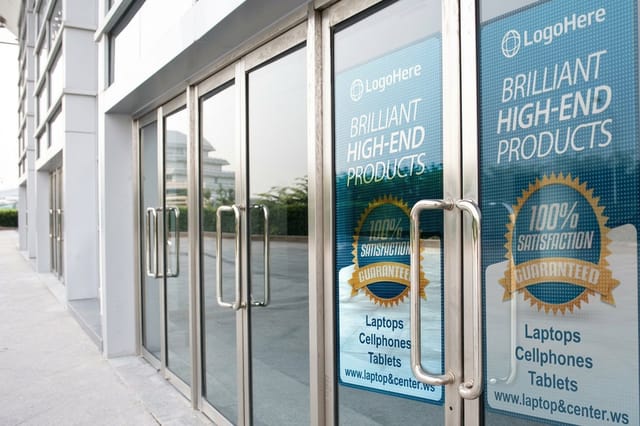
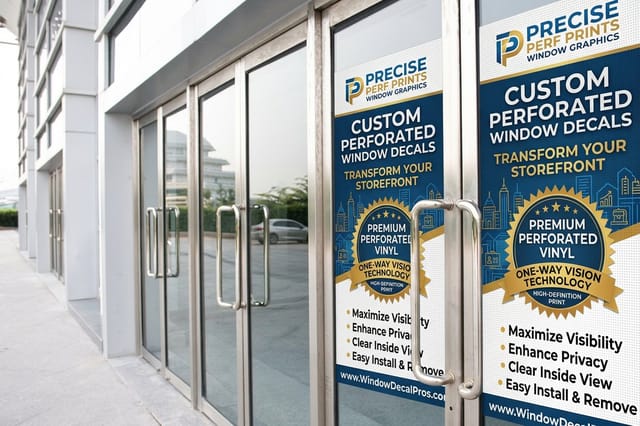
Perforated window film is a printed vinyl covered in a grid of tiny holes, often described by a ratio like 70 by 30, meaning the surface is roughly 70 percent print and 30 percent open holes. From the outside it reads as a solid, full-color image across the entire pane. From the inside, those holes let light and sightlines through, so staff and customers still see out.
That one-way effect is why perforated window vinyl is the default for covering large storefront glass with advertising. You get a billboard-sized graphic without boxing in the interior or blocking daylight. It suits promotions, brand imagery, and seasonal campaigns that should own the whole window.
Perforated film also serves double duty as light management and privacy, softening glare and obscuring the interior view from the street. For a broader primer on the category, see our guide on window clings and decals.
Picking a perf ratio by pane size and viewing distance
The ratio is a trade between the image outside and the view inside, and where the glass sits decides which side should win. On storefront glass at street level, people read the print from a few feet away and the holes have to disappear, so 70 by 30 is the default. On an office wall of glass that staff sit behind all day, the view out and the daylight matter more than a dense image, which is where a more open film earns its place.
Height and distance shift the answer again. The further back a viewer stands, the less the holes register, so upper panes on a tall frontage can run more open than the ground floor without the graphic reading differently from the street. Judge it on one pane before committing a whole frontage, because the difference is far easier to see in place than on a sample sheet.
Using Window Film for Advertising and Branding
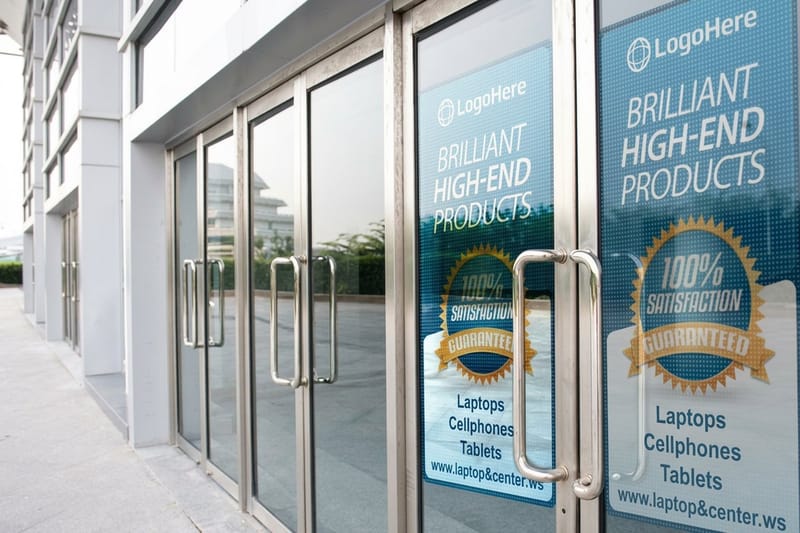
As an advertising surface, perforated film turns idle glass into your largest on-site sign. A full-window graphic is visible to every passerby, works day and night with interior lighting, and can carry a single bold message or a rich brand image. Because it covers the whole pane, it commands attention in a way a small decal cannot.
Film is also flexible for campaigns. Swap the graphic for a new season or promotion and the storefront feels refreshed without any construction. Retail, restaurants, gyms, and offices all use it to announce openings, sales, and services. Explore installation-ready options in the decals and window graphics category or the vinyl collection.
Design for the perforation: keep critical text large and high-contrast, since the holes slightly soften fine detail. Our walkthrough on making custom decals covers artwork setup that reads clean on textured surfaces.
Is perforated vinyl on car windows legal?
Short answer: perforated window film on a rear window is legal in most of the country, on the windshield it is not, and the front side windows beside the driver are where businesses get ticketed. From the street the film reads as a solid printed graphic, so police and inspection lanes treat it the way they treat dark tint: as a covering on glass, judged by how much light still passes through.
Take the vehicle one pane at a time. The rear window is the normal advertising surface, and many states allow it to be covered or blacked out as long as the vehicle has a working mirror on both sides. Rear side windows behind the driver are usually the next most permissive. Front side windows are restricted nearly everywhere, and the windshield is off limits apart from a narrow band along the top edge that the glass maker marks. The same 70 by 30 graphic that is fine across the back glass can be an instant violation on the driver's door.
The measurement that decides it is visible light transmission, the share of light that gets through the glass plus anything applied to it. Every state sets its own minimum, states disagree about which windows that minimum covers, and several require a compliance sticker or certificate on the door jamb. States with annual safety inspections check the glass with a meter, so a van that passes at home can fail one state line away, and a vehicle that crosses state lines has to satisfy the strictest rule on its route.
So confirm the current rule for your own state, and for every state your vehicles work in, on the DMV or state police window tint page before you print anything. Then design to the glass you are allowed to use: the rear window carries the big message, solid cut vinyl on the doors and quarter panels carries the phone number and website, and the front side windows stay clear.
Perforated film on vehicle windows: dos and don'ts
Do build the artwork for the rear window first, at the exact pane size, with the message centered where the driver behind you actually looks. Do not stretch a storefront-sized file onto auto glass and hope: a rear window bows in two directions, and a layout drawn flat reads crooked once the film is heated and pulled down into the curve.
Do leave clearance for everything the glass is already doing. A rear wiper will scrape and lift a film edge over time, so either cut the graphic back outside the wiper arc or have the arm removed and refitted over the film. Keep the panel clear of the third brake light, the reversing camera and its clear port, and any antenna or sensor bonded to the glass.
Do remember the defroster grid sits on the inside face, so film applied outside will not damage it, though the heat it throws changes how the adhesive behaves. Apply in the shade on clean, dry glass, squeegee from the center outward so air has somewhere to go, and let the adhesive settle before the first wash. Do not aim a pressure washer at the edges and do not scrape ice through the print; a clear overlaminate earns its cost on any vehicle that lives outdoors or goes through a wash tunnel.
Do hand the job to a professional installer when the glass is deeply curved, when the vehicle is one of a fleet that has to match panel for panel, or when a failed install means reprinting the whole run. A flat storefront pane is a fair do-it-yourself project. A van rear window with a wiper, a camera, and a fleet livery riding on it usually is not.
Window Decals vs Perforated Window Film
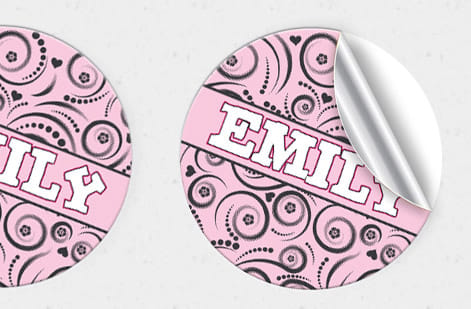
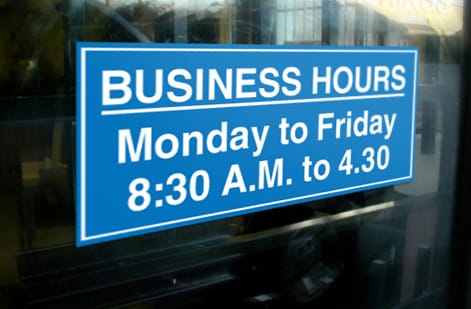
The core difference is coverage and visibility. Perforated film covers an entire pane and preserves a one-way view out. A window decal or cling instead places a specific, cut graphic, lettering, a logo, hours, a promo, onto glass that stays clear around it. Decals deliver the sharpest possible detail and full opacity because there are no holes interrupting the print.
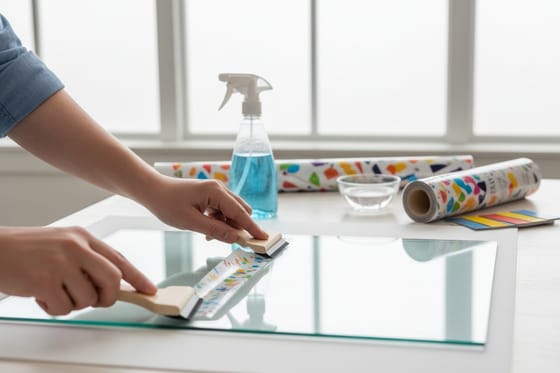
Installation differs too. Film covers large areas and benefits from careful squeegee application to avoid bubbles across a big surface. Decals and clings are smaller and quicker to place, and static clings reposition without adhesive, which makes them ideal for short-term or frequently changed messages. For technique, see how to apply window clings.
Type options round out the decision. Choose perforated window decals when you want the see-through effect at a smaller scale, solid vinyl decals for maximum punch on clear glass, and clings when you will swap the message often. Many storefronts combine a film hero graphic with decal lettering on the door.
How to Choose Between Film and Decals

Start with coverage. If you want to fill a whole window with an image while keeping the view out, choose perforated film. If you want sharp, specific graphics on glass that stays mostly clear, choose decals or clings. That single question resolves most cases.
Then weigh permanence and change frequency. Film and adhesive decals suit longer campaigns and permanent branding, while static clings are perfect for messages you rotate weekly, like specials or event dates. Privacy is another factor: film obscures the interior from the street, decals leave surrounding glass see-through. Compare application methods further in screen printing versus vinyl printing.
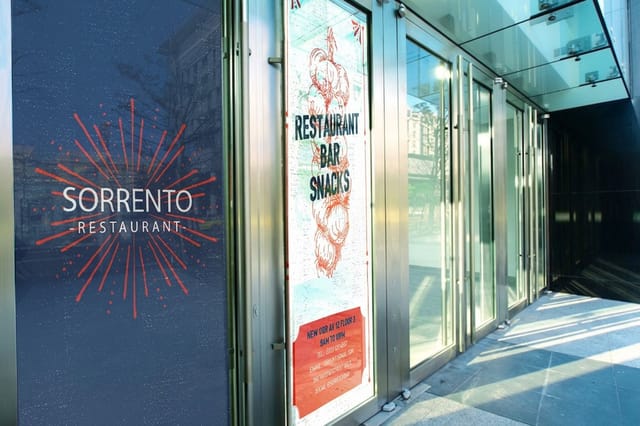
Finally, consider the mix. The most polished storefronts often run both: a perforated film graphic for reach and one-way visibility, plus crisp door decals for hours and logo. For a real-world look, see these custom window graphics for a spa. Browse ready options in window graphics.
What Window Advertising Costs and How It Is Priced
Both film and decals price on the same core levers: size or square footage, material, quantity, and finish. Perforated film is sold by area since it covers large panes, so cost scales with the size of the window. Decals and clings price by their cut size and quantity, so a set of small door graphics costs far less than a full-window film.
You set each option in the configurator and the total updates live as you adjust size, material, and quantity. That makes it easy to compare a full-window film against a set of targeted decals before you commit. Higher quantities lower the unit price, which matters if you are outfitting multiple locations.
Use the live specs and pricing panel below to build your window graphic and see the number move. When you order, your artwork runs through a free file check so the printed result matches your design at full size.
Wally puts the right graphic on the glass
Film to cover, decals to accent, both when it counts
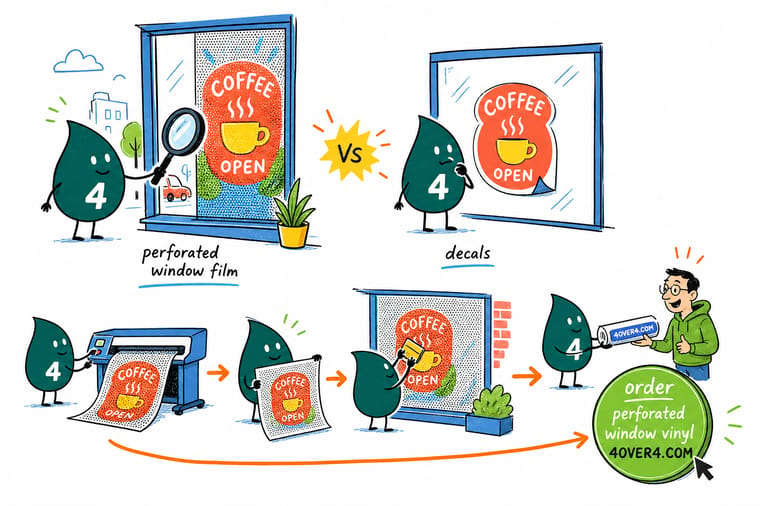
Wally reads the window first: to blanket a whole pane with a promo while staff still see out, he reaches for perforated film; for hours, a logo, or crisp lettering on clear glass, he cuts a decal. Cover with one, accent with the other, and 4OVER4 prints both to match your storefront exactly.
Order window film →Quick reference
Perforated film vs decals at a glance
The quick comparison that resolves most storefront decisions. Match the row that fits your goal, then fine-tune material and size.
| Factor | Perforated film / decals | Why it matters |
|---|---|---|
| Coverage | Whole pane vs cut graphic | Film blankets a full window; decals place specific artwork on clear glass. |
| Visibility out | One-way vs fully clear | Film lets you see out through its holes; decals leave surrounding glass see-through. |
| Detail and opacity | Softer vs sharpest | Solid decals render the crispest lettering; film trades a little detail for coverage. |
| Best use | Big promos vs hours and logos | Film owns the window for campaigns; decals handle hours, logos, and callouts. |
| Change frequency | Longer-term vs swappable | Film and adhesive decals suit lasting graphics; static clings rotate weekly. |
Step by step
Choose and apply window graphics in 6 steps
- Decide coverage first Full-window image points to film; specific graphics on clear glass point to decals or clings.
- Weigh visibility and privacy Pick perforated film if staff must see out and you want the interior obscured from the street.
- Set permanence Choose adhesive film or decals for lasting branding, static clings for messages you rotate.
- Measure the glass Record the pane or the graphic area so your size and price are accurate.
- Design for the surface Keep key text large and high-contrast, especially on perforated material.
- Proof and order Run the free file check, set material and quantity, and watch the price update live.
Infographic
Film or decals, side by side
The differences that actually decide it: coverage, visibility, detail, and how often you will change the message.
Most storefronts do not choose one forever. A perforated film hero graphic plus crisp door decals covers reach, visibility, and everyday info at once.
Specs and pricing
Perforated window vinyl specs and live pricing
Once you know film or decals, the print decisions come down to size, material, and quantity. Here are the live specs and price-per-unit for perforated window vinyl at 4OVER4.COM.
| Quantity | Price Per Unit | Total |
|---|---|---|
| 1 | $30.00 | $30.00 |
Order it
Print the window graphics your storefront needs
Explore more
Where to go next


By the numbers
Window graphic materials in our catalog
Common Questions
Common questions about window film and decals
What is 70/30 window perf?
70/30 is the perforation ratio: about 70 percent of the film is printed vinyl and 30 percent is open holes. It is the storefront default and the ratio most printers stock, because it gives the fullest, brightest image from outside while still letting staff see out. The graphic reads solid from the street and the holes vanish at viewing distance.
What is the difference between 70/30 and 50/50 perforated window film?
The split between print and holes. 70/30 has smaller, sparser holes, so the graphic looks near solid and colors print full, at the cost of a slightly dimmer view from inside. 50/50 is half holes, so the view out is clearer and more light comes in, but the print looks lighter and more screened from the street. Choose 70/30 for storefront advertising and 50/50 where the view out matters more than the image.
Are you supposed to laminate perforated vinyl?
Outdoors and on vehicles, yes. An optically clear perforated overlaminate seals the holes against water and road grime, keeps a rear wiper from lifting the print, and protects the ink in a wash tunnel, which is why it earns its cost on any vehicle that lives outside. On a flat storefront pane in a short campaign you can skip it, but any laminate you do use must be a perforated one, because a standard clear laminate fills the holes and kills the see-through effect.
Is perforated window film legal on car windows?
It depends on the pane and on your state. On the rear window perforated film is allowed in most of the country, commonly on the condition that the vehicle has a working mirror on both sides, and rear side windows behind the driver are usually treated the same way. The windshield is off limits apart from the narrow marked band at the top, and the front side windows beside the driver are restricted almost everywhere because states set a minimum visible light transmission there. Those minimums differ state by state, several states require a compliance sticker or certificate, and states with annual safety inspections measure the glass with a meter, so film that passes at home can fail one state line away. Check your own DMV or state police window tint page before you print, and if your vehicles cross state lines, build to the strictest rule on the route.
Can you see through perforated window film at night?
The one-way effect follows the light, so it flips after dark. In daylight the street is brighter than the interior, which is why the outside reads as a solid printed image while people inside see out through the holes. At night, with the interior lit and the street dark, the view reverses: from outside you can see into the lit room through the holes and the graphic goes flat and washed out. Light the graphic from the outside, or from between the film and the interior, if it has to sell after hours, and keep the message large and high-contrast so it survives low light. On a vehicle, expect rear window film to cut what you can see in the rearview mirror at night, which is exactly why working side mirrors are part of the legal condition for covering that pane.
What is perforated window film?
Perforated window film is a printed vinyl covered in a grid of tiny holes, commonly described by a ratio such as 70 by 30, meaning about 70 percent printed surface and 30 percent open holes. From the street it reads as a solid, full-color graphic across the whole pane, while from inside the holes let light and sightlines through so staff and customers can still see out. That one-way effect makes it the go-to for covering large storefront glass with advertising without boxing in the interior.
What is the difference between window film and window decals?
The core difference is coverage and visibility. Perforated film covers an entire pane and preserves a one-way view out through its holes, which suits full-window promotions and brand imagery. A window decal or cling instead places a specific cut graphic, such as lettering, a logo, or hours, onto glass that stays clear around it, giving the sharpest detail and full opacity. In short, film blankets the window while decals accent it, and many storefronts use both together.
Can you see through perforated window film from inside?
Yes. The small holes across perforated film let light and sightlines pass, so from inside you can see out to the street while the outside still reads as a solid printed image. This one-way visibility is the main reason businesses choose perforated film for large windows, since it delivers a big advertising graphic without darkening the interior or blocking the view for staff and customers. It also softens glare and adds a degree of privacy from the outside.
Which lasts longer, film or decals?
Both perforated film and adhesive vinyl decals are durable and suited to longer campaigns and permanent branding, with lifespan depending on material, exposure, and installation quality. Static window clings are the exception by design: they use no adhesive and reposition easily, which makes them ideal for short-term or frequently changed messages rather than long-term graphics. Choose adhesive film or decals when you want the graphic to stay put, and clings when you plan to rotate the message often.
Do I have to choose only film or only decals?
No, and often the best storefronts use both. A common, effective combination is a perforated film hero graphic that covers a large pane with a promotion or brand image, paired with crisp vinyl decals on the door for hours, a logo, and small callouts. Film delivers reach and one-way visibility while decals handle the sharp everyday information, so together they cover promotion, privacy, and practical detail without compromise.
What does window film advertising cost?
Both film and decals price on size or square footage, material, quantity, and finish. Perforated film is sold by area because it covers large panes, so cost scales with the window size, while decals and clings price by their cut size and quantity, making a set of small door graphics far cheaper than a full-window film. You set each option in the configurator and the total updates live, and higher quantities lower the unit price, which helps when outfitting several locations.
Get Started
Ready to turn your windows into advertising?
Print perforated window film and decals at 4OVER4.COM sized to your exact glass. Adjust material, size, and quantity and watch your price update live.
Legal Disclaimer
Gold Standard guarantees apply to all standard orders placed through 4over4.com. Price match requires verifiable proof of a competitor's published price for an equivalent product with matching specifications and turnaround time. Satisfaction guarantee covers manufacturing defects and print quality issues. Contact support with order number and documentation. On-time delivery rate based on tracked orders 1999 to 2026. Individual results may vary based on shipping carrier performance.
