
Printed Card Prices Explained


There is no single price for a printed card, only the price of the card you configure. Four levers set every total, bulk discounts move one of them, and the live price tiers show the result.
Printed card prices come from four levers: quantity, size, paper stock, and finish. Quantity moves the number most, because setup cost spreads across the run and the per-card price falls sharply as you order more. Heavier stocks and finishes like foil or spot UV add cost, larger sizes use more material, and the configurator prices your exact combination live.
Start here
Why one card has no single price
Four levers set every card price: quantity, size, paper stock, and finish. Quantity moves it the most, since setup cost spreads across the run and the per-card price drops steeply as you order more. Larger sizes use more material, heavier stocks and specialty finishes add cost, and a rush turnaround can add a little. The configurator prices your exact combination live. The chart below shows how the unit price falls with quantity.
What actually drives printed card prices
There is no single sticker price for a printed card, and that confuses a lot of buyers. The truth is simpler than it looks: four levers set nearly the entire number, and once you understand them, the price of any card becomes predictable rather than mysterious.
Those levers are quantity, size, paper stock, and finish. Quantity has the biggest effect by far. Size scales with the material used. Stock and finish add cost as you move upmarket. A fifth lever, turnaround, nudges the price if you need it fast. Everything else is detail.
This guide walks each lever in the order that matters, then shows the live price tiers so you can see the math on real business cards. If you want a specific number range for a card run, our companion guide on how much business cards cost puts figures to it.
Quantity: the tier that moves the price most
If you change one thing to control cost, change the quantity. Most of what you pay for a card run is setup, the plates, the press time, the make-ready, and that fixed cost is spread across every card you print. Order 100 and each card carries a big slice of setup. Order 5,000 and that same setup is split thousands of ways.
The result is a steep drop in the per-card price as quantity rises. The jump from a small run to a mid-size run often cuts the unit cost dramatically, then the curve flattens at high volumes. That is why card pricing is quoted in tiers rather than a flat rate.
The practical move is to order the quantity you will actually use before the next reprint, so you reach a lower tier without overbuying. The price chart above and the live tiers below show exactly where the unit cost falls as the run grows.
Stock and finish: where premium adds up

Paper stock is the feel of the card in the hand, and it carries a cost. A standard 14 point stock keeps the price low and suits high-volume everyday cards. Step up to a premium 16 point, a cotton stock, or a plastic card and the material cost rises along with the impression it makes.
Finish is the surface treatment, and it is where specialty pricing lives. A plain matte or gloss coating is inexpensive, while effects like spot UV, foil stamping, painted edges, or a soft-touch laminate each add cost because they add a production step. On custom business cards, these finishes are how a card feels expensive, and they are worth it when the card represents a premium brand.
The rule is to spend where it shows. Put budget into the stock and finish for cards that make a first impression, and keep it lean for cards you hand out by the hundreds. You do not have to choose one approach for every card you order.
Size and turnaround: the quieter levers
Size scales with the material and press space a card uses. A standard business card is the most economical footprint. An oversized card, a square card, or a die-cut shape uses more paper and often more finishing, so the price climbs with the format. When standing out is the goal, that premium can be worth it, but for pure volume, standard size wins.
Turnaround is the last lever. Standard production gives the best price, while a rush window that pulls your job forward in the queue can add cost. If your deadline allows, standard timing keeps the number down.
Neither of these moves the price as much as quantity or finish, but they explain why two cards at the same quantity can still land at different totals. When you compare quotes, make sure the size and turnaround match before you judge the price.
Reading the live price tiers and ordering
Because the price is built from your choices, the only real quote is the one the configurator generates for your exact card. Set the quantity, size, stock, and finish and the total updates live, along with the per-card price at each quantity tier, so you can see the value curve as you adjust.
Use that view to find the sweet spot: the tier where the unit price has dropped meaningfully but you are not printing cards you will never hand out. For most businesses that lands in a mid-size run, refreshed as the brand or details change.
The live specs and pricing below show the real tiers for classic business cards at 4OVER4.COM. Compare a couple of quantities and finishes there, then order at the tier that fits. For choosing a printer in the first place, our guide on where to print business cards helps.
Wally works the four price levers
No mystery, just quantity, size, stock, and finish
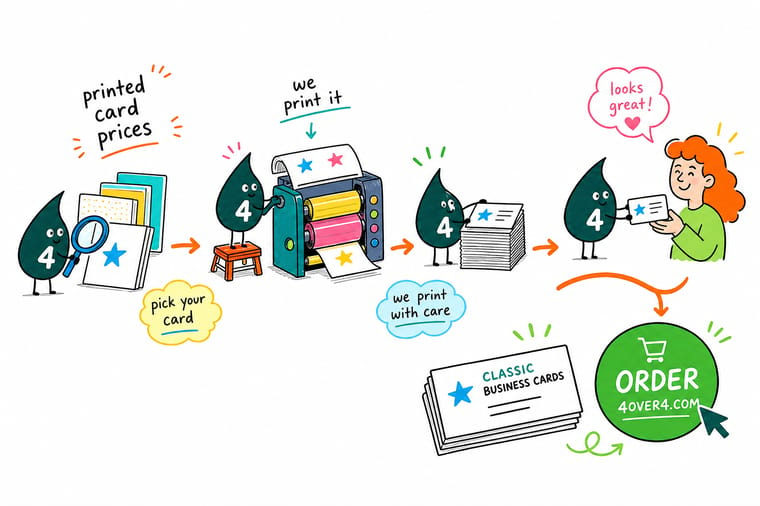
Wally treats card pricing like a mixing board. Quantity is the big fader, since setup spreads across the run and the per-card price drops as it rises. Size, stock, and finish nudge the total up or down. He sets the levers to match the job, reads the live tiers, and orders at the sweet spot where value peaks. No guessing, just the number in front of you.
Get an instant card quote →Quick reference
The levers that set a card price, at a glance
Adjust any of these and the total moves. Quantity moves it most, finish and stock next.
| Lever | Range | Effect on price |
|---|---|---|
| Quantity | The biggest lever | Setup cost spreads across the run, so the per-card price drops sharply from 100 to 5,000. |
| Size | Scales with material | A larger card uses more paper and press space, so oversized formats cost more per piece. |
| Paper stock | 14pt to premium | Heavier and specialty stocks like cotton or plastic cost more than a standard weight. |
| Finish | Matte to foil | Coatings and effects like spot UV, foil, or soft-touch add cost over a plain finish. |
| Turnaround | Standard or rush | A faster production window can add cost, while standard timing keeps it lower. |
| Design help | Free with the designer | Laying out your card in the online designer or a template adds nothing to the price. |
Step by step
Price your card run in 7 steps
- Start with the quantity you need Decide how many cards the season or the team actually requires, since quantity moves the per-card price more than any other choice.
- Pick the size Choose a standard card for the lowest cost, or an oversized or specialty shape when standing out is worth the extra material.
- Choose the paper stock Select a standard weight to keep costs down, or step up to a premium, cotton, or plastic stock when the card needs to feel substantial.
- Add a finish if it earns its keep Layer on a coating or effect like matte, spot UV, or foil only where it adds real impact, since each one raises the price.
- Set the turnaround Keep standard production for the best price, or select a faster window if a deadline requires it.
- Read the live price tiers Watch how the unit price falls across quantity tiers in the configurator, and pick the tier that fits your budget and need.
- Order at the right tier Lock the quantity that gives the best value without overbuying, upload your file, and check out with the exact number in view.
Specs and pricing
Business card specs and live price tiers
Here are the live specs and per-unit price tiers for classic business cards at 4OVER4.COM, straight from the configurator. Compare a couple of quantities to see the bulk math in action.

| Quantity | Price Per Unit | Total |
|---|---|---|
| 100 | 17.6¢ | $17.57 |
| 200 | 11.5¢ | $23.07 |
| 300 | 9.15¢ | $27.46 |
| 400 | 7.96¢ | $31.86 |
| 500 | 7.25¢ | $36.26 |
| 600 | 6.77¢ | $40.64 |
| 700 | 6.43¢ | $45.04 |
| 800 | 6.18¢ | $49.43 |
Print it
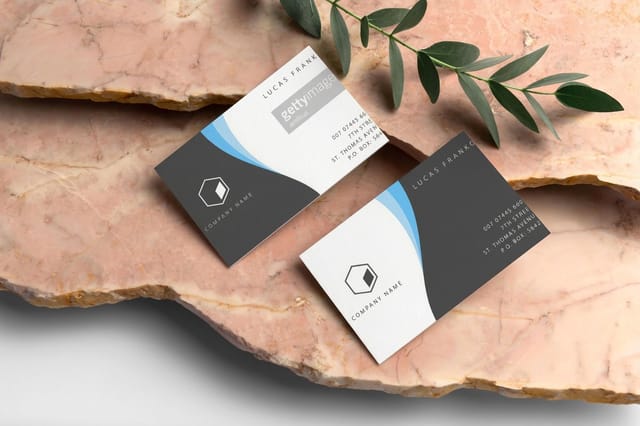
Price and print your cards at 4OVER4

See it in use
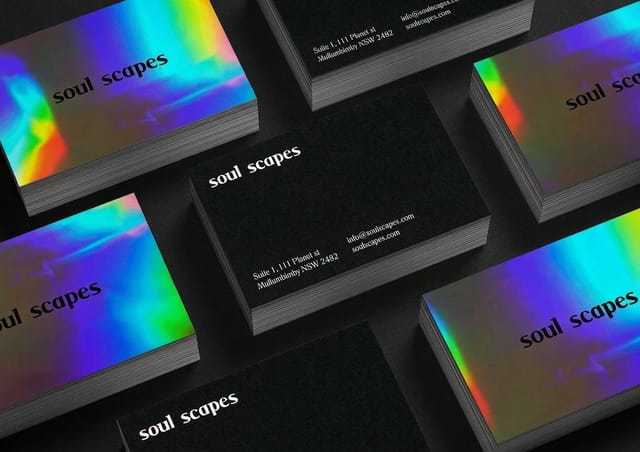
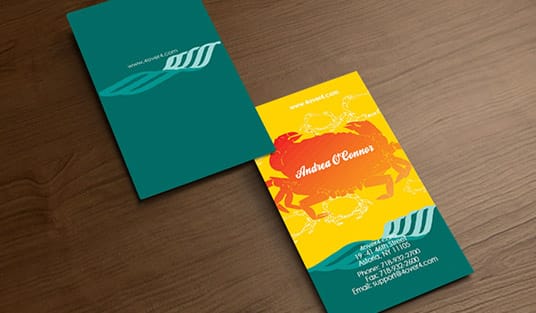
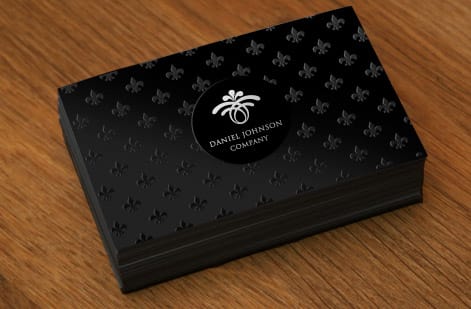
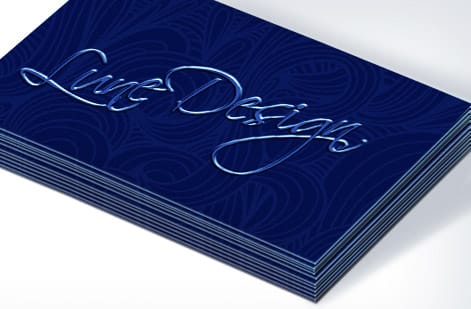
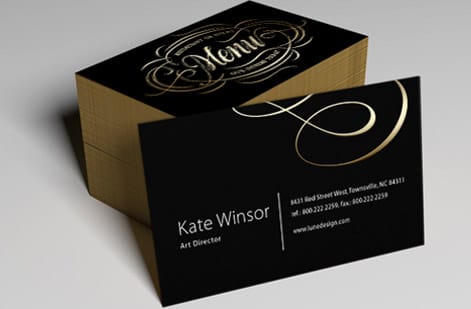
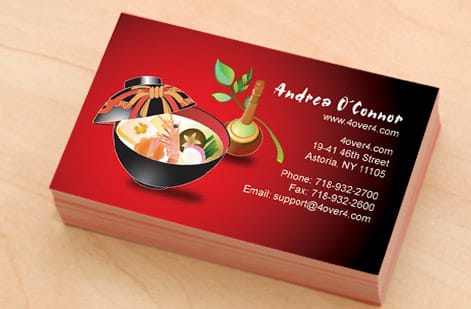
Cards at every price tier we printed



Explore more
Where to go next



By the numbers
The order volume behind these tiers
Common Questions
Common questions about printed card prices
What are card prices based on?
Printed card prices are set by four main levers: quantity, size, paper stock, and finish. Quantity is the largest, because most of the cost is in press setup, and that setup spreads across the whole run, so the per-card price falls as you order more. Size matters because a larger card uses more paper and press space. Stock adds cost as you move from a standard weight to premium, cotton, or plastic. Finish adds cost for coatings and effects like spot UV, foil, or soft-touch. Turnaround can also shift the price if you need a faster production window. Together these levers explain nearly the entire number on any card order.
What quantity gets me the best price per card?
Work backward from what the card has to do. If you need a large volume of everyday cards, favor a standard size and stock and order enough quantity to reach a lower tier, since that is where the per-card price drops most. If the card represents a premium brand or a special occasion, invest in a heavier stock or a finish like foil and accept a higher unit price on a smaller run. Set your quantity, size, stock, and finish in the configurator and compare tiers live, so you land on the combination that fits both the impression you want and the budget you have.
What does a printed card cost and how are prices set?
A run of standard business cards can start at a low per-unit price and drop further as the quantity climbs, while premium stocks and specialty finishes raise it. The price is built from the four levers, quantity, size, stock, and finish, plus turnaround, and the configurator calculates the total live as you choose each option. That means there is no fixed sticker price for a card, only the price of the exact card you configure. To see a real number for your project, set your options at 4OVER4.COM and the tiered per-card pricing appears instantly.
What sizes, stocks, and finishes are available for printed cards?
Printed cards span standard business card sizes, oversized and mini formats, and specialty die-cut shapes. Stocks range from a everyday 14 point through premium 16 point, plus cotton, plastic, kraft, and other specialty materials. Finishes include matte, gloss, uncoated, soft-touch, spot UV, foil, painted edges, and rounded corners. Each size, stock, and finish carries its own cost, which is why the configurator prices your specific combination rather than quoting a single rate. Choosing them together lets you dial in the exact balance of impression and budget.
How long do printed cards take to make and ship, and does speed cost more?
Printed cards are produced to order, so the timeline covers printing and any finishing before the order ships, and it depends on the stock, finish, and quantity you choose. Many standard card orders at 4OVER4.COM move through production quickly once your file is uploaded, and a faster rush window is available for a deadline, which can add to the price. Specialty finishes such as foil or spot UV can add a little time. The live product page shows the current production and shipping estimate for your exact options before you check out.
Get Started
100 classic cards cost $17.57, ready made cards 50 for $5.00
Set your quantity, size, stock, and finish at 4OVER4.COM and the per-card price appears instantly. Compare tiers and order at the sweet spot for your budget.
Legal Disclaimer
Gold Standard guarantees apply to all standard orders placed through 4over4.com. Price match requires verifiable proof of a competitor's published price for an equivalent product with matching specifications and turnaround time. Satisfaction guarantee covers manufacturing defects and print quality issues. Contact support with order number and documentation. On-time delivery rate based on tracked orders 1999 to 2026. Individual results may vary based on shipping carrier performance.
