
Standard A-Frame Sign Sizes and How to Choose the Right One


Almost every sidewalk A-frame comes in one of two panel sizes: 24 by 36 in for reach, or 18 by 24 in for tight spaces. Your space, your reading distance, and your message pick between them.
The two standard A-frame sizes are a 24 by 36 in panel and an 18 by 24 in panel, one per side. Choose 24 by 36 for reach in open, high-traffic areas, and 18 by 24 for a small footprint in doorways and narrow aisles. Size your headline using about 10 ft of readable distance per inch of letter height, then pick a plastic, aluminum, or steel frame for the environment.
Start here
24 by 36 for reach, 18 by 24 for close range
The standard A-frame sign size is a 24 by 36 in panel per side, with 18 by 24 in as the compact alternative for tight spaces. A 24 by 24 in square and an oversize 36 by 48 in cover the edge cases. Measure both the printed panel and the open frame footprint, size your headline to about 10 ft of readable distance per inch of letter height, and match the frame material, plastic, aluminum, or steel, to where the sign will stand. Then design both sides to the exact panel size with bleed and a safe margin. The chart below lines the sizes up, with footprints given as planning allowances because the exact frame varies by model, and the diagram after it shows both standards side by side.
| Panel size | Frame footprint, open | Frame footprint, folded | Reads from | Best venue |
|---|---|---|---|---|
| 24 x 36 in, the standard | Allow about 26 to 28 in of width and close to 2 ft of sidewalk depth once the legs open | Panel width plus the frame edge, a few inches thick against a wall | About 40 ft with a 4 in headline | Sidewalks, parking lots, event entrances |
| 18 x 24 in, the compact standard | About 20 to 22 in wide and under 2 ft deep | Slim enough to carry in one hand and store behind a counter | About 30 ft with a 3 in headline | Cafe doorways, store aisles, narrow walkways |
| 24 x 24 in, square | About 26 in wide, same depth as the 24 by 36 | Same width folded, shorter to store | About 30 ft with a 3 in headline | Menu boards and corners where a tall panel blocks the view |
| 36 x 48 in, oversize | Plan for roughly 3.5 ft of width and 3 ft of depth | A two-handed carry that needs real storage space | 60 ft or more with a 6 in headline | Open lots, roadside frontage, trade show entrances |
Why A-frame sign size decides who actually reads it
An A-frame only works if people can read it before they walk past. Get the size wrong and one of two things happens: a sign too small to be seen from across a lot goes unnoticed, or a sign too big for a narrow doorway becomes an obstacle people step around. Size is the first decision, and it drives almost everything else about the sign.
The good news is that the market has settled on two standards, so you are really choosing between them rather than picking a number from thin air. A larger 24 by 36 inch panel per side for reach, and a compact 18 by 24 inch panel per side for tight spaces. Everything after that, frame material, design, and message length, follows from which of the two you pick.
This guide covers both standards in full: their real dimensions, the difference between panel size and frame footprint, how far each one reads, which venues suit which size, and how to design for them. When you are ready to order, browse the complete A-frame signs lineup or compare formats in our guide on yard signs, A-frames, and banners.
The two real A-frame standards: 24 x 36 and 18 x 24
Nearly every sidewalk A-frame you see takes one of two printed panel sizes per side. The 24 by 36 inch panel is the large standard, built for reach and word count. It gives you room for a bold headline plus a supporting line and still reads from a distance, which is why it dominates open sidewalks, parking lots, and event entrances. When impact matters most, this is the size.
The 18 by 24 inch panel is the compact standard. It is lighter, takes up less floor space, and slips into doorways and narrow aisles without blocking foot traffic. You trade some reading distance for a footprint that fits where the larger frame simply cannot. For a cafe entrance, a boutique aisle, or a small storefront, this is usually the right call.
Because both are stock sizes, both print and ship quickly, and both are available across our frame styles, from portable Signicade A-frames to lighter aluminum frames. Explore the whole range in the A-frame signs category, and see how they sit alongside our other quick-ship essentials in the Standard collection.
Panel size vs frame footprint: measure both
Here is the mistake that trips people up: they measure the space for the printed panel and forget the frame. An A-frame is an A shape, so when it opens, its feet spread wider than the graphic itself and it claims more floor than the insert suggests. A 24 by 36 panel needs noticeably more clearance than its 24-inch width implies once the legs are open.
So measure both. Note the printed panel dimensions for your artwork, and separately note the open frame footprint for the physical space. This is what keeps a sidewalk sign from crowding a doorway or a fire lane, and it is why the compact 18 by 24 is often the safer pick in genuinely tight spots even when the larger graphic would look better.
The printed insert is also the part you swap. The frame is reusable, and inexpensive double-sided inserts slide in and out as your message changes. That split, buy the frame once, reorder the panel often, is the whole economic case for an A-frame, and it is why matching the panel to a stock standard keeps your reorders cheap. Compare frame styles in the A-frame signs category to find the footprint that fits.
Visibility distance: how far each size reads
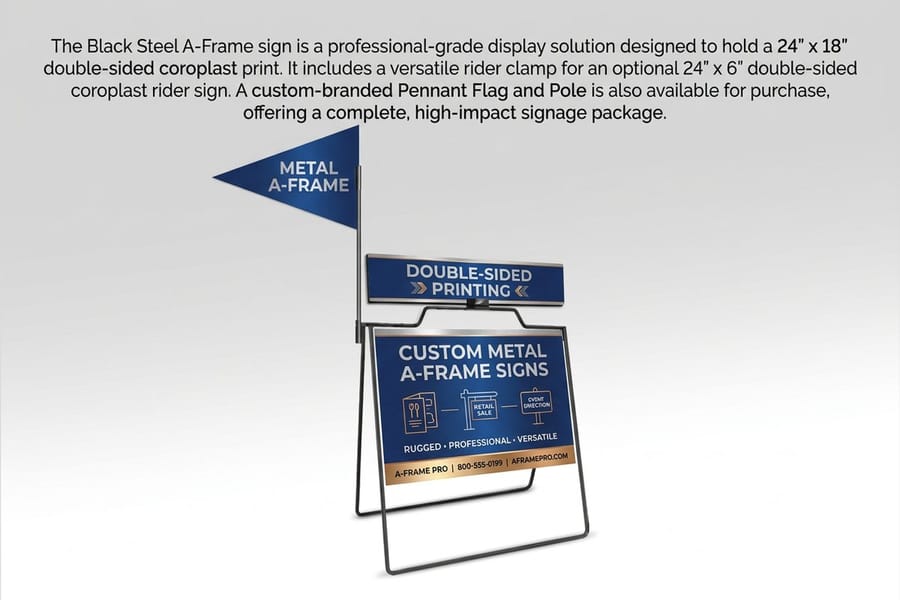
The size you need is tied to how far away people should be able to read the sign. A widely used signage rule of thumb is about 10 feet of readable distance for every inch of letter height. One-inch letters read from roughly 10 feet, three-inch letters from around 30 feet. It is an approximation, not a guarantee, but it is a reliable way to size your headline to the job.
This is where the two standards diverge. The 24 by 36 panel gives you room to set larger headline type, so it reads from farther away, which is exactly what an open lot or an event entrance needs. The 18 by 24 panel, with less room for oversized type, reads at closer range as people approach a door or move down an aisle. Neither is better; they are tuned for different distances.
Whichever you choose, contrast and brevity do as much work as size. Keep the headline short, the type large, and the color contrast high so it lands on someone in motion. A crisp, bold logo helps here too, so it stays legible at a glance, our logo design best practices cover exactly that.
Match the size to the venue
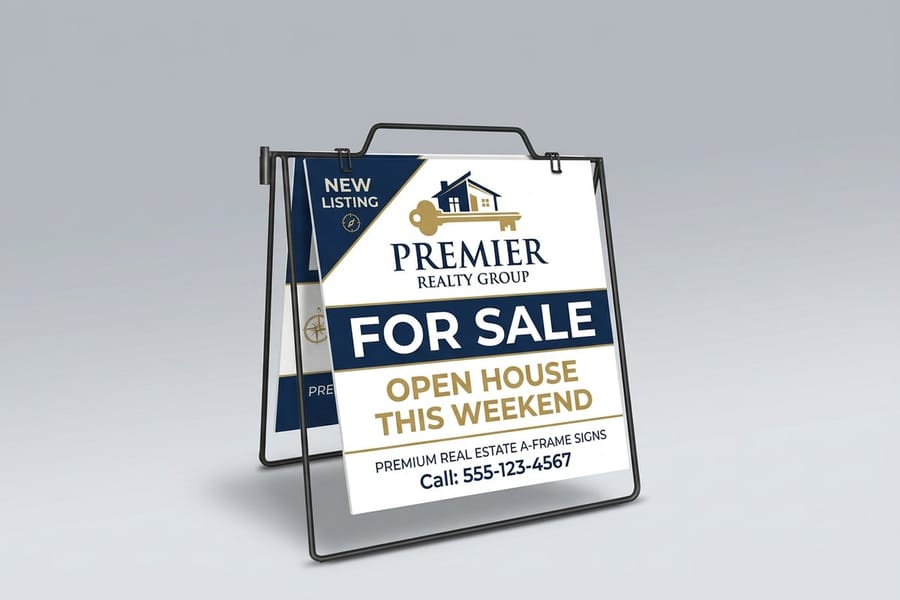
The simplest way to choose is to picture where the sign will stand. Open, high-traffic spaces reward reach: a 24 by 36 A-frame at a parking lot entrance, a festival gate, an open-house driveway, or a busy sidewalk gets read from across the space and pulls people in. If passersby are far away or moving quickly, size up.
Tight, close-range spaces reward a small footprint: an 18 by 24 A-frame outside a cafe door, in a store aisle, at the top of a stairwell, or on a narrow shopfront delivers the message without becoming a trip hazard or blocking the path. When the reader is already close and the space is limited, the compact size wins.
Think about mobility too. If the same sign moves between a sidewalk by day and storage by night, a lighter frame and the smaller panel are easier to carry. For a real-estate agent working open houses, a portable real-estate A-frame is built for exactly that. Match the size and the frame to the way the sign will actually be used, not just where it stands.
Design tips for each size
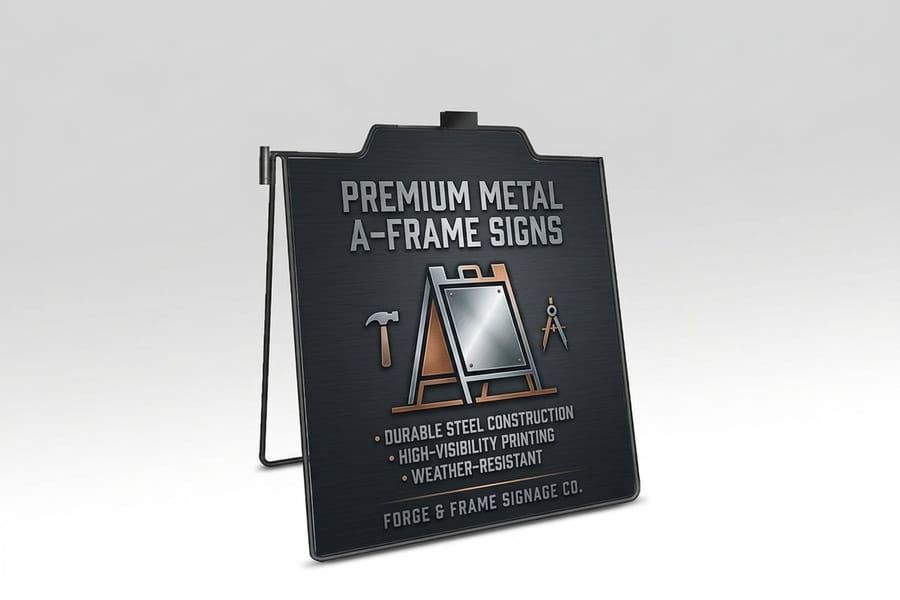
The panel size shapes the design. On the compact 18 by 24, less is more: one bold headline, a single supporting line, and a clear call to action. Crowd it and nothing reads. Because it is seen up close, you can include one small detail like a QR code or a phone number, but the headline still has to dominate.
On the larger 24 by 36, you have room for a stronger hierarchy: a big headline, a supporting benefit, and a call to action, all still large enough to read from a distance. Resist the urge to fill the extra space with text. The reach of this size comes from bigger type, not more words, so use the room for scale, not clutter.
For both, build the artwork to the exact panel dimensions with 0.125 in of bleed past every edge and a 0.125 in safe margin so no text gets clipped when the insert is trimmed. Design both sides, since A-frames are read from two directions. If you would rather not start from scratch, our online design tool sets the size and margins for you, and our file-prep guidance keeps your art press-ready.
Frame materials and where each fits

Once the size is settled, the frame material decides how the sign holds up. Plastic frames are the lightest and most portable, easy to carry in and out each day and gentle on the budget, which makes them the default for indoor use and light outdoor duty. If the sign moves constantly, plastic keeps it manageable.
Aluminum frames step up the look and durability without much added weight. They read as more premium, resist weather better than plastic, and suit storefronts and offices where appearance matters. Our aluminum A-frames hit that balance of clean looks and easy handling.
Heavier steel and reinforced frames are built for the outdoors and the wind. If the sign stands on an exposed sidewalk or lot for long stretches, the extra mass keeps it upright in a gust. Whatever the material, the panel size stays the same standard, so you can pick the frame for your environment and the size for your space independently. Browse every option in the A-frame signs category, and use the live specs and pricing below to build yours.
Wally sizes the sign to the sidewalk
Two standards: 24 by 36 for reach, 18 by 24 for tight spots
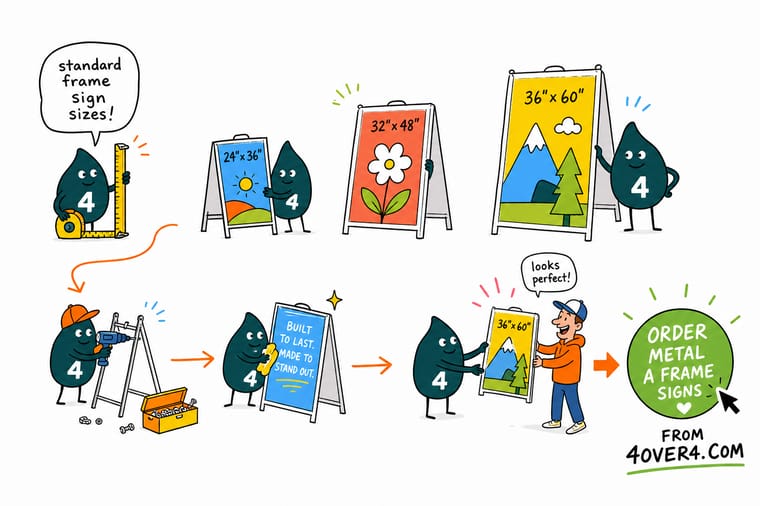
Wally measures the space first, then the distance. Open lot with people far off? He reaches for the big 24 by 36 panel and sizes the headline so it reads from across the way. Narrow cafe doorway? The compact 18 by 24 slides in without blocking the path. Buy the frame once, reorder the printed insert whenever the message changes, and 4OVER4 ships it fast.
Order your A-frame sign →Quick reference
A-frame sizes and specs, at a glance
The two standard panels, plus the material and file settings that go with them. Match these and your sign is ready to print and stand up straight.
| Spec | Standard | Why it matters |
|---|---|---|
| 24 x 36 in panel | The large standard | Maximum reach and word count. Best for lots, sidewalks, and event entries where people read from a distance. |
| 18 x 24 in panel | The compact standard | Fits tight walkways and doorways without blocking the path. Ideal for cafes, aisles, and small storefronts. |
| Frame footprint | Wider than the panel | The folded A shape needs floor space beyond the printed insert, so measure the open frame, not just the graphic. |
| Readable distance | ~10 ft per inch of letter height | A common signage rule of thumb: size your headline type to the distance you need the sign to be read from. |
| Insert material | Coroplast or rigid panel | Double-sided printed inserts slide into the frame and swap out when your message changes. |
| Printed sides | Double-sided as standard | Foot traffic arrives from both directions, so a second insert doubles the reads for a fraction of the frame cost. Single-sided only makes sense when the sign backs onto a wall, a window, or a hedge. |
| Frame model | Signicade, metal, or real estate frame | Plastic Signicade for portable sidewalk duty, metal for exposed outdoor spots and wind, a real estate frame for open houses and lot corners. |
| Frame material | Plastic, aluminum, or steel | Plastic for portability, aluminum for a lighter frame, steel for wind and heavy outdoor use. |
| Bleed and safe margin | 0.125 in each | Build art to the exact panel size with bleed past the edge and text inside the safe margin so nothing gets clipped. |
Step by step
Pick and order the right A-frame in 7 steps
- Measure the spot first Check the width of the sidewalk, doorway, or aisle where the sign will live, and account for foot traffic flowing around it. This tells you whether you have room for a 24 by 36 or need the compact 18 by 24.
- Set your reading distance Decide how far away people should be able to read it, then size your headline using the roughly 10 ft per inch of letter height rule. Longer reach points you toward the larger panel.
- Pick the panel size Choose 24 by 36 in for maximum impact and word count, or 18 by 24 in for tight spaces and a lighter footprint. Both are stock standards, so both print and ship fast.
- Choose the frame material Match the frame to the environment: plastic for easy indoor and light outdoor use, aluminum for a cleaner edge, and heavier steel frames for wind and long outdoor runs.
- Design to the real panel size Build your artwork at the exact insert dimensions with 0.125 in bleed and a 0.125 in safe margin. Keep the message short, the type large, and the contrast high so it reads on the move.
- Plan for two sides A-frames are seen from both directions, so design both panels. Repeat the core message so a passerby gets it whichever way they approach.
- Order, then swap inserts as needed Buy the frame once and reorder inexpensive printed inserts whenever your promotion changes, so the same A-frame carries a fresh message all year.
Specs and pricing
A-frame sign specs and live pricing
Once the size is set, the choices come down to frame, material, and quantity. Here are the live specs and price-per-unit for metal A-frame signs at 4OVER4.COM, straight from the configurator.
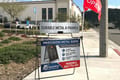
| Quantity | Price Per Unit | Total |
|---|---|---|
| 1 | $65.90 | $65.90 |
| 2 | $61.95 | $123.89 |
| 3 | $57.55 | $172.65 |
| 4 | $56.02 | $224.06 |
| 5 | $55.36 | $276.78 |
| 6 | $54.70 | $328.19 |
| 7 | $54.58 | $382.08 |
| 8 | $54.35 | $434.78 |
Print it
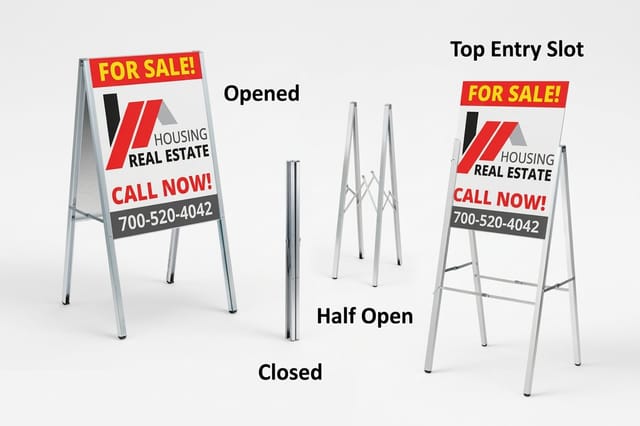
Order your A-frame signs

See it in use
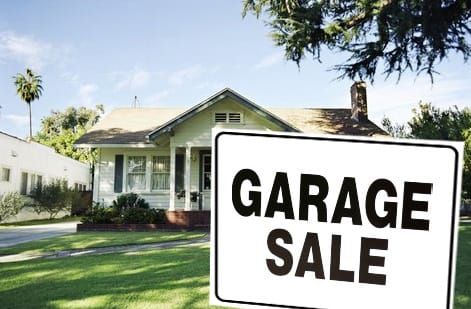
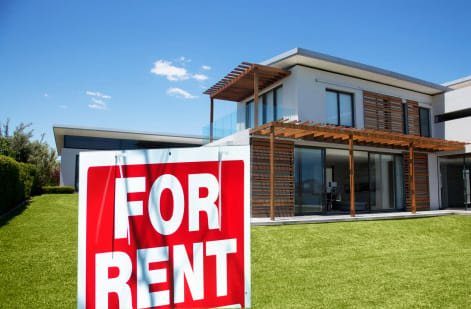
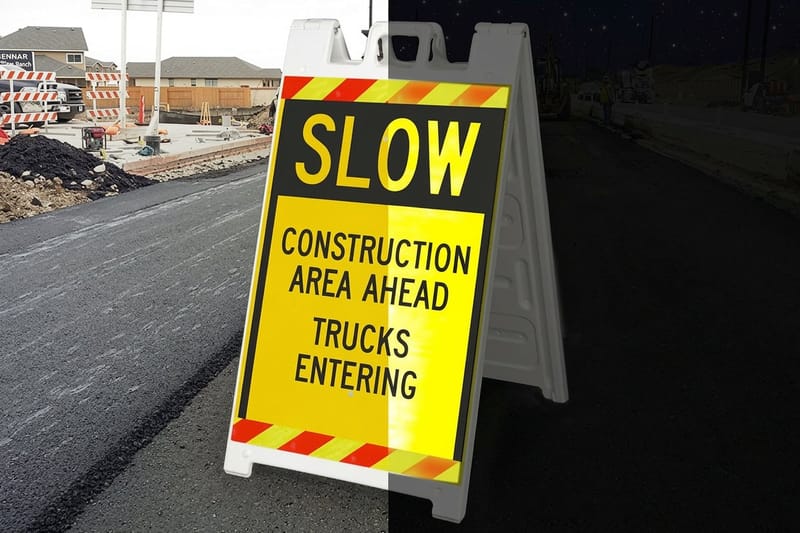
Sidewalk signs we printed this year


Explore more
Where to go next


By the numbers
Frames, panels, and the volume behind them
Common Questions
Common questions about A-frame sign sizes
What is the standard A-frame sign size?
There are two sizes that cover almost every A-frame in use. The larger standard takes a 24 by 36 inch printed panel on each side and is built for reach, so it suits sidewalks, parking lots, and event entrances where people read from farther away. The compact standard takes an 18 by 24 inch panel per side and is made for tight spaces like cafe doorways, store aisles, and narrow walkways where a bigger sign would block foot traffic. Both are stock sizes, so both print and ship quickly.
Is the A-frame insert size the same as the frame size?
No, and mixing the two up is the most common ordering mistake. The size you print, 24 by 36 or 18 by 24 inches, is the insert that slides into the frame. The frame itself stands taller and sits wider than the graphic, and once the legs open it takes up more sidewalk than either number suggests. Order the artwork at the panel size with 0.125 in of bleed and your text inside a 0.125 in safe margin, then measure the open frame separately to be sure the spot you have in mind actually holds it.
What wind rating does an A-frame sign need outdoors?
A sidewalk A-frame is not wind rated the way a permanent sign is, so stability comes from mass and shape rather than a certificate. Plastic frames are built with a base you fill with water or sand, and that ballast is what keeps them planted on a breezy day. Aluminum sits heavier than plastic, and steel is the pick for exposed corners and roadside frontage. Whatever the frame, keep both panels seated in their channels, angle the sign so the wind hits an edge rather than the face, and bring it inside overnight when weather is coming through.
Should an A-frame sign be printed on both sides?
Almost always, because people approach a sidewalk from both directions and a blank back is a wasted read. The frame is the expensive part and the inserts are not, so the second printed panel is a small addition that doubles the audience. Single-sided is fine when the sign backs onto a wall, a window, or a hedge and nobody can see it from behind. Because the inserts slide out, you can also run a different message on each face, hours on one side and the special of the day on the other.
What is the difference between 24 by 36 and 18 by 24 A-frames?
It comes down to reach versus footprint. The 24 by 36 gives you more surface, so you can use bigger type and a few more words and still be read from a distance, which makes it the choice for open, high-traffic areas. The 18 by 24 is lighter and takes up less floor space, so it fits doorways and narrow aisles without getting in anyone's way, at the cost of some reading distance. If you need to be seen from across a lot, go large; if the sidewalk is narrow, go compact.
How far away can an A-frame sign be read?
A useful signage rule of thumb is about 10 feet of readable distance for every inch of letter height. So one-inch letters read from roughly 10 feet, three-inch letters from around 30 feet, and so on. Because the 24 by 36 panel gives you room for larger headline type, it reads from farther away than the 18 by 24. Rather than memorizing exact numbers, size your main headline to the distance you actually need and keep supporting text shorter, since detail is only read up close.
Is 24 by 36 or 18 by 24 right for my sidewalk?
Start with the space and the distance. Measure the sidewalk, doorway, or aisle and picture people walking around the sign, then decide how far away it needs to be legible. Tight spot or short reading distance points to the 18 by 24; open area or longer reach points to the 24 by 36. After size, choose the frame material for your environment, plastic for portability, aluminum for a cleaner frame, steel for wind and heavy outdoor use, and design the artwork to the exact panel dimensions.
What does an A-frame sign cost, and how are prices set?
Price depends on the frame material and the number of printed inserts, not just the graphic. Sturdier frames like steel cost more than lightweight plastic, and larger 24 by 36 panels use more material than 18 by 24 ones. At 4OVER4.COM you set the frame, size, and quantity in the configurator and the price updates live as you go, with metal A-frame signs starting around $65.90. Because the frame is reusable, the smart move is to buy it once and reorder inexpensive inserts whenever your message changes.
Get Started
A metal A-frame costs $65.90, an aluminum one $146.07
Pick your panel size and frame at 4OVER4.COM, design both sides, and print it to order. Adjust every option and watch your price update live, then reorder inserts any time your message changes.
Legal Disclaimer
Gold Standard guarantees apply to all standard orders placed through 4over4.com. Price match requires verifiable proof of a competitor's published price for an equivalent product with matching specifications and turnaround time. Satisfaction guarantee covers manufacturing defects and print quality issues. Contact support with order number and documentation. On-time delivery rate based on tracked orders 1999 to 2026. Individual results may vary based on shipping carrier performance.
