
How Tamper Evident And Tamper Proof Stickers Protect Your Products


A tamper seal has one job: prove a package has not been opened. Tamper-evident and tamper-proof stickers work in two ways, void film and destructible stock, and your product decides which is the right sealing label for your product.
Tamper-evident stickers are security labels that leave permanent, visible proof if a package is opened, so a customer can trust it arrived sealed. Void stickers reveal a hidden VOID message when peeled, and destructible stickers shatter so they cannot be lifted whole. Choose the mechanism by product and threat, size it to bridge the closure, and match the adhesive to the surface.

Start here
Void film against destructible stock
Tamper-evident stickers are security seals that leave permanent, visible proof when a package is opened. Void types reveal a hidden VOID message when peeled; destructible types shatter so they cannot be lifted whole. The seal only works when it bridges the closure and the adhesive matches the surface. Add a logo and a serial number for authenticity and tracking. The diagram below shows how a void seal behaves.
Definition
What does tamper proof mean?
Tamper proof means the seal cannot be opened without destroying itself. Tamper evident means any opening leaves permanent, visible proof. No sticker is truly tamper proof, so tamper evident is the honest term: a void seal peels away leaving a hidden VOID message on the box, and a destructible seal shatters so it cannot be lifted whole and reapplied.
Pick by risk. A void seal that bridges the flap covers most retail and ecommerce boxes and keeps your branding intact, while a destructible label is the stronger answer for high-value goods and resale fraud. Either way, match the adhesive to the surface you are sealing, a coated box, a glass jar or a poly bag, and size the seal so it fully spans the closure. Then print your logo and a serial number on it, so the seal proves authenticity and tracks which package it closed, not just that it was opened.
What a tamper-evident seal actually does
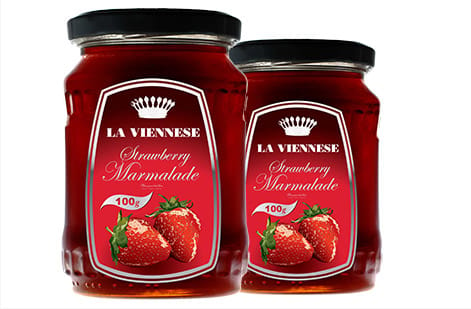
A tamper-evident seal answers one question for whoever receives a package: has this been opened since it left the seller? Rather than trying to make a package impossible to open, the seal makes opening impossible to hide. Any interference leaves permanent, obvious proof, which is enough to protect trust, deter casual tampering and support a return or fraud claim.
This matters most for ecommerce shipments, food and beverage, supplements, cosmetics and regulated goods, where a broken seal is a clear signal to stop. Sealing labels are a specialized branch of the wider label family, so pairing this page with our sticker material guide helps you understand how material choice drives the effect.
How void stickers reveal tampering
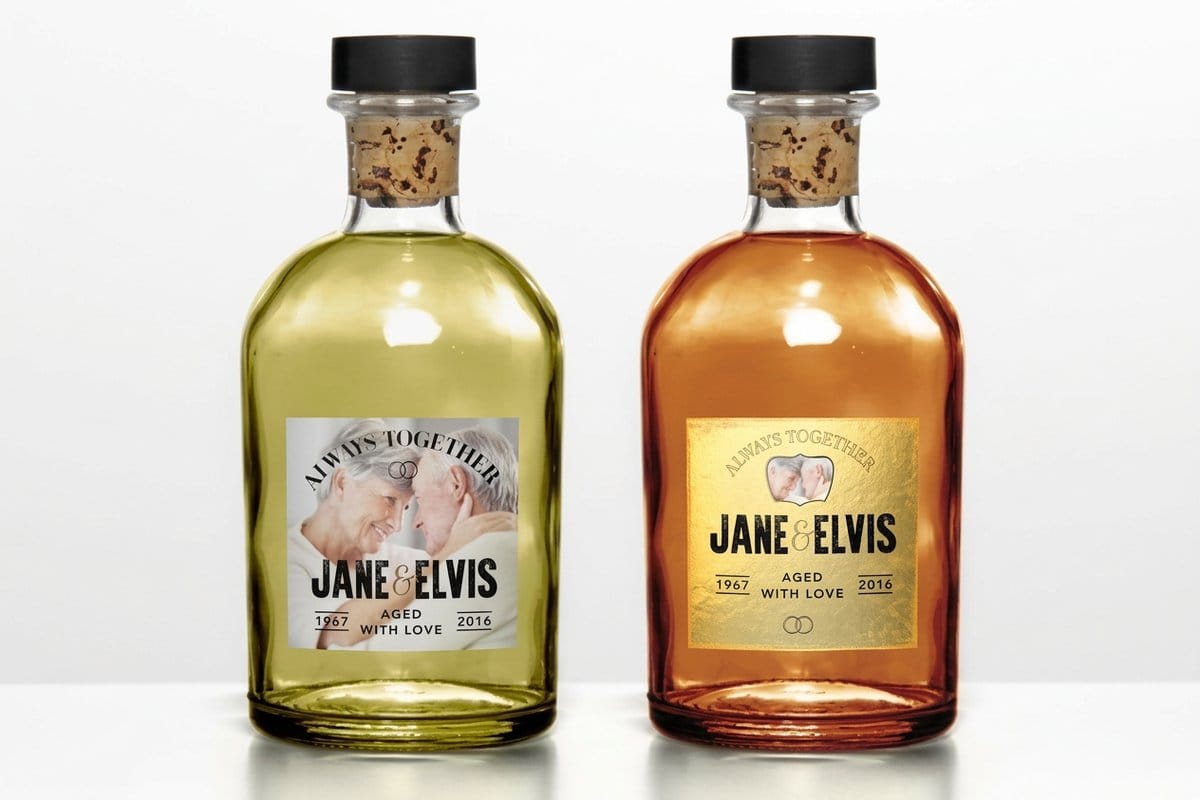
Void stickers are the most common security seal. They use a layered construction so that peeling the label leaves a hidden message behind, usually the word VOID repeated across both the surface and the lifted sticker. Once triggered, the pattern cannot be reset or hidden, so the evidence is permanent. Our custom labels can be built with this void mechanism and printed in full color.
The advantage of a void seal is that it keeps your branding intact while it is unbroken, then turns into unmistakable proof the instant it is disturbed. That makes it ideal for retail boxes and ecommerce parcels where you want a clean branded look that becomes a security alert only if someone interferes.
How destructible stickers stop reuse
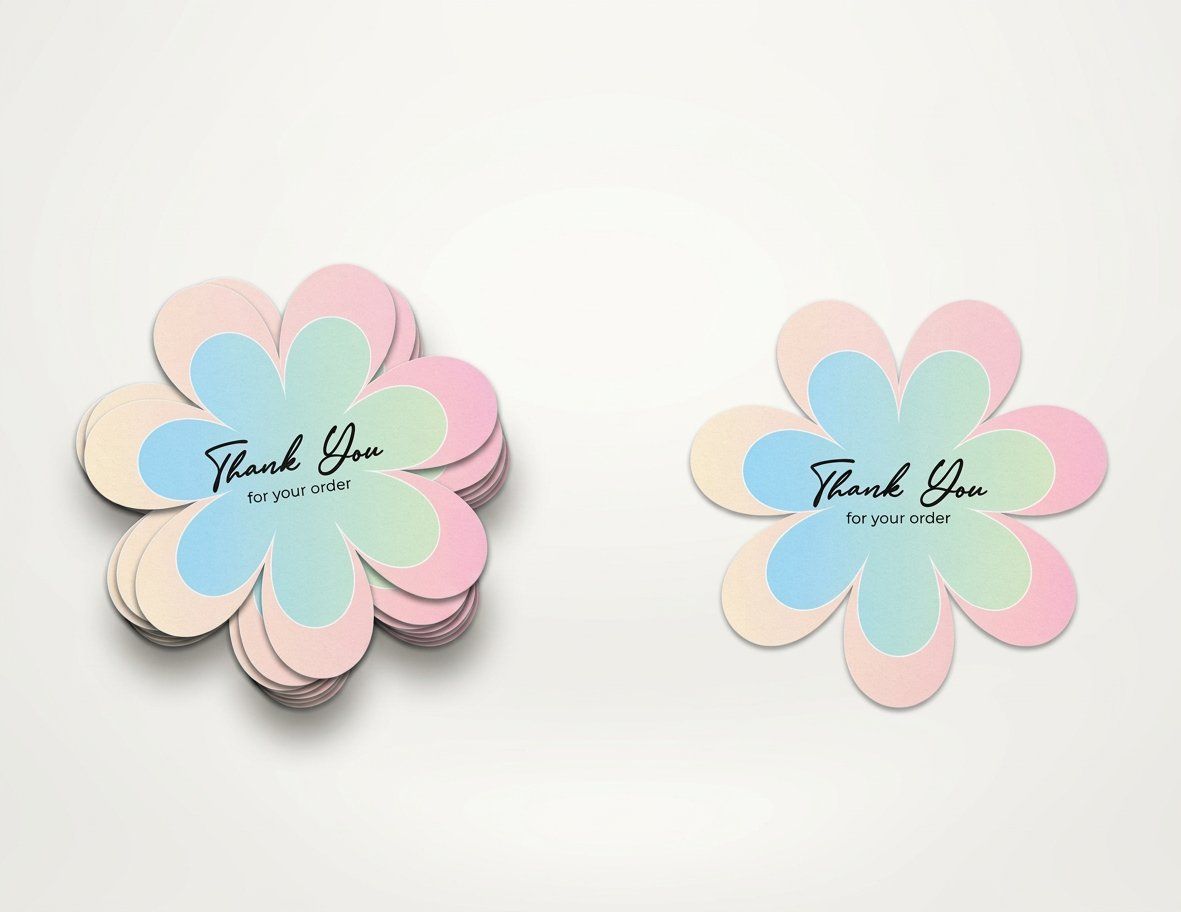
Destructible stickers take a different route. They are printed on a deliberately brittle material that fragments into small pieces the moment someone tries to peel them. Because the label cannot be lifted whole, it cannot be moved to another package or reapplied, which is what makes it strong against resale fraud and warranty abuse. A die cut destructible seal can also carry your logo and a serial number.
Use destructible seals where the stakes are higher: electronics warranties, high-value goods, or anything where a reused seal would be a real problem. The tradeoff is that the label is single use by design, so it is applied once, at the final closure, right before shipping.
Placement and adhesive make or break the seal

A security seal is only as good as where it sits. It has to bridge the actual opening, a box flap, a jar lid, a bag seam, so that opening the package physically breaks the seal. A beautifully made void label placed away from the closure protects nothing. Size the seal to fully span the seam, and where possible wrap it over an edge so it cannot be slipped around.
Adhesive is the other half. The void or fracture effect depends on a strong, surface-matched bond, so a seal for a glass jar differs from one for a coated box or a poly bag. If you are sealing shrink-wrapped or bagged goods, our shrink wrap service and matched sealing labels work together for full coverage.
Branding, numbering and traceability
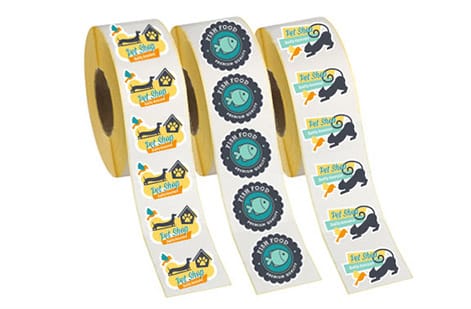
A tamper seal does double duty. Beyond proving the package is unopened, a printed logo signals that the brand cares about safety and authenticity, which itself builds trust at the moment of unboxing. Full-color printing means the seal reinforces your identity rather than looking like a generic security strip.
For regulated or high-value goods, sequential or serial numbering lets you track individual units, tie a seal to an order, and spot duplicates. Brands protecting products on the shelf lean on this, as in our look at how a food brand stood out with custom labels.
How to test and order your seals
Before a full run, always test. Order a sample, apply it to your actual package, and try to open it, confirming the void appears or the label shatters as intended. This one step catches adhesive and placement problems that are invisible on screen. The free file check also reviews your artwork before the press runs.
Once the seal performs, set the material, size and quantity in the configurator and watch the live price fall as volume rises. If you are sealing a full product line, our kitting service can assemble sealed sets, and the stickers collection shows every related label and seal option in one place.
Wally seals it so tampering shows
Void, destructible, always evident
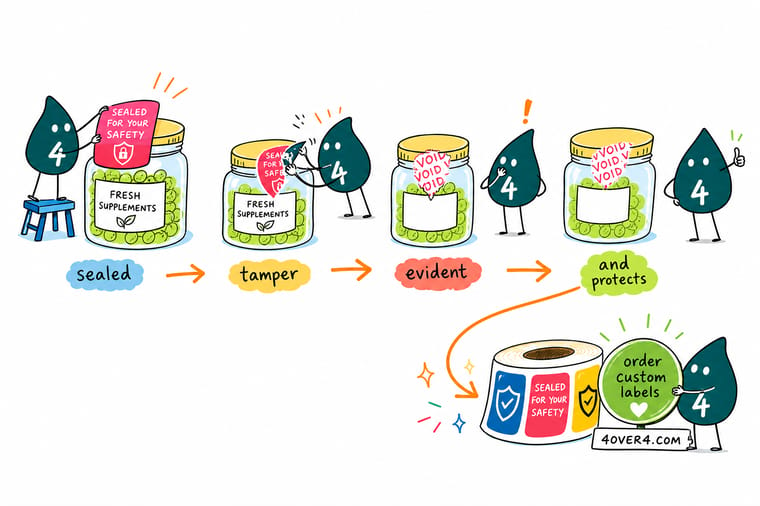
Wally bridges the box flap with a security seal and presses it down hard. If anyone lifts it, a VOID pattern stays behind or the label shatters into pieces that cannot be reused. He adds the logo and a serial number so the seal proves authenticity too. Pick the mechanism, span the closure, match the adhesive, and tampering can no longer hide.
Order your sealing labels →Quick reference
The tamper seal spec, at a glance
A sealing label settles mechanism, placement and adhesive. Use this to pick the right build for your product.
| Decision | Common choice | Why it matters |
|---|---|---|
| Mechanism | Void or destructible | Void leaves a hidden message; destructible shatters. Each proves opening in a different way. |
| Material | Vinyl, film or brittle stock | The material carries the security effect, so it is chosen to void or fragment on removal. |
| Size | Long enough to bridge the seam | The seal must span the closure so opening the package breaks it. |
| Adhesive | Aggressive, surface-matched | A strong bond on the right surface is what makes the void or fracture reliable. |
| Logo, serial or sequential number | Branding and numbering add authenticity and let you track individual seals. | |
| Shape | Rectangle or custom die cut | A custom shape reinforces the brand and can wrap an edge for extra coverage. |
Step by step
Spec your tamper-evident seals in 7 steps
- Define the threat Decide what you are protecting against, casual opening, resale fraud or contamination, since that sets how aggressive the seal needs to be.
- Pick the mechanism Choose a void sticker that reveals a message when peeled or a destructible sticker that fragments so it cannot be lifted whole.
- Find the closure Locate the exact opening, a box flap, a jar lid or a bag seam, that the seal must bridge to work.
- Size the seal Make the label long enough to span the closure so opening the package always breaks the seal.
- Match the adhesive Select an adhesive suited to the surface material so the bond is strong enough to trigger the security effect.
- Add branding and numbers Print your logo and, if you need traceability, a serial or sequential number on each seal.
- Test, then order Order a sample, apply it, and try to open the package to confirm the seal voids or shatters as intended before the full run.
Specs and pricing
Custom label specs and live pricing
Once the mechanism is chosen, size, material and quantity set the price. Here are the live specs and price-per-unit for custom labels at 4OVER4.COM, straight from the configurator.
| Quantity | Price Per Unit | Total |
|---|---|---|
| 1 | $25.00 | $25.00 |
Order it
Print your tamper-evident seals at 4OVER4
See it in use
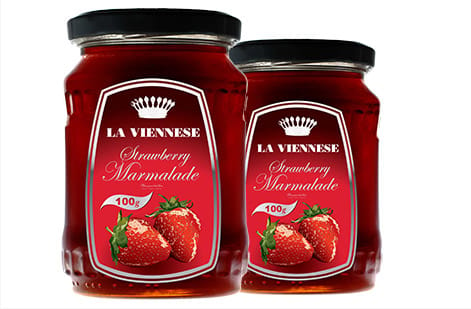
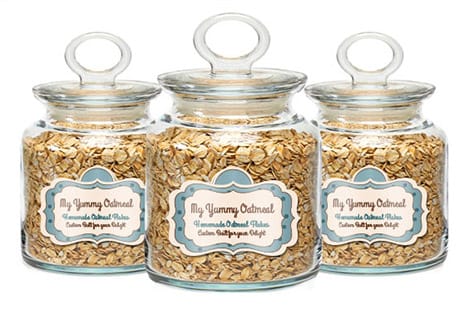
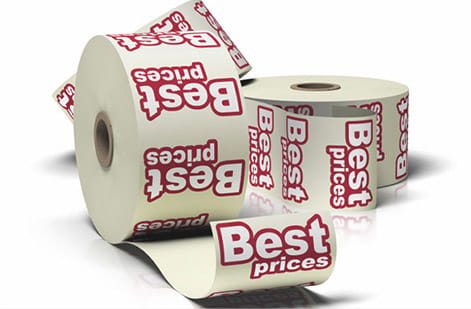
Custom label jobs from our own press



Explore more
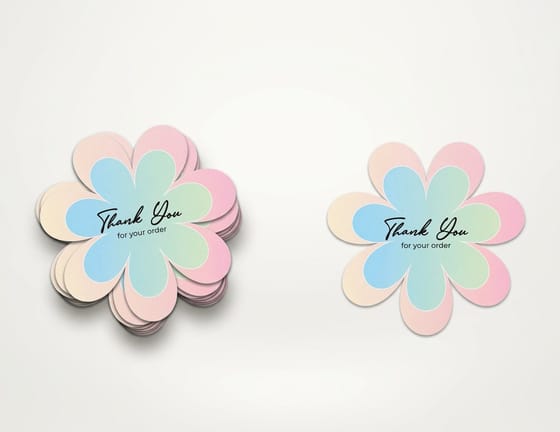
Where to go next





By the numbers
Sixty plus materials for seals and labels
Common Questions
Common questions about tamper-evident stickers
What does tamper proof mean?
Tamper proof means a seal that cannot be opened without destroying itself, so the closure can never be put back the way it was. Tamper evident means any opening leaves permanent, visible proof. Void labels reveal a hidden VOID message when peeled, and destructible labels shatter into small pieces that cannot be lifted whole and reapplied. In everyday use the two terms get swapped, but the mechanism is the same one: make opening a one-way event. A seal only earns the name when it bridges the closure and the adhesive matches the surface, whether that is a coated box, a glass jar or a poly bag.
Is anything truly tamper proof?
No. A determined person with time and tools can defeat almost any seal, which is why the honest description is tamper evident. The job of the label is not to make opening impossible, it is to make opening impossible to hide: once a void seal is lifted the VOID pattern stays behind on the box and on the label, and a destructible seal breaks apart, so a customer, retailer or inspector can see at a glance whether the seal was broken. Where you also need to prove which seal closed which package, add sequential or serial numbering and record it before the box ships.
What is the difference between tamper-evident and tamper-proof stickers?
Strictly speaking, no sticker is truly tamper-proof, because a determined person can defeat almost anything. What these labels deliver is tamper-evidence: any attempt to open the package leaves permanent, obvious proof. The two terms are used interchangeably in the market, but the honest description is tamper-evident. The value is that a customer, retailer or inspector can see at a glance whether a seal was broken.
How do void and destructible security stickers actually work?
A void sticker uses a layered adhesive so that peeling it leaves a hidden pattern, usually the word VOID, printed onto the surface and the lifted label, which cannot be reset. A destructible sticker is printed on a brittle material that shatters into small pieces the moment someone tries to remove it, so it cannot be lifted whole and reapplied. Both make removal a one-way, visible event, which is exactly the point of a tamper seal.
Do I need a void seal or a destructible one?
Start with what you are protecting against and the surface you are sealing. For general retail and ecommerce boxes, a void seal that bridges the flap is usually enough and keeps your branding intact. For high-value goods or resale fraud, a destructible label raises the bar. Then match the adhesive to the surface, whether that is a coated box, a glass jar or a poly bag, and size the seal to fully span the closure so opening it always breaks the seal.
What do tamper-evident stickers cost and how is pricing set?
Price scales with material, size, print and quantity. Security materials cost a little more than a standard label, custom shapes and serial numbering add setup, and larger runs lower the unit price. You set the size, material and quantity in the configurator and the total updates live. Custom labels start around 25 dollars for a run, with the per-unit price dropping as volume climbs.
Can I put my logo or a serial number on the seal?
Yes. Printing your logo turns a security seal into a brand touch and signals care and authenticity, while sequential or serial numbering lets you track individual seals for high-value or regulated goods. You can combine full-color branding with the void or destructible mechanism, so the seal both protects the package and reinforces trust when the customer sees it intact.
How long do tamper-evident seals take to print and ship?
Turnaround depends on the material, whether you need serial numbering or custom die cutting, and the quantity. Standard void seals move faster than numbered or specialty builds, and small runs print quicker than large ones. The product page shows the live production and shipping options for your configuration, and testing a sample on your actual package before the full run is the safest way to confirm the seal performs.
Get Started
Custom labels ship in 3 business days, die-cut ones in 5
Spec your tamper-evident sealing labels at 4OVER4.COM with the void or destructible mechanism your product needs. Adjust size and quantity and watch your price update live.
Legal Disclaimer
Gold Standard guarantees apply to all standard orders placed through 4over4.com. Price match requires verifiable proof of a competitor's published price for an equivalent product with matching specifications and turnaround time. Satisfaction guarantee covers manufacturing defects and print quality issues. Contact support with order number and documentation. On-time delivery rate based on tracked orders 1999 to 2026. Individual results may vary based on shipping carrier performance.
