
Trading Card Sizes and Dimensions for Print-Perfect Cards


The standard trading card size is 2.5 by 3.5 inches, the same footprint as a playing card, but the details around it decide whether your card looks professional. This guide gives you the exact dimensions, bleed and safe zones, the A2 size, and the finishes that make a card feel real.
The standard trading card size is 2.5 inches by 3.5 inches, matching a classic playing card. Design at that trim with 0.125 inches of bleed on every side and keep art and text 0.125 inches inside the trim in the safe zone. Corners are usually rounded at about a 1/8 inch radius. For a larger card, the A2 size is 4.25 by 5.5 inches. Finishes like gloss, silk, and kraft lamination set the final feel.
Start here
Trading card dimensions at a glance
Get the trim, the bleed, and the safe zone right and everything else about a trading card is a design choice. The standard card is 2.5 by 3.5 inches, and the diagram below shows exactly where the bleed, the trim, and the safe margin sit, plus the larger A2 size for when you need more room. Nail these three lines and your card fits sleeves, stacks cleanly, and never loses art to the cutter.
The standard trading card size

The trading card standard is 2.5 inches wide by 3.5 inches tall, the same footprint as a poker-size playing card. That size is not arbitrary: it is what card sleeves, top loaders, binder pages, and deck boxes are all built around, so a card at this trim slots into the entire collecting ecosystem without a custom accessory in sight.
Because the size is fixed by convention, your design work happens inside it. Portrait is the default orientation, though landscape works for wide art. When you order custom trading cards, you build to this trim and choose your stock and finish around it, and our online design tool starts you on a correctly sized template.
Bleed, trim, and safe zone
Three lines protect every card. The trim is the finished 2.5 by 3.5 inch edge where the blade cuts. The bleed is 0.125 inches of extra artwork past the trim on all four sides, so any background color or full-bleed image keeps going a little further and no thin white sliver appears if the cut drifts. The safe zone is 0.125 inches inside the trim, and every name, number, and logo stays inside it.
Rounded corners raise the stakes on the safe zone. Since trading cards are usually rounded at about a 1/8 inch radius, the corners eat into the printable area, so keep important detail well clear of them. The same discipline underpins any card project, and our guide on how to make trading cards walks the full build from art to file.
The A2 size and other formats
Not every card wants to be pocket-sized. When your artwork needs more room, or the card doubles as a keepsake or an announcement, the A2 size at 4.25 by 5.5 inches is the common step up. It is a familiar note-card format that still mails easily and gives illustration and text far more breathing room than the standard trim.
The same bleed and safe-zone rules apply at any size: 0.125 inches of bleed past the trim, 0.125 inches of safe margin inside it. If you are choosing between formats, think about how the card will be used, stored, and shown, then pick the trim that fits. For a fully bespoke approach, our guide on how to make custom trading cards covers non-standard shapes and sets.
Stocks and finishes that make a card feel real
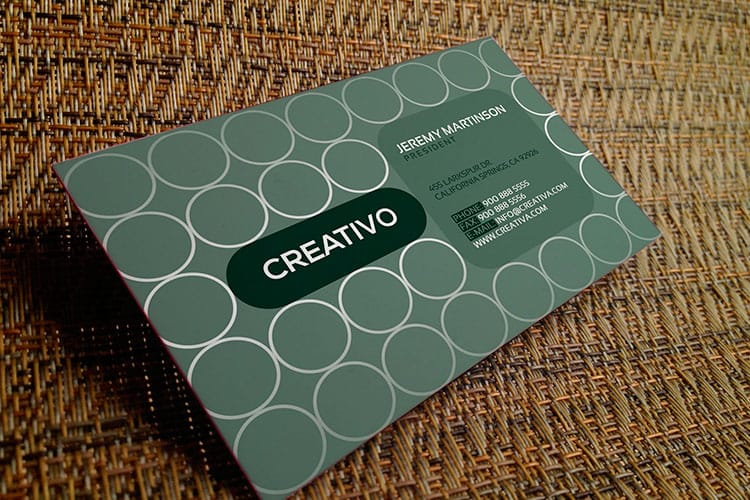
Two cards at the same size can feel completely different depending on the stock and lamination. A gloss laminate gives a bright, slick surface that makes colors pop and shrugs off fingerprints, which is why it is the classic sports-and-game-card look. A silk laminate feels smoother and more premium with a soft sheen, and a kraft stock brings a natural, matte, handmade character.
For a truly luxe hand-feel, suede and velvet laminates add a soft-touch surface that reads high-end the moment someone picks up the card. These finishes do more for perceived quality than almost any design tweak. Compare them in person by ordering samples, and browse the options through gloss laminated and silk laminated trading cards.
Preparing your trading card file
With the size and finish chosen, prepare the file the way any card needs. Build the document at the exact trim, add the 0.125 inch bleed, and pull your margins in for the safe zone, accounting for the rounded corners. Set images to 300 DPI at final size so small type and fine art stay crisp, since detail is easy to lose on a card this small.
Design in CMYK, keep small text a solid black rather than a four-color mix so it prints sharp, and export a flattened PDF. Double-sided cards need both faces aligned to the same trim and bleed. Every order runs through a free file check, and the exact live stocks and sizes are in the specs panel below.
Wally lines the card up to the sleeve
Right trim, bleed, and finish every time
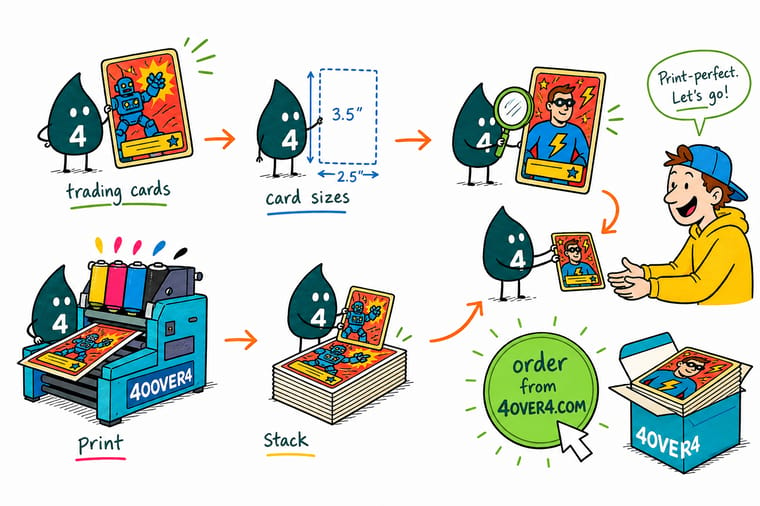
Wally sets your card to the 2.5 by 3.5 inch standard, drops in the bleed and safe zone, and keeps the art clear of the rounded corners so nothing gets clipped. Pick a gloss, silk, or soft-touch finish and 4OVER4 prints a card that fits every sleeve and feels like the real thing.
Print your custom trading cards →Quick reference
Trading card size and setup chart
The dimensions and file settings that make a trading card print cleanly. Match these and your card fits sleeves and cuts perfectly.
| Spec | Target | Why it matters |
|---|---|---|
| Standard trim | 2.5 x 3.5 in | The playing-card footprint that fits sleeves, top loaders, and binder pages. |
| A2 trim | 4.25 x 5.5 in | The larger note-card size for art-heavy cards and keepsakes that still mails easily. |
| Bleed | 0.125 in all sides | Backgrounds run past the cut so no white sliver appears if the blade drifts. |
| Safe zone | 0.125 in inside | Keeps names, numbers, and logos clear of the blade and the rounded corners. |
| Resolution | 300 DPI at final size | Keeps small type and fine art sharp on a small card. |
| Corners | Rounded ~1/8 in | The typical trading card corner, so keep detail away from the corners. |
Step by step
Size and order your trading cards in 6 steps
- Pick the trim Choose the standard 2.5 by 3.5 inch card or step up to the A2 size at 4.25 by 5.5 inches.
- Set up the three lines Build at the trim, add 0.125 inches of bleed, and pull the safe margin 0.125 inches inside.
- Mind the rounded corners Keep names, numbers, and logos clear of the corner radius so nothing is clipped.
- Place art at 300 DPI Use full-resolution art at final size and keep small text a solid black for crisp printing.
- Choose a finish Select gloss, silk, kraft, suede, or velvet lamination to set the card's hand-feel and durability.
- Proof and order Check both faces at full size, upload your flattened PDF, and let the free file check confirm it.
Specs and pricing
Custom trading card specs and live pricing
Once the size is set, the stock, finish, and quantity drive the price. Here are the live specs and price-per-unit for custom trading cards at 4OVER4, straight from the configurator.

| Quantity | Price Per Unit | Total |
|---|---|---|
| 25 | 45.0¢ | $11.25 |
| 50 | 33.0¢ | $16.48 |
| 100 | 24.2¢ | $24.16 |
| 200 | 15.9¢ | $31.86 |
| 300 | 12.8¢ | $38.45 |
| 400 | 11.3¢ | $45.04 |
| 500 | 10.3¢ | $51.62 |
| 600 | 9.89¢ | $59.31 |
Order it
Order custom trading cards
See it in use
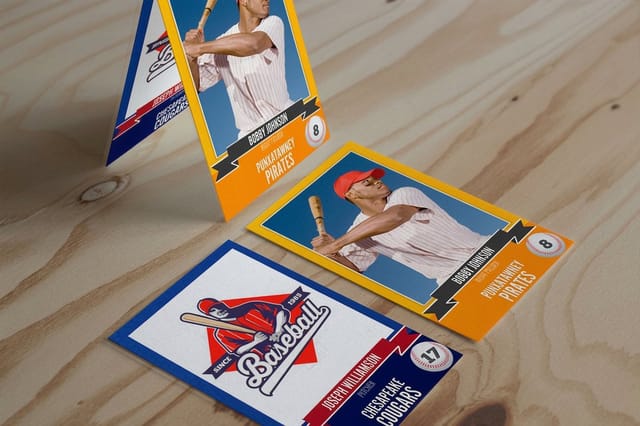
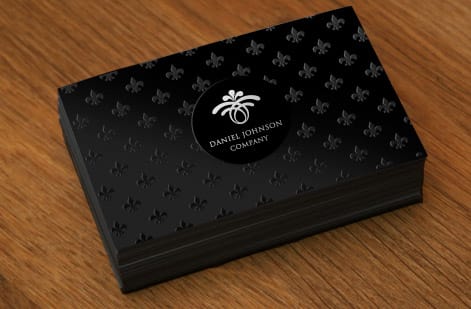
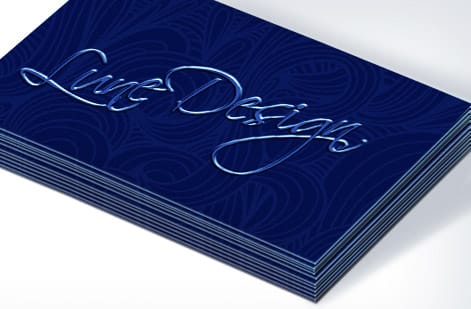
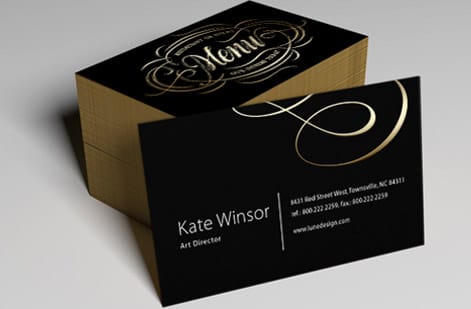
Trading card runs we printed





Explore more
Where to go next
By the numbers
Sixty paper stocks a trading card can be cut from
Common Questions
Common questions about trading card sizes
What is the standard trading card size?
The standard trading card size is 2.5 inches wide by 3.5 inches tall, the same footprint as a poker-size playing card. This size is what card sleeves, top loaders, binder pages, and deck boxes are all built around, so a card at this trim fits the entire collecting ecosystem without any custom accessory. You design inside that trim, usually in portrait orientation, and add bleed and a safe margin around it. When you need more room for art or a keepsake format, the larger A2 size at 4.25 by 5.5 inches is the common step up.
Will my card fit standard sleeves?
Base the choice on how the card will be used, stored, and shown. If it needs to fit standard sleeves, binders, and deck boxes, or to stack with other cards, stay at the 2.5 by 3.5 inch standard. If the artwork needs more space, or the card doubles as an announcement or keepsake, step up to the A2 size at 4.25 by 5.5 inches, which still mails easily. Whichever trim you pick, apply the same 0.125 inch bleed and 0.125 inch safe zone, and keep important detail clear of the rounded corners.
What does a custom trading card cost and how are prices set?
Price scales with quantity, stock, finish, and whether the card is single or double sided. Premium laminates like silk, suede, and velvet cost more than a standard gloss, and higher quantities lower the price per card, so a larger run brings the unit cost down sharply. You set each option in the configurator and the total updates live as you adjust it, so you can see exactly how a premium finish or a bigger quantity changes the number before you commit. Preparing the file yourself costs nothing, and the free file check is included.
What sizes, stocks, and finishes are available for trading cards?
Trading cards print at the standard 2.5 by 3.5 inch size and larger formats such as the A2 at 4.25 by 5.5 inches, on sturdy card stocks suited to handling and collecting. Finishes include gloss lamination for a bright classic look, silk lamination for a smooth premium feel, kraft for a natural matte character, and soft-touch suede and velvet laminates for a luxe hand-feel. Corners are typically rounded. The live specs panel on this page lists the exact current sizes, stocks, and finishes with pricing so you can match them to your project.
How long do trading cards take to print and ship?
Turnaround depends on the stock, finish, quantity, and shipping method you choose at checkout, and premium laminates can take a little longer than a standard gloss. Because the cards are printed and finished to order, the production time is set by the specific options you select, and faster production and shipping choices are available when you have a deadline. The configurator shows the available turnaround and shipping options with live pricing so you can line the delivery up with a release date, an event, or a gifting occasion.
Do trading cards have rounded corners?
Yes, trading cards are typically finished with rounded corners at roughly a 1/8 inch radius, which is the familiar look for sports, game, and collectible cards and helps them resist bending and wear at the edges. Because the rounded corner cuts into the printable area, keep names, numbers, logos, and any important detail well inside the safe zone and clear of the corners so nothing is clipped in finishing. Design at the standard trim with bleed on all sides, and the rounded corners will frame your art cleanly without losing content.
Get Started
25 trading cards cost $11.25, or 45 cents each
Set the size, choose your lamination, and print custom trading cards at 4OVER4. Adjust stock, finish, and quantity and watch your price update live.
Legal Disclaimer
Gold Standard guarantees apply to all standard orders placed through 4over4.com. Price match requires verifiable proof of a competitor's published price for an equivalent product with matching specifications and turnaround time. Satisfaction guarantee covers manufacturing defects and print quality issues. Contact support with order number and documentation. On-time delivery rate based on tracked orders 1999 to 2026. Individual results may vary based on shipping carrier performance.
