
What Sports Marketing Is and How to Launch a Campaign


Sports marketing rides on the passion fans already feel. It differs from general marketing in who it borrows attention from, and printed assets are what turn a strategy into a real activation on the field.
Sports marketing promotes a brand by tying it to a team, event, or athlete, borrowing the passion fans already feel. Build a campaign by setting a goal, picking the right tie-in, and defining the message, then activate it with the physical print that owns a venue: vinyl banners, feather flags, branded tickets, and a step-and-repeat.
Start here
From strategy to the field
A sports marketing campaign runs from a clear goal to physical activation. Set the goal, pick the tie-in, plan the message, then bring it to the crowd with banners, flags, tickets, and a photo wall. The diagram below maps the path from strategy to the assets on the field.
What sports marketing actually is
Sports marketing is the practice of promoting a brand by connecting it to the world of sports, through a team, an event, an athlete, or a venue. Its power comes from a single force: passion. Fans already feel deep loyalty and attention toward the sports they love, and sports marketing borrows that emotion, associating a brand with the excitement and community around the game.
It spans a huge range, from national stadium sponsorships and jersey logos down to a local business activating at a weekend tournament. What ties it together is the goal of making a brand feel like a natural part of the fan experience rather than an interruption of it. When it works, fans see the brand as part of the day, not an ad they sat through.
The through-line of this guide is that sports marketing is fundamentally physical. It happens at a venue, in front of a crowd, which is why the assets that carry it are large, tangible pieces like vinyl banners and feather flags. We will define the strategy, then make it real on the field.
How it differs from general marketing
Sports marketing is not just general marketing with a jersey on it. Three differences change how you should approach it. First, the audience is unusually engaged. Fans choose to be there and are emotionally invested, so your message lands with far more attention than a typical ad scrolling past in a feed.
Second, the moments are live and time-bound. A campaign is built around a game, a season, or an event, which creates urgency and a sense of shared experience you cannot manufacture online. The window is short and the energy is high, and the best campaigns ride that wave rather than fighting it.
Third, the setting is physical. The action happens in a venue full of people, which shifts the most effective media away from screens and toward large, unmissable print. A stadium banner is seen by everyone in the stands and picked up by broadcast cameras, doing work no phone notification can. Understanding these three differences is what separates a real activation from a logo slapped onto a program.
Sports advertising channels and formats
Sports advertising is the paid side of sports marketing: you buy a place inside a live sports moment instead of building the moment yourself. Four channels carry almost every campaign, and most brands run two or three of them together rather than betting everything on one.
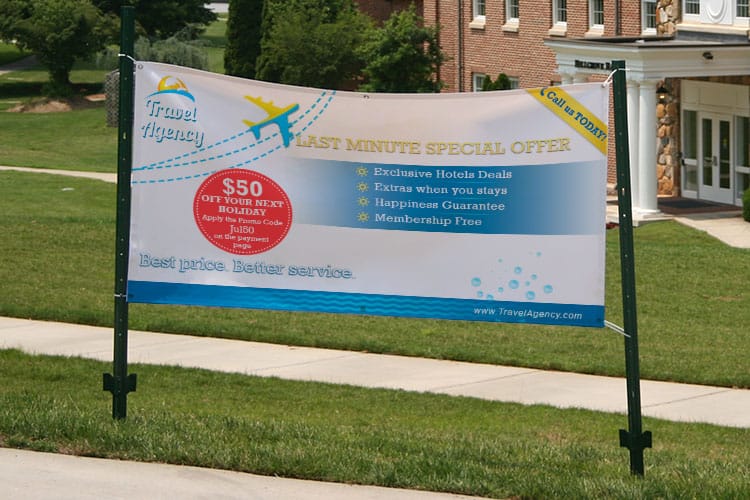
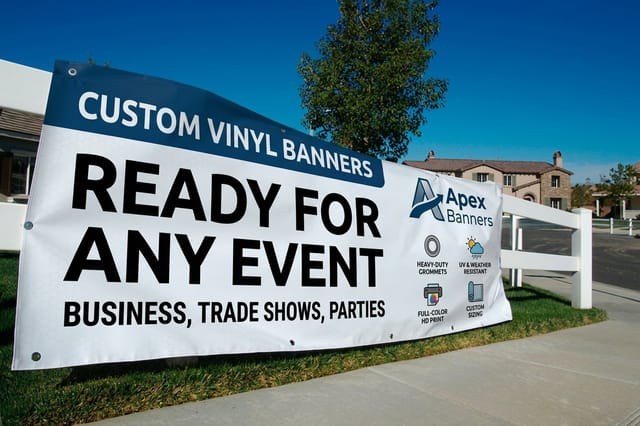
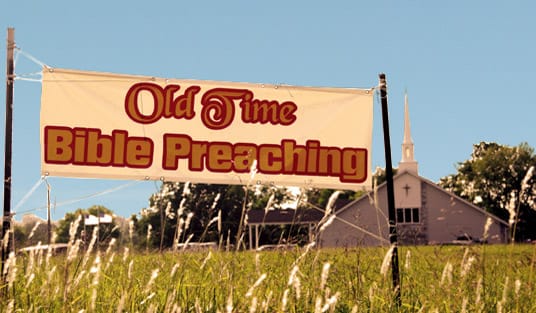
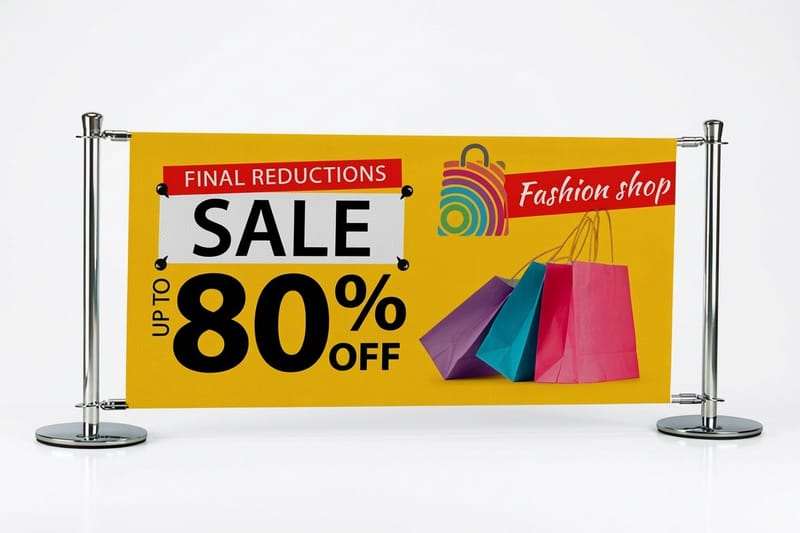
Stadium and venue signage carries the campaign. Fence lines, concourse walls, entry gates, dugout backs and the rail behind the action are what fans stare at for two hours and what broadcast cameras keep in frame. Print those runs on 13 oz scrim vinyl banners with hemmed edges and grommets every 2 feet, and switch to mesh vinyl on an exposed outdoor fence so wind passes through the banner instead of tearing it off the rail. Size to the distance: about 3 ft by 8 ft along a local field where the crowd sits close, 4 ft by 10 ft or larger in a stadium where the nearest seats are far back. One short line, one logo, type big enough to read at a glance, because nobody stops to study a fence.
Broadcast and streaming spots buy reach and repetition. In-game commercials, pre and post-game segments and the shorter mid-roll units on streams and highlight channels put you in front of viewers who never walk through the gate. The trade-off is that a spot runs for seconds and then it is gone, and the viewer sees it out of context on a couch. Pair a spot with venue signage so the same mark that plays on screen is already sitting behind the play when the camera cuts back.
Jersey and kit sponsorship is the longest-lived placement you can buy. The chest, sleeve and shorts positions travel with the team all season, on the field, in team photos and in every fan shot. It is also the least flexible: the artwork is locked for the season, so keep it to the logo in one colorway that still reads on both the home and the away shirt, and do not try to fit a message onto a shirt.
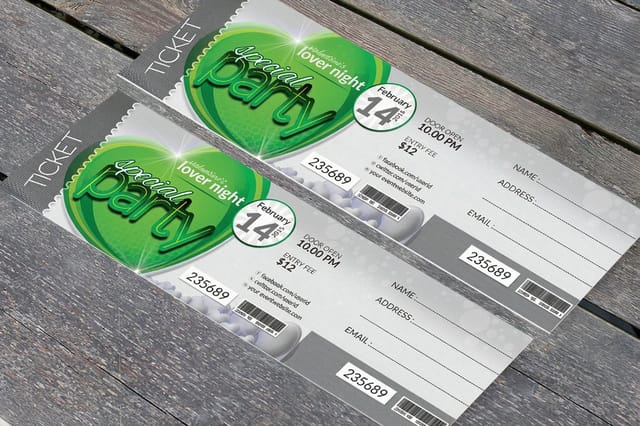
Then there are the printed assets that carry a sponsorship on site. A sponsorship contract is a right to appear; print is what makes you actually appear. Feather flags mark your zone at the gate and the fan area, event posters cover concourse walls and entry corridors, step and repeat banner stands put your logo behind every photo taken at the awards or press spot, and branded event tickets hand the crowd your name before the first whistle. Budget these the day you sign the deal, not the week of the game. A sponsorship with no print behind it is a line item nobody in the stands ever sees.
Building a sports marketing strategy

A strong campaign is built in order, and it starts with a goal. Decide what success looks like before anything else: broad awareness, direct sales, or deeper loyalty. Each of these leads to a different approach, so naming the outcome first keeps every later choice pointed at one purpose.
Next, choose your tie-in. Pick the team, event, or athlete whose fans overlap with your audience and whose image fits your brand, so the association feels natural rather than bought. A local restaurant sponsoring the neighborhood league and a national brand backing a marquee event are both right, as long as the match is genuine.
Then define the message and map the touchpoints. Craft what you want fans to feel and do, tuned to the energy of a live moment, keeping it bold and simple enough to read across a busy venue. List everywhere the brand will appear, from the stands to the entrance to a photo wall, so the plan covers the whole fan journey before you produce a single piece.
The physical assets that activate the campaign
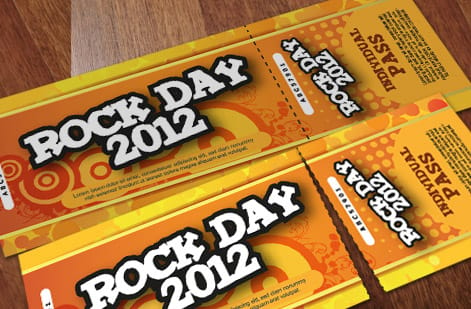
This is where strategy becomes something fans can see and touch. A plan lives on a slide until it hits the field, and the assets below are how a sports marketing campaign actually reaches the crowd. Each covers a different part of the fan journey.
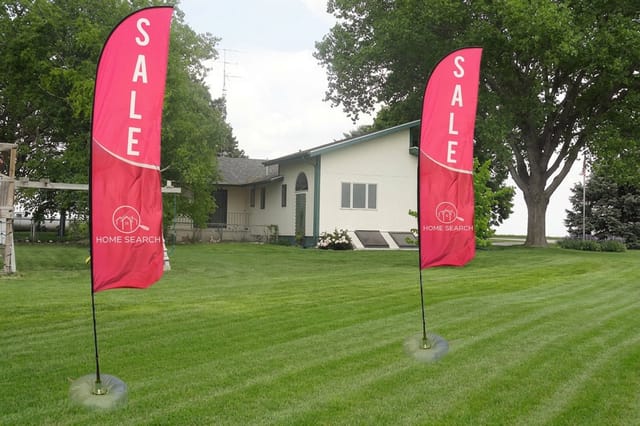
Vinyl banners go along the stadium and fence lines, putting your brand in front of the entire crowd and any cameras. Feather flags stand tall at entrances and fan zones, marking your activation and pulling foot traffic. Branded event tickets carry your identity from the moment of entry. And a step-and-repeat photo wall extends the brand into every picture fans take and share, turning attendees into promoters.
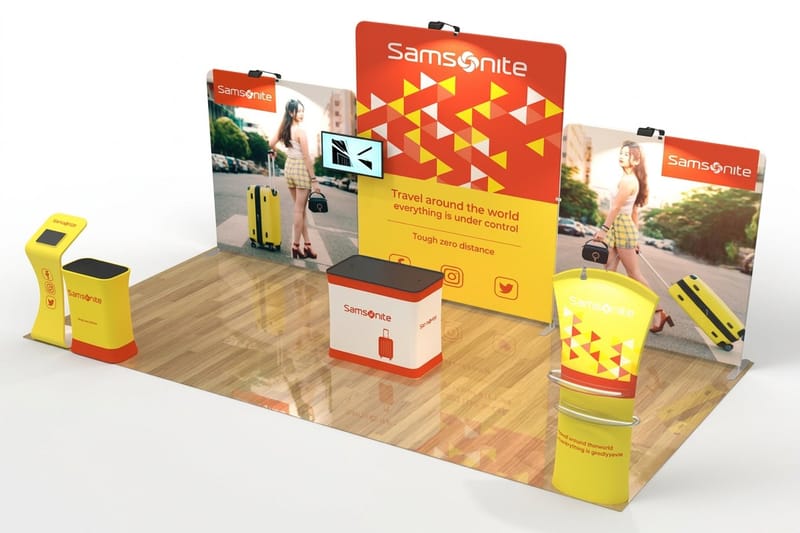
Two more pieces round the kit out. Step and repeat banner stands give that photo wall a frame you can carry in and set up alone in a few minutes, so the backdrop travels from the awards table to the press spot without a crew. Event posters handle the walls and corridors where a banner is too big: schedules, brackets, sponsor boards and the entry announcement, usually at 24 in by 36 in so they read from across a concourse.
What you actually order depends on the size of the event, so use this as a buying list.
- Local league game or youth field: 2 to 4 vinyl banners at 3 ft by 8 ft on 13 oz scrim with grommets every 2 feet, zip-tied to the sideline or outfield fence, plus 2 feather flags at the gate and the snack stand, one 24 in by 36 in poster at the entrance, and branded tickets if you are gating entry.
- Regional tournament or multi-day event: 6 to 10 banners, mixing 3 ft by 8 ft fence banners across the side courts with one 4 ft by 10 ft hero banner at the main field, 4 to 6 feather flags so your brand appears at every field rather than one, an 8 ft by 8 ft step and repeat at the awards area, posters for the bracket and schedule walls, and branded tickets or credentials for entry.
- Stadium or arena: 4 ft by 10 ft and larger banners on the camera-facing rail and the concourse, mesh vinyl on any exposed outdoor fence line so wind passes through, an 8 ft by 8 ft step and repeat at the press and photo position, posters through the concourse, feather flags out in the tailgate and fan zone where the crowd gathers before doors, and branded tickets.
Print dominates this environment for one reason: at a live event, screens compete for a crowd watching the game, while a banner, a flag, and a backdrop are large, always on, and impossible to scroll past. They own the physical space fans are already looking at, which is exactly why they form the backbone of on-site activation.
Print the assets that put you on the field
Launching a sports marketing campaign means putting the right pieces in the right places at the venue. The assets do the activating, so the practical move is to produce them in the correct sizes and weatherproof materials, then install them where they are visible from the stands, the field, and the cameras.
Start with the highest-visibility pieces: a large vinyl banner for the crowd and feather flags for your zone. Add branded tickets and a step-and-repeat backdrop to extend the brand from the gate to every shared photo. A few large, well-placed pieces almost always outperform many small ones.
Use the live specs and pricing panel below to choose the material and size for an indoor or outdoor setting, and watch the price update as you go. When your kit is ready, order the assets together so your whole activation, from the fence line to the photo wall, reads as one campaign.
Wally takes the strategy to the stands
A plan on a slide, then a brand on the field
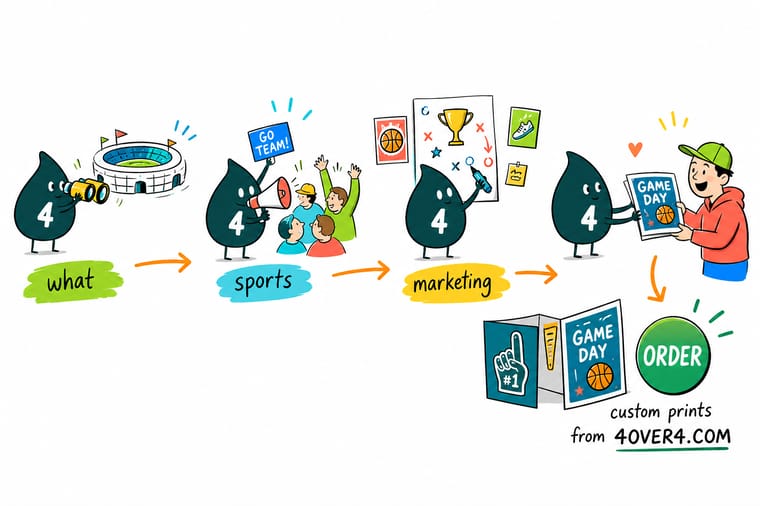
Wally starts with the goal, picks the tie-in whose fans match the brand, and shapes a bold message, then he gets physical. A vinyl banner for the crowd, feather flags at the gate, branded tickets, and a step-and-repeat that turns fans into photographers. At a live venue, screens lose to print that is large and always on. Order the kit together and 4OVER4 puts your brand on the field.
Print your event banners →Quick reference
From strategy to activation, at a glance
A fast map from each strategy step to the physical asset that carries it onto the field and in front of the crowd.
| Step | Focus | Why it matters |
|---|---|---|
| Set a goal | Reach, sales, or loyalty | Name the outcome first so every later choice, tie-in, message, and asset, serves one clear purpose. |
| Pick the tie-in | Team, event, or athlete | Choose the sports property whose fans overlap with your audience and whose values fit your brand. |
| Plan the campaign | Message + channels | Decide what you will say and where, across the venue, social, and any broadcast moment. |
| Vinyl banners | Stadium + fence lines | Large, weatherproof banners put your brand in front of the whole crowd and any cameras. |
| Feather flags | Entrances + activations | Tall, eye-catching flags mark your zone and pull foot traffic at gates and fan areas. |
| Event tickets + step-and-repeat | Gates + photo walls | Branded tickets and a repeat-logo backdrop extend the brand from entry to every shared photo. |
Step by step
Launch a sports campaign in 7 steps
- Set a clear campaign goal Decide what success looks like before anything else, whether it is broad awareness, direct sales, or deeper loyalty. The goal shapes every choice that follows.
- Choose your sports tie-in Select the team, event, or athlete whose fans overlap with your audience and whose image fits your brand. The right match makes the association feel natural.
- Define the message Craft what you want fans to feel and do, tuned to the energy of a live sports moment. Keep it bold, simple, and impossible to miss in a busy venue.
- Map the touchpoints List where the brand will appear, from the stadium and fence lines to the entrance, the fan zone, and any photo wall, so you cover the whole fan journey.
- Design the physical assets Turn the plan into pieces: vinyl banners for the crowd, feather flags for your zone, branded tickets for the gate, and a step-and-repeat for photos.
- Print and install Order the assets in the right sizes and weatherproof materials, then install them so they are visible from the stands, the field, and the cameras.
- Measure the activation Track reach, foot traffic to your zone, and social shares from the photo wall, then use what worked to sharpen the next event.
Specs and pricing
Vinyl banner specs and live pricing
The stadium banner is the backbone of on-site activation. Here are the live specs and price-per-order for vinyl banners at 4OVER4.COM, straight from the configurator.

| Quantity | Price Per Unit | Total |
|---|---|---|
| 1 | $79.00 | $79.00 |
Print it
Print the assets that activate your campaign
See it in use
Real event banners, made in-house
Explore more
Where to go next

By the numbers
The materials an event banner prints on
Common Questions
Common questions about sports marketing
What is sports marketing?
Sports marketing is the practice of promoting a brand, product, or service by connecting it to the world of sports, whether through a team, an event, an athlete, or a venue. Its power comes from passion: fans already feel deep loyalty and attention toward the sports they love, and sports marketing borrows that emotion, associating a brand with the excitement, identity, and community around a team or event. It ranges from stadium sponsorships and jersey logos to grassroots activations at local games, and at its best it makes a brand feel like a natural part of the fan experience rather than an interruption of it.
How is sports marketing different from general marketing?
Three things set it apart. First, the audience is unusually engaged: fans choose to be there and are emotionally invested, so messages land with more attention than a typical ad. Second, the moments are live and time-bound, built around a game, a season, or an event, which creates urgency and shared experience. Third, the setting is physical, centered on a venue full of people, which shifts the best media away from screens and toward large, unmissable print like banners, flags, and photo walls. General marketing chases attention in a distracted feed; sports marketing works inside a crowd that is already leaning in.
How do you develop a sports marketing strategy?
Start by setting a clear goal, since reach, sales, and loyalty each call for a different approach. Next, choose the sports tie-in whose fans overlap with your audience and whose image fits your brand, so the association feels natural rather than forced. Then define your message tuned to the energy of a live sports moment, keeping it bold and simple, and map the touchpoints where the brand will appear across the venue and the broader campaign. Finally, turn the plan into physical activation, because a strategy only matters once fans can actually see and interact with it at the event.
What physical assets do you need for a sports marketing campaign?
The core kit is vinyl banners, feather flags, branded tickets, and a step-and-repeat backdrop, each covering a different part of the fan journey. Large weatherproof vinyl banners put your brand in front of the whole crowd and any cameras along the stadium and fence lines. Tall feather flags mark your activation zone and pull foot traffic at entrances and fan areas. Branded event tickets carry your identity from the moment of entry. And a step-and-repeat photo wall extends the brand into every picture fans take and share, turning attendees into promoters. Together they make a campaign tangible from the gate to the final whistle.
Why does print work so well at sports events?
A live sports venue is a physical, high-energy environment where screens compete for a crowd that is watching the game, not their phones. Print thrives there because it is large, always on, and impossible to scroll past. A stadium banner is seen by everyone in the stands and picked up by broadcast cameras, a feather flag stands tall above a busy concourse, and a step-and-repeat turns fans into photographers who spread your brand across social media for free. Print does not compete for attention in a feed; it owns the space fans are already looking at, which is exactly why it is the backbone of on-site activation.
What does event and sports marketing print cost, and how are prices set?
Pricing scales with the piece, the size, the material, and the quantity. A large weatherproof vinyl banner is priced differently from a set of feather flags or a run of event tickets, and bigger sizes or premium outdoor materials raise the cost while larger quantities lower the per-unit price. You configure each product, choose the material and finish for an indoor or outdoor setting, and the price updates live as you go. Because sports activation lives or dies on visibility, investing in a few large, well-placed pieces, a banner, flags, and a step-and-repeat, usually delivers more impact than many small ones.
What is sports advertising?
Sports advertising is the paid placement of a brand inside a live sports moment: signage on the fence line, the rail and the concourse, commercials in the broadcast or the stream, and logos on team kit. You are buying attention that already exists, because the fans are watching the game anyway. On site it is mostly print, since a 3 ft by 8 ft banner on 13 oz scrim vinyl and a feather flag at the gate stay up for the whole event, while a broadcast spot is gone the moment it finishes playing.
How is sports marketing different from sports advertising?
Sports marketing is the whole plan: the goal, the team or event you tie into, the message, and every touchpoint from the gate to the photo wall. Sports advertising is one part of that plan, the paid placements you buy inside the event. Sponsorship sits between the two: it buys you the right to appear, and print is what makes the appearance real, so budget the banners, flags, posters and step and repeat alongside the sponsorship fee rather than after it.
Get Started
A step-and-repeat stand costs $192.22 and ships in 1 business day
Choose the material and size for each piece at 4OVER4.COM and watch the price update live. Order banners, flags, tickets, and a step-and-repeat together so your whole activation reads as one campaign.
Legal Disclaimer
Gold Standard guarantees apply to all standard orders placed through 4over4.com. Price match requires verifiable proof of a competitor's published price for an equivalent product with matching specifications and turnaround time. Satisfaction guarantee covers manufacturing defects and print quality issues. Contact support with order number and documentation. On-time delivery rate based on tracked orders 1999 to 2026. Individual results may vary based on shipping carrier performance.
