
Static Cling or Adhesive Vinyl Decides Almost Everything About a Window Graphic


What separates a cling from a bonded film, which side of the glass each one belongs on, and the two things that actually move the price of a window graphic.
A static cling carries no adhesive and holds by suction, so it peels off clean and can be reused, while adhesive vinyl bonds to the glass and stays through weather, cleaning and a full season. The window films we print are adhesive vinyls, from $25 in clear, white, translucent and front adhesive and from $29 in reflective. Price follows square footage first and quantity second, and the film choice decides whether the graphic goes on the outside of the glass or on the inside as a mirrored print.
Quick answer
Bonded film, the right side of the glass, and area times quantity
Buy a cling only for short indoor use, and adhesive vinyl for anything that has to hold on a real window. Front adhesive vinyl goes on the inside of reachable glass and prints mirrored so it reads from the street; standard back adhesive vinyl goes on the outside where the inner face is coated, textured or out of reach. Clear film lets the store show through and drops pale colors, white film gives true color and blocks the view, translucent film is for backlit boxes, and reflective film answers headlights. Pricing is square footage first, quantity second, with a contour cut adding a pass.
Static Cling and Adhesive Vinyl Solve Different Problems

A static cling is a thin PVC film with no adhesive on it whatsoever. It holds against smooth glass by suction, comes away in one piece, and can go back up next season. Being temporary is the entire point of it.
That also sets its limits. A cling wants clean, flat, room temperature glass. On a window that bakes in afternoon sun or freezes overnight, the corners lift first and the whole sheet slides down the pane by the end of the week. Size works against it too, because a large cling has more weight pulling on a bond that was never a bond in the first place.
Adhesive vinyl behaves the opposite way. A pressure sensitive adhesive grips the glass, so the graphic survives rain, sun, a squeegee at closing time and someone brushing past it with a shoulder bag. The trade you accept is removal: taking it off means heat, a shallow pull and a bottle of adhesive remover, and the film distorts on the way. The window films in our adhesive vinyls collection are all bonded films for that reason, starting at $25, because a storefront graphic that lifts at the corner after nine days is not cheaper than one that stays.
The honest rule: if the graphic has to live on real glass in real weather for more than a couple of weeks, buy adhesive. Keep the cling idea for interior glass in a climate controlled room, and even then expect to smooth it back down.
Which Side of the Glass, and Why Front Adhesive Exists
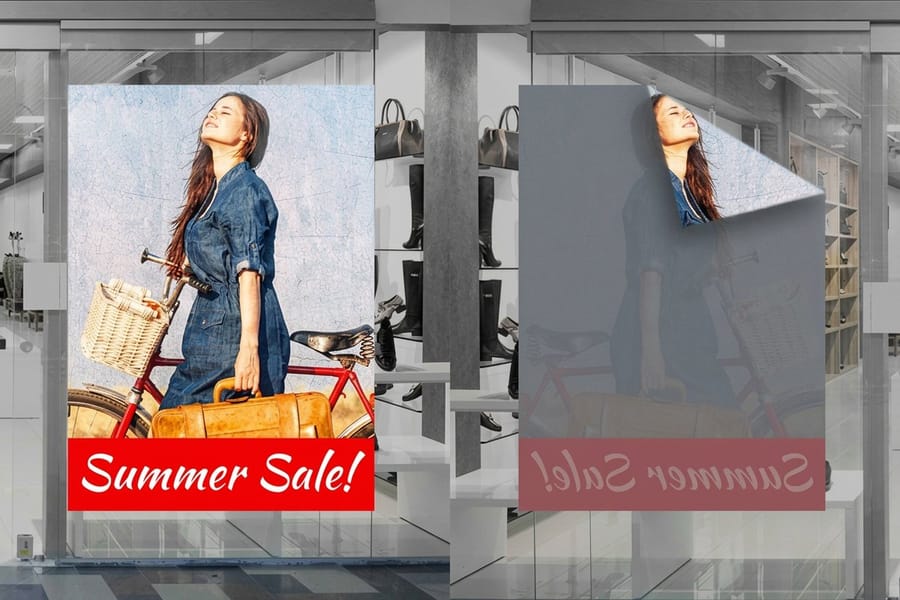
This is the decision people get wrong most often, and it is made before the file is even built, because the two options need the artwork prepared differently.
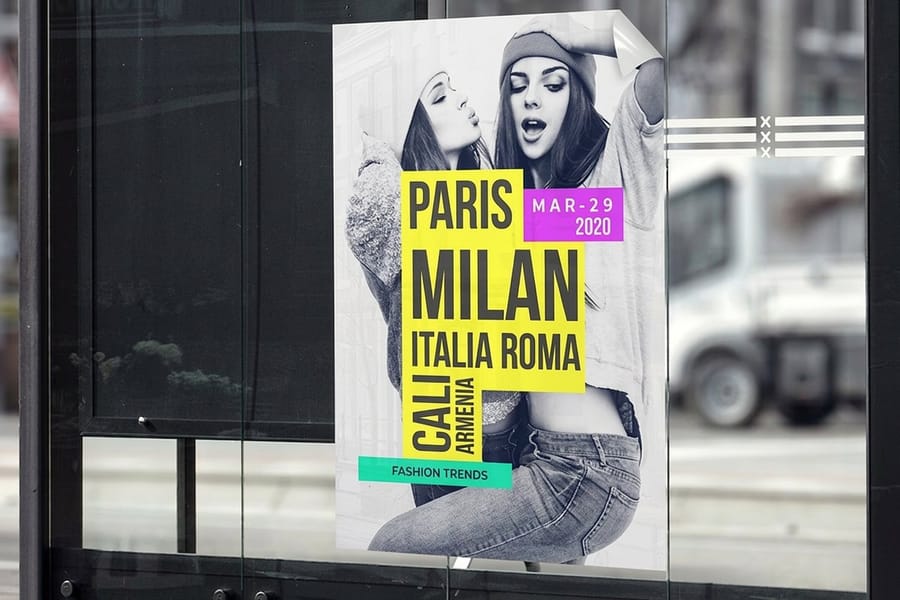
Standard adhesive vinyl has the glue on the back, behind the print. It goes on the outside face of the glass, image facing the street, with nothing between the ink and the weather. That is first surface application. It is right for interior partitions you can only reach from one side, for deeply tinted or low emissivity glass where the inner coating fights the adhesive, and for any pane whose inside face is textured.
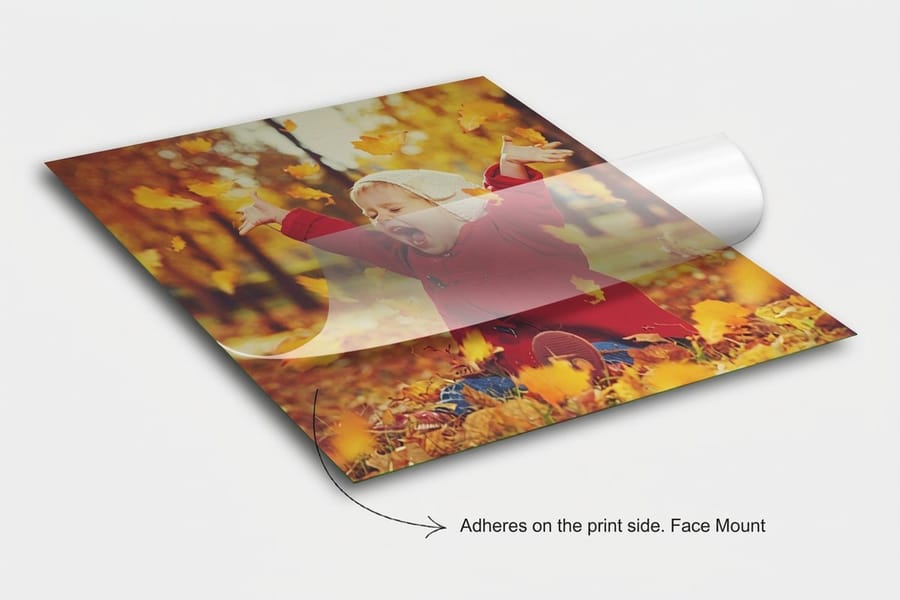
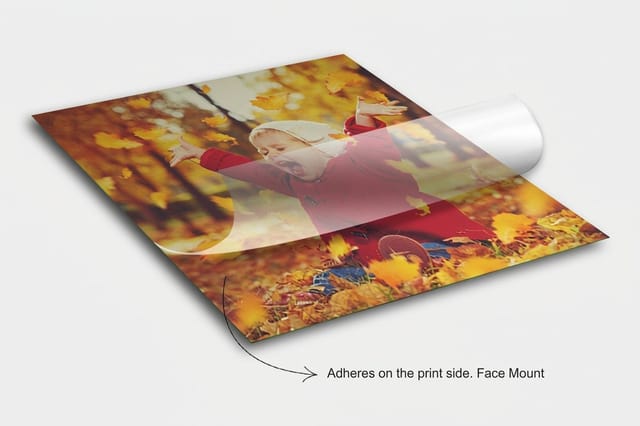
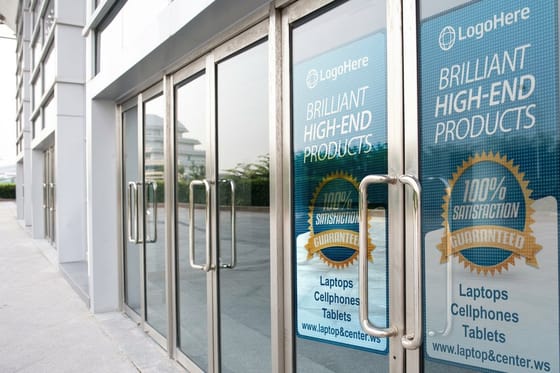
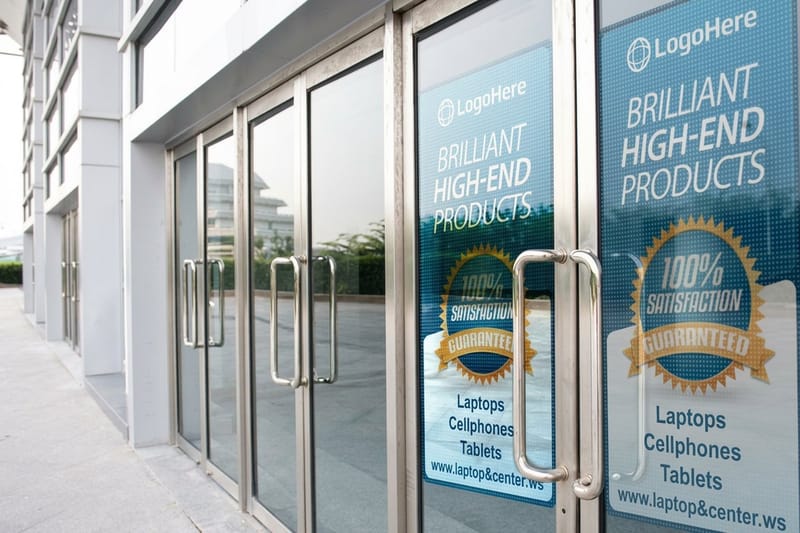
Front adhesive vinyl puts the glue on the printed face instead. The artwork is printed as a mirror image, the film is pressed against the inside of the window, and it reads correctly from the sidewalk through the glass. That is second surface application, and on a reachable storefront it wins on nearly every count.
| Application | Film | File setup | What you get |
|---|---|---|---|
| First surface | Standard back adhesive vinyl | Artwork printed as designed | Full color strength with nothing in front of it, but the print takes the weather, the scraper and the passing shoulder. |
| Second surface | Front adhesive vinyl | Artwork mirrored before printing | Glass shields the ink, install and removal happen indoors, and the graphic gains a slight gloss from the pane it sits behind. |
Two cautions on the inside route. Tinted glass shifts every color that passes through it, usually pulling warm tones gray, so a heavily tinted window is a reason to go outside instead. And a mirrored file is easy to send unmirrored by accident, which is why we handle the flip in prepress rather than asking you to guess. Supply the artwork the way it should read, and say which side of the glass it is going on.
Clear, White, Translucent and Reflective Are Not Interchangeable
The film underneath the ink does more to the finished look than any setting in the artwork. Pick it from what has to happen to the light, not from the price.
| Film | What light does | Order it when | From |
|---|---|---|---|
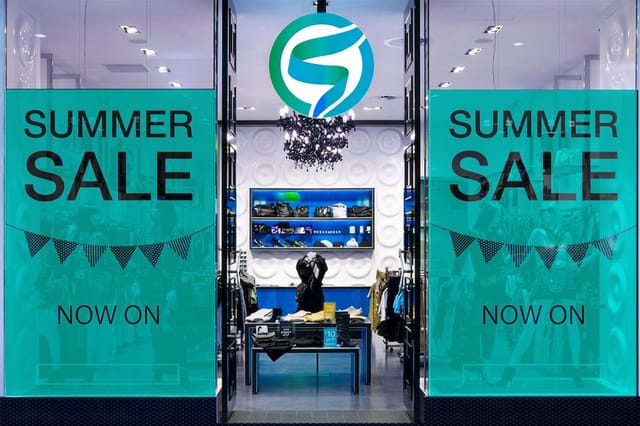
| Clear adhesive vinyl | Passes straight through the unprinted areas, so the store behind it shows through the design. | You want a floating logo, hours of business, or a graphic that does not close off the window. | $25 |
| White adhesive vinyl | Stops at the film. Colors print on an opaque white base and land where you expect them. | Color accuracy matters, the design uses pale tones, or you want the window covered. | $25 |
| Translucent adhesive vinyl | Diffuses light coming from behind so the panel glows evenly instead of showing hot spots. | The graphic sits in a light box or a backlit sign face. | $25 |
| Front adhesive vinyl | Same as its base film, viewed through the pane it is stuck to. | The graphic goes on the inside of reachable glass. | $25 |
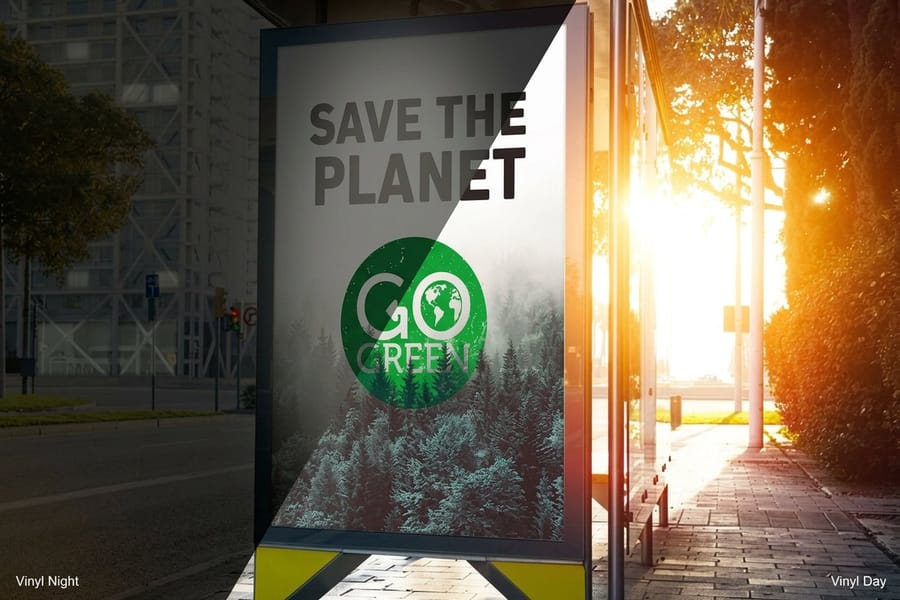
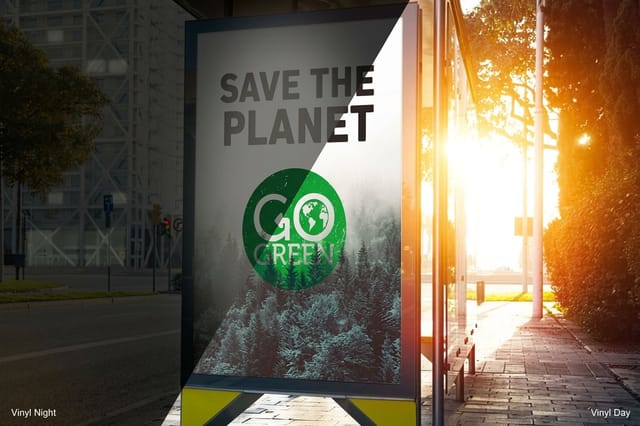
| Reflective adhesive vinyl | Bounces headlights and torchlight back toward whoever is looking. | Night visibility is the job: vehicle glass, gates, safety and wayfinding marks. | $29 |
The mistake that costs the most reprints is clear film. Designers approve a mockup on a white artboard, then the vinyl goes up and every pastel, every soft tint and every piece of white type vanishes into whatever is behind the glass. There is no white ink layer holding those areas up. On clear, use saturated color and heavy weights, or move to white film and stop fighting it.
Reflective has its own catch. The retroreflective layer only works where light can reach it, so heavy ink coverage dulls the return. Reflective earns its extra cost on bold, simple marks that need to be seen at night, not on a full color photograph.
Sizes, Cut Shapes, and Where the Price Actually Moves
Window graphics are priced from area, not from a menu of standard sizes, and once you see that the whole quote becomes predictable. A 24 by 36 inch graphic covers four times the surface of a 12 by 18, so it costs in that neighborhood. Doubling one dimension doubles the price. Doubling both quadruples it.
Quantity is the other lever, and the bigger one for most orders. One file gets prepped once, whether it prints once or twenty times, so a set of identical graphics across a row of windows carries a much lower number per piece than a single one off. If you have four locations running the same promotion, order all four together rather than one at a time.
| What you change | Effect on price | Worth doing when |
|---|---|---|
| Size | Tracks square footage almost directly. | Trim to the daylight opening instead of rounding up to the frame. Inches of dead margin are paid for. |
| Quantity | Falls per piece as the run grows, because setup is shared. | Multiple windows or multiple stores run the same artwork. Order the set in one go. |
| Shape | Rectangles are cheapest. Contour cuts add a cutting pass. | The silhouette is the idea. Otherwise print the shape on clear film and let the background do the work. |
| Film | Clear, white, translucent and front adhesive start level at $25. Reflective starts at $29. | Reflective only when the graphic has to answer headlights after dark. |
On sizing, measure the daylight opening, meaning the glass you can actually see inside the frame, and take roughly a quarter inch off each dimension. That margin is where the squeegee lives. A graphic cut to the exact pane size ends up tucked under the trim, which is the first place an edge lifts. For a pane wider than a single roll, split the design into panels along a quiet part of the artwork instead of straight through a face or a logo, and overlap the seam by a fraction of an inch so no glass shows in the gap.
If you need most of the pane covered but still want to see out, perforated film is the other answer entirely, and the window perf guide covers what the perforation pattern costs you in image detail. For privacy without a printed graphic at all, the piece on frosted vinyl and window lettering is the closer fit. More cost breakdowns for other products sit on the pricing and cost guides hub.
Wally explains window graphics
Which side of the glass, and what the film does to the light
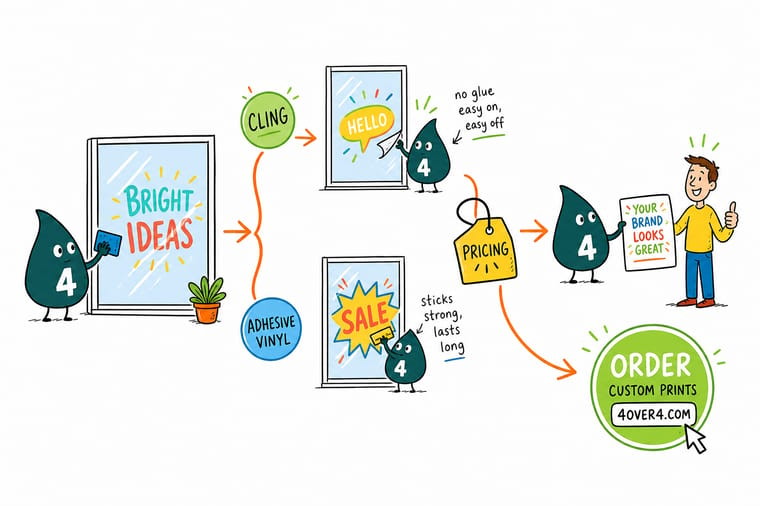
Wally stands inside the shop with a squeegee. He is putting front adhesive vinyl on the inside face of the glass, printed back to front, so the person on the sidewalk reads it the right way round and the rain never touches the ink. If the artwork is on clear film he keeps the colors strong, because pale tones disappear into whatever is behind the window. If it has to survive a car park at night he reaches for reflective instead. Then he measures the glass he can actually see, takes a quarter inch off each way, and leaves himself room to work the bubbles out.
Configure front adhesive vinyl →Specs and pricing
Window films, sizes, and starting prices
Set your size and quantity against each film to see how the per graphic number moves, with live options and starting prices straight from the 4OVER4.COM configurator.


Print it
Order the film that suits your glass
Explore more
Where to go next

By the numbers
Cling orders and the delivery record behind the price
Common Questions
Your window graphic questions, answered
What is the difference between a window cling and window vinyl?
A static cling is a thin PVC film with no adhesive on it at all. It holds against smooth glass by suction, peels away without residue, and can be stored flat and reused. Window vinyl carries a pressure sensitive adhesive, bonds properly to the glass, and is what you order when the graphic has to survive weather, cleaning and a season of sun. The films we print for windows are adhesive vinyls rather than clings, starting at $25, because a bonded film is the one that holds its edges on a real storefront.
Should the graphic go on the inside or the outside of the window?
Inside whenever the glass is reachable from the sidewalk. Glass protects the print from rain, grit, scrapers and anyone with a key in their hand, and it makes removal a job you can do standing on your own floor. Inside application needs front adhesive vinyl, where the adhesive sits on the printed face and the file is printed as a mirror image so it reads correctly from the street. Outside application is for interior glass you cannot reach from inside, deeply tinted glass, and anything with a textured or coated inner surface the adhesive cannot grip.
How much does a window graphic cost?
Start from area rather than from a size chart. Clear, front adhesive, translucent and white adhesive vinyl all start at $25 at 4OVER4.COM, and reflective adhesive vinyl starts at $29 because the film itself is more expensive to make. From there the number moves with square footage and with quantity: a 24 by 36 inch graphic covers four times the area of a 12 by 18 and prices accordingly, while a run of the same artwork across ten windows spreads one file setup over ten pieces. Put your real dimensions and count into the configurator on the product page for the exact figure.
Will a clear window graphic look like the mockup?
Not unless the mockup was built over the actual background. Clear vinyl has no white layer under the ink, so whatever sits behind the glass shows through the artwork and mixes with it. Light colors, pastels and thin white type are the first things to disappear. If the design depends on white or on soft tints, order white adhesive vinyl and accept that it blocks the view, or redraw the artwork so the only elements on clear film are strong, saturated shapes and heavy type.
What size should I order for a storefront window?
Measure the daylight opening, which is the glass you can actually see inside the frame, then take about a quarter inch off each dimension. That margin gives you somewhere to work the squeegee and keeps the edge off the sealant, where a trapped bubble or a lifted corner usually starts. If a pane is wider than a single roll, split the design into panels along a natural break in the artwork rather than through faces, logos or type.
Can I reuse an adhesive window graphic next year?
Plan on no. Adhesive vinyl is designed to bond, and taking it off cleanly means warming it with a heat gun, pulling it back at a shallow angle, and clearing the residue with adhesive remover. The film stretches and distorts on the way off. If reuse is genuinely the point, for example a seasonal sale sign that goes up four times a year, keep the graphic small and buy a fresh set each season, because the printed film costs less than the hour it takes to salvage the old one.
Get Started
White adhesive vinyl ships in 2 business days, clear in 4
Pick clear, white, translucent, front adhesive or reflective film, enter the size of the pane you measured, and we print a window graphic cut to fit it.
Legal Disclaimer
Gold Standard guarantees apply to all standard orders placed through 4over4.com. Price match requires verifiable proof of a competitor's published price for an equivalent product with matching specifications and turnaround time. Satisfaction guarantee covers manufacturing defects and print quality issues. Contact support with order number and documentation. On-time delivery rate based on tracked orders 1999 to 2026. Individual results may vary based on shipping carrier performance.
