
Business Card Statistics & Trends for 2026


Market size, first impressions, digital versus paper, and networking behavior, set against the order data behind 25 plus years of printing cards at 4OVER4.
Physical business cards are not going anywhere. With 10 billion plus cards printed in the US each year and just 7 seconds to make a first impression, a well-designed card still cuts through the digital noise. Digital cards are growing, but most professionals prefer paper, and 4OVER4.COM has printed cards for 150,000 plus businesses that agree.
In brief
Business card statistics that shape how professionals connect
Business card statistics tell a clear story: physical cards are holding their ground. With 10 billion plus cards printed in the United States alone each year, the humble business card is still one of the most exchanged marketing tools on the planet. The digital versus paper debate keeps going, but the data consistently favors tangible print, because people remember what they can touch and hold. 4OVER4.COM has printed cards for 150,000 plus businesses, and the ordering patterns confirm what the research shows.
Why it still matters
Why business card data still matters in 2026
Business card statistics tell a counterintuitive story. In an age of QR codes, LinkedIn connections, and digital wallets, printed cards are holding steady. The global business card market keeps growing, pushed by networking events, real estate, hospitality, and steady small-business demand, and understanding these numbers helps you make smarter calls about your own print marketing.
The data also points to a growing hybrid habit. Plenty of professionals now carry both physical and digital options, but when it comes to first impressions, paper still wins. A textured, well-designed card creates a sensory experience a phone screen cannot replicate, and 4OVER4.COM tracks these shifts closely across its 10,000 plus reviews.
For the bigger picture on where cards fit, the latest printing industry statistics and packaging industry statistics put print demand in context. Below you will find sourced data, industry benchmarks, and analysis covering everything from market size to networking behavior.

By the numbers
Four business card figures that decide whether to print
Here are the headline figures people reach for first when they weigh whether to print, drawn from industry benchmarks and our own production data. Roughly 10 billion cards are printed in the US each year, first impressions form in about 7 seconds, and the pieces people can hold keep getting acted on. Set those benchmarks against 25 plus years of printing cards at 4OVER4.COM and the picture stays consistent.
The numbers behind every handshake
Business card industry data, from market size to networking
Business card statistics cover a lot of ground, from production volume and first impressions to digital adoption and networking behavior. Here is the full breakdown so you can make smarter decisions about your next card. 4OVER4.COM has worked with 150,000 plus businesses, and the patterns in the data are consistent year after year.
Market size and production volume
The business card industry generates billions of dollars in revenue worldwide every year, and the United States accounts for a massive share of that output. Roughly 10 billion cards are printed here annually, which works out to about 27 million exchanged every single day. Predictions that digital tools would wipe them out have not held up, and production has stayed remarkably stable over the past decade.
Small businesses drive the bulk of that demand. Entrepreneurs, freelancers, and local service providers reorder far more often than large corporations. A single real estate agent might go through 2,000 to 5,000 cards in a year, and once you multiply that across millions of working professionals the volume adds up fast.
The cost per card has fallen sharply since the early 2000s, which put premium printing within reach of almost anyone. What used to run around fifty cents a card at a local shop now costs a fraction of that through an online printer like 4OVER4.COM business cards. Lower prices did not lower quality, they raised volume.
First impression statistics: what the research shows
First impression statistics point to one uncomfortable truth: you do not get a second chance. Research shows it takes about 7 seconds to form an impression of someone new. A business card stretches that moment well past the handshake and becomes a physical reminder of who you are and what you do.
Studies find that handing over a card during a meeting raises the odds of a follow-up by a wide margin. People who receive a printed card remember the name, company, and role more reliably than those who only trade digital contact details.
Texture matters here too. Cards printed on heavier stock, think 32pt or ultra-thick options, read as more premium, and recipients quietly map card quality onto business quality. A flimsy card suggests a flimsy operation, while a sturdy, well-designed one signals competence before a word is spoken.
The card you hand someone tells them how seriously you take your business before you even say a word.
Rachel K., Brand Strategist
Digital business card statistics and the hybrid shift
Digital business card statistics show steady adoption, but nothing close to the replacement many predicted. Cards shared over NFC, QR codes, or apps have grown popular with tech-forward professionals, and adoption runs highest among workers under 35 in software, marketing, and startup circles.
Even so, the digital business card versus paper debate is far less one-sided than the tech headlines suggest. Surveys keep showing that most professionals still prefer receiving a physical card, for practical reasons: paper does not need a charged phone, an app download, or a signal. It just works.
The hybrid approach is where the momentum is. Many people now carry printed cards with a QR code on the back that links straight to their digital profile, pairing the tactile feel of paper with instant digital access. It has quietly become a standard business card trend across industries. For how print holds up against digital channels more broadly, see our print advertising statistics.
Business networking statistics: cards at events
Business networking statistics show just how central cards remain to professional events. At the average trade show or conference, attendees swap somewhere between 5 and 20 cards a day, and for exhibitors or speakers that number climbs much higher.
Event organizers report that physical card exchange is still the most common way people share contact details in person. LinkedIn QR codes and NFC badges are growing, but they have not displaced the handshake-and-card ritual that has been standard for decades.
The psychology is simple. Handing someone a card is a gesture that signals intent, interest, and professionalism, while tapping phones together feels transactional. That difference matters when you are building a relationship rather than just adding a contact.
Cards also work as physical reminders. After a busy conference, attendees sort a stack to recall conversations, and a distinctive card rises to the top. The greeting card industry statistics show the same pattern: physical print builds stronger emotional connections than digital alternatives.
Who is ordering business cards
4OVER4.COM has served 150,000 plus businesses across nearly every industry, and the ordering patterns are revealing. Real estate agents are among the heaviest users, handing out cards at open houses and community events, then reordering often. Beauty and wellness pros lean on cards as mini appointment reminders.
Financial services, restaurants, and startups round out the list. Mortgage brokers and advisors use cards to build trust quickly, hospitality owners use them for catering and vendor relationships, and solo founders use a great card to make a one-person shop look established. Each industry has its own taste, but everyone wants a card that gets kept, not tossed.
I ordered 500 cards on 32pt stock with spot UV for my salon. Clients actually comment on how nice they feel. That never happened with my old cards.
Monica L., Salon Owner
Retention and response rates
One of the most telling business card statistics is retention. A well-designed card is kept for weeks or months on average, and cards that carry something useful on the back, a discount code, an appointment reminder, a quick tip, last even longer.
Response rates follow the same logic. Professionals who add a clear call to action, a URL to visit, a code to scan, a number to call, see measurably higher engagement than those who list only basic contact details. The card stops being a reference tool and starts being a micro-marketing piece.
Distinctive design compounds the effect. Unusual textures, bold color, and creative layouts raise the odds someone holds onto the card and eventually follows up. Plain white cards with black text still work, but they disappear in a stack of thirty collected at a single event.
Where the industry is heading
Business card trends shaping 2026 and beyond
Several business card trends are reshaping how professionals think about their cards. It is no longer enough to simply have a card. You need one that does something, that starts a conversation, drives someone to your website, or earns a spot in a wallet.
- Thicker stocks are standard now. 16pt and 32pt cards have replaced 14pt as the default. The credit-card thickness feel reads as quality on contact.
- Specialty finishes are booming. Spot UV, foil stamping, soft-touch lamination, and raised lettering are expected at the premium level, not treated as luxury add-ons.
- Eco-friendly materials are growing fast. Recycled stocks, soy-based inks, and sustainable packaging matter to environmentally conscious professionals.
- Non-standard shapes stand out. Die-cut cards, rounded corners, and mini cards break the rectangular mold and get noticed in a stack.
- QR code integration is mainstream. Nearly every modern design now includes a scannable code linking to a website, portfolio, or digital profile.
These trends reflect a broader shift in how people think about print. For a wider view of how the print industry statistics connect to these changes, the data tells a consistent story: print is evolving, not dying.
By industry
Who orders business cards, and how they use them
Each industry has different preferences, but the common thread is the same: everyone wants a card that gets kept, not tossed. The table below shows what the heaviest users print and why.
| Industry | How they use it |
|---|---|
| Real estate agents | Open houses, community events, and door to door. High volume with frequent reorders. |
| Beauty and wellness | Stylists, estheticians, and trainers use cards as mini appointment reminders. |
| Financial services | Brokers, insurance agents, and advisors rely on cards to build trust fast. |
| Restaurants and hospitality | Owners use cards for catering inquiries, event bookings, and vendor relationships. |
| Startups and freelancers | A great card makes a one-person shop look established and credible. |
Side by side
Paper cards versus digital cards
The digital business card versus paper conversation comes up constantly. The table compares the two formats on the available data and on what happens at a real handshake. Physical cards excel where trust, memorability, and personal connection matter most, while digital cards work better for remote interactions and large-scale contact sharing.
| Format | Trust and retention | Recall | Requirements | Where it wins |
|---|---|---|---|---|
| Physical cards | High, people hold and keep them | Stronger recall of name and role | No phone, app, or signal needed | Meetings, events, trade shows |
| Digital cards | Lower, easy to lose in an app | Weaker recall than a printed card | Needs a charged phone and connection | Remote and large-scale sharing |
| Hybrid card plus QR | High, tactile piece with a scannable link | Strong, print plus instant digital access | Works offline, links when scanned | Best of both across every setting |
The smartest professionals do not choose one over the other, they carry both. A physical card for face-to-face meetings and a digital option for virtual introductions. 4OVER4.COM makes it easy to bridge the gap with QR-code-enabled designs that connect your printed card to your digital presence.
If you want a card that makes a truly unforgettable physical impression, 3D lenticular business cards add motion and depth that no digital format can replicate. Across 150,000 plus businesses, reorder rates stay strong year over year, with 99 percent of customers reordering, a clear sign that printed cards keep delivering value in the field.
Make it relevant
Design choices that lift response
Personalized, distinctive cards outperform plain ones by a wide margin. A clear call to action, a useful detail on the back, and a premium finish all raise the odds that a card gets kept and acted on. Match the stock and finish to how your audience judges credibility, and the response follows.
Wally turns the data into your next card
Statistics are only step one. The card is step two.
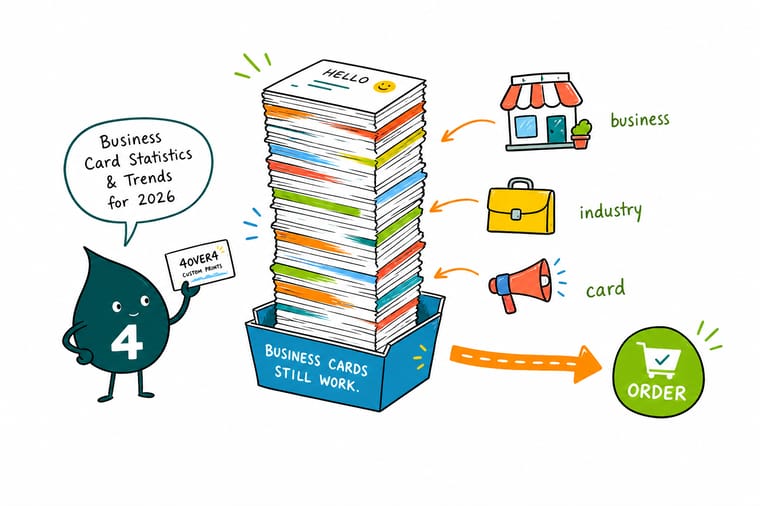
The numbers all point the same way: a premium card in someone's hands beats a contact lost in an app. Wally's rule is simple. Pick a stock that signals quality, add a finish that gets kept, and put a clear next step on the back. A first impression forms in about 7 seconds, and of the 27 million cards exchanged each day the ones that get kept are the ones whose stock says something before the text is read.
Order business cards →Proof, not promises
Delivery and rating figures behind our business card runs
Here are the latest figures on business card performance from our side of the press, the delivery, speed, and quality signals that round out the picture for anyone planning a print run in 2026 and beyond. A 99.8 percent on-time delivery rate keeps your reorder on schedule, and a 4.8 out of 5 average across 10,000 plus reviews shows the print quality holds up card after card.
Stock, finishing and price
Business card pricing and specifications
For professionals ready to act on these numbers, here is current pricing for Standard Business Cards alongside the full specifications, so you can match the right stock and finish to how your audience judges quality.
| Quantity | Price Per Unit | Total |
|---|---|---|
| 100 | 17.6¢ | $17.57 |
| 200 | 11.5¢ | $23.07 |
| 300 | 9.15¢ | $27.46 |
| 400 | 7.96¢ | $31.86 |
| 500 | 7.25¢ | $36.26 |
| 600 | 6.77¢ | $40.64 |
| 700 | 6.43¢ | $45.04 |
| 800 | 6.18¢ | $49.43 |
Start from a blank
Blank templates for business cards
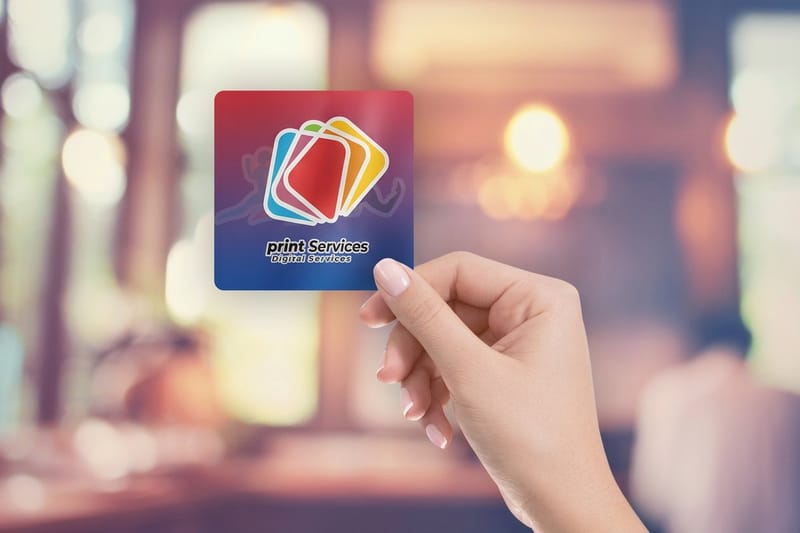
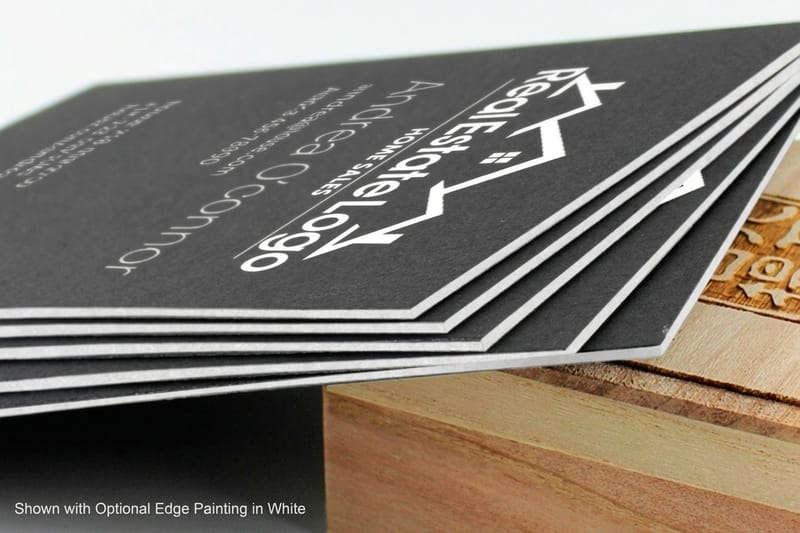
Need a head start on design? These blank templates for business cards make it easy to get your artwork print-ready, with bleed and safe margins already built in.
Clearing up the myths
Business card misconceptions versus the data
A few myths keep professionals from printing the card that would pay off. The pairs below set each common assumption against what the business card statistics actually show, so you can plan your next print run on evidence rather than habit.
Digital business cards have replaced paper.
Digital adoption is growing, but the majority of professionals still prefer receiving a physical card, and print dominates in-person events.
A cheap card works just as well as a premium one.
Recipients associate card quality with business quality. Thicker stock and specialty finishes get kept, while flimsy cards get tossed.
Younger professionals ignore printed cards.
Under-35 workers lead digital adoption, yet they still exchange physical cards at events and value the hybrid card-plus-QR approach.
Business cards cannot be measured.
A clear call to action, a QR code, or a unique offer on the back turns a card into a trackable micro-marketing piece.
Print it
The business cards professionals reach for most
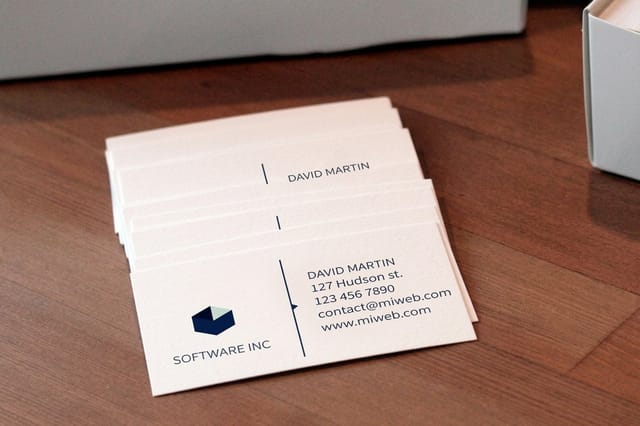
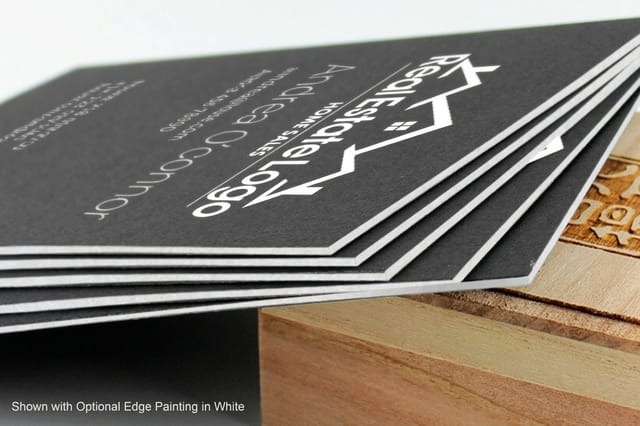
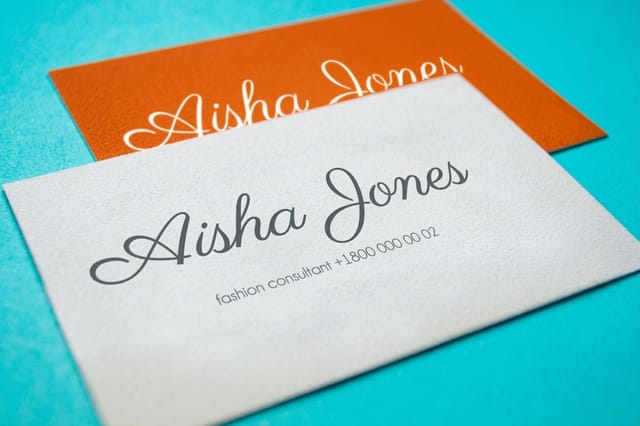
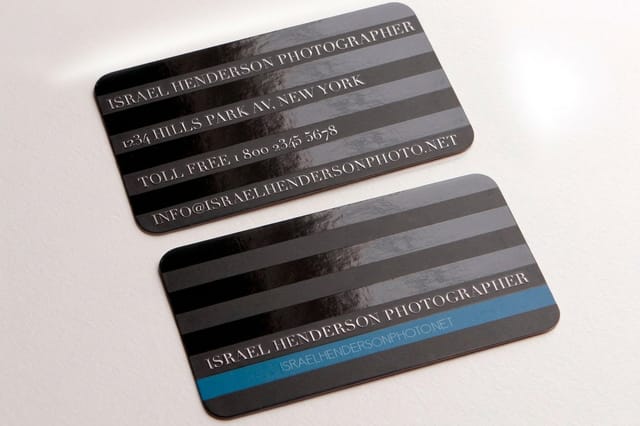
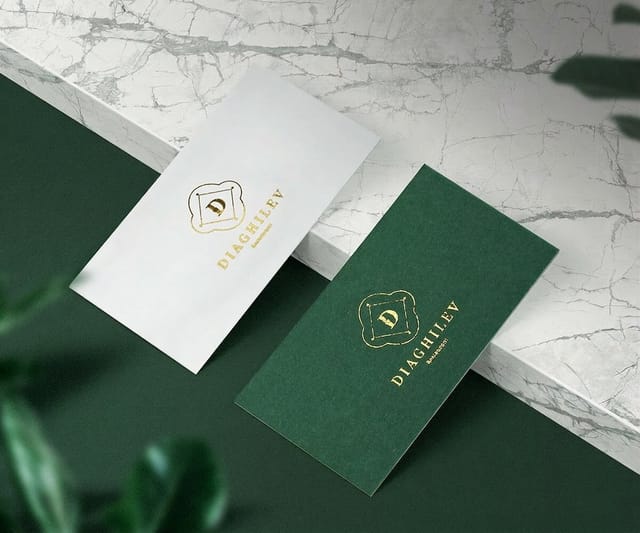
The card that earns the first impression is a physical choice: Standard Business Cards run from 14pt Gloss Cover up to 24pt Ultra Thick and print in 3 business days, while Black Business Cards start at 32pt Midnite Black Uncoated. These are the products professionals reach for most when they put these numbers to work.
What our print data reveals
Business card orders since 1999: thicker stock, more finishes
Third-party business card statistics are useful, but 4OVER4.COM's own order data, drawn from 150,000 plus businesses since 1999, adds another layer. Thicker stocks have steadily gained share over the past five years, and orders for 32pt and ultra-thick cards now make up a growing slice of total volume.
Specialty finishes are climbing too. Soft-touch matte, spot UV coating, and foil stamping have moved from niche upgrades to mainstream choices, and customers who try a premium finish once almost always reorder with the same or a better one.
Turnaround expectations have tightened as well. With 99.8 percent on-time delivery and 82 percent of orders shipping early, the platform meets the demand for speed without cutting quality. Sustainability matters to a growing share of buyers too, which is why green printing options with recycled stocks are now a baseline expectation rather than a bonus.
Switched to 4OVER4.COM after years with another printer. The 32pt uncoated cards feel incredible. I have had three people at conferences ask where I got them printed.
Verified customer, Financial Consultant
Why professionals trust us
The print record behind these business card figures
The benchmarks above sit next to our own card record: a 4.8 out of 5 average across 10,000 plus reviews and 150,000 plus businesses served since 1999. On the product level, Standard Business Cards hold a 4.9 average across 303 reviews, so a first run of 100 cards is a low-risk way to test a stock before you commit to a larger order.
Start from a design
Free business card design templates
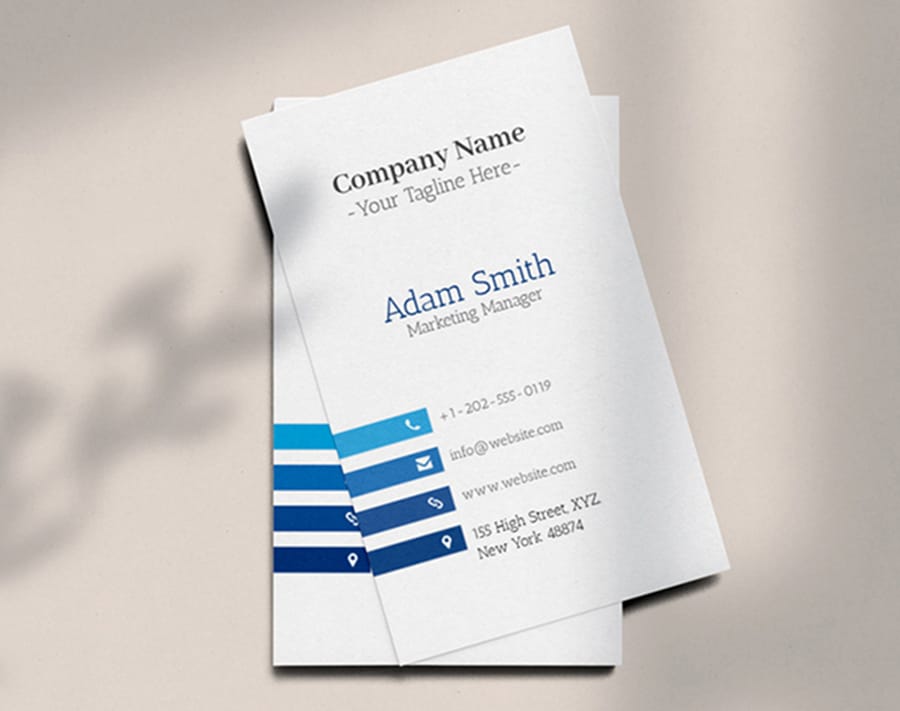
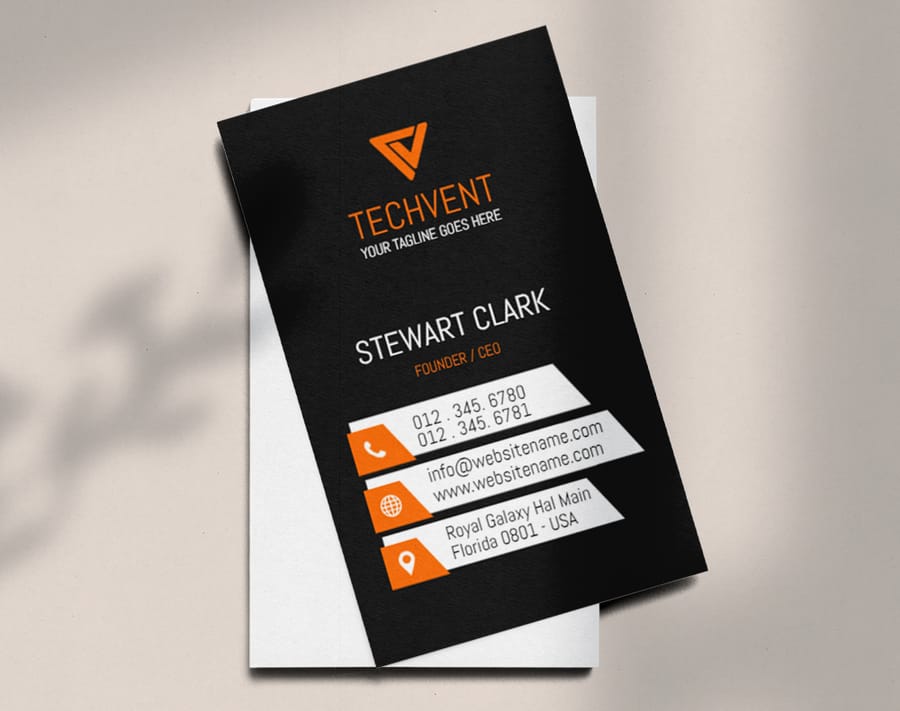
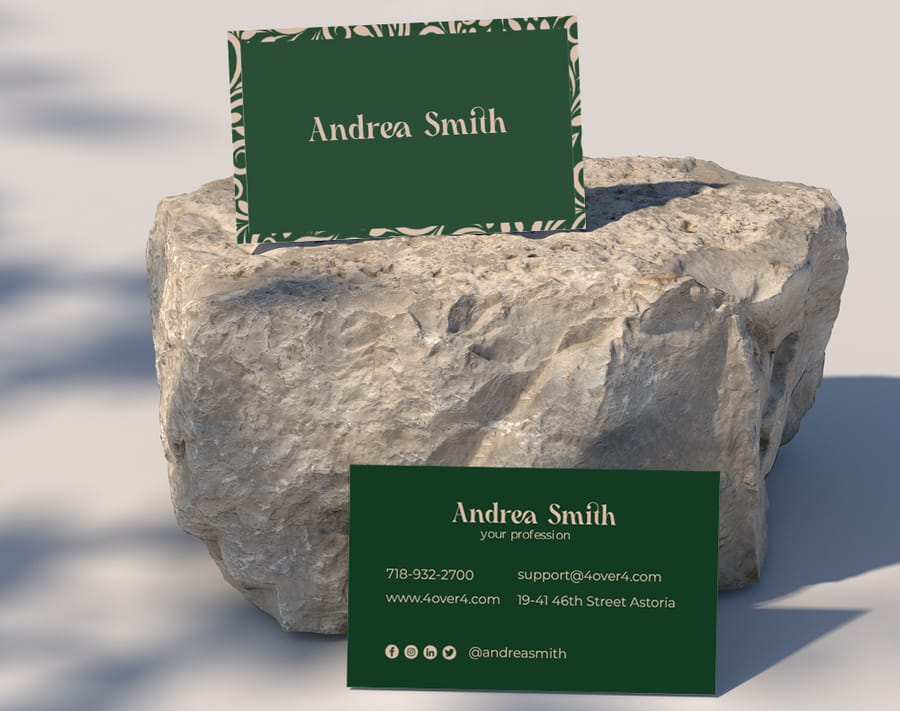
Not sure where to start? Open one of these free business card templates in the online designer, customize it, and send it straight to print.
How we built this
Where each business card statistic on this page comes from
Every business card statistic on this page comes from published industry research, trade association reporting, or 4OVER4.COM's own order and review data spanning 25 plus years of operations, drawn from 10,000 plus reviews and 150,000 plus businesses served. We cross-reference external sources with internal data before including any figure, and numbers are updated as new research becomes available. Where exact figures are not publicly disclosed, we note the general trend rather than speculate.
Get Started
Order Standard Business Cards, 100 from $17.57
Choose a stock from 14pt Gloss Cover to 24pt Ultra Thick, drop in your design or a free template, and the run prints in 3 business days.
Legal Disclaimer
Gold Standard guarantees apply to all standard orders placed through 4over4.com. Price match requires verifiable proof of a competitor's published price for an equivalent product with matching specifications and turnaround time. Satisfaction guarantee covers manufacturing defects and print quality issues. Contact support with order number and documentation. On-time delivery rate based on tracked orders 1999 to 2026. Individual results may vary based on shipping carrier performance.
Explore more
Business card products, guides, reviews, and comparisons
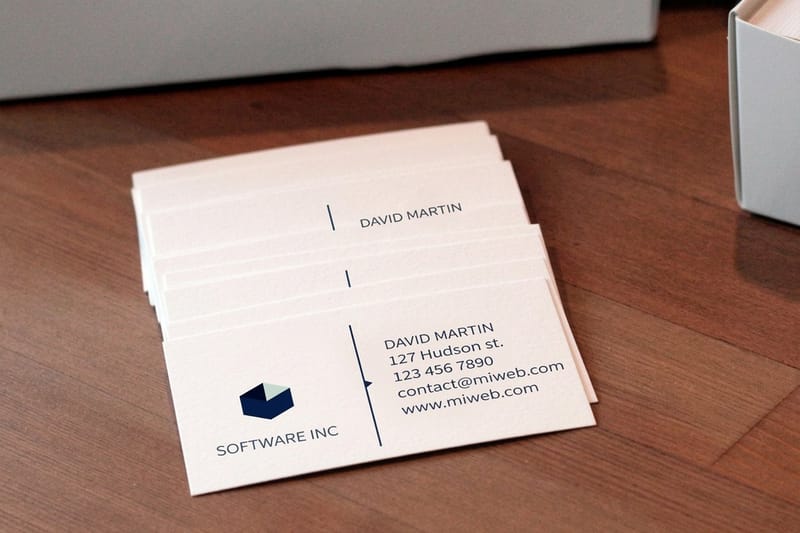 Product Standard Business Cards Print the flagship card on premium stock with fast turnaround.
  Statistics Printing Industry Statistics Where business cards fit in the wider print market.
  Statistics Packaging Industry Statistics How tactile print performs across packaging categories.
  Statistics Print Advertising Statistics The engagement data behind print versus digital channels.
  Statistics Greeting Card Statistics Why physical print builds stronger emotional connections. Hub Print Industry Statistics The parent hub pulling every print data point together.
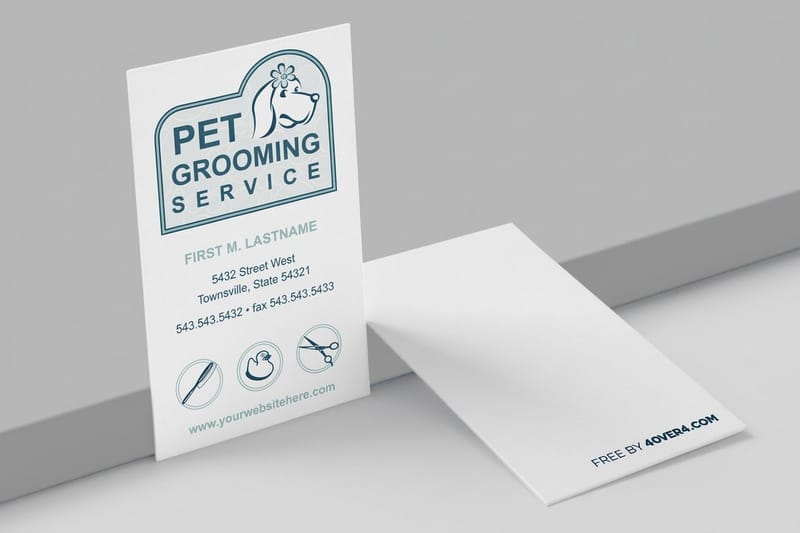
 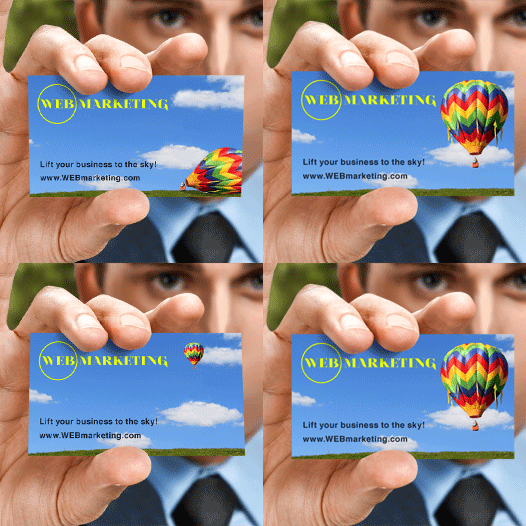 Templates Blank Card Templates Print-ready layouts with bleed and safe margins built in.
 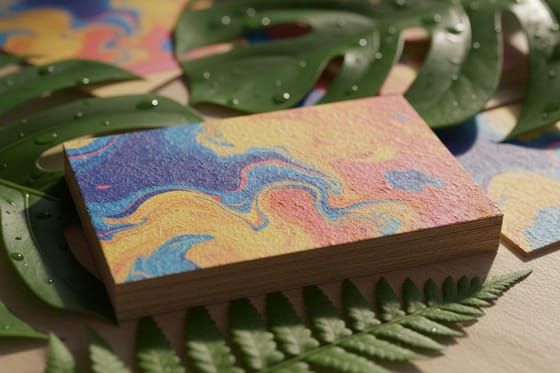 Benefit Green Printing Recycled stocks and eco-conscious production for your cards.
  Samples Free Print Samples Feel the stocks and finishes before you place a full order. FAQs Printing FAQs Answers on stock, sizes, proofs, and turnaround.
 Questions and answers
Common questions about business card data and trends
Production volume, first impressions, digital adoption, trends, and industry fit, answered.
How many business cards are printed each year in the United States?
Business card statistics indicate that 10 billion plus cards are printed annually in the US alone, roughly 27 million exchanged per day. Despite the growth of digital alternatives, production volume has stayed stable over the past decade.
Are digital business cards replacing printed ones?
Digital business card statistics show growing adoption, especially among younger professionals and tech-focused industries. Printed cards still dominate at in-person events and client meetings, and most professionals now use a hybrid approach, carrying physical cards with QR codes that link to digital profiles.
Do business cards actually help with first impressions?
First impression statistics confirm that people form judgments within 7 seconds of meeting someone. A well-designed card on a heavy stock extends that impression and increases the chance of follow-up. Card thickness, finish, and design quality all influence how recipients perceive your professionalism.
What are the biggest business card trends right now?
Current business card trends include thicker paper stocks of 32pt and above, specialty finishes like Spot UV and foil stamping, eco-friendly materials, QR code integration, and non-standard shapes. The shift is toward cards that create a tactile, memorable experience rather than just listing contact information.
How do business networking statistics support using printed cards?
Business networking statistics show that professionals exchange 5 to 20 cards per day at conferences and trade shows. Physical card exchange remains the most common contact-sharing method at in-person events, and cards with distinctive designs and premium finishes are retained longer and lead to more follow-up conversations.
Where can I get help choosing the right business card for my industry?
4OVER4.COM offers 60 plus paper types and a range of finishes suited to every industry. Visit the Help Center for guidance on paper selection, design tips, and ordering. Real estate, beauty, finance, and hospitality professionals each have different preferences, so the right stock and finish depend on your brand and audience.
