What You Need to Know About Direct Mail Response Rates
The average direct mail response rate sits between 2.7% and 4.4%, depending on the audience type, according to the Data & Marketing Association (DMA). That's dramatically higher than most digital channels. House lists - your existing customers - pull stronger numbers than prospect lists every time.
The average response rate for direct mail postcards tends to outperform letter-sized formats because postcards don't require opening. They're visible the moment someone picks them up. 4OVER4 has printed over 10 billion+ cards for 150,000+ businesses, and our clients consistently report that print quality directly impacts how recipients respond. Check out our Daily Deals to get started with high-impact mailers at a better price.
Why Direct Mail Response Rates Still Matter in 2025
The average direct mail response rate remains one of the strongest performance metrics in marketing. While email open rates hover around 20% and click-through rates sit below 3%, physical mail consistently generates measurable, trackable responses that justify the investment. For a deeper look at the broader picture, explore our Direct Mail Statistics page.
Direct mail isn't just surviving - it's outperforming. According to the Association of National Advertisers (ANA), direct mail response rates for house lists average 9%, while prospect lists average around 4.9%. Those numbers crush most digital benchmarks. The average response rate for direct mail postcards is particularly strong because the format demands zero effort from the recipient.
Understanding these benchmarks helps you set realistic goals, allocate budget wisely, and measure campaign success. If you want to connect response data to actual revenue, our Direct Mail Roi calculator breaks it all down.
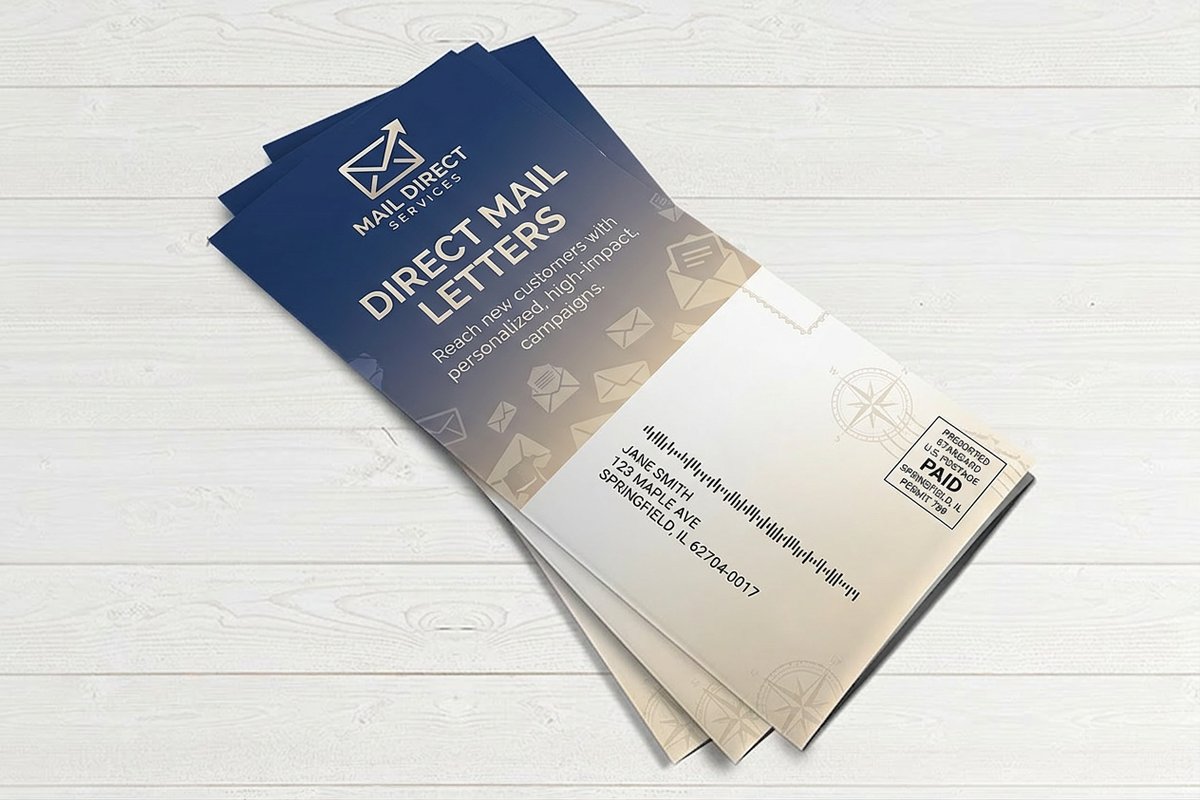
Here's a visual look at the types of direct mail formats that drive the strongest response rates.
Direct Mail Response Rate Benchmarks for 2025
The average direct mail response rate varies based on several factors: audience type, mail format, industry, personalization level, and even the paper stock you choose. Let's break down each factor so you can benchmark your campaigns against real data.
House Lists vs. Prospect Lists: The Response Gap
The biggest variable in any direct mail campaign is who you're mailing. House lists - people who've already bought from you or opted in - respond at dramatically higher rates than cold prospect lists. According to the ANA/DMA Response Rate Report, house lists generate response rates between 5% and 9%, while prospect lists typically land between 2% and 5%.
That gap makes sense. Someone who already knows your brand doesn't need convincing. They need a reason to come back. A well-timed postcard with a personalized offer can trigger that return visit. For more data on how direct mail stacks up against other channels, check out Direct Mail Effectiveness research.
Key Statistics
"We mailed 2,000 postcards to our existing customer list and got a 7.3% response rate. The card quality from 4OVER4 made our brand look premium, which I think helped people actually keep the mailer instead of tossing it."
Marcus L., Restaurant Owner
Response Rates by Mail Format
Not all mail formats perform equally. The format you choose shapes the recipient's experience before they even read your message.
Postcards consistently deliver the highest response rates among standard formats. They require zero effort to engage with - no envelope to open, no letter to unfold. The average response rate for direct mail postcards ranges from 4% to 5% for house lists. Oversized postcards (6x9 or 6x11) tend to outperform standard 4x6 formats because they stand out in the mailbox.
Letter packages with personalized letters and reply devices average around 3.5% to 4% for house lists. They work best for complex offers that need more explanation - think financial services, insurance, or B2B proposals.
Self-mailers and catalogs fall in the 2% to 3.5% range but often generate higher average order values. The browsing experience of a catalog encourages larger purchases even if fewer people respond.
For a comprehensive breakdown of all Direct Mail performance data, our statistics hub covers every angle.
More Data Points
Industry-Specific Direct Mail Response Rates
Your industry shapes what "good" looks like. A 3% response rate might be exceptional in one vertical and disappointing in another.
Nonprofit and fundraising campaigns see some of the highest direct mail response rates, often reaching 5% to 9% for donor house lists. Emotional storytelling combined with a physical ask creates a powerful combination.
Real estate mailers - think "just sold" postcards and neighborhood market updates - average 3% to 5%. Agents who mail consistently to the same farm area build familiarity that compounds over time.
Retail and e-commerce campaigns typically hit 3% to 4% with house lists, especially when the mailer includes a specific discount code that creates urgency.
Financial services hover around 2% to 3% for prospect lists but can reach 6%+ for existing account holders receiving cross-sell offers.
Healthcare and dental practices report strong results with appointment reminder postcards, averaging 4% to 6% response rates for reactivation campaigns targeting lapsed patients.
More Data Points
What Drives Higher Response Rates
Response rates don't happen by accident. Several controllable factors determine whether your mailer gets a response or gets recycled.
Personalization is the single biggest lever. According to research from InfoTrends, personalized direct mail generates a 6x higher transaction rate than non-personalized mail. Variable data printing lets you customize names, offers, images, and messaging for each recipient. It's not just "Dear [First Name]" anymore - it's tailoring the entire creative to the recipient's behavior and preferences.
Paper quality and finish directly impact perceived value. A thick, textured postcard on 16pt or 32pt stock feels different in someone's hands than a flimsy piece of paper. That tactile experience triggers what neuroscientists call "embodied cognition" - the physical sensation of quality transfers to the brand perception. 4OVER4 offers 60+ paper types so you can match the stock to your brand positioning.
Offer strength matters more than clever copy. A clear, specific offer ("$50 off your first visit" or "Free consultation - expires March 15") outperforms vague branding messages every time. The best-performing mailers combine a strong offer with a deadline.
Timing and frequency play a bigger role than most marketers realize. Single-touch campaigns underperform multi-touch sequences. Sending 3 mailers over 6 weeks can increase cumulative response rates by 50% or more compared to a single drop.
Expert Insights
Direct Mail vs. Digital: The Response Rate Comparison
When you compare the direct mail response rate against digital channels, the gap is striking. Email marketing averages a 1% to 2% click-through rate. Paid social ads hover around 0.5% to 1.5% click-through. Display advertising? Often below 0.1%.
Direct mail's 2.7% to 4.4% average response rate looks even better when you factor in the quality of those responses. People who respond to direct mail tend to spend more per transaction and have higher lifetime value. The physical nature of mail creates a deeper cognitive impression than a fleeting digital ad.
For a detailed side-by-side analysis, our Direct Mail Vs Email comparison page lays out the full picture with current data.
That said, the smartest marketers don't choose one over the other. They combine direct mail with digital follow-up. Send a postcard, then retarget the same audience with display ads. According to the USPS, campaigns that integrate direct mail with digital see a 28% higher conversion rate than either channel alone.
Blank Templates


Tracking and Measuring Your Response Rate
You can't improve what you don't measure. Here are the most reliable methods for tracking direct mail response rates:
- Unique promo codes - assign a code to each campaign or segment so you can attribute sales directly to the mailer
- Dedicated landing pages or URLs - create campaign-specific URLs (e.g., yourbrand.com/spring25) that only appear on the mailer
- QR codes - scannable codes that track engagement in real time and bridge the physical-digital gap
- Call tracking numbers - unique phone numbers for each campaign that route to your main line but track separately
- Matchback analysis - compare your mail list against new customers or transactions within the response window
The response window matters too. Most direct mail responses occur within 2 to 3 weeks of delivery, but some industries see responses trickling in for 6 to 8 weeks. Set your measurement window based on your sales cycle, not an arbitrary deadline.
How Print Quality Affects Response Rates
This is the part most data articles skip, but it matters. The physical quality of your mailer directly influences whether someone engages with it or tosses it.
A study by the USPS Office of Inspector General found that physical ads cause more emotional processing in the brain than digital ads. The weight, texture, and visual quality of a printed piece all contribute to that effect. A rigid, vivid postcard printed on heavy stock demands attention in a way a thin, floppy flyer never will.
4OVER4 prints on stocks ranging from 14pt to 32pt - and that 32pt option is roughly 3x the thickness of standard mail. When recipients feel that heft, they pause. They look. And that pause is where your response rate lives.
"Ordered average direct mail response rate from 4OVER4 and the quality blew me away. Sharp colors, premium feel, arrived 2 days early."
"Been using 4OVER4 for average direct mail response rate for a year. Consistent quality every time. The online designer made it easy."
"Switched to 4OVER4 and saved 40% on average direct mail response rate. Better quality than my old printer. 60+ paper options."
"4OVER4's average direct mail response rate helped us look more professional. Clients notice the difference."
"I switched from a budget printer to 4OVER4 for our quarterly mailers. Same list, same offer, same design. Response rate jumped from 2.1% to 3.8%. The only variable was print quality."
Rachel K., Marketing Director, Dental Practice
Here's a look at industry benchmarks and expert perspectives on what drives direct mail performance.
How Direct Mail Stacks Up Against Other Marketing Channels
The average direct mail response rate becomes even more impressive when you see it next to other channels. This comparison helps you understand where direct mail fits in your marketing mix and why so many businesses are increasing their print budgets.
Postcards, in particular, punch above their weight. The average response rate for direct mail postcards benefits from instant visibility - there's nothing to open. For a format that really stops people in their tracks, consider 3D Postcards that add motion and depth to your mailer.
4OVER4 has helped 150,000+ businesses create mailers that outperform industry averages. The difference often comes down to stock weight, finish quality, and design execution. When your postcard feels like it cost money, recipients treat it like it's worth their attention.
Direct mail response rate benchmarks for 2025 show continued strength for physical mail, especially as digital ad fatigue grows. Consumers receive hundreds of emails daily but only a handful of physical mail pieces. That scarcity creates an attention advantage that translates directly into higher response rates.
The data consistently shows that multi-channel campaigns combining direct mail with digital retargeting deliver the highest overall response and conversion rates. Physical mail anchors the message, and digital follow-up reinforces it.
Patterns From 10 Billion+ Printed Pieces
With over 10 billion+ cards and prints produced since 1999, 4OVER4 has observed consistent patterns in what separates high-performing mailers from average ones.
Clients who choose heavier paper stocks - 16pt and above - report stronger engagement with their direct mail campaigns. That tracks with industry data on the average direct mail response rate. Thicker, more tactile pieces get held longer, read more carefully, and kept instead of discarded.
Finish selection also plays a role. Soft-touch matte and spot UV coatings create a sensory contrast that draws the eye and the hand. Our clients who add specialty finishes to their direct mail postcards frequently note improved average response rates for direct mail postcards compared to standard matte or gloss prints.
Color saturation matters too. Vivid, rich color reproduction on premium stock creates a professional impression within the first second of contact. That first-second impression determines whether your mailer gets read or recycled.
How 4OVER4 Helps You Beat the Average
Knowing the average direct mail response rate is useful. Beating it is the goal. 4OVER4 gives you the tools to do exactly that.
Start with 60+ paper types and multiple finish options. Match your stock to your audience - sturdy 32pt for luxury real estate mailers, crisp 14pt for high-volume retail drops. Every choice you make about materials influences how recipients perceive and respond to your message.
4OVER4 maintains a 99.8% on-time delivery rate with a 4.8/5 star rating across 10,000+ reviews. Your campaign timeline depends on reliable production and shipping, and we deliver on both. For businesses looking to reduce their environmental footprint while maintaining print quality, our Green Printing options use sustainable materials without sacrificing the tactile impact that drives response rates.
Sustainability is becoming a factor in consumer response, too. Recipients increasingly favor brands that demonstrate environmental responsibility. 4OVER4's Green Printing program lets you align your direct mail strategy with those values.
Here are some of the most popular products our clients use for high-response direct mail campaigns.
How We Compiled This Response Rate Data
The direct mail response rate benchmarks on this page come from published reports by the Data & Marketing Association (DMA), the Association of National Advertisers (ANA), the USPS, and InfoTrends. We cross-referenced these sources with 4OVER4's 25+ years of production data serving 150,000+ businesses. All figures reflect the most recently available data as of 2025. Where ranges are cited, they account for variations across industries, list types, and mail formats.
Mailing Flyers Pricing
| Quantity | Price Per Unit |
|---|---|
| 500 | $0.18 |
| 7,000 | $0.04 |
| 25,000 | $0.03 |
| 60,000 | $0.03 |
| 100,000 | $0.03 |
Ink Color
Proof Options
Common Questions About Direct Mail Response Rates
What is a good response rate for direct mail?
A good direct mail response rate depends on your audience. For house lists (existing customers), anything above 5% is solid, and top performers hit 9% or higher. For prospect lists, 2% to 5% is considered strong. If you're below 2% on a prospect list, your targeting, offer, or creative likely needs work. The direct mail average response rate across all campaigns and list types falls between 2.7% and 4.4%.
What is the average response rate for direct mail postcards?
Postcards typically generate response rates between 4% and 5% for house lists, making them one of the highest-performing direct mail formats. Their advantage is instant visibility - no envelope means the recipient sees your message immediately. Oversized postcards (6x9 or larger) tend to outperform standard 4x6 cards because they're harder to miss in the mailbox.
How does the direct mail response rate compare to email?
Direct mail response rates average 2.7% to 4.4%, while email click-through rates typically sit between 1% and 2%. That's a 2x to 4x advantage for physical mail. Direct mail also generates higher-quality responses - people who respond tend to spend more and have greater lifetime value than email responders.
Does paper quality actually affect direct mail response rates?
Yes. Heavier stocks (16pt to 32pt) create a tactile impression that makes recipients pause and engage with the piece. Research from the USPS shows physical mail triggers stronger emotional processing than digital ads. 4OVER4 clients who upgrade from standard stock to premium options consistently report improved campaign performance.
How long should I wait to measure my direct mail response rate?
Most responses arrive within 2 to 3 weeks of delivery. However, some industries - especially B2B and high-consideration purchases - see responses for 6 to 8 weeks. Set your measurement window based on your typical sales cycle. Track using unique promo codes, dedicated URLs, QR codes, or call tracking numbers for accurate attribution.
What's the best way to improve my average direct mail response rate?
Focus on three things: list quality (mail to the right people), offer strength (give them a clear, specific reason to respond), and print quality (make the piece feel worth keeping). Personalization using variable data printing can increase transaction rates by 6x. Multi-touch campaigns - sending 3 pieces over 6 weeks - outperform single mailings by 50% or more.