What Direct Mail ROI Actually Looks Like in Real Numbers
Direct mail ROI remains one of the strongest performance metrics in offline marketing. For every dollar spent, businesses consistently see returns that outpace many digital channels. Understanding how to measure ROI of direct mail starts with tracking response rates, conversion rates, and average order values against your total campaign cost. 4OVER4 has helped 150,000+ businesses produce mail pieces that drive real, trackable revenue. With 10,000+ reviews backing the quality of our print products, the connection between premium materials and stronger returns is hard to ignore. Join our Loyalty Program to reduce your per-piece costs and push those margins even higher.
Why Marketers Keep Coming Back to Direct Mail ROI
Direct mail ROI isn't a relic of the past. It's a metric that keeps surprising marketers who've gone all-in on digital. Physical mail gets opened, held, and acted on at rates that email marketers dream about. The data backs this up across industries, company sizes, and campaign types.
If you want the full picture, start with our Direct Mail Statistics page, which covers industry-wide trends and spending patterns. Then dig into Direct Mail Effectiveness to see how response rates translate into revenue. For a broader look at how physical marketing materials perform across channels, explore the Print Marketing Statistics
hub for additional context. 4OVER4 has printed 10 billion+ cards and mail pieces for businesses that track every dollar. That volume of production gives us a front-row seat to what actually works.
Below, you'll find industry benchmarks, ROI formulas, comparison data, and expert insights to help you build campaigns that pay for themselves.
Breaking Down Direct Mail ROI by Channel, Format, and Strategy
Direct mail ROI is the ratio of revenue generated from a mail campaign to the total cost of producing and sending it. A campaign that costs $5,000 and generates $25,000 in sales delivers a 400% ROI. That's the math. The strategy is in knowing which levers to pull - format, audience, timing, print quality - to push that number higher.
Most marketers calculate ROI on direct mail using a simple formula: (Revenue - Cost) / Cost x 100. But the real insight comes from understanding what drives each variable. Let's break it down.
Response Rates Are the Foundation of Direct Mail Marketing ROI
Response rate is where everything starts. A higher response rate means more people taking action - visiting your URL, scanning your QR code, calling your number, or walking into your store. According to industry data, direct mail response rates consistently outperform digital channels.
The format matters. Oversized postcards tend to grab attention faster than standard envelopes. Personalized letters with variable data printing can push response rates even higher. And catalogs, while more expensive per piece, often generate the highest average order values. Check the Average Direct Mail Response Rate benchmarks for current numbers across formats.
What kills response rates? Generic messaging, poor targeting, and cheap-looking print. A flimsy postcard on thin stock signals "junk mail" before the recipient even reads the headline. This is where print quality directly impacts your direct mail ROI.
How to Measure ROI of Direct Mail With Precision
Tracking direct mail isn't guesswork anymore. Modern campaigns use multiple attribution methods to connect a mail piece to a sale. Here are the most reliable approaches:
- Unique URLs and landing pages - assign a specific URL to each campaign or segment so you can track visits directly
- QR codes - scannable codes on your mail piece that route to tracked destinations
- Promo codes - unique discount codes that tie purchases back to the specific mailer
- Call tracking numbers - dedicated phone numbers that attribute inbound calls to your campaign
- Matchback analysis - comparing your mailing list against customer purchase data to identify conversions
The best campaigns use two or three of these methods together. A postcard with a QR code, a unique promo code, and a dedicated landing page gives you three data points per recipient. That's how you build a reliable direct mail ROI calculator for your business.
Direct Mail vs. Digital: Where the ROI Comparison Gets Interesting
The Direct Mail Vs Email debate isn't about picking one over the other. It's about understanding where each channel performs best. Email is cheap to send but drowns in inbox clutter. Direct mail costs more per touch but commands attention.
Consider the full customer journey. A prospect who receives a well-designed postcard on thick, textured stock has a physical reminder sitting on their kitchen counter. That piece stays visible for days or weeks. An email? It's buried under 47 other messages within hours.
The cost-per-acquisition for direct mail is higher than email, but the lifetime value of customers acquired through mail tends to be higher too. They spend more per order and return more frequently. When you factor in customer lifetime value, the ROI on direct mail often surpasses digital-only campaigns.
Direct Mail ROI Benchmarks 2025: What to Expect This Year
Direct mail ROI benchmarks 2025 reflect a market where postage costs have risen but targeting technology has improved. Variable data printing lets you personalize every piece - name, offer, imagery - without slowing down production. Better targeting means less waste. Less waste means higher ROI.
Industry-wide, marketers report average returns ranging from $4 to $12 for every $1 spent on direct mail, depending on the vertical. Financial services and insurance tend to see the highest returns. Retail and e-commerce follow closely. Nonprofits often achieve strong ROI through donation campaigns that combine emotional storytelling with tangible print quality.
Your specific benchmarks depend on your list quality, offer strength, and mail piece design. A generic postcard to a cold list won't perform like a personalized letter to a warm prospect. The gap between average and top-performing campaigns is enormous - and it almost always comes down to targeting and creative execution.
Print Quality's Direct Impact on Campaign Returns
Here's something most ROI discussions skip: the physical quality of your mail piece affects whether people engage with it. A postcard printed on 16pt card stock with a matte finish feels different in someone's hands than a thin, glossy flier. That tactile experience creates a subconscious quality signal.
Think about it from the recipient's perspective. You check your mailbox. You flip through the stack. The pieces that feel big get a second look. The flimsy ones go straight to recycling. Your direct mail ROI starts at the mailbox, not on the landing page.
"We switched from standard 10pt to 16pt uncoated stock for our quarterly mailers and saw our response rate jump noticeably. People actually kept the piece on their desk instead of tossing it."
- Rachel K., Marketing Director, Regional Insurance Agency
4OVER4 offers 60+ paper types specifically because the right stock for your audience makes a measurable difference. A luxury real estate mailer on Silk Laminated stock sends a completely different message than the same design on standard gloss.
Calculating Your Own Direct Mail ROI: A Practical Framework
Building a direct mail ROI calculator for your campaigns doesn't require fancy software. Start with these numbers:
- Total campaign cost - printing, postage, list rental or purchase, design, and any fulfillment fees
- Number of pieces mailed - your total send volume
- Response rate - percentage of recipients who took a trackable action
- Conversion rate - percentage of responders who became paying customers
- Average order value - what each converted customer spent
Multiply your mail quantity by response rate, then by conversion rate, then by average order value. That gives you total revenue. Subtract your total campaign cost. Divide by total campaign cost. Multiply by 100. That's your ROI percentage.
For deeper Direct Mail data points and industry averages, explore our statistics hub.
Strategies That Push Direct Mail ROI Higher
The difference between a 200% ROI and an 800% ROI usually comes down to a handful of decisions made before anything goes to print:
- List segmentation - mail to your best prospects, not everyone. A smaller, targeted list almost always outperforms a massive, generic one.
- Strong offer - give people a clear, compelling reason to respond right now. Urgency and specificity beat vague brand awareness.
- Multi-touch campaigns - one mailer is a nudge. Three mailers over six weeks is a strategy. Repetition builds recognition and trust.
- Premium print quality - as covered above, the physical feel of your piece affects engagement. Invest in stock and finish.
- Clear call to action - tell recipients exactly what to do next. One action, prominently displayed. Don't make them guess.
Each of these levers is within your control. Small improvements across all five compound into dramatic ROI gains.
Here's a look at current industry statistics that shape direct mail ROI expectations across sectors:
Key Statistics
More Data Points
More Data Points
Expert Insights
Expert perspectives add context to the raw numbers. Here's what industry leaders are saying about the state of direct mail performance:
To see how pricing affects your per-piece cost and overall campaign ROI, review the options below:
Specifications matter when you're optimizing for both print quality and postage costs. Here are the details:
Starting from a proven layout can save design time and reduce errors. These templates are built for direct mail campaigns:
Blank Templates


Real feedback from businesses tracking their direct mail ROI tells the full story:
"Ordered direct mail roi from 4OVER4 and the quality blew me away. Sharp colors, premium feel, arrived 2 days early."
"Been using 4OVER4 for direct mail roi for a year. Consistent quality every time. The online designer made it easy."
"Switched to 4OVER4 and saved 40% on direct mail roi. Better quality than my old printer. 60+ paper options."
"4OVER4's direct mail roi helped us look more professional. Clients notice the difference."
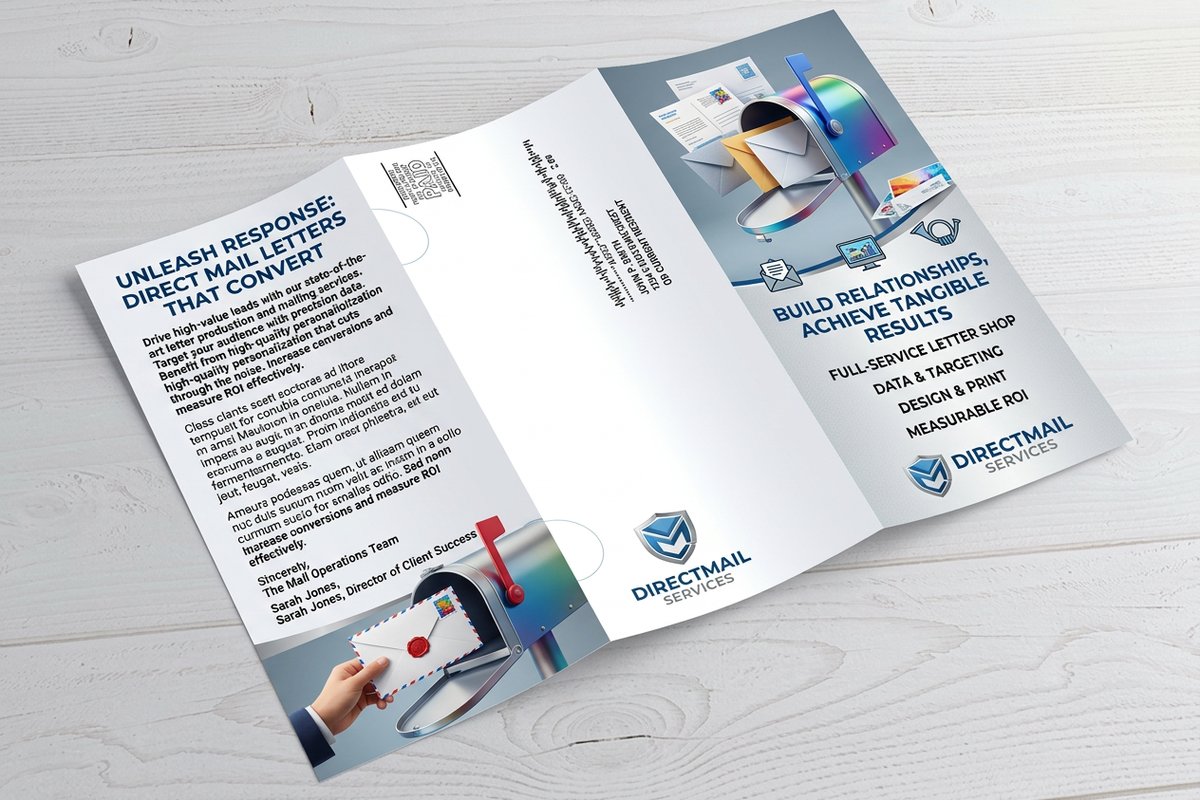
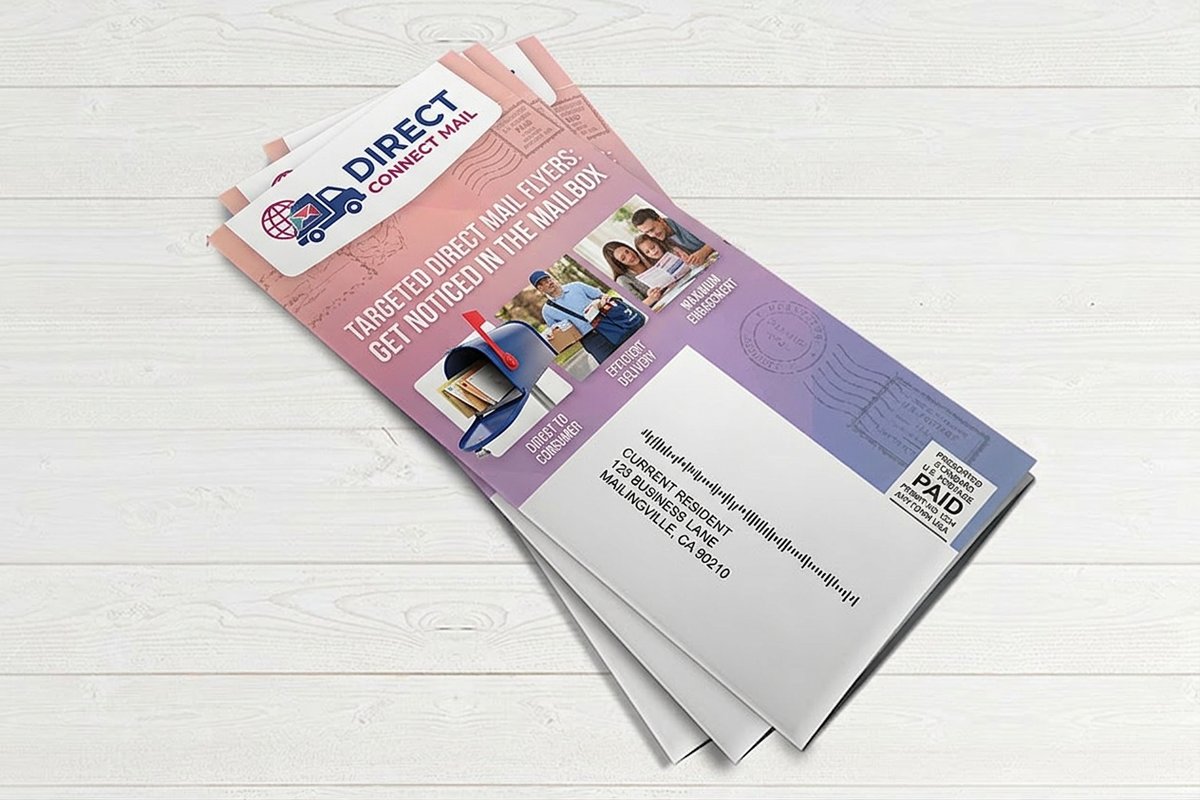
See how other marketers have designed high-performing mail pieces that drive measurable returns:
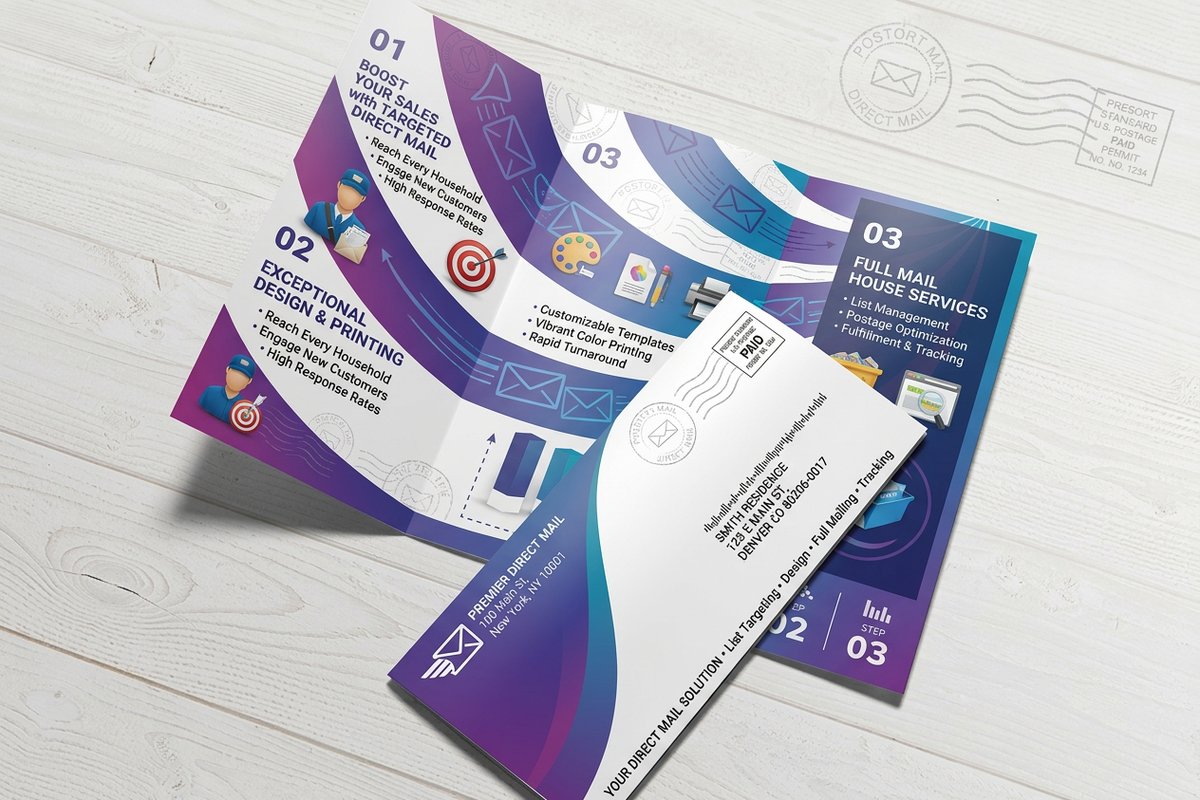
Direct Mail ROI Compared Across Marketing Channels
Understanding direct mail ROI in isolation only tells part of the story. Marketers need to see how it stacks up against other channels to make smart budget decisions. The comparison isn't always apples-to-apples - each channel has different cost structures, tracking methods, and customer touchpoints - but the relative performance data helps you allocate spend where it counts.
For campaigns that demand visual impact and dimensional engagement, formats like 3D Postcards can push response rates and ROI well above standard flat mailers. The novelty factor alone increases the likelihood that recipients interact with the piece.
When evaluating how to measure ROI of direct mail against digital alternatives, keep in mind that direct mail's longer shelf life - recipients keep physical mail for an average of 17 days - means conversions can trickle in over weeks, not just hours. Your attribution window needs to account for this. A 30-day lookback period is standard for direct mail, compared to 7 days for most email campaigns. 4OVER4's 99.8% on-time delivery rate ensures your campaign hits mailboxes on schedule, which is critical when you're coordinating multi-channel efforts with specific timing windows.
Patterns From 150,000+ Businesses Printing Direct Mail
4OVER4 has worked with 150,000+ businesses across every industry you can name. That volume of production reveals patterns that no single case study can capture. Businesses that order on heavier stock - 16pt and above - tend to reorder more frequently, which suggests their campaigns are performing well enough to justify continued investment.
We also see a clear correlation between personalization and reorder rates. Clients using variable data printing for their direct mail campaigns come back faster and order larger quantities over time. That's a strong signal that personalized mail drives better direct mail ROI than generic blasts.
Another pattern: businesses that combine multiple formats - postcards plus letters plus catalogs - in sequenced campaigns show the highest long-term retention as 4OVER4 customers. Multi-touch, multi-format strategies aren't just theory. They're reflected in real purchasing behavior across our platform.
How 4OVER4 Helps You Maximize Every Direct Mail Dollar
Your direct mail ROI is only as strong as the piece that lands in the mailbox. 4OVER4 gives you the tools to make every impression count. With 60+ paper types, premium finishes like Soft Touch, Spot UV, and Silk Laminated, and 1,000+ products to choose from, you can match your mail piece to your audience's expectations.
Need to get a time-sensitive campaign out the door? Our Same Day Printing option means you don't have to sacrifice quality for speed. And with 82% of orders shipping early, most campaigns arrive ahead of schedule.
For businesses running frequent direct mail campaigns, Same Day Printing paired with our bulk pricing tiers can dramatically reduce your cost per piece - pushing your ROI on direct mail higher with every send.
"We run monthly postcard campaigns through 4OVER4 and the consistency is incredible. Every batch looks identical, arrives on time, and our response rates have stayed steady at well above our old printer's results."
- Marcus D., Owner, Regional Home Services Company
Explore the products below that our direct mail clients use most to drive strong returns:
How We Source and Verify Direct Mail ROI Data
Every statistic on this page comes from published industry reports, recognized marketing associations, and 4OVER4's own operational data from serving 150,000+ businesses since 1999. We cross-reference multiple sources before including any benchmark. When figures conflict between sources, we note the range rather than cherry-pick the most impressive number. Our internal data reflects real order patterns and customer behavior - not surveys or projections.
Mailing Flyers Pricing
| Quantity | Price Per Unit |
|---|---|
| 500 | $0.18 |
| 7,000 | $0.04 |
| 25,000 | $0.03 |
| 60,000 | $0.03 |
| 100,000 | $0.03 |
Ink Color
Proof Options
Common Questions About Direct Mail ROI
What is a good direct mail ROI for a small business?
A strong direct mail ROI for small businesses typically falls between 300% and 600%, meaning $3 to $6 back for every $1 spent. Your actual return depends on list quality, offer strength, and the print quality of your mail piece. Businesses using targeted lists with personalized messaging consistently hit the higher end of that range.
How do you calculate direct mail marketing ROI?
Use this formula: (Total Revenue from Campaign - Total Campaign Cost) / Total Campaign Cost x 100. Include all costs - printing, postage, design, list acquisition, and fulfillment. A direct mail ROI calculator built on these inputs gives you an accurate picture of campaign performance. Track responses with unique URLs, QR codes, or promo codes for precise attribution.
Why is direct mail ROI often higher than email marketing?
Direct mail gets physically handled, which creates stronger brand recall and higher engagement. Response rates for direct mail a lot exceed email open rates. While cost per touch is higher, the conversion quality and customer lifetime value tend to make up the difference - often resulting in better overall ROI on direct mail.
What direct mail formats deliver the best ROI?
Oversized postcards and personalized letters tend to deliver the strongest returns. Postcards are cost-effective because they don't require envelope insertion and are immediately visible. Letters work well for high-value offers that need more explanation. Catalogs generate the highest average order values but cost more per piece to produce and mail.
How does print quality affect direct mail ROI?
Print quality directly impacts whether recipients engage with your piece or discard it. Heavier card stock (16pt and above), premium finishes like Soft Touch or Spot UV, and vivid color reproduction all signal credibility. 4OVER4 offers 60+ paper types so you can match the tactile experience to your brand positioning and audience expectations.
What are the direct mail ROI benchmarks for 2025?
Direct mail ROI benchmarks 2025 show average returns of $4 to $12 per dollar spent, varying by industry. Financial services and insurance lead the pack. Retail and e-commerce follow closely. Improved targeting through variable data printing and better list segmentation are driving higher returns despite rising postage costs.
"I was skeptical about direct mail until I tracked our first campaign through 4OVER4. We sent 2,000 postcards on 16pt Matte stock with a QR code, and the ROI blew our Facebook ads out of the water. Now it's a permanent part of our marketing budget."
- Danielle F., Co-founder, Boutique Skincare Brand