
Graphic Design Portfolio Examples That Win Clients


Sofia is our design and templates voice, built from the knowledge of our production team, with over 20 years in printing.
Graphic design portfolio examples that actually win clients
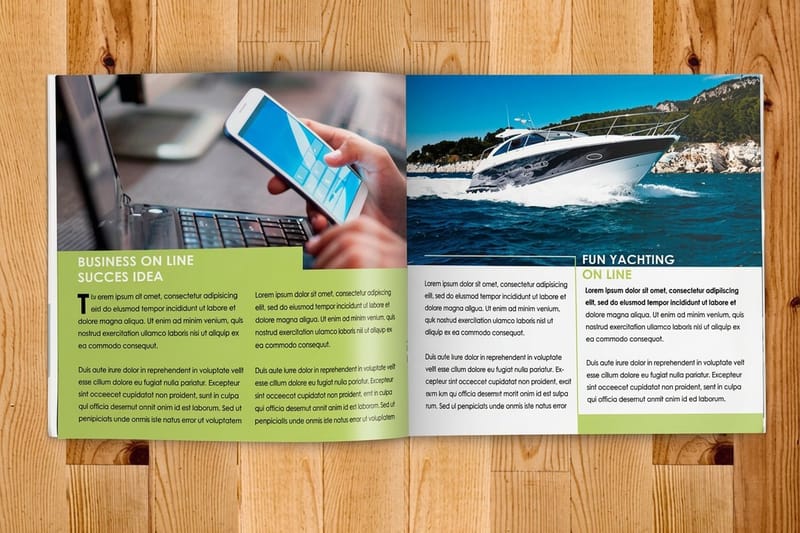
A graphic design portfolio is a printed or digital collection of a designer's best work, usually 10 to 12 projects, curated to attract clients and job offers. In print, the common builds are a 16 to 24 page saddle stitched book at 8.5x11 with a 14pt cover, a coil bound book that lies flat during a pitch, and loose 8.5x11 sheets in a 9x12 pocket folder.
Your portfolio is still the single most important tool you own as a designer. It is your handshake before the handshake, your pitch before you open your mouth. If you rely only on a website or a PDF, you leave a real opportunity on the table. A printed portfolio, one you can hand to an art director, leave behind after a meeting, or mail to a dream client, creates a sensory experience that digital cannot match.
This guide breaks down real graphic design portfolio examples across different styles, formats, and specialties. You will see what works, why it works, and how to print your own portfolio pieces that get you hired.
Printed portfolio examples gallery
Nine printed portfolios you could order this week, from a half fold leave behind to a 9x12 suede laminated case, each with its format, stock, binding and place on cost. Prices move with quantity and finish, so every card links to the live price on the product page.
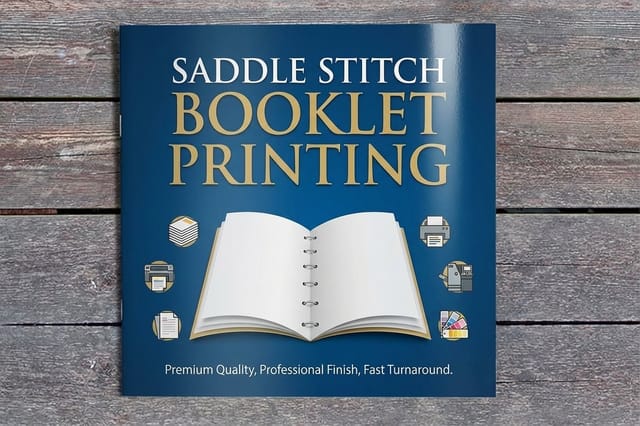 Saddle stitched booklet 8.5x11, 16 to 24 pages 100lb gloss text inside, a 14pt cover option, stapled through the spine. The cheapest bound format per copy, and the price drops hard past 100 books.
 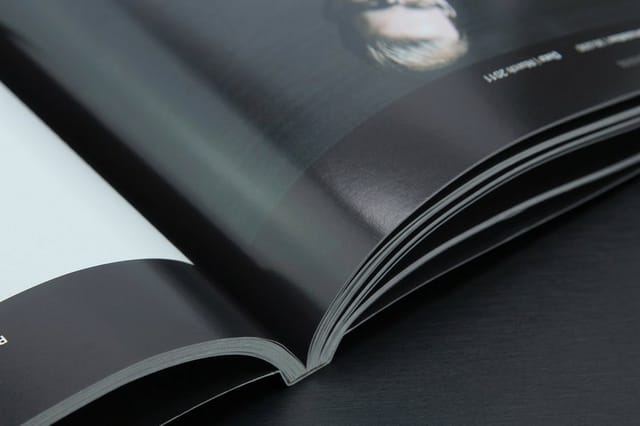 Perfect bound book 6x9 or 8.5x11, 40 inside pages and up Text stock inside, heavy cover wrapped and glued to a square spine you can print your name on. Mid to high cost per copy, and it needs page count to work.
 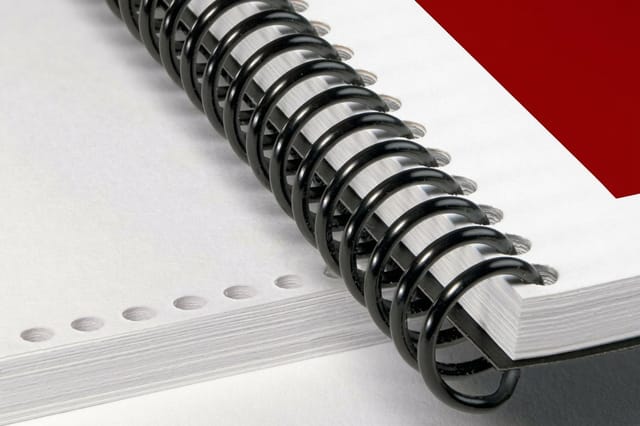 Coil and wire o bound book 8.5x11, 40 to 300 inside pages Gloss, silk or 70lb uncoated text, punched and coiled so every spread lies flat on the table. Mid cost per copy, and the only binding that stays open during a pitch.
 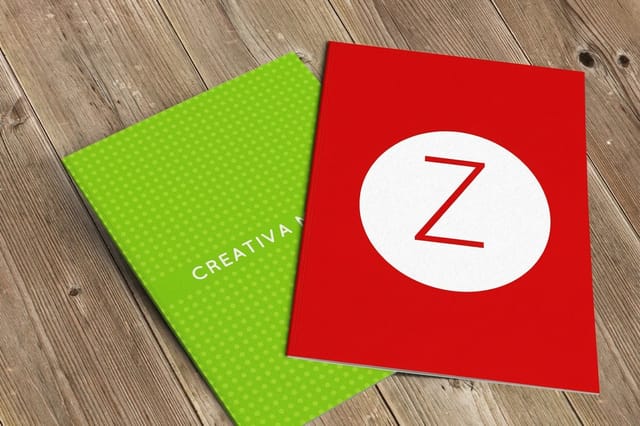 Pocket folder with loose inserts 9x12 folder, 8.5x11 sheets 14pt gloss folder, project sheets on 100lb cover. Low cost per copy and the only format you can re-cut for each meeting without reprinting the book.
 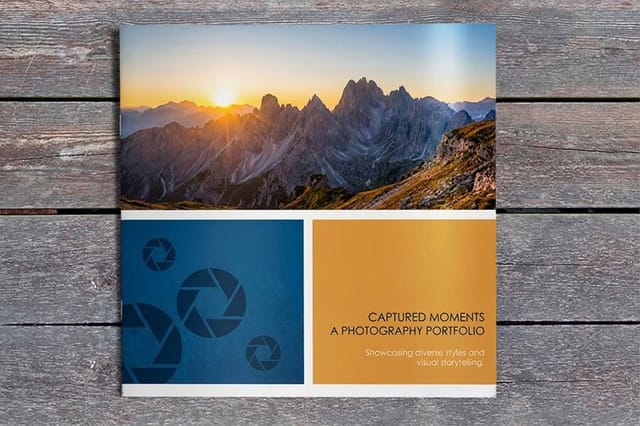 Photography booklet 8.5x11, long or short binding The 100lb silk text option holds shadow detail without the shine of gloss. Higher cost per copy than gloss, worth it if the work is photographic.
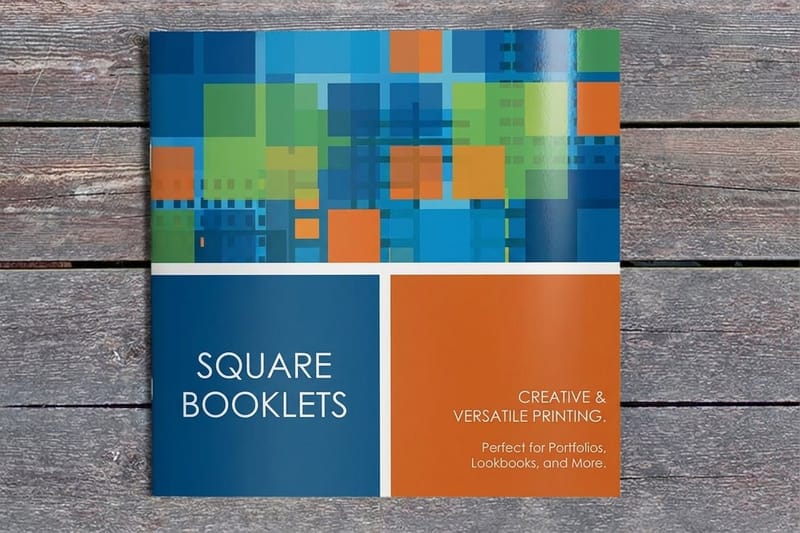
 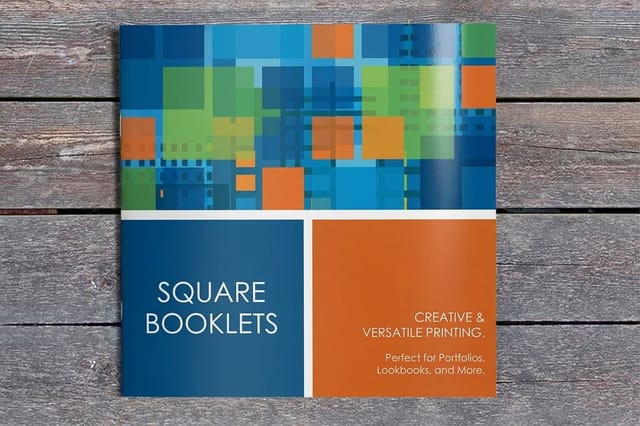 Square booklet 11x11 square format Silk or gloss text, saddle stitched. It reads as a deliberate design choice on a desk.
 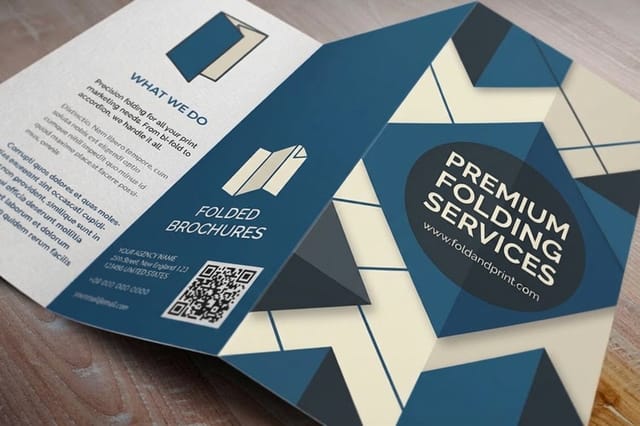 Half fold leave behind 11x17 folded to 8.5x11 14pt Gloss Cover or 100# gloss text, half folded. Low enough per copy to leave one with everyone in the room.
  Mini card set 3.5x2 cards, one project per card 16pt to 32pt uncoated or soft touch stock, one project per card. Cheapest piece you can hand out, and it doubles as the card you leave behind anyway.
 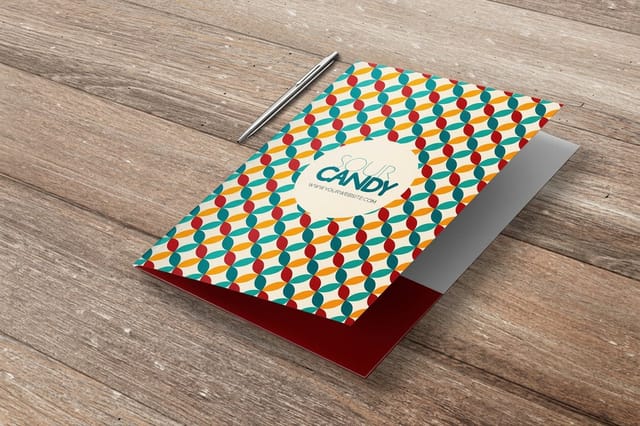 Suede laminated case 9x12 folder, soft touch finish 16pt stock with suede lamination, so the first thing the client registers is texture. Highest cost per copy here, with a 250 minimum.
 Showcasing your strongest projects first
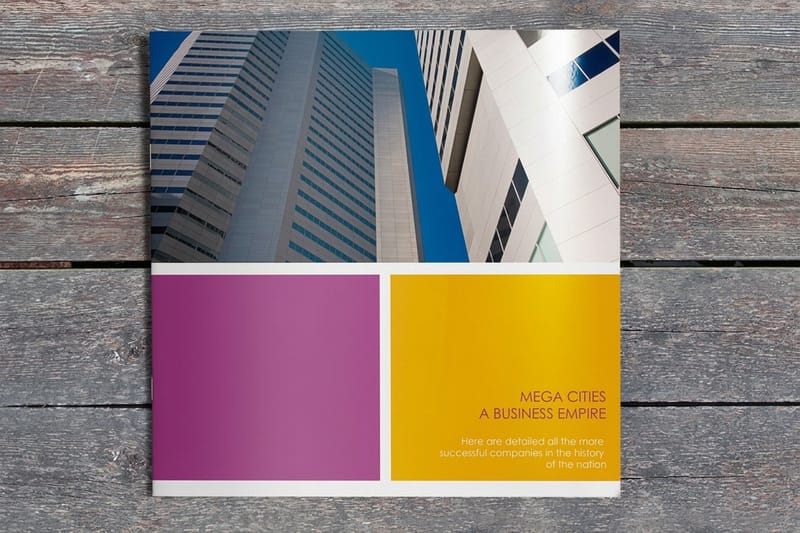
The best portfolios lead with impact. Treat the book as a highlight reel, a curated selection of projects that represent the work you want to keep doing, and put the two you most want more of on the first spread. In a 24 page saddle stitched book, 12 projects gives each one a two page spread.
Picking the right pieces means being honest with yourself. Does this project reflect where you are headed, or just where you have been? If a logo redesign from three years ago does not align with the brand work you are chasing now, cut it. Every page in your printed portfolio should earn its spot.
Integrating case studies into each project section adds depth that standalone images cannot provide. Walk the viewer through your process, the brief, the research, the iterations, the final result. Clients do not just want pretty pictures. They want to understand how you think.
Mix up your presentation formats to keep things engaging. Include a range of print items like brochures, business cards, packaging mockups, and poster designs. This variety shows adaptability. You can use the 4OVER4.COM design templates to build consistent layouts across your pages while letting each project breathe.
Photograph your printed pieces well. Shoot your printed pieces in context, on a desk, in someone's hands, on a retail shelf. Contextual mockups help clients picture your work in their world, so place these images alongside your case study text.
Custom printing options can set your portfolio apart from every other designer in the waiting room. The paper weight, the finish, even the binding method sends a message about your standards. Your portfolio should feel as good as it looks.
Quantity and price
Booklet pricing and specs
Real configurator numbers for portfolio booklets, page counts, stocks, and finishing options.
| Quantity | Price Per Unit | Total |
|---|---|---|
| 25 | $9.62 | $240.55 |
| 50 | $6.04 | $302.06 |
| 100 | $3.61 | $361.37 |
| 200 | $2.22 | $444.85 |
| 300 | $1.65 | $495.38 |
| 400 | $1.29 | $515.14 |
Presenting yourself as a brand across the book
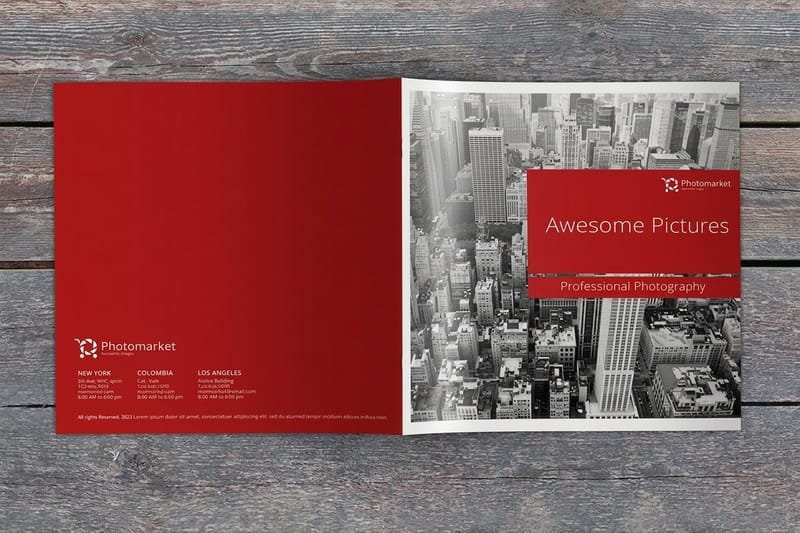
A portfolio is a brand system before it is a set of projects. Pick one typeface pair and one grid, then hold both from the cover to the contact page, because a book that changes its margins every spread reads as a folder of files rather than a body of work.
Put your name on the cover and again on the spine if the binding has one, so the book is findable when it sits in a pile on a desk. Number the projects and keep each caption in the same position on every page. Close with a contact page carrying your name, email and site, then tuck a matching business card into the folder pocket or inside the back cover. The card is the piece that leaves with them, and it should look like it came out of the same book.
Bold minimalist portfolio design
A bold minimalist portfolio strips away everything that does not serve the work. No decorative borders, no busy backgrounds, just your projects breathing in generous white space on heavy, premium paper.
This style works especially well for brand identity designers, typographers, and anyone whose work speaks loudest when it is not competing for attention. A clean, well-bound booklet carries a lot on its own.
What makes minimalist portfolios stand out
High-quality images at large scale are the backbone of this approach. Each spread should feature one or two hero images that fill the page. Printed on a smooth, coated stock, these images pop with color accuracy and sharpness that makes the viewer stop and look.
Clean typography ties the whole thing together. Limit yourself to two typefaces, one for headings and one for body text. Bold sans-serifs for project titles paired with a readable serif for descriptions create contrast without clutter.
Color restraint is your friend. A minimalist portfolio often uses a monochromatic or two-tone palette for the structure itself, letting the project work provide all the color. The projects are the stars, everything else is the stage.
Negative space is not wasted space, it is intentional breathing room that guides the eye. When a client flips through a minimalist portfolio, they know exactly where to look on every page.
Start fast
Design templates and print-ready blanks
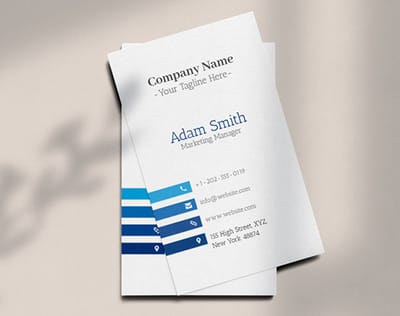
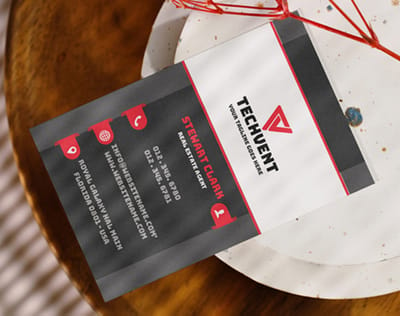
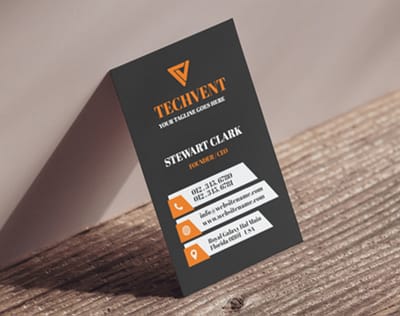
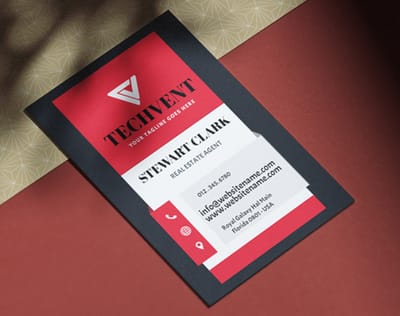
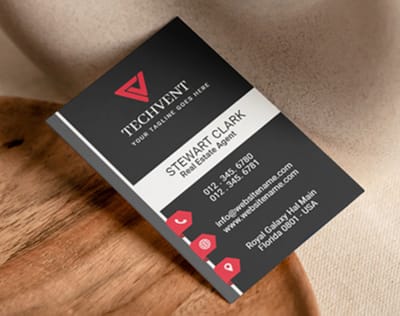
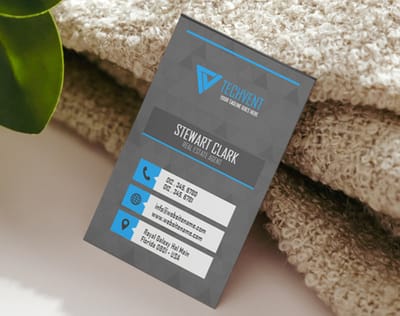
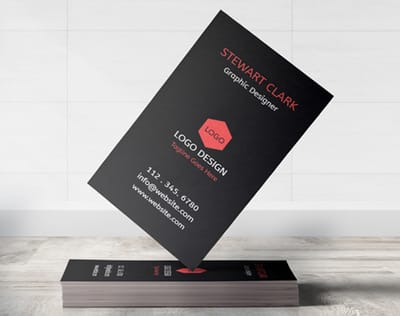
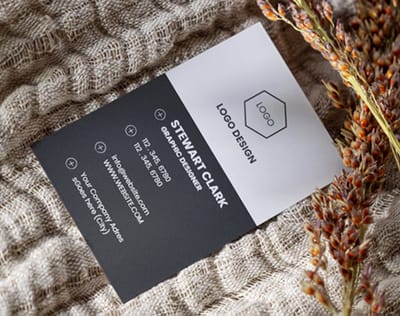
Business card design templates and exact-size blank booklet files so your artwork lands inside the cut line.
Bright and colorful portfolio approaches
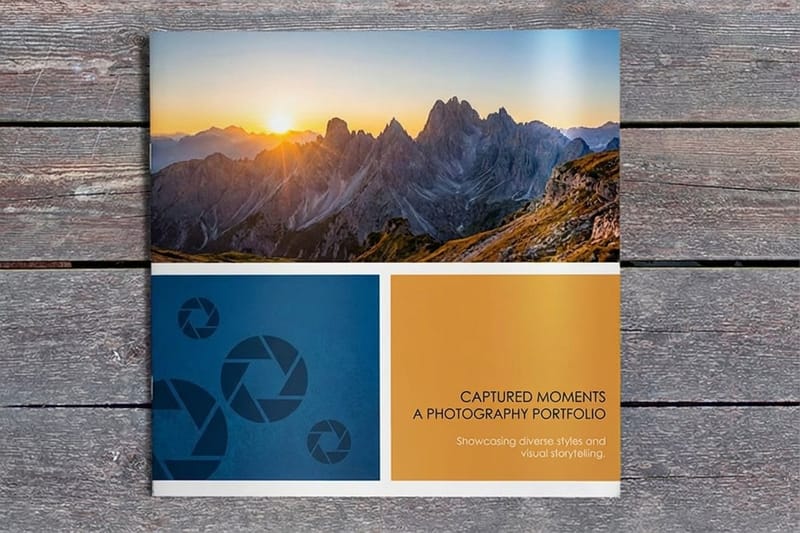
Not every designer wants restraint. If your work lives in bold color palettes, think packaging design, editorial illustration, event branding, or children's book art, your portfolio should reflect that energy. A bright printed portfolio, done right, feels alive in your hands.
The trick is organized boldness. Color everywhere does not mean chaos everywhere. Use a consistent grid system so the eye has structure to follow, even when every page bursts with hue. Assign each project section its own accent color to create visual chapters.
Paper choice matters enormously for colorful portfolios. A glossy or silk-finish stock makes saturated colors look vivid and punchy. Uncoated stocks absorb more ink, which can soften colors, great for some aesthetics but not ideal for maximum vibrancy. Include process shots alongside finished work to show the journey behind each project.
For designers who work across packaging, signage, and environmental graphics, include photos of your work installed in real spaces.
Interactive and tactile portfolio formats
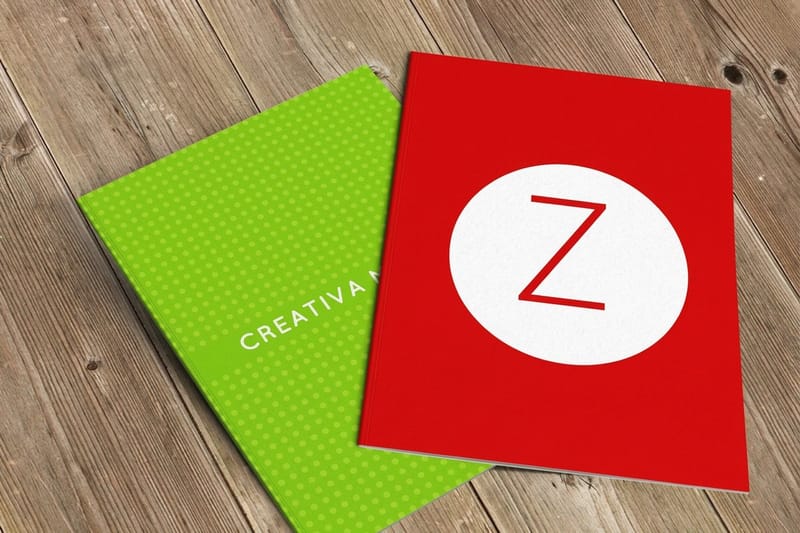
The most memorable portfolios go beyond flat pages. They invite the viewer to interact, pull out an insert, unfold a gatefold spread, flip through a bound booklet nested inside a larger case. These tactile moments create surprise and delight, and they show your understanding of physical design in ways a screen never could.
The two formats below give the viewer something to handle.
Pocket folders with loose inserts
A custom-printed pocket folder acts as your portfolio shell. Inside, you place individual project sheets, mini case study booklets, and printed samples the viewer can pick up, examine, and rearrange.
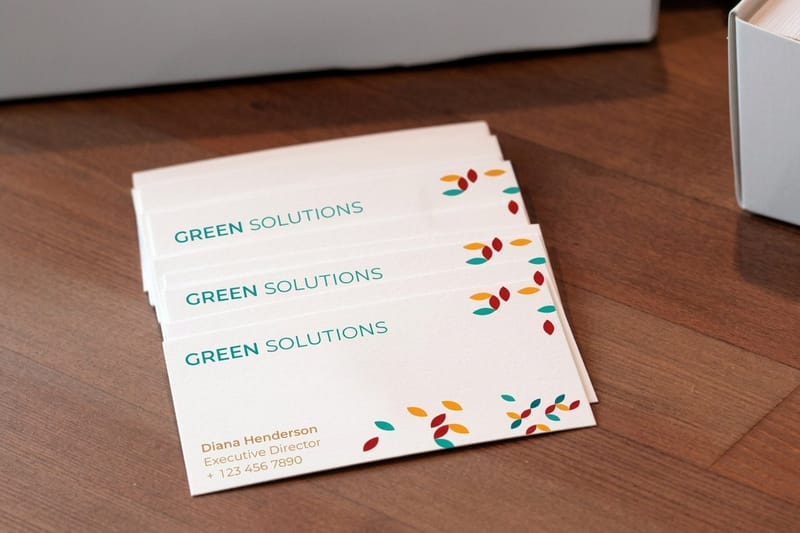
Each insert becomes its own design moment. A business card sample on 32pt ultra-thick stock, a postcard mockup with spot UV, a folded brochure that shows your layout skills. The folder itself should feature your personal branding, printed on 14pt Gloss Cover.
Bound booklets with special finishes
Saddle-stitched or perfect-bound booklets give your portfolio a polished, editorial feel. Think of it as a magazine dedicated entirely to your work. On a perfect bound or coil book, add a velvet, silk or gloss laminated cover; foil on your name or a die-cut window is a custom project.
A velvet laminated cover is the first thing a client feels before the first project shows.
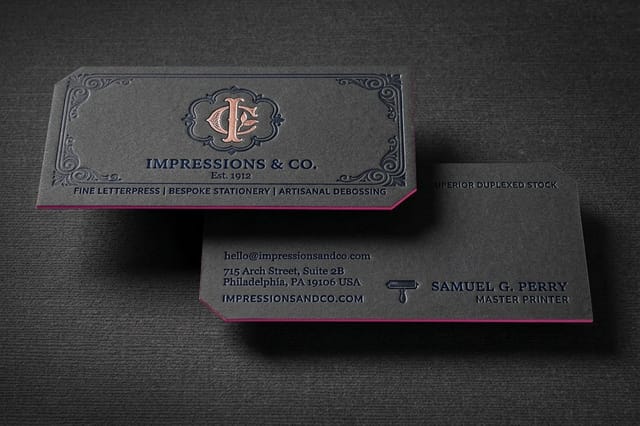 Letterpress Thick laminated card stock 32pt or 48pt silk or velvet laminated stock, with foil, embossing and spot UV as options. One card insert shows craft a screen cannot. Soft touch Suede lamination on the cover 16 point suede laminated stock, matte and velvety in the hand, 9 x 12 with optional business card slits.
 The shell
Presentation folders for loose inserts
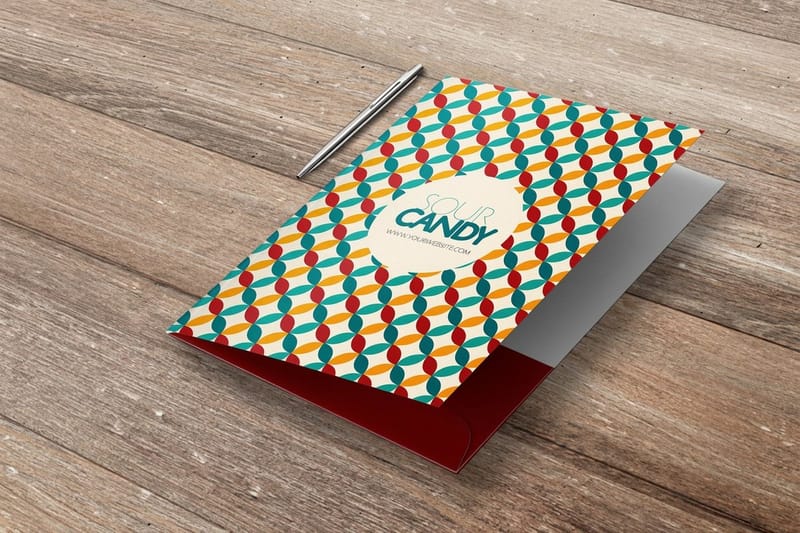
A custom-printed pocket folder holds project sheets, mini booklets and printed samples.
Industry-specific portfolio strategies
Tailor the portfolio to the industry you are targeting. A portfolio aimed at a luxury fashion brand looks and feels completely different from one pitched to a tech startup or a restaurant group.
Here is how to adjust your approach by target market, so the work you lead with matches the clients you want to win.
Brand identity and agency work
Lead with comprehensive brand systems. Show the logo, the color palette, the typography system, the brand guidelines, then the applications, business cards, letterheads, signage, packaging. Clients hiring for brand work want systematic thinking, not just pretty logos in isolation.
Print your brand case studies on uncoated stock for a tactile feel that suits craft-led brand work.
Packaging and product design
Include actual printed samples whenever possible. A flat mockup of a box design is fine, but handing someone the actual folded, printed box is unforgettable.
Editorial and publication design
Print a sample spread or a mini version of a publication you have designed. A half-size magazine mockup or a trimmed-down annual report lets the viewer experience your layout skills firsthand. Editorial designers are judged on their understanding of print production as much as their aesthetic choices.
Advertising and campaign work
Show the full campaign arc. Do not just include a single print ad, show the billboard, the social adaptations, the direct mail piece, the in-store display.
Brochure specs
Folded pieces for your portfolio
Stocks, folds, and finishing for the brochures and mailers you tuck into a folder or booklet.
Print advertising agency portfolio examples
Agency portfolios are built differently from a solo designer book. The work is judged on whether it moved a number. Four builds for an agency new business meeting.
The campaign spread
One campaign per spread, printed large. Left page carries the hero execution at full bleed, right page carries the extensions, the outdoor, the transit card, the direct mail piece. A saddle stitched book at 11x17 folded to 8.5x11 gives you a spread wide enough that a print ad reads at close to its real proportions. Do not shrink six executions onto one page. Two per spread, six spreads, done.
Before and after ad work
The strongest agency page is the client's old ad on the left and yours on the right. It is uncomfortable and it is the most persuasive layout in print. Keep the caption to one line of what changed and one line of what happened after. Print it on uncoated stock so the comparison reads as documentation rather than as a brag.
Case study inserts
Loose inserts let a team pitch three different accounts from the same folder. Print each case study as a single 8.5x11 sheet on 100lb cover, headline, the problem, the work, the result, and one large image. Slot the three that match the prospect into a presentation folder the morning of the meeting and leave the rest in the box.
The leave behind
Whatever you present, something small stays on the desk. A half fold on 14pt cover or a set of cards, one project per card, costs the least of anything in this article, and it is still on the desk after the meeting ends.
Printed portfolio formats and specs
Binding decides how your work is read. Saddle stitch staples through the spine, so it is fast, cheap, and capped at 60 pages in the catalog. It is the right call for a 16 to 24 page book and the one most designers should print first.
Perfect binding glues the pages to a wrapped cover and gives you a flat square spine you can print on. It needs bulk, roughly 40 pages minimum, or the spine has nothing to hold. It costs more per copy and it looks like a book rather than a brochure, which is the point.
Wire o and coil binding is the one that lies flat. Every spread opens to 180 degrees and stays there while you talk, which no other binding does. Punch holes take part of the inside margin, so build that into the layout from the start.
Loose sheets in a folder are not really binding at all, and that is the advantage. You reorder the book per meeting and you reprint one sheet instead of forty. Short run presentation folders start at 10, so you are not stuck with 500 folders carrying last year's logo.
On paper: 100lb gloss or silk text for interiors that carry photography, 70lb uncoated text when the work is type led and you want no glare under a conference room light, a 14pt cover for anything that gets handled. On size: 8.5x11 is the safe default, 5.5x8.5 and 6x9 cost less to ship and feel more designed, 11x17 folded to 8.5x11 gives you the widest spread. On cost per copy, the order runs card set, then half fold, then saddle stitch, then coil, then perfect bound, then anything laminated. Every product page carries a live price calculator, so run your real page count and quantity there rather than guessing from a table.
DIY portfolio solutions on a budget
You do not need a massive budget to create a printed portfolio that impresses. Smart designers use affordable printing options and clever formatting to punch above their weight. Start with a strong cover. Even if you print interior pages on standard stock, invest in a heavier, finished cover. That first touch sets expectations for everything inside.
Start fast
Blank templates to start from
Blank press-ready templates keep your artwork aligned to the cut lines and bleed areas from the first draft.
Common mistakes that weaken a printed portfolio
Even talented designers sabotage their portfolios with avoidable errors. Here are the biggest ones to watch for before you send files to print.
- Inconsistent presentation. If your first three spreads use a clean grid and the fourth switches to a totally different layout, it feels disjointed. Establish a visual system, grid, typography, color, and stick with it throughout.
- Ignoring print production basics. Low-resolution images, RGB instead of CMYK, missing bleeds, these mistakes scream amateur. Before sending files, check every image is at least 300 DPI and your document is CMYK with proper trim marks.
How to print your portfolio with 4OVER4.COM
Once your portfolio is designed and your files are ready, the printing process should be straightforward. Start by choosing your format. Booklets, flat sheets, folded pieces, or a combination all print with consistent color accuracy and sharp detail.
Test with the smallest run first, 25 saddle stitched booklets or 10 perfect bound or coil books, and check colors, alignment and feel before a larger batch.
Wally prints a portfolio that gets you hired
Ten to twelve projects, bound and finished to feel as good as it looks
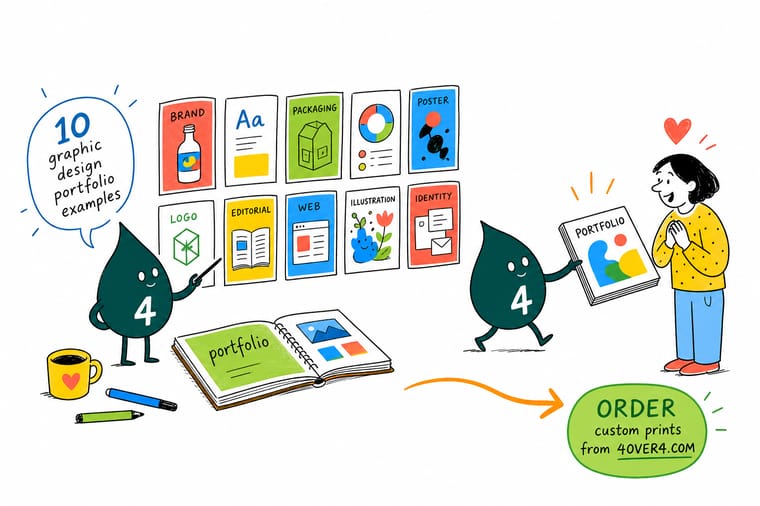
A printed portfolio is your handshake before the handshake. Curate your 10 to 12 strongest projects, add short case studies for context, and pick a format, a bound booklet, a pocket folder with loose inserts, or a mix. Choose premium stock, print a small test run, and 4OVER4.COM makes it feel as good as it looks.
Print your booklet portfolio →What to remember about building a printed design portfolio
Why a printed portfolio wins
- No login, no loading. A printed book opens in a meeting room with no projector and no signal.
- You set the order. The client turns the pages in the sequence you chose.
Explore more
More ways to build and print your portfolio
Booklets, folders, cards, case studies and guides for the next step of your book.
Product Booklets Saddle stitched portfolios from 8 to 60 pages. Product Short Run Presentation Folders Pocket folders for loose project sheets. Category Booklets & Catalogs Every bound-book format in one place. 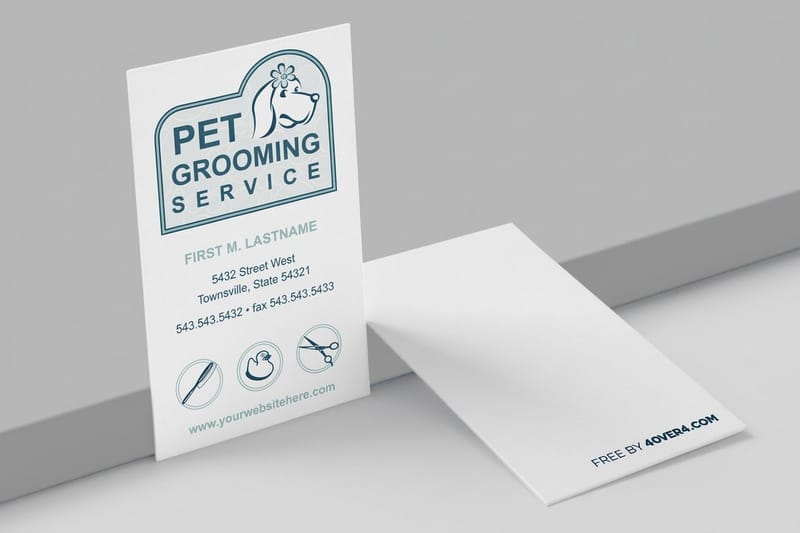 Category Business Cards Printing Every business card style for portfolio samples.
  Article Amazing Business Card Design Design inspiration for standout cards.
 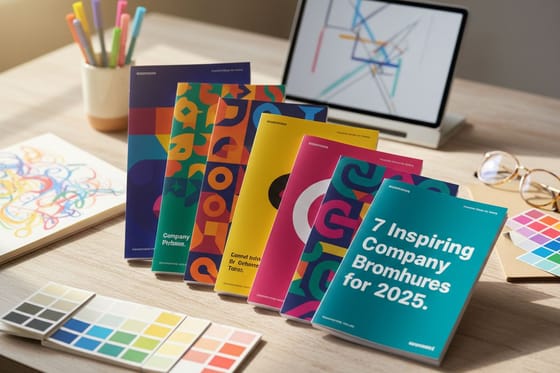 Article Company Brochure Examples Brochure layouts that drive results.
  Article Graphic Designer Profile Tips How to stand out and win more clients.
  Guide Logo Design Best Practices Print-ready brand identity fundamentals.
  Case study Portfolio Prints Case Study How print portfolios landed real clients.
  Showcase Booklet Printing Showcase Binding options and real results.
  Statistics Graphic Design Statistics Industry data every designer should know.
  Hub Print Marketing Ideas Ideas that drive real results.
 Ready to print a portfolio that wins clients?
Curate your best projects, pick a booklet or folder format and a premium stock, and 4OVER4.COM prints it sharp, in as little as one business day.
Your questions about graphic design portfolio examples, answered
How do I print an entire PDF portfolio?
Export it as single pages at final trim size, not as reader spreads, and let the printer impose it. Embed the fonts, flatten the transparency, convert to CMYK and add bleed on every edge where artwork runs off the page. Send one file with the pages in order, then check the proof for page order before the run, because a portfolio printed out of sequence is a reprint.
How do I choose which projects to include?
Make each piece prove a different skill: a brand system, a layout, an illustration, a type project. Then show the shortlist to a colleague and ask which pieces they still remember an hour later.
How much does a printed portfolio cost?
Budget for the run, not one copy. At 4OVER4.COM, 25 saddle stitched booklets cost $240.55, about $9.62 a copy, 10 perfect bound books start at $375.05 and 10 spiral coil books at $423.28. Ten presentation folders cost $108.75 for a loose-sheet portfolio. A laminated cover is an added option on perfect bound and coil books.
What should a printed graphic design portfolio include?
Include at least one piece that shows craft you cannot show on a screen, a letterpress card, a die cut cover, a foil detail.
What size is a print portfolio?
Saddle stitched books come in 5.5 x 8.5, 8.5 x 11 and 11 x 11 inches. Perfect bound and coil books come in 5.5 x 8.5, 6 x 6, 6 x 9 and 8.5 x 11, and presentation folders are 9 x 12.
