
6 Real Estate Agent Introduction Postcards That Win Clients


Nadia is our customer education voice, built from the knowledge of our production team, with over 20 years in printing.
Why a Printed Introduction Still Opens Doors in Your Farm Area
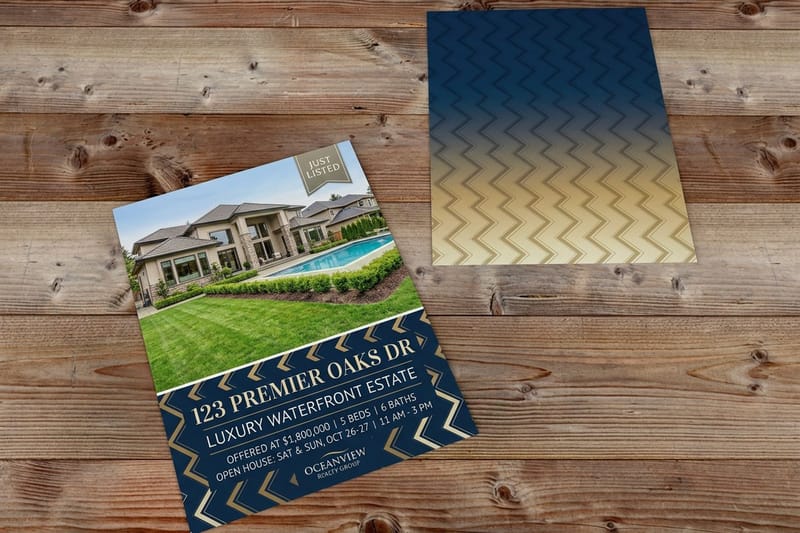
Real estate agent introduction postcards are the first of the types of realtor postcards a new agent mails, because a homeowner hires the agent whose name they already recognize on the day they finally decide to sell, whatever the quality of the other agents’ marketing. That decision arrives months after the first impression, which is exactly why a physical introduction card outperforms a cold call. The card waits on the counter. The call gets declined.
An introduction postcard also does something a digital ad cannot. It lands in a defined geography, in every mailbox on the street, without a targeting algorithm deciding who deserves to see you. If you have picked a farm area of 400 to 1,000 homes, the card puts your face in front of all of them for less than the price of one lunch meeting.
The six designs below are the ones that hold up in real farm campaigns. Each one is built around a single job: prove you are local, prove someone already trusted you, and make the next step feel small. Print them on Real Estate Postcards from $16.48 and you can test two versions on the same block without touching your marketing budget in any serious way.
What a working introduction card must contain
Your photo, taken this year, cropped tight enough that a face is readable from arm's length. Your first name in type big enough to read across a kitchen. One line of proof. One offer that costs the homeowner nothing. One phone number and one QR code. Everything else you were planning to add is the reason cards get thrown out.
Shop the category
Real estate printing collection
Postcards, signs, riders and brochures built for agents who farm a neighborhood.
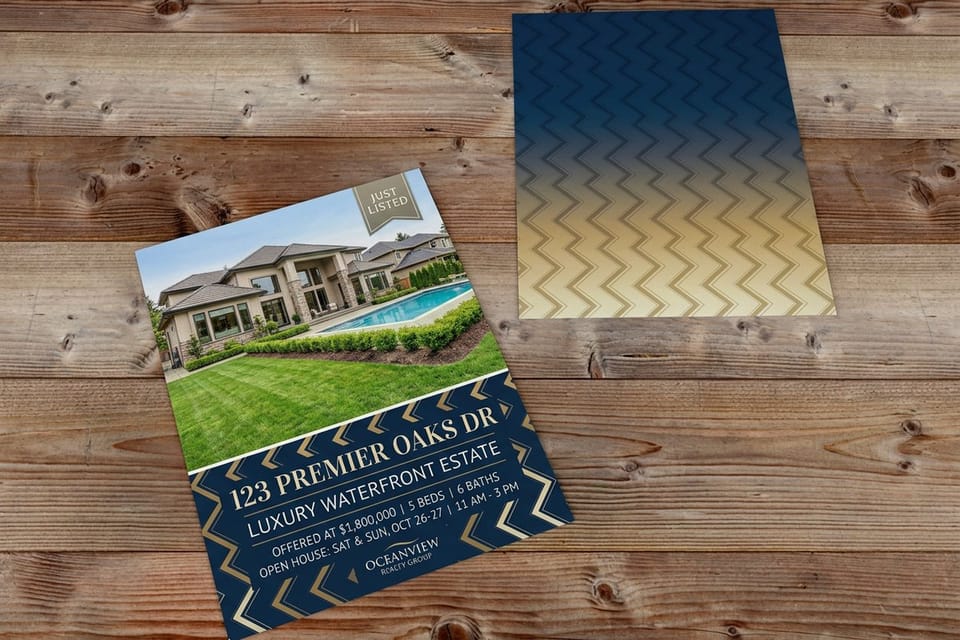
Types of Realtor Postcards and When Each One Goes Out
Realtor postcards come in six common types, and a farm campaign rotates through them over a year. The introduction card on this page opens the rotation.
- Introduction. Your face, your name and one reason to call, mailed three times in the first quarter.
- Just listed and just sold. A nearby address and a result, mailed within days of the listing or the closing.
- Open house. The date, the address and a photo, on open house postcards, the week before.
- Market update. Three local numbers each quarter, so homeowners see you as the neighborhood reference.
- Seasonal. A holiday or Memorial Day card with no pitch, to keep the name in front of the farm.
- Expired listing. A short, honest card to owners whose listing came off the market unsold.
Every type prints on the same real estate postcards, from $16.48, so one brand layout carries the whole year.
Six Introduction Postcard Designs That Earn Listing Appointments
Treat these as templates, not as art direction. Each one pairs a front concept with the copy that goes on it, so you can hand the whole thing to a designer or drop it straight into a layout and print. The back always carries the same three elements: a short paragraph in your own voice, your contact block, and the offer.
1. The New Neighbor Card
Front: your photo on the left, a clean map outline of the neighborhood on the right. Headline reads "I work this neighborhood, and now I live in it." Back copy names the streets you cover, the grocery store you actually shop at, and the school district. This card wins because it removes the biggest objection new agents face, which is the suspicion that you are farming from twenty miles away.
2. The Just Sold Introduction
Front: a photo of a recently sold home nearby with a bold SOLD banner, days on market, and the sale to list ratio. Headline reads "Your neighbor's home sold in 11 days. Here is what that means for yours." Use real numbers from a real transaction, including one you co-listed or assisted on if you are new. Never invent a comp. Homeowners check.
3. The Honest Hello
Front: nothing but your photo and six words of handwriting-style type, "New agent. Old fashioned work ethic." Back is a short letter, five sentences maximum, that says what you did before real estate and why you switched. This is the highest performing card for agents under two years in the business because it converts inexperience into a reason to root for you.
4. The Review Wall
Front: three real client reviews set as short pull quotes with first name and last initial, plus your star rating and the platform it lives on. Headline reads "Three families said this before you ever met me." If you only have two reviews, run two. A short honest wall beats a long invented one, and a seller will look you up before they call.
5. The Free Valuation Offer
Front: a large dollar-sign-free headline, "What is your home worth this month?" with your photo small in the corner and a QR code sized at least one inch square. Back explains that the valuation is a walkthrough, not an automated estimate, and that it takes twenty minutes. This card generates the most scans, and it also attracts the most tire kickers, so pair it with a card that filters.
6. The Coming Soon Preview
Front: a single listing photo with COMING SOON and the street name, no address. Headline reads "Before it hits the market, it hits your mailbox." This one introduces you as the person with early information, which is the most valuable thing an agent can be in a tight neighborhood. Mail it to the surrounding four blocks the week before you go live.
Print picks
Three formats every farming agent runs
Live prices, ready to customize with your photo, headline and contact block.
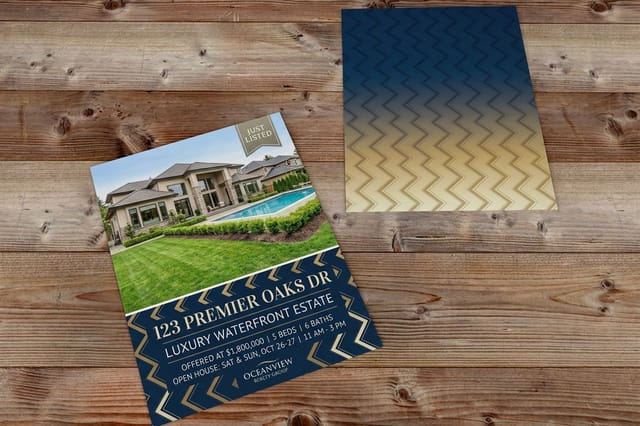 Real Estate Postcards 50 for $16.48 The workhorse intro card, printed heavy and ready for a farm area mail drop.
  Commercial Real Estate Brochures 50 for $57.11 The leave behind for sellers who want the full market story in their hands.
 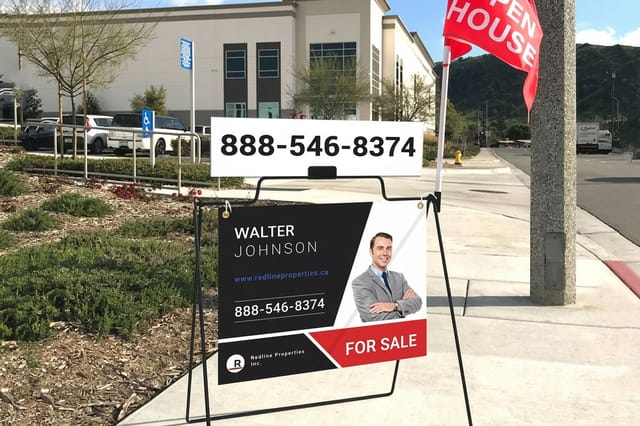 Real Estate a Frame $65.90 each Put your face on the corner all weekend so the mailbox card looks familiar.
 Headlines That Survive the Walk From Mailbox to Recycling Bin
You have roughly two seconds and one glance. A headline that starts with your name loses, because your name is not yet worth anything to the reader. A headline that starts with their street, their home value, or their neighbor wins, because all three are already interesting to them. Write the headline first and design around it.
- Name the geography. "Maple Ridge homes are selling above asking" outperforms "Top producing agent serving your area" every single time.
- Use a real number. Eleven days, 3 offers, 98 percent of list. Specific figures read as evidence. Round numbers read as advertising.
- Ask a question the homeowner has already asked themselves. "Is now a bad time to sell?" pulls harder than any claim you can make about yourself.
- Put the offer in the headline when the offer is genuinely free. A twenty minute walkthrough valuation is worth saying out loud on the front of the card.
- Cut every adjective you can live without. Trusted, dedicated, results driven and premier are invisible words. They occupy space and communicate nothing.
Once the headline is set, print a short run first and read it from six feet away on a kitchen counter. If you cannot get the message in one glance, the type is too small or the card is saying two things at once. The pricing below shows how the per piece cost drops as the run grows, which is why most agents test at a small quantity, then commit.
Quantity and price
Real estate postcard pricing and specs
Real configurator numbers. The more homes you mail, the lower the cost per card.
| Quantity | Price Per Unit | Total |
|---|---|---|
| 50 | 33.0¢ | $16.48 |
| 100 | 24.2¢ | $24.16 |
| 200 | 15.9¢ | $31.86 |
| 300 | 12.8¢ | $38.45 |
| 400 | 11.3¢ | $45.04 |
| 500 | 10.3¢ | $51.62 |

Putting Proof on the Back Where It Does the Real Work

The front earns the two second glance. The back earns the phone call. This is where new agents waste the most space, usually on a paragraph about passion and dedication that nobody finishes reading. Give the back three jobs instead: prove someone trusted you, show what you did for them, and make contacting you feel like a small decision.
Reviews carry the most weight when they are attributed and specific. "Sarah answered my texts at 9pm on a Sunday" is worth more than five stars with no words attached. Pull the sentence that describes a behavior, not the sentence that describes a feeling. If your review count is thin, borrow credibility from your brokerage's local track record and say so plainly.
When the postcard does its job and the seller invites you over, you need something better than a folded printout in your hand. A Commercial Real Estate Brochure from $57.11 holds the market data, the comps and your marketing plan in a format that stays on the seller's table after you leave. Agents who bring one to the appointment close more of them.
Appointment leave behind
Commercial real estate brochures
The market data, the comps and your marketing plan in a piece the seller keeps.

Mailing the Farm With EDDM and Targeted Owner Lists
There are two ways to get the card into hands, and most agents should use both. Every Door Direct Mail hits every address on a chosen postal carrier route with no mailing list required, which is the cheapest way to blanket a farm area. Targeted mailing uses an owner list you have built or purchased, so you can reach absentee owners, long tenure owners and expired listings specifically. Before you book a drop, read how to use a mass mailing service to reach every address on your list.
Run EDDM for saturation and recognition, then layer targeted mail on the segment most likely to transact. A homeowner who has been in the same property for nine years is a different prospect than one who bought last spring, and the card they should receive is different too. Same design system, different headline and different offer.
Check the size before you commit to a design. EDDM has minimum dimension requirements that a standard small postcard does not meet, so confirm the format works for the mailing path you plan to use before the file goes to print. Reprinting a whole farm run because the piece was a quarter inch short is a painful and entirely avoidable lesson.
Frequency beats reach. One card to 2,000 homes produces almost nothing. Six cards to 400 homes over a year produces listing appointments, because by the fourth drop your face has moved from stranger to the agent who works this street. Budget for the sequence, not for the single mailing, and keep the design family consistent so each card compounds the last.
Own the corner
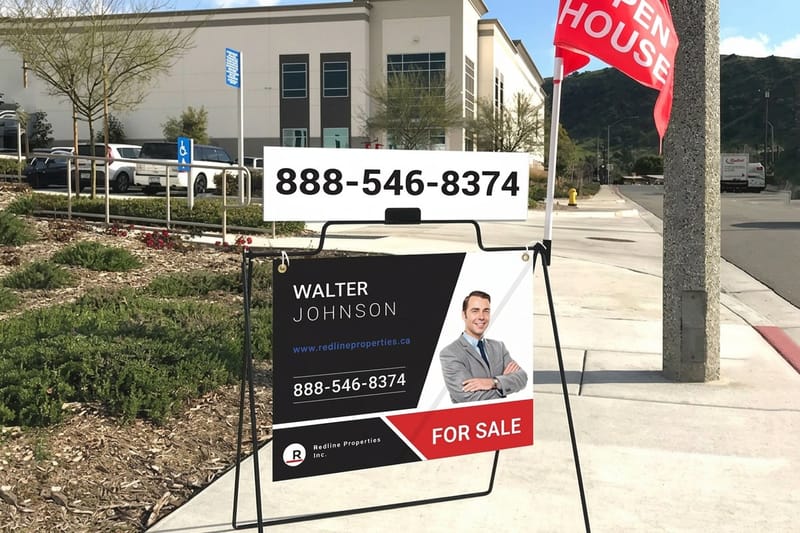
Real estate A frame signs
Put your face on the street all weekend so the postcard in the mailbox already looks familiar.
Sizes, Stocks and Finishes That Hold Up in the Mail
A thin card arrives bent and reads as disposable, which is exactly the impression a new agent cannot afford. Heavy card stock, 16pt Gloss Cover or 24pt Ultra Thick Gloss Cover on a real estate postcard from $16.48, is the single cheapest upgrade on the piece, and homeowners register the weight before they read a word. Ask for the heaviest stock your budget allows and spend the savings elsewhere.
- Gloss finish. Makes listing photography and sold banners pop. The right choice when the front is carrying a property image.
- Matte finish. Softer, easier to read, and it takes pen ink, which matters if you want to handwrite a name or a note on the card.
- Uncoated stock. Reads as a personal letter rather than an advertisement. Strong pairing with the Honest Hello design.
- Larger formats. A bigger card holds a map, a review wall and a QR code without crowding, and it stands out in a stack of standard mail.
Compare the popular real estate formats side by side below, then order the one that matches how you plan to mail. If you are running two designs against each other, keep the stock and size identical so the only variable is the message. Otherwise you will not know which change moved the response.
Compare formats
Popular real estate print, side by side
Stock, finish, size, quantity, turnaround and starting price in one view.
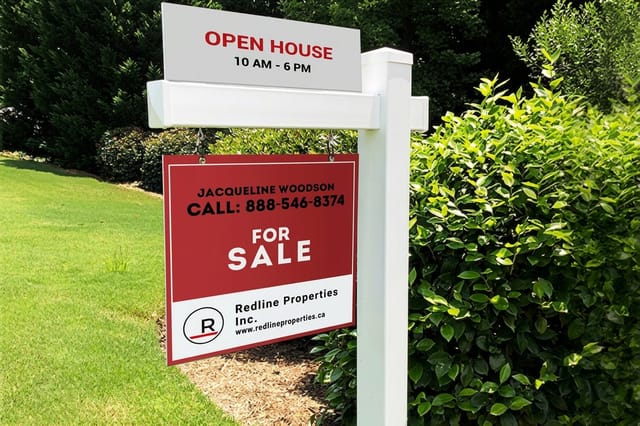 Real Estate Post | 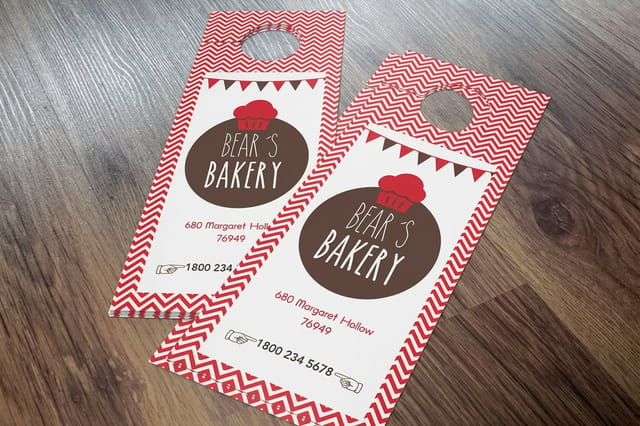 Real Estate Door Hangers | 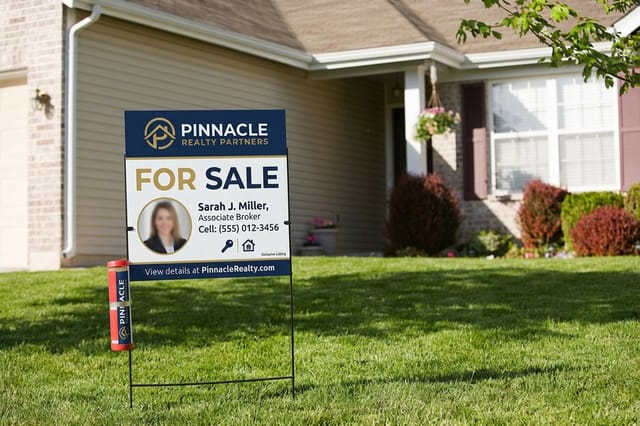 Real Estate Signs | 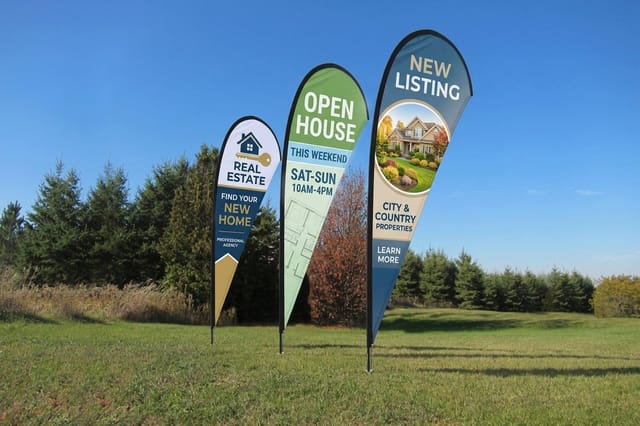 Real Estate Flags | |
|---|---|---|---|---|
| Min price | $218.35 | $252.51 | $25.00 | $108.75 |
| Paper / stock | 1/8" Aluminum Sign Panel | 14pt Gloss Cover | 4mm White Coroplast | - |
| Finish | - | High Gloss UV Coating | - | - |
| Size | 6' Tall Post & Arm | 4.25" x 11" | 12" x 18" | 32" x 70" (7 Foot Tall) |
| Default qty | 1 | 250 | 1 | 1 |
| Turnaround | 4 business days | 7 business days | 5 business days | 4 business days |
| Rating | ||||
| View & customize | View & customize | View & customize | View & customize |
Ordering the Run and Working the Week After It Lands
Build the file at the exact trim size with a proper bleed, keep the type well inside the safe area, and leave the address panel clear if you are mailing the piece yourself. Export at 300 dpi in CMYK. A photo pulled from a social profile will look sharp on your screen and soft on a printed card, so use the original file from your photographer.
Start from a print ready layout so the dimensions and bleed are correct before you design a single element, then swap in your photo, your headline and your contact block. If you need the cards for an open house this weekend, order early in the week and select the fastest turnaround available on the product page rather than gambling on a standard schedule.
The week after the drop
- Be reachable. Calls from a mailer come at odd hours. Answer them live for the first ten days or the card paid for someone else's listing.
- Track the QR code. Use a unique link per design so you know which of the six cards is actually producing scans.
- Walk the streets you mailed. A door knock three days after the card lands converts far better than a cold knock, because you are no longer a stranger.
- Book the next drop before you judge this one. Response builds across the sequence, and agents who quit after one mailing quit right before it starts working.
Start fast
Postcard templates and print ready blanks
Free layouts plus exact size blanks so your bleed and safe area are correct before you design.









Wally maps your farm area before you print
Pick the design, pick the streets, then mail the sequence
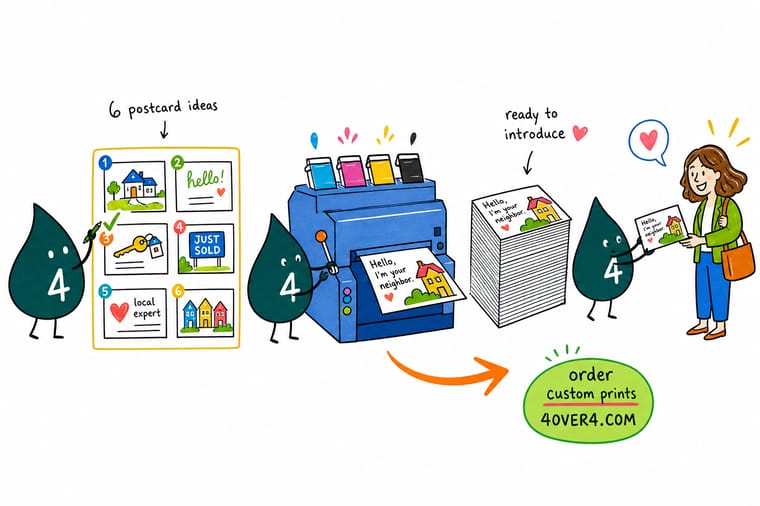
Six designs, one decision. Run the Honest Hello if you are new, the Just Sold card if you have a nearby closing, and the Review Wall once clients have written about you. Keep the size and stock identical across versions so the message is the only variable, mail the same 400 homes six times across the year, and answer every call live for the ten days after each drop.
Design your introduction postcards →Introduction Postcard Takeaways for New Agents
Keep reading
Guides that pair with your first farm campaign
Marketing yourself as a new agent, Memorial Day postcard ideas, door hanger ideas and financial marketing case studies.
Guide Marketing Yourself as a New Agent The full playbook for your first year of farm building. Guide 6 Memorial Day Postcard Ideas Seasonal cards that keep your farm mailing sequence alive. Guide 6 Real Estate Door Hanger Ideas What to hang when you walk the streets you just mailed. Guide Financial Marketing Case Studies How trust-led print campaigns are built and measured. Explore more
More print that builds a real estate farm
Related pages across 4OVER4.COM, one card for every part of the campaign.
 Collection Real Estate Printing Postcards, signs, brochures and riders for agents. Product Real Estate Postcards The intro card, printed heavy and mail ready. Product Commercial Real Estate Brochures The listing appointment leave behind that stays on the table.
  Product Real Estate A Frame Weekend corner presence that makes your card look familiar. Guide Marketing a New Agent Career Your first year of farming, step by step.
  Case study Financial Marketing Case Studies Trust-led print campaigns and what moved the numbers.
  Article 6 Memorial Day Postcard Ideas Seasonal cards that keep the sequence running.
  Article 6 Door Hanger Ideas for Agents The follow up piece for the streets you mailed.
  Article Best Colors for Yard Signs Color choices that stay readable from a moving car.
  Article Bandit Signs for Agents Low cost signage and how to run it responsibly.
  Article 10 Graphic Design Portfolios Layout ideas worth stealing for your own brand.
  Article Service Business Card Ideas Small format design lessons that apply to intro cards.
 Ready to put your face in every mailbox on the street?
Pick one of the six designs, print it on heavy stock, and mail the same neighborhood on a schedule until your name is the one they already know.
Real Estate Agent Introduction Postcard Questions
What is a real estate agent introduction postcard?
It is a printed card mailed to every home in a chosen neighborhood that introduces you as the agent who works that area. The front carries your photo and one headline about the neighborhood, and the back carries a short note in your voice, a piece of proof such as a client review or a recent sale, and a free offer like a twenty minute home valuation. It is the opening move in farming a territory, and it works because it waits on a counter until the homeowner is ready to sell.
What can I prove today, closings or reviews?
Choose based on what you can prove today. If you have closed transactions in the neighborhood, run the Just Sold Introduction with real numbers. If you have client reviews, run the Review Wall. If you are brand new with neither, run the Honest Hello, which turns your newness into a reason to root for you. Agents who already have name recognition on the street should skip straight to the Free Valuation Offer, because the introduction work is already done and the card only needs to create the next step.
Why is a farm sized run cheaper per home?
Real Estate Postcards from 4OVER4.COM start at $16.48, and the per piece cost falls sharply as the quantity climbs, which is why a farm sized run is far cheaper per home than a small test. Price is set by four factors: size, paper stock and finish, quantity, and turnaround speed. Add postage separately, which depends on whether you mail through Every Door Direct Mail or a targeted owner list. Budget for a sequence of drops across the year rather than one mailing, because that is what actually produces appointments.
Gloss, matte, or uncoated for a first hello?
Heavy card stock is the priority, because weight is registered before a single word is read and a thin card arrives bent. Gloss suits fronts carrying listing photography and sold banners, matte is easier to read and accepts handwriting, and uncoated reads like a personal letter rather than an advertisement. Larger formats hold a map, a review wall and a QR code without crowding, and they are hard to miss in a stack of standard mail. Confirm your chosen size meets the minimum dimensions for the mailing path you plan to use.
Can the card be ready before the listing goes live?
Turnaround depends on the product, the finish and the quantity, and every option with its production time is shown on the product page as you configure the order. Standard runs move quickly, and faster production options are available when a drop is tied to an open house or a listing that goes live on a fixed date. Plan backward from the day you want the card in mailboxes, and add transit time for shipping plus a few days for the mailing house or postal route if you are not hand delivering.
