
Baseball Banner Ideas for Rosters, Sponsors and Senior Night


Tobias is our voice for cutting, binding and large format, built from the knowledge of our production team, with over 20 years in printing.
The baseball banner ideas that work are the ones built around viewing distance: a sponsor fence banner is a logo block, a dugout roster is numbers and last names, and a senior night banner is one photo and one name. Print anything that hangs on an exposed outfield fence for a full season on mesh, and everything sheltered or short term on 13 oz vinyl with grommets every 24 inches. Vinyl banners print from 2' x 4' to 8' x 20' or any size, on 13 oz outdoor or 15 oz blackout vinyl; mesh banners come in 24" x 72", 36" x 108", 48" x 144" or any size on 8 oz perforated vinyl. Both print from a single banner in 3 business days, with hemmed edges and grommets on request.
Baseball banner placements at a glance
| Placement | Usual size | What it carries | Material call | Product at 4OVER4 |
|---|---|---|---|---|
| Outfield fence sponsor | 8 x 3 ft | One logo, one line, nothing else | 13 oz vinyl, or mesh on an exposed fence | Vinyl Banners, Mesh Banners |
| Dugout roster | 8 x 2 ft or 6 x 3 ft | Numbers large, last names under them | 13 oz vinyl, hemmed | Vinyl Banners |
| Senior night portrait | 2 x 4 ft vertical | One photo, name, number, class year | 13 oz vinyl, matte if it gets photographed | Vinyl Banners |
| Photo day backdrop | 8 x 8 ft | Repeating team and sponsor marks | Matte, so the flash does not blow out | Step-and-Repeat Banners |
| Entrance drive poles | 30 x 60 in | Team mark and season, read from a car | Pole pockets top and bottom | Pole Banners |
| Walkway between fields | 6 x 3 ft, printed both sides | Same message facing both directions | Blockout core, no ghosting | 2 Sided Blockout Banners |
Measure the real fence span before you set a size, because chain link posts are rarely spaced exactly the way the site plan says. You can order vinyl banners at any custom size straight from the configurator, hems and grommets included.
Start with the distance, not the design

Every banner decision at a ball field comes back to one number: how far away the person reading it is standing. A capital letter one inch tall stays comfortably readable from about ten feet. Scale that up and the maths gets uncomfortable fast. A 3 foot tall banner leaves you roughly 10 to 12 inches of cap height for a single line, which carries to somewhere around 100 or 120 feet, the depth of a set of bleachers.
From home plate the outfield fence is 200 feet away at a Little League park and further at a high school field. Nobody in the stands is reading a sponsor banner out there. They are recognising a shape and a color. That is the honest limit, and it changes what you should print: a fence banner is a logo block, not a sentence.
Which is why the ideas below split into two families. Banners people walk past, at the gate, on the walkway, along the fence line behind the dugout, can carry words. Banners people only see from across the field carry a mark and a color. Our banner size guide in inches has the full size chart if you need to check a span before you order.
The cap height rule, and where it breaks
The ten feet per inch guideline assumes decent contrast and a clean typeface. Thin strokes, tight letter spacing and a condensed face all cost you distance. A heavy sans in caps at 10 inches beats a light script at 14 inches every time, which is the point our banner font guide makes at length.
The other place it breaks is the second line. A banner with a name, a tagline and a phone number splits three ways, so no line gets the full height, and all three become unreadable at the distance the first line would have survived. Cut to one line and print it large. That single edit does more for a sponsor banner than any other change.
Grommets, zip ties and the wind
Order grommets every 24 inches along all four sides, not just the top. A banner tied only at the corners bows in the middle, and the bow is what tears the corner grommets out. Zip ties beat bungee cords for the same reason: a bungee lets the banner slap against the fence all season, and the slapping is what abrades the print at the fold line.
Wind slits in solid vinyl are a compromise rather than a fix. They relieve some pressure, they cut through your artwork, and they elongate over a season until the banner looks tired. On an exposed fence with nothing behind it, skip the slits and print mesh banners instead. The perforations do the same job across the whole surface without touching the layout.
Twelve baseball banner ideas worth printing
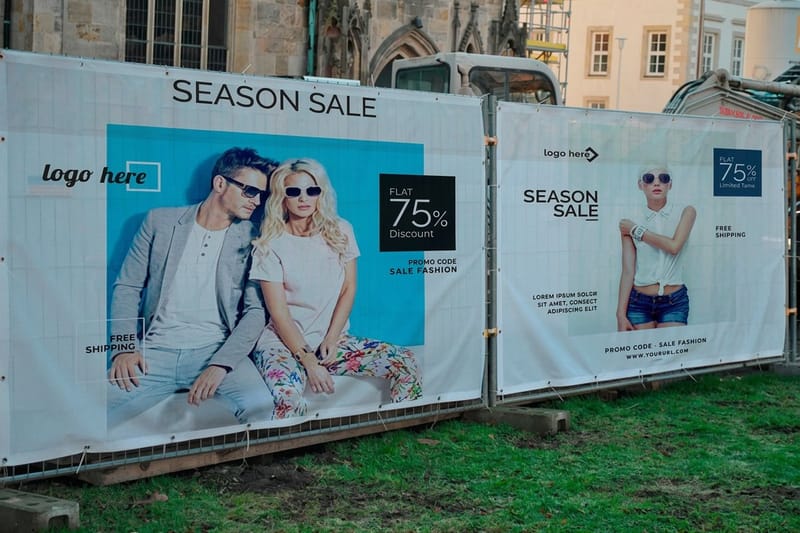
These twelve cover a full season for a Little League board, a high school program or a travel club. Each one names the material that suits it, because the same artwork on the wrong stock is what turns a good idea into a replacement order in June.
Cost is rarely the blocker. Vinyl banners start at $79 and mesh banners at $75, which most programs recover from a single sponsor.
Ideas one to four: the fence line
1. The single sponsor block. One logo, one line, filling an 8 by 3 foot field on 13 oz vinyl. No phone number, no address, no strapline. If the sponsor insists on contact details, put a short URL under the mark and accept that only people walking the fence line will read it.
2. The mesh sponsor run. Same layout, printed on mesh, for the stretch of fence with open ground behind it. Colors read a shade lighter through the perforations, so push saturation up when you build the artwork rather than matching the sponsor swatch exactly.
3. The sponsor wall. One long banner carrying every supporting business as a tidy grid, hung on the concession side where people queue. It reads at queue distance, it saves you hanging fifteen separate pieces, and it gives smaller sponsors somewhere honest to sit.
4. The season record banner. A narrow strip above the dugout listing championship years. Add a year each season and reprint. It is the cheapest piece of atmosphere a field can buy, and visiting teams read it while they warm up.
Ideas five to eight: the players
5. The dugout roster. Numbers at 8 to 10 inches, last names beneath at half that, first names left off entirely. Coaches and parents read it from a few feet away, so the number is doing the work, not the name.
6. The senior night portrait. A 2 by 4 foot vertical per player: one photo cropped tight, name, number, position, class year. Print matte, because every one of these gets photographed with a flash and a gloss finish blows out.
7. The milestone banner. A small piece for a no hitter, a hundredth career hit or a state qualifier. Keep the template fixed and change only the name and the achievement, so each one takes ten minutes to lay out.
8. The photo day step-and-repeat. An 8 by 8 foot step-and-repeat banner turns team photos into sponsor exposure, because the marks appear in every picture a parent posts. Ours start at $217.50 and the step-and-repeat setup guide covers the mark spacing that keeps logos in frame.
Ideas nine to twelve: the rest of the park
9. The gate schedule. A 4 by 2 foot banner at the entrance with the home schedule. People stand a meter from it, so this is the one place a small type size actually works. Print it in early spring and it earns its keep for the season.
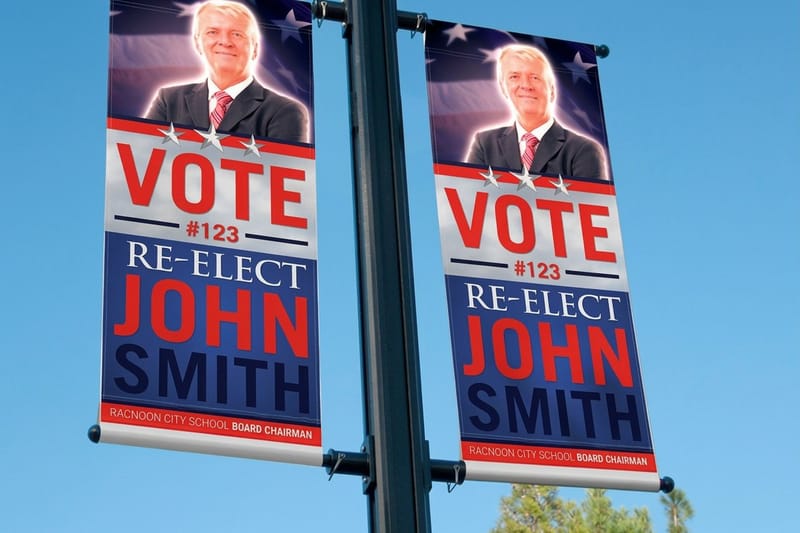
10. The entrance drive poles. A run of pole banners at $97.76 along the approach road, carrying the team mark and the season. Read at 20 miles per hour, so one word and one mark, nothing more.
11. The double-sided walkway banner. Between two fields, both directions matter. A 2 sided blockout banner at $108.75 has an opaque core, so the reverse print does not shadow through and mud both faces.
12. The indoor fundraiser banner. For a hall dinner or a winter clinic, fabric banners from $57.20 hang without glare and fold into a bag instead of rolling in a tube. Do not hang one outdoors for a season and expect it back.
Colors and wording that survive a chain link fence
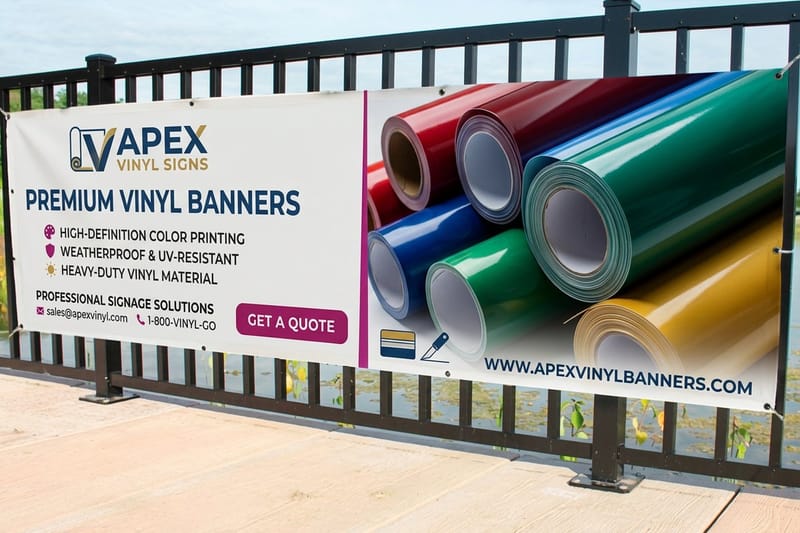
A chain link fence is a gray grid sitting directly behind your artwork, and it eats mid tones. Colors in the same tonal range as the fence, mid grays, sage, dusty blue, go soft the moment the banner is hung. The fix is tonal contrast rather than color contrast: something clearly dark against something clearly light.
Team colors complicate this because plenty of them are two darks. Navy and maroon, forest and black, royal and purple. On screen they look distinct. At 80 feet against a fence they merge. Keep the pair for trim and small elements, then run the main type in white or a near white on the darker of the two.
Red type on navy is the pairing that fails most often at ball fields, and it fails because the two colors share a tone even though they look unrelated. If a sponsor brand demands both, put white between them. The same reasoning is worked through in our guide to the best colors for advertising signs.
Color pairs that hold at distance
White on navy, white on forest, black on athletic gold and white on scarlet all survive the fence and the sun. Yellow on white and light gray on white do not, in any size. Test by turning the artwork grayscale before you send it: if the type disappears in grayscale, it will disappear on the fence.
Sun matters over a season. Reds and purples shift first on outdoor print, so a scarlet field that starts perfect will drift toward a warmer, flatter tone by late summer while a navy field looks much the same. If a sponsor is buying a multi season banner, steering the design toward the darker end of their palette is a favour to both of you.
Wording: what earns the space
For sponsors, the business name plus one identifying line is the whole brief. "Riverton Hardware, Since 1974" tells a parent what the business is and gives it a bit of standing. A phone number on an outfield fence is decoration. The town name is worth more, because it is the thing a local reader recognises from distance.
For team banners, short beats clever. "GO CATS" at 12 inches beats a four word slogan at five inches, and the slogan was never going to be read anyway. Save the longer copy for the gate banner and the program, where people are standing still. Our football banner ideas and sayings piece works through the same wording problem for a different sideline, and the rules transfer directly.
One more thing worth checking before the file goes out: the league. Some youth leagues cap sponsor banner sizes or ban certain categories of business outright, and finding that out after the print run is an expensive way to learn it.
Banner pricing and specs at 4OVER4.COM
A sponsor banner budget comes down to three numbers: vinyl starts at $79 and mesh at $75 a banner, both print in 3 business days, and the cost per banner drops once the board orders the whole sponsor run together rather than one at a time. A season of 8 by 3 foot fence banners on mesh, grommets every 24 inches, is one order with one file per sponsor. The numbers below come from the live configurator, so a board can budget a season before anyone commits.
Quantity and price
Vinyl banner pricing and specs
Real configurator numbers on 13 oz scrim vinyl, where ordering the whole sponsor run at once is where the saving sits.
| Quantity | Price Per Unit | Total |
|---|---|---|
| 1 | $79.00 | $79.00 |
If your league is ordering every season, earn coins on each order and put them against next spring's reprint. Our banner prices explained guide breaks down what actually drives the number.
Material, hems and finishing for a full season outdoors
Three finishing choices decide whether a banner comes back next spring: the material, the hem, and the grommet spacing. Everything else is artwork. A hemmed edge doubles the material at the point the grommet passes through, which is where every failure starts, so it is not the place to save four dollars.
Print it
Vinyl banners, hemmed and grommeted
Custom sizes on 13 oz scrim, the default for fences, dugouts and gates.
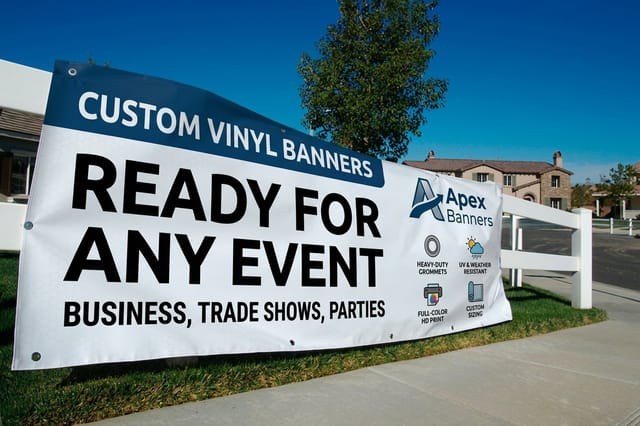
Material follows the site. Solid 13 oz vinyl holds the deepest color and blocks light, which suits a sheltered fence, a dugout strip or a gate banner. Mesh gives up a little saturation in exchange for surviving wind on an exposed run. Fabric is an indoor stock: it hangs flat with no glare and packs into a bag, and it should not spend a summer outside. Blockout has an opaque layer sandwiched in the middle so a double sided print stays clean on both faces. The full comparison sits in our banner material types guide, and the wider range is on the vinyl banner printing category.
Choosing by who is paying for the banner
The right banner depends less on the sport than on who signs the cheque and what they need back from it.
- Little League boards. Sponsor blocks on 13 oz vinyl are the fundraising engine. Fix one 8 by 3 foot template, sell the slot, and drop each sponsor logo in. One layout, fifteen banners, no design fee.
- High school programs. Record banners and senior night portraits do the emotional work. Budget for a reprint of the record strip every year and treat the portraits as one photo plus four words.
- Travel and club teams. You hang at fields you do not control, so everything needs to go up and come down in ten minutes. Mesh, grommets every 24 inches, and a bag of zip ties in the equipment kit.
- Sponsoring businesses. You are buying recognition, not a call to action. Spend the space on the mark and the town, then run yard signs from $25 near your own premises for the message that needs words.
- Tournament organisers. A step-and-repeat for the trophy photos and pole banners on the approach road turn a rented complex into something that looks like an event.
Sponsor blanks you fill in once per logo
Building a sponsor run goes faster from a template: set the 8 by 3 foot layout once, with the league name strip and the logo block, then swap only the logo per sponsor. Keep every logo inside the safe area and clear of the grommet line along the edges, where a zip tie or a fence post will cover it. Pull a print ready blank from the blank template library with the safe area already marked.
Start fast
Banner templates and print-ready blanks
Banner design templates and exact size blanks so your artwork lands inside the safe area.
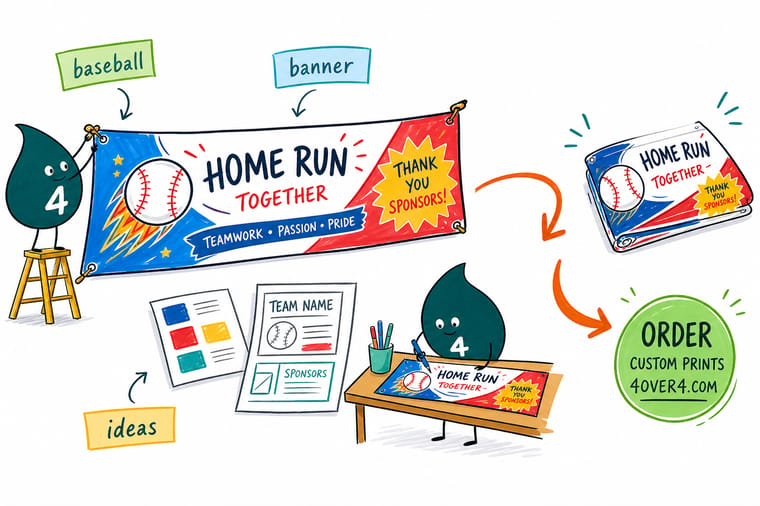
Wally hangs the sponsor banner and walks back to read it
Size the letters to the distance, then pick the material for the wind
Give one line of type 10 to 12 inches of cap height on an 8 by 3 foot banner, order grommets every 24 inches on all four sides, and tie with zip ties rather than bungees. Print mesh on an exposed fence and 13 oz vinyl everywhere sheltered, then check the artwork in grayscale before you send it. 4OVER4.COM prints custom banner sizes with optional hems and grommets.
Order baseball banners →What holds through a season on a fence
Design tips that hold at every size
- Build at a tenth scale, view at arm’s length. Set the artwork at 10 percent of final size and look at it from about a foot away. That approximates the real viewing distance more honestly than zooming out in a design app.
- Grayscale is the contrast test. If the type vanishes when you strip the color, it will vanish on the fence. Tonal contrast is what carries distance, not hue contrast.
- One line, printed large. Every extra line steals height from the line that mattered. A sponsor banner with three lines reads as none.
- Grommets on all four sides. Top only means a bowed middle and torn corners by midseason. Every 24 inches, all the way round, and zip ties instead of bungees.
- Keep 3 inches clear of the trim. Ties, hem stitching and the fence rail all cover the outer band. Nothing you need to read should sit in it.
Explore more
More ways to print and promote
Mesh banners print in 3 business days and blockout banners in 4, so a senior night booked a week out still makes it.
Product Vinyl Banners 13 oz scrim vinyl for fences, dugouts and gates. Product Mesh Banners Perforated stock that lets the wind through. 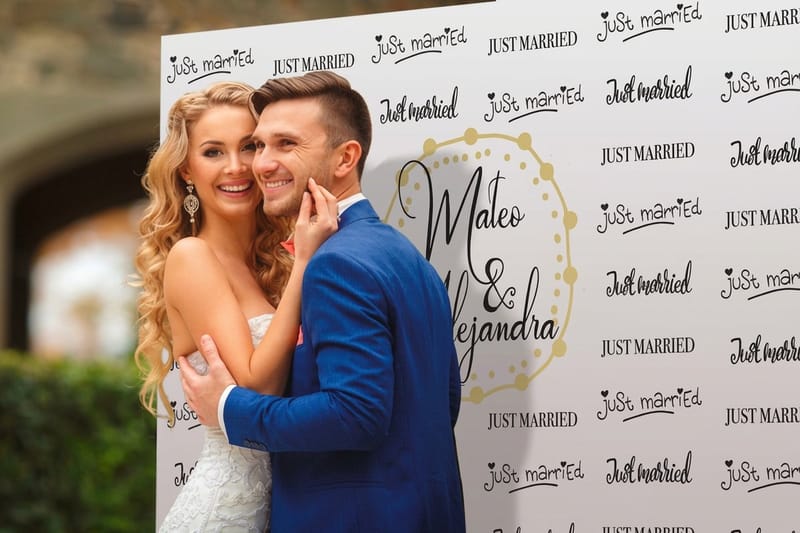 Product Step-and-Repeat Banners Photo day backdrops that put sponsors in every picture.
  Product Pole Banners Pole pocket banners for the approach road.
  Product 2 Sided Blockout Banners Opaque core so the back print never ghosts through.
  Category Vinyl Banner Printing Every size, hem and grommet option in one place. Hub Signs and Banners Banners, yard signs and rigid signage for the whole park.
  Guide Banner Material Types Vinyl, mesh, fabric and blockout compared properly.
 Ready to print the season's banners?
Pick your size, drop in your artwork or a free template, and 4OVER4.COM prints it on 13 oz vinyl or mesh with optional hems and grommets, fast enough for opening day.
Common questions about baseball banners
What size should a baseball sponsor banner be?
Eight feet by three feet is the working standard for an outfield fence, and it is the size most leagues sell by. It fits neatly between chain link posts, it gives you enough height for one line of type at 10 to 12 inches, and it is light enough that two people can hang it in a couple of minutes. Some parks sell a 6 by 3 foot slot to fit more sponsors along the same run, which is fine as long as the artwork drops to one mark and a shorter name. Measure the actual fence span before you commit, because posts are not always spaced the way the plan says.
Should an outfield banner be vinyl or mesh?
Use mesh when the fence is exposed with open ground behind it and the banner stays up for a full season. Perforations let the wind through instead of turning the banner into a sail, which is what pulls grommets out and tears corners. Use 13 oz vinyl when the banner is sheltered, when it goes up for a weekend tournament, or when the artwork needs maximum color density, because solid vinyl holds saturation better than mesh does. Mesh banners start at $75 at 4OVER4.COM and vinyl banners at $79, so the choice is about the site rather than the budget.
How long will an outdoor baseball banner last?
A hemmed 13 oz vinyl banner with grommets every 24 inches, tied with zip ties rather than bungees, comfortably handles a season and usually several. What ends it is mechanical rather than the print: a bowed middle that tears a corner grommet, or constant slapping against the fence that abrades the ink along a fold. Sun does its work more slowly, and reds and purples drift before darker colors do. Taking banners down at the end of the season and storing them rolled rather than folded adds years, because a crease left through a winter becomes a permanent crack in the coating.
What should a senior night banner say?
Name, number, position and class year, with one photo cropped tight enough that the face reads from ten feet. That is the whole list. Parents want to add a message, a quote and a baby photo, and every addition shrinks the elements that people actually look for. If the program wants a longer tribute, it belongs in the printed program or on the scoreboard, not on a two foot wide banner. Print matte rather than gloss, because these get photographed with flash all evening and a gloss surface blows out into a white patch.
Can we reuse the same banner design next season?
Yes, and building for it saves real money. Keep the sponsor name and the year on separate layers so a reprint is a two minute file edit rather than a new design job. For record banners, leave deliberate empty space at the end of the list so an added year does not force a full relayout. The one thing worth reprinting rather than reusing is anything carrying a sponsor logo that has since been updated, because a stale mark on a fence is more visible than no mark at all.
