
EDDM Examples That Get Responses, Dissected by Industry

Nadia is our customer education voice, built from the knowledge of our production team, with over 20 years in printing.
The EDDM pieces that get responses carry one offer, one piece of proof that the sender is local to that carrier route, and one deadline. The five examples below are pulled apart on those three points, plus the flat size each one had to hit before USPS would take it.
Five EDDM examples at a glance
| Business | The offer | The headline | The call to action | Format |
|---|---|---|---|---|
| HVAC | $89 pre-season tune-up, 30 units per route | Your neighbors booked in April. You will book in July. | Call the number, quote the route code | 6.5 x 9 flat, 16pt gloss |
| Restaurant | Free appetizer, dine-in, expires in 21 days | We are the kitchen four blocks from your door. | Bring the card, no code to remember | 6.25 x 11 flat, 14pt uncoated |
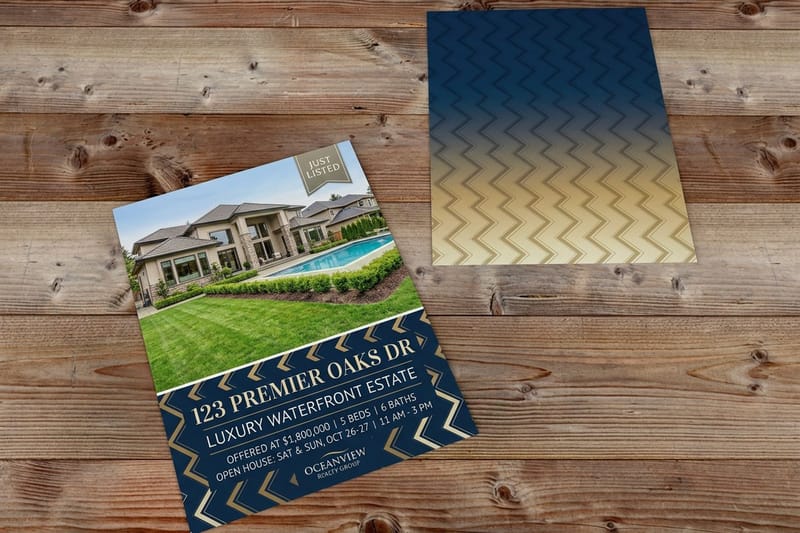
| Real estate | Sold price of three homes on that carrier route | Three houses on your street sold above asking. | Scan for what your house would list at | 8.5 x 11 flat, 16pt matte |
| Dental | New patient exam and x-rays at a fixed price | Accepting new patients, and we are open Saturdays. | Book online, or walk in Saturday morning | 6.5 x 9 flat, 14pt gloss |
| Home services | Free roof inspection after the storm, 10 day window | We repaired 11 roofs on this route after the hail. | Text a photo of the damage to this number | 6.25 x 11 flat, 16pt gloss |
Every format in that last column is a legal EDDM flat. Check yours against the thresholds before you commit artwork, because a quarter inch of height is the difference between a flat and letter mail. You can order oversized postcards in any of these sizes from the configurator.
What the EDDM pieces that pulled had in common
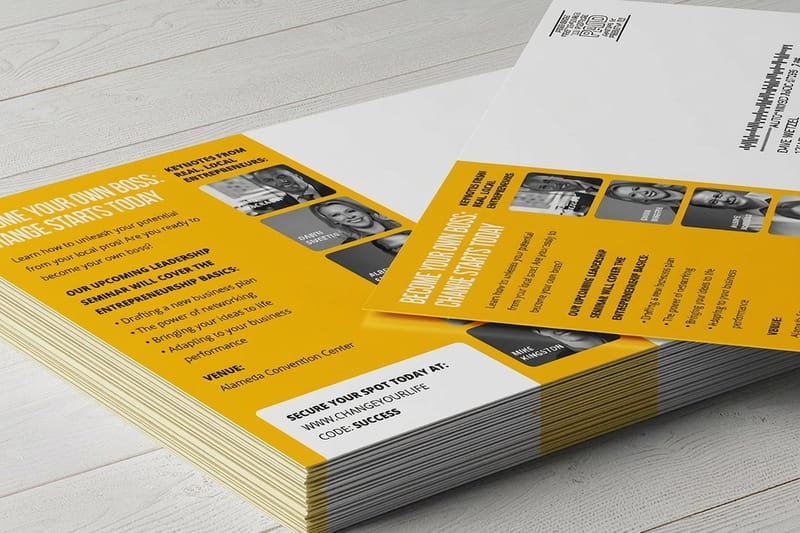
The EDDM pieces that get calls do three things: they name one offer, they prove the sender is local to that carrier route, and they put a date on it. Everything else on the card is decoration, and the ones that fail almost always failed by carrying two offers instead of one.
That local proof is the part most senders skip, and it is the only real advantage EDDM has. You picked the route, so you already know the neighborhood, the school, the intersection, the storm that came through in March. A card that says "we repaired eleven roofs on this route after the hail" is doing something a targeted list cannot do cheaply. A card that says "quality service since 1998" is paying flat postage to say nothing.
The date is the third leg. Without an expiry, the card goes on the counter and dies there. Twenty-one days is the window most local offers can support: long enough to survive a busy week, short enough that it is still on someone’s mind. If you want the mechanics of the drop itself rather than the creative, our step by step EDDM mailing guide covers bundling, facing slips and the retail counter.
We ran the same postcard on two routes, one with the neighborhood name in the headline and one without. Same offer, same stock. The named one was the only version anybody called about.
Marcus T., HVAC contractor
The size rule that decides whether you can mail it at all
EDDM is flat-size mail. A piece qualifies only when it exceeds 6.125 inches in height, or 11.5 inches in length, or 0.25 inches in thickness, and stays inside 12 by 15 inches. A 6 by 11 card clears none of those thresholds, so it is letter mail and the retail clerk will turn it away. Add a quarter inch of height and the identical design goes through.
This is why so many EDDM examples look bigger than a normal postcard. They are not being generous with your budget, they are hitting the smallest legal flat. The two sizes that do most of the work are 6.5 by 9 and 6.25 by 11. Our breakdown of popular EDDM postcard sizes lists the rest against the USPS limits.
Half the back of the card belongs to USPS
The address side has to carry the EDDM Retail indicia in the top right, the ECRWSS endorsement, and the Local Postal Customer line, with clear space around the block. Designers who lay out the back as free canvas get the proof back with a third of their artwork sitting where it cannot go.
Plan the address panel first and treat the remaining area as your second selling surface, not as an afterthought. The EDDM file setup guidelines show exactly where the indicia and endorsement sit before you start the layout.
Five EDDM examples, dissected by industry
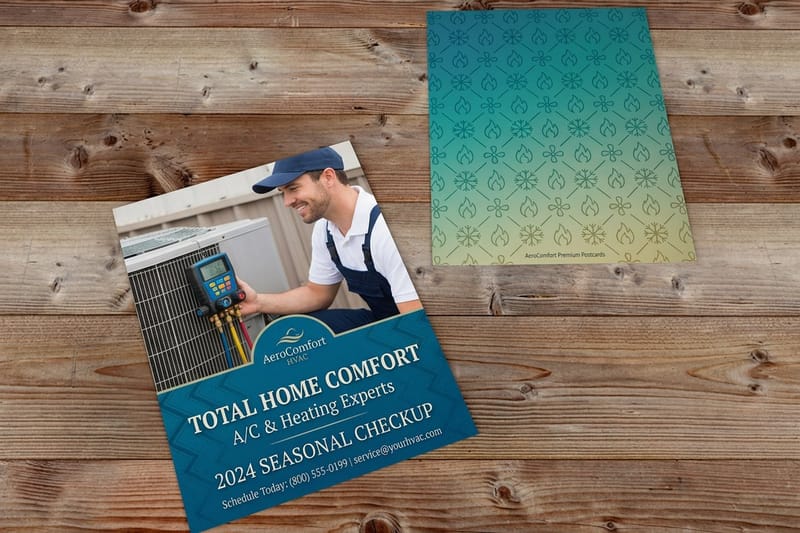
Each of these is a format that repeats across routes because the offer fits the buying moment, not because the design was clever. Read them as structures to copy rather than as artwork to imitate.
All five print on the same flat sizes and the same stocks. HVAC postcards, restaurant postcards and dental postcards all start at $16.48 on standard postcard sizes, and oversized postcards at $51.62 once you move up to a qualifying flat. To see them in use, tap through the HVAC postcards story or watch the restaurant postcards and dental postcards videos.
The seasonal service card, and the storm card
HVAC, pre-season tune-up. One price, one service, mailed six to eight weeks before the season turns. The headline works because it names the timing problem the homeowner already has, and the call to action asks for a phone call with a route code so the sender can tell which drop produced which booking. Without that code you are guessing, and most EDDM programs die because nobody could prove they worked.
Home services, post-storm inspection. The strongest EDDM card in this whole list is the one mailed to the routes a storm actually crossed, four to seven days after it crossed them. It names the count of jobs already done on that route, offers a free inspection, and closes the window at ten days. It works because the recipient can look up at their own roof and check.
Both are the same structure: a specific event, a fixed offer, a short deadline, and a response method that can be attributed. Our direct mail design best practices cover how to lay that out so it survives a walk from the mailbox to the recycling bin.
The local restaurant card and the just-sold card
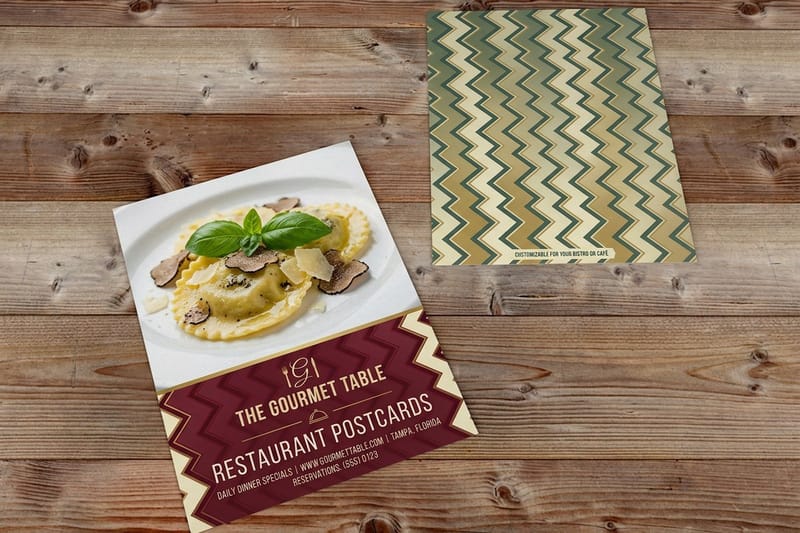
Restaurant, four blocks away. Proximity is the offer. The card names the cross street, shows one dish photographed properly rather than five thumbnails, and gives a free appetizer on dine-in with a three week expiry and no code, because a code at the table is friction. Printing on uncoated stock is deliberate: it photographs badly on a phone and reads warm in the hand, which suits a neighborhood restaurant more than a glossy chain look.
Real estate, three houses on your street. Instead of an agent portrait, the front carries three addresses from that carrier route with their sold prices, and a QR that lands on a valuation page for that route rather than the agency homepage. That last detail is what separates a card that gets scanned from one that teaches the neighborhood not to scan. See how to add a QR code to your postcards for the size and quiet zone that actually scan off a moving card.
Dental, accepting new patients. The weakest offer of the five on paper, and it still works because the constraint it removes is real. Saturday hours, a fixed price for the new patient exam, and a booking link. Dental EDDM fails when it leads with technology nobody outside the practice cares about.
The offer, the headline and the call to action
Pull any of those five apart and you find the same three parts doing all the work. The offer decides whether the card is worth reading, the headline decides whether it gets read at all, and the call to action decides whether anything happens next.
The offer should cost you something. A discount that is smaller than the postage plus print is not an offer, it is a coupon, and coupons get compared. A fixed price on a service, a free inspection, or a genuine first-visit rate all commit the sender to something, and that is what earns the response.
The headline has one job: to be read from arm’s length while somebody walks from the mailbox to the kitchen. Six to nine words, one idea, and the neighborhood in it wherever you can. The call to action then needs to be the easiest thing on the card. One number, one link, or one QR, and never all three fighting each other.
How to tell which route produced the call
EDDM has no names, so it also has no natural attribution. Give each route its own extension, its own QR destination, or its own promo word at the counter. It costs nothing at the print stage and it turns the second drop into a decision instead of a hope.
Mail the same offer to two routes with two different headlines if you want to learn something. Do not change the offer, the stock and the headline all at once and then try to read the result. If you want the arithmetic behind what a route is worth before you drop it, direct mail cost per piece and EDDM pricing explained both work through it.
Where EDDM is the wrong tool
EDDM covers every door on the route. That is the whole point, and it is also the limit. You cannot suppress your existing customers, you cannot skip renters when you are selling roofs, and you cannot put anybody’s name on the card. If the value of your list is higher than the value of the coverage, EDDM is the more expensive option even though the postage is cheaper.
A short worked example: a dermatology practice with a 4,000 patient database is better served by an addressed mailing to those names than by blanketing 4,000 doors, because the response comes from people who already know the practice. A pizzeria opening on a new block is the reverse case, since nobody on the route knows it exists yet and coverage is exactly what it needs.
The second limit is size. Because EDDM requires a flat, your print cost per piece is higher than a 4 by 6 card would be. You are trading print cost for postage rate, and on a small drop that trade can go the wrong way. For a targeted list on a smaller card, direct mail postcards at $89.68 include the mailing, and building or renting a mailing list covers where the names come from.
The volume cap nobody reads until the counter
EDDM Retail is capped at 5,000 pieces per ZIP code per day, and the bundles have to go in at 50 to 100 pieces with a facing slip on each. Above that volume you are into a permit and a Business Mail Entry Unit, which is a different process with different paperwork.
Plan the drop against the cap before you order the print run, not after the boxes arrive. EDDM Retail versus BMEU sets out which one your volume puts you in.
EDDM postcard pricing and specs
Flat-size postcards cost more per piece to print than a 4 by 6 card, which is the trade you make for the EDDM postage rate. The numbers below come from the live configurator on oversized postcards, the size range most EDDM drops land in, so you can budget the print half before you work out the postage half.
Quantity and price
Oversized postcard pricing and specs
Live configurator numbers on the flat sizes that qualify for EDDM, where the per piece cost drops as the run grows.
| Quantity | Price Per Unit | Total |
|---|---|---|
| 50 | $1.03 | $51.62 |
| 100 | 62.4¢ | $62.40 |
| 200 | 39.1¢ | $78.20 |
| 300 | 31.3¢ | $94.02 |
| 400 | 27.5¢ | $109.84 |
| 500 | 25.1¢ | $125.65 |

If you would rather hand over the drop as well as the print, direct mail postcards start at $89.68 with the mailing included. You also earn coins on every order and redeem them against later runs, which matters when a route gets mailed four times a year.
Stock and finish on an EDDM flat
A flat gets handled more than a small card, so stock does real work here. 16pt is the safe default on anything above 6 by 9, because a 14pt piece that size flexes in the hand and arrives with a soft corner. Gloss lifts photography and shrugs off a wet mailbox. Matte reads calmer and takes a pen, which matters when the offer asks somebody to write down a time. Uncoated reads warm and local, and it is the right choice for a neighborhood restaurant even though it photographs flat.
Print it
Postcards, ready for the route
Standard postcard sizes from $16.48, and the flat sizes that qualify for EDDM alongside them.
One more thing that decides how the piece arrives: full bleed art on the address side fights the indicia block. Keep a clean field behind the endorsement and the Local Postal Customer line rather than running a photograph under them, or the carrier route clerk will send it back. For everything upstream of the design, EDDM size requirements and the direct mail formats that still perform are the two worth reading before you brief a designer.
Choosing the approach for your industry
The offer that works changes with the buying moment, so the offer changes by business type.
- Home services and HVAC. Seasonal timing beats every other variable. Mail six to eight weeks ahead of the season turning, one fixed-price service, one phone number with a route code.
- Restaurants and cafes. Lead with proximity and one dish. Dine-in offers with a three week expiry, uncoated stock, and no code to remember at the table.
- Real estate. Sold prices from that exact carrier route, not the county. A QR to a route-specific valuation page, never to the agency homepage.
- Dental and medical practices. Remove a constraint rather than discount a treatment. Saturday hours, a fixed new-patient exam price, and an online booking link.
- Churches and nonprofits. One event, one date, one address, and a map crop of the neighborhood. Coverage is the point, so the piece should read as an invitation rather than an ad.
Blanks at the exact EDDM flat size
Starting from a blank at the exact flat size saves the round trip where artwork comes back a quarter inch short. 4OVER4.COM sizes its blanks to the product specs so bleed and trim are already marked, and the blank template library has the postcard sizes ready to open.
Start fast
Blanks at the exact EDDM flat size
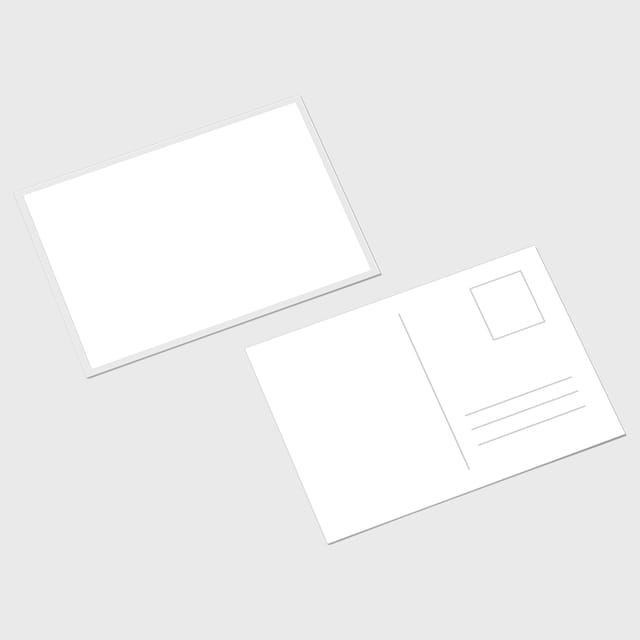
Postcard blanks with the indicia block and the endorsement area left clear.






Wally checks the flat-size threshold before you print
A quarter inch decides whether USPS takes your card
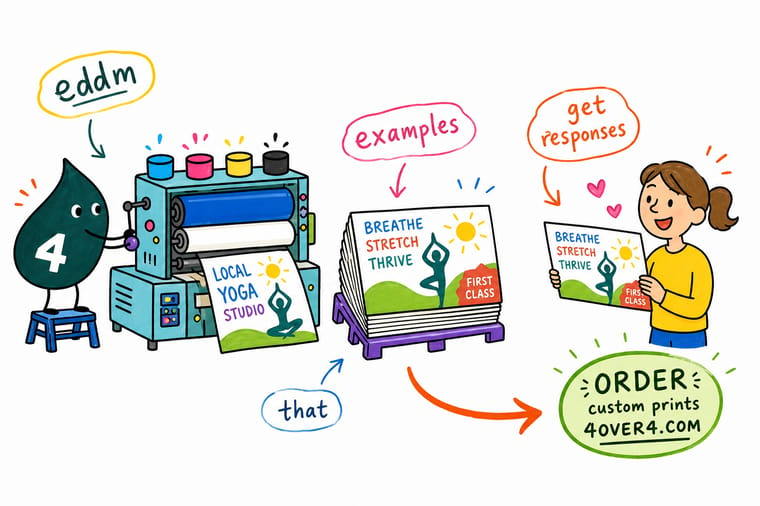
An EDDM piece has to exceed 6.125 inches high, or 11.5 inches long, or 0.25 inches thick, and stay inside 12 by 15 inches. A 6 by 11 card is letter mail and gets refused; 6.25 by 11 goes through. Keep the address panel clear for the indicia and the ECRWSS line, print on 16pt so the corners survive the walk, and 4OVER4.COM has the flat sizes in stock.
Order EDDM postcards →What to remember about EDDM creative
Design rules that hold on every route
- One offer only. Two offers on an EDDM flat halve each other. If the second offer matters, it is a second drop, not a second panel.
- Put the neighborhood in the headline. The route is the only thing you know about every recipient. Naming the street, the school or the storm is the cheapest relevance you will ever buy.
- Design the address panel first. The indicia, the ECRWSS endorsement and the Local Postal Customer line take a fixed block. Lay them in before the artwork, not after the proof.
- Give every route its own response path. A different extension, QR destination or counter word per route turns the next drop into a decision instead of a guess.
- Put a date on it. An offer with no expiry sits on a counter until it is thrown away. Twenty-one days suits most local offers.
- Print one and read it at arm’s length. Hold the proof at the distance of a walk from the mailbox. If the headline needs a second look, it is too long.
Explore more
More ways to print and mail
HVAC and restaurant postcards both run 50 for $16.48 in 3 business days.
Product Direct Mail Postcards Print and mailing handled in one order. 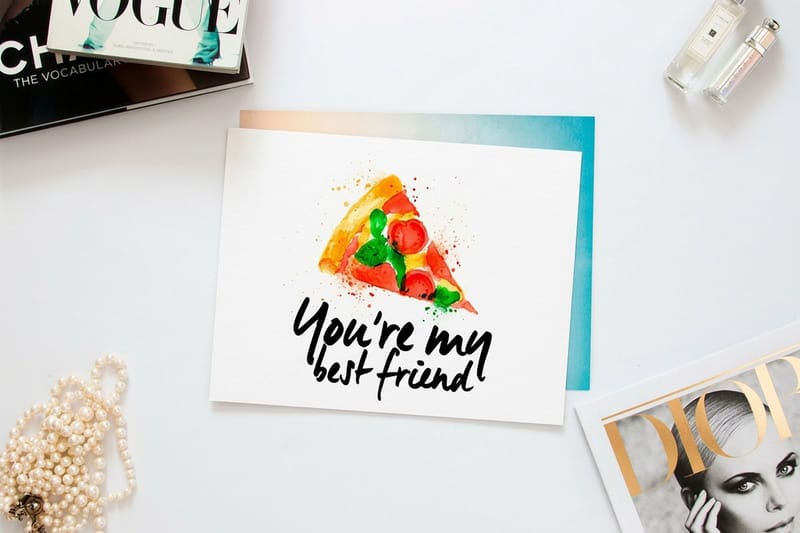 Product Oversized Postcards The flat sizes that qualify for EDDM. Product HVAC Postcards Seasonal service cards for home service routes. Product Restaurant Postcards Neighborhood cards for dine-in offers.
 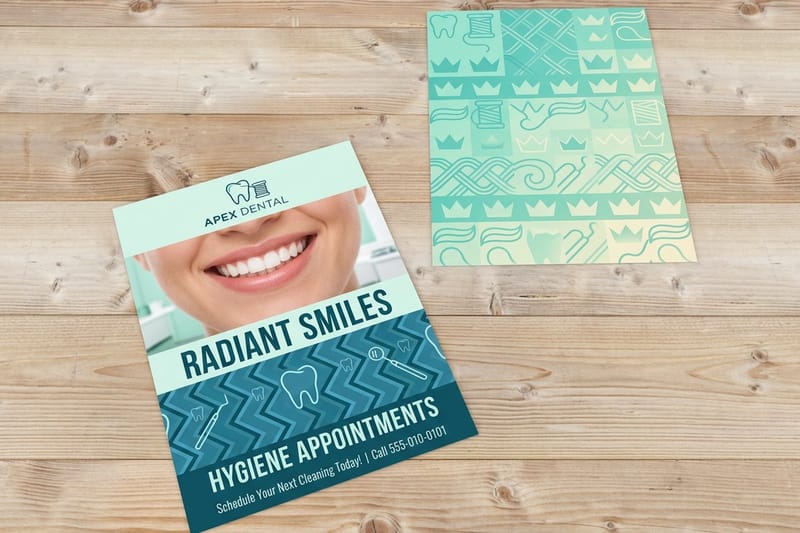 Product Dental Postcards New patient cards for local practices.
  Category Postcard Printing Every postcard size, stock and finish in one place.
  Guide What Is Every Door Direct Mail How EDDM works and who it suits.
  Article Direct Mail Response Rates by Industry What responses look like per sector.
 Ready to print your EDDM drop?
Pick a qualifying flat size, drop in your design or a free template, and 4OVER4.COM prints it sharp on 16pt stock, as fast as your route schedule needs.
Common questions about EDDM examples
What size does an EDDM postcard have to be?
It has to be a flat, which means it must exceed at least one of three thresholds: more than 6.125 inches high, more than 11.5 inches long, or more than 0.25 inches thick. It also has to stay within 12 by 15 inches. That single rule is why EDDM cards look oversized next to a normal postcard. A 6 by 11 card clears none of the thresholds and will be refused, while a 6.25 by 11 card goes straight through. The two sizes doing most of the work in real campaigns are 6.5 by 9 and 6.25 by 11, and oversized postcards at 4OVER4.COM start at $51.62.
Can I put a person’s name on an EDDM piece?
No. EDDM delivers to every address on a carrier route without a mailing list, so the address block carries the Local Postal Customer line rather than a name. That is the trade you are making: you get coverage and a low postage rate, and you give up personalization, suppression of existing customers, and any ability to target owners over renters. If naming the recipient matters to the campaign, an addressed mailing to a real list is the right tool even though the postage costs more.
How many EDDM pieces can I mail at once?
EDDM Retail is limited to 5,000 pieces per ZIP code per day, and the pieces have to be bundled in groups of 50 to 100 with a facing slip on each bundle. If your drop is larger than that, you move to EDDM BMEU, which requires a permit and a different submission process at a Business Mail Entry Unit. Plan the volume against the cap before you place the print order, because splitting a run across days after the boxes arrive is more awkward than planning for it.
What offer works best on an EDDM card?
One that costs the sender something and expires. A fixed price on a service, a free inspection, or a genuine first-visit rate all commit you to something specific, and that is what earns a call. A small percentage discount does not, because it invites comparison shopping and the recipient has nothing to compare against on the card. Put a date on whatever you offer. An offer with no deadline sits on a kitchen counter until it is thrown out, which is why twenty-one days is the window most local businesses settle on.
How do I know which EDDM route produced a response?
Build the attribution into the print, because EDDM gives you no names to match against afterwards. Give each carrier route its own phone extension, its own QR destination, or its own word to mention at the counter. None of that costs anything extra at the print stage, and it is the difference between a second drop you can justify and one you are guessing at. Change one variable at a time between drops, usually the headline, and keep the offer and the stock constant so the result means something.
