
Entertainment Calendar Printing Ideas for Venues, Bands, and Studios


Four formats carry an entertainment schedule: the 12 month wall calendar, the single sheet poster calendar, the folded card calendar that mails, and the scratch off countdown. Which one you print is decided by how often your dates change, not by how the mock up looks, because a wall calendar is the cheapest per month and the most expensive to correct.
Entertainment calendar formats at a glance
| Format | Typical size | Best for | Where it lives | What it costs you |
|---|---|---|---|---|
| 12 month wall calendar | 11 x 17 folded to 11 x 8.5 | Studios and venues with a fixed program | A rehearsal room wall, a booking office | Most pages, longest lead time, highest artwork load |
| Single sheet poster calendar | 18 x 24 or 24 x 36 | One season, one residency, one festival | Taped inside the venue, sold at the merch table | One press sheet, cheapest per unit |
| Folded card calendar | 5 x 7 folded, fits a standard envelope | Mailing lists and patron thank you drops | An envelope, then a fridge door | Print plus postage, from $56.02 |
| Banner date wall | 3 x 6 ft and up on vinyl | Street frontage, festival gates, load in doors | Outdoors, in sun and wind | From $79, but every date change is a new banner |
| Scratch off countdown | 4 x 9 card or 8.5 x 11 sheet | Season subscriptions and advent style promos | A wallet, a fridge, a merch bag | From $237.25, and the only format that tracks redemption |
Prices are the current starting prices in the configurator and move with size, stock and quantity. If you are printing more than one format from the same artwork, set the largest one first and scale down, because type that works at poster size rarely survives being shrunk to a card. Browse the venue formats in music and entertainment printing.
What an entertainment calendar has to do before it looks good
A calendar in live entertainment is a schedule that has to survive being wrong. A support act drops off a bill, a studio session moves a week, a festival stage swaps a headliner, and the printed thing on the wall is now telling your audience something untrue. That is the constraint every format decision comes back to.
So the first question is not what size or what stock. It is how many of your printed dates will still be accurate in ninety days. A resident theater with a season locked in March can print a 12 month wall calendar and be safe. A club booking six weeks out cannot, and should be printing a poster calendar per quarter or a banner that carries the room and the website rather than the lineup.
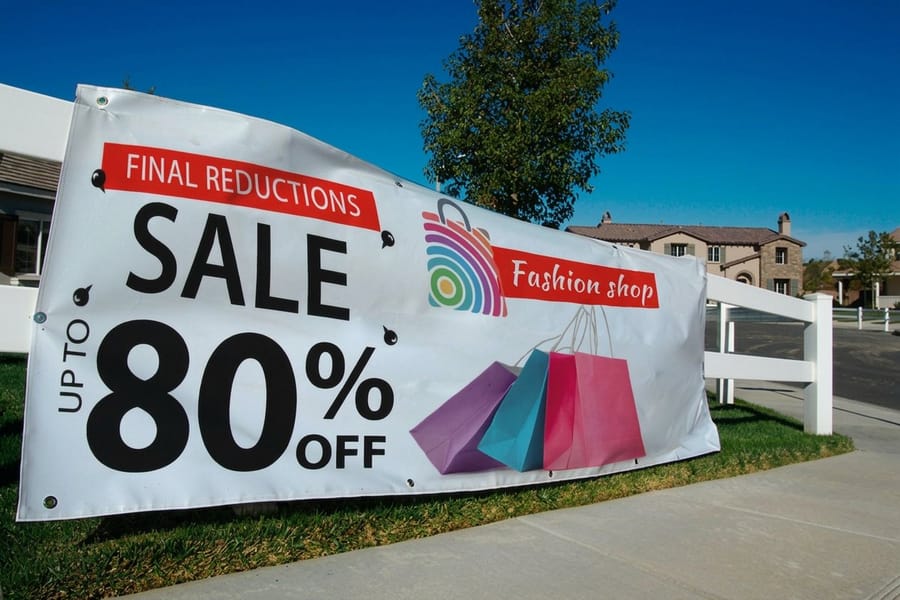
The banner case is worth stating plainly because it costs people money. A vinyl banner with printed dates is a beautiful thing until the first change, and then it is scrap. If you want your outdoor banner to last a year, print the venue, the neighborhood and the URL, and let the paper calendar inside carry the dates. More venue formats sit in the entertainment printing collection.
Decide how often the dates change
Count the changes in your last three months of bookings. Under two, print long: a year on the wall is fine. Two to six, print quarterly on a single sheet. More than six, stop printing dates at all on anything expensive and move the schedule to a poster you can reprint cheaply and a QR code that goes to the live listing.
This is the trade off nobody puts on a calendar sales page. A 12 month wall calendar has the lowest cost per printed month and the highest cost per correction. A quarterly poster is the reverse. Neither is better, they just fail in opposite directions.
Leave a place for the change to land
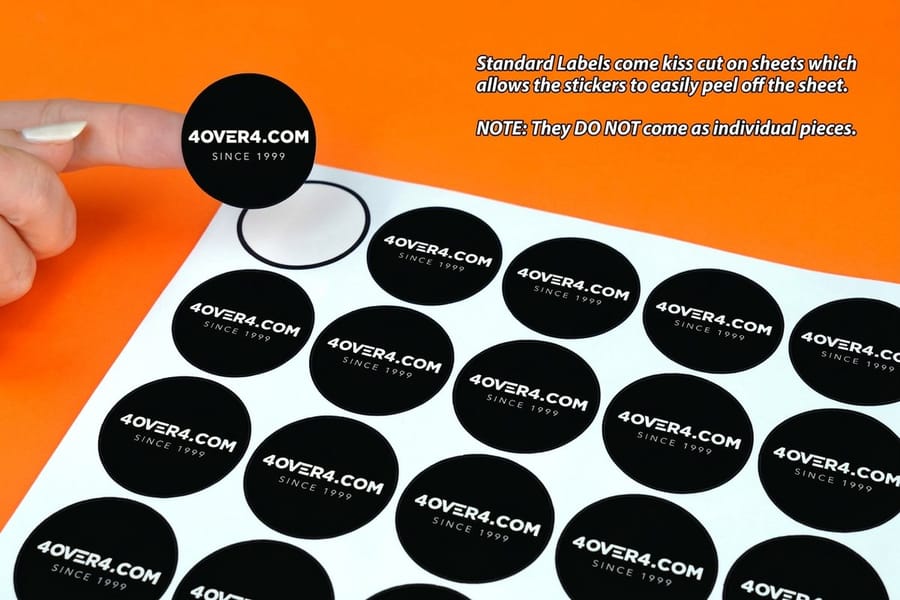
Design a clear strip at the foot of every month or every quarter block, roughly half an inch deep, with nothing in it. That is where an overprinted label goes when a date moves, and it is why a well laid out calendar takes a correction without looking patched. Standard labels start at $23.88, which is less than the shipping on a reprint.
Put the QR code in the same strip. It should land on the live listing page for that month, not on your homepage. A code that dumps a fan on a homepage teaches that fan not to scan your codes again.
Five formats, and who each one is for

Here is what each format is genuinely good at, including the part where it is the wrong choice. The order runs from the most committed to the most disposable, which is roughly the order of how far ahead your program is locked.
The folded card calendar is the one most venues miss. Printed as a greeting card from $56.02, it folds to fit a standard envelope, so a season announcement, a thank you note and a 12 month grid all travel in the same mailing at one postage rate. Season ticket holders keep it because it arrived as a letter rather than as a flyer.
Wall, poster and card
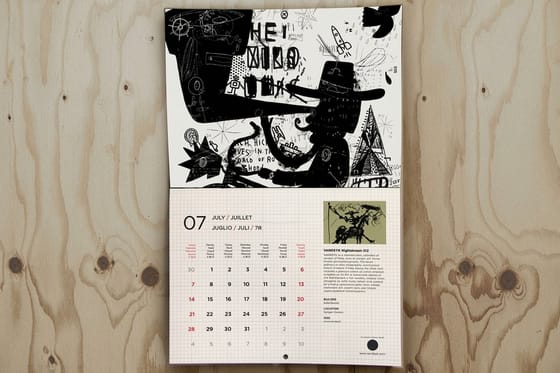
The 12 month wall calendar suits a studio, a school, a resident company, a rehearsal complex. It is a year of brand impressions in a room where people book time. It needs twelve images and a locked program, and that is exactly why a club should not attempt one. The six components to consider when creating a custom calendar covers the build in detail.
The single sheet poster calendar is the one most venues end up printing. One press sheet, one season, big type, and it doubles as merchandise. Fans buy a printed season poster in a way they never buy a wall calendar of the same room. Print it at a size a fan can frame, then print the same artwork small for the window.
The folded card calendar is the mailing format. If you already send anything to a list, this replaces it rather than adding to it. The custom photo calendar printing guide walks through the photo side, which matters more here than on a poster because the image is small and has to survive a fold.
Banner and scratch off
The banner date wall belongs outdoors and belongs to the venue, not the lineup. Vinyl from $79 handles a season of weather. Print the room, the street, the URL and one strong image, and accept that dates on vinyl are a recurring cost. If you must show dates outside, print a smaller banner per quarter instead of one big one per year.
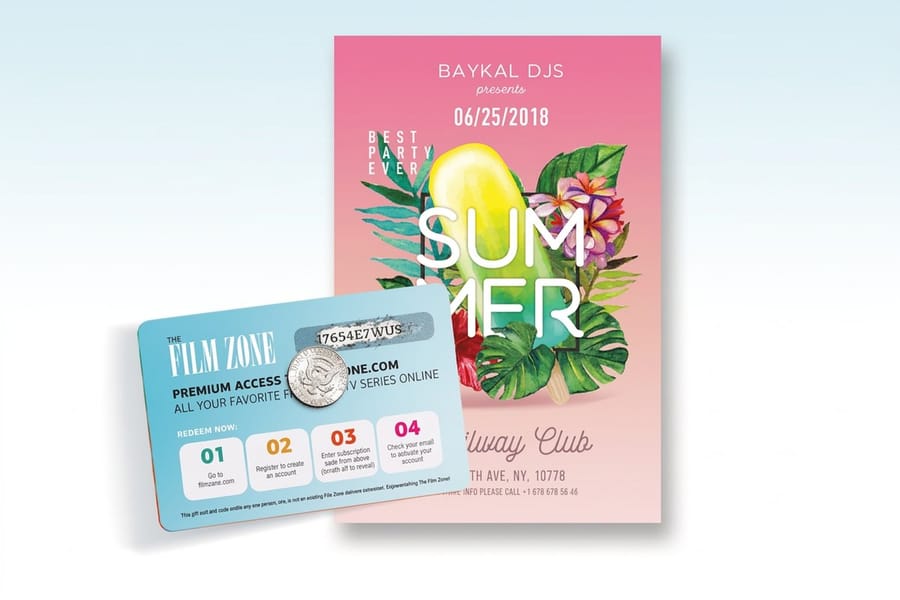
The scratch off countdown is a different animal. From $237.25 it is the most expensive per unit on this list, and it is the only one that gives you a mechanism: twelve panels, one per month, scratched at the show for a drink, a discount, an early ticket window. Bands use it as a tour passport. It works because a fan has to bring it back, which is the whole point.
Lay out the grid so a date change does not force a reprint
Tour dates and venue schedules move. The layout decisions that make a correction cheap are all made before the file goes to press, and they cost nothing at that stage.
Keep the date list on its own layer and its own color. If your calendar is a two color job, a reprint of the date sheet is far cheaper than a full color reprint, and the fix is genuinely usable rather than theoretical. The two color printing with Pantone or spot inks guide explains where that saving comes from.
Set the date type at a size that still reads when a label is stuck over the line above it. Tight leading looks elegant on screen and makes a corrected calendar look broken.
What to do when a date moves after the run
Print a sheet of standard labels with the corrected line, in the same ink color and the same typeface, sized to the strip you left. Ten minutes with a sheet of labels rescues a run of five hundred calendars. Order the labels white and opaque, because a semi transparent label lets the wrong date ghost through and that looks worse than a crossed out line.
Do not attempt this on a laminated poster or a vinyl banner. Adhesive on a gloss laminate lifts within days outdoors, and on vinyl in sun it curls at the corner and then peels. Corrections belong on uncoated or matte paper stock, which is one more reason to keep the schedule on paper and the branding on vinyl.
Get the color right the first time
Stage photography is dark, high contrast and heavily colored, which is the hardest thing to hold on paper. Deep blacks flatten, saturated stage reds and magentas fall outside CMYK, and a purple wash that looked electric on a monitor prints muddy brown. Convert and check before you commit, using the right color profile for printing.
If your artwork depends on one exact brand color, a Pantone build holds it across every reprint in a way a CMYK mix will not. That matters more on a calendar than on a flyer, because the calendar sits on a wall next to last year’s.
Give people a reason to keep it
A calendar that is only a schedule gets recycled in February. A calendar that does something gets kept, and kept is the entire value: eleven more months of your name on a wall.
The mechanisms that work in entertainment are all variations on one idea, which is that a month should be worth arriving at. A scratch off panel per month redeemed at the merch table. A blank month strip a fan fills in with the shows they attended. A photo per month credited to a fan photographer, which turns twelve people into twelve promoters. For more visual directions, the 30 calendar design ideas collection is worth a scroll.
Seasonal timing is part of it too. A summer festival calendar landing in May does more than a January drop, and an outdoor program is best announced alongside the Fourth of July printing collection when the whole town is already planning outside.
Print the giveaway version and the sale version
Run the same artwork twice: a small folded card you hand out free at the door, and a large poster calendar you sell at the merch table. The artwork cost is paid once, the free one seeds the demand, and the paid one carries the margin. Bands have done this with tour posters for decades and it works identically for calendars.
Price the sale version like merchandise, not like print. It sits next to a shirt on the same table and gets compared to a shirt, not to a stationery catalog.
Banner pricing and specs at 4OVER4.COM
The banner is the one piece in this list that stays up all season, so it is worth sizing properly. Price moves with dimensions, material and finishing, and the numbers below come from the live configurator.
Quantity and price
Outdoor banner pricing and specs
Real configurator numbers on outdoor vinyl, the format that carries your venue name through a whole season of weather.
| Quantity | Price Per Unit | Total |
|---|---|---|
| 1 | $79.00 | $79.00 |

You can also earn coins on every order and put them against the next quarter’s reprint, which matters when your calendar is a recurring print job rather than a one off.
The merch table is part of the calendar
A calendar sold at a merch table is competing with a shirt, and it wins or loses on the same terms: does it look like something a fan wants to own. Print the poster calendar at a size worth framing, put it next to the shirts, and price it as merchandise. T shirt printing from $21.96 gives you the anchor product that makes the calendar look like the cheap add on, which is exactly where you want it in a buying decision.
Print it
The folded calendar card that mails
Greeting card stock and folds, so a season announcement and a 12 month grid travel in one envelope.

Pair the calendar with a printed season program if you run one. If you have never built one, the brochure ideas worth stealing apply directly to a season booklet, and a venue that already prints signage will recognize the same thinking in signage that pulls people in from the street. If print is a recurring cost you are trying to control, outsourced printing for business covers where the savings actually are.
Choosing the right format for your operation
Different corners of the business have different date volatility, so here is the format that fits each one.
- Music venues and clubs. Quarterly poster calendar in the window, a permanent banner outside with the room name and no dates, and a QR to the live listing. Reprinting a poster four times a year costs less than reprinting a banner once.
- Touring bands. A folded card calendar sold at merch with the tour routing on the inside spread, and a scratch off tour passport for the fans who follow multiple dates.
- Recording studios. A 12 month wall calendar is the right call here, because the program is your own availability and it does not get cancelled by a promoter. It hangs where people book time.
- Theaters and resident companies. The season locks early, so print a mailed card calendar to subscribers and a wall version for the front of house desk. Leave the correction strip anyway.
- Festivals and outdoor events. A single sheet poster calendar per edition, plus vinyl banners at the gates carrying the festival name and year rather than the stage times.
- Dance and rehearsal studios. Class timetables change per term, so print per term on a single sheet and use labels for the mid term room swaps.
Calendar blanks with a date strip layer
A calendar grid is fiddly to build from nothing, and the fold and the trim are where most first attempts go wrong. A month block that looks balanced on screen ends up crowded against the trim once the bleed is added, and on a folded card the crease lands straight through the image. 4OVER4.COM sizes its blanks to exact product specs, so pull one from the blank template library before you start drawing boxes, and check the artwork against a design template if you want a starting layout rather than an empty page.
Start fast
Print-ready blanks for the folded calendar card
Exact size press blanks with the fold, trim and bleed already marked, so your grid lands inside the cut.

Wally prints the calendar that survives a schedule change
Leave room for the date that moves
Pick the format by date volatility: a year on the wall for a studio, a quarterly 18 x 24 poster for a club, a folded card that mails for subscribers. Leave a half inch correction strip under each month, keep dates off outdoor vinyl, and check stage photography in the right color profile before the run.
Order greeting card calendars →What a schedule change costs you
Design tips that hold at every format
- Big dates, quiet everything else. A fan scanning a calendar in a bar is reading numbers, not your typography. Set the dates large enough to read at arm’s length and let the artwork carry the rest.
- Leave the correction strip. Half an inch of empty space under each month block is the cheapest insurance in print. It is where a label goes when a date moves.
- One image per month, credited. Crediting the photographer on the month turns your calendar into something twelve people share. It costs a line of 7pt type.
- Keep dates off vinyl. Outdoor banners should carry the venue and the URL. Dates on vinyl are a reprint waiting to happen.
- Check stage photography before you print. Saturated stage lighting is the hardest thing to hold in CMYK. Convert, look at it, and adjust before the run, not after.
- Design for the fold, not the screen. On a folded card calendar the crease lands through the image. Move the face, the logo and the headline off the fold line early.
Explore more
More ways to print a season
A sheet of standard labels is 25 for $23.88 in 3 business days, which is what rescues a wrong date.
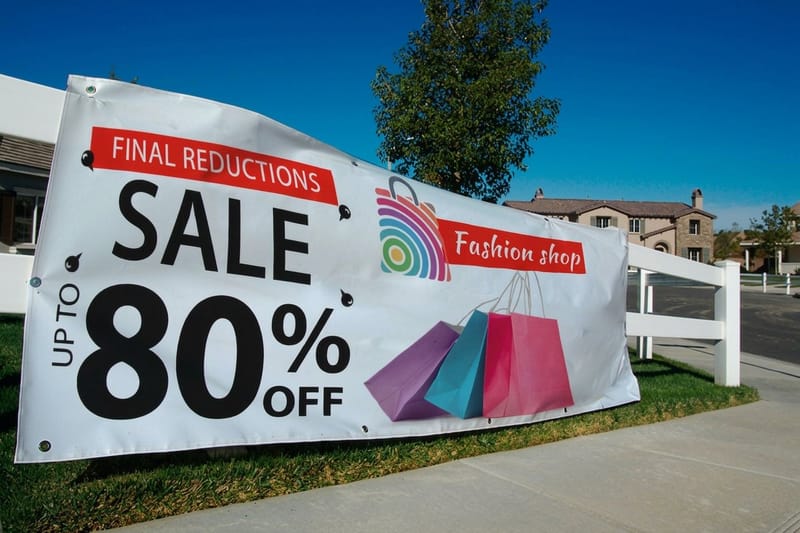 Product Outdoor Banners Vinyl for the venue frontage and festival gates, from $79.
  Product Greeting Cards The folded format for a calendar card that mails, from $56.02.
 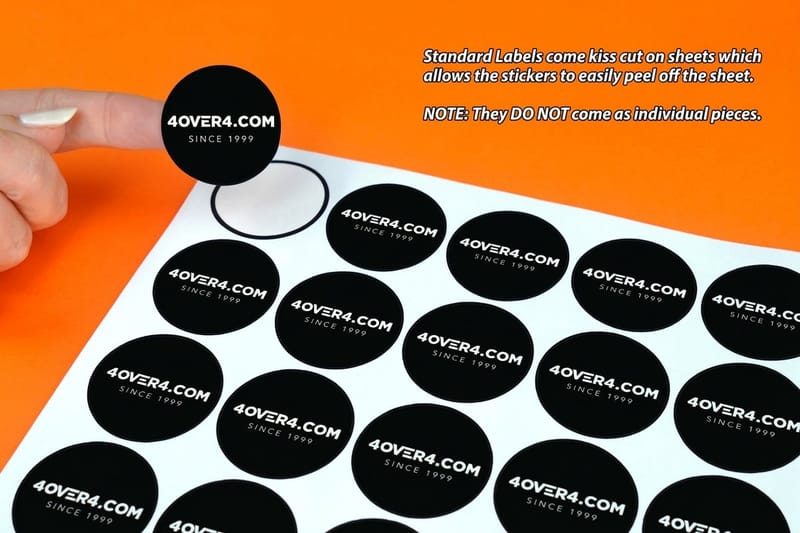 Product Standard Labels Overprint a corrected show date instead of reprinting the run.
 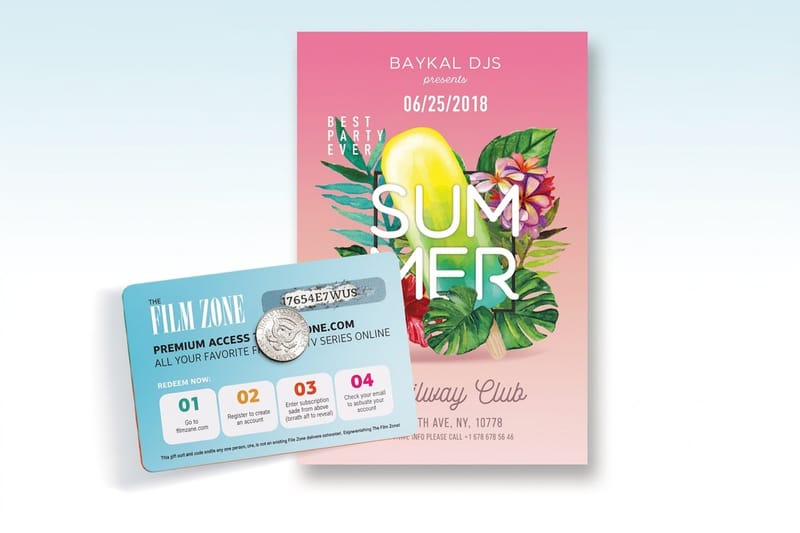 Product Scratch Off Printing A panel per month, redeemed at the merch table.
  Product T Shirt Printing The merch table piece that sits next to the calendar, from $21.96.
  Category Entertainment Printing Every format a venue, promoter or company prints in a season.
  Category Music and Entertainment Printing Merch, posters and schedules for bands and rooms.
  Guide Custom Photo Calendar Printing How to prepare twelve images that survive the press.
 Ready to print your season?
Pick the format, drop in your artwork or a free blank, and 4OVER4.COM prints it sharp on the stock you choose, as fast as your first date needs.
Common questions about entertainment calendars
What size should a venue calendar be?
A single sheet poster calendar at 18 by 24 inches is the safest default for a music venue, because it reads across a room, it frames without trimming, and it prints on one press sheet so a quarterly reprint stays affordable. Go to 24 by 36 inches only if you are selling it as merchandise, since that size costs more to ship flat and gets damaged in a tube more often than people expect. For a studio or a resident company with a locked program, an 11 by 17 sheet folded to 11 by 8.5 is the standard wall calendar shape and hangs anywhere.
How far ahead should we print a season calendar?
Print so the calendar is in hand at least three weeks before the first date you want it to sell, because the calendar has to reach people while there are still tickets left for the show at the top of it. Work backwards from that: artwork locked, then proofing, then production, then delivery, then the time it takes your own team to get it into the window and into envelopes. The mistake is treating the print lead time as the whole schedule. The internal distribution step is usually longer than the printing.
What do we do when a show date changes after the calendar is printed?
Print a sheet of opaque white labels with the corrected line, in the same typeface and ink color, and apply them to the correction strip you left under the month block. Standard labels at 4OVER4.COM start at $23.88, which is a fraction of a reprint. Use opaque stock rather than clear, because a semi transparent label lets the old date ghost through. Do not try this on laminated posters or vinyl banners, where the adhesive lifts within days.
Is a wall calendar worth it for a club compared with a poster?
Usually not. A 12 month wall calendar has the lowest cost per printed month and the highest cost per correction, which is exactly the wrong shape for a room booking six weeks out. Clubs are better served by a quarterly single sheet poster calendar plus a permanent banner carrying the venue name and URL. Wall calendars earn their keep for recording studios, theaters and resident companies, where the program is your own and does not get cancelled by someone else.
Can one calendar work for a tour with different cities?
Yes, if you separate the routing from the artwork. Put the full tour routing on one spread or one panel and keep the monthly grid generic, so the same print run works in every city and only the merch table changes. Bands that try to print a city specific version end up with unsold stock in the cities that undersold. If you want a per city hook, use a scratch off panel redeemed at that night’s show rather than a printed city name, since the panel works everywhere and still feels local.
More frequently asked questions →
Keep reading: 30 calendar design ideas, business card ideas that sell, and the six components of a custom calendar.
