
March Madness Flyer Design Ideas for Basketball Watch Parties and Bar Promos


Sofia is our design and templates voice, built from the knowledge of our production team, with over 20 years in printing.
A March Madness flyer has one job: get a specific person to a specific screen by a specific tip off. Put the matchup and the time in the biggest type on the sheet, put the venue and the offer directly underneath, and keep the full bracket off the handout, because 64 team names do not stay legible at 8.5 by 11 inches.
Basketball event print formats at a glance
| Piece | Where it goes | What it carries | Used for | Product at 4OVER4 |
|---|---|---|---|---|
| Club flyer, 4 x 6 in | Stacked, handed out, propped on a table | Matchup, tip off time, one offer, address | Door stacks, counter piles, street handouts | Club flyers |
| Handout flyer, 8.5 x 11 in | Doors, community boards, campus corridors | Full weekend schedule plus the offer | Windows, noticeboards, staff rooms | Standard flyers |
| Bracket sheet, 11 x 17 in | Wall behind the bar, or handed out for a pool | 64 name slots, six rounds, room for a pen | Bracket pools, office competitions | Standard posters |
| Window poster, 18 x 24 in | Inside the glass, facing the pavement | Three lines only, read at fifteen feet | Storefronts, entrances, lobbies | Standard posters |
| Numbered ticket | Sold or issued ahead of the night | Seat or table number, date, entry terms | Capped rooms, private viewing parties | Event tickets |
Measure the wall or the window before you set the artboard: 11 by 17 inches fits between the shelves and the taps, 18 by 24 inches suits a street window, and a 24 by 36 inch poster covers the glass customers look through, so it comes down by the second weekend. You can order standard flyers in any of these sizes straight from the configurator.
Why March Madness flyers fill seats
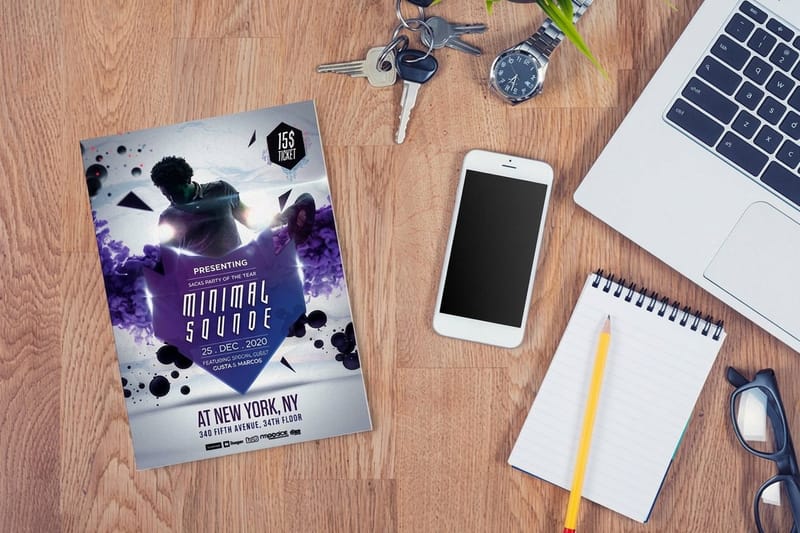
Tournament weekend is one of the few times you are advertising to people who have already decided to watch. They are not choosing between your bar and staying in. They are choosing between your screens and the ones three blocks away, and that choice gets made on the walk over, usually in front of a flyer.
So the flyer wins on specifics. A window that says Watch March Madness Here is wallpaper. A window that says All 16 Games Thursday, Sound On The Big Screen, Kitchen Until 1am answers the three questions a person is actually holding. Every line that does not answer one of those questions is taking up space a matchup could use.
The calendar is the other half of the job. Selection Sunday fixes the bracket, and the round of 64 tips off the following Thursday. That is roughly three working days to finish artwork, print and hang, which is why experienced venues build the layout in February and leave only the matchups and times to drop in. Our last minute printing guide covers what still ships when you have run out of runway, and flyer printing lists the sizes and stocks in one place.
The four lines that have to be on it
Which games, what time, where, and what it costs to walk in. In that order, in that hierarchy. A logo at the top of a flyer is the most common wasted inch in bar marketing, because nobody crossing a street is looking for your brand mark. They are looking for a tip off time.
Put the offer under the time rather than beside it. Drinks pricing, a wing deal or a free bracket entry is the reason to pick your room over the identical room down the road, but it only matters once the reader knows the game is on at all.
Print the base run early, top up weekly
The tournament runs over three weekends and the field shrinks every round, so a single print run covering all of it goes stale by the Sweet 16. The cheaper unit price on a big run is real, and so is the pile of flyers naming teams that lost in the first round.
The workflow that holds up is a base run of posters that never names a team, plus a small, cheap flyer run each week carrying the actual matchups. Club flyers at $16.48 make that weekly reprint affordable enough to keep doing it through the Final Four.
Bracket and scoreboard layout ideas
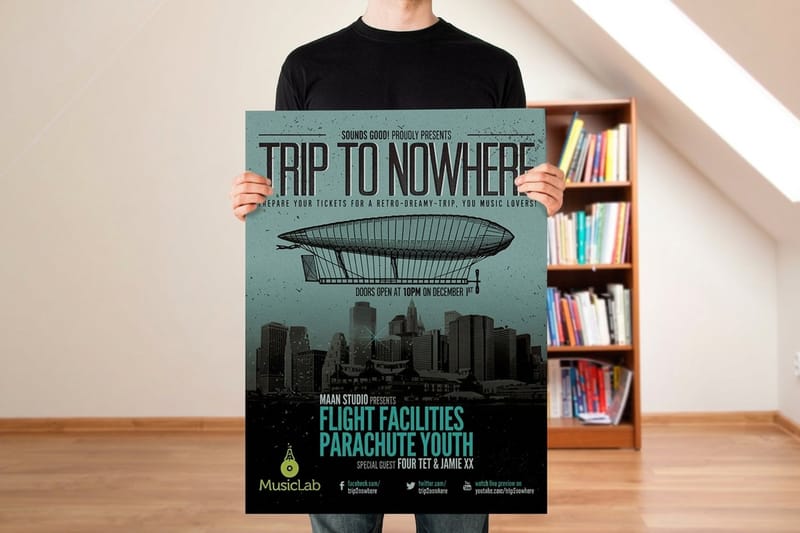
A full bracket does not belong on a handout. The main draw has 64 first round slots across six rounds, and squeezing 64 team names onto 8.5 by 11 inches drops the type below the size anyone can write over with a ballpoint. Print the bracket at 11 by 17 inches or bigger as a poster, hang it where people gather, and let the small flyer point at it.
The other layout that works is the scoreboard: two team blocks, a colon between the times, and everything set in the flat, condensed type an arena display uses. It reads instantly because the format is already familiar, and it gives you an honest reason to use big numerals, which are the easiest thing on a flyer to read at distance.
Whichever direction you pick, pace out the spot where a fan first sees it and size the headline from there. At about one inch of cap height for every ten feet, a bracket poster read from a stool twelve feet away needs a headline over an inch tall, and one read from across a car park looks oversized on screen.
Pool sheets people can actually fill in
If the bracket is going to be written on, it has to be uncoated. Gloss and aqueous coatings sit on top of the sheet and ballpoint ink beads up on them, so the first name someone writes smears across the second. Uncoated stock takes the pen and dries, which is the whole reason forms and receipts have always been printed on it.
Leave the name slots at least a quarter of an inch tall and rule them with a hairline rather than a heavy box. People write over lines comfortably and inside boxes badly, and a bracket that is annoying to complete gets abandoned halfway through the first round.
Sizes that hang where you need them
For the wall behind a bar, 11 by 17 inches is usually the largest sheet that fits between the shelves and the taps. For a window facing the street, 18 by 24 inches is the practical size, because 24 by 36 inches covers the glass that customers want to see through. Measure the space before you set the artboard, not after.
If your space is an awkward shape, our guide on how to print any size explains what custom trims cost and where the presses stop.
Color and type that read like game day
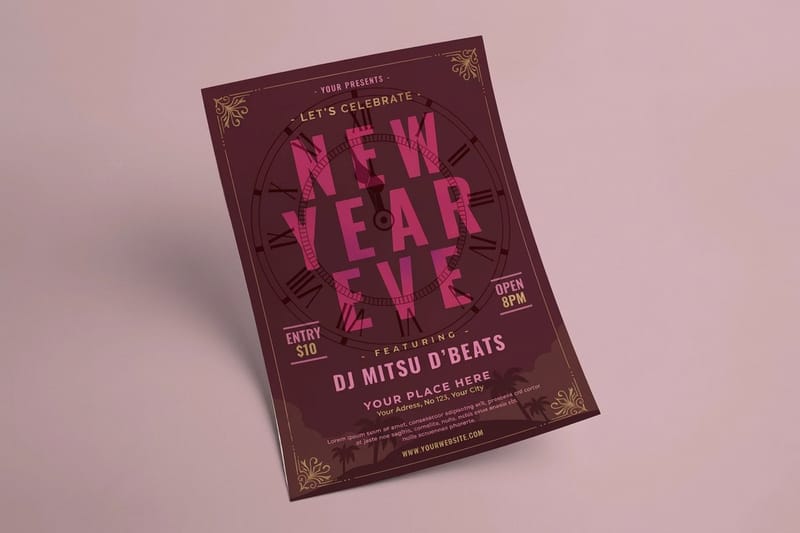
A bar owner signals the game with color long before anyone reads a word. Navy and orange on a window, with a city name and the Thursday tip off time, tells a regular which game you are showing, and it uses nothing that belongs to a school or the tournament. Their logos, team names and branding are protected marks, so licensing them for a bar promotion is a legal question rather than a design one. Check anything beyond colors with your own counsel before it goes on a press.
For contrast, the safest pairing on a lit window is light type reversed out of a dark field. Dark type on white behind glass fights the reflection all afternoon, and by evening the glare has taken the top third of the sheet. Reversed white on a deep navy or a saturated dark red stays readable in both.
One warning about bright color. The vivid orange and electric red that look right on a monitor sit outside what CMYK inks can hit, so they print duller than the file suggests. Pick the value you want on paper, ask for a proof, and judge it under the light the flyer will actually hang in. Our campaign posters guide goes through the same trade off for large format work.
Type sizes that survive the distance
Set the headline for the far reader and the details for the near one. A window poster read from fifteen feet wants roughly an inch and a half of cap height on the top line; a counter flyer read from eighteen inches is fine at a quarter of an inch. Anything in between is a compromise that fails at both ends, which is why two pieces beat one clever one.
Condensed type buys you characters per line, but only down to a point. Below about nine points, condensed faces close up and the counters fill in on absorbent stock, so a schedule set tiny to fit becomes a gray block. Cut a line of copy instead of cutting the type size.
Stock, coverage and show through
A dark full bleed on thin 100lb text stock shows through to the back, which matters when the reverse carries the schedule. For anything double sided and dark, go to 14pt or 16pt card, and 16pt is noticeably more rigid once the piece is bigger than about 4 by 9 inches.
Gloss lifts photography and shrugs off a wet bar top. Matte cuts glare, which is worth more than it sounds on a piece hanging under spotlights. Uncoated is the one to pick when the sheet has to be written on.
Watch party and bar promo flyer ideas

The pieces that move people into a room are small, cheap and specific. Club flyers at 4 by 6 inches sit in a stand by the till, go in a takeaway bag, and get handed out on the pavement without anyone folding them. Standard flyers at 8.5 by 11 inches are the noticeboard and door size, where a reader has time to scan a full weekend schedule.
The promotions worth printing are the ones tied to something that happens on screen. A bracket entry night on the Wednesday before the round of 64. A half time drinks reset. A discount that triggers on an upset, which costs you nothing most nights and buys a story on the nights it pays out. A reserved table card for the Thursday lunchtime slate, which is the shift most venues leave empty.
The pieces that live on the table, not the pole
Table tents work well for a drinks offer people read while they wait, and they are the one item here with a real commitment attached: table tents start at $554.39 because they come in a production run sized for a chain, not a single weekend. For one tournament, a stack of club flyers in a cheap acrylic stand does the same job for a fraction of that.
If you are running the night as a series rather than a one off, the maths flips. A table tent that stays on the table for the whole three weeks earns its cost back in a way a flyer that gets binned on Thursday does not.
Tickets when the room has a limit
For a capped viewing party, a private hire or a charity night, print numbered event tickets from $25.27 rather than taking names on a phone. A physical ticket in a pocket brings people back on the night in a way a text confirmation does not, and the numbering gives you a door count you can trust.
Print the terms on the back in plain words: what time the door closes, whether the seat is held, and what happens if the game is a blowout and people leave early. Every argument at a door is an unwritten term.
Sponsor and prize callouts on the flyer
A sponsor pays for attention, and attention on a flyer is a fixed quantity. The version that keeps both sides happy gives the sponsor one clean band, usually across the bottom, and gives the venue everything above it. Four logos scattered around the edges look like a compromise and read like clutter, and the sponsor gets less from it than from the single strip.
- Give one sponsor the bottom band. A single logo at 100 percent of a clean strip is worth more to a sponsor than four logos crammed into a corner, and it keeps the top of the flyer working for you.
- Name the prize, not the category. A bar tab of a stated value, a signed ball, a season of something specific. A vague prize turns a bracket pool into a shrug.
- Print the entry deadline. Pools close before the first game of the round of 64. Put that date and time on the sheet, because every year someone tries to enter on the Friday.
- Show how the winner is decided. Points per round, upset bonuses, and the tiebreak. Two lines of small type on the bracket prevents the argument that ends the competition.
- Keep a QR pointed somewhere useful. Send it to the entry form or the schedule, never to a homepage. A code that lands on a homepage teaches people to stop scanning your codes.
If the prize is worth more than a drink, print the entry as something people can hold. Numbered event tickets and a printed rules sheet make a pool feel run rather than improvised, and the event ticket printing options cover perforation and sequential numbering.
Flyer pricing and specs at 4OVER4.COM
A weekly matchup run is small, so price it from the first step: 50 club flyers start at $16.48 on 14pt gloss cover, and 50 standard flyers start at $39.54 on 100lb gloss text, both at the smallest size, so pick 4 by 6 or 8.5 by 11 in the configurator for the exact figure. The same configurator prints the 11 by 17 inch bracket sheet on 70lb uncoated text, the stock a pen writes on, and every size takes the same 0.125 inch bleed. Numbered tickets from $25.27 and table tents from $554.39 price on their own product pages.
Quantity and price
Flyer pricing and specs
Real configurator numbers on standard flyer stocks, where the more you order the lower the per unit cost drops.
| Quantity | Price Per Unit | Total |
|---|---|---|
| 50 | 79.1¢ | $39.54 |
| 100 | 57.1¢ | $57.11 |
| 200 | 37.3¢ | $74.69 |
| 300 | 28.6¢ | $85.68 |
| 400 | 24.4¢ | $97.76 |
| 500 | 21.8¢ | $108.75 |

You can also earn coins on every order and redeem them against the next run, which matters when you are reprinting a flyer every week for three weeks.
Print your basketball flyers fast with 4OVER4.COM
Speed on a tournament job comes from the file being ready, not from the press. Build the artwork at 300 DPI in CMYK, add 0.125 inch of bleed on every side, keep type 0.25 inch inside the trim, and flatten transparency before you export. A file that arrives clean moves straight to production; a file that needs a query costs a day, and on this calendar a day is a round.
Print it
Club flyers, ready for the weekend
The 4 by 6 handout that goes on the counter, in the bag and out on the pavement.
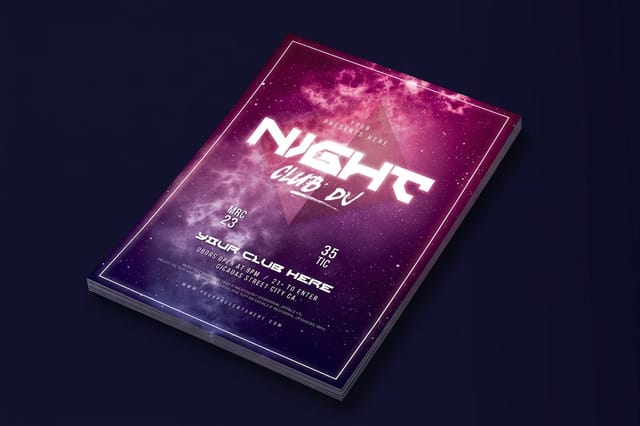
Choose the turnaround before the finish. A gloss or matte coating on a standard stock is quick; specialty stocks and heavier cards add time, and on tournament week the extra day usually costs more than the upgrade is worth. For the window pieces, poster printing runs on a separate schedule, so order those first and the flyers second.
Ideas by venue
The right set of pieces changes with the room. It usually breaks down this way.
- Sports bars and pubs. Two pieces beat five. An 18 by 24 inch window poster with three lines, and a weekly stack of 4 by 6 club flyers carrying the real matchups and the offer.
- Restaurants with screens. Lead with the lunchtime slate on the opening Thursday and Friday. That is the shift the tournament actually fills, and most menus never mention it.
- Campus groups and student unions. Bracket sheets for the pool, a corridor flyer for the viewing room, and one poster at the building entrance. Uncoated stock, because everything gets written on.
- Gyms and rec leagues. Tie the flyer to a court booking or a shooting competition rather than a screen. A flyer with an activity on it outperforms one with a broadcast on it.
- Offices and workplaces. An 11 by 17 inch bracket on the kitchen wall and a half sheet with the pool rules. Print the rules, or you will be settling the tiebreak argument yourself.
Blanks that save you the Thursday
Starting from a correct blank saves the round trip that costs you the Thursday. 4OVER4.COM sizes its blanks to the exact product specs so the bleed, the trim and the safe area are already marked. Pull a press ready file from the blank template library, or start from a layout in the design template library and swap in your matchups. For a game night look you can edit in minutes, browse the free flyer templates.
Start fast
Blanks that save you the Thursday
Flyer blanks at 11 x 17 and the counter sizes, with the cut line already drawn.



Wally sizes the tournament flyer to the room
One piece for the window, one for the counter, one for the pen
Set the window poster at 18 by 24 inches with three lines and a headline near an inch and a half tall, keep the counter handout at 4 by 6 inches, and print the fill in bracket at 11 by 17 inches on uncoated stock so ballpoint ink does not bead. Build at 300 DPI in CMYK with 0.125 inch bleed, finish the layout before Selection Sunday, and 4OVER4.COM prints it in time for the first tip off.
Order club flyers →What has to be right before Selection Sunday
Design tips that hold up at every size
- Time and matchup at the top. The tip off time is the piece of information every reader is looking for. Give it the largest type on the sheet and put the venue name underneath it.
- Set type to the reading distance. About one inch of cap height for every ten feet, as a rule of thumb. Decide where the piece hangs before you decide how big the headline is.
- Uncoated for anything with a pen. Gloss and aqueous coatings repel ballpoint ink. Brackets, pool sheets and entry forms go on uncoated stock or they smear.
- Colors, not marks. Team colors carry the signal. Logos, team names and tournament branding are licensed property, so keep them off a promotional flyer unless you have permission in writing.
- Leave the field blank on the long run. Print the reusable poster without a single team name on it, and carry the matchups on the cheap weekly flyer that is meant to be replaced.
Explore more
More ways to print and promote the tournament
Event tickets run 50 for $25.27 and table tents 250 for $554.39, both out in 5 business days.
Product Club Flyers The 4 by 6 handout for counters, doors and pavements. Product Standard Flyers The 8.5 by 11 noticeboard size, from $39.54. Product Standard Posters Bracket sheets and window posters at 11 by 17 and up. 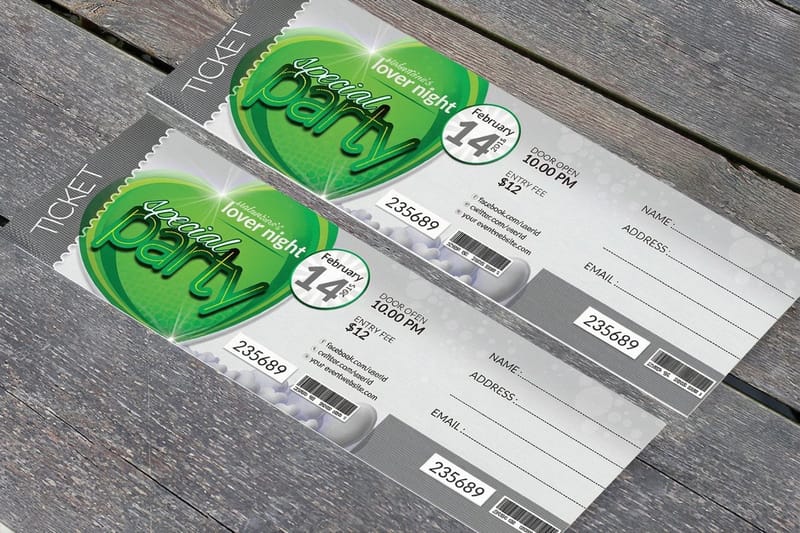 Product Event Tickets Numbered tickets for a viewing party with a door limit.
 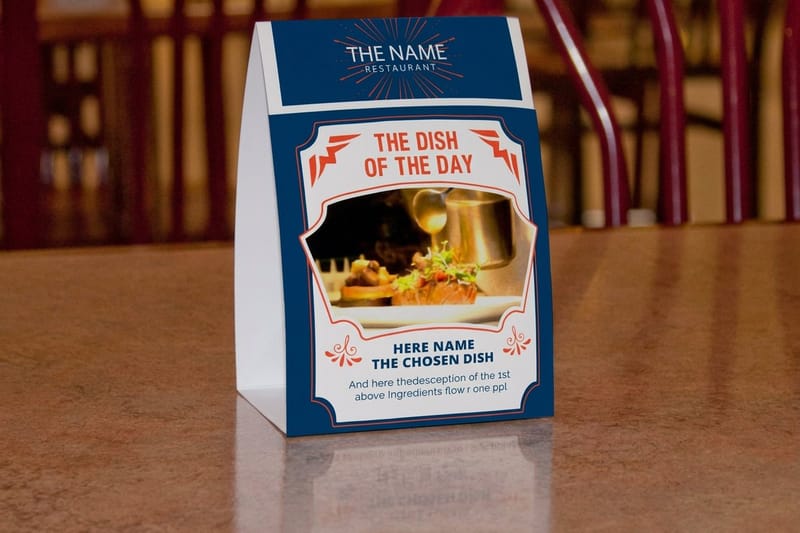 Product Table Tents Table top offers for a venue running the full three weeks. Category Flyer Printing Every flyer size, stock and finish in one place.
  Guide Nightclub Flyer Design Guide How late night flyers are built, from grid to press file.
 Ready to print for tip off?
Pick the size, drop in your artwork or a free blank, and 4OVER4.COM prints it sharp on premium stock, as fast as the bracket demands.
Common questions about basketball event flyers
What size should a March Madness flyer be?
Pick the size from where it will be read. A 4 by 6 inch club flyer is right for a counter stack, a takeaway bag or a handout, because it is read from about eighteen inches and it does not get folded. An 8.5 by 11 inch flyer is the noticeboard and door size, where a reader has time to take in a full weekend schedule. Anything meant to work from across a room or through a window is a poster job, at 11 by 17 inches for a wall or 18 by 24 inches for glass. Most venues need two of these rather than one clever compromise, and club flyers at $16.48 make the second piece cheap. For the poster sizes, the Staples poster printing alternative that prints for less compares a store counter with an online order.
Can I put team logos or the March Madness name on my flyer?
Team names, school logos and the tournament branding are protected marks owned by other parties, and using them to promote a commercial event is a licensing question rather than a design decision. Colors are not marks. A flyer in the two colors of the teams playing, naming the cities and the tip off time, communicates the same thing without using property that belongs to someone else. If you want to use an official mark, get permission in writing first and check the wording with your own legal advisor before the file goes to press.
How fast can I get basketball flyers printed after Selection Sunday?
Selection Sunday sets the field and the round of 64 begins on the Thursday, so the realistic window is three working days including shipping. That is enough for a straightforward flyer on a standard stock if the artwork is already built and only the matchups change, and it is not enough for a new design, a proof round and a specialty finish. Build the layout weeks ahead with the team names left as placeholders. Check the turnaround options in the configurator before you choose the stock, because some finishes add days to the same job.
What stock should a fill in bracket be printed on?
Uncoated. Gloss and aqueous coatings sit on the surface of the sheet, and ballpoint ink beads on them instead of soaking in, so the first name written smears into the second. Uncoated stock absorbs the ink and dries, which is why forms and receipts have always been printed on it. Keep the name slots at least a quarter of an inch tall, rule them with a hairline rather than boxing them, and print at 11 by 17 inches or larger so 64 first round slots stay legible.
How many flyers should I print for a watch party?
Work from your distribution plan rather than a number someone quoted you. Count the places the flyer physically goes: seats in the venue, the counter stack, the doors and boards you have permission to use, and the number a member of staff can hand out in an hour on the street. Add the weeks you intend to repeat it, since the tournament runs over three weekends and the matchups change every round. Then order to that figure. Flyer pricing steps down as the quantity climbs, so it is worth checking the next quantity break before you commit, but ordering thousands of a sheet naming teams that are about to be eliminated saves nothing.
