
Political Campaign Print Ideas That Win Close Local Races


Jordan is our labels, packaging and sustainability voice, built from the knowledge of our production team, with over 20 years in printing.
Why Print Still Decides Close Local Races
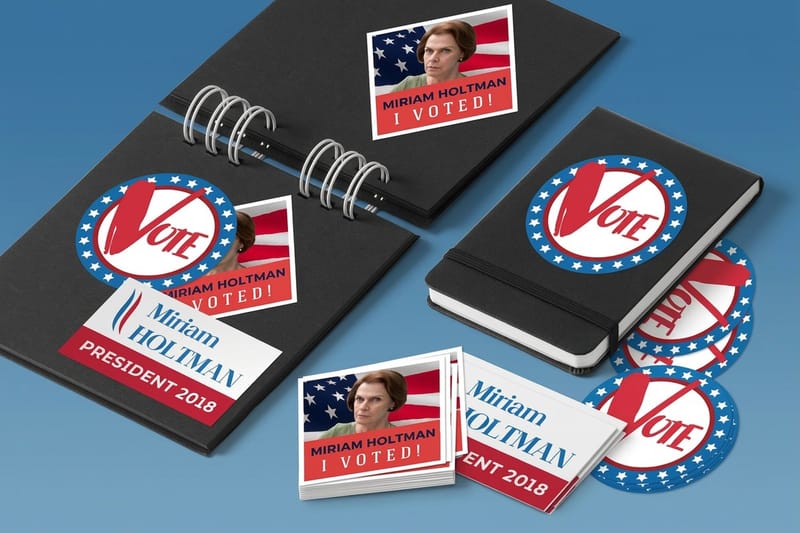
Political campaign materials for a local election come down to a few affordable pieces: yard signs, push cards, flyers, posters and door hangers, with stickers for volunteers. A campaign is a name recognition problem before it is anything else, because voters meet a candidate on a lawn, on a bumper, at a front door, and in a stack of mail, almost always while they are thinking about something else. Print is the one medium that occupies those places without asking permission, without a scroll, and without bidding against every other advertiser in the county.
Affordable political campaign materials for a local race
- Yard signs. 12 by 18, 12 by 24 or 18 by 24 inches on 4mm white coroplast, printed one or both sides, with H-stakes, in 5 business days.
- Flyers. 50 for $39.54 at 4.25 by 5.5 inches on 100lb gloss text, up to 11 by 17 for community boards, in 3 business days.
- Posters. From 11 by 17 inches on 10mil semi gloss for windows and campaign offices, in 2 business days.
- Door hangers. 4.25 by 11 inches on 14pt gloss cover, 250 for $290.41 or 1,000 for $332.08, in 7 business days.
- Stickers. Standard campaign stickers from $23.88 for 25, for volunteers and supporters.
Campaign push card examples
- The introduction card. Candidate photo and name on the front, three positions and the vote date on the back, printed as a 4 by 6 inch political postcard on 14pt gloss cover.
- The single issue card. One local problem in the headline, one sentence on the fix, the date and the polling hours on the back.
- The neighbor card. A line the canvasser signs by hand, which needs an uncoated back so the pen does not smear.
- The election week card. Polling place, hours and a one-line ask, the same content as the door hanger at pocket size.
Digital ads reach people who are already paying attention. Print reaches the ones who are not. A sign on a busy corner works on every commuter who passes it twice a day for six weeks, and it keeps working after the ad budget thins out in the closing stretch of the race.
Campaign work has a rhythm of its own. It arrives in waves. A launch wave of signs and palm cards, a persuasion wave of mailers and literature, then a turnout wave of door hangers and stickers that has to land inside one fixed week. Mapping those waves before the first file goes to press is what keeps a campaign from paying rush fees three separate times.
Name recognition comes first
In down-ballot races most voters decide in the booth, and the name they half remember wins. Repetition on lawns, windows, and bumpers is what builds that memory, which is why the cheapest high-frequency pieces get ordered first and in the largest quantity.
Persuasion happens in the hand
A palm card handed over at a doorstep gets read for maybe fifteen seconds. That is enough for three positions and a photo, and nothing more. The pieces built for persuasion are the ones a voter can hold, keep on the fridge, and show to a spouse later.
Mobilization has a hard deadline
Door hangers with polling place details, hours, and a map only matter in the final seventy-two hours. Miss the print window and the entire spend is wasted, so this is the piece to order early and store, never the piece to improvise.
Volunteers need something to wear
Stickers, buttons, and badges turn supporters into visible endorsements. A volunteer wearing your name in a grocery store line is free contact, and the unit cost of that contact is measured in cents.
Shop the cycle
Political printing collection
Stickers, cards, and campaign print built for candidates, committees, and ballot measures.

The Must-Have Campaign Print Pieces
Every campaign, from school board to statewide, ends up printing the same core set. The names and the budgets change, but the jobs do not. Below is the short list that covers nearly all of the voter contact a field program makes, along with what each piece is actually there to accomplish.
Stock choice matters more than most first-time campaign managers expect, since a sign that curls or a card that goes soft in a pocket reads as a sloppy operation. Work through how to choose paper for your printed marketing materials before you commit a run, and borrow the local-reach playbook in print marketing campaigns for local promotion, because a district is simply a service area with a ballot attached.
- Yard signs. The frequency engine. Placement on high-traffic corners beats total quantity every single time, so map intersections before you order.
- Palm cards and push cards. The canvasser's script made physical. Photo, three positions, and the vote date on the back, nothing else.
- Door hangers. The turnout piece. Polling location, hours, and a one-line ask, printed weeks early and held for the final push.
- Direct mail postcards. The persuasion piece for households your volunteers cannot reach on foot, targeted by precinct and voter file.
- Stickers and buttons. The identity piece. Cheap, wearable, and the fastest way to make a crowd look like a movement.
Order these together rather than one at a time. A single consolidated run keeps the color consistent across every piece, which matters when a voter sees the sign on Tuesday and the mailer on Thursday and needs to register both as the same campaign. Split runs drift, and drifting blue is the difference between looking established and looking improvised.
Print picks
Three campaign sticker formats worth a look
Live prices, ready to customize with your candidate art and colors.
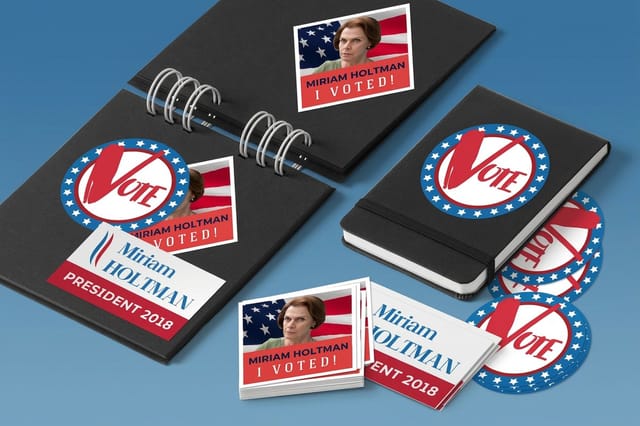 Premium Campaign and Political Stickers 25 for $29.16 Heavier stock and weather-ready finishes for car windows and hard hats.
 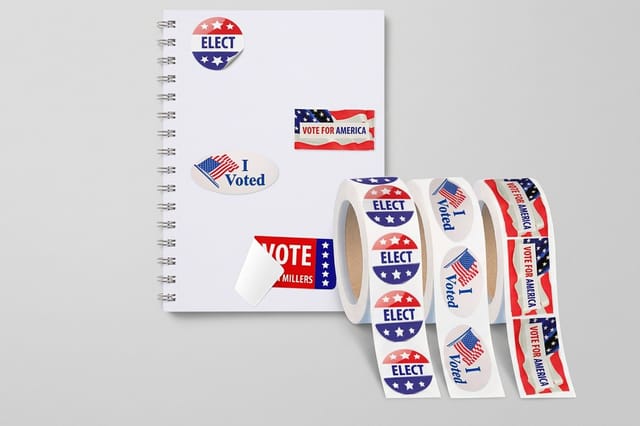 Roll Campaign and Political Stickers 100 for $322.98 Peel and hand out in seconds at rallies, fairs, and registration tables.
 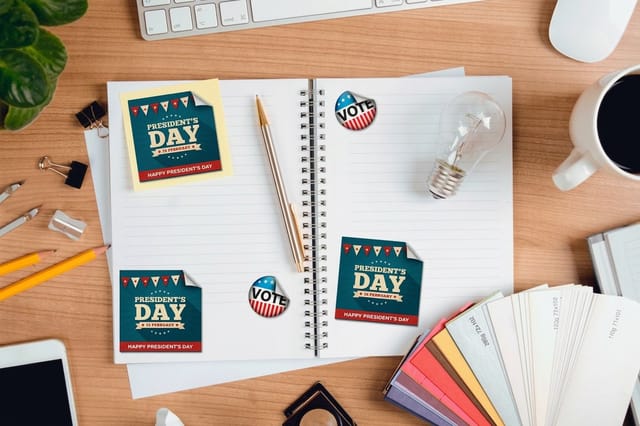 Standard Campaign and Political Stickers 25 for $23.88 The everyday endorsement sticker for clipboards, laptops, and lapels.
 Ranking Campaign Materials by Impact per Dollar
Not every piece earns its place. A campaign with a modest budget should spend it in the order below, because each tier only pays off once the tier above it is saturated. Buying novelty items before you own the intersections in your district is the classic first-time mistake.
The ranking assumes a local race with volunteers and no television budget. Larger races reshuffle the middle, but the top and the bottom of this list stay remarkably stable across districts.
- 1. Yard signs. Highest impressions per dollar, and the only piece that works while your team sleeps. Print more than you think you need, because a third of them go missing.
- 2. Palm cards. The backbone of every canvass. Nothing else converts a doorstep conversation into a remembered name as cheaply.
- 3. Door hangers. Enormous impact inside a tiny window. Value collapses to zero the morning after the polls close, so time this one precisely.
- 4. Stickers. Pennies per impression once a supporter puts one on a laptop, a truck, or a jacket. They also solve the problem of what to hand a volunteer who wants to help.
- 5. Direct mail postcards. Higher cost per household, but the only way to reach apartment buildings, gated streets, and voters who never answer a knock.
- 6. Buttons and pins. Modest reach and real collectibility. They keep the core team visible and give the campaign something to hand a donor.
- 7. Rally banners and table covers. Reusable across the entire cycle. One purchase, dozens of events, and every photograph of your candidate carries the name.
Design Examples That Read at Forty Miles per Hour
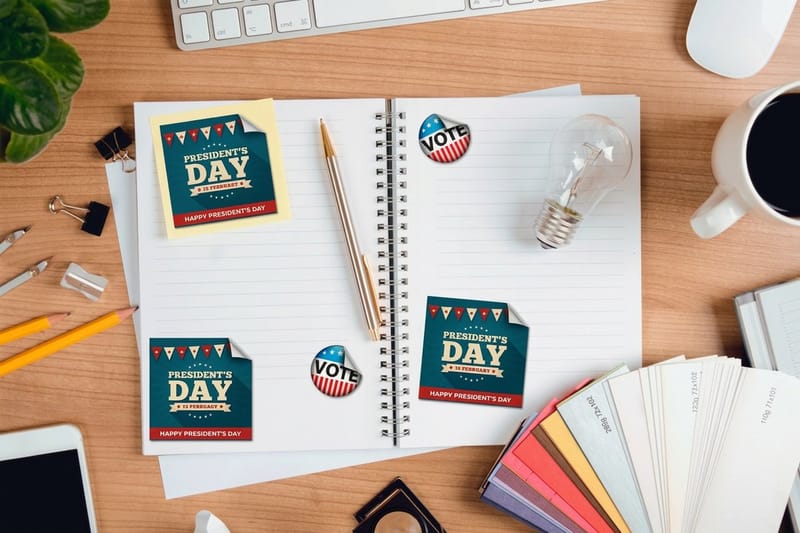
Campaign design is legibility design. A driver gives a sign under two seconds, a voter gives a mailer about four, and a doorstep card gets fifteen. Every layout decision has to survive that budget, which rules out most of what looks good on a laptop screen at full size.
The strongest campaign postcard examples all follow the same discipline. The candidate name occupies at least a third of the surface, the contrast between text and background is severe, and there is one message per side. Everything else is negotiable.
- Name larger than everything. Last name dominant, first name smaller above it, office and year in a supporting line underneath.
- Two colors, maybe three. A dominant field, a high-contrast type color, and one accent. More than that turns to mud on a lawn at dusk.
- No thin type outdoors. Condensed bold or a heavy sans holds up at distance. Light weights disappear the moment the sign is fifty feet away.
- One photo, cropped tight. Face filling the frame, eyes above the midline, plain background. Full-body shots read as a blur at mailbox distance.
- A single ask per piece. Vote on the date, visit the site, or attend the event. Two asks means neither one gets done.
- Disclaimer sized correctly. Check your state and local requirements for the paid-for line before the file ships, and place it where it will not be trimmed.
Test the layout the way a voter will see it. Print a single proof, tape it to a wall, and walk backward until you cannot read the name. If that distance is shorter than the width of a two-lane road, the type is too small and the whole run will underperform.
What Campaign Stickers Cost and How Quantity Moves the Price
Stickers are where a small campaign gets the most visible return for the least money. Premium Campaign and Political Stickers start at $29.16 and climb slowly as quantity rises, which means the per-piece cost drops sharply the moment you stop ordering in dribs and drabs.
Price on any custom print job is set by four things. Quantity first, then size, then the stock and finish, then how fast you need it. Turnaround is the one that punishes campaigns hardest, because a rushed reorder in the final fortnight can cost more than the original run.
- Quantity. The setup is fixed, so doubling the run never doubles the bill. Estimate the full cycle and order it once.
- Size and shape. Standard rectangles and circles cost less than custom die-cut shapes, though a shaped sticker gets kept more often.
- Stock and finish. Gloss for color pop, matte for a quieter look, and a weather-resistant option when the sticker will live on a bumper.
- Turnaround. Standard production is the cheapest line on the quote. Build a two-week buffer into your calendar and keep it there.
Quantity and price
Premium campaign sticker pricing and specs
Real configurator numbers. The more you print in one run, the less each sticker costs.
| Quantity | Price Per Unit | Total |
|---|---|---|
| 25 | $1.17 | $29.16 |
Roll Stickers for Rallies and High-Volume Handouts
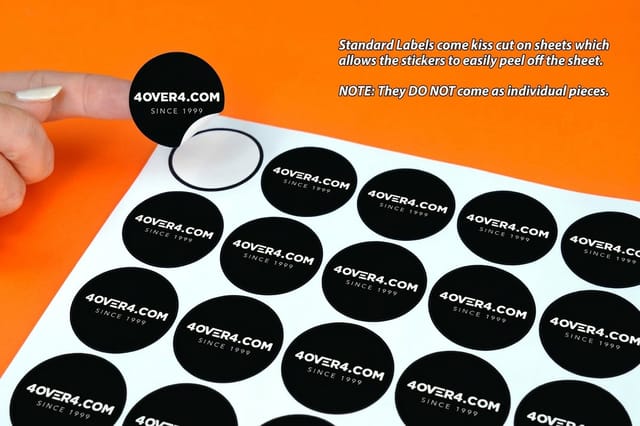
Sheeted stickers slow a volunteer down. Peeling from a sheet takes both hands and a moment of attention, and in a rally line that moment is the difference between handing out four hundred stickers and handing out fifteen hundred. Roll stickers solve it by design.
Roll Campaign and Political Stickers start at $322.98 for the volume tier, which sounds like a step up until you divide it across an entire cycle of events. For county fairs, parades, registration drives, and election night, a roll on a lanyard is the fastest distribution method a field team has.
High volume
Roll campaign and political stickers
Built for speed at rallies, parades, county fairs, and voter registration tables.
The Volunteer Table Workhorse
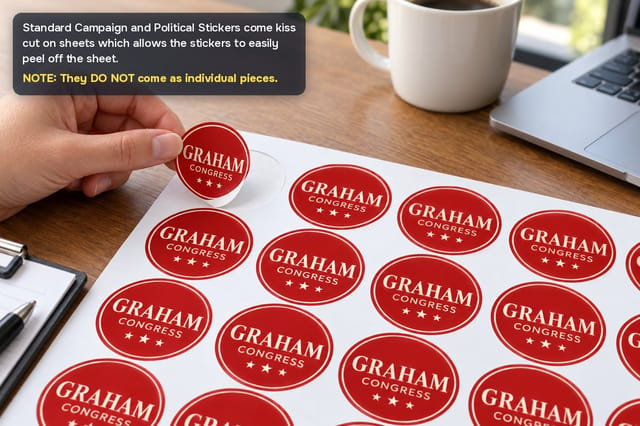
Every campaign office needs a default giveaway. It sits in a bowl by the sign-in sheet, it goes into every packet a canvasser carries, and it is what you hand the person who says they support you but cannot spare a Saturday. Standard Campaign and Political Stickers fill that role at $23.88 to start.
- Stock the table before the launch event. Running out on night one costs you the photos where the crowd is wearing your name.
- Give canvassers a stack. A sticker left behind after a good conversation keeps the visit alive on the fridge door.
- Keep a design for supporters and one for staff. A subtle variant lets your team spot each other across a crowded room.
- Reorder on a schedule, not on panic. Set a floor quantity and place the next order the week you hit it.
Volunteer essentials
Standard campaign stickers
The default giveaway for the office table, the canvass packet, and every supporter who asks how to help.
Comparing Formats Before You Commit the Budget
Before signing off on a run, put the candidate formats next to each other and look at stock, size, quantity break, and turnaround in one view. Door hangers run 250 for $290.41 and 1,000 for $332.08, so covering a whole ward instead of one precinct adds $41.67, while political flyers go from 50 for $39.54 to 300 for $85.68. Campaign budgets are approved once and rarely topped up, so the comparison you make now is the one you live with through election day.
The pattern that holds across most local races is simple. Spend heavily on the two cheapest high-frequency pieces, spend precisely on the deadline-bound turnout piece, and treat everything else as an upgrade you buy only if a fundraising night goes better than planned.
Compare formats
Popular sticker formats, side by side
Stock, finish, size, quantity, turnaround, and price in a single view.
 Standard Stickers |  Premium Stickers | 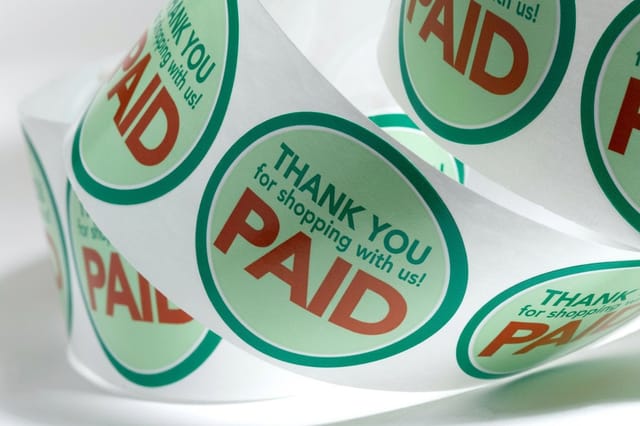 Roll Stickers |  Bumper Stickers | |
|---|---|---|---|---|
| Min price | $23.88 | $29.16 | $322.98 | $38.44 |
| Paper / stock | Standard Uncoated Label | Uncoated Label | White Gloss (Indoor) | White Vinyl Permanent |
| Finish | - | - | - | UV Coating |
| Size | .375" x 1" | 3" x 5" | 1" x 1" | 2" x 5" |
| Default qty | 25 | 25 | 100 | 25 |
| Turnaround | 3 business days | 3 business days | 6 business days | 5 business days |
| Rating | ||||
| View & customize | View & customize | View & customize | View & customize |
Bulk Ordering for the Full Election Cycle
The single best cost decision a campaign makes is calendar-driven, not design-driven. Sit down with the field plan, count the doors, count the events, add a generous margin for loss and weather, and place one large order instead of five small ones.
Bulk pricing rewards that discipline twice. The per-piece cost falls, and the color stays identical across every format because everything printed on the same press run from the same file. Campaigns that reorder piecemeal end up with three slightly different reds and a brand that looks borrowed.
Match the piece to the moment
- Launch. Yard signs, the first sticker run, and enough palm cards to cover the opening canvass weekends.
- Persuasion. Mailers and literature keyed to the precincts your voter file says are genuinely in play.
- Turnout. Door hangers with polling details, printed early, boxed, and stored until the final weekend.
- Election night. Banners, table covers, and a fresh roll of stickers, because every photo taken that night carries your name.
Start fast
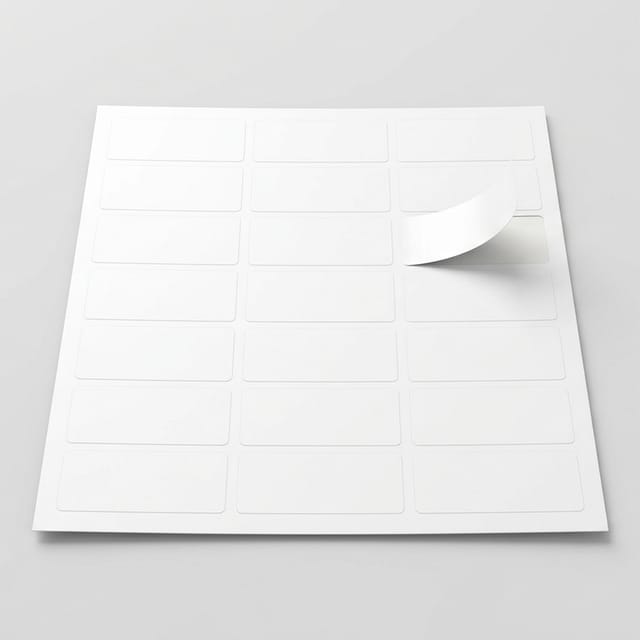
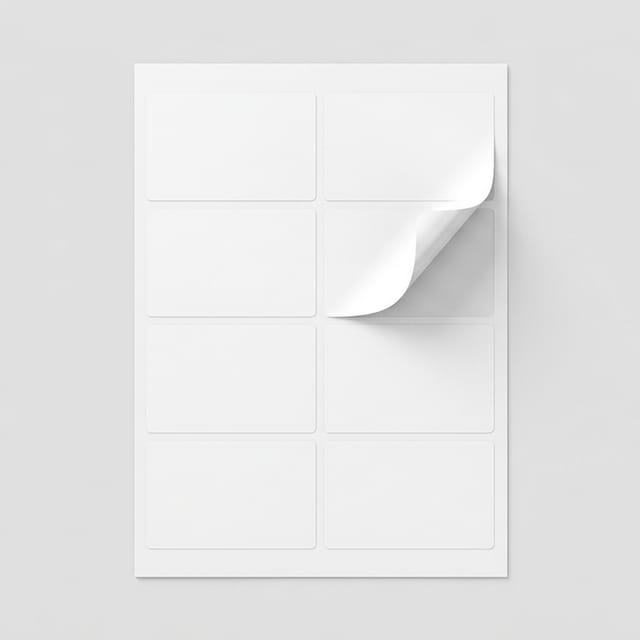
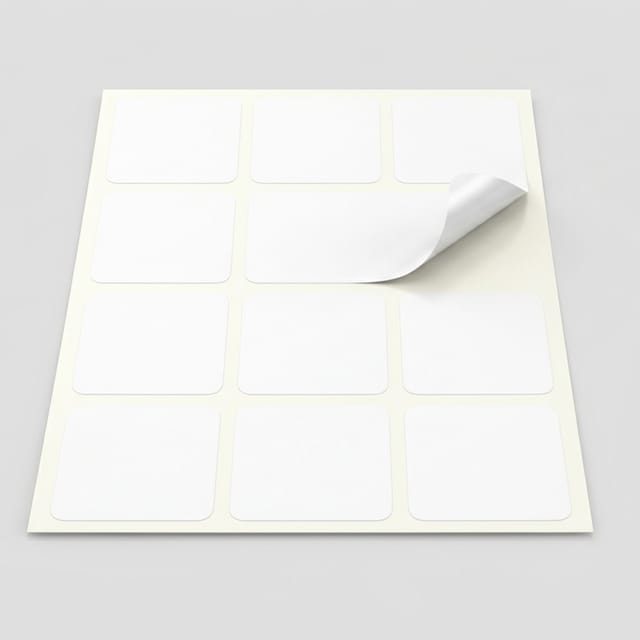
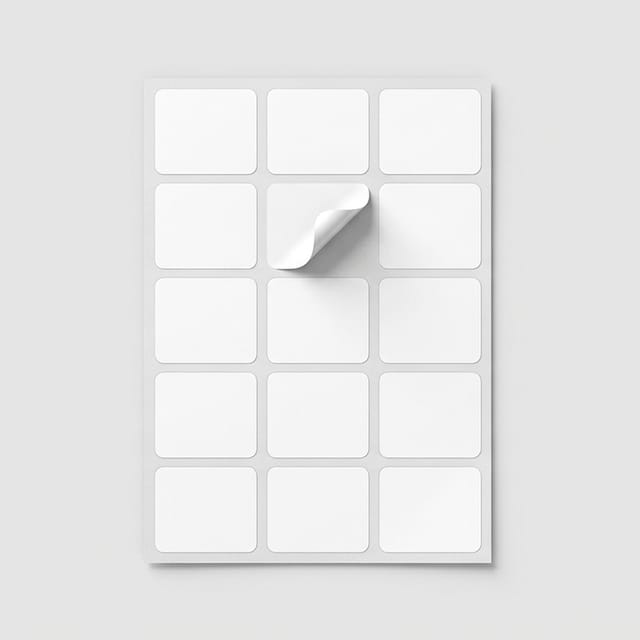
Campaign templates and print-ready blanks
Free layouts plus exact-size blanks so your artwork lands inside the trim on the first proof.


Wally maps your campaign print plan
The right pieces, in the right order, printed before the deadline
Not sure where the budget should go first? Fund frequency before novelty. Yard signs and palm cards buy name recognition, stickers turn supporters into walking endorsements, and door hangers carry the turnout message in the final days. Count your doors, intersections, and events, add margin for weather and loss, then place one consolidated run so every piece matches and nothing gets rushed at the worst moment of the race.
Browse political printing →What to Remember Before You Approve the Run
Guides
Go deeper before you order
Stock selection, campaign structure, and local reach for a run that starts at 250 door hangers and a stack of 12 by 18 yard signs.
 Guide How to Choose Paper for Marketing Materials Stock weight, finish, and durability decisions that hold up outdoors. Guide How to Launch a Campaign Campaign structure and rollout lessons that transfer straight to politics.
  Guide Local Print Marketing Campaigns Reaching a defined geography with print, precinct by precinct.
 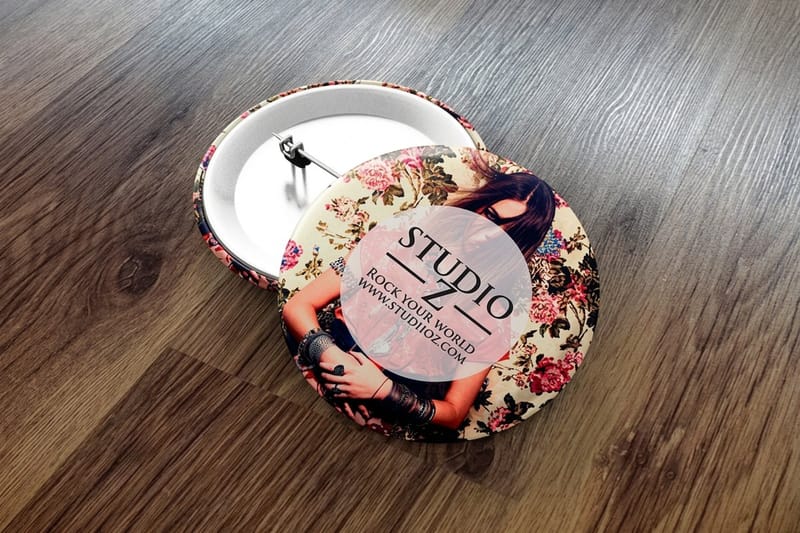 Guide Vintage Political Campaign Buttons A century of pinback design and what still works today.
 Explore more
More campaign and marketing print resources
Yard signs, flyers from $39.54, door hangers from $290.41 and the guides behind each one.
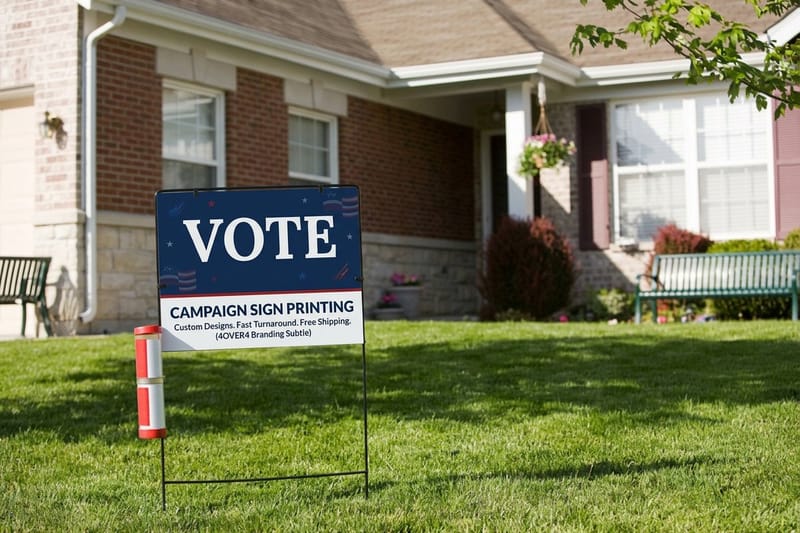 Collection Political Printing Collection Stickers, cards, and campaign print in one place. Product Premium Campaign Stickers Heavier stock built for windows, bumpers, and weather.
 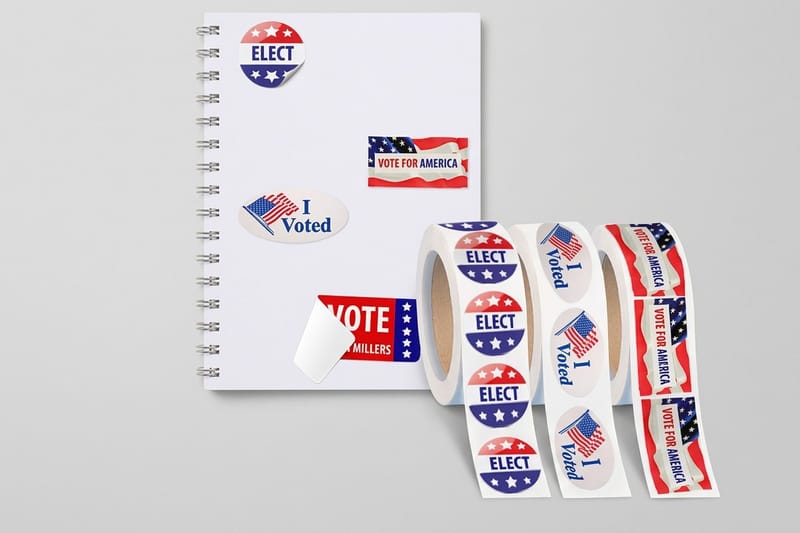 Product Roll Campaign Stickers Peel and hand out fast at rallies and fairs.
 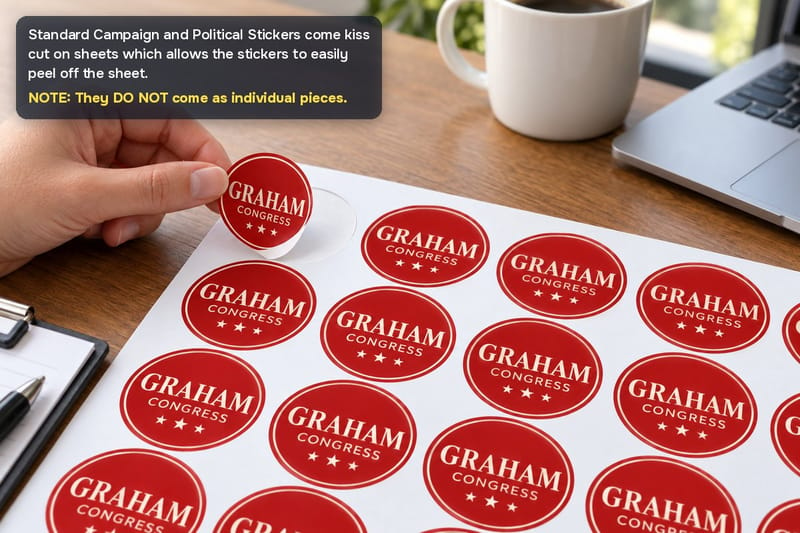 Product Standard Campaign Stickers The everyday volunteer table sticker from $23.88. Article Vintage Campaign Buttons Pinback design history and the lessons that survived. Article Local Print Marketing How to own a geography with printed pieces. Guide Choosing Paper Stock Weight, coating, and durability made simple. Guide Launching a Campaign Planning, rollout, and momentum from day one.
  Article Photographer Marketing Materials Portfolio-grade print that sells a personal brand.
  Article Marketing Materials Checklist A full print checklist you can adapt to a field plan.
  Article Seasonal Marketing Ideas Timing a print push around a fixed calendar date.
  Article Date-Driven Promotion Building a print campaign toward one deadline.
 Put your name on every lawn, lapel and doorstep this cycle
Lock the artwork, count the cycle, and print the whole plan in one run so the color matches from launch night through the final weekend of the race.
Political Campaign Marketing Materials FAQ
What counts as political campaign marketing materials?
Political campaign marketing materials are the printed pieces a campaign uses to reach voters, which usually means yard signs, palm cards, door hangers, direct mail postcards, stickers, buttons, banners, and event signage. Each one has a distinct job. Signs build name recognition, palm cards support the canvass, door hangers drive turnout in the final days, and stickers turn supporters into visible endorsements around town.
How do I choose the right materials for my campaign?
Start from the field plan rather than the catalog. Count the doors your volunteers will knock, the intersections worth a sign, the households you cannot reach on foot, and the events on the calendar. That gives you quantities for palm cards, signs, mail, and stickers in that order. Only add extras once the high-frequency pieces are fully funded, since saturation beats variety in every local race.
What do political campaign marketing materials cost and how is pricing set?
Pricing follows four levers. Quantity comes first, because setup is fixed and the per-piece cost falls steeply as the run grows. Then size, then stock and finish, then turnaround speed. Standard Campaign and Political Stickers start at $23.88, premium versions start at $29.16, and roll stickers for high-volume handouts start at $322.98. Ordering the full cycle at once is the single biggest saving available.
What sizes, stocks, and finishes are available for campaign print?
Campaign stickers come in standard rectangles and circles plus custom die-cut shapes, with gloss, matte, and weather-resistant options for outdoor use. Cards and mailers run across many paper weights and coatings, from lightweight literature stock to heavy cover for pieces meant to be kept. Read the paper guide before you commit, since stock choice affects how the piece survives pockets and rain.
How long does printing and shipping take before an election?
Standard production plus transit is the cheapest and safest path, and faster turnaround options exist when a deadline moves. The practical rule for campaigns is a two-week buffer on anything tied to a date, and more on turnout pieces like door hangers, since those become worthless the moment polls close. Approve proofs early, keep the file locked, and store the late-cycle pieces until you need them.
