
The 10 Best Print on Demand Products to Sell in 2026


Jordan is our labels, packaging and sustainability voice, built from the knowledge of our production team, with over 20 years in printing.
How Print on Demand Works and What Makes a Product Worth Selling

Print on demand means you sell first and print second. There are no pallets in a spare room, no minimum order you have to guess your way into, and no dead stock when a design stops moving. A customer places an order, the file goes to a commercial press, and the finished piece ships: 100 standard business cards start at $17.57, and 500 metallic foil business cards take 7 business days. The catch is that not every product survives that model, and the ones that do are the ones worth building a store around.
The winners all share a shape. They print flat or fold from flat, they survive a parcel carrier without custom crating, they carry a design large enough that customizing it feels worth paying for, and they cost little enough per unit that a healthy margin still lands on a price a buyer accepts without flinching.
4OVER4.COM has printed 10 billion+ cards and print products since 1999 and produces for 150,000+ businesses, so the items below are not theoretical picks pulled from a trend report. They run on the same presses, stocks, and finishing lines that supply agencies, franchises, and one-person merch shops. Someone still has to make every print on demand order on a real machine with real ink limits and real trim tolerances. Knowing which products a production floor handles cleanly is the difference between a smooth catalog and a queue of reprints.
Print economics decide the margin
Unit cost falls fast with quantity on a press and barely moves on a hand-assembled item. That single fact sorts the catalog. Flat printed goods reward volume, so a store that sells them can raise margin over time. Assembly-heavy novelties stay expensive at every quantity, which caps what you can ever earn on them.
Shipping decides whether the margin survives
A product that costs little to make and a fortune to ship is not a print on demand product, it is a logistics problem wearing a logo. Favor items that fold, roll, or stack flat. Grommeted banners roll into a tube, cards ship in a box the size of a paperback, and both arrive intact without a claim.
Start here
The full print on demand catalog
Every format in this article is produced to order, with no minimum inventory to carry.

Print on Demand Products 1 to 4 for Everyday Demand
These four move constantly because every business, creator, and event needs them again and again. They are the base layer of a print on demand catalog, the products that build repeat orders while the higher-ticket items carry the profit.
1. Custom stickers and labels
Stickers are the perfect entry product. Cheap to produce, forgiving on file setup, impossible to break in transit, and endlessly re-orderable. They also do double duty as marketing for the buyer, which is why they sell in sheets, packs, and rolls to the same customer month after month. If you need proof of how far one design travels, look at these logo sticker promotion ideas before you build your first sheet.
2. Plastic and specialty business cards
Paper cards are a commodity. Plastic is not. 30mil Clear Plastic Cards start at $529.26 for a production run, and that number matters because it puts the product in premium territory where the buyer expects to pay for the difference. Transparent stock, rounded corners, and a spot of opaque white ink turn a card into something the recipient keeps on a desk instead of in a wallet.
3. Postcards and direct mail pieces
Direct mail refuses to die because it lands in a hand rather than a spam folder. Postcards print flat, mail without an envelope, and let a seller offer a seasonal design series that renews four times a year. For a print on demand store, a mail-ready format is also an upsell path into addressing and mailing services later, and our mailing services for postcards cover the addressing and postage.
4. Posters and wall prints
Art sells on demand better than almost anything because inventory risk was always the barrier. A poster is one file, one stock, and one size chart. The trap is color. Screen-bright artwork prints duller than it looks, so soft-proof every design and pull saturation back before you list it.
Print picks
Three print on demand products worth stocking a listing for
Live starting prices, ready to configure with your own artwork.
 2 Sided Blockout Banners $108.75 each Two printed faces, one blockout core, zero bleed-through in daylight.
 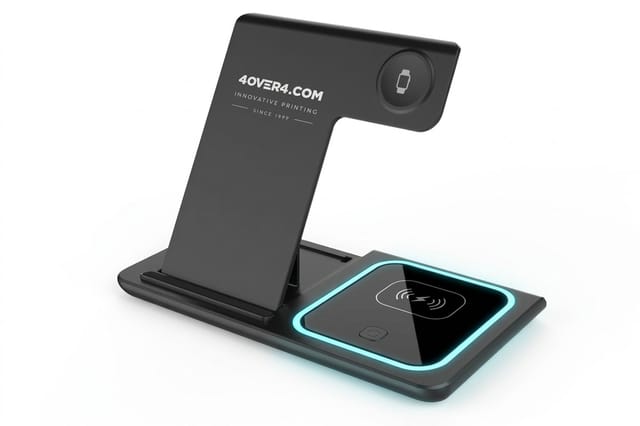 3 in 1 Foldable Wireless Charger $15.00 each A tech gift people keep on the nightstand, not in a drawer.
 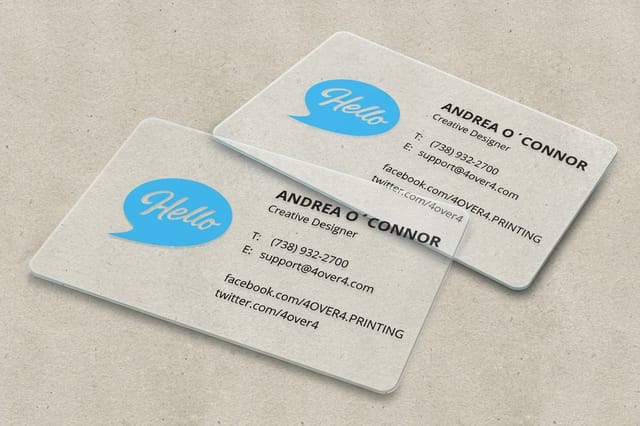 30mil Clear Plastic Cards 500 for $529.26 Transparent stock that turns an ordinary card into a keepsake.
 Products 5 to 7 With the Highest Margin Per Order
The next three carry more perceived value than production cost, which is exactly where a print on demand catalog starts to earn real money. They also tend to sell in corporate quantities rather than singles, so one order can be worth twenty sticker sales.
5. Tech gifts and wireless chargers
Tech is the promotional category people actually keep. A 3 in 1 Foldable Wireless Charger starts at $15.00 per unit and ships as it comes, with no logo or print step. Sell it as a client welcome gift, a conference giveaway, or a tier reward in a loyalty program, and the buyer sees the logo every night. Our list of branded promotional gift ideas people actually keep has more picks, and the guide Wholesale Promotional Gifts People Actually Keep covers ordering them in bulk.
6. Notebooks, journals, and desk stationery
A notebook is a subscription in disguise. It gets used up and reordered, and it carries a cover design large enough to justify a real design fee. Sell them in bundles rather than singles so the shipping cost is spread across several units and the order value clears your minimum.
7. Custom packaging, boxes, and mailers
Packaging is where small brands quietly spend the most, because the unboxing is the only physical moment they control. Printed mailers, sleeves, and inserts all print flat and fold at the destination. Keep an eye on the direction the category is moving through these packaging design trends so your templates do not look dated the season after you launch.
Highest margin
Branded tech gifts
A ready-made foldable charger stays on a nightstand for years, which no printed flyer manages.
Products 8 to 10 for Events and Large Format
Large format is the category most print on demand sellers skip, which is precisely why it is worth entering. Fewer competitors, larger order values, and buyers with fixed event dates who will not shop around for a week to save nine dollars.
8. Blockout banners and outdoor signage
2 Sided Blockout Banners start at $108.75 and solve the one problem every double-sided banner has, which is the back design ghosting through the front in daylight. An opaque blockout core sits between the two printed faces, so a banner hung across a street or a booth aisle reads cleanly from both directions.
9. Table covers and trade show kits
Every exhibitor needs a covered table, and almost none of them own one that still looks current. Sell the cover with a matching banner and a stack of cards as a single kit and the average order value triples without a single extra design hour.
10. Yard signs, A-frames, and window graphics
Local demand for signage is constant and seasonal at the same time. Real estate, campaigns, contractors, school events, and open houses all reorder on a rhythm you can plan a calendar around. These products also sell in tens rather than ones, which suits on demand production perfectly.
Large format
2 sided blockout banners
An opaque core between two printed faces, so neither side ghosts through in daylight.

What Print on Demand Products Cost and How to Price Them
Pricing is where most new sellers lose the business. Production cost is only one line of the equation, and the ones people forget are the expensive ones. Work backward from the retail price a buyer will accept, not forward from the print cost.
Prices on a real print catalog are quantity-tiered, so the same product has several correct answers depending on the run. Look at the tier table below before you set a retail price, because the break between one tier and the next is often where an extra ten units cost less than the ten you already sold. If you want the wider market context, the promotional products market data and ROI figures show where buyer budgets are actually going.
Build the retail price from five inputs
- Production cost at your realistic quantity. Use the tier you will actually order, not the biggest one on the chart.
- Shipping in and out. Large format rolls and card boxes have very different profiles, and both eat margin quietly.
- Design time. A custom layout is billable work, not a free bonus you absorb on every order.
- Platform and payment fees. Marketplace commission plus card processing routinely takes a tenth of the sale.
- A reprint allowance. Budget for the small percentage of orders that come back, because pretending it is zero prices you underwater.
Once those five are on the page, the margin becomes a decision rather than a surprise. Most healthy print on demand catalogs land between 40 and 60 percent on flat printed goods and lower on assembled or shipped-heavy items, which is why the product mix matters more than any single markup rule.
Quantity and price
Plastic card pricing and specifications
Real configurator numbers. Study the tier breaks before you set a retail price.
| Quantity | Price Per Unit | Total |
|---|---|---|
| 500 | $1.06 | $529.26 |
| 1,000 | 63.0¢ | $630.31 |
| 2,000 | 56.8¢ | $1,135.55 |
| 2,500 | 53.0¢ | $1,325.02 |
| 3,000 | 50.5¢ | $1,514.49 |
| 3,500 | 48.7¢ | $1,703.96 |
Choosing a Print on Demand Supplier You Can Scale With
Your supplier is your factory, your quality control, and your delivery promise all at once. Switching later means rebuilding every template and re-proofing every product, so the choice is worth an afternoon of real comparison rather than a quick price check. Compare three numbers: the on-time rate, which is 99.8% at 4OVER4.COM with 82% of orders shipping early; the stock range, 60+ paper types across our catalog; and where the work is printed, which for us is our own NYC plant.
Two comparisons worth reading before you commit are the Printing for Less alternative breakdown and the Vistaprint promotional products alternative, which cover where each supplier is strong and where a growing catalog tends to outgrow them.
What to test before you list a single product
- Order a real sample. Not a swatch book. Run your own file through the actual product you intend to sell.
- Check the turnaround honestly. Ask whether the clock starts at order or at proof approval, because those are different promises.
- Confirm the reprint policy. Know exactly who pays when the trim drifts or the color misses the proof.
- Test the file rejection rate. A supplier that catches a bad bleed before printing saves you more than a discount ever will.
- Look at the catalog depth. If you can only get cards today, you will be sourcing banners from a second vendor by next quarter.
Compare formats
Popular card formats, side by side
Stock, finish, size, quantity, turnaround, and price in a single view.
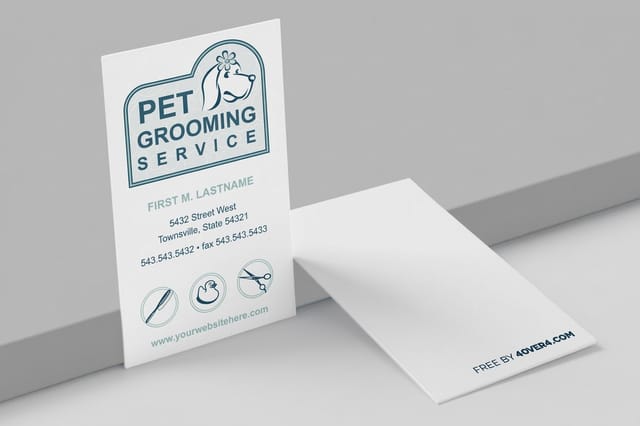 free business cards | 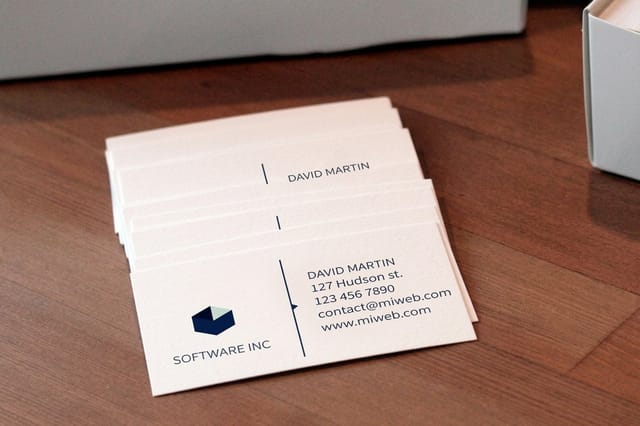 Standard Business Cards |  3D Lenticular Business Cards | 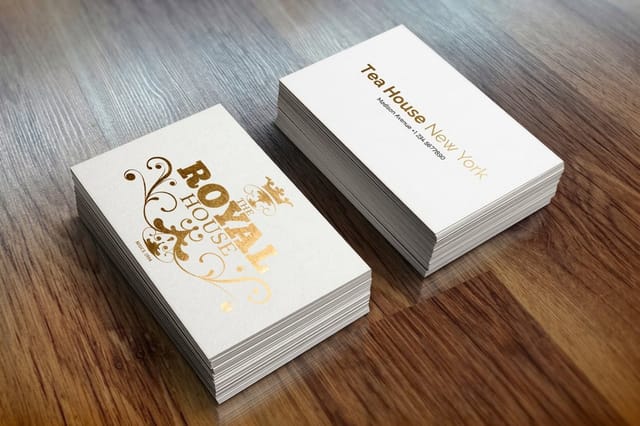 Metallic Foil Business Cards | |
|---|---|---|---|---|
| Min price | Free | $17.57 | $690.88 | $222.13 |
| Paper / stock | 14pt Gloss Cover | 14pt Gloss Cover | 31pt Lenticular Lens | 16 Point Silk Laminated |
| Finish | - | Standard Finish | - | - |
| Size | 2" x 3.5" | 2" x 3.5" | 2" x 3.5" - Vertical | 2" x 3.5" |
| Default qty | 200 | 100 | 500 | 500 |
| Turnaround | 5 business days | 3 business days | 22 business days | 7 business days |
| Rating | ||||
| View & customize | View & customize | View & customize | View & customize |
Launching Your Catalog Without a Single Reprint

Almost every print on demand failure traces back to a file, not a press. Wrong bleed, RGB color, live text inside the trim, a logo pulled from a website at 72 dpi. Fix the file discipline once and the rest of the operation stays boring, which is exactly what you want from production.
Start from print-ready layouts and exact-size blanks rather than building artboards from memory. Templates carry the bleed, the trim, and the safe zone already drawn, so your design lands inside the lines the first time. Once your first products are proofed, browse the full catalog from the 4OVER4 home page to see which formats slot in next to what you already sell.
File setup that survives production
- Bleed and safe zone. Extend artwork past the trim and keep anything that must not be cut well inside the margin.
- CMYK, not RGB. Convert before you export so the screen-bright blues do not arrive as flat navy.
- 300 dpi at final size. A logo that looks sharp on a card can fall apart at banner scale.
- Outline your type. It removes every font substitution risk between your machine and the press.
- One file per product size. Scaling a card layout up to a poster is how proportions and margins go wrong.
The last piece is presentation. A print on demand store lives or dies on how the products look in the listing, and the same rules that make a strong graphic design portfolio apply to a product page. If you are still at the naming stage, these art and craft business name ideas are a faster start than staring at a blank page.
Start fast
Templates and print-ready blanks
Free layouts plus exact-size blanks so bleed, trim, and safe zones are drawn for you.





Wally sorts the sellers from the shelf-warmers
Pick products that print flat, ship safely, and leave room for margin
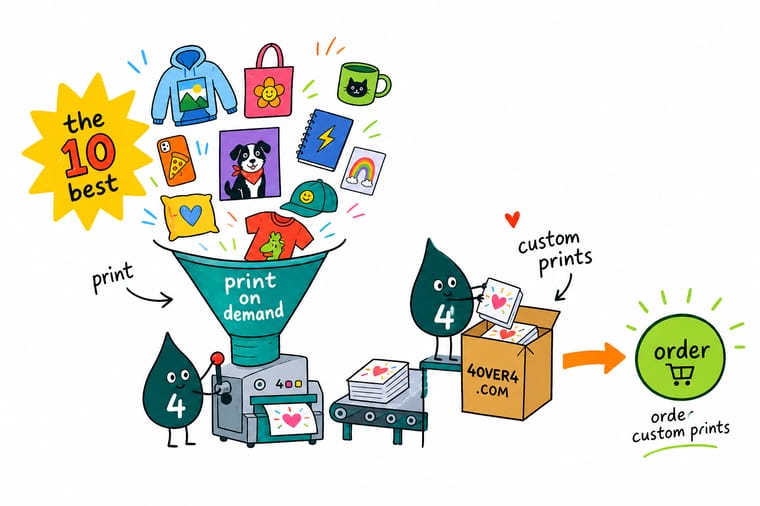
Every print on demand product has to pass the same three tests. Can a press produce it from one file at low quantity? Will it survive a parcel carrier without special packing? Does the design surface justify what you charge for customizing it? Stickers, cards, postcards, banners, packaging, and branded tech clear all three. Start with two cheap repeat sellers and one high-ticket item, then widen the catalog once your file process is boring and predictable.
Configure your first product →The Short Version for Sellers Building a 2026 Catalog
Explore more
More reading for print on demand sellers
Promotional products market data, the full 4OVER4 print catalog, two printer comparisons, packaging design trends, and craft business name ideas for a new store.
 Statistics Promotional Products Market Data Where buyer budgets go and what the ROI looks like.
  Shop The 4OVER4 Print Catalog Every format a print on demand store can sell, printed to order.
  Alternative 4OVER4 vs Printing for Less How the two compare on catalog depth, pricing, and turnaround.
  Alternative Vistaprint Promo Alternative Branded swag and marketing products compared side by side.
  Article 10 Ways to Use Logo Stickers Turn one sticker design into a full promotion channel.
  Article Packaging Design Trends What the unboxing moment is expected to look like now.
  Article Graphic Design Portfolio Examples Presentation lessons that transfer straight to product pages.
  Article 100 Craft Business Name Ideas A faster start than staring at a blank naming page.
 Start the catalog with three flat products you can ship this week
Pick a product, upload your file, and print only what sells. Same presses, stocks, and finishing lines that produce for 150,000+ businesses.
Print on Demand Product Questions
What is print on demand and what counts as a print on demand product?
Print on demand means the item is produced only after a customer buys it, so no inventory sits in a warehouse waiting for a sale. A product qualifies when it can be printed from a digital file at low quantity, finished without hand assembly, and shipped safely as a parcel. Stickers, cards, postcards, posters, banners, packaging, and branded tech gifts all fit. Anything requiring custom tooling or freight crating does not.
How do I choose the right print on demand products to sell?
Pick products your audience already buys on a schedule, then check three things before listing. Confirm the unit cost still leaves a workable margin at the quantity you will realistically order. Confirm the item ships flat, rolled, or boxed without special handling. Confirm the design surface is large enough that customization feels worth paying for. A catalog that mixes cheap repeat sellers with a few high-ticket items outperforms one built entirely from either.
What do print on demand products cost and how are prices set?
Prices are quantity-tiered, so the same product has several correct answers. A 3 in 1 Foldable Wireless Charger starts at $15.00 per unit, 2 Sided Blockout Banners start at $108.75, and 30mil Clear Plastic Cards start at $529.26 for a production run. Per-unit cost drops as the run grows. Set your retail price from production, shipping, design time, platform fees, and a reprint allowance rather than from the print cost alone.
What sizes, stocks, and finishes are available for print on demand products?
It depends on the format. Cards run on paper and plastic stocks including transparent 30mil, with rounded corners, foil, and spot finishes available. Banners come in standard and custom dimensions with optional hems and grommets, and single or double sided blockout construction. Posters, packaging, and stationery each carry their own stock and coating lists. Every option is shown on the product page configurator, where the price updates as you change the specification.
How long does print on demand printing and shipping take?
Turnaround depends on the product and the finishing it needs. Flat printed goods such as stickers, postcards, and standard cards move fastest. Specialty stocks, foil, and large format add production time because they pass through extra stations. Shipping transit sits on top of production, so plan an event date backward from delivery rather than from the order date. Approve your proof quickly, since the production clock starts there rather than at checkout.
