
7 Types of Signage and Where Each One Works Best


Seven categories, sorted by the job each one does rather than the material it is printed on, with the reading distance, the rules and the failure mode for each.
The seven signage types are wayfinding, ADA and identification, outdoor and exterior, point of purchase, safety and regulatory, dimensional and architectural, and digital. Each one is defined by the job it does and the distance it gets read from, which then sets the letter height, the substrate and where it mounts. Two of them, ADA and safety, are governed by rules rather than by design taste.
Quick answer
Sort signs by job and distance, then pick the material
The seven types are wayfinding, ADA and identification, outdoor, point of purchase, safety and regulatory, dimensional, and digital. Start with how far away the sign gets read, because that fixes the letter height at roughly one inch of capital height per ten feet of viewing distance, and letter height fixes the panel size. Only then choose the substrate from the exposure: corrugated plastic for a season, vinyl or mesh for a hung graphic, aluminum for years outside, acrylic or PVC for interior walls.
The Seven Sign Types and the Job Each One Does
Signs get sorted by material in most catalogs, which is backwards. A sheet of aluminum can be a parking directional, a safety notice or a building identification panel. What changes is the job, and the job sets the size, the letter height and where it hangs.
| Type | The job it does | Where it lives | What we usually print it on |
|---|---|---|---|
| Wayfinding | Gets a stranger from the entrance to the room without asking anyone. | Lobbies, corridors, campuses, parking structures. | Aluminum, PVC board, standoff-mounted acrylic. |
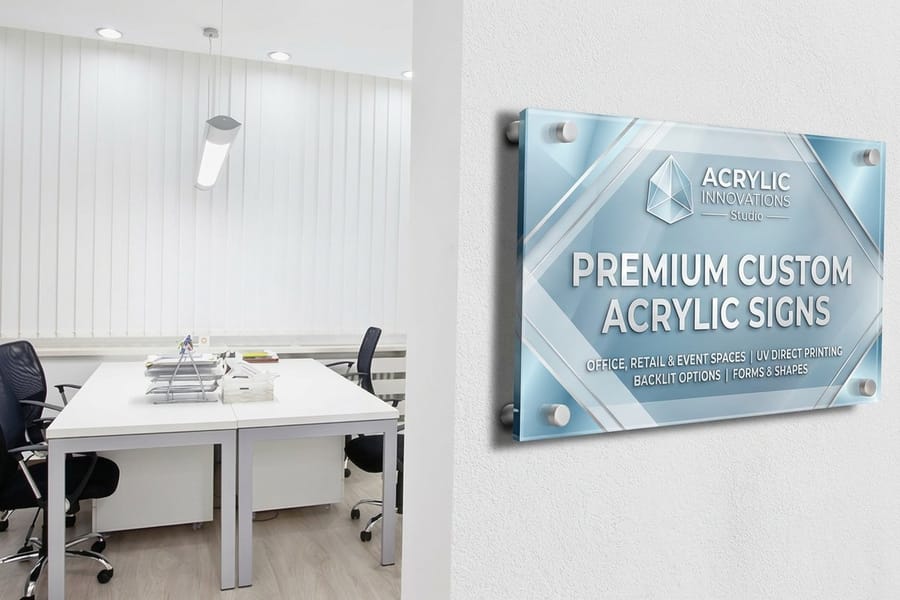
| ADA and identification | Names a permanent space in a form a blind visitor can read. | Beside the latch side of every permanent room door. | Acrylic or engraved plastic with raised characters and braille. |
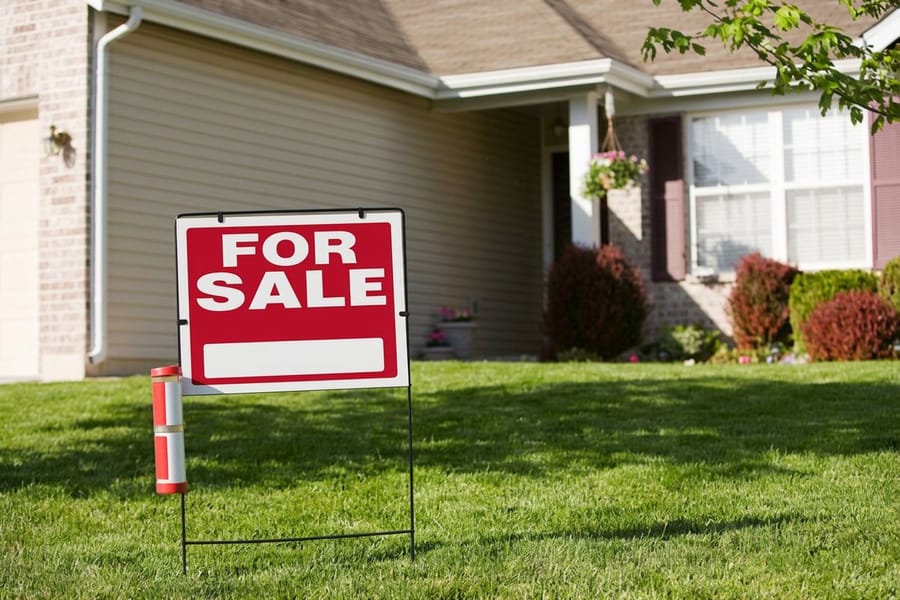
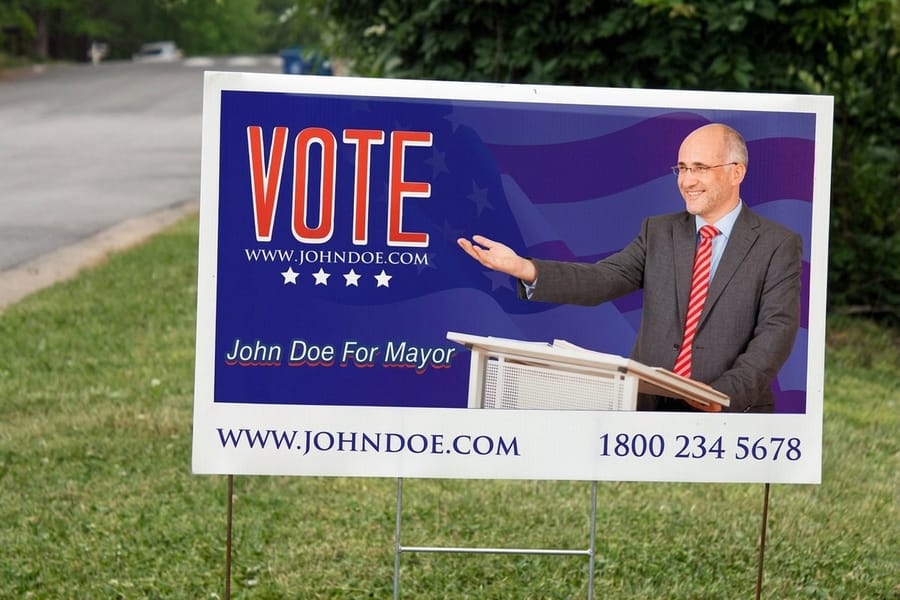
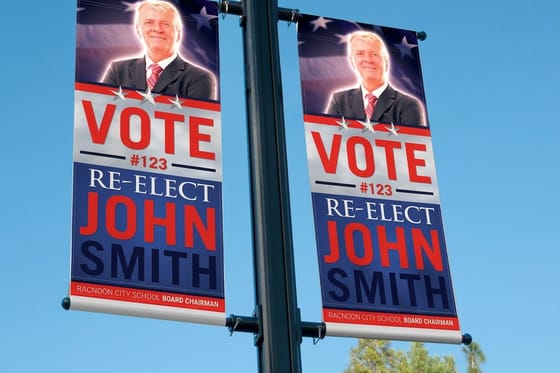
| Outdoor and exterior | Announces the business or the event to people outside it. | Yards, fences, poles, building faces, sidewalks. | Corrugated plastic, aluminum, vinyl banner, flag fabric. |
| Point of purchase | Sells one thing to somebody already standing in front of it. | Aisles, counters, floors, tables, window glass. | Floor vinyl, card stock, foam board, static cling. |
| Safety and regulatory | Warns, restricts, or satisfies a code inspector. | Exits, plant floors, docks, stairwells, parking lots. | Aluminum or rigid plastic with reflective or high contrast faces. |
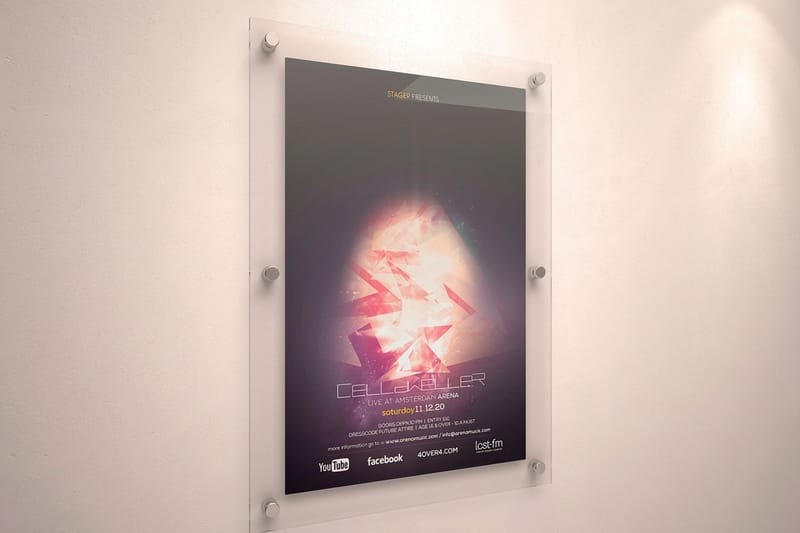
| Dimensional and architectural | Puts the brand on the building with depth and a shadow line. | Fascias, reception walls, monument structures. | Cut acrylic, standoff panels, brushed or painted metal. |
| Digital | Shows content that changes faster than you can reprint it. | Menu boards, queue displays, lobby screens. | A screen, a mount, power, and a content system. |
Read the third column before the fourth. Once you know where a sign lives, the distance it gets read from is fixed, and the letter height follows the old sign painter rule: about one inch of capital height for every ten feet of viewing distance. That is why a 24 by 18 inch yard sign is a sixty foot sign no matter how close to the road you stake it, and why a fascia sign that has to work from the far end of a parking lot ends up two feet tall.
Wayfinding and ADA, the Two Types With Rules Attached
Everything else on this page is a design decision. These two are partly a compliance decision, and getting them wrong costs a reprint or a citation rather than a shrug.
ADA identification signs carry hard numbers. Raised characters run between 5/8 inch and 2 inches tall, they sit in a sans serif face with no italics or scripts, contracted braille goes below them, and the finish has to be non-glare with the characters contrasting against their background. Mounting is measured to the characters rather than to the sign: the baseline of the lowest tactile line sits at least 48 inches above the floor and the highest at most 60 inches, on the latch side of the door. If a space is permanent, it needs one. Signs posted for a week or less, menus and building directories are outside the rule.
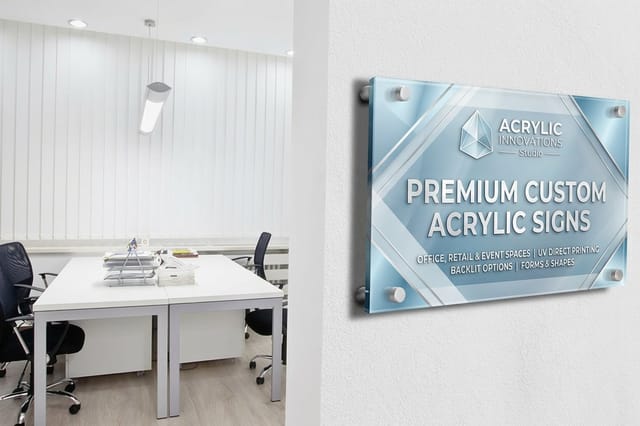
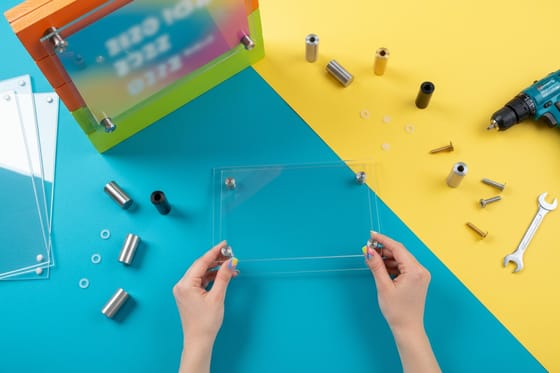
Wayfinding is the part people underbuy. A working system has four kinds of sign, not one: identification that confirms arrival, directional arrows along the route, an overview map or directory at each decision point, and the regulatory notices that stop people going the wrong way. Order only the arrows and you build a corridor where visitors follow three signs and then stop, because nothing tells them they got there. Interior panels usually run on acrylic signs or on rigid PVC signs, and lifting an acrylic panel off the wall on hardware makes it easier to read in raking light, which our guide to standoff screws covers in detail.
Outdoor Signage Is a Material Problem, Not a Design One
Outside, the artwork rarely fails first. The substrate does. Three failures cover almost everything that comes back.
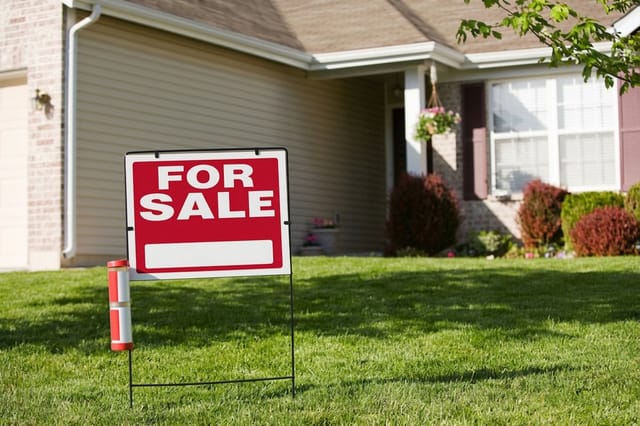
- Corrugated plastic curls and the stake tears out. The flutes run in one direction, and a stake pushed across them splits the panel. Order the flutes running vertically for an H stake and the sign holds. Even then, treat yard signs as a campaign or a selling season, not as permanent signage.
- PVC board bows in a hot window. Expanded PVC is a superb interior panel and a poor south-facing one. Heat behind glass softens it and it takes a permanent wave. For anything that lives in full sun, move to aluminum signs, which do not absorb water and do not flex.
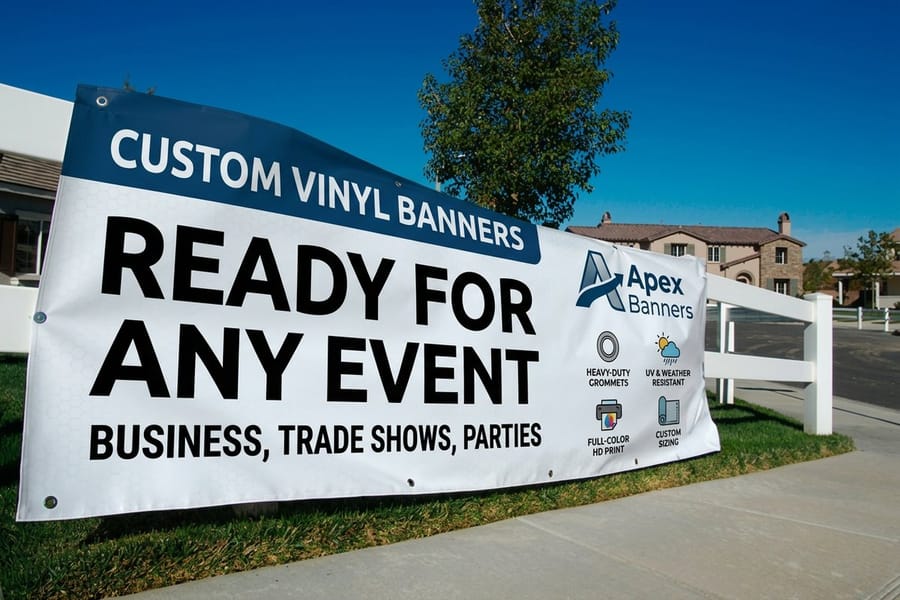
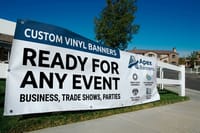
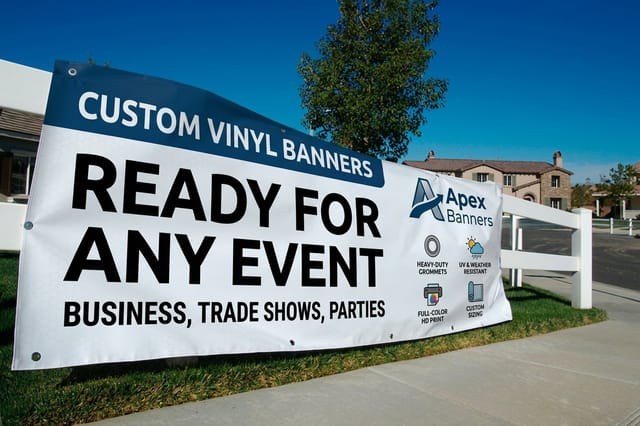
- Banners tear at the grommets, not in the middle. The stress lands on the corners. Hem the edges, grommet at reasonable intervals, and hang with bungees so the banner can move. Cutting wind slits is the folk remedy and it mostly just weakens the face. On a fence or an exposed wall, print mesh banners instead and let the air through.
Choose the substrate from the exposure and the lifespan you actually need, then check the size against the reading distance. Vinyl banners and feather flags do different jobs at the same distance: the banner carries a sentence, the flag carries motion and one word. Our banner material guide works through scrim, mesh and fabric weights, and flags versus banners settles which of the two belongs at your curb.
Point of Purchase and Dimensional Signs Get Judged Up Close
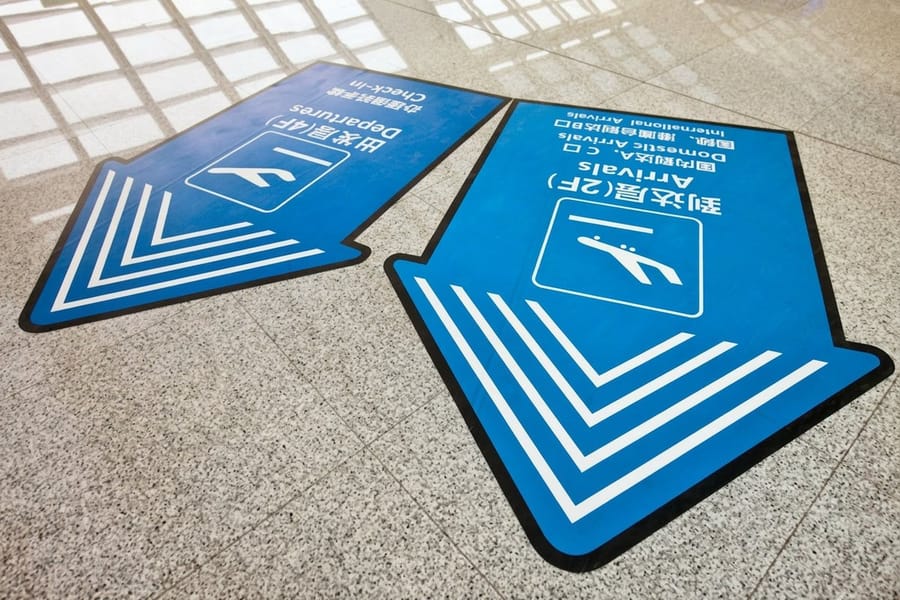
Roadside signs get half a second. These get several seconds from somebody standing still, which changes what you can put on them and how good the print has to be.
Point of purchase is the only category where small type earns its place. A customer at a counter will read a price, a size and a condition. Use that. Floor graphics work because they sit in the one sight line nobody else is competing for, and table tents hold attention for as long as somebody is waiting for food. The catch with floor vinyl is the surface: it needs a smooth, sealed, clean floor to bond to, and it will lift on rough concrete or freshly waxed tile no matter how good the adhesive is.
Dimensional and architectural signage is judged on edges. A cut acrylic letter or a standoff-mounted panel throws a shadow, and that shadow is most of the effect, so the cut quality and the mounting spacing matter more than the color. This is also the category where a retractable stand does honest work indoors: a retractable banner stand gives you a head height graphic at close range that packs down into a tube, which is why it beats a wall panel for anything that has to travel. For ideas about what to actually put on these, signage ideas that convert and salon signage ideas are worth a read.
Digital Signage: What It Buys and What It Really Costs
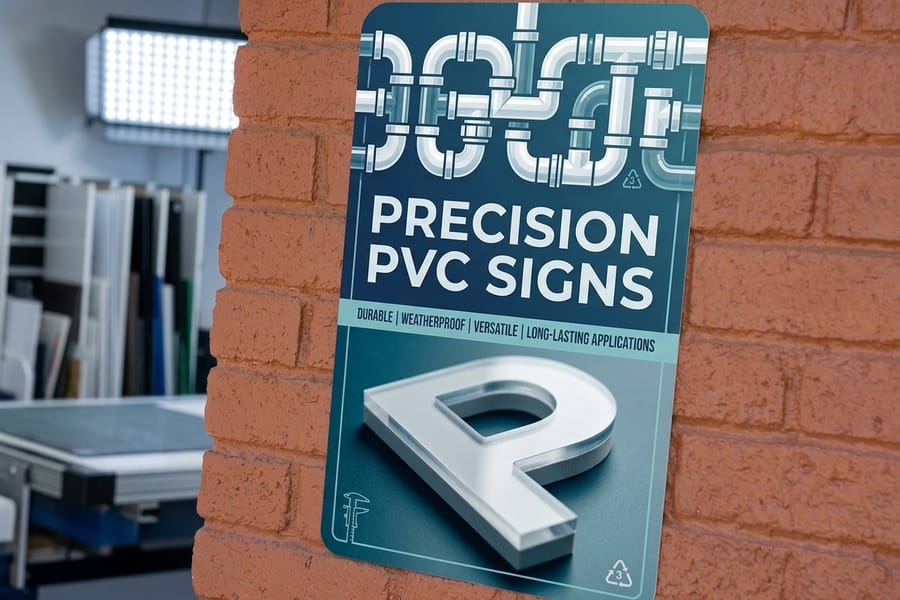
Digital is the seventh type and the only one we do not print. It deserves an honest paragraph rather than a sales pitch, because it is oversold to businesses that do not need it.
What it buys you is speed of change. A menu board where prices move, a queue display, a lobby screen carrying today's schedule: those are jobs a printed panel cannot do without a reprint every time. What it costs is a screen rated for commercial hours, a mount, a power run to the wall, a player or a content system, somebody whose job it is to update the content, and the failure mode of a black rectangle or an error message facing your customers when it drops out.
The test is simple. If the message on the sign will be the same in three months, print it. A rigid panel costs a fraction of a screen, needs no power, and cannot crash. If the message genuinely changes weekly, a screen is cheaper than the reprints. Plenty of good storefronts run a hybrid: a permanent printed identification panel that never changes, and one screen doing the part that does. Everything printed in that mix comes from the same place as the rest of your signs, and you can browse the full range in signs and banners or across large format printing.
Wally sorts the seven sign types
Measure the distance, then pick the sign
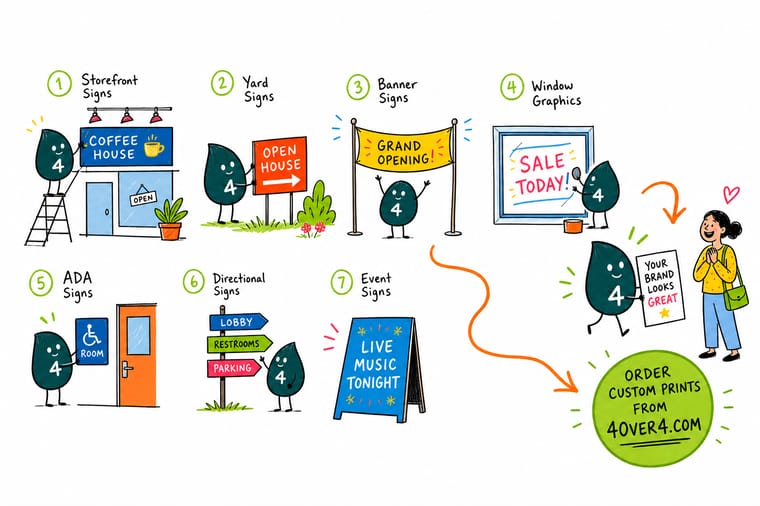
Wally does not start with the sign. He starts with a tape measure and the spot the customer will be standing in. Four hundred feet away in a car needs about forty inch letters, so that is a roadside panel. Fifty feet down a corridor needs five inch letters, so that is wayfinding. Arm's length beside a door is ADA territory, where the raised characters have a 5/8 inch minimum and braille is not optional. Once the distance sets the letter height, the panel size is decided for you, and the only question left is what material survives where the sign has to hang.
Shop signs and banners →Specs and pricing
Sizes, substrates and starting prices
The three signs that cover most of the seven types: a staked yard sign for short runs outside, an aluminum panel for anything permanent, and a vinyl banner for the hung graphic. Live configuration options and starting prices from the 4OVER4.COM configurator.

Print it
Order the sign type your space actually needs
Explore more
Where to go next


By the numbers
Signage printed at 4OVER4, by the numbers
Common Questions
Your signage questions, answered
What are the 7 main types of signage?
Wayfinding, ADA and identification, outdoor and exterior, point of purchase, safety and regulatory, dimensional and architectural, and digital. The split is by job, not by material, which is why the same aluminum panel can be a wayfinding sign in a parking garage and a safety sign on a loading dock. Sort your list of signs by the job each one does and the material and size follow from there.
How big do the letters on a sign need to be?
The working rule is one inch of capital letter height for every ten feet of viewing distance, so a sign read from 100 feet wants roughly ten inch caps. Some sign shops quote one inch per 25 feet, which is the distance at which a letter can be resolved rather than the distance at which it can be read comfortably by a driver who is also watching traffic. Use the ten foot version for anything that has to be read from a moving vehicle, and the looser figure only for a single word.
Does my sign have to meet ADA rules?
Permanent room identification does. If a sign names a space that will not change, such as a restroom, a stairwell or a numbered office, it needs raised characters between 5/8 inch and 2 inches tall, contracted braille below them, a non-glare finish, and characters that contrast with their background. Directional and informational signs need the visual character rules but not the tactile ones, and signage posted for seven days or less is exempt. Menus, building directories and company logos sit outside the requirement.
What is the difference between wayfinding and directional signage?
Directional signs are one part of wayfinding. A wayfinding system is the whole set: the identification sign that confirms you arrived, the directional signs that point along the route, the map or directory that gives the overview, and the regulatory signs that tell you what you cannot do. Buying only the arrows is the common mistake, and it produces a building where people follow three signs and then stand in a corridor with no confirmation.
Which sign type lasts longest outdoors?
Aluminum, by a wide margin. It does not absorb water, it does not flex in wind, and the printed or vinyl-applied face is what eventually fades rather than the panel failing. Corrugated plastic yard signs are built for a campaign or a selling season. Vinyl banners sit in between and last far longer when they are hemmed and grommeted properly and mounted with bungees rather than pulled tight against a frame.
Do wind slits actually help a banner survive?
Not much. Cutting slits or half moons into a vinyl banner weakens the face and gives the wind an edge to tear from, and the load a solid banner catches is mostly transferred to the corners anyway. If the banner hangs on a fence or in a genuinely windy spot, print it on mesh so the air passes through the fabric, and leave a little slack in the mounting so the banner can move instead of ripping at the grommets.
Get Started
Know which sign type you need?
Pick the substrate that suits the exposure, set the size from the reading distance, and we print it. Yard signs, aluminum panels, banners, flags and interior acrylic all come off the same presses.
Legal Disclaimer
Gold Standard guarantees apply to all standard orders placed through 4over4.com. Price match requires verifiable proof of a competitor's published price for an equivalent product with matching specifications and turnaround time. Satisfaction guarantee covers manufacturing defects and print quality issues. Contact support with order number and documentation. On-time delivery rate based on tracked orders 1999 to 2026. Individual results may vary based on shipping carrier performance.
