
Acrylic Signage for Modern Offices and Lobbies


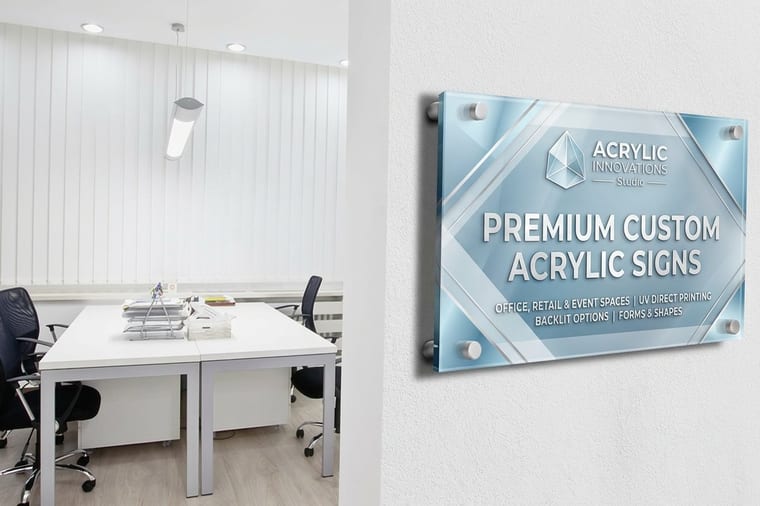
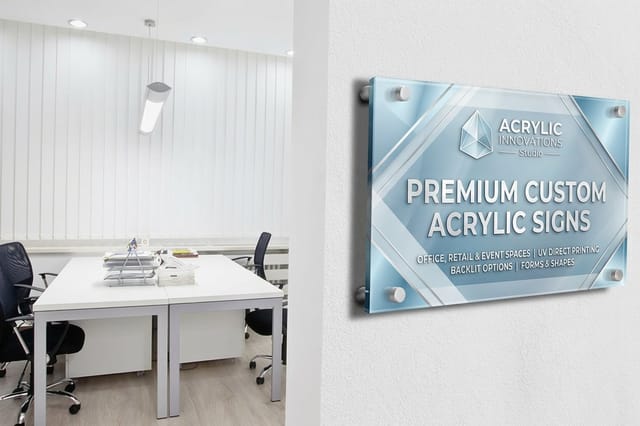
Acrylic signage gives a reception wall its polish. The standoff gap is what creates the float, and a polished edge is what makes the light wrap it.
Acrylic signage is a clear, rigid printed panel mounted on standoffs so it floats off the wall. Its glass-like depth and the soft shadow behind a floated panel read as premium, which is why offices and lobbies use it for reception logo walls, door signs, and wayfinding. Choose 1/8 in for compact signs and 1/4 in for feature walls, pick direct-print, frosted, or a printed backer, and mount with metal standoffs.
Start here
A gap, a shadow, and a polished edge
Acrylic signage is a clear, rigid printed panel that mounts on standoffs to float off the wall. Its depth and soft shadow read as premium, making it the default for reception logo walls, office door signs, and lobby wayfinding. Pick 1/8 in for compact signs and 1/4 in for feature walls, choose direct-print, frosted, or a printed backer, and mount with metal standoffs in a finish that matches the room. The step guide below sums up the build.
What acrylic signage is and why it looks premium
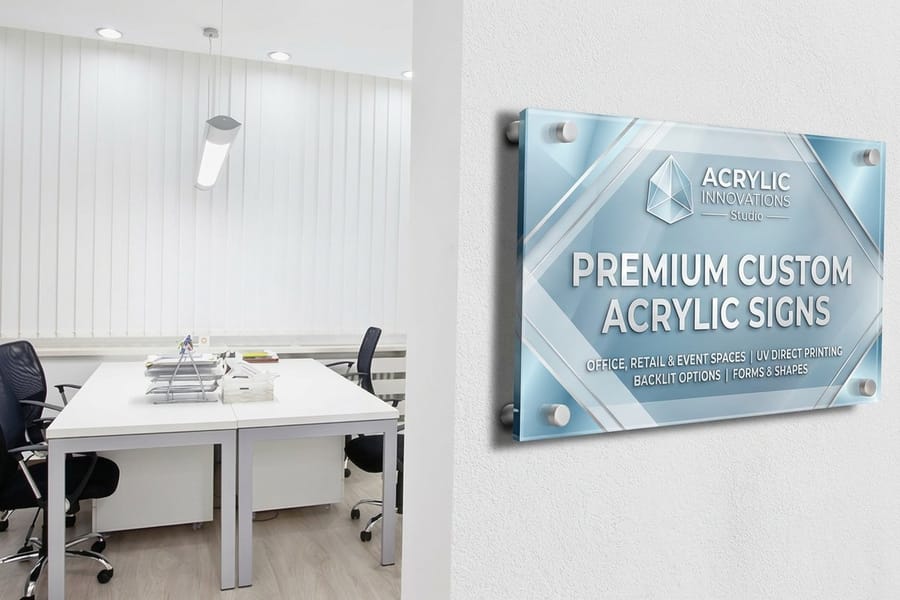
Walk into a well-designed office and the sign behind the reception desk is almost always acrylic. There is a reason. Acrylic is a clear, rigid plastic with a glass-like clarity and depth, and when a logo is printed on it and floated off the wall on metal standoffs, it reads instantly as considered and professional. The material does the work of looking expensive before anyone reads a word.
That premium effect comes from three things working together: the transparency and light-catching depth of the acrylic itself, the crisp full-color printing the surface takes, and the soft shadow the standoffs cast behind a floating panel. Together they give a flat sign real dimension, which is exactly the polish a lobby or reception wall is meant to project.
Acrylic is also practical. It resists yellowing, shrugs off daily handling, and wipes clean, so a sign keeps its showroom look for years. This guide covers where acrylic signs work best, how to choose thickness and finish, how standoff mounting creates the floating look, and how to prepare a clean print file. For pure wall art, our acrylic prints use the same material for framed-free displays.
Where acrylic signage works: lobbies, reception, and office branding
Acrylic signage earns its place wherever a first impression matters. The classic use is the reception or lobby logo wall, the sign a client or candidate sees the moment they arrive. Rendered in acrylic on standoffs, a logo there sets the tone for the whole visit. It is the single highest-impact spot for the material.
From there, acrylic scales down through the whole office. Directional and wayfinding plaques guide visitors, conference-room and office-door signs mark spaces cleanly, and department or floor markers keep a large space navigable. Because the look is consistent, a suite of acrylic signs makes an entire office feel intentional and branded rather than pieced together.
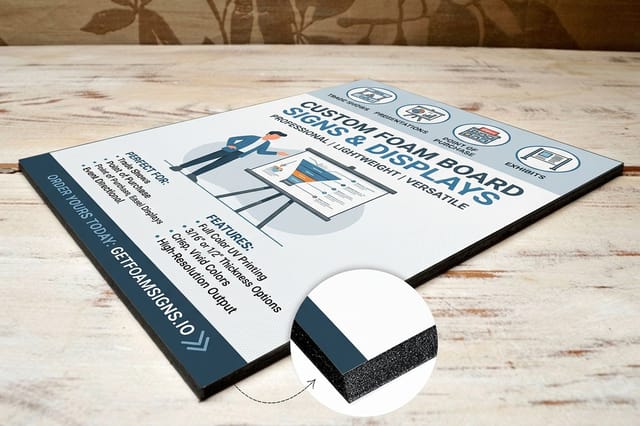
The same panel suits retail counters, salon and studio walls, medical and dental reception areas, and event branding where a logo has to read clean. When a space calls for a warmer or larger wall feature alongside the signage, acrylic pairs naturally with matching acrylic prints and rigid foam board signs for supporting displays. Our signage design guide helps plan a coherent set.
Acrylic thickness and how to choose it
Thickness is what gives an acrylic sign its sense of substance, and choosing it is mostly about the impression you want. The common standard is 1/8 in, which is clean, light, and perfectly suited to smaller pieces: door signs, directional plaques, conference-room markers, and anything where a slim, tidy profile is the goal.
Step up to 1/4 in when the sign needs to command a wall. The extra depth catches more light along the edges and reads as noticeably more solid and premium, which is exactly what a reception logo wall or a feature sign wants. The thicker panel also holds larger sizes flatter, so it is the right call as the sign grows.
Let the role decide. A wall of small office-door signs is efficient and elegant at 1/8 in, while the one sign every visitor sees on arrival deserves 1/4 in. If you are unsure how a thickness will feel in the space, order free samples so you can judge the depth and clarity in person before committing to the full order.
Standoff mounting and other ways to hang acrylic signs
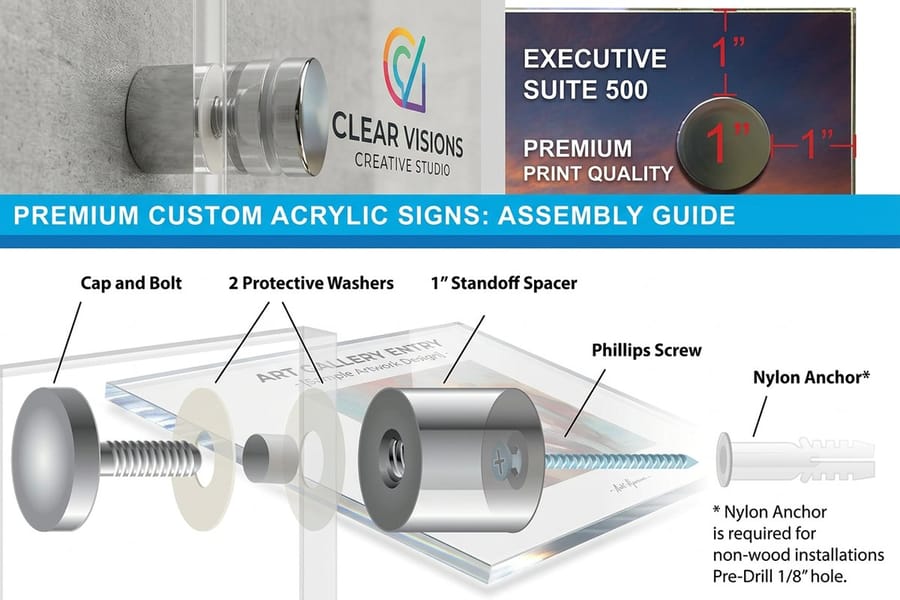
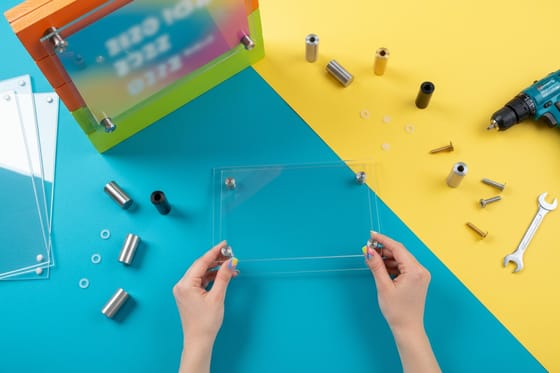
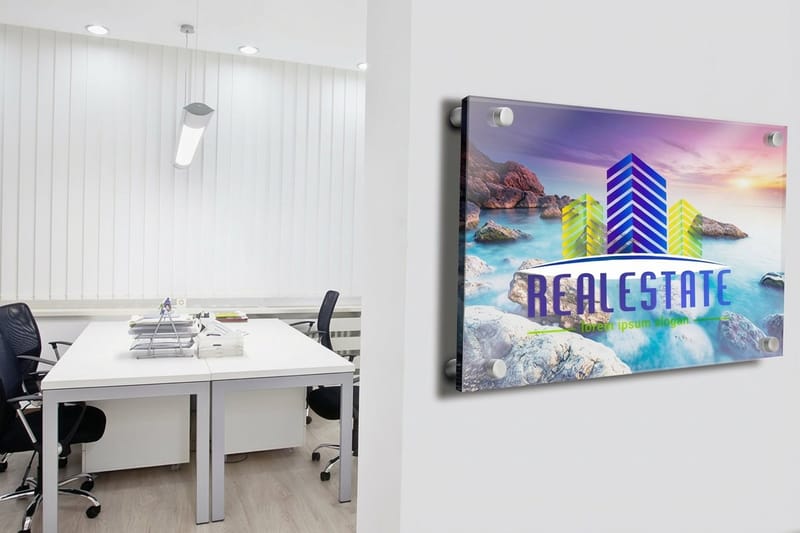
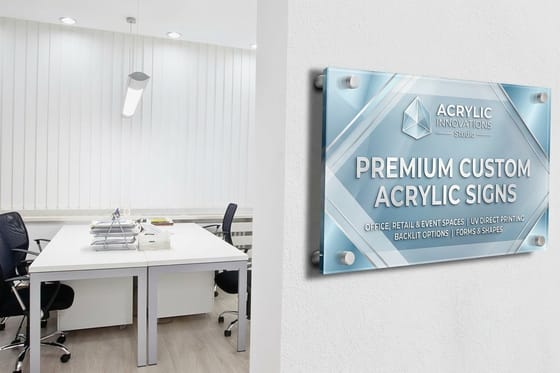
Mounting is where an acrylic sign becomes the acrylic look. Metal standoffs are small cylindrical barrels that screw into the wall and grip the panel through drilled holes, usually one in each corner. They hold the acrylic a short distance off the surface, and that gap is the whole trick: it lets light pass behind the panel and casts a soft drop shadow, giving a flat sign the floating, dimensional presence people associate with premium signage.
Standoff hardware comes in finishes, brushed silver, polished gold, and matte black, so you can match the room and the brand. Placement matters: the holes sit in from the corners, and your logo and text need to stay clear of them so nothing important is interrupted by hardware. Our guide on how standoff signage works covers hole spacing and barrel selection.
Standoffs are not the only option. For lighter or temporary installs, acrylic can mount with strong adhesive, sit in a tabletop or floor stand, or slot into a rail system for signs you swap often. But when the goal is that reception-wall polish, standoffs are the answer. Our guide to hanging acrylic walks through each method.
Finishes: clear, frosted, and printed acrylic
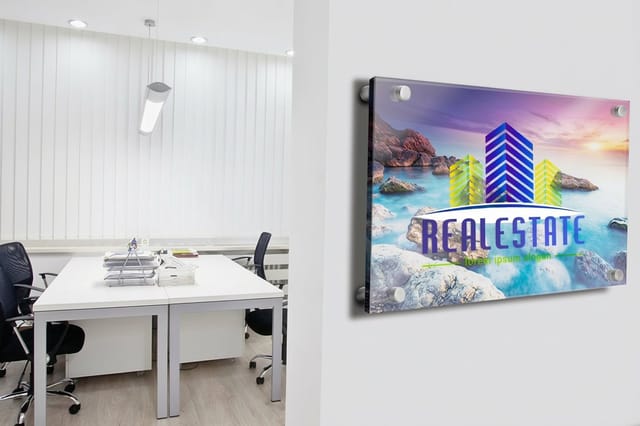
The finish decides the personality of an acrylic sign. Direct full-color printing lays your artwork straight onto the acrylic, delivering bold, saturated color and sharp logos with the panel's clarity showing through, the most versatile and popular choice for branded signage.
A frosted finish gives the acrylic a soft, etched, glass-like look. It diffuses light and reads as understated and elegant, which suits professional-services firms, law offices, studios, and any brand that wants quiet sophistication rather than bold color. Frosted panels let a logo appear subtly embossed into the surface.
Clear acrylic with a printed backer creates depth by layering: the artwork prints on a panel behind a clear front, so the viewer looks through the acrylic to the image, adding a sense of dimension. Choosing among these follows the mood you want, bold and colorful, softly etched, or layered and deep, and all three keep the durability and easy cleaning acrylic is known for.
Printing acrylic signage and prepping the file
A clean file is what turns a good acrylic panel into a crisp, professional sign. Build your artwork at the exact final panel size in CMYK color so brand colors print true. Place logos as vector art whenever possible so they stay razor-sharp at any size, and set any photographs at 300 DPI at final size, checked at 100 percent zoom.
Add 0.125 in of bleed on every edge so any background color runs cleanly to the cut, and keep your logo and text inside the safe margin, well clear of both the trim and the standoff holes. If you are using a printed backer or a specific finish, confirm which layer carries the art. Then flatten everything to a single press-ready PDF for the most predictable result.
When you order with us, that file runs through a free file check so any issue is caught before production. Set your size, thickness, finish, and standoff hardware in the configurator below, browse the full acrylic collection, or order free samples first to judge the material and finish in your own space.
Wally floats the logo so the lobby looks the part
Clear, deep, and premium from the front door
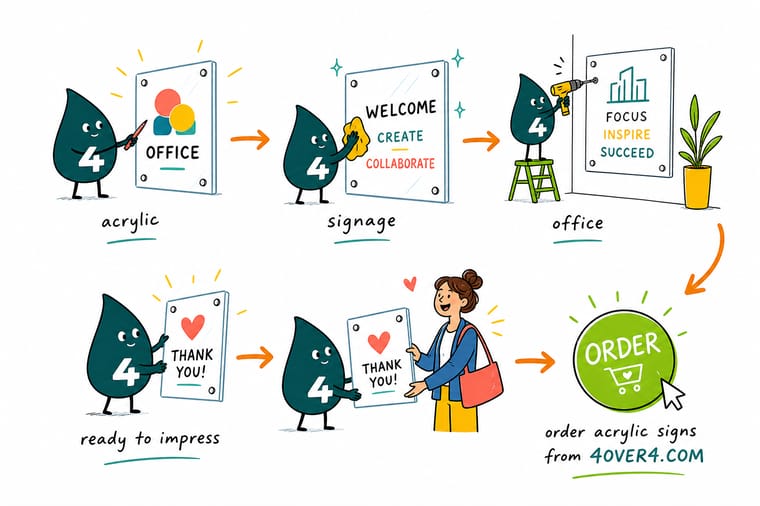
Wally reaches for acrylic when the sign is the first thing a visitor sees. He sizes it to the reception wall, picks 1/4 in for real depth, chooses direct-print, frosted, or a layered backer, and floats it on standoffs that cast a soft shadow. Clear, durable, and easy to keep looking new, printed premium at 4OVER4.
Order acrylic signs →Quick reference
The acrylic signage setup, at a glance
Match these choices to your space and your acrylic sign is ready to float clean and read premium on any wall.
| Setting | Get it to | Why it matters |
|---|---|---|
| Material | Cast or extruded acrylic | Clear, rigid acrylic gives the glass-like depth and clarity that reads as premium in an office or lobby. |
| Standard thickness | 1/8 in | A clean choice for smaller plaques, directional signs, and door signage. |
| Premium thickness | 1/4 in | Adds visible depth and heft for reception walls and feature logo signs. |
| Mounting | Metal standoffs | Standoff hardware floats the panel off the wall and casts the soft shadow that defines the acrylic look. |
| Print method | Direct print or printed backer | Print full color directly to the acrylic, or print a backer behind a clear panel for extra depth. |
| Bleed and safe margin | 0.125 in each | Art runs past the trim for a clean edge, and logos and text stay clear of the cut and the standoff holes. |
| File format | Flattened PDF at final size | A press-ready PDF built at the exact panel size keeps type and logos crisp. |
Step by step
Order an acrylic sign in 7 steps
- Pick the sign and the wall Decide what the sign is: a reception logo wall, a directional plaque, a door sign, or a conference-room marker, and where it will hang. The setting drives size and thickness.
- Size it to the space A reception logo sign wants presence, often 24 in wide or more, while door and directional signs stay compact. Scale the panel to the wall and the viewing distance.
- Choose the thickness Use 1/8 in for smaller plaques and door signs, and step up to 1/4 in for reception and feature walls where depth and heft matter.
- Decide the finish and print approach Print full color directly to the acrylic, choose a frosted finish for a soft etched look, or use a clear panel with a printed backer for a layered, dimensional effect.
- Plan the standoff layout Position the standoff holes in the corners, keep logos and text clear of them, and match the hardware finish to the space, brushed silver, gold, or black.
- Build a clean print file Design at final size in CMYK, place logos as vectors and photos at 300 DPI, add bleed, and hold key elements inside the safe margin.
- Export a press-ready PDF and order Flatten to a single PDF, run it through our free file check, and set your size, thickness, and hardware in the configurator.
Specs and pricing
Acrylic sign specs and live pricing
Once you know the size, thickness and finish, hardware and quantity are what is left, and acrylic signs ship in 4 business days.
| Quantity | Price Per Unit | Total |
|---|---|---|
| 1 | $152.72 | $152.72 |
Print it
Order your acrylic signage from 4OVER4
See it in use
Reception signs we printed and mounted



Explore more
Where to go next


By the numbers
Where acrylic signs sit in our product list
Common Questions
Common questions about acrylic signage
What is acrylic signage?
Acrylic signage is a sign made from a clear, rigid acrylic panel, printed in full color and typically mounted on metal standoffs so it appears to float off the wall. The material has a glass-like clarity and depth that reads as premium, which is why it is the default for reception logo walls, lobby directories, office door signs, and conference-room markers. Acrylic can be printed directly, given a frosted etched look, or paired with a printed backer behind a clear panel, and it resists yellowing and wipes clean, so it keeps its polished appearance for years.
Direct print, etched, or layered behind clear?
Match the sign to its role and its wall. A reception or lobby logo sign wants presence and depth, so go larger and choose 1/4 in thickness with corner standoffs. Door signs, directional plaques, and conference-room markers stay compact and work well at 1/8 in. Decide the finish next: direct print for bold color, frosted for a soft etched look, or a clear panel with a printed backer for a layered effect. Then match the standoff hardware, silver, gold, or black, to the room. Our guide on how standoff signage works walks through the hardware choices.
What does acrylic signage cost and how are prices set?
Price is driven by size first, then thickness, print method, and quantity, with standoff hardware added per set. A compact 1/8 in door sign is inexpensive, while a large 1/4 in reception logo wall costs more for the extra material and depth. You set the size, thickness, and hardware in the configurator and the total updates live, so you can see exactly what stepping up to a thicker panel or a larger sign does to the price before you order.
What sizes, thicknesses, and finishes are available for acrylic signs?
Acrylic signs run from small door and directional plaques up to large reception and feature walls, with custom dimensions available. Thickness is typically 1/8 in for standard signs and 1/4 in for premium, dimensional pieces. Finishes include direct full-color printing, frosted or etched looks, and clear panels with a printed backer, and standoff hardware comes in brushed silver, gold, and black to suit the space.
How long does acrylic signage take to print and ship?
Turnaround depends on the size, thickness, and finish you choose, and the configurator shows the available production and shipping options as you set your specs. Because acrylic signs often anchor an office opening or a rebrand, plan backward from your install date and pick a turnaround that gives you time to mount the hardware once the panel arrives.
How are acrylic signs mounted to the wall?
The signature method is metal standoffs: small barrels that screw into the wall and hold the acrylic panel a short distance off the surface through drilled corner holes. That gap is what creates the floating look and the soft drop shadow that makes acrylic read as premium. Standoffs come in different finishes and sizes to match the room, and for lighter or temporary installs, acrylic can also be mounted with adhesive or slotted into a stand. Our guide on how standoff signage works covers hole placement and hardware selection in detail.
Get Started
Order an acrylic sign with standoff hardware
Bring your logo to 4OVER4.COM and print it on clear acrylic in the size, thickness, and finish your space calls for. Foam core signs ship in 4 business days as the supporting display.
Legal Disclaimer
Gold Standard guarantees apply to all standard orders placed through 4over4.com. Price match requires verifiable proof of a competitor's published price for an equivalent product with matching specifications and turnaround time. Satisfaction guarantee covers manufacturing defects and print quality issues. Contact support with order number and documentation. On-time delivery rate based on tracked orders 1999 to 2026. Individual results may vary based on shipping carrier performance.
