
Banners vs Signs, The Complete Guide


Banner or sign? The choice is flexible against rigid, and where it will live. A banner rolls up and travels, a sign stays where you mount it.
A banner is flexible vinyl or fabric that rolls up and hangs, while a sign is a rigid board that stands on its own. Choose a banner for events, sales, and hung displays, and a sign for yards, directions, and storefronts. Use weatherproof material outdoors and lighter fabric or foam indoors, and size the piece to the distance people read from.
Start here
Flexible or rigid, indoors or out
A banner is flexible and portable, a sign is rigid and fixed. Hang a banner for events, sales, and wide displays that travel and reroll. Stand a sign for yards, directions, and storefronts that stay in place and last. Use weatherproof vinyl, mesh, or coroplast outdoors and lighter fabric or foam board indoors, and size the piece to the distance people read from. The comparison below lines up both across every trait.
Banner vs sign, defined
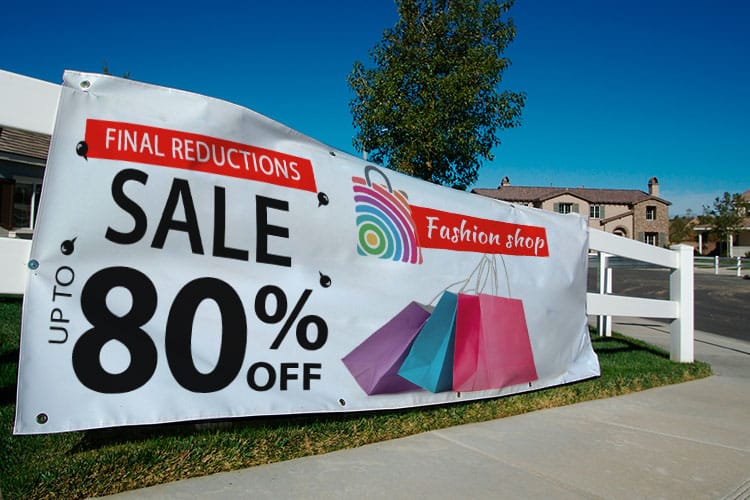
A banner is a graphic printed on flexible material that hangs. A sign is a graphic on a rigid board that stands. The types of banners and signs follow straight from that split: vinyl, mesh, fabric, retractable, pole and backdrop banners on one side, coroplast yard, PVC and foam, aluminum, acrylic and A frame signs on the other.
The two words get used interchangeably, but they are different products with different jobs. A banner is a graphic printed on flexible material, vinyl or fabric, that rolls up, travels, and hangs with grommets and ties. A sign is a graphic on a rigid board, coroplast, foam, or PVC, that stands on its own and stays where you put it.
That single distinction, flexible and portable versus rigid and fixed, drives everything else: the material, how it mounts, how long it lasts, and what it costs. Get the category right and the rest of the decision falls into place.
This guide defines each, shows when to use which, matches materials to indoor and outdoor settings, and routes every use to the right 4OVER4 product, from vinyl banners to rigid yard signs. The comparison above lines the two up side by side, and the next section names every type of banner and every type of sign we print, with the job each one is built for.
Types of banners and signs
The different types of banners are vinyl, mesh, fabric, retractable, pole and backdrop. The different types of signs are coroplast yard signs, rigid PVC and foam board, aluminum, acrylic and A frame. Every one of them prints here, and each exists because a specific job broke the format before it.
Banner types. All of them print on flexible stock and hang, so what changes is the weave, the finish, and how the piece takes wind and light.
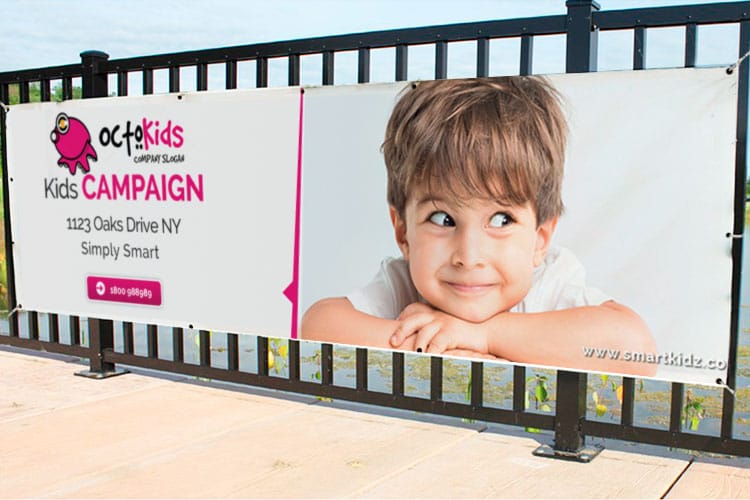
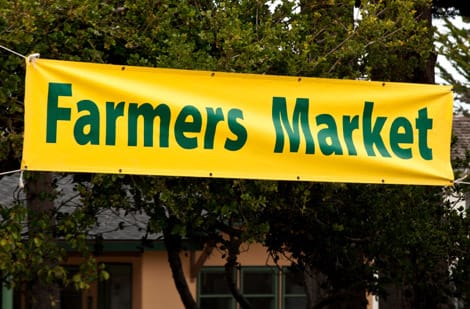
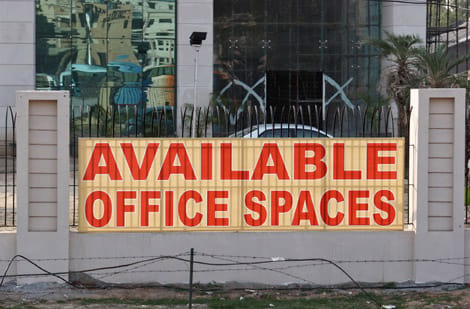
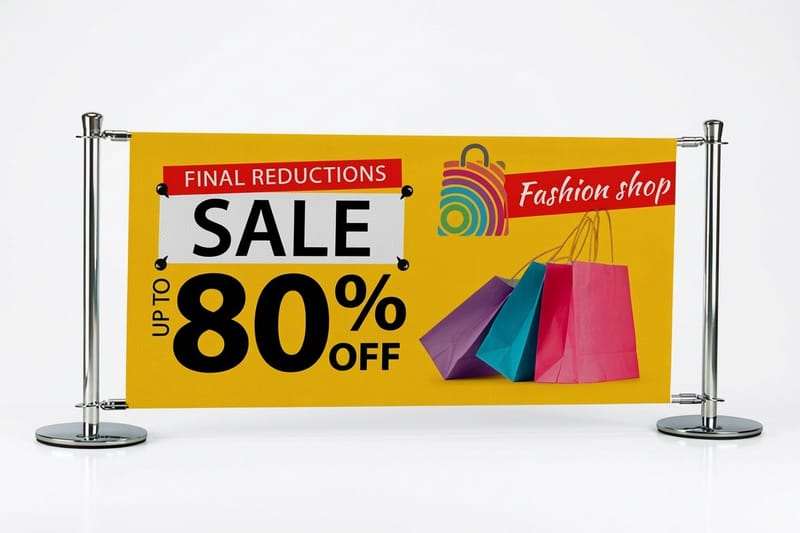
Vinyl banners are the default: heavyweight scrim vinyl, hemmed edges and grommets, the right call for storefronts, sales, and grand openings, with sizes and live pricing on the vinyl banners page. Mesh banners are perforated so wind passes through the face instead of tearing it off the fence, which is what you want on construction fencing, stadium rails, and any long outdoor run, so start at mesh banners. Fabric banners print on polyester for a soft, low-glare face that photographs well and hangs without curl, which suits conference stages, church halls, and anywhere a camera is pointed at your logo. Retractable banners pull up out of a weighted base in seconds and roll back into the cassette for the drive home, the standard for trade show booths and lobby displays: retractable banner stands. Pole banners hang in pairs from street or campus poles with sewn pole pockets top and bottom instead of grommets. Backdrop banners, including step-and-repeat walls, fill the whole camera frame behind a speaker or a red carpet, so the artwork is built to repeat and to survive being cropped.
Sign types. Rigid boards, sorted by how long the message has to stand and how hard the sign gets hit.
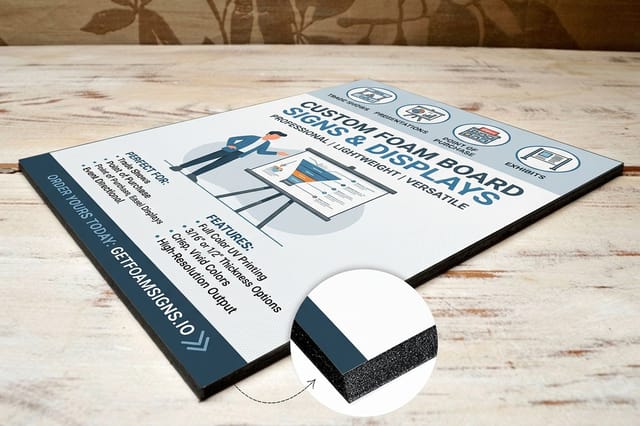
Coroplast yard signs are corrugated plastic on a wire H stake, the fast, low-cost pick for real estate, campaigns, and open houses, and they are covered end to end in yard signs and our guide on making yard signs. Rigid PVC and foam board signs stay dead flat on a wall or an easel, which is why they carry interior directories, menu boards, and point of purchase displays. Aluminum signs do not warp, soak, or flex, so they take the jobs that get bolted up and left alone for years: parking, traffic, property, and site marking, at aluminum signs. Acrylic signs read premium indoors, with a glass-like face for lobby logos, suite numbers, and reception walls. A frame signs fold, sit on the sidewalk all day, and get carried back in at close, which makes them the daily specials sign for cafes, salons, and open houses: A frame signs.
If you are weighing materials rather than formats, banner material types puts vinyl, mesh, and fabric head to head, types of banners covers styles and costs across the full range, how to hang banners handles the mounting, and every size we stock sits in the banners collection. Terms like grommet, coroplast, and mesh are defined in the printing terms glossary.
When to use each

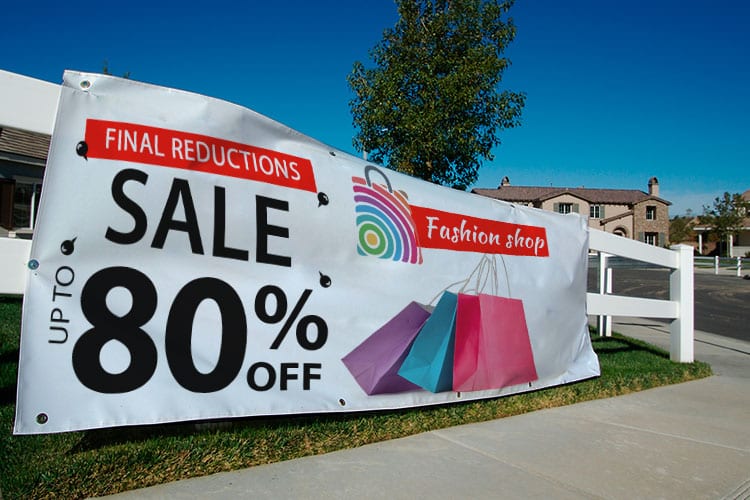
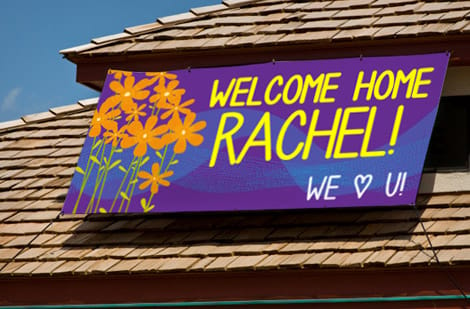
Reach for a banner when the display is temporary, travels, or needs to span a wide space. Events, sales, trade-show backdrops, grand openings, and step-and-repeat walls all favor a banner, because it hangs big, comes down fast, and packs away for the next use.
Reach for a sign when the message needs to stand on its own and stay put. Real estate and campaign yard signs, directional and parking signs, storefront and sidewalk signs, and construction site markers all favor a rigid board, because it holds its shape, stands without a wall, and survives the weather for the long haul.
A quick test: if you would hang it, you want a banner. If you would stake it or stand it, you want a sign. Many businesses use both, a banner for the event and signs to point the way, and our guide on making yard signs covers the rigid side in depth.
Indoor vs outdoor materials

Where the piece lives decides the material. Outdoors, you need weather resistance: standard or heavy-duty vinyl for banners, mesh vinyl where wind is a factor since it lets air pass through, and coroplast or rigid PVC for signs that face sun and rain for months.
Indoors, you can trade weatherproofing for a softer surface. A fabric banner hangs with a soft, wrinkle-resistant finish that photographs beautifully at events, while a foam board sign gives a crisp, lightweight display for retail and reception areas.
Matching material to setting is what keeps a banner from sagging in the rain or a sign from curling in the sun. Our guide on banner material types breaks down vinyl, mesh, and fabric, and the same weatherproof-versus-premium logic applies to rigid foam board signs and coroplast.
Sizing for the space and distance

Size follows viewing distance. The farther away people read from, the bigger the piece and the bolder the type must be. A roadside sign glimpsed at speed needs huge, high-contrast lettering, while an indoor banner read from a few feet can carry more detail and smaller text.
A useful rule of thumb is roughly one inch of letter height for every ten feet of viewing distance. Scale the whole piece to match, and resist crowding it. One clear message, a logo, and a call to action will always outperform a wall of copy at any distance.
Banners flex to almost any dimension, from a 2 by 4 foot sign banner to a building-side piece, while signs come in standard yard and storefront sizes. Once you know the distance and the message, the size follows, and the mounting is next.
The comparison, and how to order
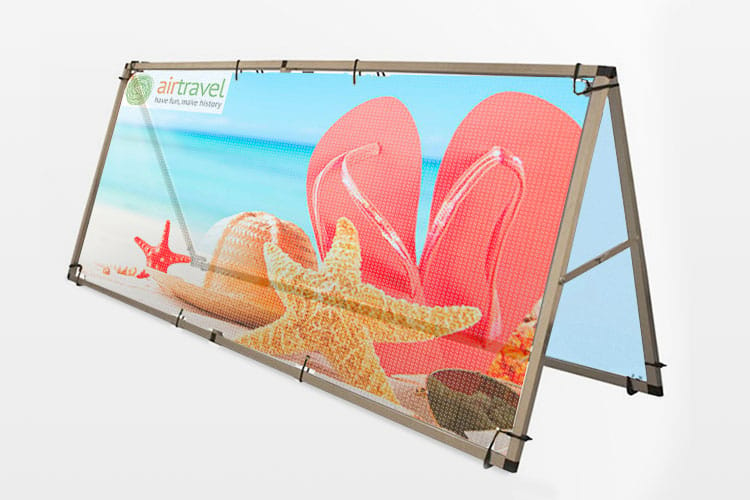
Put them side by side and the choice is clear. Banners win on flexibility, portability, and wide coverage, and they reroll for the next event. Signs win on standing on their own, durability outdoors, and staying put, and they mount on stakes, frames, or standoffs. Both deliver a huge number of views for a low cost per impression.
The order is simple once you have decided. Route an event or a hung display to vinyl banners, a self-standing outdoor message to yard signs, and a crisp indoor display to foam board signs. Set the size and material and the price updates live.
Use the live specs and pricing below to compare a banner and a sign for the same message at 4OVER4.COM. For hanging the banner cleanly once it arrives, our guide on how to hang banners has the mounting tips.
Wally asks: hang it or stand it?
Flexible banner or rigid sign, the setting decides
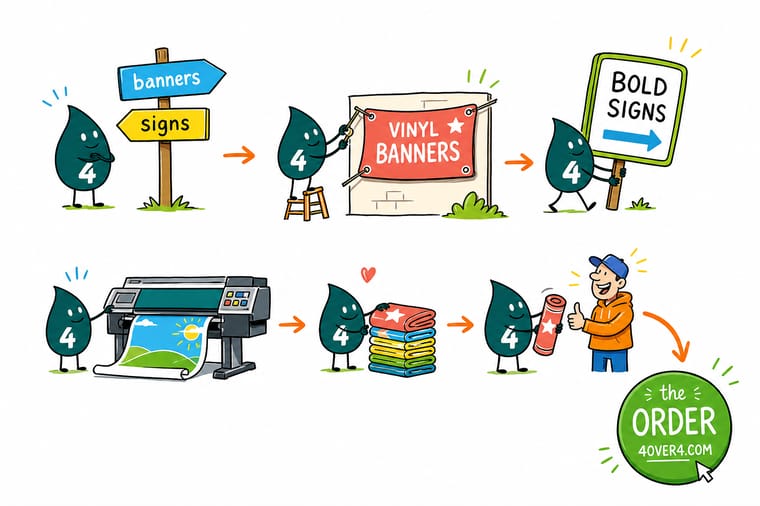
Wally settles the banner-or-sign question with one test. If you would hang it or roll it up for the next event, it is a banner on vinyl or fabric. If you would stake it or stand it and leave it, it is a rigid sign on coroplast or foam. Then he matches the material to indoor or outdoor and sizes it to the viewing distance, and routes each job to the right product.
Order banners and signs →Quick reference
Banner or sign, at a glance
Match the format and material to where the graphic lives and how far people read it from.
| Choice | What it is | Why it fits |
|---|---|---|
| Banner | Flexible vinyl or fabric | Rolls up, travels, and hangs with grommets and ties, ideal for events and temporary displays. |
| Sign | Rigid board | Stands on its own on coroplast, foam, or PVC, ideal for yards, directions, and storefronts. |
| Outdoor use | Weatherproof material | Vinyl, mesh, and coroplast handle sun, wind, and rain for months to years. |
| Indoor use | Fabric or foam board | Lighter materials look premium indoors and are easy to hang or stand. |
| Sizing | Match viewing distance | Bigger piece and bolder type the farther away people read from. |
| Mounting | Grommets or stakes | Banners hang with grommets and ties, signs mount on stakes, frames, or standoffs. |
Step by step
Choose and order in 7 steps
- Define where it will live Decide whether the graphic hangs on a wall or fence, stands in a yard, or travels between events. Placement is the first fork between banner and sign.
- Choose banner or sign Pick a banner for flexible, portable, temporary display, and a rigid sign for a fixed, self-standing placement that lasts.
- Match the material to the setting For outdoors, choose weatherproof vinyl, mesh, or coroplast. For indoors, a lighter fabric banner or foam board sign reads clean and premium.
- Size to the viewing distance Measure how far away people will read from, then scale the piece and the type so the message lands at that distance.
- Design bold and simple Lead with one message and high contrast, keep copy short, and make the logo and call to action readable at a glance.
- Plan the mounting Add grommets and hems for a banner, or pick stakes, a frame, or standoffs for a sign, so it installs cleanly where it goes.
- Order the right product Route each use to the matching 4OVER4 product, set the size and material, and the price updates live before checkout.
Specs and pricing
Vinyl banner specs and live pricing
Once you have chosen banner or sign, size and material are what is left. Mesh ships in 3 business days, aluminum and foam core in 4.
| Quantity | Price Per Unit | Total |
|---|---|---|
| 1 | $79.00 | $79.00 |
Print it
Bring your message to 4OVER4 banners and signs
See it in use
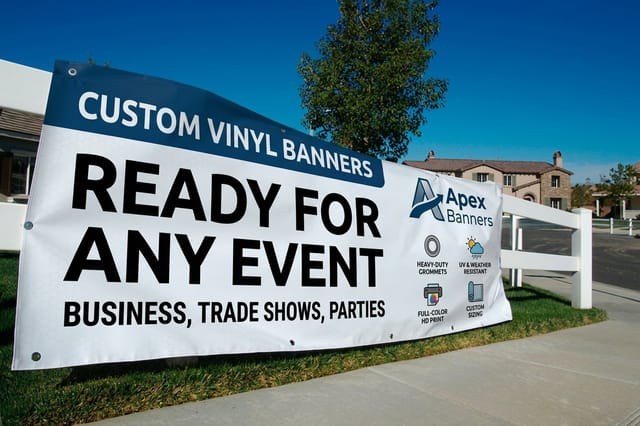
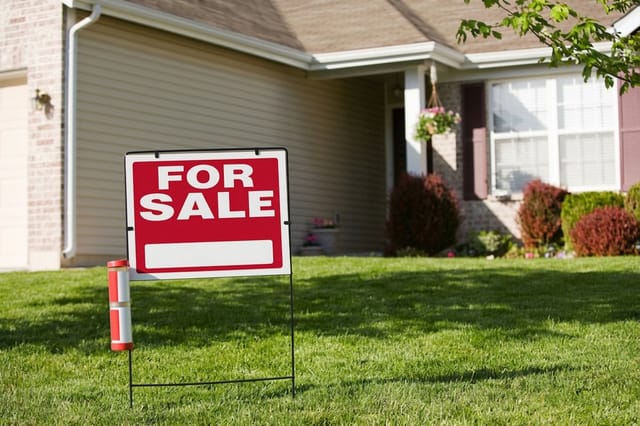
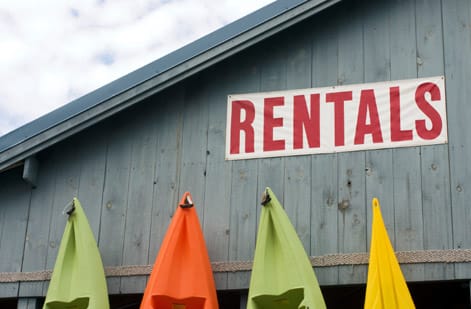
Banners and rigid panels side by side




Explore more
Where to go next




By the numbers
A banner and a sign sit in the same 1,000+ product catalog
Common Questions
Common questions about banners and signs
What is the difference between a banner and a sign?
A banner is a graphic printed on flexible material like vinyl or fabric that can roll up, travel, and hang with grommets and ties, which makes it the go-to for events, sales, and temporary displays. A sign is printed on a rigid board like coroplast, foam board, or PVC that stands on its own and stays in place, which makes it the go-to for yards, directions, storefronts, and anywhere the message needs to hold for the long term. The core split is flexible and portable versus rigid and fixed, and that difference drives the material, the mounting, and how long each one lasts.
How do I choose between a banner and a sign?
Start with placement and permanence. If the graphic needs to travel, hang across a wall or fence, or come down after an event, choose a banner. If it needs to stand on its own in a yard, point people in a direction, or live at a storefront for months, choose a rigid sign. Then match the material to the setting: weatherproof vinyl, mesh, or coroplast for outdoors, and lighter fabric or foam board for indoors. Finally, size the piece to the distance people will read from. A roadside sign needs to be large and bold, while an indoor banner can be more detailed.
What do banners and signs cost and how are prices set?
Both scale with size, material, quantity, and finishing. For banners, price rises with square footage and the material grade, from standard vinyl to premium fabric or mesh, plus hems and grommets. For signs, price depends on the board material, the size, and any stakes, frames, or standoffs. Quantity lowers the per-piece cost on both, which matters most for a run of yard signs. You set the size and material in the configurator at 4OVER4.COM and the price updates live, so you can compare a banner and a sign for the same message before you decide.
What sizes and materials are available for banners and signs?
Banners range from small 2 by 4 foot pieces up to large building-side sizes, on materials including standard vinyl, heavy-duty vinyl, mesh for wind, and premium fabric for indoor use, all finished with hems and grommets. Signs come in standard yard-sign sizes up to large storefront panels, on coroplast for economical outdoor use, foam board for crisp indoor display, and rigid PVC or aluminum for durable long-term signage. Mounting options span grommets and pole pockets for banners and stakes, frames, and standoffs for signs, so each piece installs cleanly where it belongs.
How long do banners and signs take to print and ship?
Banners and signs are produced to order, so the timeline covers printing, cutting, and finishing before the order ships, and it depends on the size, material, and quantity you choose. The live product page at 4OVER4.COM shows the current production and shipping estimate for your selected options, and large formats or specialty materials can add a little time. You always see the estimate before checkout, which makes it easy to plan around an event date, a grand opening, or a campaign.
Get Started
Order aluminum signs, printed in 4 business days
Route your message to a flexible banner or a rigid sign at 4OVER4.COM, pick the size and material for indoor or outdoor use, and watch your price update live.
Legal Disclaimer
Gold Standard guarantees apply to all standard orders placed through 4over4.com. Price match requires verifiable proof of a competitor's published price for an equivalent product with matching specifications and turnaround time. Satisfaction guarantee covers manufacturing defects and print quality issues. Contact support with order number and documentation. On-time delivery rate based on tracked orders 1999 to 2026. Individual results may vary based on shipping carrier performance.
