
How to Make Yard Signs That Get Noticed Outdoors


Pick a weatherproof material, size it for the road, and design a bold, high-contrast message. A driver gets about three seconds with your sign, and that limit sets every other choice.
To make a yard sign, print your artwork on 4mm coroplast at the standard 18 by 24 inch size, keep the message under seven words in a bold sans-serif font with high-contrast colors, then mount it on an H-stake angled toward traffic. Design at 300 DPI in CMYK with an eighth-inch bleed so the print stays crisp and weatherproof outdoors.
Start here
How to make yard signs, step by step
Yard signs are one of the cheapest ways to grab attention on a busy street, for a business, an event, or a campaign. This guide walks through how to make yard signs from scratch, from choosing a material and size to designing artwork people read from the road and installing it so it faces traffic. Building out the rest of your kit? Pair it with custom magnets and custom envelopes, browse the full signs and banners range or jump straight to custom yard sign printing, and build your art in the browser with the online designer.
Choosing the right yard sign material
Material choice decides how long your yard sign lasts and how good it looks. Most yard signs use one of three substrates, and each has a sweet spot.
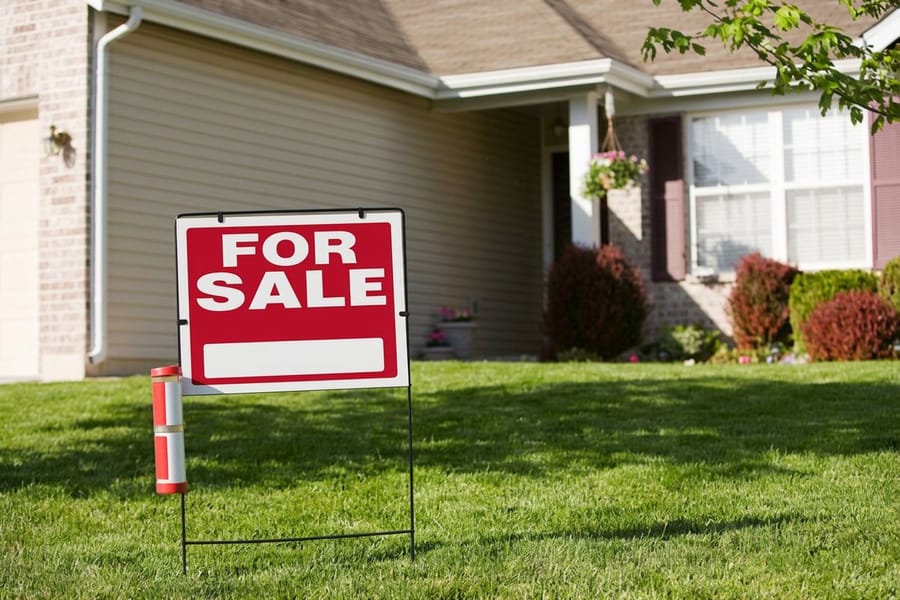
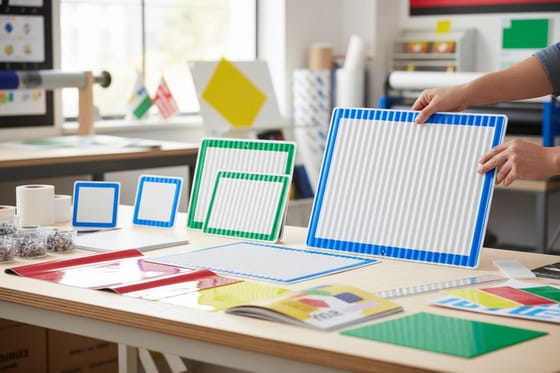
Coroplast (corrugated plastic) is the standard. It is lightweight, waterproof, and affordable, and the fluted core keeps it rigid enough to stand upright on a wire stake without bending. Political signs, real estate signs, and event announcements all lean on coroplast because it shrugs off rain, sun, and wind. A typical coroplast sign lasts 6 to 12 months outdoors, which covers most seasonal promotions and campaign cycles, and it recycles easily when you are done.
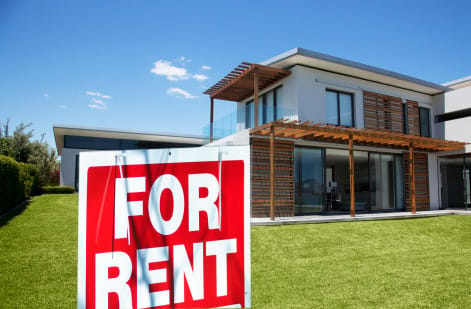
Need something more permanent? Custom aluminum signs are rust-resistant and built to last years. They are heavier, so they work best with metal stakes or post-mounted frames, and real estate agents and property managers love the polished look that survives multiple seasons. PVC board sits in between, giving you a smooth rigid surface that prints sharper than coroplast, while foam board is the budget option for indoor or short-term use like open house signs. For listing work specifically, real estate yard signs ship ready for an H-stake.
Sizing your yard sign for the road
Size matters more than most people realize. A sign that is too small gets ignored, and one that is too large looks out of place or bumps into local ordinances.
The most common yard sign size is 18 by 24 inches. It is big enough to read from a passing car and small enough to fit any front yard. For busier roads where drivers move faster, step up to 24 by 36 inches so you have more room for your message. Smaller 12 by 18 inch signs work for directional arrows, parking lot markers, or pedestrian areas. If you are making yard signs for a business, 18 by 24 is the safest bet. Our guide to yard sign sizes and materials breaks down every option side by side.
Landscape orientation is standard because it matches the way a driver scans a sign from the side of the road. Portrait works when you have a tall logo or want to stack several lines of text, but stick with landscape unless you have a specific design reason to go vertical.
Designing yard signs that get noticed
Design is where most do-it-yourself yard signs fall apart. People try to cram too much onto a small surface. Six words and one phone number is the working ceiling.
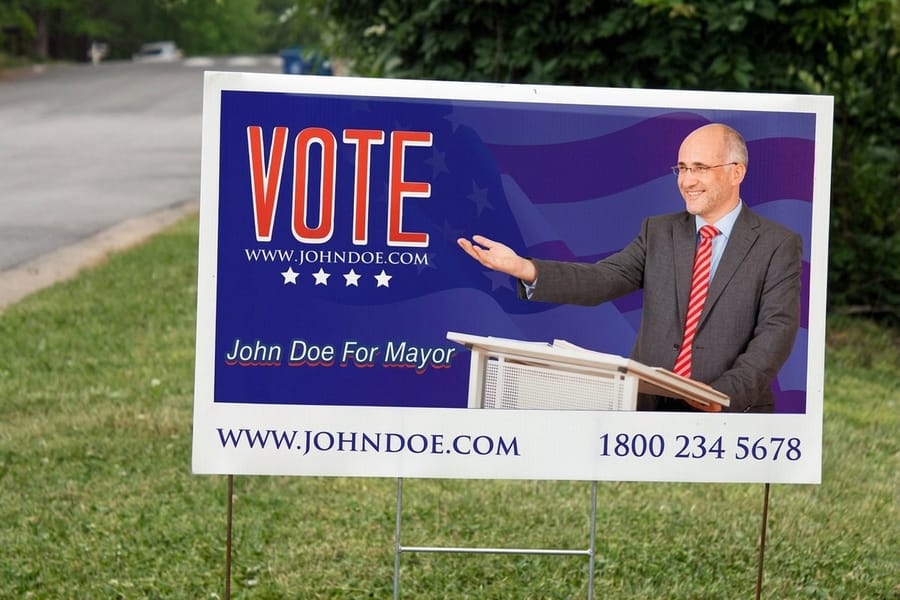
Your sign gets about three seconds of attention from a passing driver, so the core message needs to land in a glance. "Vote Smith for Mayor" works. A full sentence about the candidate does not. Build a clear hierarchy where the most important detail, the name, phone number, or call to action, is the largest text, and supporting details sit smaller underneath.
Sans-serif fonts like Arial, Helvetica, or Impact read best from a distance, and bold weights are non-negotiable. Keep primary text at least two inches tall on an 18 by 24 sign, and let phone numbers or web addresses drop to 1.5 inches at the smallest. The same distance-first thinking runs through our printing guide hub, and if you have designed flyers before, the readability rules carry straight over.
Colors and graphics that pop from a distance
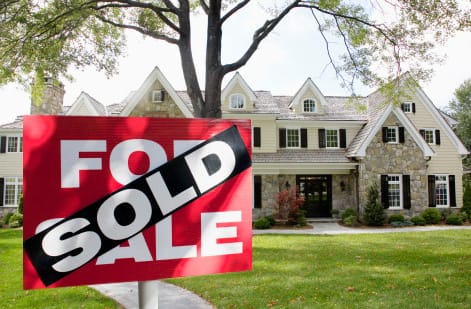
High contrast is everything. Dark text on a light background, or the reverse, is what keeps a sign readable from the road. The best-performing combinations are simple:
- Dark blue on white reads as professional and trustworthy, ideal for real estate and business.
- Red on white feels urgent and grabs attention, great for sales and events.
- White on dark green stays clean and visible, popular with landscaping and service brands.
- Black on yellow is the highest-visibility pairing, which is exactly why road signage uses it.
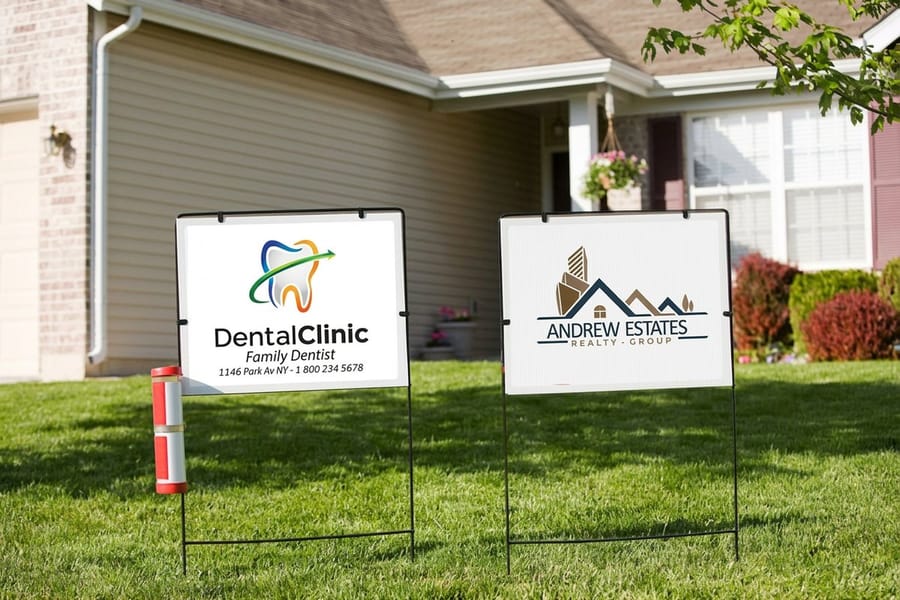
Avoid placing similar colors next to each other. Red text on an orange background disappears from a moving car. Logos should stay simple and recognizable at small sizes, so use your logo mark rather than a detailed full wordmark when space is tight. Photos rarely work on yard signs because they lose detail at distance and add clutter, so lean on solid colors, clean type, and simple vector graphics.
Setting up your artwork file the right way
Getting the file right before printing saves time and prevents surprises. Design at 300 DPI in CMYK color mode. RGB looks great on screen but shifts when printed, especially blues and greens, so convert before you export. Save the final artwork as a high-resolution PDF to lock in fonts, colors, and image quality, and if you are working in Canva, download as "PDF Print" rather than a standard PDF.
Add 0.125 inches of bleed on all sides so no white edges show up after trimming, and keep every important element at least 0.25 inches inside the trim line inside the safe zone. These same prep steps apply to other print projects too. If you are also folding printed pieces, our guide on how to fold a brochure walks through similar file setup.
Printing options: do-it-yourself vs professional

You have two paths, and each has trade-offs. For a handful of signs, you can buy blank coroplast sheets and use vinyl lettering, stencils, or even hand-paint them. That works for one-off projects like a garage sale or a birthday announcement. The quality will not match professional printing, but the cost per sign stays low if you already have supplies.
For anything tied to a business, professional printing earns its keep. 4OVER4.COM uses UV-resistant inks and precision cutting that you cannot replicate at home, so colors stay vivid in direct sun and the edges come out clean. When you want custom yard signs that represent your brand well, professional printing is the move. Not sure what to expect from print quality? Order free samples to see and feel the materials before committing to a full run.
Installing your yard signs so they get seen
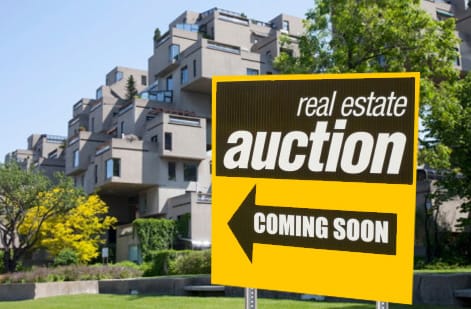
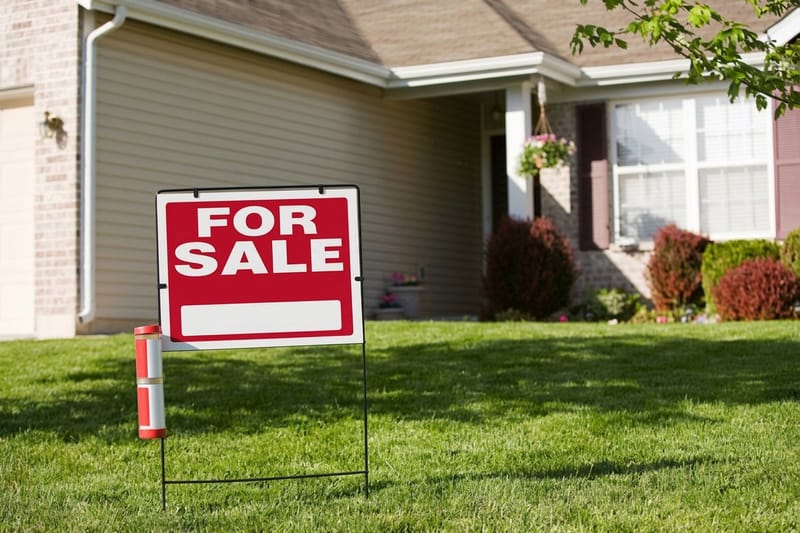
A great sign that is poorly installed is a waste. The standard H-frame wire stake slides straight into the flutes of a coroplast sign. Push the stake into the ground at a slight backward angle so the face tilts toward oncoming traffic. On hard or rocky soil, water the spot first to soften it, or set a piece of wood over the stake and tap it in with a rubber mallet.
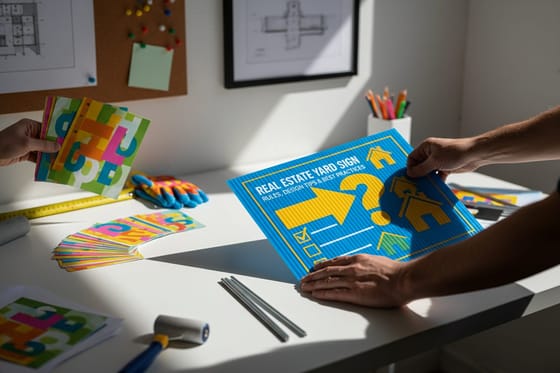
Placement decides how many eyeballs you earn. Corners of busy intersections, main roads near your business, and neighborhood entrances all work well, but check local regulations first because many cities limit signs on public property and rights-of-way. For real estate or directional signs, create a trail of three to five signs at each turn leading to your location. Start from a proven layout with our yard sign templates or real estate yard sign templates, and if you keep other branded tools like stamps for paperwork, our guide on how to clean rubber stamps keeps those sharp too.
Mistakes that ruin yard signs
Even experienced designers slip up when making yard signs. These are the errors the 4OVER4.COM print team sees most:
- Too much text. A yard sign is not a brochure. Stick to a headline, one supporting detail, and a phone number or website.
- Low-contrast colors. Light gray on white or dark blue on black vanishes at distance. Test your design by viewing it at 10 percent zoom on screen.
- Wrong file resolution. A 72 DPI web graphic prints blurry and pixelated, so always design at 300 DPI.
- Ignoring flute direction. Coroplast flutes run one way. On a landscape sign the flutes need to run vertically so the H-stake can slide in.
- Skipping the proof. Always review your digital proof before approving, because typos on 100 signs are expensive typos.
4OVER4.COM includes a free proof with every order so you can catch issues before they hit the press. Want proof it pays off? See how a construction company won leads with yard signs, and for color choices that convert, read the advice on the best colors for real estate yard signs.
Wally explains yard signs
Bold, brief, and built to face the traffic
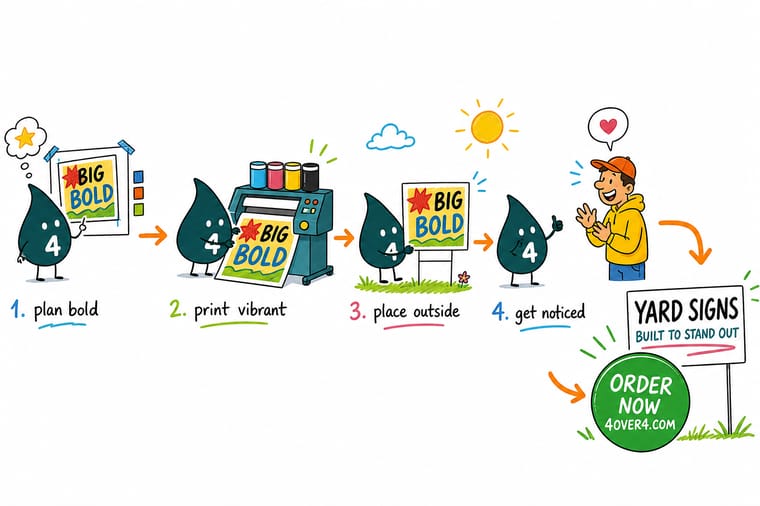
Wally treats a yard sign like a billboard the size of a pizza box: you get three seconds and seven words, so make them count. Bold sans-serif text, high-contrast colors, and coroplast that laughs at rain do the heavy lifting, and an H-stake angled toward traffic seals it. When you are ready, skip the hand-painted plywood and print a weatherproof yard sign built to your exact artwork at 4OVER4.
Order yard signs →Print it
Order yard signs and matching print at 4OVER4
When a sign finally fades, reordering takes minutes. Pair your yard signs with free business cards for a complete brand kit, choose eco-conscious stock through our green printing program, and browse focused options like coroplast yard signs and political yard signs built for a single run.
See it in use
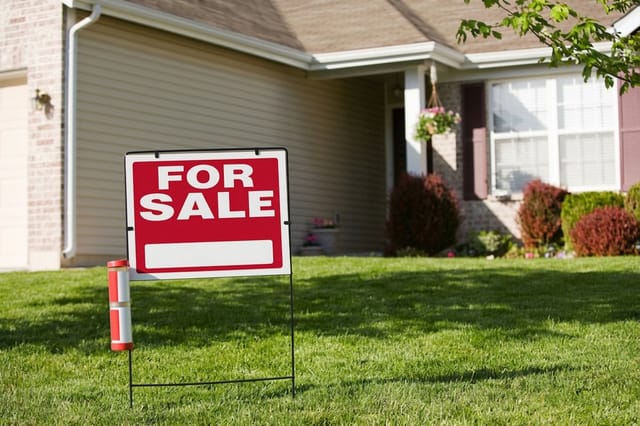
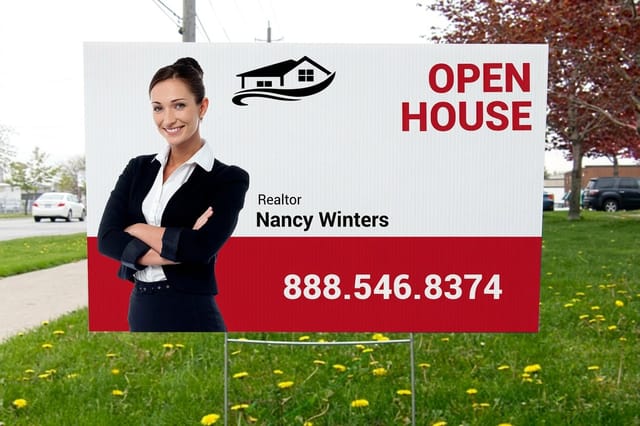
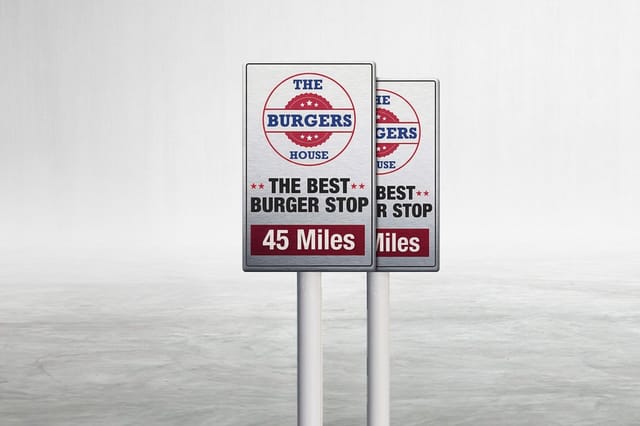
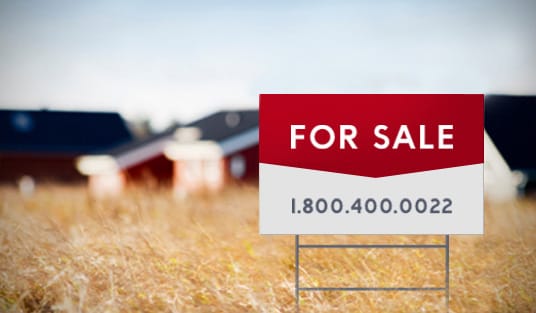
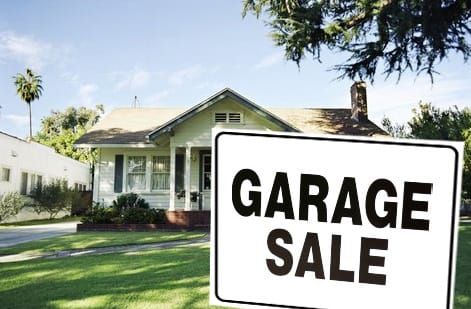
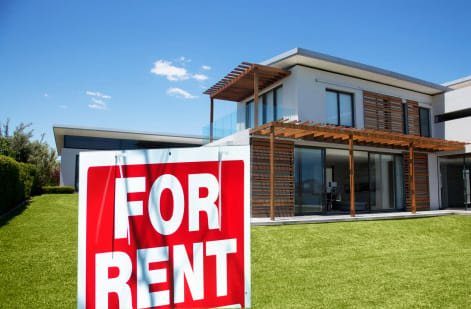
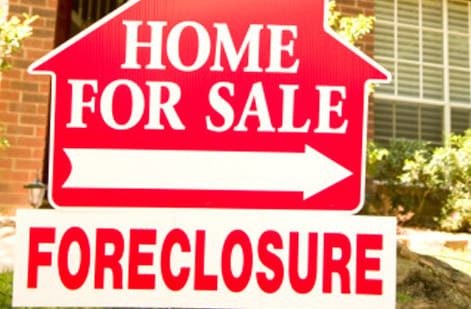
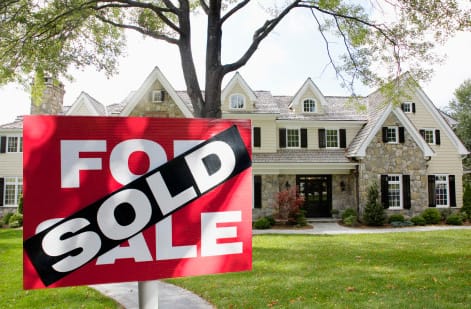
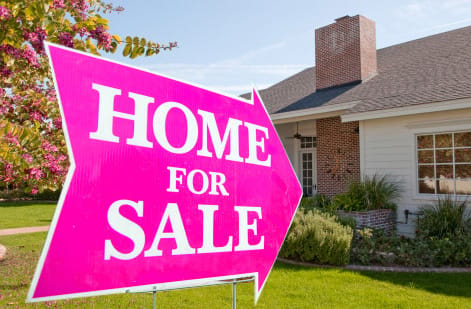
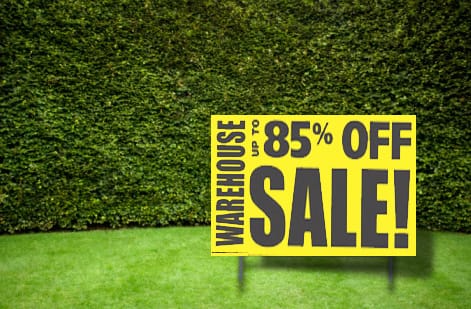
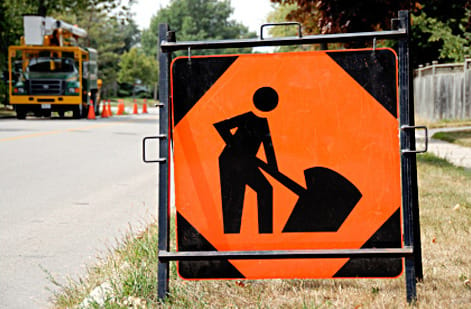
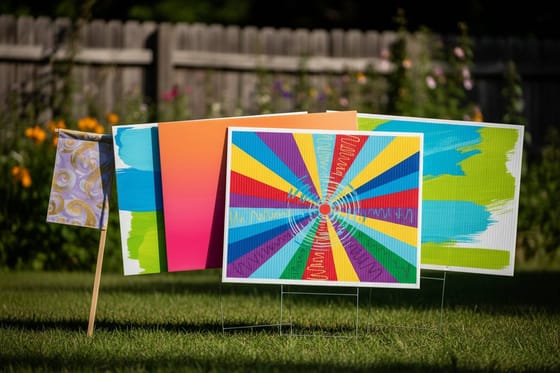
Yard signs we printed for customer jobs
Explore more
Where to go next

By the numbers
What we run on 4mm White Coroplast
Common Questions
Common questions about making yard signs
What is the best material for outdoor yard signs?
Corrugated plastic, known as coroplast, is the most popular choice for outdoor yard signs. It is waterproof, lightweight, and durable enough to last 6 to 12 months in sun and rain. For permanent signage, aluminum is the better pick. 4OVER4.COM prints on both materials with UV-resistant inks that resist fading.
What size should I make my yard sign?
The standard yard sign size is 18 by 24 inches, and it works for most jobs. If your sign sits along a busy road with faster traffic, step up to 24 by 36 inches for better readability. Smaller 12 by 18 inch signs work well for directional arrows, parking areas, or anywhere people are walking rather than driving.
How do I make yard signs for my business?
Start with your logo, business name, phone number, and one call to action. Use a bold sans-serif font and high-contrast colors, then design at 300 DPI in CMYK and save as a print-ready PDF. When you make yard signs for a business, keeping the message under seven words is the rule that matters most.
Can I design custom yard signs without graphic design experience?
Yes. Free tools like Canva offer yard sign templates you can customize with your own text and colors, and 4OVER4.COM provides blank templates with the correct dimensions and bleed marks already set up. Upload your finished design and the print team handles the rest.
How do I install a yard sign properly?
Use an H-frame wire stake that slides into the coroplast flutes. Push the stake into soft ground at a slight backward angle so the sign faces traffic, and soften hard soil with water first. Keep the sign at eye level, roughly two to three feet off the ground.
How long do printed yard signs last outdoors?
Coroplast yard signs with UV-resistant ink typically last 6 to 12 months outdoors, and aluminum signs can last several years. Fading depends on direct sun exposure, but professional UV printing from 4OVER4.COM holds color far longer than inkjet or laser home printing.
Get Started
Print coroplast signs that read from the road
Pick your size, drop in your artwork or text, and we print bold, weatherproof coroplast signs that read clearly from the road and hold color for months.
Legal Disclaimer
Gold Standard guarantees apply to all standard orders placed through 4over4.com. Price match requires verifiable proof of a competitor's published price for an equivalent product with matching specifications and turnaround time. Satisfaction guarantee covers manufacturing defects and print quality issues. Contact support with order number and documentation. On-time delivery rate based on tracked orders 1999 to 2026. Individual results may vary based on shipping carrier performance.
