
The Print Marketing Supplies Every Small Business Actually Needs


Marcus is our print marketing voice, built from the knowledge of our production team, with over 20 years in printing.
Five pieces, what each one is for, the size and stock to choose for each, which 4OVER4.COM product fills the slot, and the order to buy them in so nothing sits in a box with an old phone number on it.
A working print marketing kit is five pieces: business cards, flyers, brochures, postcards and one banner. At 4OVER4.COM the entry configuration is $17.57 for standard business cards, $39.54 for flyers, $57.11 for brochures, $16.48 for postcards and $79 for a vinyl banner, so the whole kit lands near $210. Buy them in that order rather than all at once, because each piece meets the customer at a different distance and what you learn from the early ones changes the later ones.
Quick answer
Five pieces, five distances, roughly $210 to start
The kit is business cards, flyers, brochures, postcards and one banner. Cards meet somebody at arm length, flyers reach people who have never heard of you, brochures answer a question that has already been asked, postcards arrive without an envelope to open, and a banner works on anyone more than ten feet away. Buy cards first and brochures last. The piece that decides whether each one works is not the finish, it is the type size, and type size follows the distance the piece is read at.
The Five Supplies That Actually Get Used
Most advice on business marketing supplies lists twenty items. In practice a small business uses five, and the other fifteen sit in a box under a desk until the phone number changes. What separates the five is that each one meets the customer at a different distance and a different level of interest.
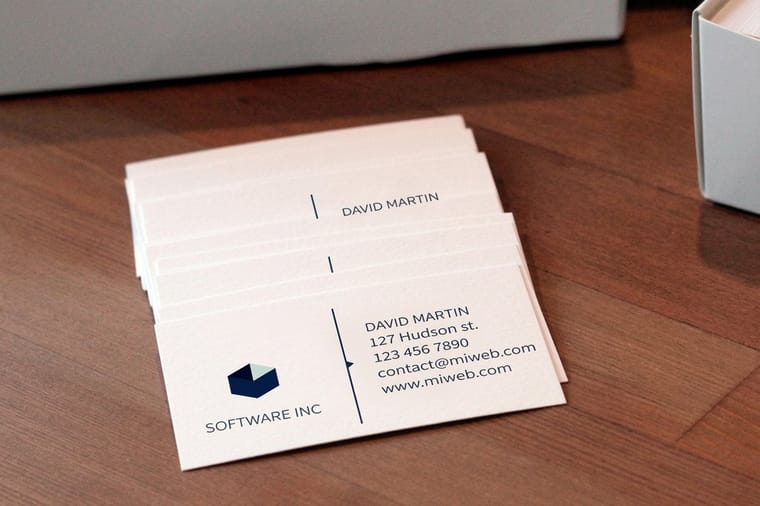
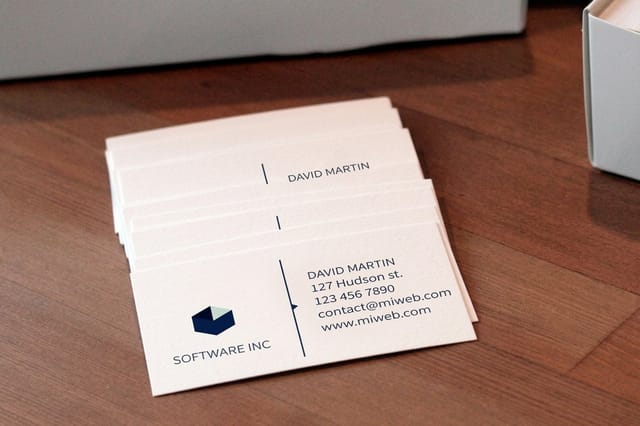
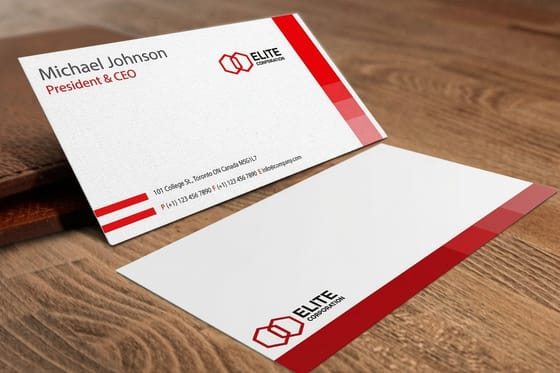
Business cards are the only piece that travels in your pocket every day, so they get handed over more times than everything else combined. They cost the least per contact and they are the piece people keep. Standard business cards start at $17.57, which is less than one hour of most people time, and 14pt or 16pt stock is the honest default. Go 16pt if the cards live in wallets, and pick an uncoated or soft touch finish if anyone needs to write on the back, because a gloss coat rejects ballpoint ink.
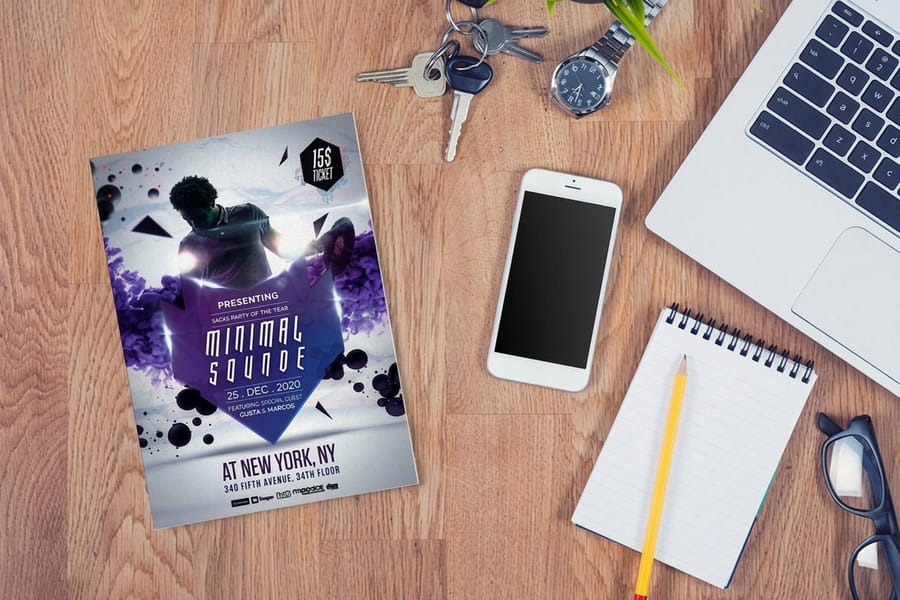
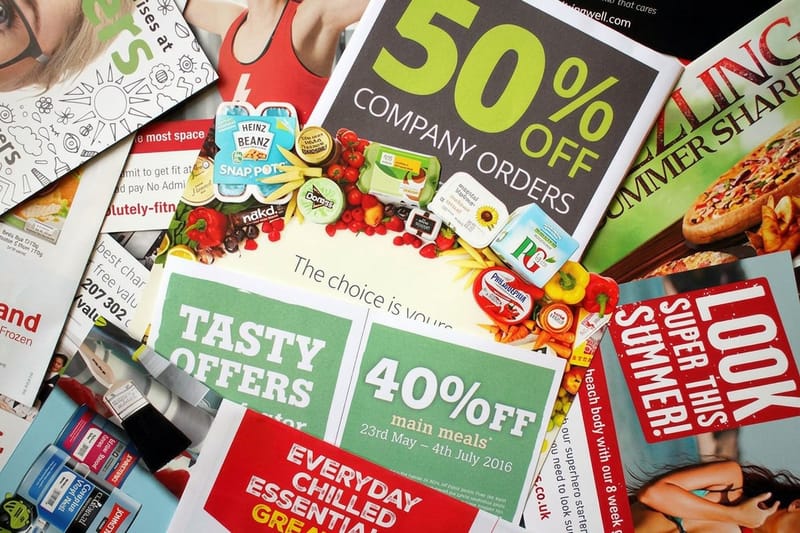
Flyers do the work nobody wants to do: reaching people who have never heard of you. One sheet, one offer, read in about three seconds at arm length. Standard flyers start at $39.54. The mistake is ordering 5,000 on the first run because the per-piece price looks better. Print a short run, distribute it, find out whether the offer pulls, then reprint the version that worked.
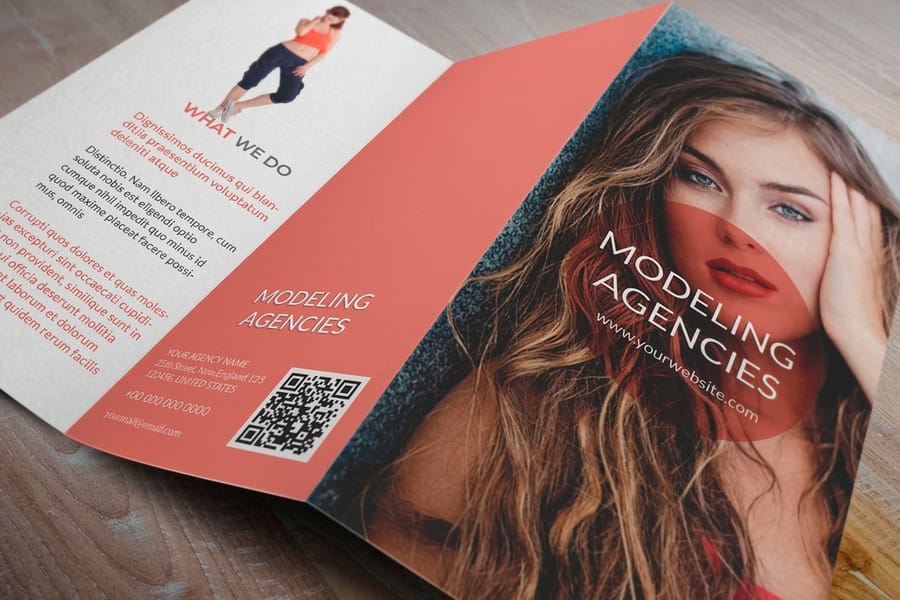
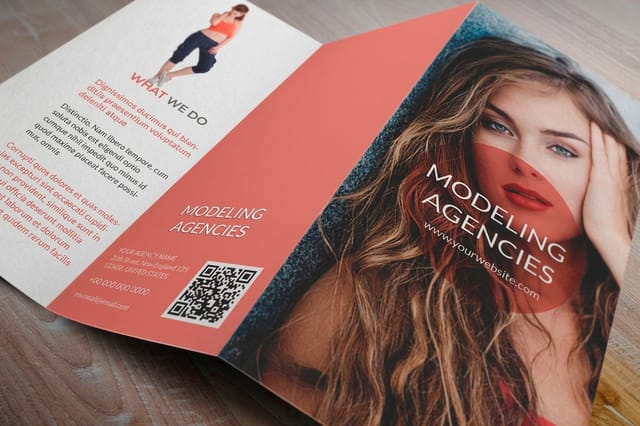
Brochures are the opposite piece. A brochure is for somebody who already asked a question and now wants the detail: your services, your process, your price bands. Standard brochures start at $57.11. Handed to a stranger on a sidewalk a brochure is worse than a flyer, because three folded panels ask for a commitment nobody has made yet.
Postcards are the only piece in the kit that arrives uninvited and still gets read, because there is no envelope to open. That is their whole advantage, and it is why the design has to work as a glance. Standard postcards start at $16.48, and heavier stock is worth it on anything that goes through a mail stream, since a thin card comes out of the sorting equipment bent.
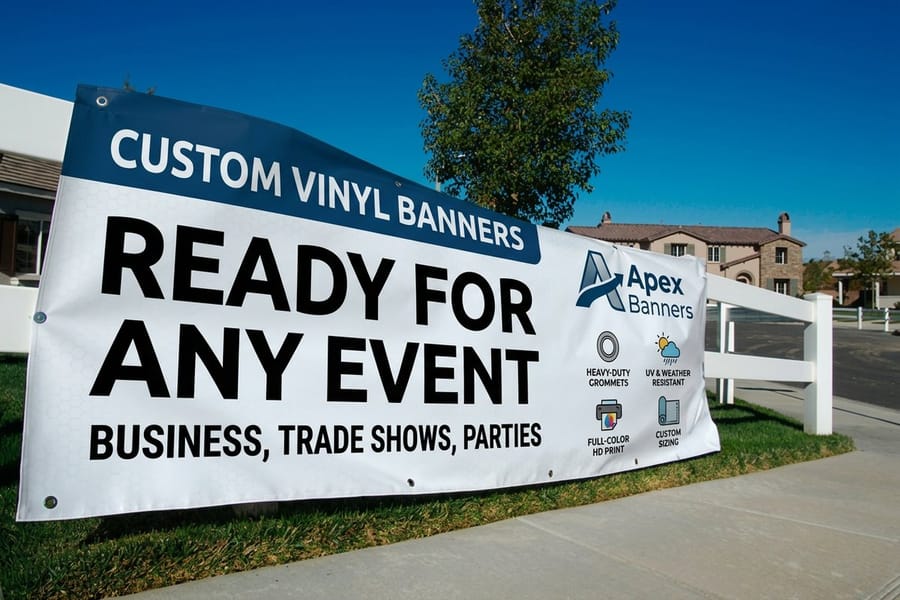
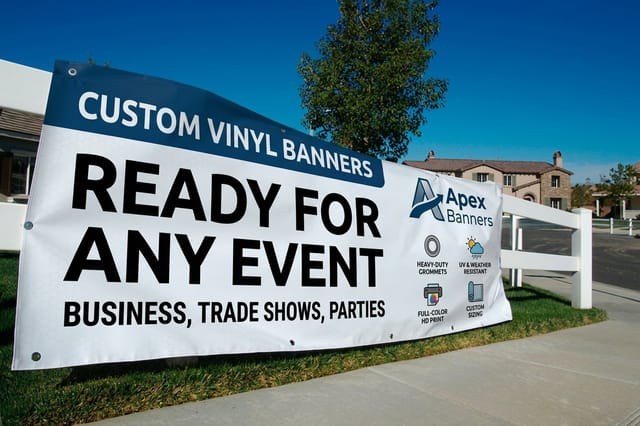
One banner covers everything that happens more than ten feet away. Vinyl banners start at $79 with grommets and handle weather, fences and building fronts. Retractable banner stands start at $139 and set up in under a minute on a hard floor with nothing to tie to, which is the situation at every trade show booth. Buy one, not both.
Which 4OVER4 Product Fills Each Slot
Five slots, five products, five starting prices. The last column is the part that decides whether a piece earns its cost, so read that first.
| Slot | Product | Starts at | The job it does, and where it fails |
|---|---|---|---|
| Handshake | Standard business cards | $17.57 | Kept, carried, and passed on. Fails as a mass handout, because a card with no context goes in a drawer. |
| Cold reach | Standard flyers | $39.54 | One offer, read in seconds. Fails when it carries five messages instead of one. |
| Warm detail | Standard brochures | $57.11 | Answers a question already asked. Fails as a street handout and as a first impression. |
| Mailbox | Standard postcards | $16.48 | No envelope to open, so it gets seen. Fails on thin stock, which buckles in mail equipment. |
| Ten feet and beyond | Vinyl banners | $79 | Stops traffic at a distance. Fails the moment it carries more than about three words. |
Two products sit just outside the core five and get bought far too early. Yard signs from $25 are excellent for a service business working a neighborhood and pointless for anyone whose customers arrive by search. Standard magnets from $19.68 stay on a refrigerator for years, which only pays off if you are the business somebody calls in an emergency: plumbing, HVAC, towing, locksmith. For a trade that works from a van, the Plumbing Signs video shows the kind of sign that earns a spot in a second order. Neither belongs in a first order.
If a slot needs more range than the standard product gives, the category pages carry the full option set: business card printing, flyer printing, brochure printing, postcard printing and large format printing for anything banner sized.
The Order to Buy Them In
Buying all five at once is how businesses end up reprinting three of them. Order by how soon each piece meets a customer, and let what you learn from the early pieces shape the later ones.
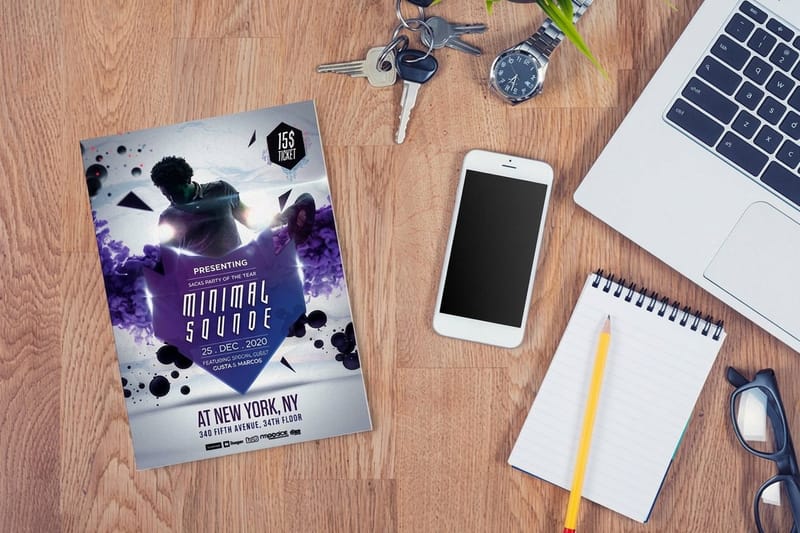
- Business cards, immediately. You need them the week you open, and the design constraints are the smallest. 250 to 500 to start. Check the phone number and the spelling of the street twice, because a card is the piece you cannot quietly correct later.
- Flyers, once you have one offer worth testing. Not a description of the business. One offer with a deadline or a reason to act. Short run, distribute, count what comes back.
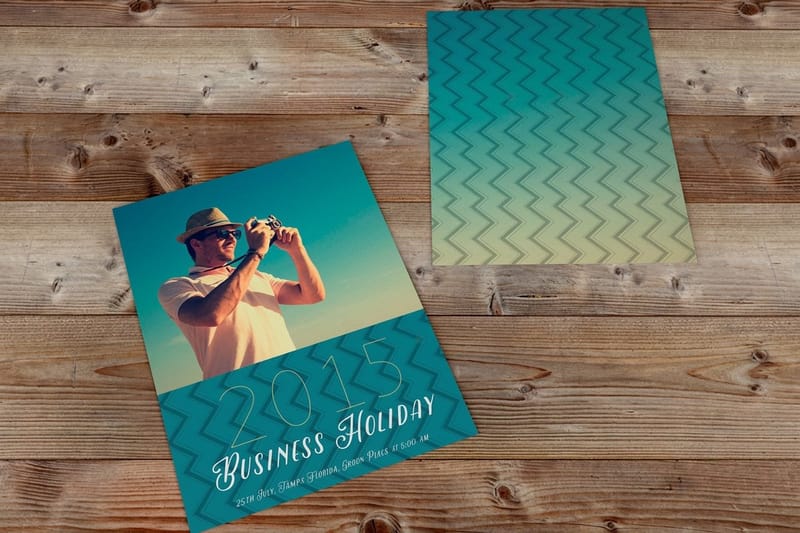
- Postcards, once you know which zip codes matter. A mailing is only as good as the list, so wait until you can name the neighborhoods or the customer type. Design it to be understood while somebody walks from the mailbox to the trash can.
- A banner, when the first event or the first storefront moment is booked. Buying it earlier gets you a banner sized for a space you have not seen. Measure the wall, the fence or the booth first.
- Brochures, last. By this point you have heard the same three customer questions enough times to know what belongs on the panels. Print the brochure that answers those three questions and nothing else.
Two things to settle before the first file goes out. Fix the palette, the logo lockup and one typeface pair so the five pieces read as one business, and start every layout from a correctly sized file rather than resizing the last one. Our blank template library carries the trim and bleed for each size, and the guide to how online printing works walks through the file handoff from upload to delivery.
Sizes, Stock and the Mistakes That Waste a Run
Four errors account for most reprints, and every one of them is decided before the file is uploaded.
Text sitting too close to the trim. Cutting is accurate but not perfect, so anything within about an eighth of an inch of the edge risks being clipped on some sheets and not others. Keep live text inside the safe margin and extend background color past the trim into the bleed. This is the single most common reason a job comes back looking off center.
Type sized for a screen instead of a distance. Allow roughly one inch of capital height for every ten feet of viewing distance. A banner read from twenty-five feet needs capitals around two and a half inches tall, which leaves room for about three words. Designers copy the flyer headline onto the banner, and from across a parking lot it reads as a gray block.
Gloss coating on anything people write on. A gloss or UV coating repels ballpoint ink. If staff write appointment times on the back of a card, or a caterer writes a quantity on the back of a flyer, specify uncoated, matte or soft touch instead.
Stock too light for the mail. Postcards run through automated sorting equipment that grips, bends and stacks them. Thin card comes out curled with soft corners, which undoes whatever the design was doing. Choose a heavier card for anything mailed, and check the layout rules before you finalize the back panel with our postcard mailing layout guide.
A default spec for each piece. Cards at 2 by 3.5 inches on 16pt if they live in wallets, uncoated if anyone writes on the back. Flyers at 8.5 by 11 on 100# Gloss Text for a handout, or 14pt cover when they sit on a counter and get picked up again. Brochures at 8.5 by 11 with a half fold on 100# Silk/Matte Text, so the panels take a pen note. Postcards at 4 by 6 or 6 by 9 on 16pt or heavier for the mail. A banner on 13oz outdoor vinyl or 15oz BlackOut vinyl, in one of the stock sizes from 2 by 4 to 8 by 20 feet, picked against the wall you measured.
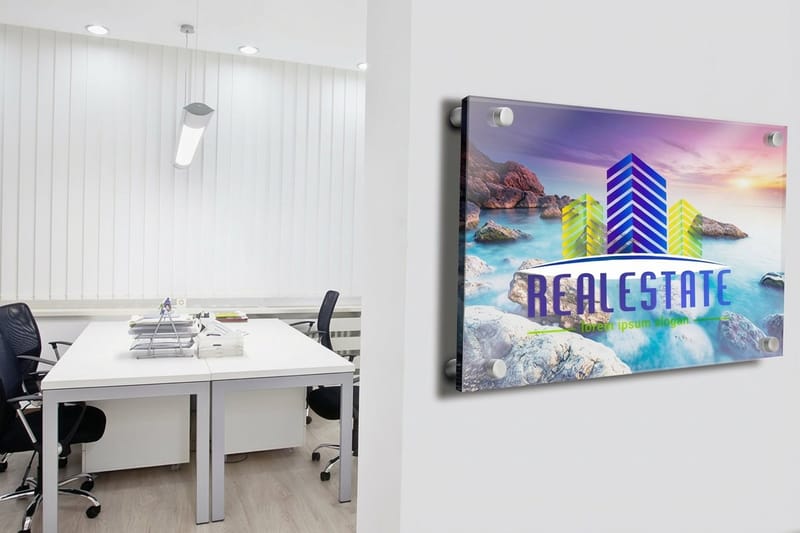
For stock and coating choices across all five pieces, the paper selection guide compares weights and finishes side by side, and the real estate print kit guide shows the same five slots configured for a single industry.
Wally explains the five piece kit
Cards first, brochures last, one banner in between
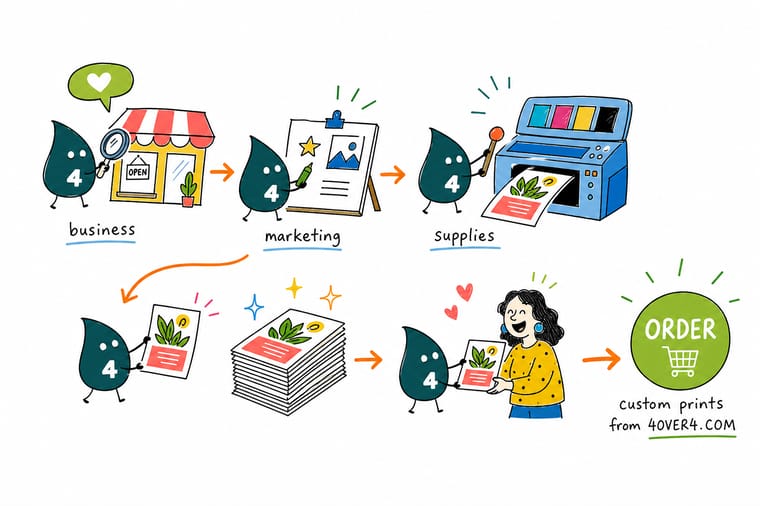
Wally lays the kit out in the order he would buy it. Cards go out first because you need them the week you open. Flyers come next, in a short run, so one offer can be tested before thousands are printed. Postcards follow once he knows which neighborhoods matter. A banner is measured against the actual wall or booth, never guessed. The brochure is last, because by then the same three customer questions have come up enough times to know what belongs on the panels.
Order standard business cards →
Specs and pricing
Sizes, stocks and starting prices for the core three
Cards, flyers and postcards are the three pieces most businesses reorder, and all three ship after 3 business days of production. Business cards trim to 2 by 3.5 inches. Flyers run from 4.25 by 5.5 up to 11 by 25.5 inches on seven papers, from 70# Uncoated Text to 14pt cover. Postcards come in 14 sizes from 2.5 by 2.5 to 6 by 11 inches, and flyers and postcards both start at 50 pieces.


Cards, brochures, banner
Order the kit, one piece at a time

Paper, mailing and kits by trade
Where to go next

Printed in Queens since 1999
The print partner behind the kit
Common Questions
Your marketing supplies questions, answered
What print marketing supplies does a small business actually need?
Five: business cards, flyers, brochures, postcards and one banner. Each covers a different moment. Cards travel out of your pocket, flyers go where people walk past, brochures go to somebody who already asked what you do, postcards land in a mailbox uninvited, and a banner works on people who are thirty feet away and were not looking for you. Anything past those five, such as yard signs, magnets or door hangers, is a specialist addition for a specific channel rather than part of the core kit.
How much does a full print marketing kit cost?
At the entry configuration on 4OVER4.COM the five pieces come to roughly $210 together: standard business cards from $17.57, standard flyers from $39.54, standard brochures from $57.11, standard postcards from $16.48 and a vinyl banner from $79. Upgrades move it. Heavier stock, a matte or gloss coating, a larger flyer size or a bigger banner all add cost, and quantity changes the per-piece price far more than the finish does.
How many flyers should I order on the first run?
Order the smallest quantity that covers one real distribution, not the quantity where the per-piece price looks best. A first run is a test of the headline and the offer, and you almost never get either right on attempt one. Print enough for one week of handing out or one event, watch what happens, change the offer, then reprint. The per-piece price on a small run is higher, but a cheap box of 5,000 flyers with the wrong phone number or a dead promo code is worth nothing at all.
Is a brochure still worth printing?
Yes, but only for the customer who has already engaged. A brochure loses badly as a cold handout because nobody opens three panels for a business they have not heard of. It wins on a counter, in a follow-up envelope, in a hotel rack, or handed to somebody after a conversation, because at that point they want the detail. If you are printing a brochure to introduce yourself to strangers, print flyers instead and save the difference.
What stock should business cards be printed on?
14pt or 16pt cardstock covers nearly everyone. 16pt is noticeably more rigid in the hand and holds up better in a wallet, which matters if your cards sit in a pocket for weeks. Add a matte or soft touch coating if you want people to write on the back, since a gloss coating will reject a ballpoint pen. Uncoated stock takes pen ink best of all and is the right pick for trades who write appointment times on the reverse.
Do I need a banner if I only do two events a year?
One is enough, and the choice is between the two formats rather than whether to bother. A vinyl banner with grommets from $79 is cheaper and handles outdoor weather, fences and building fronts. A retractable banner stand from $139 costs more but sets up alone in under a minute and stands on a hard floor without anywhere to tie to, which is what a trade show booth actually needs. Two events a year justify one of them, not both.
Should the five pieces share one design?
They should share a palette, a logo lockup and one typeface pair, not a layout. A postcard read at two feet and a banner read at twenty-five feet need completely different type sizes and word counts, so copying the flyer layout onto the banner produces a wall of unreadable text. Fix the colors and the logo, then rebuild the hierarchy for each distance. Our blank templates give you the correct trim and bleed for every size so the artwork itself is the only thing you have to rethink.
Get Started
100 business cards cost $17.57, 50 postcards $16.48
Start with cards, add flyers when you have one offer worth testing, and let the rest follow. Upload your file or start from a correctly sized blank template.
Legal Disclaimer
Gold Standard guarantees apply to all standard orders placed through 4over4.com. Price match requires verifiable proof of a competitor's published price for an equivalent product with matching specifications and turnaround time. Satisfaction guarantee covers manufacturing defects and print quality issues. Contact support with order number and documentation.
